
Report Feature
Running Gear Market Trends and Forecast
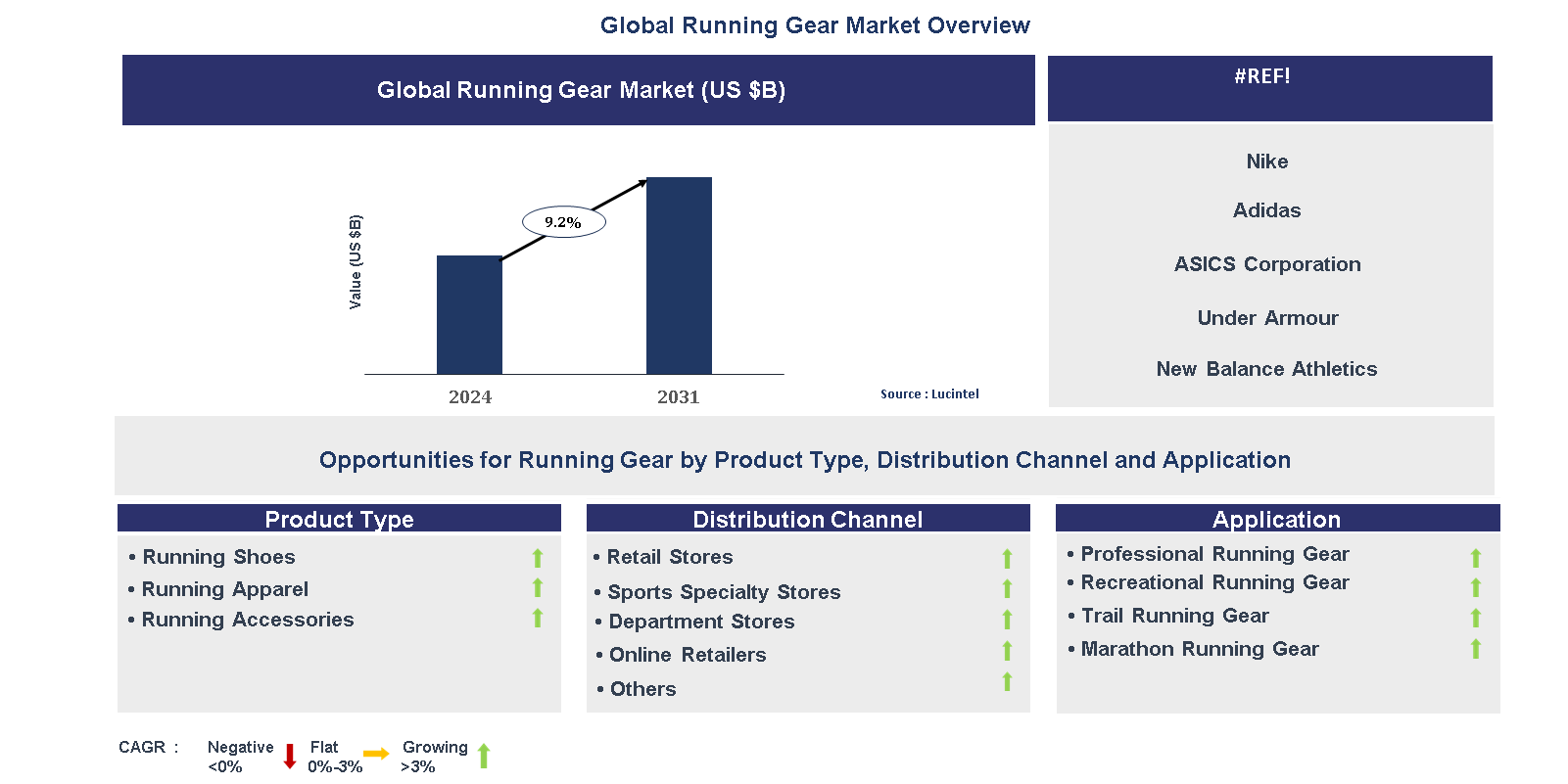
The future of the global running gear market looks promising with opportunities in the professional running gear, recreational running gear, trail running gear, and marathon running gear markets. The global running gear market is expected to grow with a CAGR of 9.2% from 2025 to 2031. The major drivers for this market are the increasing participation in running events, the rising popularity of fitness tracking technology, and the growing demand for performance-enhancing running gear.• Lucintel forecasts that, within the product type category, running shoe is expected to witness the highest growth over the forecast period.
• Within the application category, professional running gear is expected to witness the highest growth.
• In terms of region, APAC is expected to witness the highest growth over the forecast period. Gain valuable insights for your business decisions with our comprehensive 150+ page report. Sample figures with some insights are shown below.
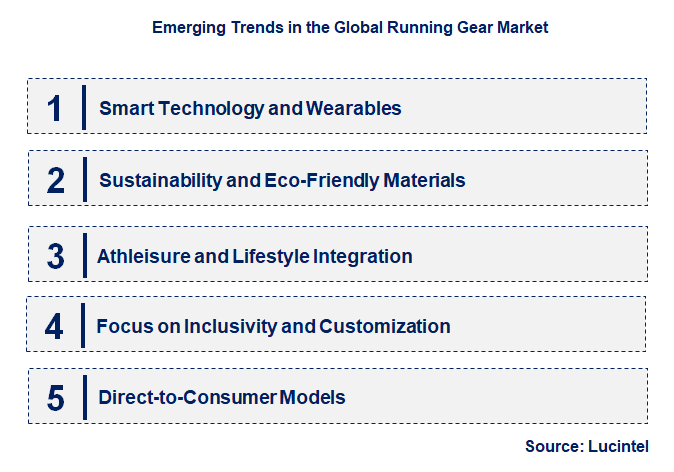
Emerging Trends in the Running Gear Market
The running gear market is being reshaped by several key trends, from technological integration to a focus on sustainability, reflecting a broader shift in consumer values and the way people approach fitness. These trends are moving the industry beyond simple apparel and footwear, focusing on personalized experiences, eco-conscious production, and blurring the lines between sportswear and casual wear.• Smart Technology and Wearables: The market is witnessing a significant trend toward the integration of smart technology into running gear. This includes GPS watches that track metrics like pace and distance, as well as smart apparel with built-in sensors that monitor heart rate and other biometrics. This trend is impacting the market by offering a data-driven, personalized experience that enhances performance and helps prevent injuries.
• Sustainability and Eco-Friendly Materials: There is a growing consumer demand for environmentally conscious products. This trend involves using recycled materials, natural rubber, and other sustainable fabrics in the manufacturing of running shoes and apparel. Adopting sustainable practices not only appeals to a new generation of eco-aware consumers but also positions brands as responsible leaders, enhancing their reputation and marketability.
• Athleisure and Lifestyle Integration: The market is seeing a growing trend toward athleisure, where running gear is designed to be worn for both exercise and casual, everyday activities. This includes stylish leggings, jackets, and footwear that seamlessly transition from the gym to the street. This trend is impacting the market by expanding the use of running gear beyond sports and attracting a wider demographic of consumers.
• Focus on Inclusivity and Customization: Manufacturers are increasingly focusing on offering a wider range of sizes, fits, and styles to cater to a diverse consumer base. This trend also includes the use of AI to create personalized shoe designs and apparel based on a users unique body shape and running style. This is impacting the market by fostering brand loyalty and making running more accessible to all body types.
• Direct-to-Consumer Models: The market is witnessing a significant trend toward direct-to-consumer sales, where brands sell their products directly to consumers through their websites and social media platforms. This is impacting the market by reducing reliance on traditional retail, giving brands more control over their messaging and pricing, and fostering a stronger direct relationship with their customer base. The combination of these trends is fundamentally reshaping the running gear market. The introduction of smart technology and AI is elevating the user experience, while a focus on sustainability and inclusivity is catering to modern consumer values. The shift to a D2C model is changing how products are sold and used, creating a more responsive and consumer-friendly market.
Recent Development in the Running Gear Market
The running gear market is seeing several significant developments, driven by a blend of technological innovation, changing consumer habits, and a renewed focus on the user experience. These advancements are impacting everything from the design and materials of the gear to how they are distributed and marketed, making running more accessible and engaging.• Advanced Material and Fabric Technology: A key development is the widespread use of advanced materials like moisture-wicking and temperature-regulating fabrics. This includes new carbon-plated running shoes designed for enhanced speed and performance. This is revolutionizing the industry by improving comfort, reducing chafing, and helping runners optimize their performance in diverse weather conditions.
• AI-Driven Product Customization: The development of AI-driven software that allows for personalized product customization is a major recent development. This includes platforms that use 3D scanning to create custom-fit shoes and apparel based on a users unique biomechanics. This is impacting the market by offering a tailored experience, which helps users prevent injuries and achieve their fitness goals more effectively.
• Rise of Smart Wearables: A notable recent development is the growing trend toward smart wearables that seamlessly integrate with running gear. This includes GPS watches, heart rate monitors, and fitness trackers that sync with mobile apps to provide real-time data and personalized coaching. This is impacting the market by offering a comprehensive, data-driven approach to training and performance tracking.
• Focus on Inclusive Sizing and Design: The market is seeing a strong focus on developing gear with inclusive sizing and design. This includes a wider range of fits and styles for all body types and genders, as well as gear designed for specific needs like compression apparel. This is impacting the market by broadening its appeal to a more diverse audience and promoting a more inclusive running culture.
• Growth of E-commerce and Social Media Marketing: The expansion of e-commerce and the use of social media for marketing are major developments. Brands are now using platforms like Instagram and TikTok to engage with their audience and build community. This is impacting the market by making high-quality gear more accessible to a broader range of clients and fostering a strong sense of community. These recent developments are collectively transforming the running gear market. The integration of technology and a focus on personalization are elevating the user experience, while a shift to inclusivity and sustainable materials is broadening the user base. The growth of e-commerce is changing how products are sold and used, making the market more dynamic and responsive to a wider range of consumer needs.
Strategic Growth Opportunities in the Running Gear Market
The running gear market presents numerous strategic growth opportunities across key applications, driven by a growing global interest in fitness and a shift in consumer behavior. By focusing on specific market segments, manufacturers and retailers can tap into new revenue streams and expand their market presence. These opportunities range from serving professional athletes to catering to the burgeoning corporate and community running markets.• Corporate and Employee Wellness: The corporate wellness segment presents a key growth opportunity by providing customized running gear and wellness programs for employees. This can be delivered through partnerships with companies to promote active lifestyles and team-building. The impact is significant as this model commands large-scale contracts and promotes a healthier, more productive workforce, leading to a steady, predictable revenue stream for gear providers.
• Specialized and Niche Markets: A significant growth opportunity lies in designing gear specifically for niche markets, such as trail running, ultramarathons, or specific weather conditions. This includes rugged footwear for off-road terrain and weather-resistant apparel. The impact is a new revenue stream from a specialized market segment, positioning brands as experts in specific running disciplines and attracting dedicated, high-value consumers.
• Online and Digital Platforms: The online and digital market offers a substantial growth opportunity by providing a scalable platform for running gear sales and community building. This includes e-commerce sites with virtual fitting tools and apps that offer training plans and social features. The impact is widespread, as this model makes gear accessible to a global audience and fosters customer loyalty through an engaging digital experience.
• Customization and Personalization: The market for customized running gear is a promising area for growth. Opportunities involve creating personalized shoes and apparel based on a runners unique needs, gait, and style preferences. The impact is a more tailored and effective product that enhances performance and reduces injury risk, leading to higher customer satisfaction and repeat business.
• Subscription-Based Services: The subscription-based model presents a new growth opportunity. This involves offering a curated selection of running gear on a recurring basis, such as monthly boxes of apparel or accessories. The impact is a predictable revenue stream and a way to build a strong community by offering a continuous, personalized experience that keeps customers engaged and loyal to the brand. These strategic growth opportunities are reshaping the running gear market by encouraging companies to diversify their offerings and target specific applications. By catering to the distinct needs of corporate clients, niche athletes, online users, and those seeking personalized products, the industry can achieve sustainable growth, innovate new products, and foster a more inclusive and dynamic fitness community.
Running Gear Market Driver and Challenges
The running gear markets dynamics are shaped by a complex interplay of drivers and challenges, including various technological, economic, and social factors. The market is propelled by a growing global interest in fitness and continuous innovation. However, it is also constrained by high costs, a risk of counterfeit products, and intense competition. Navigating these dynamics is crucial for companies to maintain a competitive edge. The factors responsible for driving the running gear market include: 1. Rising Health and Wellness Awareness: The increasing global awareness of the importance of health and fitness is a significant driver. This is fueled by concerns about sedentary lifestyles and a desire for overall well-being. The trend is creating a larger consumer base motivated to invest in high-quality running gear as an essential part of a healthy lifestyle. 2. Technological Advancements: Continuous innovation in the form of smart wearables, performance-enhancing materials, and AI-driven customization is a major driver. These advancements enhance user experience, provide real-time performance tracking, and offer a data-driven approach to training. The integration of technology appeals to a new, tech-savvy generation of consumers. 3. Growth of Running Events and Marathons: The increasing popularity of running events, from local fun runs to major international marathons, is a significant driver. These events motivate individuals to train and invest in specialized gear to enhance their performance. The community and competitive aspects of these events create a continuous demand for new and advanced products. 4. E-commerce and Social Media Influence: The widespread adoption of e-commerce has made running gear more accessible to a global audience. Social media platforms also play a crucial role by providing a powerful marketing channel for brands and allowing fitness influencers to showcase products, which in turn drives consumer demand and engagement. 5. Athleisure and Lifestyle Integration: The growing trend of athleisure is a key driver, as it has expanded the use of running gear beyond sports. Consumers are now wearing running apparel and footwear as fashionable, everyday clothing, which has significantly increased the markets total addressable audience and created new product categories. Challenges in the running gear market are: 1. High Cost of Premium Products: The high cost of premium, high-tech running gear is a significant challenge. These products, such as carbon-plated shoes and advanced GPS watches, can be a major financial barrier for many potential consumers. The expense limits market accessibility and may lead to a reliance on low-cost alternatives. 2. Counterfeit Products and Brand Dilution: The proliferation of counterfeit running gear poses a significant challenge. These fake products not only erode brand equity and consumer trust but also pose safety risks due to inferior materials. Brands must invest heavily in intellectual property protection and consumer education to combat this issue. 3. Intense Market Competition: The running gear market is highly competitive, with a large number of established brands and new entrants vying for market share. This intense competition puts pressure on pricing and requires continuous innovation, substantial marketing investments, and strong brand differentiation to stand out from the crowd. The running gear markets landscape is shaped by a dual force of potent drivers and significant challenges. While the rising health awareness, technological advancements, and a vibrant event culture propel the market forward, it must contend with the hurdles of high costs, counterfeiting, and intense competition. The ability of brands to innovate and adapt to consumer needs will be crucial for sustained growth in this dynamic industry.List of Running Gear Companies
Companies in the market compete on the basis of product quality offered. Major players in this market focus on expanding their manufacturing facilities, R&D investments, infrastructural development, and leverage integration opportunities across the value chain. With these strategies running gear companies cater increasing demand, ensure competitive effectiveness, develop innovative products & technologies, reduce production costs, and expand their customer base. Some of the running gear companies profiled in this report include-• Nike
• Adidas
• ASICS Corporation
• Under Armour
• New Balance Athletics
• Puma
• Brooks Sports
• Salomon
• Saucony
• Mizuno Corporation
Running Gear Market by Segment
The study includes a forecast for the global running gear market by product type, distribution channel, application, and region.Running Gear Market by Product Type [Value from 2019 to 2031]:
• Running Shoes
• Running Apparel
• Running Accessories
Running Gear Market by Distribution Channel [Value from 2019 to 2031]:
• Retail Stores
• Sports Specialty Stores
• Department Stores
• Online Retailers
• Others
Running Gear Market by Application [Value from 2019 to 2031]:
• Professional Running Gear
• Recreational Running Gear
• Trail Running Gear
• Marathon Running Gear
Running Gear Market by Region [Value from 2019 to 2031]:
• North America
• Europe
• Asia Pacific
• The Rest of the World
Country Wise Outlook for the Running Gear Market
The running gear market is currently experiencing significant innovation, driven by a growing focus on health and wellness, technological advancements, and a shift towards sustainability. Recent developments are centered on creating gear that is not only high-performing and comfortable but also smart, eco-friendly, and versatile, catering to the evolving needs of runners and fitness enthusiasts worldwide.• United States: The U.S. market is a leader in tech-infused running gear. Recent developments include the widespread adoption of smart apparel with built-in sensors and GPS-enabled watches that provide real-time performance data. The market is also seeing a rise in partnerships between major brands and tech companies to create personalized and data-driven running experiences for consumers.
• China: China’s market is experiencing explosive growth, fueled by rising disposable incomes and a growing interest in fitness. Developments are centered on mass-produced, affordable yet high-quality running gear. The market is also seeing a surge in demand for all-in-one running kits that include shoes, apparel, and accessories, appealing to a young, tech-savvy population that is new to the sport.
• Germany: Germanys market is characterized by a strong emphasis on precision engineering, quality, and durability. Developments involve the use of advanced materials and a focus on ergonomic design for performance and injury prevention. German brands are known for their reliable, long-lasting products that cater to serious runners who prioritize functionality and a seamless, high-quality running experience.
• India: The running gear market in India is emerging, driven by increasing health consciousness and a young, digitally savvy population. Developments are centered on providing accessible, entry-level products that are suitable for diverse weather conditions. The market is heavily reliant on online retail, which is making a wide variety of domestic and international brands available to a large, geographically dispersed consumer base.
• Japan: Japan’s market is mature and highly specialized, with developments focused on innovative, lightweight, and high-performance gear. Recent trends include the rise of minimalist footwear and the popularity of unique running accessories designed for comfort and efficiency. The market is also seeing a strong demand for aesthetically pleasing gear that is both functional and stylish.

Features of the Global Running Gear Market
Market Size Estimates: Running gear market size estimation in terms of value ($B). Trend and Forecast Analysis: Market trends (2019 to 2024) and forecast (2025 to 2031) by various segments and regions. Segmentation Analysis: Running gear market size by product type, distribution channel, application, and region in terms of value ($B). Regional Analysis: Running gear market breakdown by North America, Europe, Asia Pacific, and Rest of the World. Growth Opportunities: Analysis of growth opportunities in different product types, distribution channels, applications, and regions for the running gear market. Strategic Analysis: This includes M&A, new product development, and competitive landscape of the running gear market. Analysis of competitive intensity of the industry based on Porter’s Five Forces model.
FAQ
Q1. What is the growth forecast for running gear market? Answer: The global running gear market is expected to grow with a CAGR of 9.2% from 2025 to 2031. Q2. What are the major drivers influencing the growth of the running gear market? Answer: The major drivers for this market are the increasing participation in running events, the rising popularity of fitness tracking technology, and the growing demand for performance-enhancing running gear. Q3. What are the major segments for running gear market? Answer: The future of the running gear market looks promising with opportunities in the professional running gear, recreational running gear, trail running gear, and marathon running gear markets. Q4. Who are the key running gear market companies? Answer: Some of the key running gear companies are as follows:• Nike
• Adidas
• ASICS Corporation
• Under Armour
• New Balance Athletics
• Puma
• Brooks Sports
• Salomon
• Saucony
• Mizuno Corporation Q5. Which running gear market segment will be the largest in future? Answer: Lucintel forecasts that, within the product type category, running shoe is expected to witness the highest growth over the forecast period. Q6. In running gear market, which region is expected to be the largest in next 5 years? Answer: In terms of region, APAC is expected to witness the highest growth over the forecast period. Q7. Do we receive customization in this report? Answer: Yes, Lucintel provides 10% customization without any additional cost.
Table of Contents
List of Figures
List of Tables
Methodology
- In-depth interviews of the major players in this market
- Detailed secondary research from competitors’ financial statements and published data
- Extensive searches of published works, market, and database information pertaining to industry news, company press releases, and customer intentions
- A compilation of the experiences, judgments, and insights of Lucintel’s professionals, who have analyzed and tracked this market over the years.


Buy Now
Choose a license that fits your team. Instant PDF delivery.
Prices exclude taxes. Instant delivery. Custom licensing available on request.
Key Questions
- • What are some of the most promising, high-growth opportunities for the running gear market by product type (running shoes, running apparel, and running accessories), distribution channel (retail stores, sports specialty stores, department stores, online retailers, and others), application (professional running gear, recreational running gear, trail running gear, and marathon running gear), and region (North America, Europe, Asia Pacific, and the Rest of the World)?
- • Which segments will grow at a faster pace and why?
- • Which region will grow at a faster pace and why?
- • What are the key factors affecting market dynamics? What are the key challenges and business risks in this market?
- • What are the business risks and competitive threats in this market?
- • What are the emerging trends in this market and the reasons behind them?
- • What are some of the changing demands of customers in the market?
- • What are the new developments in the market? Which companies are leading these developments?
- • Who are the major players in this market? What strategic initiatives are key players pursuing for business growth?
- • What are some of the competing products in this market and how big of a threat do they pose for loss of market share by material or product substitution?
- • What M&A activity has occurred in the last 5 years and what has its impact been on the industry? For any questions related to Running Gear Market, Running Gear Market Size, Running Gear Market Growth, Running Gear Market Analysis, Running Gear Market Report, Running Gear Market Share, Running Gear Market Trends, Running Gear Market Forecast, Running Gear Companies, write Lucintel analyst at email: helpdesk@lucintel.com. We will be glad to get back to you soon.


