
Market Report · July 22, 2026

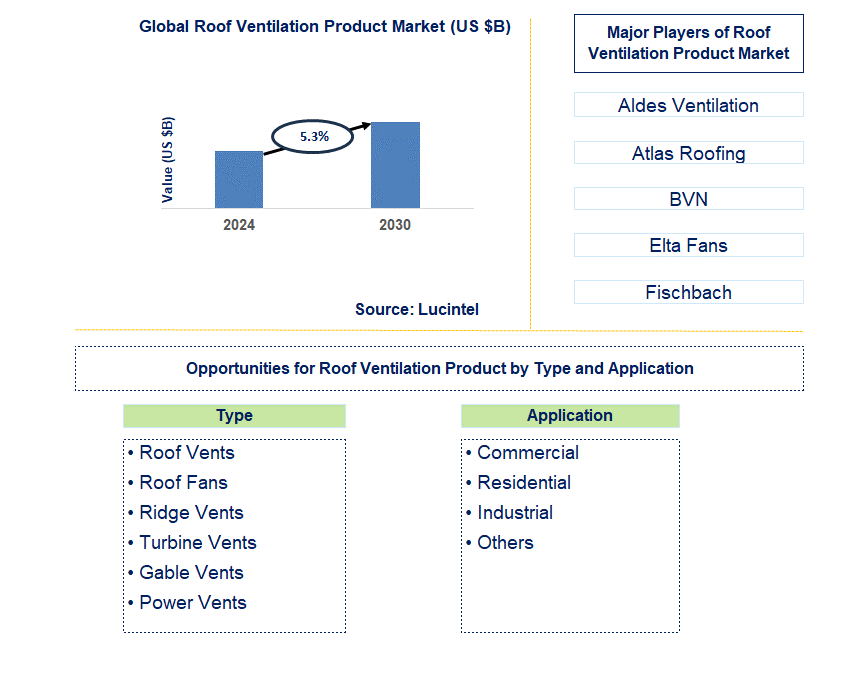
Key data points: The growth forecast = 5.3% annually for the next 6 years. Scroll below to get more insights. This market report covers trends, opportunities, and forecasts in the global roof ventilation product market to 2030 by type (roof vents, roof fans, ridge vents, turbine vents, gable vents, and power vents), application (commercial, residential, industrial, and others), and region (North America, Europe, Asia Pacific, and the Rest of the World)
We'll send your sample report shortly.
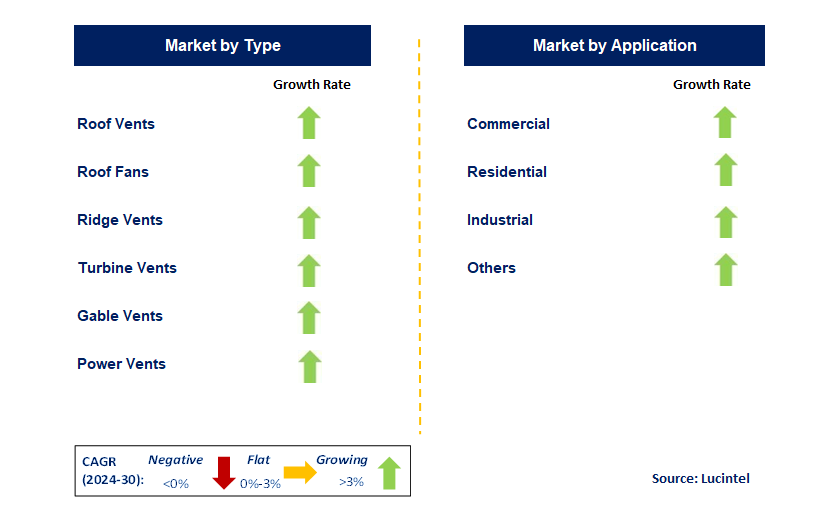
• Lucintel forecasts that, within the type category, roof fan will remain the largest segment over the forecast period.
• Within this application category, commercial is expected to witness the highest growth over the forecast period.
• In terms of regions, North America will remain the largest region over the forecast period.
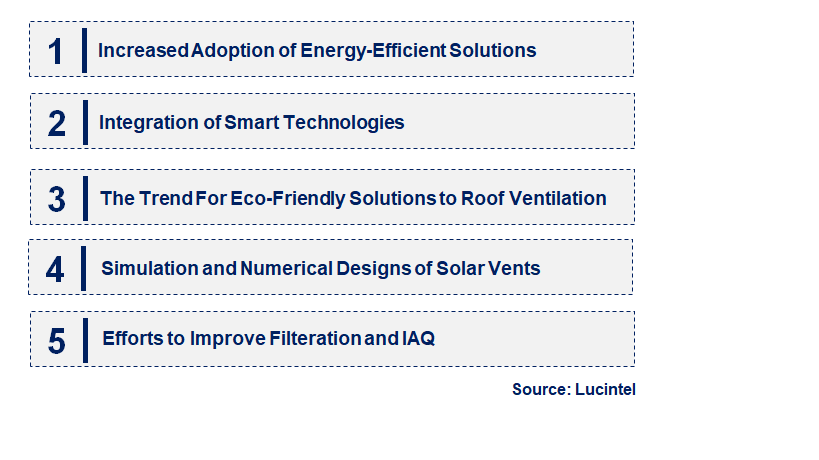
• Increased Adoption of Energy-Efficient Solutions: The ever-increasing focus on energy needs is driving the use of rooftop ventilation products, which help reduce heating and cooling costs. There is growing demand for products such as ventilators that promote and optimize airflow, prevent energy waste, and are integrated into energy-efficient structures used in homes and commercial buildings. These solutions help lower energy costs and comply with mandated policies.
• Integration of Smart Technologies: The use of IoT sensors and smart controls in roof ventilation systems is becoming increasingly common, especially in residential homes and commercial buildings. These systems automatically control ventilation by adjusting based on temperature, humidity, and air quality, enhancing comfort while conserving energy. The rise of smart homes and buildings will further accelerate this trend.
• The Trend for Eco-Friendly Solutions to Roof Ventilation: With growing ecological concerns, manufacturers are sourcing materials such as recycled plastics and biodegradable composites for their roof ventilation products. These products maintain performance standards while minimizing the ecological footprint. This trend is driven not only by consumer preferences but also by tighter environmental policies in many nations.
• Simulation and Numerical Designs of Solar Vents: As the need for renewable energy solutions increases, the use of solar-powered roof ventilation systems is also on the rise. Solar-powered roof ventilation consumes less energy, as it harnesses solar power for ventilation needs, making it ideal for environmentally conscious individuals. The decreasing cost of solar technologies is a key factor driving their use in residential and commercial buildings.
• Efforts to Improve Filtration and Indoor Air Quality (IAQ): Recently, roof ventilation products have been redesigned to improve indoor environments by minimizing the buildup of indoor contaminants through optimized air circulation. The increasing focus on wellness, especially post-pandemic, has made products that enhance IAQ more popular in both homes and commercial buildings.
• Cost-Effective Ventilation Solutions: Manufacturers are increasingly focused on creating heat-reducing products to cut heating and cooling costs. These products are specifically designed to improve the energy performance of buildings while being environmentally friendly. Their adoption is driven by policies that encourage energy efficiency and sustainability, which is why they are in high demand in both residential and commercial buildings.
• Integration of Smart Systems into Roof Ventilation Management: The advancement of IoT technology has accelerated the incorporation of smart roof ventilation systems that control air intake based on prevailing environmental factors. The combined energy efficiency and improved comfort offered by these systems make them attractive to modern residential and commercial property owners.
• Use of Sustainable Materials: There is a growing shift towards using more sustainable, cleaner, and recyclable materials in roof ventilation products. This trend aligns with global sustainability goals and responds to the increasing customer demand for greener building materials. The carbon footprint of these products is relatively low, helping them comply with stricter environmental policies in key markets.
• Introduction of Solar Roofs: The number of solar-powered roof ventilation products is increasing as solar technology becomes cheaper. These systems also reduce dependence on grid electricity, leading to lower energy usage and operational costs. As demand for clean, renewable energy grows, solar-powered ventilation systems are quickly gaining market share.
• Improved Indoor Air Quality Solutions: Indoor air quality is becoming a major focus for many companies designing roof ventilation products that improve airflow and reduce pollutants. Proper ventilation is essential for controlling pollutants, providing a healthier indoor environment, and complying with building health standards. Urban areas and new buildings are particularly affected by this need, as their indoor air quality is often poor.
• Energy-Efficient Residential Ventilation: The demand for energy-saving roof systems in buildings has grown due to rising energy costs and a greater emphasis on sustainability. Increasingly efficient roof ventilation systems are now considered essential in all residential structures. These systems improve air circulation without raising heating and cooling costs, presenting a great opportunity for residential manufacturers looking to expand their offerings.
• Commercial Building Ventilation Systems: Energy efficiency regulations and standards in building design require intelligent ventilation systems in commercial buildings. These systems provide effective gas exchange, minimize energy waste, and improve indoor air quality. Manufacturers specializing in these solutions have significant growth opportunities in the commercial market.
• Use of Solar Systems: Roof ventilation products have significant potential in the growing market for clean energy solutions. These systems reduce reliance on conventional power sources and are applicable in both residential and commercial sectors, making them an efficient means of ventilation.
• Market Focus on Smart Homes: With the rise of self-ventilating roofs, there will also be an increased demand for smart roof systems that automatically adjust ventilation based on energy efficiency and smart controls. Manufacturers targeting interconnected home systems with their innovative ventilation solutions will benefit from this growing trend.
• Ceiling Ventilation for Climate-Resilient Buildings: As climate change leads to more destructive weather events, there is an opportunity to design roof ventilation products that enhance the structural integrity of buildings by promoting maximum ventilation and minimizing moisture buildup in adverse conditions.
• Technological Development: Advances in smart technology, energy-efficient designs, and renewable energy sources for roof ventilation are driving market growth. The integration of solar-powered systems and IoT-enabled ventilation products is accelerating product adoption due to their efficiency and appeal.
• Rising Energy Costs: Increased energy costs have driven demand for energy-efficient roof ventilation products. Solutions that help reduce heating and cooling costs are widely appreciated, as homeowners and businesses seek to spend less while adhering to energy efficiency regulations.
• Stringent Environmental Regulations: Environmental concerns have prompted a shift in building construction, aligning with energy efficiency and sustainability guidelines. This shift is driving the adoption of roof ventilation products that improve energy performance while minimizing environmental impact, facilitating growth in regulated markets.
• Rising Standards of Indoor Air Quality: There is growing demand for roof ventilation products that improve indoor air quality, driven by an increased emphasis on health and wellness, especially after the COVID-19 pandemic. Proper ventilation is crucial for controlling pollutants and maintaining a healthy indoor environment while complying with building health standards.
• High Initial Costs: The high initial cost of advanced roof ventilation systems, particularly smart or solar-powered systems, poses a challenge. Many price-sensitive customers, both residential and commercial, may hesitate to adopt these technologies, which could slow market growth.
• Maintenance and Installation Complexity: Complex installation processes and maintenance requirements for advanced roof ventilation systems may deter widespread adoption. The need for specialized installation and frequent servicing could limit market acceptance.
• Limited Awareness in Emerging Markets: In emerging economies like India, there is limited awareness of the benefits of roof ventilation systems. This lack of knowledge may slow the adoption of these advanced products and hinder market penetration, particularly for sustainable energy-saving solutions.
Addressing these challenges, including the high cost of technology and the complexity of installation and maintenance, will be crucial for realizing the full potential of the roof ventilation product market.• Aldes Ventilation
• Atlas Roofing
• BVN
• Elta Fans
• Fischbach
• Helios Ventilation Systems
• MAICO Ventilatoren
• Östberg Group
• Rosenberg Ventilatoren
• SWEGON
• Roof Vents
• Roof Fans
• Ridge Vents
• Turbine Vents
• Gable Vents
• Power Vents
• Commercial
• Residential
• Industrial
• Others
• North America
• Europe
• Asia Pacific
• The Rest of the World
• United States: In America, the trend for energy-efficient buildings has also inadvertently expanded the roof ventilation market. As the market evolves, consumers are increasingly purchasing solar-powered roof vents or smart vents. Furthermore, initiatives targeted at energy-saving home modifications are creating opportunities in the industry by increasing the number of new roof ventilation systems requiring replacement in the domestic construction sector.
• China: The increasing rate of urbanization in China and construction activities has triggered a heightened demand for roof ventilation products. Due to pollution levels in many regions, there is a need to improve ventilation standards and introduce environmentally friendly indoor air purifying systems. Consequently, there is a surge in the prevalence of integrated advanced roof ventilation units in both commercial and domestic applications that employ smart technology and eco-friendly materials.
• Germany: Germany's roof ventilation market is driven by environmental obligations and the need for energy efficiency. The country is embracing state-of-the-art roof ventilating systems that successfully integrate with passive house principles, cutting down on energy wastage. There is also growing interest in the use of natural ventilation systems and hybrid systems, driven by the increasing demand for green building materials and energy-efficient homes.
• India: In India, the market for roof ventilation products is expanding due to urbanization and rising temperatures. The incorporation of green designs in buildings, especially in the commercial and residential sectors, has led to a greater preference for roof ventilation products that enhance indoor conditions. Such products include roof exhaust fans and ventilation systems specifically designed for hot climate areas.
• Japan: Roof ventilation in Japan is influenced by an increasing focus on disaster preparedness, particularly in areas susceptible to typhoons and earthquakes. The trend towards the use of high-tech, specialized roof ventilation systems designed to meet extreme climate conditions is growing. Additionally, the demand for high-efficiency devices for roof ventilation, both in homes and commercial businesses, is increasing due to the need for energy efficiency and smart home technology.


• Aldes Ventilation
• Atlas Roofing
• BVN
• Elta Fans
• Fischbach
• Helios Ventilation Systems
• MAICO Ventilatoren
• Östberg Group
• Rosenberg Ventilatoren
• SWEGON
Q5. Which roof ventilation product market segment will be the largest in future?

Choose a license that fits your team. Instant PDF delivery.
Prices exclude taxes. Instant delivery. Custom licensing available on request.
Market Report · July 22, 2026
Market Report · July 17, 2026
Market Report · July 17, 2026
Trusted partner for strategic intelligence and business growth


Receive a complimentary market analysis tailored to your industry. Our analysts will identify key growth opportunities and competitive dynamics specific to your business.

Market size, growth rate, and key trend analysis for your specific sector.

Top competitor positioning and market share analysis.

Strategic recommendations backed by data-driven insights.
Get curated market intelligence and competitive moves straight to your inbox.
By subscribing, you agree to receive our monthly insights. Unsubscribe anytime.
Receive a complimentary market analysis tailored to your industry. Our analysts will identify key growth opportunities and competitive dynamics specific to your business.
Market size, growth rate, and key trend analysis for your specific sector.
Top competitor positioning and market share analysis.
Strategic recommendations backed by data-driven insights.
Get curated market intelligence, emerging trends, and competitive moves straight to your inbox each month.
By subscribing, you agree to receive our monthly insights. Unsubscribe anytime.
We'll send your sample report shortly.