
Report Feature
Rigid 1-2 Sided in the Global PCB Market Trends and Forecast
The change in rigid 1-2 sided technologies in the global PCB market over the last few years has been an interesting phenomenon, as it shifted drastically from phenolic resin-based PCBs to advanced epoxy resin and polyimide film technologies.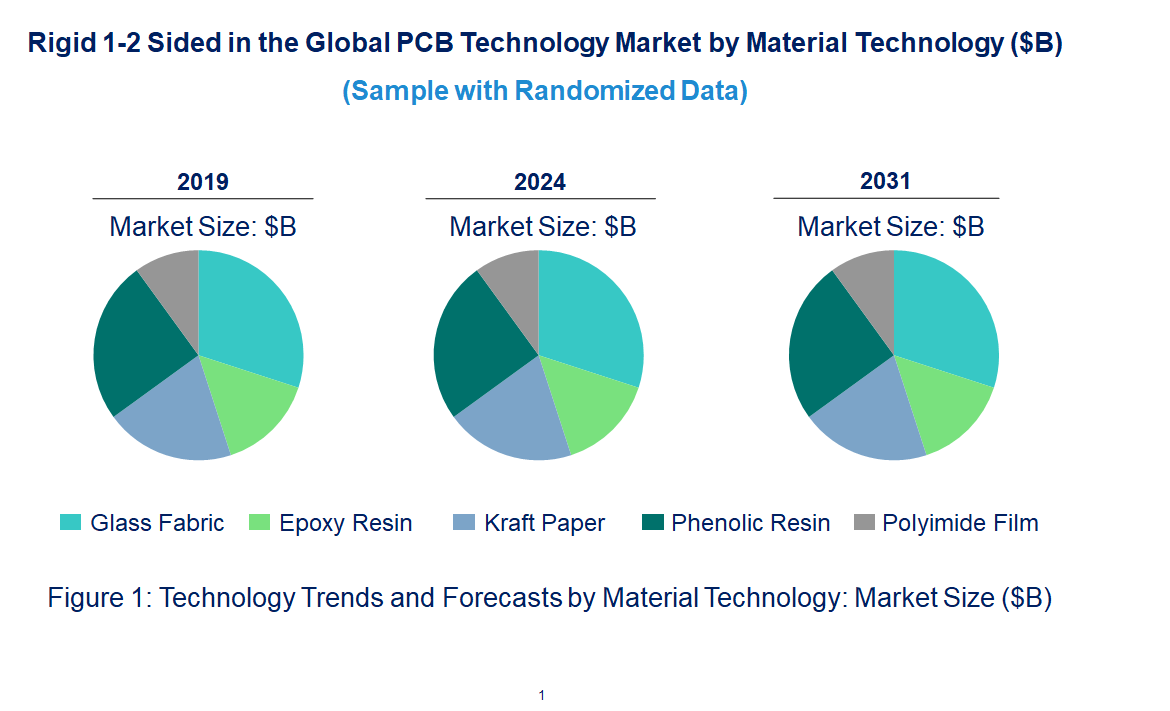
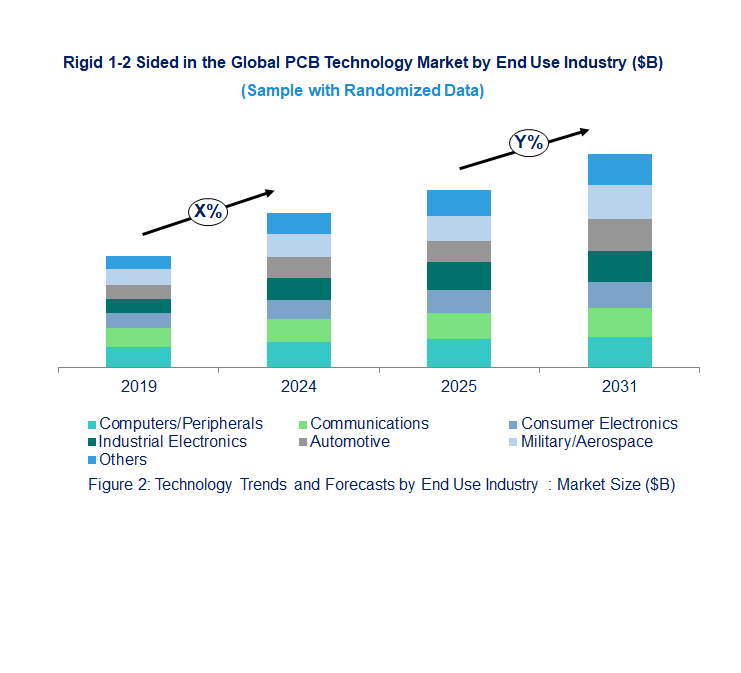
Emerging Trends in the Rigid 1-2 Sided in the Global PCB Market
Advances in technology are rapidly changing the rigid 1-2 sided in the global PCB market. Challenging industry requirements that provide increased functionality, reliability, and environmental compatibility are forcing manufacturers to look for alternate routes for PCBs. Five significant trends in this market include:• Growing Epoxy Resin Usage: Epoxy resins are gradually replacing phenolic resins due to their greater thermal resistance, mechanical strength, and suitability for high-frequency applications. These make them a must for automotive and industrial usage.
• Polyimide Films: Polyimide films are gaining popularity due to their flexibility and high-temperature resistance, along with excellent electrical insulation, fulfilling the rising demand for advanced electronics.
• Halogen-Free Materials: Ramping up on issues of the environment and regulatory requirements, halogen-free materials are increasingly adopted so that their performance is high while meeting the standards followed by RoHS and REACH.
• Advances in Glass Fabric Technology: Improving glass fabric technologies provides PCB stability for better reliability and signal integrity with a strong focus on requirements, especially at high data speeds.
• Towards Light and Ultra-Thin Designs: The drive towards compact electronics is propelling manufacturers to think of thinner, lighter designs with advanced material combinations without compromising on robustness. These trends highlight the dynamic evolution of rigid 1-2 sided in the global PCB technology, opening doors for greater innovation, sustainability, and application versatility in modern electronics.
Rigid 1-2 Sided in the Global PCB Market : Industry Potential, Technological Development, and Compliance Considerations
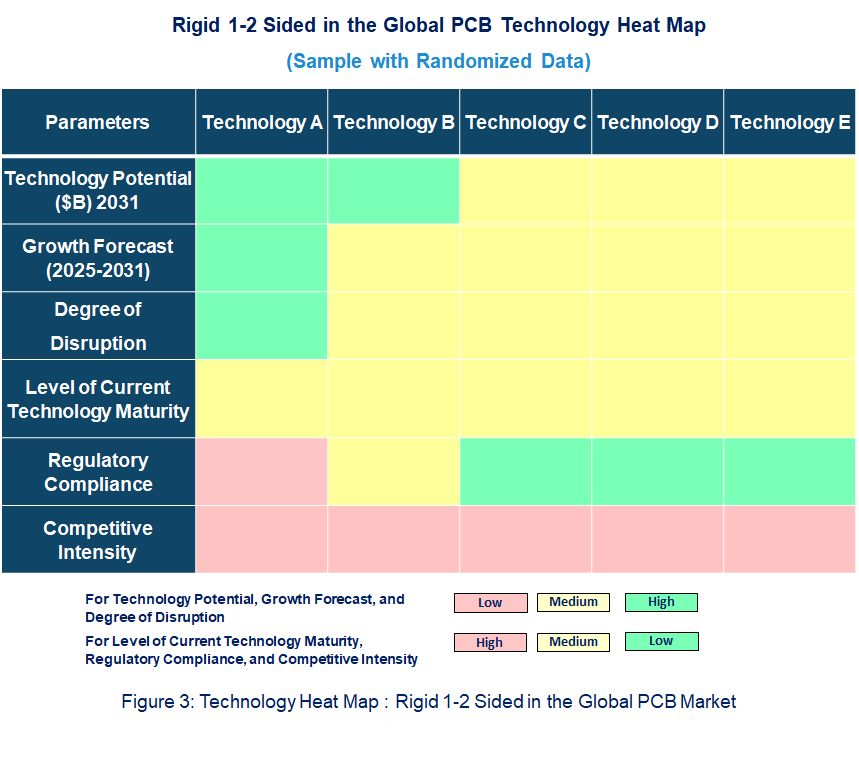
Rigid 1-2 sided in the global PCB technology is adapting to fulfill the demands of future electronics through innovative materials and manufacturing practices. Below are some of the key factors that indicate its potential and industry impact:• Potential of the Technology: The advanced material, such as epoxy resin and polyimide films, enhances thermal, mechanical, and electrical properties, allowing for applications in IoT, automotive, and 5G technologies.
• Degree of Disruption: It is changing manufacturing from traditional to advanced materials; it enables eco-friendly production and replaces legacy processes with high-performance solutions.
• Degree of Current Technological Maturity: The development of legacy technologies is mature, while halogen-free and polyimide-based developments are being rapidly advanced but still on the way to being mature.
• Regulatory Compliance: Strict regulations like RoHS and REACH are forcing the need for halogen-free and recyclable materials, thus encouraging sustainable and compliant manufacturing practices. The rigid 1-2 sided PCB technology is aiding the innovation of sustainability along with high performance, eco-friendliness, and compliance with regulation in the global electronics industry.
Recent Technological development in Rigid 1-2 Sided in the Global PCB Market by Key Players
The 1-2 sided rigid PCB market has witnessed significant developments through industry leaders such as Nippon Mektron, TTM Technologies, Unimicron Technology, Epec, and Compeq Manufacturing. These companies are driving innovation in directions that improve PCB performance, sustainability, and efficiency, aligning with evolving industry needs and regulatory demands.• Nippon Mektron: Nippon Mektron has oriented its strategy toward enhancing HDI technologies, greatly improving the performance of advanced electronics for use in the automotive and telecommunications markets. The technology of this development can be seamlessly integrated into next-generation devices to create compact and efficient PCB designs.
• TTM Technologies: TTM Technologies has developed high-performance thermal management solutions, using innovative epoxy resin materials to enhance heat dissipation. This supports applications like 5G infrastructure and data centers.
• Unimicron Technology: Unimicron has pioneered the adoption of halogen-free and low-loss materials, ensuring environmentally friendly standards while maintaining high-speed data transmission capabilities, in line with green electronics initiatives.
• Epec: Epec has expanded its competencies in rapid prototyping and production of custom PCBs using polyimide films with faster development cycles, which is critical for aerospace and medical applications.
• Compeq Manufacturing: Compeq focuses on implementing thinner, lighter designs for PCBs in its consumer electronics products, utilizing advanced material technologies to ensure that such reduced-size packages do not compromise reliability. These are examples of how leading players are furthering rigid 1-2 sided PCB technology through the application of advanced materials, increased environmental sensitivity, and high-performance application demands. These advancements interact to boost the market’s flexibility and growth potential.
Rigid 1-2 Sided in the Global PCB Market Driver and Challenges
The rigid 1-2 sided in the global PCB market is driven by several factors and challenges as firms adopt modern demands for performance, sustainability, and innovation. The factors driving rigid 1-2 sided in the global PCB market are listed below:• Evolving Demand for Miniaturized Devices: The increasing usage of smartphones, IoT devices, and wearables is driving demand for miniature and efficient PCB designs, leading to innovations in materials and processes.
• Automotive Electronics Increasing Popularity: The growing adoption of electronic systems in automobiles, including ADAS and EVs, has increased the demand for reliable and thermally stable PCBs.
• Advances in Material Technology: Developments such as halogen-free materials or polyimide films address both performance and environmental compliance challenges.
• Increasing Infrastructure of 5G: The rollout of 5G necessitates PCBs that offer improved signal integrity and thermal management, which is driving innovation in rigid 1-2 sided designs.
• Emphasis on Environmentally Friendly Manufacturing: Regulatory forces and consumer attitudes toward sustainable electronics are compelling a transition toward recyclable materials and greener production processes. Challenges in the rigid 1-2 sided in the global PCB market include:
• Higher Material Costs: Expensive materials such as epoxy resins and polyimide films increase costs, making it less feasible for smaller manufacturers.
• Stringent Regulatory Compliance: Changing environmental regulations like RoHS and REACH require significant investment in material innovations and testing.
• Dependence on Global Suppliers: The market depends on global suppliers for raw materials and components, making it vulnerable to geopolitical and economic uncertainties.
• R&D Barriers: The production of high-performance PCBs involves significant R&D efforts, which may act as a barrier for smaller players.
• Competition from Flexible and Multilayer PCBs: Flexible PCBs and multilayer solutions compete with rigid 1-2 sided PCBs, limiting growth in specific applications. While miniaturization, advancements in materials, and eco-friendly trends propel the rigid 1-2 sided PCB market, high costs and regulatory pressures pose challenges. Strategic innovation and collaboration are needed to overcome these barriers and shape the future of the market.
List of Rigid 1-2 Sided in the Global PCB Companies
Companies in the market compete based on product quality offered. Major players in this market focus on expanding their manufacturing facilities, R&D investments, infrastructural development, and leverage integration opportunities across the value chain. With these strategies rigid 1-2 sided in the global PCB companies cater to increasing demand, ensure competitive effectiveness, develop innovative products & technologies, reduce production costs, and expand their customer base. Some of the rigid 1-2 sided in the global PCB companies profiled in this report include.• Nippon Mektron
• TTM Technologies
• Unimicron Technology
• Epec
• Compeq Manufacturing
Rigid 1-2 Sided in the Global PCB Market by Technology
• Technology Maturity: Glass fabric and epoxy resin are highly mature technologies, with wide adoption across different industries because they are reliable and cost-effective. Polyimide films are less mature but have been growing rapidly to suit high-end applications in aerospace and 5G infrastructure. Phenolic resin and kraft paper are behind due to fewer applications and performance issues, but they are still viable for cost-sensitive markets. Under the pressures created by competitive factors, the current and future demands for epoxy and polyimide materials are better met while achieving high compliance, advanced functionality, and wide applications in the global PCB market.
• Competitive Intensity and Compliance by Regulation: Rigid 1-2 sided in the global PCB competitive intensity is strong among technologies such as epoxy resin and polyimide film due to the surging demand for high-performance PCBs. Glass fabric is widely used based on structural reliability, although newer materials like halogen-free epoxy and polyimide films lead in RoHS compliance. Phenolic resin and kraft paper are not as competitive because of their relatively lower durability and regulatory issues, limiting their applications. The increased focus of organizations on innovation and more environmentally friendly materials can provide a commercial advantage, making regulatory compliance an essential criterion in the choice of material.
• Disruption Potential: Some of the technologies in this space, such as glass fabric, epoxy resin, kraft paper, phenolic resin, and polyimide film, vary in terms of their disruption potential in the rigid 1-2 sided PCB market. Glass fabric and epoxy resin are leading due to their properties in heat dissipation and mechanical performance, which makes kraft paper and phenolic resin obsolete. Polyimide film is revolutionizing high-performance applications, offering excellent heat resistance and flexibility, and has become critical for advanced electronics. Hence, the legacy materials are less relevant, but innovation in composites helps redefine PCB design to secure stronger and more efficient applications in sectors like automotive, telecom, and consumer electronics.
Rigid 1-2 Sided in the Global PCB Market Trend and Forecast by Material Technology [Value from 2019 to 2031]:
• Glass Fabric
• Epoxy Resin
• Kraft Paper
• Phenolic Resin
• Polyimide Film
Rigid 1-2 Sided in the Global PCB Market Trend and Forecast by End Use Industry [Value from 2019 to 2031]:
• Computers/Peripherals
• Communications
• Consumer Electronics
• Industrial Electronics
• Automotive
• Military/Aerospace
• Others
Rigid 1-2 Sided in the Global PCB Market by Region [Value from 2019 to 2031]:
• North America
• Europe
• Asia Pacific
• The Rest of the World
• Latest Developments and Innovations in the Rigid 1-2 Sided in the Global PCB Technologies
• Companies / Ecosystems
• Strategic Opportunities by Technology Type
Features of the Global Rigid 1-2 Sided in the Global PCB Market
Market Size Estimates: Rigid 1-2 sided in the global PCB market size estimation in terms of ($B). Trend and Forecast Analysis: Market trends (2019 to 2024) and forecast (2025 to 2031) by various segments and regions. Segmentation Analysis: Technology trends in the global rigid 1-2 sided in the global PCB market size by various segments, such as material technology and application in terms of value and volume shipments. Regional Analysis: Technology trends in the global rigid 1-2 sided in the global PCB market breakdown by North America, Europe, Asia Pacific, and the Rest of the World. Growth Opportunities: Analysis of growth opportunities in different end use industries, material technologies, and regions for technology trends in the global rigid 1-2 sided in the global PCB market. Strategic Analysis: This includes M&A, new product development, and competitive landscape for technology trends in the global rigid 1-2 sided in the global PCB market. Analysis of competitive intensity of the industry based on Porter’s Five Forces model.Table of Contents
Methodology
- In-depth interviews of the major players in this market
- Detailed secondary research from competitors’ financial statements and published data
- Extensive searches of published works, market, and database information pertaining to industry news, company press releases, and customer intentions
- A compilation of the experiences, judgments, and insights of Lucintel’s professionals, who have analyzed and tracked this market over the years.


Buy Now
Choose a license that fits your team. Instant PDF delivery.
Prices exclude taxes. Instant delivery. Custom licensing available on request.
Key Questions
- • What are some of the most promising potential, high-growth opportunities for the technology trends in the global rigid 1-2 sided in the global pcb market by material technology (glass fabric, epoxy resin, kraft paper, phenolic resin, and polyimide film), end use industry (computers/peripherals, communications, consumer electronics, industrial electronics, automotive, military/aerospace, and others), and region (North America, Europe, Asia Pacific, and the Rest of the World)?
- • Which technology segments will grow at a faster pace and why?
- • Which regions will grow at a faster pace and why?
- • What are the key factors affecting dynamics of different material technologies? What are the drivers and challenges of these material technologies in the global rigid 1-2 sided in the global PCB market?
- • What are the business risks and threats to the technology trends in the global rigid 1-2 sided in the global PCB market?
- • What are the emerging trends in these material technologies in the global rigid 1-2 sided in the global PCB market and the reasons behind them?
- • Which technologies have potential of disruption in this market?
- • What are the new developments in the technology trends in the global rigid 1-2 sided in the global PCB market? Which companies are leading these developments?
- • Who are the major players in technology trends in the global rigid 1-2 sided in the global PCB market? What strategic initiatives are being implemented by key players for business growth?
- • What are strategic growth opportunities in this rigid 1-2 sided in the global PCB technology space?
- • What M & A activities did take place in the last five years in technology trends in the global rigid 1-2 sided in the global PCB market?


