
Market Report · July 22, 2026

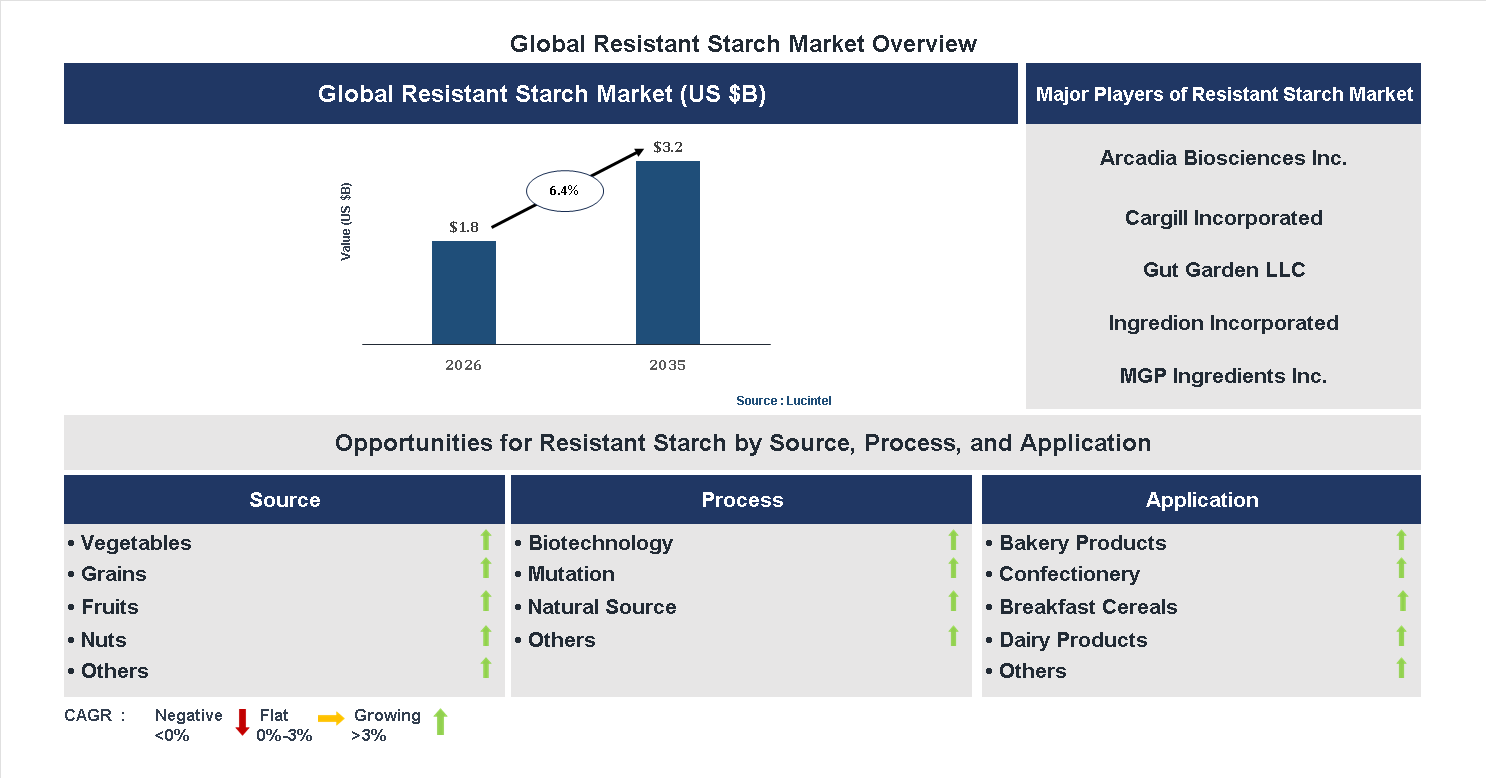
Key data points: The market size in 2035 = $3.2 billion, growth forecast = 6.4% annually for the next 8 years. Scroll below to get more insights. This market report covers trends, opportunities and forecasts in resistant starch market to 2035 by source (vegetables, grains, fruits, nuts, and others), process (biotechnology, mutation, natural source, and others), application (bakery products, confectionery, breakfast cereals, dairy products, and others), and region (North America, Europe, Asia Pacific, and the Rest of the World)
We'll send your sample report shortly.
• Lucintel forecasts that, within the source category, grain is expected to witness the highest growth over the forecast period.
• Within the application category, bakery product is expected to witness the highest growth.
• In terms of region, APAC is expected to witness the highest growth over the forecast period. Gain valuable insights for your business decisions with our comprehensive 150+ page report. Sample figures with some insights are shown below.
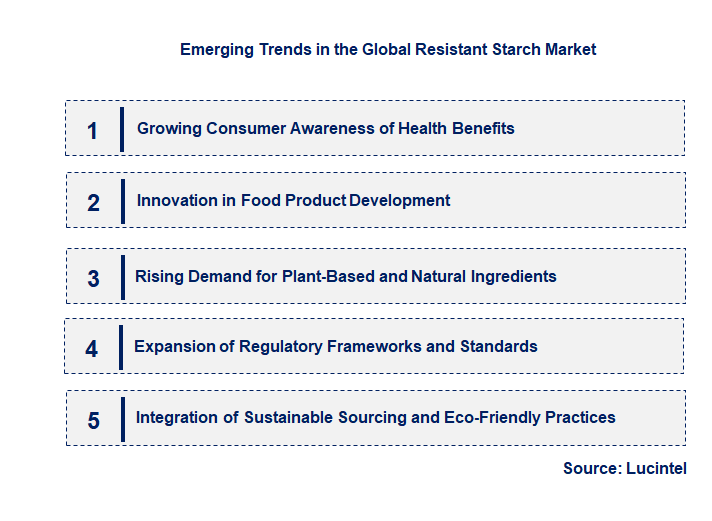
• Growing Consumer Awareness of Health Benefits: Increased knowledge about gut health, digestion, and metabolic benefits is driving demand for resistant starch. Consumers are actively seeking foods that support digestive health, weight management, and blood sugar regulation. This awareness is fueled by scientific research, health campaigns, and social media influence, leading to a surge in product innovation and consumption. As a result, manufacturers are focusing on educating consumers and highlighting health benefits to differentiate their offerings and capture market share.
• Innovation in Food Product Development: Companies are investing in developing novel resistant starch ingredients and incorporating them into diverse food products such as bread, snacks, beverages, and dairy. Advances in food processing technologies enable better functional properties and taste profiles. This innovation expands product portfolios, caters to different consumer preferences, and enhances the sensory experience. It also allows for cleaner labels and natural ingredients, aligning with health-conscious trends and increasing market penetration.
• Rising Demand for Plant-Based and Natural Ingredients: Consumers are increasingly favoring plant-based diets and natural ingredients, which boosts the appeal of resistant starch derived from sources like potatoes, green bananas, and legumes. This trend supports clean-label products and sustainable sourcing practices. Manufacturers are leveraging plant-based resistant starch to meet dietary restrictions and ethical considerations, thereby broadening their consumer base. The emphasis on natural, minimally processed ingredients is also driving product innovation and marketing strategies.
• Expansion of Regulatory Frameworks and Standards: Governments and industry bodies are establishing clearer regulations and standards for resistant starch ingredients, ensuring safety, quality, and labeling transparency. This regulatory evolution fosters consumer trust and encourages market growth. It also facilitates international trade and product acceptance across different regions. Companies are adapting to these standards by enhancing quality control measures and obtaining certifications, which further boost credibility and market competitiveness.
• Integration of Sustainable Sourcing and Eco-Friendly Practices: Sustainability is becoming a key factor in ingredient sourcing and product manufacturing. Companies are adopting eco-friendly practices, such as utilizing agricultural waste and promoting responsible farming, to produce resistant starch. This approach appeals to environmentally conscious consumers and aligns with global sustainability goals. Sustainable sourcing not only reduces environmental impact but also enhances brand reputation and consumer loyalty, contributing to long-term market growth. These trends are collectively transforming the resistant starch market by fostering innovation, emphasizing health and sustainability, and establishing stronger regulatory frameworks. This evolution is making resistant starch products more accessible, trusted, and aligned with modern consumer values, thereby reshaping the future landscape of functional foods and dietary supplements.
• Growing Consumer Awareness Of Health Benefits: Increasing awareness of resistant starchs health benefits, such as improved digestion and blood sugar regulation, is driving demand. Consumers are seeking functional foods that support wellness, prompting manufacturers to incorporate resistant starch into various products. This trend is expanding the market as more health-conscious consumers look for natural, beneficial ingredients. The rise in health-focused lifestyles is expected to sustain long-term growth, encouraging innovation and product diversification in the resistant starch sector.
• Innovations in Processing Technologies: Advances in processing technologies, such as enzymatic modification and fermentation, are enhancing the quality and functionality of resistant starch. These innovations allow for better control over starch properties, improving texture, taste, and stability in food products. As a result, manufacturers can develop a wider range of applications, from baked goods to snacks. Improved processing methods also reduce costs and increase efficiency, making resistant starch more economically viable and boosting its adoption across various food segments.
• Expansion of Application in the Food and Beverage Industry: The application of resistant starch in diverse food and beverage products is expanding rapidly. It is increasingly used in bakery items, dairy products, beverages, and snack foods to enhance nutritional profiles. This diversification helps meet consumer demand for healthier options without compromising taste or texture. The ability to incorporate resistant starch seamlessly into existing formulations is driving market growth, encouraging food companies to innovate and develop new functional products that cater to health-conscious markets.
• Regulatory Support and Standardization: Governments and regulatory bodies are recognizing the benefits of resistant starch, leading to supportive policies and standards. Clear guidelines on labeling and health claims are boosting consumer confidence and industry adoption. Regulatory approval facilitates market entry for new resistant starch sources and products, encouraging investment and research. This supportive environment is crucial for expanding the market, ensuring safety, and fostering innovation, ultimately leading to wider acceptance and integration of resistant starch in various food products.
• Development of New Resistant Starch Sources: Researchers are exploring novel sources of resistant starch, such as unconventional grains, tubers, and by-products from food processing. These new sources diversify supply chains and reduce reliance on traditional crops, enhancing sustainability. They also offer unique functional properties, enabling tailored applications in different food matrices. The development of these sources is expected to lower costs and increase availability, further stimulating market growth and providing opportunities for product differentiation and innovation. The recent developments in the resistant starch market are significantly impacting its growth trajectory. Innovations in processing, expanding applications, regulatory support, and new source development are collectively enhancing product offerings and consumer acceptance. These advancements are fostering a more dynamic, sustainable, and competitive market environment. As a result, resistant starch is poised for continued expansion, influencing food formulations and health trends globally, and creating substantial opportunities for industry stakeholders.
• Growing Consumer Awareness Of Digestive Health Benefits: Increasing awareness of digestive health benefits associated with resistant starch is driving demand. Consumers seek functional foods that improve gut health, regulate blood sugar, and support weight management. This shift in consumer preferences encourages food manufacturers to incorporate resistant starch into their products, expanding market reach. The focus on health and wellness is expected to sustain long-term growth, prompting innovation in resistant starch sources and formulations to meet diverse dietary needs.
• Expansion of Functional Food and Beverage Applications: The rising popularity of functional foods and beverages presents significant growth opportunities for resistant starch. Food and beverage companies are integrating resistant starch into products like bread, snacks, dairy, and beverages to enhance nutritional profiles. This diversification caters to health-conscious consumers seeking convenient, health-boosting options. The ability to improve product texture, shelf life, and nutritional content makes resistant starch a valuable ingredient, fostering innovation and broadening its application scope across multiple food categories.
• Technological Innovations In Resistant Starch Production: Advances in food processing technologies are enabling more efficient extraction and production of resistant starch from various sources such as corn, potatoes, and legumes. These innovations improve yield, reduce costs, and enhance functional properties. Novel processing methods like enzymatic modification and fermentation are expanding the range of resistant starch types available. Such technological progress supports product development, meets regulatory standards, and allows manufacturers to create customized solutions tailored to specific health benefits and application needs.
• Rising Demand For Clean Label And Natural Ingredients: Consumers increasingly prefer clean label products with natural ingredients, prompting manufacturers to source resistant starch from natural, minimally processed sources. This trend encourages the development of plant-based resistant starch options that align with clean label standards. The demand for transparency and natural ingredients boosts the market for resistant starch derived from organic and non-GMO sources. This shift enhances consumer trust, supports premium product positioning, and stimulates innovation in sourcing and processing methods to meet these preferences.
• Increasing Investment In Research And Development Activities: Investment in R&D is crucial for discovering new resistant starch sources and improving existing formulations. Companies are exploring novel plant sources and fermentation techniques to develop resistant starch with enhanced functional and health properties. R&D efforts also focus on understanding mechanisms of action and health benefits, which support marketing claims and regulatory approvals. These activities foster innovation, enable product differentiation, and help meet evolving consumer demands, ultimately driving market growth and expanding application opportunities. These strategic growth opportunities collectively position the resistant starch market for sustained expansion by aligning with consumer health trends, technological advancements, and product innovation. Emphasizing natural ingredients, functional applications, and research-driven development will enable industry players to capture new market segments. As awareness of digestive health and wellness continues to grow, the market is poised for significant long-term growth, benefiting manufacturers, consumers, and stakeholders invested in health-focused food solutions.
• Technological Innovations: The development of advanced processing techniques has enabled the production of high-quality resistant starches, improving their functional properties and applications in various food products. These innovations facilitate the incorporation of resistant starch into processed foods, enhancing their health benefits and consumer appeal. As technology continues to evolve, manufacturers can create more efficient, cost-effective solutions, driving market growth and expanding product portfolios.
• Rising Consumer Health Awareness: Increasing awareness about the health benefits of resistant starch, such as improved digestion, weight management, and blood sugar regulation, is fueling demand. Consumers are actively seeking functional foods that support a healthy lifestyle, prompting food companies to incorporate resistant starch into their offerings. This trend is reinforced by the growing prevalence of lifestyle-related health issues, encouraging a shift toward preventive nutrition.
• Growing Demand for Functional Foods: The global shift toward healthier eating habits has led to a surge in demand for functional foods containing resistant starch. These products are perceived as beneficial for gut health and metabolic health, making them attractive to health-conscious consumers. The expanding product range, including snacks, bakery items, and beverages, is further boosting market growth as manufacturers respond to consumer preferences.
• Economic Growth and Urbanization: Rapid economic development and urbanization in emerging markets have increased disposable incomes and changed dietary patterns. Consumers in these regions are increasingly adopting Western-style diets that include processed foods fortified with resistant starch. This economic shift creates new opportunities for market expansion, especially in developing countries where awareness and availability are rising. The challenges in the resistant starch market are:
• Regulatory Uncertainties: The lack of standardized regulations and clear guidelines regarding health claims and labeling for resistant starch products creates uncertainty for manufacturers. Differing regulations across regions complicate product development and marketing strategies, potentially hindering market growth. Companies must navigate complex legal landscapes to ensure compliance, which can increase costs and delay product launches.
• High Production Costs: The manufacturing of resistant starch involves specialized processing techniques that can be expensive. These high costs impact the final product pricing, making it less competitive against traditional ingredients. Small and medium-sized enterprises may find it difficult to scale production profitably, limiting market penetration and innovation within the industry.
• Consumer Skepticism and Lack of Awareness: Despite growing interest, some consumers remain skeptical about the health benefits of resistant starch or lack sufficient awareness. Misinformation and limited understanding can impede adoption, especially in regions where education about functional foods is limited. Overcoming this challenge requires targeted marketing and educational campaigns to build trust and increase acceptance. The resistant starch market is driven by technological advancements, health-conscious consumer behavior, and economic growth, which collectively foster expansion opportunities. However, regulatory ambiguities, high production costs, and consumer skepticism pose significant hurdles. These factors collectively influence market dynamics, requiring stakeholders to innovate, educate, and adapt strategies to sustain growth and capitalize on emerging trends. The interplay of these drivers and challenges will ultimately determine the pace and scope of market development in the coming years.
• Arcadia Biosciences Inc.
• Cargill Incorporated
• Gut Garden LLC
• Ingredion Incorporated
• MGP Ingredients Inc.
• Natural Stacks Inc.
• Roquette Freres
• Vegetables
• Grains
• Fruits
• Nuts
• Others
• Biotechnology
• Mutation
• Natural Source
• Others
• Bakery Products
• Confectionery
• Breakfast Cereals
• Dairy Products
• Others
• North America
• Europe
• Asia Pacific
• The Rest of the World
• United States: The US resistant starch market has seen rapid expansion due to rising consumer interest in gut health and weight management. Major food companies are investing in R&D to develop resistant starch-enriched products such as snacks, cereals, and bakery items. Regulatory agencies are providing clearer guidelines, boosting product innovation. The increasing popularity of plant-based and clean-label foods further fuels demand. Additionally, collaborations between academia and industry are advancing understanding of health benefits, supporting market growth. The US remains a key driver in global resistant starch innovation and commercialization.
• China: China’s resistant starch market is experiencing robust growth driven by a growing middle class and increasing health consciousness. Local manufacturers are adopting advanced processing techniques to produce resistant starch ingredients suitable for traditional and modern foods. Government initiatives promoting functional foods and dietary supplements are also contributing to market expansion. The rising prevalence of digestive disorders and obesity has heightened demand for gut health products. Chinese companies are investing in research to develop novel resistant starch sources, aligning with global trends. The market is expected to continue expanding as consumer awareness and product availability increase.
• Germany: Germany’s resistant starch market benefits from a strong focus on health and wellness, with consumers seeking functional foods to improve digestion and metabolic health. Food manufacturers are incorporating resistant starch into a variety of products, including bread, pasta, and snacks. The country’s strict regulatory environment ensures high-quality standards, fostering consumer trust. Innovation in sustainable sourcing and clean-label ingredients is prominent. Germany’s emphasis on research and development, along with collaborations with European institutions, is driving product innovation. The market is poised for steady growth, supported by increasing demand for health-promoting food ingredients.
• India: India’s resistant starch market is emerging rapidly, fueled by rising awareness of digestive health and lifestyle-related diseases. Local companies are exploring cost-effective methods to produce resistant starch from indigenous sources like rice and maize. The government’s focus on improving nutrition and promoting functional foods is aiding market development. Urbanization and changing dietary patterns are increasing the demand for health-oriented products. Startups and established players are launching resistant starch-enriched foods targeting the growing middle class. The market is expected to expand significantly as consumer knowledge and product availability improve across urban and semi-urban areas.
• Japan: Japan’s resistant starch market is characterized by a high level of innovation and consumer awareness. The aging population’s focus on maintaining digestive health and preventing metabolic disorders drives demand. Food companies are developing resistant starch-based functional foods, including supplements and processed foods. Regulatory support for health claims enhances product credibility. Japan’s emphasis on natural and minimally processed ingredients aligns with consumer preferences. Collaborations between industry and research institutions are fostering new product development. The market is expected to grow steadily, supported by a strong health-conscious consumer base and ongoing technological advancements.


• Arcadia Biosciences Inc.
• Cargill Incorporated
• Gut Garden LLC
• Ingredion Incorporated
• MGP Ingredients Inc.
• Natural Stacks Inc.
• Roquette Freres Q6. Which resistant starch market segment will be the largest in future? Answer: Lucintel forecasts that, within the source category, grain is expected to witness the highest growth over the forecast period. Q7. In resistant starch market, which region is expected to be the largest in next 5 years? Answer: In terms of region, APAC is expected to witness the highest growth over the forecast period. Q8. Do we receive customization in this report? Answer: Yes, Lucintel provides 10% customization without any additional cost.


Choose a license that fits your team. Instant PDF delivery.
Prices exclude taxes. Instant delivery. Custom licensing available on request.
Market Report · July 22, 2026
Market Report · July 22, 2026
Market Report · July 22, 2026
Trusted partner for strategic intelligence and business growth


Receive a complimentary market analysis tailored to your industry. Our analysts will identify key growth opportunities and competitive dynamics specific to your business.

Market size, growth rate, and key trend analysis for your specific sector.

Top competitor positioning and market share analysis.

Strategic recommendations backed by data-driven insights.
Get curated market intelligence and competitive moves straight to your inbox.
By subscribing, you agree to receive our monthly insights. Unsubscribe anytime.
Receive a complimentary market analysis tailored to your industry. Our analysts will identify key growth opportunities and competitive dynamics specific to your business.
Market size, growth rate, and key trend analysis for your specific sector.
Top competitor positioning and market share analysis.
Strategic recommendations backed by data-driven insights.
Get curated market intelligence, emerging trends, and competitive moves straight to your inbox each month.
By subscribing, you agree to receive our monthly insights. Unsubscribe anytime.
We'll send your sample report shortly.