
Report Feature
Residential Digital Faucet Market Trends and Forecast
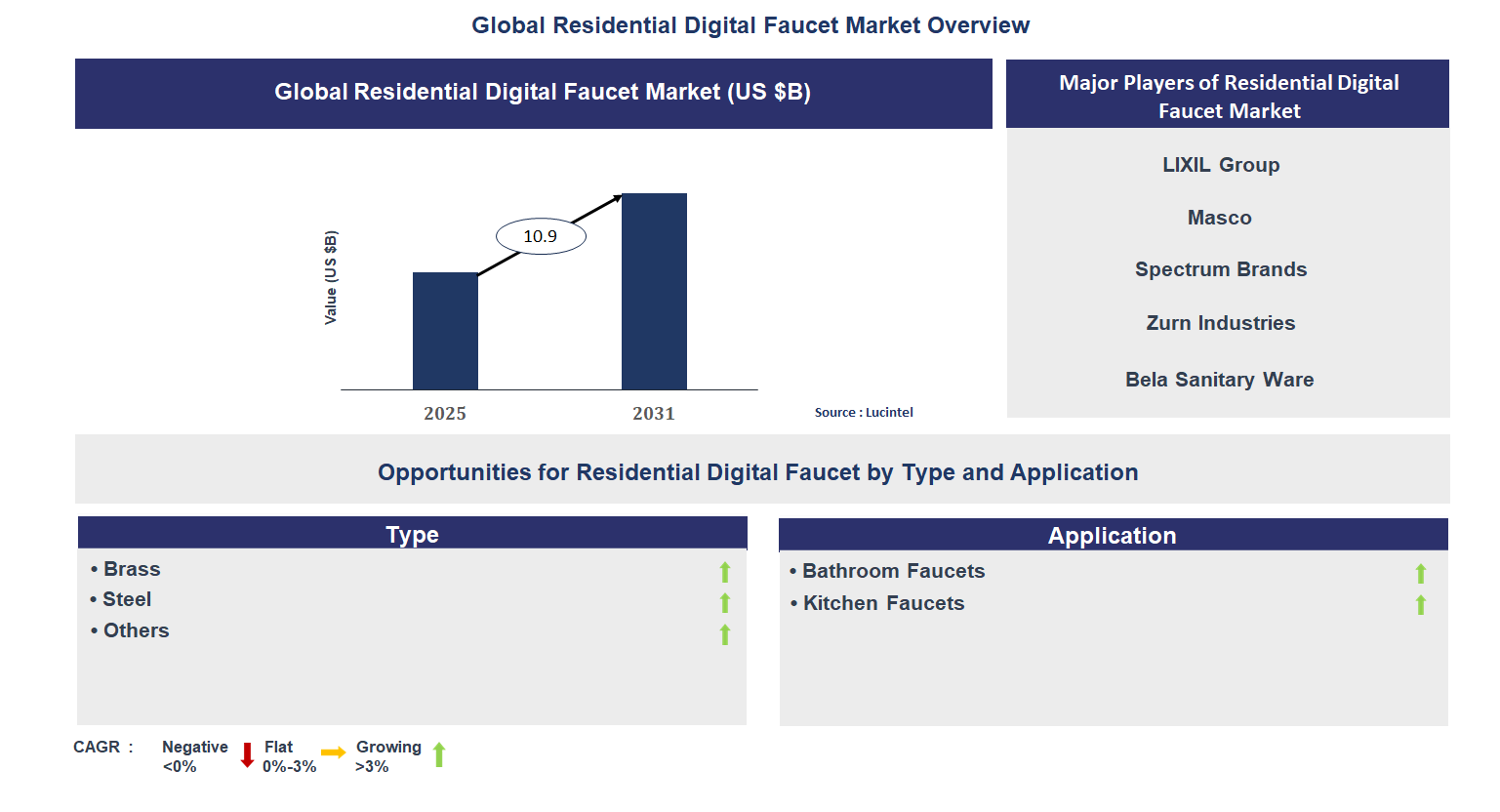
The future of the global residential digital faucet market looks promising with opportunities in the bathroom faucet and kitchen faucet markets. The global residential digital faucet market is expected to grow with a CAGR of 10.9% from 2025 to 2031. The major drivers for this market are the increasing preference for smart home devices, the rising demand for water-saving faucet technologies, and the growing adoption of touchless faucet innovations.• Lucintel forecasts that, within the type category, steel is expected to witness higher growth over the forecast period.
• Within the application category, bathroom faucet is expected to witness higher growth.
• In terms of region, APAC is expected to witness the highest growth over the forecast period. Gain valuable insights for your business decisions with our comprehensive 150+ page report. Sample figures with some insights are shown below.
Emerging Trends in the Residential Digital Faucet Market
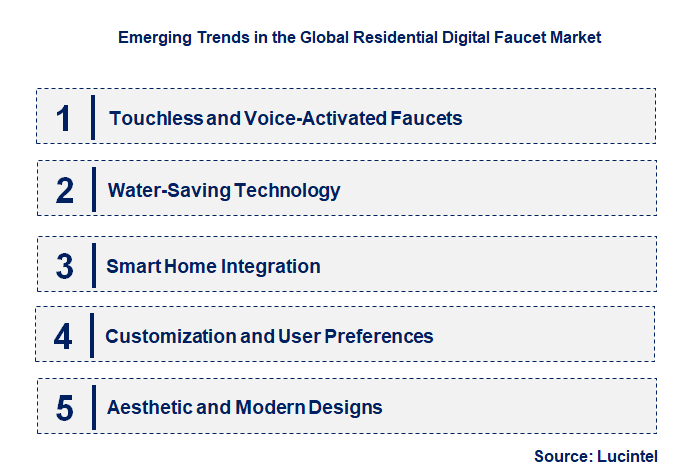
The residential digital faucet market is evolving with technological advancements that cater to growing consumer demands for convenience, water conservation, and integration with smart home systems. These trends are reshaping the market, offering new opportunities for manufacturers to innovate and meet the needs of eco-conscious and tech-savvy consumers worldwide.• Touchless and Voice-Activated Faucets: Touchless faucets, which activate with motion sensors, are becoming more common in residential spaces. This trend promotes hygiene, reduces water wastage, and provides a futuristic user experience. Voice-activated faucets, integrated with smart home systems like Amazon Alexa or Google Assistant, are further enhancing convenience and user interaction, making faucets smarter and more intuitive.
• Water-Saving Technology: As water conservation becomes a priority, digital faucets with water-saving features are in high demand. Technologies like flow restrictors, smart sensors that adjust water flow, and temperature control mechanisms reduce water consumption. These innovations help homeowners save on utility bills and contribute to sustainable water management, especially in areas facing water shortages.
• Smart Home Integration: Increasingly, digital faucets are being designed to integrate with other smart home systems, offering homeowners the ability to control their faucets via smartphones or home assistants. This trend aligns with the growing popularity of smart homes, where appliances work in tandem to provide convenience, efficiency, and personalized experiences. Faucets are now part of a broader ecosystem of interconnected devices.
• Customization and User Preferences: With an emphasis on personalization, digital faucets are offering customizable features like adjustable water flow, temperature presets, and color options. Consumers can tailor their faucet experience to suit individual needs and preferences, such as setting the water to a specific temperature for different tasks. This trend provides enhanced comfort and user satisfaction.
• Aesthetic and Modern Designs: Digital faucets are increasingly being designed with sleek, modern aesthetics that complement contemporary home interiors. Manufacturers are focusing on high-quality materials, finishes, and stylish designs to make digital faucets a visual centerpiece in kitchens and bathrooms. Consumers are now seeking products that blend technology with elegance and sophistication. These trends are reshaping the residential digital faucet market by prioritizing user experience, sustainability, and smart home integration. The adoption of these technologies is making home water systems more efficient, eco-friendly, and convenient, aligning with global trends toward smarter and greener living.
Recent Development in the Residential Digital Faucet Market
The residential digital faucet market has seen key developments driven by consumer demand for smarter, more efficient, and sustainable solutions. These developments focus on improving user experience, integrating new technologies, and providing water-saving solutions, contributing to the markets continued growth.• Integration of Smart Technology: One of the major developments in the digital faucet market is the integration of smart technology, including voice recognition and smart sensors. Faucets now connect with other home automation systems, enabling users to control their water flow or temperature via voice commands or smartphones, offering a higher level of convenience and personalization.
• Water Conservation Features: Digital faucets are incorporating advanced water-saving technologies such as flow rate management, touchless operation, and automatic shutoff features. These innovations help homeowners reduce water waste, lower utility bills, and contribute to environmental sustainability, aligning with growing global concerns about water conservation.
• Voice and App Control: The rise of voice-activated and app-controlled faucets is one of the most notable developments. Faucets are now compatible with popular smart home systems like Amazon Alexa and Google Assistant, allowing homeowners to adjust water temperature, flow, and other settings without physical interaction, further enhancing convenience and ease of use.
• Health and Hygiene Benefits: With an increased focus on hygiene, digital faucets are now equipped with touchless features that minimize contact, reducing the spread of germs and bacteria. Some faucets also offer UV sanitization features, which can help purify the water and enhance health and safety for the entire household.
• Sustainability and Eco-Friendly Materials: As sustainability continues to be a key priority, many digital faucet manufacturers are focusing on eco-friendly materials and manufacturing processes. The use of recyclable materials, low-impact production methods, and energy-efficient designs is becoming more common, meeting the growing demand for products that align with environmental consciousness. These key developments are significantly impacting the digital faucet market by enhancing functionality, increasing energy efficiency, and improving consumer experience. They are driving the adoption of smart faucets across a diverse range of households, from tech-savvy urban dwellers to eco-conscious consumers.
Strategic Growth Opportunities in the Residential Digital Faucet Market
The residential digital faucet market presents numerous strategic growth opportunities, driven by innovations in smart home integration, water conservation technologies, and consumer demand for higher-end, customizable products. Companies can capitalize on these trends to develop competitive advantages in the evolving market.• Expansion into Smart Home Systems: Integrating digital faucets with broader smart home ecosystems represents a major growth opportunity. Manufacturers can partner with smart home brands and expand their product offerings to create seamless home automation experiences, enhancing their appeal to tech-savvy consumers looking for convenience and efficiency in every aspect of their home.
• Customization Features for Consumers: Offering greater customization in terms of water flow, temperature control, and design will be a key growth opportunity. Consumers are increasingly looking for products that can be tailored to their personal preferences. Manufacturers that offer a range of options and user-centric features are likely to see increased demand and customer loyalty.
• Sustainability and Eco-Friendly Products: There is a growing trend towards eco-friendly and water-saving solutions. By focusing on energy-efficient designs, low-flow technologies, and the use of sustainable materials, companies can tap into the environmentally conscious consumer market. Water-saving faucets also align with global trends in environmental sustainability, offering long-term cost savings for consumers.
• Health and Hygiene Innovation: With health and hygiene concerns on the rise, the demand for touchless faucets with enhanced hygiene features is increasing. Manufacturers that innovate with features like UV sanitization or antimicrobial coatings can capture market share by appealing to health-conscious consumers who prioritize cleanliness and safety.
• Expansion in Emerging Markets: As urbanization increases in emerging markets such as India and China, there is a growing demand for modern home products, including digital faucets. Expanding into these regions offers significant growth opportunities, especially if manufacturers tailor their products to local preferences and offer affordable solutions that appeal to middle-class consumers. Strategic growth opportunities in the digital faucet market are largely driven by the intersection of technology, sustainability, and consumer demands for convenience. By capitalizing on these opportunities, manufacturers can cater to a diverse range of consumer needs and position themselves for success in an evolving market.
Residential Digital Faucet Market Driver and Challenges
The growth of the residential digital faucet market is influenced by various technological, economic, and regulatory factors. However, challenges such as high costs, technological limitations, and market competition also affect the adoption of digital faucets. Companies must address these drivers and challenges to remain competitive in the market. The factors responsible for driving the residential digital faucet market include: 1. Technological Advancements: The adoption of smart home technology is one of the major drivers for digital faucet growth. The integration of advanced sensors, touchless activation, and app controls enhances convenience and functionality, driving consumer interest in these products. As technology continues to evolve, it will unlock new features and expand the market’s potential. 2. Water Conservation Awareness: Rising global concerns about water scarcity have driven demand for water-saving technologies in residential products. Digital faucets with features like flow regulation and automatic shutoff are appealing to consumers who wish to reduce water waste and lower utility costs, providing an essential market driver. 3. Increased Focus on Hygiene: The growing awareness of hygiene, especially in the wake of the COVID-19 pandemic, is a significant driver. Touchless faucets, which minimize the need for physical contact, offer consumers a safer and more hygienic alternative to traditional faucets, encouraging adoption in residential settings. 4. Rising Smart Home Integration: The increasing demand for interconnected devices in the home is driving the adoption of smart home products, including digital faucets. Consumers seek seamless control over all aspects of their home, and faucets that integrate with other smart devices offer convenience and appeal to tech-savvy buyers. 5. Eco-Friendly Consumer Preferences: The shift toward sustainability is encouraging the use of eco-friendly materials and energy-efficient products. Digital faucets that offer water-saving features and are made from recyclable materials cater to the growing demand for environmentally responsible products, thus driving market growth. Challenges in the residential digital faucet market are: 1. High Initial Cost: The cost of digital faucets remains a challenge for many consumers, as they tend to be more expensive than traditional faucets. The higher upfront cost may limit adoption, particularly in price-sensitive markets. Manufacturers must find ways to reduce production costs and make these products more affordable. 2. Technology Complexity: While digital faucets offer advanced features, the complexity of technology can be a barrier to some consumers. Issues such as compatibility with existing plumbing systems, maintenance requirements, and user unfamiliarity with digital controls can hinder widespread adoption, particularly in markets with less technological integration. 3. Competition from Traditional Faucets: The digital faucet market faces significant competition from traditional faucets, which are often cheaper, simpler, and easier to install. Consumers who are not focused on smart technology or water conservation may opt for conventional products, limiting the growth potential for digital faucet manufacturers. The residential digital faucet market is driven by technological advancements, water conservation needs, and a focus on hygiene. However, challenges like high costs and competition from traditional products require strategic innovation and market adaptation. Manufacturers who address these drivers and challenges while capitalizing on emerging trends can successfully expand their market share in this growing segment.List of Residential Digital Faucet Companies
Companies in the market compete on the basis of product quality offered. Major players in this market focus on expanding their manufacturing facilities, R&D investments, infrastructural development, and leverage integration opportunities across the value chain. With these strategies residential digital faucet companies cater increasing demand, ensure competitive effectiveness, develop innovative products & technologies, reduce production costs, and expand their customer base. Some of the residential digital faucet companies profiled in this report include-• LIXIL Group
• Masco
• Spectrum Brands
• Zurn Industries
• Bela Sanitary Ware
• BRIZO KITCHEN & BATH COMPANY
• Freuer Faucets
• Jaquar
• Premier Faucet
• Wenzhou Rozin Sanitary Wares
Residential Digital Faucet Market by Segment
The study includes a forecast for the global residential digital faucet market by type, application, and region.Residential Digital Faucet Market by Type [Value from 2019 to 2031]:
• Brass
• Steel
• Others
Residential Digital Faucet Market by Application [Value from 2019 to 2031]:
• Bathroom Faucets
• Kitchen Faucets
Residential Digital Faucet Market by Region [Value from 2019 to 2031]:
• North America
• Europe
• Asia Pacific
• The Rest of the World
Country Wise Outlook for the Residential Digital Faucet Market
The residential digital faucet market is experiencing rapid growth due to increasing demand for smart home products, water conservation, and improved user convenience. As technology advances, digital faucets with features such as touchless activation, temperature control, and water-saving capabilities are becoming more common. This shift is driving innovation and product development in key markets like the United States, China, Germany, India, and Japan.• United States: The U.S. residential digital faucet market has seen significant growth driven by the increasing adoption of smart home technologies. Consumers are prioritizing convenience, water efficiency, and hygiene, leading to a rise in demand for touchless and voice-activated faucets. Companies are integrating advanced sensors, customizable water flow features, and even smart-home compatibility to appeal to tech-savvy buyers.
• China: In China, the residential digital faucet market is rapidly expanding due to urbanization and the rise of smart homes. Digital faucets are becoming increasingly popular in luxury apartments and high-tech homes, with features such as real-time temperature control and touch-free operation. The demand for water-saving technologies is also growing as consumers become more eco-conscious, particularly in water-scarce regions.
• Germany: Germany’s residential digital faucet market is influenced by the country’s strong focus on sustainability and energy efficiency. Digital faucets with smart temperature control and water-saving features are gaining popularity in eco-conscious homes. Additionally, consumers are looking for products that integrate seamlessly with other smart home devices, creating an interconnected, energy-efficient environment. German consumers favor quality and durability, prioritizing long-term value.
• India: The residential digital faucet market in India is growing steadily as urbanization and disposable incomes rise. While still emerging, demand for digital faucets with water-saving features and touchless technology is increasing, particularly in new apartments and homes. Innovations that offer convenience, hygiene, and cost savings are attractive to Indian consumers, especially in metropolitan areas where water management is a concern.
• Japan: In Japan, the residential digital faucet market is characterized by advanced technology and high consumer expectations for quality and efficiency. Digital faucets with precise temperature control, touchless features, and water-saving capabilities are in demand. The country’s aging population also drives interest in faucets that offer ease of use and safety features. Japan’s focus on technological innovation is pushing manufacturers to develop cutting-edge products.

Features of the Global Residential Digital Faucet Market
Market Size Estimates: Residential digital faucet market size estimation in terms of value ($B). Trend and Forecast Analysis: Market trends (2019 to 2024) and forecast (2025 to 2031) by various segments and regions. Segmentation Analysis: Residential digital faucet market size by type, application, and region in terms of value ($B). Regional Analysis: Residential digital faucet market breakdown by North America, Europe, Asia Pacific, and Rest of the World. Growth Opportunities: Analysis of growth opportunities in different types, applications, and regions for the residential digital faucet market. Strategic Analysis: This includes M&A, new product development, and competitive landscape of the residential digital faucet market. Analysis of competitive intensity of the industry based on Porter’s Five Forces model.
FAQ
Q1. What is the growth forecast for residential digital faucet market? Answer: The global residential digital faucet market is expected to grow with a CAGR of 10.9% from 2025 to 2031. Q2. What are the major drivers influencing the growth of the residential digital faucet market? Answer: The major drivers for this market are the increasing preference for smart home devices, the rising demand for water-saving faucet technologies, and the growing adoption of touchless faucet innovations. Q3. What are the major segments for residential digital faucet market? Answer: The future of the residential digital faucet market looks promising with opportunities in the bathroom faucet and kitchen faucet markets. Q4. Who are the key residential digital faucet market companies? Answer: Some of the key residential digital faucet companies are as follows:• LIXIL Group
• Masco
• Spectrum Brands
• Zurn Industries
• Bela Sanitary Ware
• BRIZO KITCHEN & BATH COMPANY
• Freuer Faucets
• Jaquar
• Premier Faucet
• Wenzhou Rozin Sanitary Wares Q5. Which residential digital faucet market segment will be the largest in future? Answer: Lucintel forecasts that, within the type category, steel is expected to witness higher growth over the forecast period. Q6. In residential digital faucet market, which region is expected to be the largest in next 5 years? Answer: In terms of region, APAC is expected to witness the highest growth over the forecast period. Q7. Do we receive customization in this report? Answer: Yes, Lucintel provides 10% customization without any additional cost.
Table of Contents
List of Figures
List of Tables
Methodology
- In-depth interviews of the major players in this market
- Detailed secondary research from competitors’ financial statements and published data
- Extensive searches of published works, market, and database information pertaining to industry news, company press releases, and customer intentions
- A compilation of the experiences, judgments, and insights of Lucintel’s professionals, who have analyzed and tracked this market over the years.


Buy Now
Choose a license that fits your team. Instant PDF delivery.
Prices exclude taxes. Instant delivery. Custom licensing available on request.
Key Questions
- • What are some of the most promising, high-growth opportunities for the residential digital faucet market by type (brass, steel, and others), application (bathroom faucets and kitchen faucets), and region (North America, Europe, Asia Pacific, and the Rest of the World)?
- • Which segments will grow at a faster pace and why?
- • Which region will grow at a faster pace and why?
- • What are the key factors affecting market dynamics? What are the key challenges and business risks in this market?
- • What are the business risks and competitive threats in this market?
- • What are the emerging trends in this market and the reasons behind them?
- • What are some of the changing demands of customers in the market?
- • What are the new developments in the market? Which companies are leading these developments?
- • Who are the major players in this market? What strategic initiatives are key players pursuing for business growth?
- • What are some of the competing products in this market and how big of a threat do they pose for loss of market share by material or product substitution?
- • What M&A activity has occurred in the last 5 years and what has its impact been on the industry? For any questions related to Residential Digital Faucet Market, Residential Digital Faucet Market Size, Residential Digital Faucet Market Growth, Residential Digital Faucet Market Analysis, Residential Digital Faucet Market Report, Residential Digital Faucet Market Share, Residential Digital Faucet Market Trends, Residential Digital Faucet Market Forecast, Residential Digital Faucet Companies, write Lucintel analyst at email: helpdesk@lucintel.com. We will be glad to get back to you soon.


