
Report Feature
Remote Digital Marketing Training Market Trends and Forecast
The technologies in the remote digital marketing training market have undergone significant changes in recent years, with a shift from traditional classroom-based training to cloud-based learning management systems (LMS). This transition has led to a greater emphasis on AI-powered learning tools that offer personalized training experiences, as well as the increasing use of web conferencing and virtual classrooms for interactive, real-time learning. Additionally, analytics and reporting software are now more integrated into training platforms to track progress and improve learning outcomes. This technology shift enables more flexible, data-driven, and scalable digital marketing training.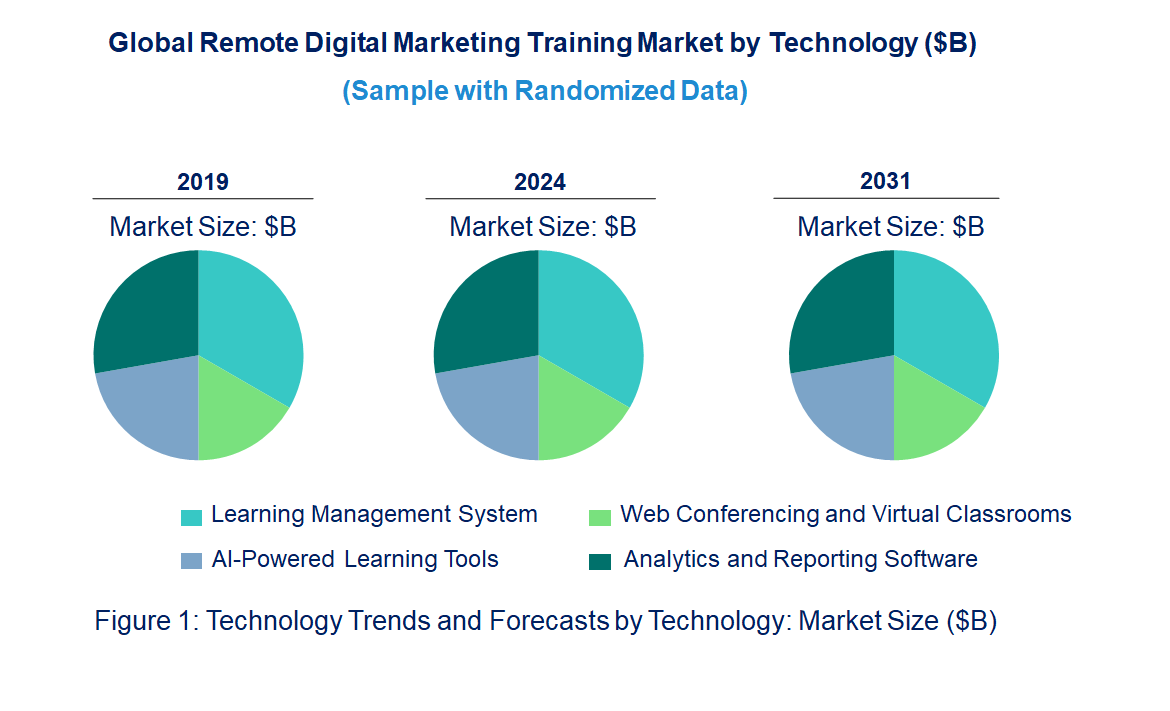
Emerging Trends in the Remote Digital Marketing Training Market
The remote digital marketing training market is witnessing several emerging trends that are transforming how digital marketing skills are taught and learned. These trends reflect the growing demand for more personalized, flexible, and engaging learning experiences.• Rise of AI and machine learning in training: AI-powered platforms now personalize training content based on learner behavior and preferences, enhancing engagement and effectiveness.
• Interactive and real-time learning: Virtual classrooms and web conferencing tools enable real-time, interactive sessions, fostering collaboration and engagement among learners.
• Mobile learning integration: The growth of mobile learning platforms allows users to access digital marketing training anytime and anywhere, making learning more accessible.
• Data-driven learning analytics: Training platforms are increasingly incorporating data analytics to track learner progress, identify skill gaps, and optimize the training experience.
• Microlearning: Short, focused lessons are becoming more popular, offering learners concise and easy-to-digest content that fits into their busy schedules. These trends are reshaping the way digital marketing skills are developed and delivered, providing more personalized, interactive, and efficient training experiences.
Remote Digital Marketing Training Market : Industry Potential, Technological Development, and Compliance Considerations
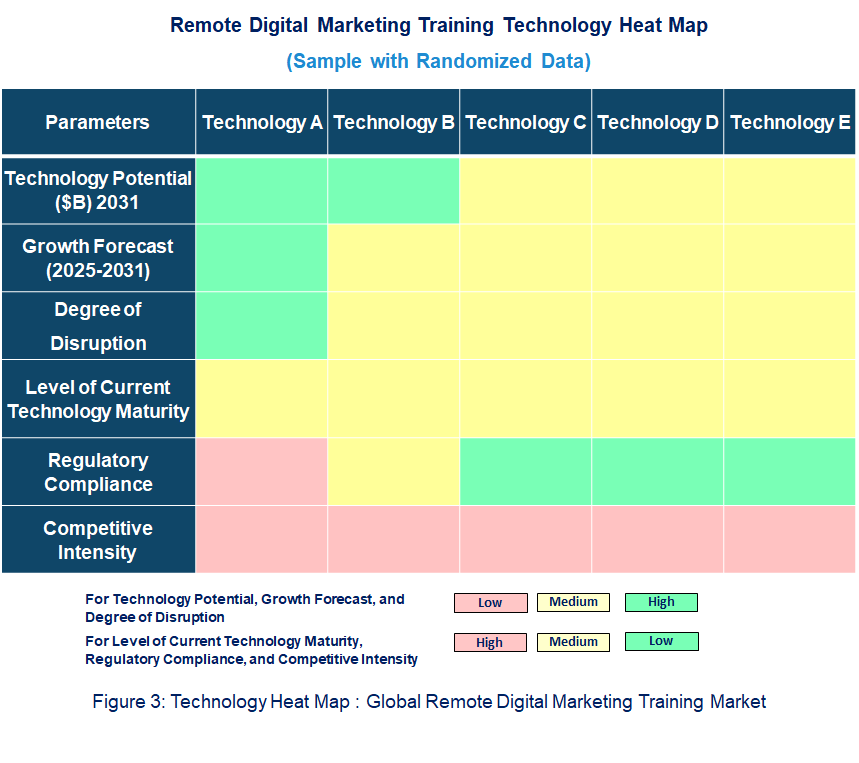
The remote digital marketing training market has witnessed a significant evolution, driven by the advancement of digital technologies that enable flexible, scalable, and highly personalized learning experiences. The integration of tools such as learning management systems (LMS), AI-powered platforms, web conferencing, and analytics software is transforming how digital marketing skills are taught and learned.• Technology potential: The potential of these technologies in reshaping remote digital marketing training is immense. AI-powered tools enable adaptive learning that tailors content to the individual learner, ensuring more efficient training. LMS platforms, along with virtual classrooms, make training more accessible globally, breaking down geographical barriers and offering real-time communication.
• Degree of disruption: The shift from traditional classroom-based learning to remote, technology-driven formats significantly disrupts the educational model. It offers greater scalability, lowers costs, and increases accessibility for learners, enabling businesses and professionals to continuously upskill in the fast-evolving digital marketing space.
• Level of current technology maturity: Technologies such as LMS, virtual classrooms, and AI tools have reached a high level of maturity, with widespread adoption across educational institutions and businesses. However, there is still potential for more refined features, such as enhanced AI capabilities and deeper analytics integration.
• Regulatory compliance: Although there are no strict regulatory challenges in digital marketing training, compliance with data privacy laws like gdpr is crucial for platforms handling user data. This market will continue to grow, driven by the need for effective, tech-enabled training solutions.
Recent Technological development in Remote Digital Marketing Training Market by Key Players
The remote digital marketing training market has seen numerous advancements from key players who are constantly evolving to meet the changing needs of learners.• Shelton Associates: Shelton Associates has introduced more interactive features to their digital marketing courses, such as live Q&A sessions and personalized coaching, enhancing learner engagement and success.
• General Assembly: General Assembly continues to expand its digital marketing curriculum with a focus on hands-on experience and real-world applications, offering boot camps and certifications in digital marketing.
• BrainStation: BrainStation has introduced specialized workshops and corporate training programs for companies looking to upskill their teams in digital marketing, positioning itself as a leader in corporate training solutions.
• Digital Marketing Institute: Digital Marketing Institute offers industry-recognized certifications and has developed an online platform to cater to a global audience, making its training more accessible.
• Nuclio Digital School: Nuclio focuses on offering innovative, up-to-date training in digital marketing, incorporating tools like AI and big data analytics, which provides students with a competitive edge in the job market. These developments demonstrate the increasing sophistication of digital marketing training programs, helping learners and companies adapt to rapidly changing industry trends.
Remote Digital Marketing Training Market Driver and Challenges
The remote digital marketing training market is experiencing strong growth, driven by several key factors, although challenges remain. The factors responsible for driving the global remote digital marketing training market are:• Increasing demand for digital skills: As businesses shift to online platforms, the demand for digital marketing skills is growing, driving the need for specialized training programs.
• Remote learning adoption: The shift towards remote work has led to increased adoption of online learning solutions, making digital marketing training more accessible.
• Personalization in learning: AI-driven platforms that offer personalized learning experiences are gaining popularity, attracting learners who seek tailored training.
• Shortage of qualified professionals: The shortage of skilled digital marketers has accelerated the demand for digital marketing training programs to close this skills gap. Challenges facing the global remote digital marketing training market are:
• High competition: With the rise in demand, the number of training providers has increased, leading to intense competition in the market.
• Keeping pace with rapid technological changes: Digital marketing evolves quickly, and training programs must constantly update their curricula to stay relevant.
• Data privacy concerns: As digital marketing relies heavily on data, privacy concerns related to data collection and sharing can impact the effectiveness of training programs. These drivers and challenges are shaping the market, with providers working to offer innovative solutions that address the evolving needs of learners and organizations.
List of Remote Digital ing Training Companies
Companies in the market compete on the basis of product quality offered. Major players in this market focus on expanding their manufacturing facilities, R&D investments, infrastructural development, and leverage integration opportunities across the value chain. With these strategies remote digital ing training companies cater increasing demand, ensure competitive effectiveness, develop innovative products & technologies, reduce production costs, and expand their customer base. Some of the remote digital ing training companies profiled in this report includes.• Shelton Associates
• General Assembly,
• Brainstation
• Digital Marketing Institute
• Nuclio Digital School
Remote Digital Marketing Training Market by Technology
• Technology Readiness by Technology Type: In the remote digital marketing training market, LMS platforms are highly mature, widely used for structured learning. Web conferencing and virtual classrooms are established but require updates for better interaction. AI-powered tools are emerging with potential but need more development for personalization. Analytics tools are mature, offering insights into learning effectiveness.
• Competitive Intensity and Regulatory Compliance: Competition is high across LMS, web conferencing, AI tools, and analytics. LMS and web conferencing focus on features and integration. AI tools are growing but face regulatory concerns around data privacy. Analytics software competes based on actionable insights, while regulatory compliance is critical in data security and user privacy.
• Disruption Potential by Technology Type: LMS revolutionizes learning delivery, web conferencing replaces in-person training, and AI tools offer personalized experiences. Analytics software optimizes training programs. Together, these technologies reshape the digital marketing training market, driving accessibility, scalability, and innovation.
Remote Digital Marketing Training Market Trend and Forecast by Technology [Value from 2019 to 2031]:
• Learning Management Systems (LMS)
• Web Conferencing and Virtual Classrooms
• AI-Powered Learning Tools
• Analytics and Reporting Software
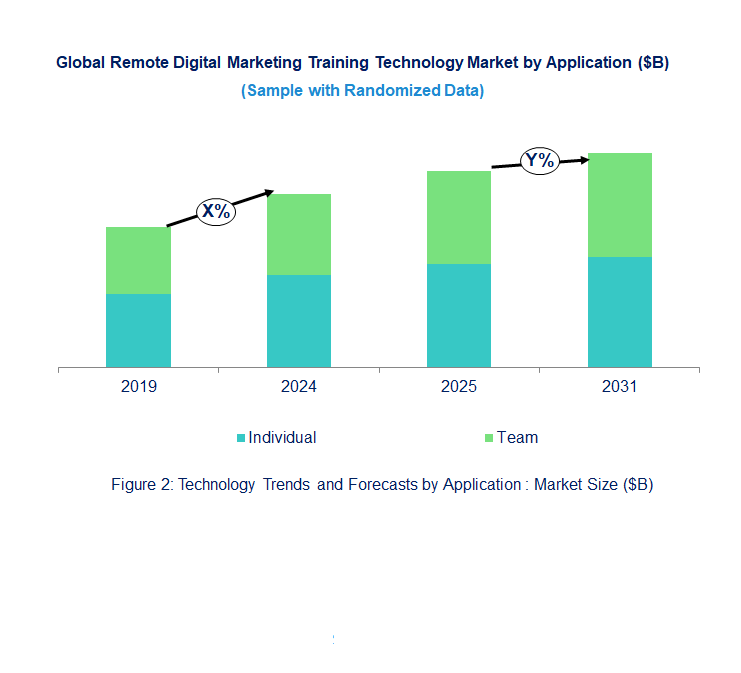
Remote Digital Marketing Training Market Trend and Forecast by Application [Value from 2019 to 2031]:
• Individual
• Team
Remote Digital Marketing Training Market by Region [Value from 2019 to 2031]:
• North America
• Europe
• Asia Pacific
• The Rest of the World
• Latest Developments and Innovations in the Remote Digital Marketing Training Technologies
• Companies / Ecosystems
• Strategic Opportunities by Technology Type
Features of the Global Remote Digital Marketing Training Market
Market Size Estimates: Remote digital marketing training market size estimation in terms of ($B). Trend and Forecast Analysis: Market trends (2019 to 2024) and forecast (2025 to 2031) by various segments and regions. Segmentation Analysis: Technology trends in the global remote digital marketing training market size by various segments, such as application and technology in terms of value and volume shipments. Regional Analysis: Technology trends in the global remote digital marketing training market breakdown by North America, Europe, Asia Pacific, and the Rest of the World. Growth Opportunities: Analysis of growth opportunities in different applications, technologies, and regions for technology trends in the global remote digital marketing training market. Strategic Analysis: This includes M&A, new product development, and competitive landscape for technology trends in the global remote digital marketing training market. Analysis of competitive intensity of the industry based on Porter’s Five Forces model.Table of Contents
Methodology
- In-depth interviews of the major players in this market
- Detailed secondary research from competitors’ financial statements and published data
- Extensive searches of published works, market, and database information pertaining to industry news, company press releases, and customer intentions
- A compilation of the experiences, judgments, and insights of Lucintel’s professionals, who have analyzed and tracked this market over the years.


Buy Now
Choose a license that fits your team. Instant PDF delivery.
Prices exclude taxes. Instant delivery. Custom licensing available on request.
Key Questions
- • What are some of the most promising potential, high-growth opportunities for the technology trends in the global remote digital marketing training market by technology (learning management systems (lms), web conferencing and virtual classrooms, ai-powered learning tools, and analytics and reporting software), application (individual and team), and region (North America, Europe, Asia Pacific, and the Rest of the World)?
- • Which technology segments will grow at a faster pace and why?
- • Which regions will grow at a faster pace and why?
- • What are the key factors affecting dynamics of different technology? What are the drivers and challenges of these technologies in the global remote digital marketing training market?
- • What are the business risks and threats to the technology trends in the global remote digital marketing training market?
- • What are the emerging trends in these technologies in the global remote digital marketing training market and the reasons behind them?
- • Which technologies have potential of disruption in this market?
- • What are the new developments in the technology trends in the global remote digital marketing training market? Which companies are leading these developments?
- • Who are the major players in technology trends in the global remote digital marketing training market? What strategic initiatives are being implemented by key players for business growth?
- • What are strategic growth opportunities in this remote digitaling training technology space?
- • What M & A activities did take place in the last five years in technology trends in the global remote digital marketing training market?


