
Market Report · September 3, 2026

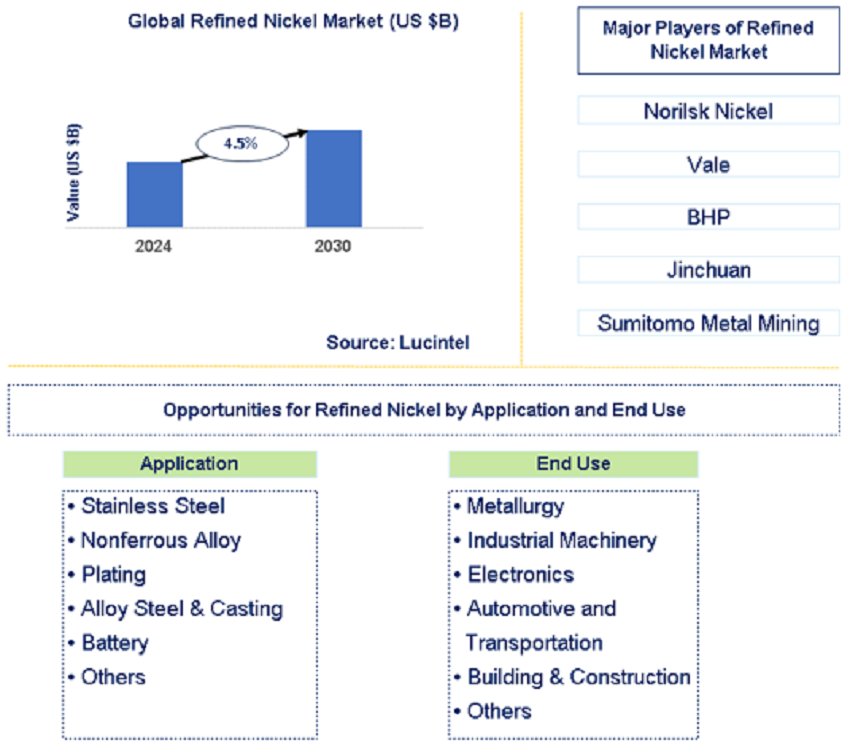
Key data points: The growth forecast = 4.5% annually for the next 6 years. Scroll below to get more insights. This market report covers trends, opportunities, and forecasts in the global refined nickel market to 2030 by application (stainless steel, nonferrous alloy, plating, alloy steel & casting, battery, and others), end use (metallurgy, industrial machinery, electronics, automotive and transportation, building & construction, and others), and region (North America, Europe, Asia Pacific, and the Rest of the World)
We'll send your sample report shortly.
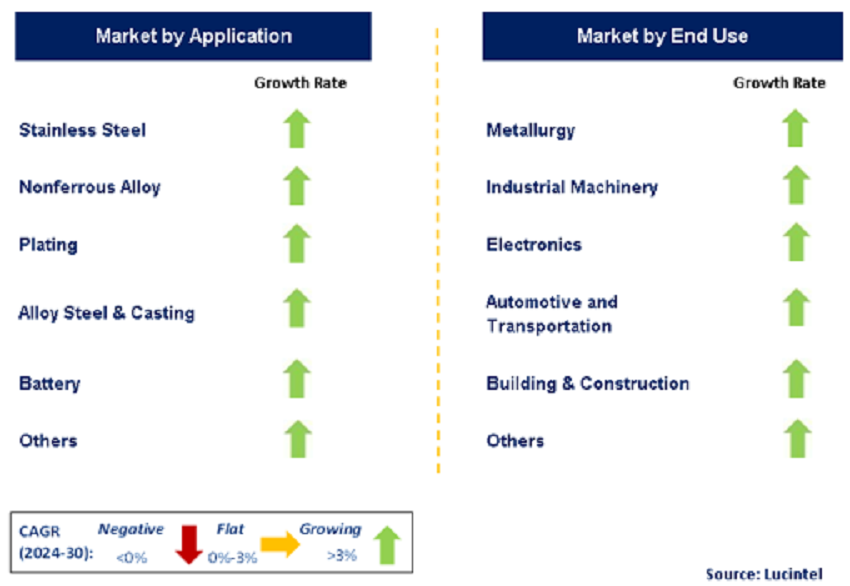
• Lucintel forecasts that, within the application category stainless steel is expected to witness the highest growth over the forecast period due to its reliance on nickel for corrosion resistance and strength.
• Within the end use category, industrial machinery is expected to witness the highest growth over the forecast period.
• In terms of regrions, APAC is expected to witness highest growth over the forecast period due to rapid industrialization, growing preference for e-vehicles, and existence of major stainless steel producer in the region. Gain Valuable insights for your business decisions with our comprehensive 150+ page report.
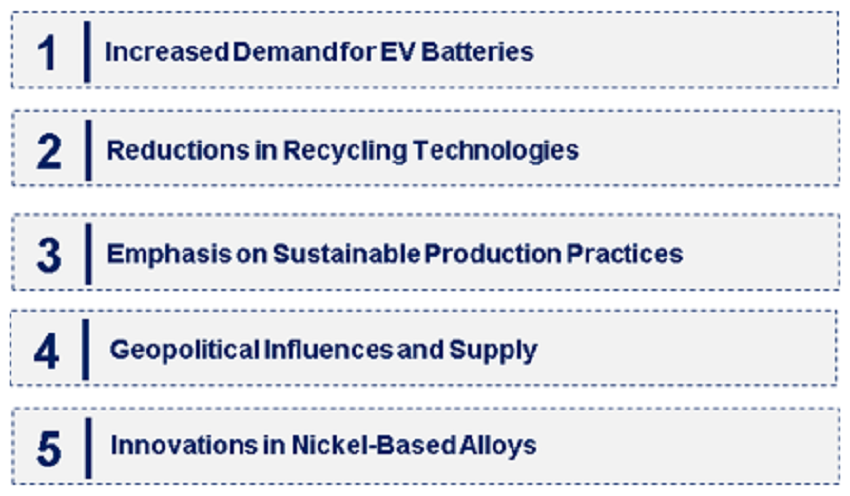
• Increased Demand for EV Batteries: The rise in the adoption of electric vehicles (EV) is significantly increasing demand for refined nickel, which is a key component used in lithium-ion batteries. This has led to increased investments in refining and mining technologies for nickel to respond to manufacturers targeting higher performance battery materials needed by this growing segment of high-performance battery users. The shift toward EVs also means continued growth opportunities from additional needs created by them for more nickel going forward.
• Reductions in Recycling Technologies: New recycling technologies are enhancing the effectiveness of nickel recovery from scrap and spent batteries. This development is vital for reducing environmental implications and lowering production costs. These improved recycling methods are making nickel supply chains more sustainable, aligning with worldwide environmental regulations and lessening the reliance on primary sources.
• Emphasis on Sustainable Production Practices: There is an increasing focus on sustainable production practices among companies dealing with nickel due to regulatory pressures and consumer preferences. Like any other metal, nickel producers are adopting cleaner technologies and improving energy efficiency to reduce their environmental footprint. This focus has led to a shift toward eco-friendly practices among organizations.
• Geopolitical Influences and Supply Chain Resilience: The global nickel supply chain has been influenced by geopolitical factors and trade policies. National governments are seeking ways to secure nickel resources through investment in mining projects and international partnerships. The implication is that there is a need for robustness in all supply chains given recent geopolitical developments affecting the availability and pricing of nickel.
• Innovations in Nickel-Based Alloys: Advanced nickel-based alloys have increased utilization across various industries, such as aerospace, energy, and electronics. Performance improvements through changes in alloy composition or processing techniques have driven demand for specialized forms of this metal. As a result, there is diversification within markets, leading to the growth of high-value applications. These emerging trends are changing the refined nickel industry by driving demand, encouraging technological advances, and dictating how companies produce it. Stakeholders must adapt to these trends to capitalize on opportunities and address challenges in the evolving market landscape.
• Expansion of Nickel Processing Facilities: The construction and expansion of nickel processing facilities are increasing production volume and efficiency in operations. New plants have emerged in leading nickel-producing nations due to increased demand for refined nickel in industries such as electric vehicles and stainless steel. This move is expected to strengthen supply chains while eliminating any bottlenecks that may arise from insufficient quantities of nickel.
• Growth in Nickel Recycling Initiatives: Advances in recycling technologies, coupled with increased investments in recycling infrastructure, have led to improved recovery rates for nickel and reduced environmental implications. This supports the circular economy concept and global sustainability objectives in terms of advanced recycling schemes. Thus, this will be instrumental in addressing supply constraints while minimizing dependence on primary nickel sources.
• Technological Innovations in Nickel Extraction: Innovations are taking place in extraction technologies, such as pyrometallurgical methods, while hydrometallurgical techniques aimed at improving efficiency are being developed for greater effectiveness regarding environmental protection during mining operations, such as those at Tongonan in Leyte, Philippines, using these technologies (Hydrometallurgy 2005). Such improvements enable cheaper and more sustainable extraction processes that address market dynamics, including environmental concerns related to nickel mining.
• Strategic Investments in Nickel Mining Projects: Firms and governments are strategically investing in nickel mining projects to guarantee a long-term supply and manage geopolitical risks through the creation of new mines or the expansion of existing ones, ensuring stable supplies of refined nickel that can support rising global demand.
• Regulatory Changes and Environmental Standards: Production patterns of nickel and market dynamics are influenced by regulatory changes and tighter environmental standards. Adhering to these policies leads to the adoption of cleaner technologies and practices, which influence product costs and manufacturing systems. Through these laws, the market is guided into an uncertain future where everything could change. Recent activities have strengthened production capacity, made it more sustainable, and minimized regulatory hassles for nickel refineries within the context of these developments. The ever-changing landscape reflects how markets respond to shifting demands and an ongoing commitment to improvement in technology and sustainability.
• Expansion in Electric Vehicle Batteries: As global demand increases for electric vehicle batteries, the implications for the refined nickel production industry are significant. High-performance EV batteries cannot be developed without this important metal due to emerging battery technologies that consume more nickel per unit capacity than before. Companies investing in production specifications for electric vehicles powered by this type of battery will enjoy huge profits from increasing population sizes supporting eco-friendly automotive solutions.
• Growth in Stainless Steel Production: The growth potential in the stainless steel sector, which relies heavily on refined nickel, is noteworthy. Nickel is commonly used in construction, automobiles, and industrial applications. The demand for stainless steel has increased with infrastructure expansion and industrialization rates, providing a reliable market for refined nickel.
• Innovations in Nickel-Based Alloys: Advancements in aerospace technology, energy systems, and electronics present lucrative opportunities through new advanced alloys, which are mainly made from nickel due to its high resistance to heat. Therefore, specialized niches in zero-emission transportation systems can be better served by firms producing these alloys.
• Enhanced Recycling Programs: Another opportunity for growth lies in recycling initiatives aimed at products containing nickel, including batteries and stainless steel items. Increased efficiency in nickel recovery through improved recycling technology and infrastructure reduces dependence on primary sources while supporting sustainability targets within the circular economy trend. Companies may also choose to follow regulatory guidelines.
• Strategic Partnerships and Investments: Strategic alliances with global players or investments in new projects are other ways to create value within this industry, apart from mining itself, which provides little revenue even during times when metal prices rise sharply due to geopolitical unrest. This helps companies navigate uncertainty while taking advantage of emerging opportunities within their respective sectors, such as refining. These strategic growth opportunities emerge from technological advancements, increases in demand across key applications, and sustainable practices throughout the supply chain, potentially resulting in more environmentally friendly production methods than previously available. Such moves by various stakeholders will enhance their positions and drive growth in the evolving landscape of the nickel industry.
• Growing Demand for Electric Vehicles (EVs):The increasing adoption of electric vehicles is a major driver for the refined nickel market. High-powered batteries that are used in EVs rely on high amounts of nickel. Therefore, the rise in sales of EVs has led to increased demand for finished nickel, hence more production investment.
• Technological Advancements in Nickel Extraction: There have been improvements in extraction techniques such as better hydrometallurgical techniques or even pyrometallurgical processes which have improved efficiency making it possible to extract nickel sustainably from nature at lower prices. This reduces costs of production while conserving environment thereby making it a viable investment option.
• Rising Industrial and Infrastructure Activities: The increasing industrialization and infrastructure development particularly across emerging economies is driving demand for finished nickel. Nickels find application on stainless steel among other industrial materials hence any growth within construction sector plus manufacturing boosts this metal’s consumption rate; thus ultimately consumption rates increase.
• Strategic Investments in Mining Projects: Strategic investments being made by governments and companies into mining projects have helped mitigate geopolitical risks while ensuring long-term supply stability of this metal. These investments lead to expansion of production capacities as well as improved marketing stability thereby guarantee constant supply of refined nickel towards meeting global requirements.
• Focus on Sustainable Production Practices: Emphasis on sustainable practices aiming at reducing environmental impacts has contributed to the adoption of cleaner production practices in the nickel industry. Companies are currently investing in technologies that reduce environmental impact and improve energy efficiency aligning with global sustainability goals and regulatory requirements. Challenges in refined nickel market are:
• Geopolitical and Trade Risks: Political conflicts, as well as trade policy issues, can disrupt the global supply chain of nickel which may affect its cost of production. Disputes arising due to export restrictions or even between trading nations can lead to shortage in supply hence prices become volatile thereby making it very hard for the market to plan ahead.
• Environmental and Regulatory Compliance: Tougher environmental laws and regulations have increased costs of operations for nickel miners. It is therefore necessary to comply with these standards by using clean technologies and processes but this may adversely affect profitability ratios as well as operational efficiencies.
• Market Volatility and Price Fluctuations: Factors like imbalances in demand vs. supply, economic variables, market speculation result into price volatility resulting into price fluctuations within refined nickel markets. This may negatively influence investment choices while undermining financial stability among players. There are several factors that drive the dynamics of the refined nickel market. The growth in electric vehicles (EVs) and technological advancements are encouraging market expansion while geopolitical risks coupled with regulatory pressures pose significant challenges. Therefore, an understanding of these factors is important for stakeholders since they will help them navigate through it effectively so that they can seize opportunities when they present themselves.
• Norilsk Nickel
• Vale
• BHP
• Jinchuan
• Sumitomo Metal Mining
• Anglo American
• Ambatovy
• Sherritt International
• Minara Resources
• Glencore
• Stainless Steel
• Nonferrous Alloy
• Plating
• Alloy Steel & Casting
• Battery
• Others
• Metallurgy
• Industrial Machinery
• Electronics
• Automotive and Transportation
• Building & Construction
• Others
• North America
• Europe
• Asia Pacific
• The Rest of the World
• United States: The country is making efforts to have a sustainable supply chain by increasing its production of nickel. New facilities for processing nickel have been established and recycling technologies have advanced. The US government has made substantial investments into domestic production of nickel focusing on critical minerals with the aim of reducing dependence on foreign imports of electric vehicle batteries.
• China: It remains the top consumer of refined nickel globally with an interest in EVs and stainless steel industries. There have been expansions in refining capacities for nickel as well as strategic investment overseas to secure supply of such metal here. In addition, China quest for cleaner energy sources coupled with stringent environmental regulations has resulted into heightened attention towards sustainable processes for producing nickel.
• Germany: Germany is associated with automotive and renewable energy sectors when it comes to developments taking place within refined-nickel trade. Some considerable investments have been made towards battery technologies that are based on nickel due to increasing demands for EVs as well as energy storage systems. Moreover, Germany is focused on enhancing its recycling capacity to meet strict environmental standards imposed by the EU while at the same time reducing dependence on imported nickel.
• India: Emerging infrastructural developments and growing industrial base make India a crucial player within refined nickel markets. On this note, some new Nickel refining plants have been built recently while other international players were partnered with so that their production capabilities could be enhanced further locally. Government initiatives promoting e-mobility alongside infrastructure projects would also help increase the need for nickel in future.
• Japan: In terms of battery technology advances plus recycle processes Japan still continues innovating in the sector of refined-nickel. The country has become the world’s leader in niche applications following its focus on high-performance nickel alloys and efficient extraction processes. Moreover, Japan’s partnerships with other countries for resource acquisition and technology exchange are worth mentioning.


• Norilsk Nickel
• Vale
• BHP
• Jinchuan
• Sumitomo Metal Mining
• Anglo American
• Ambatovy
• Sherritt International
• Minara Resources
• Glencore Q5. Which refined nickel market segment will be the largest in future? Answer: Lucintel forecasts that stainless steel is expected to witness the highest growth over the forecast period due to its reliance on nickel for corrosion resistance and strength. Q6. In refined nickel market, which region is expected to be the largest in next 5 years? Answer: APAC is expected to witness highest growth over the forecast period due to rapid industrialization, growing preference for e-vehicles, and existence of major stainless steel producer in the region. Q7. Do we receive customization in this report? Answer: Yes, Lucintel provides 10% customization without any additional cost.


Choose a license that fits your team. Instant PDF delivery.
Prices exclude taxes. Instant delivery. Custom licensing available on request.
Market Report · September 3, 2026
Market Report · July 22, 2026
Market Report · July 22, 2026
Trusted partner for strategic intelligence and business growth


Receive a complimentary market analysis tailored to your industry. Our analysts will identify key growth opportunities and competitive dynamics specific to your business.

Market size, growth rate, and key trend analysis for your specific sector.

Top competitor positioning and market share analysis.

Strategic recommendations backed by data-driven insights.
Get curated market intelligence and competitive moves straight to your inbox.
By subscribing, you agree to receive our monthly insights. Unsubscribe anytime.
Receive a complimentary market analysis tailored to your industry. Our analysts will identify key growth opportunities and competitive dynamics specific to your business.
Market size, growth rate, and key trend analysis for your specific sector.
Top competitor positioning and market share analysis.
Strategic recommendations backed by data-driven insights.
Get curated market intelligence, emerging trends, and competitive moves straight to your inbox each month.
By subscribing, you agree to receive our monthly insights. Unsubscribe anytime.
We'll send your sample report shortly.