
Report Feature
Water Based Acrylates Copolymer Rheology Modifiers Trends and Forecast
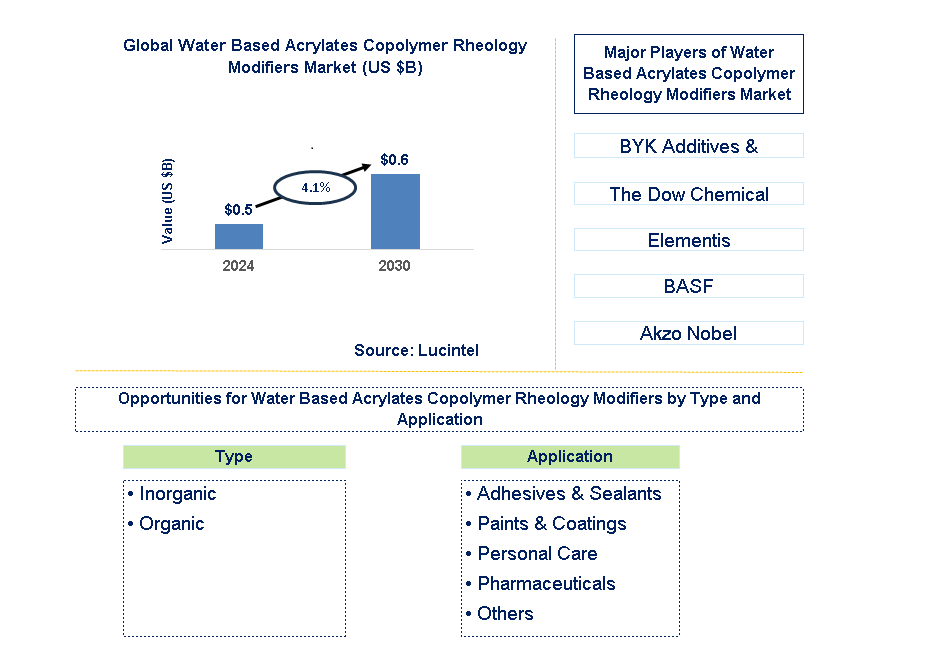
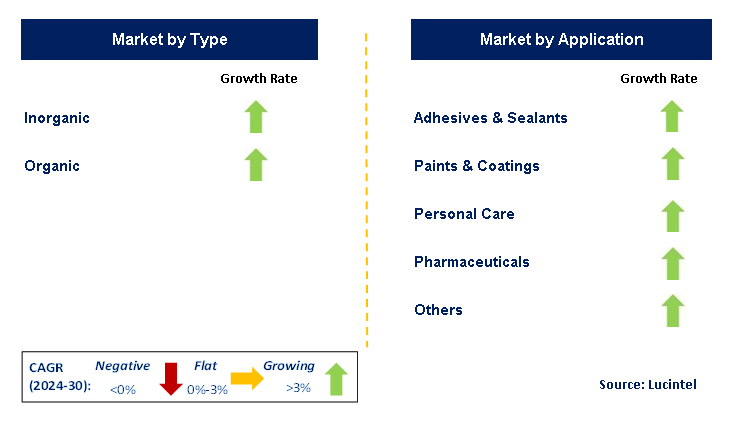
The future of the global water based acrylates copolymer rheology modifiers market looks promising with opportunities in the adhesive & sealant, paint & coating, personal care, and pharmaceutical markets. The global water based acrylates copolymer rheology modifiers market is expected to reach an estimated $0.6 billion by 2030 with a CAGR of 4.1% from 2024 to 2030. The major drivers for this market are rising demand for water-based adhesives and sealants, growing demand for personal care products, and stringent environmental regulations.• Lucintel forecasts that, within the type category, organic is expected to witness the higher growth over the forecast period owing to its high yield and ecological nature.
• Within the application category, personal care is expected to witness the highest growth due to changes in lifestyle and more disposable income.
• In terms of regions, North America will remain the largest region over the forecast period due to strict environmental regulations and growing consumer demand for sustainable and eco-friendly products across all industries. Gain valuable insights for your business decisions with our comprehensive 150+ page report
Emerging Trends in the Water Based Acrylates Copolymer Rheology Modifiers Market
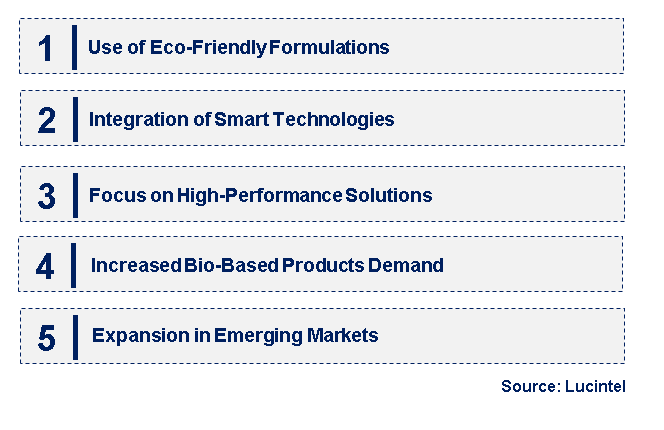
There are a number of emerging trends in the water-based acrylates copolymer rheology modifiers market. These indicate changes in technology, consumer preferences, and regulatory requirements. Understanding these emerging trends is crucial for the formulation of the right strategies by various stakeholders to leverage new opportunities.• Use of Eco-Friendly Formulations: A growing trend in the use of green and low-VOC formulations in water-based acrylates copolymer rheology modifiers is evident across the globe. This shift toward such formulations is driven by increased environmental regulations and consumer demand for products considered sustainable. Eco-friendly formulations help reduce environmental impact without compromising performance, thereby addressing sustainability on a global scale.
• Integration of Smart Technologies: Smart technologies are utilized in responsive rheology modifiers. These modifiers behave according to environmental changes. As a result, different product varieties have been created, with improvements in stability and performance. These include changes in viscosity adapted to real-world situations, aimed at improving application efficiency and user experiences in various sectors.
• Focus on High-Performance Solutions: Increasing pressure is being exerted for the development of high-performance rheology modifiers that feature better viscosity control and stability. Advanced formulations are under development, especially in industries like automotive and construction, where proper rheological properties can mean the difference between good and poor performance.
• Increased Bio-Based Products Demand: There is an increasing demand for bio-based water-based acrylates copolymer rheology modifiers. These can be produced from renewable feedstock, offering a greener alternative to traditionally petrochemical-based modifiers. This trend reflects the broader shift toward sustainable solutions that minimize environmental impact.
• Expansion in Emerging Markets: The demand for water-based acrylates copolymer rheology modifiers has grown significantly in emerging markets, particularly in the Asia-Pacific region. The rapid industrialization of countries and the growth of industries such as construction, automotive, and other end-user sectors are driving this demand. This opens up opportunities for market expansion and the development of new products. Eco-friendly formulations, the development of smart technologies, high-performance solutions, demand for bio-based products, and expansion in emerging markets are some of the emerging trends in the water-based acrylates copolymer rheology modifiers market. These trends reflect evolving market demands and regulatory pressures that act as drivers of innovation and growth within the sector.
Recent Developments in the Water Based Acrylates Copolymer Rheology Modifiers Market
The water-based acrylates copolymer rheology modifiers market has seen several key developments. These developments are driven by technological advancements, regulatory changes, and the growing demands of various market applications.• Introduction of High-Performance Formulations: Recent developments in this market include high-performance formulations that extend viscosity control and stability. Advanced formulations, designed to meet the stringent requirements of industries such as automotive and construction, enable improved product performance and reliability.
• Eco-Friendly Products: Much effort is being invested in the formulation of eco-friendly water-based acrylates copolymer rheology modifiers. The number of new products with low VOC and bio-based components is increasing, developed in line with environmental regulations for sustainable solutions driven by consumer preference.
• Increased Research and Development: Increased investment in research and development fosters innovation in the water-based acrylates copolymer rheology modifier market. New companies are focused on developing modified and value-added functionalities, stability, and performance of products to meet the changing requirements of various industrial applications.
• Expansion in Emerging Markets: The market is growing rapidly in emerging regions, especially in the Asia-Pacific region. The growth of industrial activities and sectors such as construction and automotive is driving demand for advanced rheology modifiers, offering market participants opportunities to enter new geographical markets.
• Adoption of Smart Rheology Modifiers: The use of intelligent rheology modifiers that adjust their properties in response to environmental conditions is one notable development. This innovation offers improved control over performance and stability of products in highly adaptive industrial environments. Recent developments in the water-based acrylates copolymer rheology modifiers market include high-value formulations, the development of greener products, rising R&D investments, market penetration in emerging economies, and the adoption of smart modifiers. These developments mark how the industry is evolving due to technological, regulatory, and consumer-driven changes, which will shape the future direction of the market.
Strategic Growth Opportunities for Water Based Acrylates Copolymer Rheology Modifiers Market
The water-based acrylates copolymer rheology modifiers market presents several growth opportunities through strategic development in various application fields. The key drivers of growth include technological advancements, increasing demand, and changing industry needs.• Growth in Paints and Coatings Sector: The largest growth opportunities for water-based acrylates copolymer rheology modifiers are in the paints and coatings sector. Advances in formulation technologies and the increasing demand for eco-friendly coatings are driving the need for high-performance rheology modifiers that enhance properties such as application and stability.
• Growth of Adhesives Industry: Water-based rheology modifiers have strong prospects in the adhesives industry. The application of high-value adhesives in sectors like construction, automotive, and packaging creates demand for high viscosity and stability, leading to a need for value-added rheology modifier solutions.
• Textile Industry: Growing Demand: The textile industry is experiencing growth, and so is the need for water-based acrylates copolymer rheology modifiers. There is greater demand for control in textile finishes and fabric treatments, requiring rheology modifiers to improve processability and enhance performance properties.
• Adoption in the Electronics Industry: Water-based rheology modifiers are increasingly being adopted in the electronics industry, from circuit board manufacturing to coatings. The demand for high-performance and stable products is driving growth opportunities within this sector as the shift toward superior electronic components continues.
• Focus on Sustainability: There is growing interest in green and sustainable rheology modifiers. Opportunities for growth and innovation in low environmental impact products, such as bio-based and low-VOC formulations, align with global sustainability trends. Strategic growth opportunities for water-based acrylates copolymer rheology modifiers include expansion in the paints and coatings, adhesives, textile, and electronics industries, as well as a strong focus on sustainable solutions. These emerging opportunities have evolved to meet changing industrial demands and trends, fostering innovation across various end-use applications.
Water Based Acrylates Copolymer Rheology Modifiers Market Driver and Challenges
There are a few key drivers and challenges that affect the water-based acrylates copolymer rheology modifiers market. These include drivers such as technological advancement, regulatory pressures, and economic conditions that will affect the development and adoption of the rheology modifier. The factors responsible for driving the water based acrylates copolymer rheology modifiers market include:• Technological Advancement: The continuous technological advancement in formulation and manufacturing processes propels innovations in product performance, stability, and application efficiency-the vital factors that enhance functionality and appeal for water-based acrylates copolymer rheology modifiers.
• Increasing Demand towards Eco-Friendly Products: Increasing demand from green products is one of the major driving forces. There is a demand from consumers and regulations both that are forcing industries to adopt low-VOC and bio-based formulation. Therefore, companies are encouraged to develop some effort in the direction of green rheology modifiers.
• Emerging Industrial Applications: The demand for water-based acrylates copolymer rheology modifiers is anticipated to rise with the growth of various industries such as paints and coatings, adhesives, and textiles. Expanding industrial functions and scope of applications of the products create potential opportunities for growth.
• Strict Regulatory Standards: The favorable demand for value-added rheology modifier solutions is marked by strict regulatory standards regarding product safety and environmental concerns. Adherence to regulations provides access to the market and addresses industry requirements on quality and sustainability.
• Innovative Product Formulation: Water-based rheology modifier products are continuously being innovated to improve their performance and versatility. Technologies and various research studies improve product characteristics and, therefore, increase their applications and marketability. Challenges in the water based acrylates copolymer rheology modifiers market are:
• High Production Costs: The high production costs of advanced formulations and manufacturing processes are a significant challenge. Investments in research and development may affect pricing and competitiveness in the market.
• Regulatory Compliance: Compliance with evolving regulatory standards has become challenging. Stricter environmental and safety regulations require continuous formulation and process adjustments, which can impact operational efficiency and economies.
• Competition in the Market: The competition in the market is intense due to the large number of players. Differentiation and competitive advantages will rely on continuous product innovations and effective marketing strategies. The factors driving growth in the water-based acrylates copolymer rheology modifiers market include technological advancement, increasing demand for eco-friendly products, industrial growth, stringent regulatory standards, and product innovation. However, challenges such as high production costs, regulatory compliance, and market competition must be addressed. These factors will ultimately balance market growth and are key to long-term success in this dynamic industry.
List of Water Based Acrylates Copolymer Rheology Modifiers Companies
Companies in the market compete on the basis of product quality offered. Major players in this market focus on expanding their manufacturing facilities, R&D investments, infrastructural development, and leverage integration opportunities across the value chain. through these strategies water based acrylates copolymer rheology modifiers companies cater increasing demand, ensure competitive effectiveness, develop innovative products & technologies, reduce production costs, and expand their customer base. Some of the water based acrylates copolymer rheology modifiers companies profiled in this report include-• BYK Additives & Instruments
• The Dow Chemical
• Elementis
• BASF
• Akzo Nobel
• Lubrizol
• Ashland
• Arkema
• Croda
• Clariant
Water Based Acrylates Copolymer Rheology Modifiers by Segment
The study includes a forecast for the global water based acrylates copolymer rheology modifiers by type, application, and region.Water Based Acrylates Copolymer Rheology Modifiers Market by Type [Analysis by Value from 2018 to 2030]:
• Inorganic
• Organic
Water Based Acrylates Copolymer Rheology Modifiers Market by Application [Analysis by Value from 2018 to 2030]:
• Adhesives & Sealants
• Paints & Coatings
• Personal Care
• Pharmaceuticals
• Others
Water Based Acrylates Copolymer Rheology Modifiers Market by Region [Analysis by Value from 2018 to 2030]:
• North America
• Europe
• Asia Pacific
• The Rest of the World
Country Wise Outlook for the Water Based Acrylates Copolymer Rheology Modifiers Market
In recent years, the water-based acrylates copolymer rheology modifiers market has seen remarkable developments. More and more industries are striving for higher product performance while ensuring compliance with environmental policies. Innovation in formulation and technologies is ongoing, with key markets in the United States, China, Germany, India, and Japan.• United States: The demand for water-based acrylates copolymer rheology modifiers in the U.S. has been driven by the paints and coatings sector. Recently, several companies have added high-performance rheology modifiers to their product portfolios, improving viscosity and stability without compromising environmental regulations. Low-VOC and eco-friendly formulations continue to evolve, driven by increasing regulatory pressures and consumer demand for sustainability.
• China: China's rapid industrialization and expansion in the construction and automotive sectors are driving significant growth in the water-based acrylates copolymer rheology modifiers market. The focus is on developing cost-effective, high-performance rheology modifiers to meet the local demand. Innovations include the addition of advanced copolymer technologies to ensure stability and performance, meeting the rapidly growing requirements of domestic industries.
• Germany: In Germany, the water-based acrylates copolymer rheology modifiers market emphasizes sustainability and quality standards. Developments include the adoption of bio-based and eco-friendly rheology modifiers, which meet Germany's strict environmental regulations. Additionally, German companies are investing in advanced R&D to enhance product functionality and efficiency, particularly in the automotive and industrial coatings sectors.
• India: The water-based acrylates copolymer rheology modifiers market in India is growing in line with the expansion of the construction and automotive industries. Recent product developments are focused on affordable, high-performance rheology modifiers, with improved formulations that ensure performance, stability, and compliance with local regulations. Additionally, there is increased interest in sustainable, "green" products in the Indian market.
• Japan: Japan has long been at the forefront of developing innovative technologies for water-based acrylates copolymer rheology modifiers, with a focus on high-performance products. Recent advancements include the development of smart rheology modifiers that respond to changes in ambient environmental conditions, improving product stability and application efficiency. As in other markets, the demand for green products is expected to increase due to regulatory standards and Japan's strong commitment to sustainability.

Features of the Global Water Based Acrylates Copolymer Rheology Modifiers Market
Market Size Estimates: Water based acrylates copolymer rheology modifiers market size estimation in terms of value ($B). Trend and Forecast Analysis: Market trends (2018 to 2023) and forecasts (2024 to 2030) by various segments and regions. Segmentation Analysis: Water based acrylates copolymer rheology modifiers market size by type, application, and region in terms of value ($B). Regional Analysis: Water based acrylates copolymer rheology modifiers market breakdown by North America, Europe, Asia Pacific, and Rest of the World. Growth Opportunities: Analysis of growth opportunities in different types, applications, and regions for the water based acrylates copolymer rheology modifiers market. Strategic Analysis: This includes M&A, new product development, and competitive landscape of the water based acrylates copolymer rheology modifiers market. Analysis of competitive intensity of the industry based on Porter’s Five Forces model.If you are looking to expand your business in this market or adjacent markets, then contact us. We have done hundreds of strategic consulting projects in market entry, opportunity screening, due diligence, supply chain analysis, M & A, and more.

FAQ
Q1. What is the water based acrylates copolymer rheology modifiers market size? Answer: The global water based acrylates copolymer rheology modifiers market is expected to reach an estimated $0.6 billion by 2030. Q2. What is the growth forecast for water based acrylates copolymer rheology modifiers market? Answer: The global water based acrylates copolymer rheology modifiers market is expected to grow with a CAGR of 4.1% from 2024 to 2030. Q3. What are the major drivers influencing the growth of the water based acrylates copolymer rheology modifiers market? Answer: The major drivers for this market are rising demand for water-based adhesives and sealants, growing demand for personal care products, and stringent environmental regulations. Q4. What are the major segments for water based acrylates copolymer rheology modifiers market? Answer: The future of the water based acrylates copolymer rheology modifiers market looks promising with opportunities in the adhesive & sealant, paint & coating, personal care, and pharmaceutical markets. Q5. Who are the key water based acrylates copolymer rheology modifiers market companies? Answer: Some of the key water based acrylates copolymer rheology modifiers companies are as follows:• BYK Additives & Instruments
• The Dow Chemical
• Elementis
• BASF
• Akzo Nobel
• Lubrizol
• Ashland
• Arkema
• Croda
• Clariant Q6. Which water based acrylates copolymer rheology modifiers market segment will be the largest in future? Answer: Lucintel forecasts that organic is expected to witness a higher growth over the forecast period owing to its high yield and ecological nature. Q7. In water based acrylates copolymer rheology modifiers market, which region is expected to be the largest in next 5 years? Answer: North America will remain the largest region over the forecast period due to strict environmental regulations and growing consumer demand for sustainable and eco-friendly products across all industries. Q.8 Do we receive customization in this report? Answer: Yes, Lucintel provides 10% customization without any additional cost.
Table of Contents
Methodology
- In-depth interviews of the major players in this market
- Detailed secondary research from competitors’ financial statements and published data
- Extensive searches of published works, market, and database information pertaining to industry news, company press releases, and customer intentions
- A compilation of the experiences, judgments, and insights of Lucintel’s professionals, who have analyzed and tracked this market over the years.


Buy Now
Choose a license that fits your team. Instant PDF delivery.
Prices exclude taxes. Instant delivery. Custom licensing available on request.
Key Questions
- • What are some of the most promising, high-growth opportunities for the water based acrylates copolymer rheology modifiers market by type (inorganic and organic), application (adhesives & sealants, paints & coatings, personal care, pharmaceuticals, and others), and region (North America, Europe, Asia Pacific, and the Rest of the World)?
- • Which segments will grow at a faster pace and why?
- • Which region will grow at a faster pace and why?
- • What are the key factors affecting market dynamics? What are the key challenges and business risks in this market?
- • What are the business risks and competitive threats in this market?
- • What are the emerging trends in this market and the reasons behind them?
- • What are some of the changing demands of customers in the market?
- • What are the new developments in the market? Which companies are leading these developments?
- • Who are the major players in this market? What strategic initiatives are key players pursuing for business growth?
- • What are some of the competing products in this market and how big of a threat do they pose for loss of market share by material or product substitution?
- • What M&A activity has occurred in the last 5 years and what has its impact been on the industry? For any questions related to Water Based Acrylates Copolymer Rheology Modifiers Market, Water Based Acrylates Copolymer Rheology Modifiers Market Size, Water Based Acrylates Copolymer Rheology Modifiers Market Growth, Water Based Acrylates Copolymer Rheology Modifiers Market Analysis, Water Based Acrylates Copolymer Rheology Modifiers Market Report, Water Based Acrylates Copolymer Rheology Modifiers Market Share, Water Based Acrylates Copolymer Rheology Modifiers Market Trends, Water Based Acrylates Copolymer Rheology Modifiers Market Forecast, Water Based Acrylates Copolymer Rheology Modifiers Companies, write Lucintel analyst at email: helpdesk@lucintel.com. We will be glad to get back to you soon.


