
Market Report · June 29, 2026

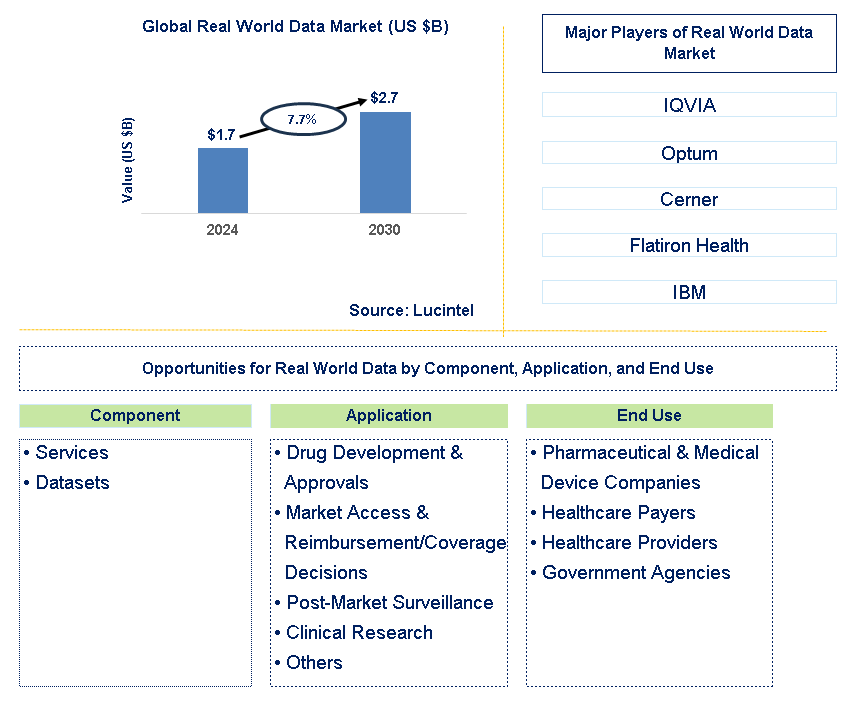
Key data points: The market size in 2030 = $2.68 billion, growth forecast = 7.70% annually for the next 6 years. Scroll below to get more insights. This market report covers trends, opportunities, and forecasts in the global real world data market to 2030 by component (services and datasets), application (drug development & approvals, market access & reimbursement/coverage decisions, post-market surveillance, clinical research, and others), end use (pharmaceutical & medical device companies, healthcare payers, healthcare providers, and government agencies), and region (North America, Europe, Asia Pacific, and the Rest of the World)
We'll send your sample report shortly.
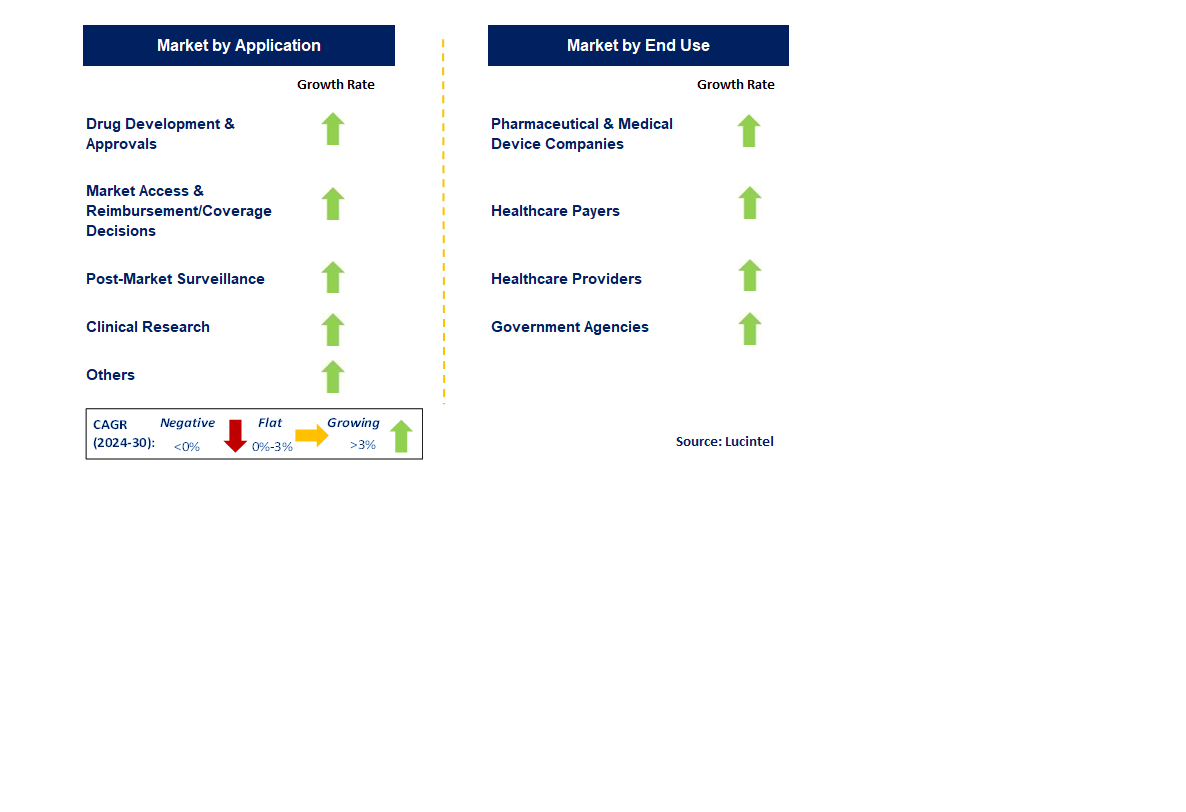
• Lucintel forecasts that, within the application category, drug development & approvals is expected to witness the highest growth over the forecast period.
• Within the end use category, pharmaceutical & medical device is expected to witness the highest growth.
• In terms of regions, North America is expected to witness highest growth over the forecast period. Gain valuable insight for your business decisions with our comprehensive 150+ page report
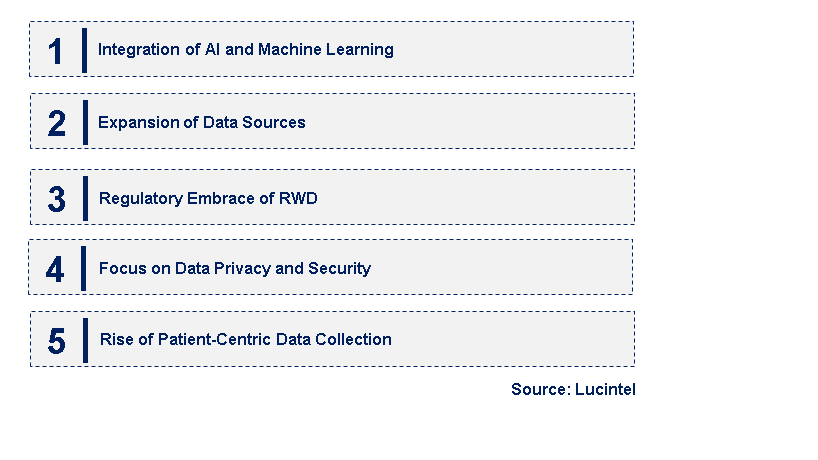
• Integration of AI and Machine Learning: AI and machine learning technologies are increasingly being used to analyze large volumes of RWD, providing deeper insights and predictive analytics. This trend enhances the ability to identify patterns and trends, improve disease management, and personalize treatments based on real-world evidence.
• Expansion of Data Sources: The range of data sources for RWD is expanding beyond traditional EHRs to include wearable devices, mobile health apps, and social media. This trend increases the richness of the data and allows for a more comprehensive analysis of patient behaviors and outcomes.
• Regulatory Embrace of RWD: Regulatory agencies are increasingly recognizing the value of RWD for drug development and post-market surveillance. This trend includes efforts to streamline the use of RWD in regulatory submissions and approvals, making it a more integral part of the drug evaluation process.
• Focus on Data Privacy and Security: As the use of RWD grows, there is a heightened focus on ensuring data privacy and security. This trend involves implementing robust data protection measures and compliance with regulations to safeguard patient information and maintain trust in the data.
• Rise of Patient-Centric Data Collection: There is a growing emphasis on patient-centric approaches to data collection, where patients are actively involved in providing and managing their health data. This trend improves data accuracy and relevance, as well as patient engagement in their own healthcare. Emerging trends such as AI integration, expansion of data sources, regulatory support, data privacy focus, and patient-centric data collection are significantly reshaping the RWD market. These trends enhance the capabilities and applications of RWD, driving innovation and improving healthcare outcomes.
• Enhanced Data Integration: Advances in technology have improved the integration of RWD from diverse sources, including EHRs, wearables, and patient registries. This development allows for more comprehensive data analysis and better insights into patient health and treatment outcomes.
• Adoption of AI and Machine Learning: The use of AI and machine learning algorithms is becoming more prevalent in analyzing RWD. These technologies enable more sophisticated data processing, predictive modeling, and personalized treatment approaches, enhancing the value of real-world evidence.
• Strengthened Regulatory Frameworks: Regulatory bodies are increasingly incorporating RWD into drug development and approval processes. Recent changes in regulatory frameworks are supporting the use of RWD for evaluating drug safety and efficacy, providing more robust evidence for decision-making.
• Expansion of Data Privacy Measures: With the growth of RWD usage, there is a heightened focus on data privacy and security. New measures and compliance standards are being implemented to protect patient information and ensure that data usage adheres to regulatory requirements.
• Growth in Patient-Reported Outcomes: The integration of patient-reported outcomes (PROs) into RWD collections is gaining traction. This development provides valuable insights into patients' perspectives on their health and treatment experiences, contributing to more patient-centered care. Key developments such as enhanced data integration, AI adoption, strengthened regulatory frameworks, expanded data privacy measures, and growth in patient-reported outcomes are impacting the RWD market. These advancements improve data utilization and contribute to better healthcare outcomes.
• Personalized Medicine: The use of RWD in personalized medicine is a key growth opportunity. By leveraging real-world data to tailor treatments to individual patient profiles, healthcare providers can improve treatment efficacy and patient outcomes.
• Drug Development and Research: RWD provides valuable insights for drug development and research, including post-market surveillance and real-world effectiveness studies. This opportunity allows for more informed decision-making and better assessment of drug safety and efficacy.
• Population Health Management: RWD is increasingly used in population health management to identify health trends and optimize interventions. This opportunity enables healthcare organizations to address public health challenges and improve community health outcomes.
• Digital Health Technologies: The rise of digital health technologies, such as wearable devices and mobile apps, presents growth opportunities for integrating RWD. These technologies provide continuous data collection and monitoring, enhancing the quality and scope of real-world evidence.
• Health Economics and Outcomes Research: RWD is valuable for health economics and outcomes research (HEOR), helping to assess the cost-effectiveness and value of treatments. This opportunity supports better resource allocation and policy-making in healthcare. Strategic growth opportunities in areas such as personalized medicine, drug development, population health management, digital health technologies, and health economics research are shaping the RWD market. Leveraging these opportunities can drive innovation and improve healthcare delivery.
• Technological Advancements: Innovations in data collection and analysis technologies, such as AI and machine learning, are driving the growth of the RWD market. These advancements enhance the ability to process and analyze large datasets, providing valuable insights for healthcare.
• Increased Demand for Personalized Medicine: The growing emphasis on personalized medicine is driving demand for RWD. Real-world evidence helps tailor treatments to individual patients, improving outcomes and advancing personalized healthcare approaches.
• Regulatory Support for RWD Utilization: Regulatory bodies are increasingly supporting the use of RWD in drug development and approval processes. This support provides a framework for incorporating real-world evidence into regulatory decision-making, expanding the market's potential.
• Expansion of Digital Health Tools: The proliferation of digital health tools, such as wearables and mobile health apps, provides new sources of RWD. This expansion enhances data collection and enriches the real-world evidence available for analysis.
• Focus on Value-Based Healthcare: The shift towards value-based healthcare models is driving the use of RWD to assess treatment effectiveness and cost-effectiveness. This focus supports evidence-based decision-making and improves healthcare value. Challenges in the real world data market are:
• Data Privacy and Security Concerns: Ensuring the privacy and security of patient data is a significant challenge in the RWD market. Compliance with data protection regulations and maintaining data confidentiality are critical to addressing these concerns.
• Data Integration and Quality Issues: Integrating data from diverse sources and ensuring data quality can be challenging. Variability in data formats and completeness can impact the reliability of RWD and its usefulness for analysis.
• Regulatory and Compliance Hurdles: Navigating regulatory requirements and ensuring compliance with evolving guidelines can be complex. Regulatory hurdles may impact the speed and feasibility of utilizing RWD in certain applications. Drivers such as technological advancements, demand for personalized medicine, regulatory support, digital health expansion, and value-based healthcare are fueling the growth of the RWD market. Challenges related to data privacy, integration, and regulatory compliance need to be addressed to fully leverage the potential of real-world data and enhance market development.
• IQVIA
• Optum
• Cerner
• Flatiron Health
• IBM
• Tempus Labs
• Syneos Health
• Evidera
• Palantir Technologies
• SAS Institute
• Services
• Datasets
• Drug Development & Approvals
• Market Access & Reimbursement/Coverage Decisions
• Post-Market Surveillance
• Clinical Research
• Others
• Pharmaceutical & Medical Device Companies
• Healthcare Payers
• Healthcare Providers
• Government Agencies
• North America
• Europe
• Asia Pacific
• The Rest of the World
• United States: In the U.S., recent developments in the RWD market include increased integration of electronic health records (EHRs) and patient registries. Advances in data analytics and machine learning are being used to extract actionable insights from large datasets. Additionally, regulatory support from agencies like the FDA is encouraging the use of RWD in clinical trials and post-market surveillance, enhancing the relevance and application of real-world evidence in healthcare decision-making.
• China: China is seeing significant growth in RWD as the government invests in digital health infrastructure. The expansion of EHR systems and patient databases is driving improvements in data quality and accessibility. Chinese companies are also focusing on integrating RWD with artificial intelligence (AI) to develop predictive models for disease management and treatment outcomes. Moreover, regulatory reforms are promoting the use of RWD for evaluating drug safety and efficacy.
• Germany: In Germany, advancements in RWD are driven by initiatives aimed at improving healthcare data interoperability and patient-centered research. The country is enhancing its data-sharing capabilities through national health data networks and platforms. Germany is also focusing on using RWD to support personalized medicine and outcomes-based research, leveraging high-quality health data to tailor treatments and interventions to individual patient needs.
• India: India's RWD market is growing as healthcare providers and researchers increasingly use real-world evidence to address public health challenges. The adoption of digital health tools and telemedicine is expanding the sources of RWD, which are being used to monitor treatment effectiveness and disease prevalence. Indian organizations are also working on improving data collection methodologies and integrating RWD into healthcare policies to enhance overall health outcomes.
• Japan: Japan is experiencing growth in RWD through advancements in digital health technologies and health information systems. The integration of RWD with genomic data is enabling more precise research and personalized treatment approaches. Additionally, Japan is focusing on expanding the use of RWD in clinical trials and regulatory submissions to enhance the robustness of evidence for new therapies and medical interventions.


• IQVIA
• Optum
• Cerner
• Flatiron Health
• IBM
• Tempus Labs
• Syneos Health
• Evidera
• Palantir Technologies
• SAS Institute Q6. Which real world data market segment will be the largest in future? Answer: Lucintel forecasts that, within the application category, drug development & approvals is expected to witness the highest growth over the forecast period. Q7. In real world data market, which region is expected to be the largest in next 5 years? Answer: In terms of regions, North America is expected to witness highest growth over the forecast period. Q.8 Do we receive customization in this report? Answer: Yes, Lucintel provides 10% customization without any additional cost.


Choose a license that fits your team. Instant PDF delivery.
Prices exclude taxes. Instant delivery. Custom licensing available on request.
Market Report · June 29, 2026
Market Report · May 18, 2026
Trusted partner for strategic intelligence and business growth


Receive a complimentary market analysis tailored to your industry. Our analysts will identify key growth opportunities and competitive dynamics specific to your business.

Market size, growth rate, and key trend analysis for your specific sector.

Top competitor positioning and market share analysis.

Strategic recommendations backed by data-driven insights.
Get curated market intelligence and competitive moves straight to your inbox.
By subscribing, you agree to receive our monthly insights. Unsubscribe anytime.
Receive a complimentary market analysis tailored to your industry. Our analysts will identify key growth opportunities and competitive dynamics specific to your business.
Market size, growth rate, and key trend analysis for your specific sector.
Top competitor positioning and market share analysis.
Strategic recommendations backed by data-driven insights.
Get curated market intelligence, emerging trends, and competitive moves straight to your inbox each month.
By subscribing, you agree to receive our monthly insights. Unsubscribe anytime.
We'll send your sample report shortly.