
Report Feature
PSP System Market Trends and Forecast
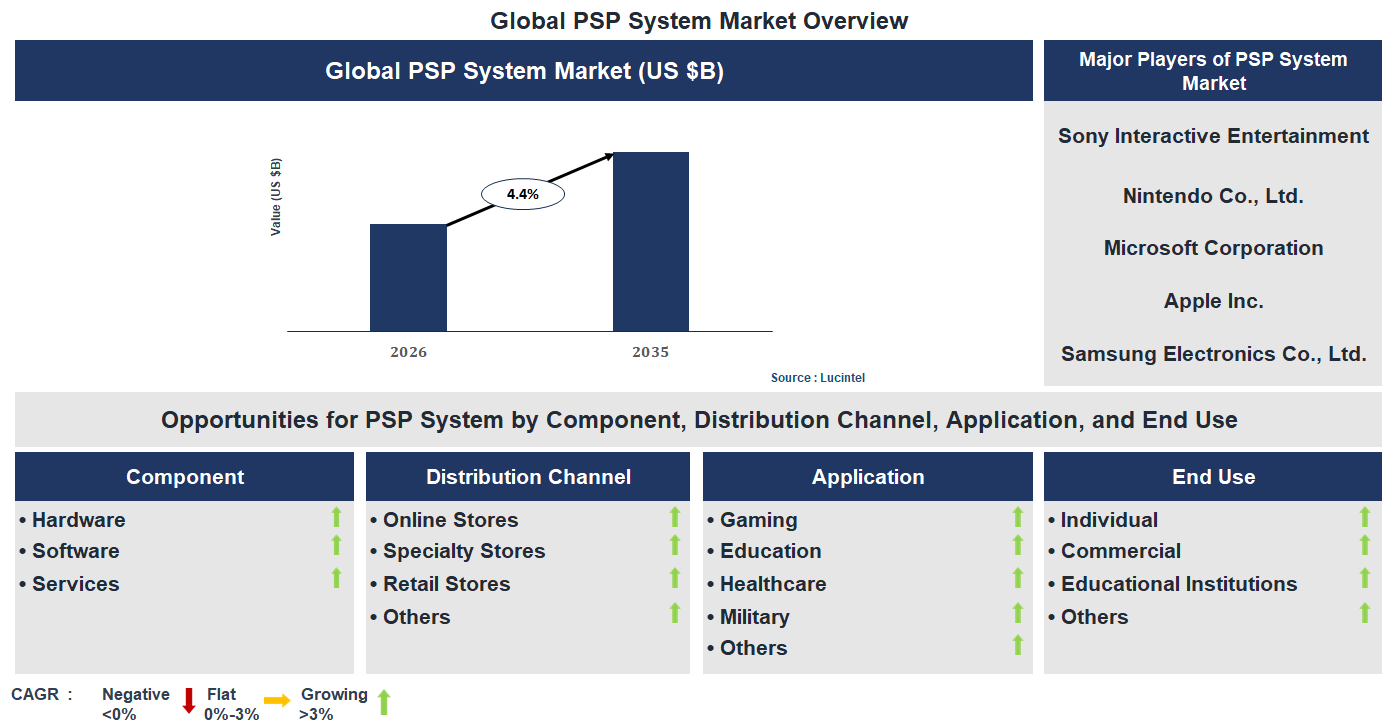
The future of the global PSP system market looks promising with opportunities in the individual, commercial, and educational institution markets. The global PSP system market is expected to reach an estimated $199 million by 2035 with a CAGR of 3% from 2026 to 2035. The major drivers for this market are the increasing demand for efficient imaging systems, the rising adoption of digital radiography technologies, and the growing focus on healthcare automation solutions.• Lucintel forecasts that, within the component category, hardware is expected to witness the highest growth over the forecast period.
• Within the end use category, individual is expected to witness the highest growth.
• In terms of region, North America is expected to witness the highest growth over the forecast period. Gain valuable insights for your business decisions with our comprehensive 150+ page report. Sample figures with some insights are shown below.
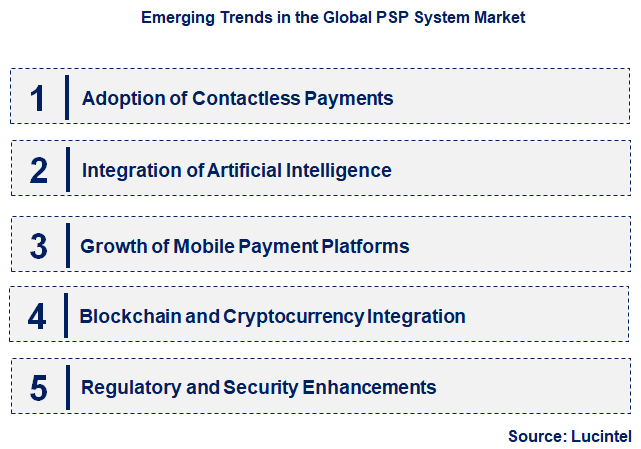
Emerging Trends in the PSP System Market
The PSP system market is experiencing rapid evolution driven by technological advancements, changing consumer preferences, and regulatory shifts. As digital payments become increasingly prevalent, providers are innovating to meet the demands for faster, more secure, and more versatile payment solutions. The market is also witnessing a surge in integration with emerging technologies such as artificial intelligence, blockchain, and mobile platforms. These developments are transforming how businesses and consumers interact with payment systems, creating new opportunities and challenges. Understanding these key trends is essential for stakeholders aiming to stay competitive and capitalize on the markets growth potential.• Adoption of Contactless Payments: The rise of contactless payment methods, including NFC and QR code-based solutions, is transforming transaction experiences. Consumers favor these quick, hygienic, and convenient options, especially post-pandemic. Businesses are increasingly integrating contactless options to enhance customer satisfaction and reduce transaction times. This trend is driving widespread adoption across retail, hospitality, and transportation sectors, leading to increased transaction volumes and improved operational efficiency. As technology becomes more affordable and secure, contactless payments are expected to dominate mainstream payment methods, reshaping consumer behavior and merchant strategies.
• Integration of Artificial Intelligence: AI is playing a pivotal role in enhancing payment security, fraud detection, and customer experience. Machine learning algorithms analyze transaction patterns to identify suspicious activities in real-time, reducing fraud risks. AI-powered chatbots and personalized marketing improve customer engagement and streamline support services. Additionally, AI facilitates smarter transaction routing and risk assessment, optimizing payment processing. This integration not only boosts security but also enables PSPs to offer tailored solutions, fostering trust and loyalty among users. As AI technology advances, its influence on the PSP market will continue to grow, making payments more intelligent and secure.
• Growth of Mobile Payment Platforms: Mobile wallets and payment apps are experiencing exponential growth, driven by smartphone penetration and digital lifestyle adoption. Consumers prefer mobile payments for their convenience, speed, and integration with other financial services. PSPs are developing feature-rich apps that support loyalty programs, peer-to-peer transfers, and bill payments, creating a seamless user experience. The proliferation of mobile payment platforms is also encouraging financial inclusion by reaching unbanked populations. This trend is compelling traditional banks and new entrants to innovate rapidly, leading to a more competitive and dynamic market landscape.
• Blockchain and Cryptocurrency Integration: The adoption of blockchain technology and cryptocurrencies is gaining traction within the PSP ecosystem. Blockchain offers enhanced security, transparency, and decentralization, making it attractive for cross-border transactions and remittances. PSPs are exploring crypto payment solutions to cater to a growing segment of digital asset users. Regulatory developments are gradually accommodating these innovations, fostering wider acceptance. The integration of blockchain and cryptocurrencies is poised to reduce transaction costs, increase speed, and expand payment options, fundamentally altering the traditional payment infrastructure and opening new revenue streams for PSP providers.
• Regulatory and Security Enhancements: Evolving regulatory frameworks aim to strengthen payment security and consumer protection. Compliance with standards such as PSD2, GDPR, and AML regulations is becoming mandatory, prompting PSPs to upgrade their systems. Enhanced security measures, including biometric authentication and tokenization, are reducing fraud and data breaches. These regulatory shifts also promote interoperability and open banking, fostering innovation and competition. As security and compliance become more sophisticated, they build consumer trust and facilitate market expansion. This trend underscores the importance of robust security protocols and regulatory adherence in maintaining market integrity and growth. In summary, these emerging trends are collectively reshaping the PSP system market by fostering innovation, enhancing security, and improving user experience. They are driving increased adoption of digital and contactless payments, integrating advanced technologies like AI and blockchain, and emphasizing regulatory compliance. These developments are creating a more competitive, secure, and inclusive market environment, ultimately transforming how payments are processed and experienced worldwide.
Recent Development in the PSP System Market
The PSP system market is experiencing rapid evolution driven by technological advancements, increasing consumer demand, and expanding applications across various sectors. These developments are shaping the future landscape, creating new opportunities for growth and innovation. Stakeholders are focusing on integrating advanced features, enhancing user experience, and expanding market reach to capitalize on emerging trends. The following key developments highlight the current trajectory and potential of the PSP system market.• Platform Integration: The integration of PSP systems with mobile and online platforms is expanding accessibility and convenience for users. This development allows seamless payment experiences across multiple devices, increasing user engagement and satisfaction. Businesses benefit from improved transaction efficiency and broader customer reach. As a result, market penetration accelerates, fostering growth in both consumer and enterprise segments. This integration is crucial for staying competitive in a digital-first economy.
• Security Enhancements: Advances in security protocols, including biometric authentication and encryption, are significantly reducing fraud risks. These improvements build consumer trust and ensure compliance with regulatory standards. Enhanced security measures also enable PSP providers to offer more sophisticated services, such as contactless payments and digital wallets, with confidence. The market benefits from increased adoption rates and reduced transaction failures, fostering a safer environment for digital payments and encouraging innovation.
• Technology Innovation: The adoption of emerging technologies like AI, blockchain, and IoT is transforming PSP capabilities. AI-driven analytics optimize transaction processing and customer insights, while blockchain enhances transparency and security. IoT integration enables real-time payment solutions for connected devices. These innovations improve operational efficiency, reduce costs, and open new revenue streams. The market is poised for rapid growth as providers leverage these technologies to deliver smarter, more reliable payment solutions.
• Expansion into New Markets: PSP systems are increasingly penetrating emerging markets with rising smartphone penetration and digital infrastructure. This expansion offers significant growth opportunities by catering to previously underserved populations. Localized solutions and partnerships facilitate market entry, boosting financial inclusion and economic development. As these markets grow, the demand for efficient, accessible payment systems surges, driving global market expansion and diversification.
• Regulatory Adaptation: Evolving regulatory frameworks are shaping the PSP landscape by establishing standards for data privacy, security, and cross-border transactions. Compliance ensures market legitimacy and consumer confidence, while also fostering innovation within a secure environment. PSP providers are investing in compliance infrastructure to meet these standards, which can act as a barrier but also as a competitive advantage. This regulatory evolution is guiding sustainable growth and stability in the market. The overall impact of these developments is a more secure, innovative, and accessible PSP system market. Enhanced technology, expanded reach, and regulatory compliance are driving increased adoption and market resilience. These opportunities are fostering a dynamic environment that encourages continuous innovation, ultimately benefiting consumers, businesses, and stakeholders across the globe.
Strategic Growth Opportunities in the PSP System Market
The PSP system market is experiencing rapid expansion driven by technological advancements, increasing demand for portable gaming solutions, and the integration of innovative features. Market players are focusing on strategic collaborations, product diversification, and enhancing user experience to capture a larger customer base. The growth opportunities are diverse, spanning emerging markets and technological innovations, which are expected to significantly influence the market landscape over the coming years.• Product Innovation and Diversification: Developing advanced PSP systems with enhanced graphics, longer battery life, and new features can attract a broader audience. Companies investing in R&D to create unique gaming experiences, such as augmented reality or cloud gaming, will differentiate themselves. Diversification into related entertainment sectors, like streaming or social gaming, can also expand revenue streams and market reach.
• Strategic Partnerships and Collaborations: Forming alliances with game developers, technology providers, and content creators can boost product offerings and market penetration. Collaborations enable access to exclusive content, improve distribution channels, and enhance brand visibility. These partnerships can accelerate innovation, reduce costs, and create a competitive edge in a crowded marketplace.
• Expansion into Emerging Markets: Increasing internet penetration, smartphone adoption, and rising disposable incomes in developing regions present significant growth opportunities. Tailoring products to local preferences, offering affordable pricing, and establishing regional distribution networks can facilitate market entry. This expansion can significantly increase the customer base and revenue potential for PSP system providers.
• Adoption of Cloud Gaming and Digital Distribution: Integrating cloud gaming technology allows users to access high-quality games without high-end hardware. Digital distribution platforms enable instant access to a vast library of games, reducing physical manufacturing costs. Emphasizing these digital solutions can attract tech-savvy consumers and provide continuous revenue through subscriptions and downloadable content.
• Enhancing User Experience with Connectivity and Social Features: Incorporating online multiplayer, social sharing, and seamless connectivity enhances user engagement. Features like cross-platform play and integrated social networks foster community building and loyalty. Improving user interfaces and offering personalized content can increase customer satisfaction, retention, and overall market growth by creating a more immersive and connected gaming environment. The overall market outlook is positively influenced by these growth opportunities, which collectively drive innovation, expand reach, and improve consumer engagement. Companies that strategically leverage these areas will be better positioned to capitalize on emerging trends and sustain competitive advantage in the evolving PSP system landscape.
PSP System Market Driver and Challenges
The PSP system market is influenced by a variety of technological, economic, and regulatory factors that shape its growth trajectory. Rapid advancements in payment technology, increasing adoption of digital payment solutions, and evolving consumer preferences are key drivers. Additionally, regulatory frameworks aimed at enhancing security and reducing fraud impact market dynamics. Economic factors such as rising disposable incomes and the expansion of retail sectors further propel market growth. However, the market also faces challenges, including cybersecurity threats, regulatory compliance complexities, and technological integration issues. Understanding these drivers and challenges is essential for stakeholders to navigate the evolving landscape effectively and capitalize on emerging opportunities. The factors responsible for driving the PSP system market include:• Technological Innovation: The continuous development of advanced payment technologies, such as contactless payments, mobile wallets, and biometric authentication, enhances user convenience and security. These innovations enable faster transaction processing, reduce fraud risks, and improve customer experience, thereby encouraging adoption across various sectors. As technology evolves, PSP providers are able to offer more integrated and versatile solutions, fueling market expansion and competitiveness.
• Growing Digital Payment Adoption: The surge in digital payment usage driven by smartphone penetration, internet accessibility, and changing consumer preferences is a significant growth catalyst. Consumers increasingly prefer cashless transactions for their convenience and safety, especially in the wake of the COVID-19 pandemic. This shift encourages businesses to adopt PSP systems to meet customer expectations, thereby expanding the market and fostering innovation in payment solutions.
• Regulatory Environment and Security Standards: Governments and regulatory bodies are implementing stringent security standards such as PCI DSS and GDPR to protect consumer data and prevent fraud. These regulations compel PSP providers to upgrade their security protocols, which, while increasing compliance costs, also build consumer trust. A robust regulatory framework promotes market stability and encourages wider adoption of secure payment systems.
• Economic Growth and Retail Expansion: Economic development in emerging markets, coupled with the expansion of retail and e-commerce sectors, drives demand for efficient payment processing solutions. As disposable incomes rise and consumer spending increases, businesses seek reliable PSP systems to facilitate seamless transactions, thereby fueling market growth and encouraging technological investments.
• Strategic Partnerships and Market Consolidation: Collaborations between PSP providers, financial institutions, and technology firms foster innovation and broaden service offerings. Mergers and acquisitions also enable market players to expand their reach and improve service efficiency. These strategic moves enhance competitive positioning and accelerate the deployment of advanced PSP solutions across diverse markets. The challenges facing the PSP system market include:
• Cybersecurity Threats and Data Breaches: The increasing sophistication of cyberattacks poses a significant risk to PSP systems. Data breaches can lead to financial losses, legal penalties, and damage to brand reputation. Ensuring robust security measures requires continuous investment in advanced cybersecurity technologies, which can be costly and complex, especially for smaller providers. The threat landscape necessitates ongoing vigilance and adaptation to emerging risks.
• Regulatory Compliance Complexity: Navigating diverse and evolving regulatory requirements across different regions presents a substantial challenge. Compliance demands significant resources for monitoring, reporting, and implementing necessary changes, which can hinder market agility. Non-compliance risks include fines and legal actions, making it imperative for PSP providers to stay updated and adapt swiftly to regulatory shifts.
• Technological Integration and Interoperability Issues: Integrating new PSP solutions with existing legacy systems and ensuring interoperability across various platforms can be complex and resource-intensive. Compatibility issues may lead to operational disruptions, increased costs, and delays in deployment. Overcoming these technical challenges is crucial for delivering seamless payment experiences and maintaining a competitive advantage in a rapidly evolving market. A synthesis of these drivers and challenges indicates that while technological advancements and increasing digital payment adoption propel the PSP system market forward, security concerns, regulatory complexities, and integration issues pose significant hurdles. Market participants must strategically invest in security, stay compliant, and focus on seamless integration to capitalize on growth opportunities. Overall, the markets future depends on balancing innovation with risk management, ensuring sustainable growth amid evolving technological and regulatory landscapes.
List of PSP System Companies
Companies in the market compete on the basis of product quality offered. Major players in this market focus on expanding their manufacturing facilities, R&D investments, infrastructural development, and leverage integration opportunities across the value chain. With these strategies PSP system companies cater increasing demand, ensure competitive effectiveness, develop innovative products & technologies, reduce production costs, and expand their customer base. Some of the PSP system companies profiled in this report include-• Sony Interactive Entertainment
• Nintendo Co., Ltd.
• Microsoft Corporation
• Apple Inc.
• Samsung Electronics Co., Ltd.
• LG Electronics Inc.
• HTC Corporation
• Oculus VR
• Valve Corporation
• NVIDIA Corporation
PSP System Market by Segment
The study includes a forecast for the global PSP system market by component, distribution channel, application, end use, and region.PSP System Market by Component [Value from 2019 to 2035]:
• Hardware
• Software
• Services
PSP System Market by Distribution Channel [Value from 2019 to 2035]:
• Online Stores
• Specialty Stores
• Retail Stores
• Others
PSP System Market by Application [Value from 2019 to 2035]:
• Gaming
• Education
• Healthcare
• Military
• Others
PSP System Market by End Use [Value from 2019 to 2035]:
• Individual
• Commercial
• Educational Institutions
• Others
PSP System Market by Region [Value from 2019 to 2035]:
• North America
• Europe
• Asia Pacific
• The Rest of the World
Country Wise Outlook for the PSP System Market
The PSP system market has experienced rapid growth globally, driven by technological advancements, increasing digital transactions, and evolving consumer preferences. Countries are adopting innovative solutions to enhance payment security, speed, and convenience. Regulatory changes and the rise of mobile and contactless payments are shaping market dynamics. Each country’s market development reflects its unique economic landscape, technological infrastructure, and consumer behavior. Understanding these regional trends is crucial for stakeholders aiming to capitalize on emerging opportunities and address challenges in the PSP system market.• United States: The US market has seen significant innovation with the integration of AI and machine learning to improve fraud detection and customer experience. Major players are expanding their digital payment offerings, including contactless and mobile wallets. Regulatory frameworks are evolving to enhance security and privacy, fostering consumer trust. The adoption of open banking APIs is facilitating more seamless payment integrations across platforms. E-commerce growth continues to drive demand for advanced PSP solutions, with a focus on omnichannel payment experiences. Fintech startups are also gaining traction, offering niche payment services tailored to specific industries.
• China: China’s PSP market is characterized by rapid adoption of mobile payments, with giants like Alipay and WeChat Pay dominating the landscape. The government’s push for digital currency development, including the digital yuan, is shaping future payment infrastructure. Innovative QR code-based payment systems are widespread, supporting small businesses and rural areas. The market is also witnessing increased integration of blockchain technology for secure transactions. Regulatory measures are balancing innovation with security concerns, fostering a competitive yet controlled environment. The growth of e-commerce and social commerce continues to propel market expansion, with a focus on seamless, fast, and secure payments.
• Germany: Germany’s PSP market emphasizes security, data privacy, and regulatory compliance, driven by strict EU regulations such as PSD2. Banks and fintech firms are collaborating to develop open banking solutions that enable innovative payment services. Contactless and mobile payments are increasingly popular, supported by widespread NFC infrastructure. The market is also witnessing a shift towards sustainable and eco-friendly payment options. Digital transformation in traditional banking institutions is accelerating, with investments in secure, user-friendly platforms. The focus remains on building consumer trust through enhanced security features and transparent data handling practices.
• India: India’s PSP market is experiencing exponential growth fueled by increasing smartphone penetration and internet access. Digital wallets like Paytm, Ponape, and Google Pay are widely adopted, supporting a cashless economy. The government’s push for digital payments through initiatives like Digital India and UPI (Unified Payments Interface) has accelerated adoption. Fintech startups are innovating with QR code-based payments and contactless solutions. Regulatory reforms are fostering competition and innovation while ensuring security. The market is also expanding into rural areas, promoting financial inclusion. The rapid digital transformation is reshaping the payment landscape, making it more accessible and efficient.
• Japan: Japan’s PSP market is characterized by a high level of technological adoption and consumer preference for secure, reliable payment methods. Contactless and mobile payments are gaining popularity, supported by extensive NFC infrastructure. The market is seeing increased integration of biometric authentication for enhanced security. Traditional banks are partnering with fintech firms to develop innovative payment solutions. The government is promoting cashless initiatives to reduce cash dependency, especially in the retail and transportation sectors. Consumer trust remains a priority, with a focus on data security and privacy. The market continues to evolve with advancements in AI and IoT integration for smarter payment systems.

Features of the Global PSP System Market
Market Size Estimates: PSP system market size estimation in terms of value ($M). Trend and Forecast Analysis: Market trends (2019 to 2025) and forecast (2026 to 2035) by various segments and regions. Segmentation Analysis: PSP system market size by various segments, such as by component, distribution channel, application, end use, and region in terms of value ($M). Regional Analysis: PSP system market breakdown by North America, Europe, Asia Pacific, and Rest of the World. Growth Opportunities: Analysis of growth opportunities in different components, distribution channels, applications, end uses, and regions for the PSP system market. Strategic Analysis: This includes M&A, new product development, and competitive landscape of the PSP system market. Analysis of competitive intensity of the industry based on Porter’s Five Forces model.
FAQ
Q1. What is the market size and growth forecast for PSP system market? Answer: The global PSP system market is expected to reach an estimated $199 million by 2035 and grow with a CAGR of 3% from 2026 to 2035. Q2. What are the major drivers influencing the growth of the PSP system market? Answer: The major drivers for this market are the increasing demand for efficient imaging systems, the rising adoption of digital radiography technologies, and the growing focus on healthcare automation solutions. Q3. What are the major segments for PSP system market? Answer: The future of the PSP system market looks promising with opportunities in the individual, commercial, and educational institution markets. Q4. Who are the key PSP system market companies? Answer: Some of the key PSP system companies are as follows:• Sony Interactive Entertainment
• Nintendo Co., Ltd.
• Microsoft Corporation
• Apple Inc.
• Samsung Electronics Co., Ltd.
• LG Electronics Inc.
• HTC Corporation
• Oculus VR
• Valve Corporation
• NVIDIA Corporation Q5. Which PSP system market segment will be the largest in future? Answer: Lucintel forecasts that, within the component category, hardware is expected to witness the highest growth over the forecast period. Q6. In PSP system market, which region is expected to be the largest in next 5 years? Answer: In terms of region, North America is expected to witness the highest growth over the forecast period. Q7. Do we receive customization in this report? Answer: Yes, Lucintel provides 10% customization without any additional cost.
Table of Contents
List of Figures
List of Tables
Methodology
- In-depth interviews of the major players in this market
- Detailed secondary research from competitors’ financial statements and published data
- Extensive searches of published works, market, and database information pertaining to industry news, company press releases, and customer intentions
- A compilation of the experiences, judgments, and insights of Lucintel’s professionals, who have analyzed and tracked this market over the years.


Buy Now
Choose a license that fits your team. Instant PDF delivery.
Prices exclude taxes. Instant delivery. Custom licensing available on request.
Key Questions
- • What are some of the most promising, high-growth opportunities for the PSP system market by component (hardware, software, and services), distribution channel (online stores, specialty stores, retail stores, and others), application (gaming, education, healthcare, military, and others), end use (individual, commercial, educational institutions, and others), and region (North America, Europe, Asia Pacific, and the Rest of the World)?
- • Which segments will grow at a faster pace and why?
- • Which region will grow at a faster pace and why?
- • What are the key factors affecting market dynamics? What are the key challenges and business risks in this market?
- • What are the business risks and competitive threats in this market?
- • What are the emerging trends in this market and the reasons behind them?
- • What are some of the changing demands of customers in the market?
- • What are the new developments in the market? Which companies are leading these developments?
- • Who are the major players in this market? What strategic initiatives are key players pursuing for business growth?
- • What are some of the competing products in this market and how big of a threat do they pose for loss of market share by material or product substitution?
- • What M&A activity has occurred in the last 7 years and what has its impact been on the industry? For any questions related to PSP System Market, PSP System Market Size, PSP System Market Growth, PSP System Market Analysis, PSP System Market Report, PSP System Market Share, PSP System Market Trends, PSP System Market Forecast, PSP System Companies, write Lucintel analyst at email: helpdesk@lucintel.com. We will be glad to get back to you soon.


