
Report Feature
Protein Hydrolysate Market Trends and Forecast
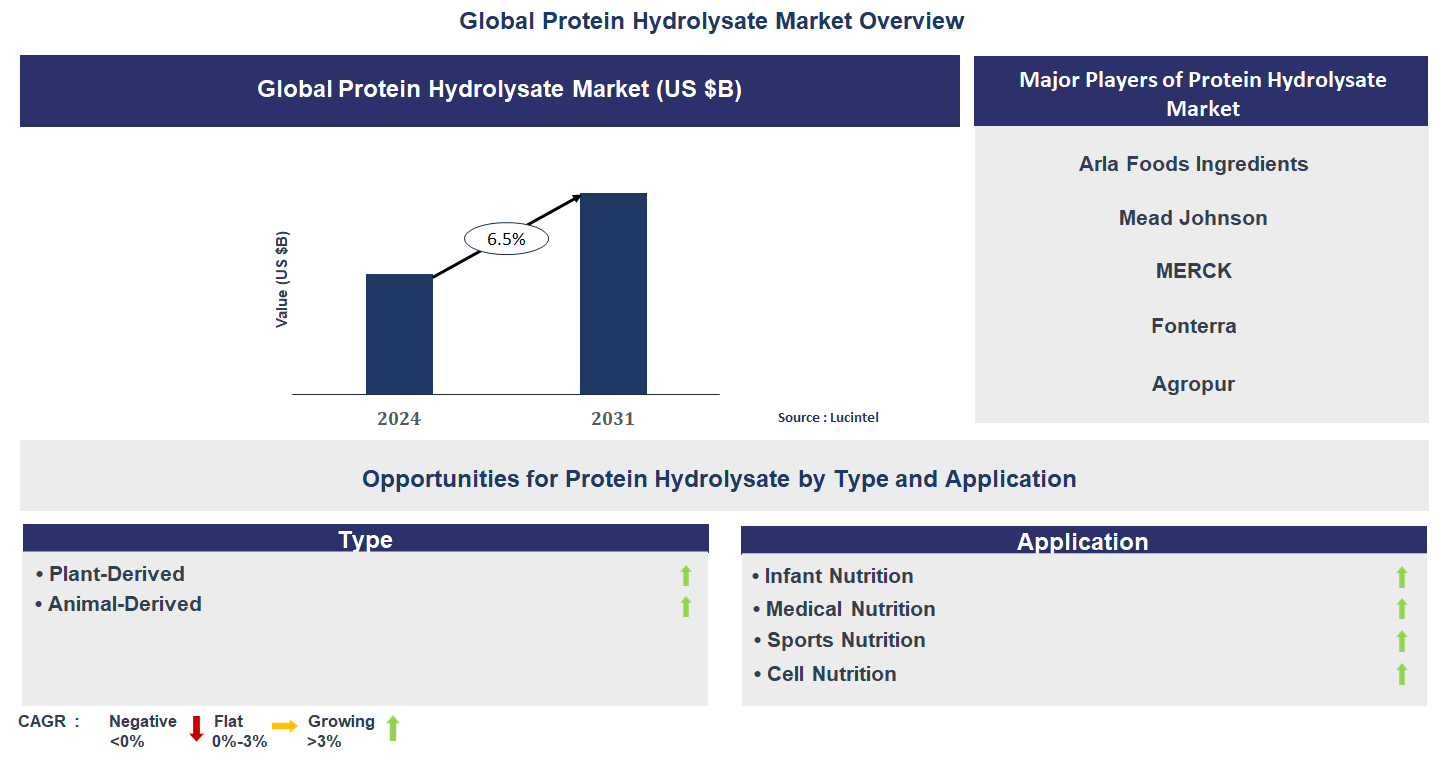
The future of the global protein hydrolysate market looks promising with opportunities in the infant nutrition, medical nutrition, sport nutrition, and cell nutrition markets. The global protein hydrolysate market is expected to grow with a CAGR of 6.5% from 2025 to 2031. The major drivers for this market are the increasing demand for functional protein ingredients, the rising adoption of protein-enriched food products, and the growing focus on health & wellness solutions.• Lucintel forecasts that, within the type category, plant-derived is expected to witness higher growth over the forecast period.
• Within the application category, infant nutrition is expected to witness the highest growth.
• In terms of region, APAC is expected to witness the highest growth over the forecast period. Gain valuable insights for your business decisions with our comprehensive 150+ page report. Sample figures with some insights are shown below.
Emerging Trends in the Protein Hydrolysate Market
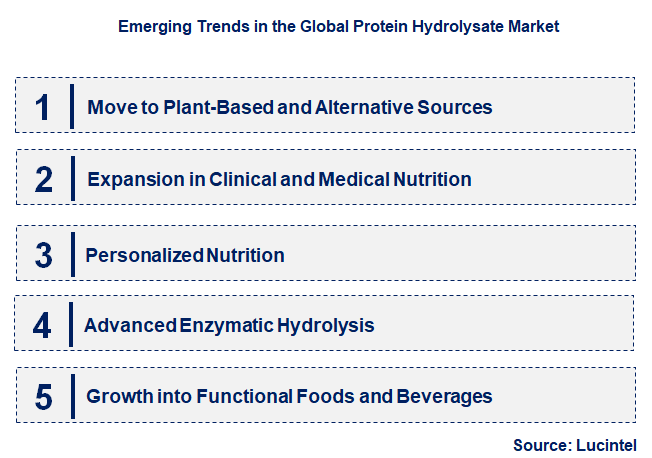
The protein hydrolysate market is being redefined by a number of emerging key trends that are altering the industry from a niche segment to a mainstream part of contemporary nutrition. They are fueled by increased awareness of the role of protein in health, changes in consumer dietary habits, and innovation in manufacturing. The industry is shifting from one that thinks about plain protein sources to one that is now all about formulating highly functional, bioavailable, and sustainable products that can be utilized in a broad array of products and consumer applications.• Move to Plant-Based and Alternative Sources: One of the largest trends is the shift to plant-based and alternative protein hydrolysates, including pea, soy, rice, and even insect-based sources. The effect is a more sustainable and diverse protein market. This trend is fueled by customer demand for vegan and vegetarian products, and seeking increasingly environmentally friendly and allergen-free protein sources. It is opening up new avenues for manufacturers to diversify their portfolios and reach a wider consumer audience.
• Expansion in Clinical and Medical Nutrition: Protein hydrolysates are being used widely in clinical and medical nutrition. They are utilized for patients suffering from digestive disorders, food allergies, or patients requiring a source of readily assimilated protein for recovery after surgery. The market is a high-value, specialty application segment with a robust growth path. The application of protein hydrolysates in such applications is growing because of their better digestibility and hypo allergenicity, which are of utmost importance for patient well-being.
• Personalized Nutrition: A new trend is the utilization of protein hydrolysates in personalized nutrition offerings. This means the production of products with targeted amino acid profiles and peptide structures to address an individual’s individual health needs, for example, muscle recovery or weight control. The effect is a move away from mass-market products to tailored solutions. This trend takes advantage of greater scientific knowledge about nutrition and is facilitated by advances in technology and data analysis, permitting greater precision in dietary supplementation.
• Advanced Enzymatic Hydrolysis: One of the most important trends is the application of advanced enzymatic hydrolysis technologies to manufacture protein hydrolysates. As opposed to conventional acid or alkaline processes, enzymatic processes provide more control over the end product, enabling the production of precise peptide sizes and functional properties. The result is a better quality, more functional product. This technology enables manufacturers to create hydrolysates with enhanced solubility, flavor, and bioavailability, making them more applicable for use in a broader variety of food and beverage products.
• Growth into Functional Foods and Beverages: The market is witnessing a trend where protein hydrolysates are added to a variety of functional foods and drinks. This goes beyond the conventional sports shakes to include yogurt that is fortified, clear protein waters, and meat snacks. The effect is increased consumer appeal and market growth. By incorporating hydrolysates into common food products, companies are making it simpler for consumers to consume more protein, driving growth in new market spaces. Combined, these trends are redefining the market by making protein hydrolysates more sustainable, technological, and consumer-driven, which is setting the industry up for dramatic future growth.
Recent Development in the Protein Hydrolysate Market
The protein hydrolysate industry is experiencing a phase of dynamic evolution, fueled by an interplay of scientific advances and changing consumer interests. These trends are not incremental developments but radically altering the sector’s terrain. The emphasis is on developing more productive manufacturing processes, diversifying the raw materials, and diversifying the uses of these highly functional products. This is a critical time for the market since it continues to expand in significance in different industries, ranging from food and beverage to pharmaceuticals and animal nutrition.• Emerging Extraction and Processing Technologies: One of the main advances is the improvement in extraction and processing technologies, specifically enzymatic hydrolysis. New processes and enzymes are being formulated for the production of protein hydrolysates with particular molecular weights and peptide profiles. The result is a more consistent and improved quality final product. The innovation enables manufacturers to have complete control over the functional characteristics of the hydrolysates, e.g., their solubility, flavor, and bioavailability, which are critical for applications to specialized markets.
• Raw Material Source Diversification: One development is the diversification of raw material sources from traditional milk and soy. There is an increasing emphasis on leveraging the underutilized sources, including fish and meat food processing by-products as well as plant sources like algae and fungi. The result is a more cost-efficient and sustainable supply chain. Manufacturers are not only decreasing their environmental impact but also generating new revenue streams, as well as making the entire market more robust by utilizing what would otherwise be waste.
• Broader Use in Clinical and Infant Nutrition: Another recent trend is the broader application of protein hydrolysates for clinical and infant nutrition. Ingredients are being used more frequently in hypoallergenic infant formulas and in medical foods for patients with gastrointestinal disorders or metabolic disorders. The effect is strong demand from a high-value, specialized market. This trend is promoted by an increasing understanding of the health impacts of highly digestible proteins and the requirement for safe, effective nutritional interventions among vulnerable groups.
• Bioactive Peptides Emphasis: There is a significant trend towards increased interest in bioactive peptides, peptides that are portions of proteins with specific health effects greater than basic nutrition. Scientists are now separating and developing hydrolysates with functionalities like anti-hypertensive, antioxidant, and immunomodulatory activities. The effect is the trend towards functional health ingredients. This has drawn interest from the nutraceutical and pharmaceutical sectors, as these bioactive peptides can be employed to develop targeted health supplements.
• Sports Nutrition Customization: A major development is the customization of protein hydrolysates for the sports nutrition industry. Producers are formulating hydrolysates with tailored amino acid profiles and absorption rates to maximize athletes’ muscle recovery and performance. The effect is a more advanced and competitive sports nutrition industry. By customizing products to the particular requirements of athletes, businesses are able to differentiate their products and account for a greater percentage of this expanding market segment. These advances are cumulatively affecting the market by making protein hydrolysates more functional, versatile, and responsive to consumer and industry needs for specialty, high-performance ingredients.
Strategic Growth Opportunities in the Protein Hydrolysate Market
The protein hydrolysate market presents many strategic opportunities for growth in the key applications, as global demand for high-quality, functional proteins continues to grow. Those companies that can seize these opportunities will position themselves for future success. These opportunities move beyond conventional uses and into specialized markets that demand the very specific qualities of protein hydrolysates. Strategic growth will be generated through the capability to innovate in product development, diversification of sourcing, and expansion of markets to satisfy these changing demands.• Infant Nutrition and Medical Foods: A key strategic growth opportunity is in supplying specialized protein hydrolysates for infant nutrition and medical foods. This involves hypoallergenic baby formulas for allergic infants and high nutrient content solutions for patients with particular dietary requirements. The effect is being able to access a high-value, regulated market with high demand for safe, highly functional ingredients. By satisfying the rigorous quality and safety requirements of these industries, businesses can establish a solid and profitable place.
• Sports Nutrition and Supplements: The sports nutrition and dietary supplement sector is a significant strategic growth area. There is an increasing need for highly bioavailable protein hydrolysates that can be quickly absorbed to support muscle recovery and performance. The effect is a big and growing market segment with strong willingness to pay for high-end products. Firms can differentiate themselves through the production of hydrolysates with better taste and solubility for applications in protein powders, bars, and ready-to-drink beverages.
• Aquaculture and Animal Feed: One of the major strategic growth areas is the animal feed and aquaculture industries. Protein hydrolysates are being utilized in increasing amounts in feed to enhance animal growth, immunity, and nutrient uptake. The result is a giant and high-volume market looking for alternatives to conventional sources of protein. With the ability to produce affordable hydrolysates from by-products, companies can deliver sustainable and performance-improving solutions for the aquaculture and livestock sectors.
• Cosmeceuticals and Personal Care: The cosmeceuticals and personal care industry is a rising strategic growth area. Protein hydrolysates, particularly collagen peptides and silk-derived ones, are being applied in skin and hair care applications for moisturizing, anti-aging, and strengthening activities. The effect is a new and profitable market centered around high-value, functional ingredients. By emphasizing the scientifically-proven advantages of their hydrolysates, businesses are able to attract customers who are seeking more than the minimalist cosmetics.
• Functional Foods and Food and Beverages: The market for functional foods and beverages represents a wide strategic expansion opportunity. Firms are able to innovate through the addition of protein hydrolysates to a variety of products, including snack bars, nutritional beverages, and fortified cereals, in order to increase their protein levels and health benefits. The result is a convenient market with potential for the development of new product segments and access to a mass consumer base that is becoming progressively more health-aware. These growth opportunities through strategy are influencing the market by pushing specialization and innovation. The market is heading toward a world in which bespoke, high-performance protein hydrolysates are the margin of success in several high-impact industries.
Protein Hydrolysate Market Driver and Challenges
The protein hydrolysate market is driven by a mix of strong drivers and crucial challenges. The drivers are mainly a reaction to global health and wellness trends, while the challenges are technical complexities, cost, and consumer perception. The long-term success of the markets will depend on its capacity to ride on its drivers while orderly addressing its challenges. The interplay of these forces will shape the rate and direction of the industry’s development. The factors responsible for driving the protein hydrolysate market include: 1. Growing Health and Wellness Awareness: The largest individual driver is the increasing global awareness of health and wellness. Consumers are more and more looking for functional foods and supplements to deliver a unique benefit to health. Protein hydrolysates, being easily digestible and highly bioavailable, are perfectly placed to take advantage of this trend, particularly among athletes, the elderly, and those with dietary limitations. 2. Expanding Sports Nutrition Industry: The most important driver is the expanding sports nutrition industry. Endurance athletes and bodybuilding athletes are most concerned about performance and recovery and realize that protein hydrolysates are digested more quickly than intact proteins, helping to repair and rebuild muscle. This is driving a robust and steady demand for hydrolysates for protein powders, bars, and shakes. 3. Infant Nutrition Products Demand: High-quality infant nutrition demand is a chief driver. Protein hydrolysates are a main component in hypoallergenic and easy-to-digest infant nutrition for infants suffering from milk protein allergies or with digestive problems. Since parents are increasingly aware of these specialist products, the market for hydrolysates in this use is growing. 4. Growth of the Nutraceutical Market: Industry growth is a strong stimulus. Protein hydrolysates are being added to supplements and functional foods for their bioactive activities, including antioxidant and anti-hypertensive activities. This is opening up new, high-value product ranges beyond general protein supplementation. 5. Senior Nutrition Focus: The primary driver is the growing global aging population and the requirement of senior-specific nutrition. Protein hydrolysates are particularly suitable for elderly people who can have compromised ability to digest and absorb protein from intact food sources. This is generating demand for clinical and dietary supplements specific to their needs. Challenges in the protein hydrolysate market are: 1. High Cost of Production: High production cost is one of the primary challenges. The enzymatic hydrolysis process and high-purity raw materials used can be costly. This may increase the final product costs to be more expensive than traditional protein powders, which can hinder price-sensitive consumers and manufacturers. 2. Bitter Taste and Flavor Problems: One of the main issues is the bitter taste and flavor problems normally connected with protein hydrolysates. The hydrolysis can reveal hydrophobic amino acids, which impart a bitter taste that is challenging to conceal. This may restrict their application in food and beverage usage and involves heavy investment in flavor-masking technologies. 3. Access to Alternatives: Access to alternatives such as protein isolates and concentrates is a major challenge. Alternatives tend to be cheaper and have no flavor characteristics, which presents a preferred option for most food manufacturers, particularly in non-specialty applications. In summary, the protein hydrolysate industry is fueled by strong consumer health trends and niche application requirements. It will, however, need to surmount production cost, flavor, and competition from alternative protein sources challenges. The success of the industry in the future will lie in its capacity to innovate and develop solutions that are not just functional and effective but also cost-effective and acceptable to a wider consumer audience.List of Protein Hydrolysate Companies
Companies in the market compete on the basis of product quality offered. Major players in this market focus on expanding their manufacturing facilities, R&D investments, infrastructural development, and leverage integration opportunities across the value chain. With these strategies protein hydrolysate companies cater increasing demand, ensure competitive effectiveness, develop innovative products & technologies, reduce production costs, and expand their customer base. Some of the protein hydrolysate companies profiled in this report include-• Arla Foods Ingredients
• Mead Johnson
• MERCK
• Fonterra
• Agropur
• Milk Specialties
• BD
• Tatua
• FrieslandCampina
• CMS
Protein Hydrolysate Market by Segment
The study includes a forecast for the global protein hydrolysate market by type, application, and region.Protein Hydrolysate Market by Type [Value from 2019 to 2031]:
• Plant-Derived
• Animal-Derived
Protein Hydrolysate Market by Application [Value from 2019 to 2031]:
• Infant Nutrition
• Medical Nutrition
• Sports Nutrition
• Cell Nutrition
Protein Hydrolysate Market by Region [Value from 2019 to 2031]:
• North America
• Europe
• Asia Pacific
• The Rest of the World
Country Wise Outlook for the Protein Hydrolysate Market
The protein hydrolysate market is experiencing a phase of high-paced growth, spurred by an international emphasis on health, wellness, and precision nutrition. Protein hydrolysates, the pre-digested forms of proteins, are gaining prominence for their high bioavailability and distinctive functional properties. Recent innovation involves establishing new protein hydrolysate sources from plants and insects and increasing their availability for applications beyond conventional uses in sports nutrition.• United States: In the United States, recent trends are characterized by high consumer demand for functional foods and clean-label products. There is major emphasis on plant protein hydrolysates from sources such as peas, soy, and rice to meet the increasing vegan and vegetarian bases. One of the advancements is the use of these hydrolysates in a broad spectrum of products, such as ready-to-drink shakes, protein bars, and clinical nutrition products.
• China: China’s protein hydrolysate market is growing extremely fast, driven by increasing disposable incomes and a continued penchant for health and wellness. The latest trends are infant nutrition and sports supplements. There is a firm government initiative for food safety and an increasing demand for high-quality, easily absorbable protein for infant formula, driving domestic production of milk protein hydrolysates to a high. The market is also experiencing considerable investment in new manufacturing infrastructure and research and development to produce functional hydrolysates for a thriving sports nutrition industry.
• Germany: Germany’s market is a forerunner in high-grade protein ingredients, both conventional and innovative sources. Current trends are spurred by strict quality requirements and an ongoing market for clinical and medical nutrition. Clinical-grade enteral nutrition products are in increasing demand as are specialty protein hydrolysates for the population with food allergies. German firms are leaders in the development of enzymatic hydrolysis technology that produces hypoallergenic and highly bioavailable proteins, with products conforming to the highest safety and nutritional efficacy standards.
• India: The Indian protein hydrolysate market is in a growth phase, being spurred on by fast urbanization and the growth of the nutraceutical and sports nutrition segments. Recent innovations involve the development of cost-efficient and scalable solutions for a big population concerned about health. There is an increased need for plant-based hydrolysates and dietary supplement and sports nutrition products. There is also new entrant activity and a strong research and development focus to tailor-make protein hydrolysates from native sources like cereals and pulses.
• Japan: Japan possesses a well-developed and highly innovative protein hydrolysate market with the driving force being its large percentage of elderly and functional food culture. Current innovations are focused on clinical nutrition and anti-ageing products. Japan leads the way in the production of protein hydrolysates from ocean sources, including fish collagen peptides, utilized in a variety of applications from dietary supplements to cosmetics. The market also places great emphasis on flavor and texture enhancement, as hydrolysates are employed to enhance the sensory quality of a wide range of food products.

Features of the Global Protein Hydrolysate Market
Market Size Estimates: Protein hydrolysate market size estimation in terms of value ($B). Trend and Forecast Analysis: Market trends (2019 to 2024) and forecast (2025 to 2031) by various segments and regions. Segmentation Analysis: Protein hydrolysate market size by type, application, and region in terms of value ($B). Regional Analysis: Protein hydrolysate market breakdown by North America, Europe, Asia Pacific, and Rest of the World. Growth Opportunities: Analysis of growth opportunities in different types, applications, and regions for the protein hydrolysate market. Strategic Analysis: This includes M&A, new product development, and competitive landscape of the protein hydrolysate market. Analysis of competitive intensity of the industry based on Porter’s Five Forces model.
FAQ
Q1. What is the growth forecast for protein hydrolysate market? Answer: The global protein hydrolysate market is expected to grow with a CAGR of 6.5% from 2025 to 2031. Q2. What are the major drivers influencing the growth of the protein hydrolysate market? Answer: The major drivers for this market are the increasing demand for functional protein ingredients, the rising adoption of protein-enriched food products, and the growing focus on health & wellness solutions. Q3. What are the major segments for protein hydrolysate market? Answer: The future of the protein hydrolysate market looks promising with opportunities in the infant nutrition, medical nutrition, sport nutrition, and cell nutrition markets. Q4. Who are the key protein hydrolysate market companies? Answer: Some of the key protein hydrolysate companies are as follows:• Arla Foods Ingredients
• Mead Johnson
• MERCK
• Fonterra
• Agropur
• Milk Specialties
• BD
• Tatua
• FrieslandCampina
• CMS Q5. Which protein hydrolysate market segment will be the largest in future? Answer: Lucintel forecasts that, within the type category, plant-derived is expected to witness higher growth over the forecast period. Q6. In protein hydrolysate market, which region is expected to be the largest in next 5 years? Answer: In terms of region, APAC is expected to witness the highest growth over the forecast period. Q7. Do we receive customization in this report? Answer: Yes, Lucintel provides 10% customization without any additional cost.
Table of Contents
List of Figures
List of Tables
Methodology
- In-depth interviews of the major players in this market
- Detailed secondary research from competitors’ financial statements and published data
- Extensive searches of published works, market, and database information pertaining to industry news, company press releases, and customer intentions
- A compilation of the experiences, judgments, and insights of Lucintel’s professionals, who have analyzed and tracked this market over the years.


Buy Now
Choose a license that fits your team. Instant PDF delivery.
Prices exclude taxes. Instant delivery. Custom licensing available on request.
Key Questions
- • What are some of the most promising, high-growth opportunities for the protein hydrolysate market by type (plant-derived and animal-derived), application (infant nutrition, medical nutrition, sports nutrition, and cell nutrition), and region (North America, Europe, Asia Pacific, and the Rest of the World)?
- • Which segments will grow at a faster pace and why?
- • Which region will grow at a faster pace and why?
- • What are the key factors affecting market dynamics? What are the key challenges and business risks in this market?
- • What are the business risks and competitive threats in this market?
- • What are the emerging trends in this market and the reasons behind them?
- • What are some of the changing demands of customers in the market?
- • What are the new developments in the market? Which companies are leading these developments?
- • Who are the major players in this market? What strategic initiatives are key players pursuing for business growth?
- • What are some of the competing products in this market and how big of a threat do they pose for loss of market share by material or product substitution?
- • What M&A activity has occurred in the last 5 years and what has its impact been on the industry? For any questions related to Protein Hydrolysate Market, Protein Hydrolysate Market Size, Protein Hydrolysate Market Growth, Protein Hydrolysate Market Analysis, Protein Hydrolysate Market Report, Protein Hydrolysate Market Share, Protein Hydrolysate Market Trends, Protein Hydrolysate Market Forecast, Protein Hydrolysate Companies, write Lucintel analyst at email: helpdesk@lucintel.com. We will be glad to get back to you soon.


