
Market Report · July 22, 2026

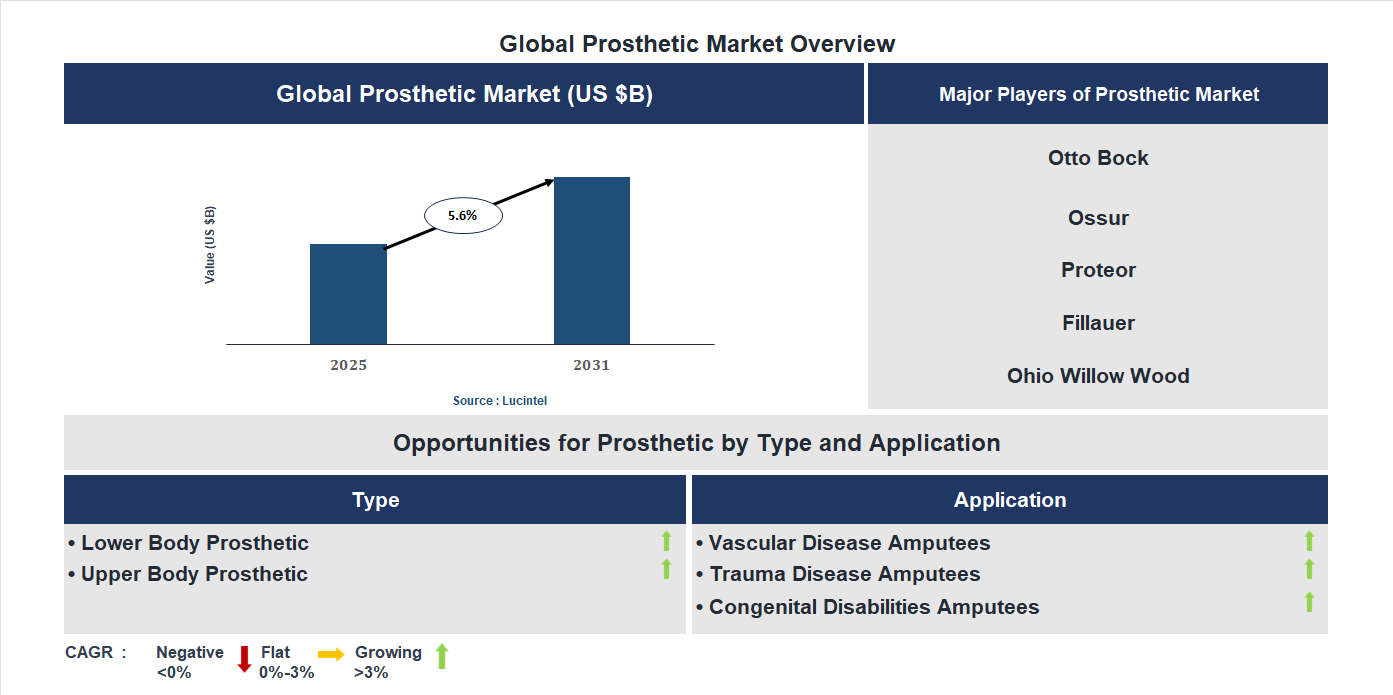
Key data points: The growth forecast = 5.6% annually for the next 7 years. Scroll below to get more insights. This market report covers trends, opportunities and forecasts in prosthetic market to 2031 by type (lower body prosthetic and upper body prosthetic), application (vascular disease amputees, trauma disease amputees, and congenital disabilities amputees), and region (North America, Europe, Asia Pacific, and the Rest of the World)
We'll send your sample report shortly.
• Lucintel forecasts that, within the type category, lower body prosthetic is expected to witness higher growth over the forecast period.
• Within the application category, vascular disease amputees is expected to witness the highest growth.
• In terms of region, APAC is expected to witness the highest growth over the forecast period. Gain valuable insights for your business decisions with our comprehensive 150+ page report. Sample figures with some insights are shown below.
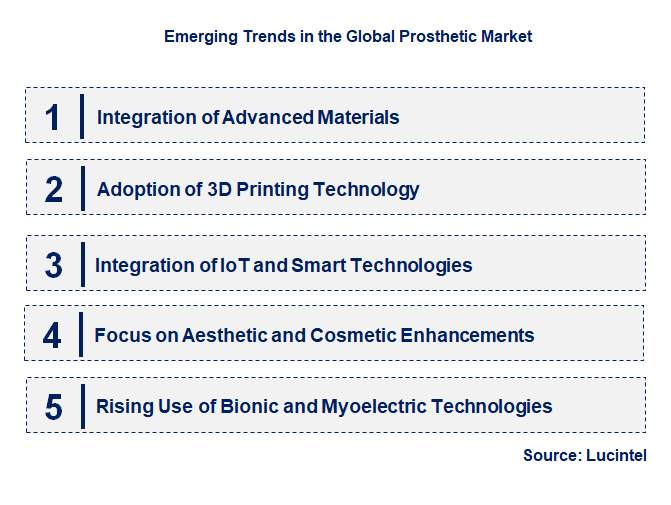
• Integration of Advanced Materials: The use of lightweight, durable, and biocompatible materials such as carbon fiber composites and advanced polymers is revolutionizing prosthetic design. These materials improve comfort, reduce weight, and enhance durability, leading to better patient compliance and satisfaction. The integration of smart materials also allows for more responsive and adaptive prosthetics, which can mimic natural limb movements more effectively. This trend is driving innovation in prosthetic manufacturing, making devices more functional and user-friendly while reducing long-term costs and maintenance.
• Adoption of 3D Printing Technology: 3D printing is transforming prosthetic production by enabling rapid, cost-effective, and highly customizable solutions. This technology allows for precise tailoring to individual patient anatomy, improving fit and comfort. It also reduces production time and costs, making prosthetics more accessible, especially in remote or underserved areas. The ability to quickly prototype and iterate designs accelerates innovation and personalization, meeting diverse patient needs more effectively. As 3D printing becomes more widespread, it is expected to significantly lower barriers to prosthetic access and customization.
• Integration of IoT and Smart Technologies: The incorporation of Internet of Things (IoT) devices and sensors into prosthetics is enhancing functionality and user experience. These smart prosthetics can collect data on usage patterns, environmental conditions, and device performance, enabling real-time adjustments and predictive maintenance. Connectivity features facilitate remote monitoring by healthcare providers, improving post-implant care and reducing complications. This trend is leading to more intuitive, responsive, and adaptive prosthetic devices, ultimately improving mobility, safety, and overall quality of life for users.
• Focus on Aesthetic and Cosmetic Enhancements: There is a growing emphasis on making prosthetics more visually appealing and natural-looking. Advances in silicone and other skin-like materials, along with realistic coloring and texturing techniques, are enabling prosthetics to closely resemble natural limbs. This focus on aesthetics helps improve psychological well-being and social acceptance for users. Market players are investing in innovative cosmetic solutions, including customizable covers and realistic joint movements, to meet the increasing demand for prosthetics that are both functional and visually discreet.
• Rising Use of Bionic and Myoelectric Technologies: Bionic and myoelectric prosthetics are gaining popularity due to their ability to restore more natural movement and dexterity. These devices use electrical signals generated by muscle movements to control prosthetic limbs, offering enhanced precision and control. Advances in sensor technology and machine learning algorithms are making these systems more intuitive and responsive. The adoption of bionic prosthetics is particularly prominent among upper-limb amputees, significantly improving their ability to perform daily tasks. This trend is pushing the market toward more sophisticated, high-performance solutions that closely mimic biological functions. In summary, these emerging trends are collectively reshaping the prosthetic market by making devices more personalized, functional, and accessible. They are driving innovation, improving patient outcomes, and expanding market opportunities, ultimately leading to a future where prosthetics are seamlessly integrated into users lives with enhanced comfort, aesthetics, and capabilities.
• Technological Innovations: Advanced materials and 3D printing are revolutionizing prosthetic manufacturing, enabling customized, lightweight, and cost-effective solutions. This enhances user comfort and functionality, broadening market reach and adoption.
• Digital Integration: The incorporation of smart technologies, such as sensors and IoT, allows for real-time monitoring and improved control of prosthetic devices. This development improves user experience and promotes more natural movement, boosting market growth.
• Material Advancements: The use of durable, biocompatible materials like carbon fiber and silicone has increased prosthetic lifespan and comfort. These innovations reduce maintenance costs and improve patient satisfaction, positively impacting market expansion.
• Rising Demand in Emerging Markets: Growing awareness, healthcare infrastructure improvements, and government initiatives in regions like Asia-Pacific are driving increased prosthetic adoption. This expansion opens new revenue streams and diversifies the market.
• Regulatory and Reimbursement Changes: Evolving policies and insurance coverage improvements are making prosthetic devices more accessible and affordable. These changes facilitate higher adoption rates and stimulate market growth. In summary, recent developments in technology, digital integration, material science, emerging market expansion, and regulatory reforms are collectively propelling the prosthetic market forward. These advancements are enhancing device performance, accessibility, and affordability, leading to increased adoption and a more dynamic industry landscape.
• Medical Rehabilitation: Enhanced functional recovery : Innovations in prosthetic design and materials are enabling better mobility and comfort for amputees, leading to improved rehabilitation outcomes and higher patient satisfaction. Advanced sensors and AI integration facilitate more natural movement, reducing recovery time and enhancing independence.
• Military and Defense: Advanced prosthetics for injured personnel : The demand for highly durable, adaptable prosthetics for injured soldiers is driving development in this sector. These devices offer superior strength, environmental resistance, and integration with military technology, supporting active lifestyles and operational readiness.
• Sports and Athletics: Performance-enhancing prosthetics : The sports industry is witnessing growth in specialized prosthetics designed for athletes. These devices improve performance, reduce injury risk, and promote inclusivity, opening new markets and encouraging participation in competitive sports.
• Consumer and Lifestyle: Customizable and aesthetic options : Increasing consumer awareness and preference for personalized prosthetics are fueling demand for stylish, customizable devices. Innovations in 3D printing and design enable users to express individuality while maintaining functionality.
• Research and Development: Cutting-edge prosthetic technologies : Investment in R&D is fostering breakthroughs such as bionic limbs, neural interfaces, and smart prosthetics. These innovations promise to revolutionize the market by offering more intuitive, responsive, and integrated solutions. In summary, these growth opportunities are significantly impacting the prosthetic market by expanding its scope, enhancing device capabilities, and addressing diverse user needs. They are driving innovation, increasing market size, and fostering a more inclusive environment for users across various applications.
• Technological Innovation: The integration of advanced materials, 3D printing, and smart prosthetics enhances functionality, comfort, and customization. These innovations reduce manufacturing costs and lead times, making prosthetics more accessible. As technology continues to evolve, the market benefits from improved patient outcomes and broader adoption, especially in developing regions. The ability to tailor prosthetics to individual needs fosters higher satisfaction and usability, fueling market growth.
• Increasing Prevalence of Limb Loss: Rising incidences of accidents, trauma, and chronic diseases like diabetes contribute to a growing demand for prosthetic devices. Aging populations are more susceptible to conditions leading to limb loss, creating a steady increase in market size. This demographic shift ensures sustained demand for both basic and advanced prosthetic solutions, encouraging manufacturers to innovate and expand their product portfolios.
• Economic Growth and Healthcare Spending: Growing healthcare budgets and increased insurance coverage facilitate access to prosthetic devices. Economic development in emerging markets boosts disposable income, enabling more individuals to afford high-quality prosthetics. This financial support accelerates market penetration and encourages investment in research and development, leading to a broader range of products and improved quality standards.
• Regulatory Support and Standards: Governments and regulatory bodies establish safety, efficacy, and quality standards that ensure consumer confidence. Clear regulatory pathways streamline product approval processes, encouraging innovation and market entry. Compliance with these standards also enhances brand reputation and facilitates international trade, contributing to overall market stability and growth.
• Rising Awareness and Rehabilitation Programs: Increased awareness about prosthetic options and the importance of rehabilitation services promote market expansion. Educational campaigns and government initiatives improve acceptance and utilization of prosthetic devices. Enhanced rehabilitation programs also improve patient outcomes, encouraging further adoption and fostering a supportive environment for technological advancements. The challenges facing this prosthetic market include:-
• High Cost of Advanced Prosthetics: Despite technological advancements, sophisticated prosthetic devices remain expensive, limiting accessibility for many patients, especially in low-income regions. The high costs stem from complex manufacturing processes, proprietary materials, and ongoing maintenance needs. This financial barrier restricts market growth and necessitates efforts to develop affordable solutions without compromising quality.
• Regulatory and Reimbursement Barriers: Stringent regulatory requirements can delay product launches and increase development costs. Variability in reimbursement policies across regions creates uncertainty, affecting market stability. Limited reimbursement for advanced prosthetics discourages innovation and restricts patient access, posing significant challenges for manufacturers seeking to expand globally.
• Limited Skilled Workforce and Infrastructure: The deployment of advanced prosthetic solutions requires specialized training and infrastructure, which are often lacking in developing regions. The shortage of skilled prosthetists and technicians hampers effective fitting, customization, and maintenance of devices. This gap impedes market growth and highlights the need for capacity-building initiatives to support technological adoption. In summary, the prosthetic market is driven by rapid technological innovations, increasing prevalence of limb loss, supportive economic and regulatory environments, and heightened awareness. However, high costs, regulatory hurdles, and infrastructure limitations pose significant challenges. These factors collectively influence market dynamics, requiring stakeholders to balance innovation with affordability and accessibility. Addressing these challenges while leveraging technological advancements will be crucial for sustainable growth and improved patient outcomes in the evolving prosthetic landscape.
• Otto Bock
• Ossur
• Proteor
• Fillauer
• Ohio Willow Wood
• Trulife
• Blatchford
• Streifeneder
• College Park
• Steeper Group
• Lower Body Prosthetic
• Upper Body Prosthetic
• Vascular Disease Amputees
• Trauma Disease Amputees
• Congenital Disabilities Amputees
• North America
• Europe
• Asia Pacific
• The Rest of the World
• United States: The US prosthetic market has seen rapid innovation with the integration of advanced materials like carbon fiber and smart sensors. Companies are focusing on AI-powered prosthetics that adapt to user movements, improving comfort and functionality. The adoption of 3D printing has reduced costs and production times, making custom prosthetics more accessible. Government programs and insurance coverage are expanding, supporting increased patient access. Additionally, startups and established firms are collaborating to develop more intuitive and lightweight devices, driving market growth and technological leadership.
• China: China’s prosthetic market is expanding swiftly due to rising healthcare investments and a large population of amputees. The country is emphasizing affordable, mass-produced prosthetics using 3D printing technology, which reduces costs significantly. Local companies are innovating in modular and customizable prosthetic solutions to meet diverse needs. Government initiatives aim to improve rehabilitation services and promote domestic manufacturing. The market is also witnessing increased adoption of smart prosthetics with basic sensor integration, although advanced AI-driven devices are still emerging. Overall, China is positioning itself as a key player in affordable prosthetic solutions.
• Germany: Germany’s market is characterized by high-quality, technologically advanced prosthetic devices, with a strong focus on research and development. The country leads in integrating biomechanics and robotics into prosthetic design, enhancing mobility and user comfort. German companies are pioneering in the development of osseointegration and myoelectric prosthetics, offering more natural movement control. The healthcare system supports extensive rehabilitation services, fostering innovation. Additionally, Germany’s emphasis on sustainability has led to the adoption of eco-friendly materials and manufacturing processes. The market continues to grow through collaborations between academia and industry, maintaining its reputation for precision and innovation.
• India: The Indian prosthetic market is rapidly growing, driven by increasing awareness, government initiatives, and a large population in need of affordable solutions. The focus is on developing low-cost, durable prosthetics using locally available materials and 3D printing technology. Several startups are emerging to provide customized prosthetic devices tailored to individual needs. The government’s Ayushman Bharat scheme and other programs are improving access to prosthetic services in rural and urban areas. While advanced AI and smart prosthetics are still limited, incremental innovations are improving basic functionality. Overall, India is poised to become a significant hub for affordable prosthetic manufacturing and innovation.
• Japan: Japan’s prosthetic market is distinguished by its emphasis on robotics and high-tech integration. The country is advancing in the development of highly functional, lightweight, and durable prosthetics, often incorporating AI and sensor technology. Japanese firms are focusing on enhancing user comfort and natural movement, with innovations in myoelectric control systems. The aging population has increased demand for prosthetic solutions that support mobility and independence. Japan also invests heavily in research collaborations to develop next-generation prosthetics, including bionic limbs. The market remains competitive, with a strong emphasis on quality, innovation, and personalized care.


• Otto Bock
• Ossur
• Proteor
• Fillauer
• Ohio Willow Wood
• Trulife
• Blatchford
• Streifeneder
• College Park
• Steeper Group Q5. Which prosthetic market segment will be the largest in future? Answer: Lucintel forecasts that, within the type category, lower body prosthetic is expected to witness higher growth over the forecast period. Q6. In prosthetic market, which region is expected to be the largest in next 5 years? Answer: In terms of region, APAC is expected to witness the highest growth over the forecast period. Q7. Do we receive customization in this report? Answer: Yes, Lucintel provides 10% customization without any additional cost.


Choose a license that fits your team. Instant PDF delivery.
Prices exclude taxes. Instant delivery. Custom licensing available on request.
Market Report · July 22, 2026
Market Report · July 22, 2026
Market Report · July 22, 2026
Trusted partner for strategic intelligence and business growth


Receive a complimentary market analysis tailored to your industry. Our analysts will identify key growth opportunities and competitive dynamics specific to your business.

Market size, growth rate, and key trend analysis for your specific sector.

Top competitor positioning and market share analysis.

Strategic recommendations backed by data-driven insights.
Get curated market intelligence and competitive moves straight to your inbox.
By subscribing, you agree to receive our monthly insights. Unsubscribe anytime.
Receive a complimentary market analysis tailored to your industry. Our analysts will identify key growth opportunities and competitive dynamics specific to your business.
Market size, growth rate, and key trend analysis for your specific sector.
Top competitor positioning and market share analysis.
Strategic recommendations backed by data-driven insights.
Get curated market intelligence, emerging trends, and competitive moves straight to your inbox each month.
By subscribing, you agree to receive our monthly insights. Unsubscribe anytime.
We'll send your sample report shortly.