
Market Report · July 16, 2026

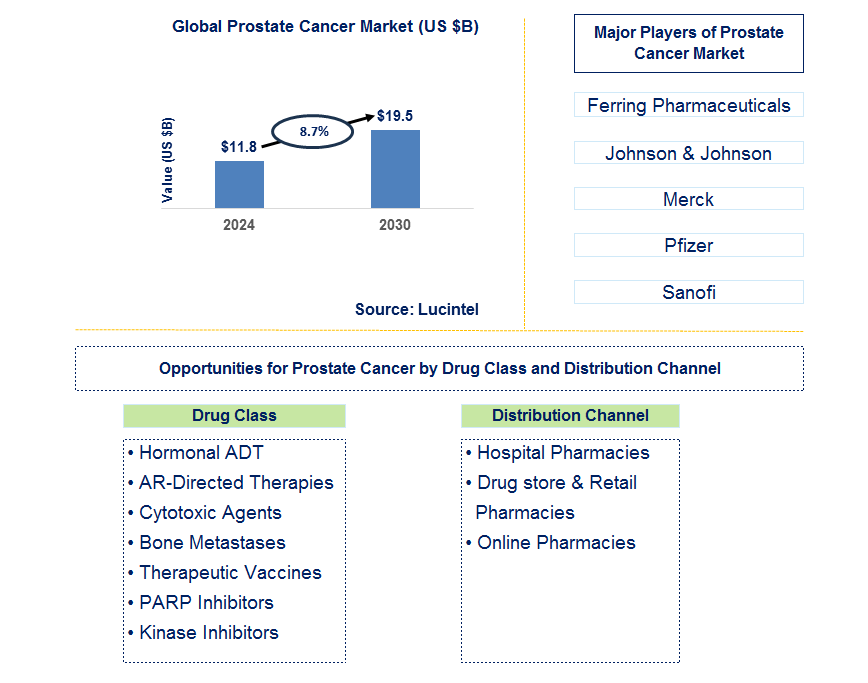
Key data points: The market size in 2030 = $19.47 billion, growth forecast = 8.7% annually for the next 6 years. Scroll below to get more insights. This market report covers trends, opportunities, and forecasts in the global prostate cancer market to 2030 by drug class (hormonal ADT, AR-directed therapies, cytotoxic agents,bone metastases, therapeutic vaccines, PARP inhibitors, kinase inhibitors, and PSMA-targeted radioligands), distribution channel (hospital pharmacies, drug store & retail pharmacies, and online pharmacies), and region (North America, Europe, Asia Pacific, and the Rest of the World)
We'll send your sample report shortly.
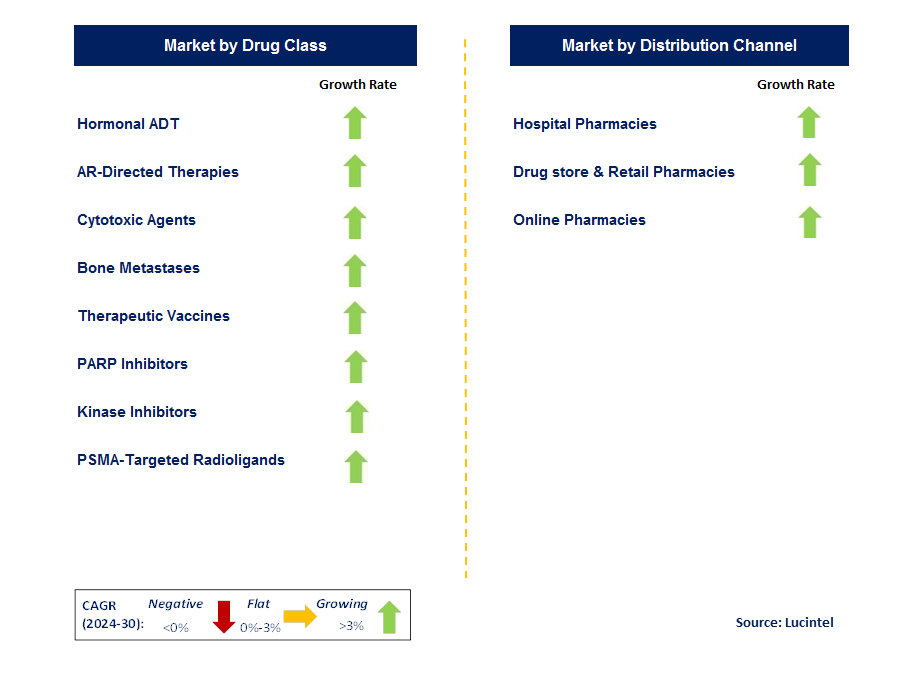
• Lucintel forecasts that, within the drug class category, AR-directed therapies is expected to witness the highest growth over the forecast period.
• In terms of regions, APAC is expected to witness the highest growth over the forecast period due to The increasing prevalence of prostate cancer, the availability of several treatment choices, technical developments, customized medications, and affordable therapy. A more than 150-page report is developed to help in your business decisions.
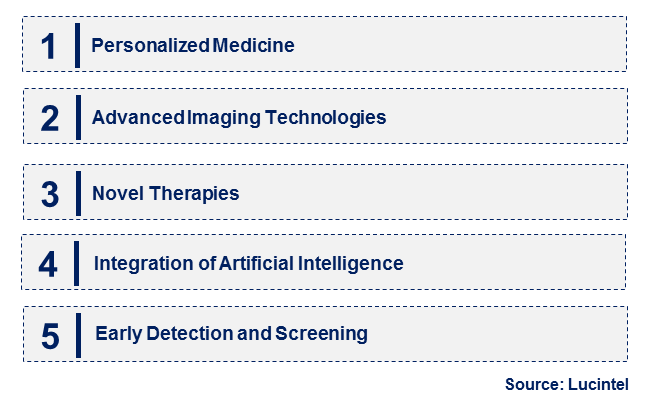
• Personalized Medicine: Personalized medicine in the management of prostate cancer is becoming increasingly possible due to advances in genomics and biomarker research. This approach allows treatments to be tailored to the individual genetic profiles of patients, maximizing efficacy while minimizing side effects. Genomic information thus enables healthcare providers to choose the most appropriate therapeutic options for each patient, optimizing treatment outcomes and resources.
• Advanced Imaging Technologies: Advanced imaging technologies, such as multiparametric MRI and PSMA PET scans, are revolutionizing diagnosis and staging in prostate cancer. These newer imaging methods provide clearer, more detailed pictures that enhance cancer detection and help assess responses to treatment. Early interventions and personalized strategies are now possible due to enhanced imaging capabilities, improving overall patient management.
• Novel Therapies: Over the last ten years, many new treatments for prostate cancer have been developed and approved. Novel targeted therapies and immunotherapies, such as PSMA-targeted therapies and immune checkpoint inhibitors, are opening new treatment avenues for patients with advanced or refractory diseases. These therapies represent a new generation of treatments that are increasingly effective and personalized.
• Integration of Artificial Intelligence: AI has been introduced at every step of prostate cancer management, from diagnosis through imaging to the delivery of planned treatments. AI algorithms are used for medical image analysis, outcome prediction, and personalized treatment approaches. These technologies are expected to improve diagnostic precision, streamline workflows, and enhance patient care through predictive analytics.
• Early Detection and Screening: There is an increasing emphasis on early detection and screening for prostate cancer, driven by the need to diagnose and treat the disease earlier. New guidelines for screening, along with improved diagnostic tools, continue to aid in the earlier detection of prostate cancer, leading to better outcomes and more effective treatment options. This shift is further supported by increased awareness and advancements in diagnostic technologies. These emerging trends will continue to reshape the prostate cancer market by enhancing diagnosis, treatment, and patient care. Personalized medicine, along with new technologies and innovative therapies, is driving improvements in disease management and better patient outcomes.
• FDA Approval of New Drugs: Recent FDA approvals have introduced new medicines into the prostate cancer market, including new androgen receptor inhibitors and radiopharmaceuticals. These new treatments have demonstrated improved efficacy in patients with advanced or castration-resistant prostate cancer, offering more therapeutic options and better disease management. The approvals also reflect ongoing innovation and research in the field.
• Precision Medicine Advances: There has been significant progress in precision medicine for prostate cancer treatment. Improved genetic profiling and biomarker identification are helping to further personalize treatments. This approach has raised the success rates of treatments, as therapies can be tailored to exact genetic mutations and disease characteristics, improving patient outcomes and resource optimization.
• Emergence of PSMA-targeted Therapies: PSMA-targeted therapies, including new treatments like radioligand therapy, are emerging. In radioligand therapy, prostate-specific membrane antigen (PSMA) is used to target radiation delivery to cancerous cells in a precise manner. This approach offers another option for patients with metastatic disease and has shown efficacy in clinical trials, marking an important advancement in prostate cancer treatment.
• Growth in Diagnostic Imaging Technologies: Improved diagnostic imaging techniques, such as multiparametric MRI and PET scans, allow for detailed imaging, accurate cancer staging, and early detection. These advancements help in treatment planning, leading to better patient management and improved treatment outcomes.
• More Consideration for Patient Access and Equity: There is an increasing emphasis on improving patient access to care and reducing treatment disparities in prostate cancer. Efforts are being made to enhance healthcare infrastructure, provide access to novel therapies, and support underserved populations. This focus on equity is expected to ensure that all patients, regardless of socioeconomic status, receive timely and effective care. These developments are driving changes in the prostate cancer market, leading to better treatment options, more accurate diagnoses, and improved patient access. The ongoing innovations and research underscore the importance of continued progress in the field.
• Expansion of Targeted Therapies: This represents a significant opportunity for the further adoption of targeted therapies in prostate cancer. Targeted therapies are focused on individual genetic mutations or biomarkers and provide personalized treatment options that may significantly improve efficacy while minimizing side effects. The development and commercialization of novel targeted therapies can be used to fulfill unmet needs and drive further market growth.
• Advancing Diagnostic Technologies: Other important areas of growth opportunity could be investment in advanced diagnostic technologies. Multi-parametric MRI and PSMA PET are examples of technologies that form the basis for accurate diagnosis and staging. Innovative companies, with such advanced diagnostic tools, stand to benefit by offering them to meet the increasing demand for more accurate and early-detection methodologies.
• Immunotherapies Development: Immunotherapy is starting to appear as a very encouraging area of growth within the prostate cancer market. The development and marketing of new immune checkpoint inhibitors and other forms of immunotherapeutic agents would be able to offer innovative options for patients in advanced or refractory disease. The field offers opportunities for major market development with an enhancement in patient outcomes.
• Expansion into Emerging Markets: Emerging markets, such as India and China, provide a huge growth opportunity for prostate cancer treatment. As healthcare infrastructures continue to develop in these regions, the demand for advanced treatments will also increase. Companies have great opportunities to tap into this newly developing pool of patients. This may further help their market reach and advantage of strategic partnerships with localised solutions for enhanced market presence.
• Improvement in Patient Support and Access Programs: There is a growing demand to have patient support and access programs, especially in underserved areas. Along with comprehensive support services involving patient education, financial assistance, and access to new treatments, patient outcome can be bettered concurrent with market growth. Companies gain significantly in terms of reputation by investing in these sorts of programs. These represent strategic growth opportunities and are high-priority areas of expansion and innovation in the prostate cancer market. Targeted therapies, advanced diagnostics, immunotherapies, emerging markets, and patient support are some of the key areas wherein stakeholders can cause growth and create a dent in patient care.
• Technological Advances: Technological advancements allow for the discovery of new diagnostic and therapeutic modalities, which are major growth factors for the prostate cancer market. New imaging technologies, innovative treatments, early diagnoses, and more precise treatment options are driving market growth and creating opportunities for stakeholders to improve patient care.
• Growing Prevalence of Prostate Cancer: As the global population ages, the prevalence of prostate cancer is expected to rise. With the increase in diagnosed cases, there is a growing demand for both early detection and novel treatments. The increasing awareness of prostate cancer also plays a role in accelerating market growth.
• Government Initiatives: Government initiatives promoting awareness, early detection, and research are helping to stimulate the market. Public funding, incentives for research institutions, and policy reforms are creating an environment that encourages innovation and drives growth in the prostate cancer market. Challenges:
• High Treatment Costs: Prostate cancer treatments, particularly advanced therapies and diagnostics, can be expensive. High treatment costs can limit access to care for patients, particularly in low- and middle-income regions. These costs can slow down the adoption of new therapies and technologies, limiting market growth.
• Regulatory Barriers: The regulatory approval process for new drugs and therapies can be lengthy and complex. Stringent approval requirements and differing regulations across regions can delay the entry of new treatments into the market and limit their accessibility.
• Limited Access to Healthcare: In some regions, limited access to healthcare services and treatments, along with disparities in healthcare quality, can restrict patient access to the latest therapies. These challenges hinder market growth and patient outcomes.
• Ferring Pharmaceuticals
• Johnson & Johnson
• Merck
• Pfizer
• Sanofi
• AbbVie
• Astellas Pharma
• AstraZeneca
• Bayer
• Clovis Oncology
• Hormonal ADT
• AR-Directed Therapies
• Cytotoxic Agents
• Bone Metastases
• Therapeutic Vaccines
• PARP Inhibitors
• Kinase Inhibitors
• PSMA-Targeted Radioligands
• Hospital Pharmacies
• Drug store & Retail Pharmacies
• Online Pharmacies
• North America
• Europe
• Asia Pacific
• The Rest of the World
• United States: In the U.S., precision medicine and targeted therapy are increasingly being applied. Advances in genomic profiling have led to personalized treatments based on genetic makeup. Some newer treatments, like PSMA-targeted radioligand therapy, have also shown efficacy in clinical trials. Recently, the FDA has approved several new drugs and diagnostics, greatly improving options for treating patients with advanced prostate cancer.
• China: China is also making strides in addressing prostate cancer, with significant investments in research and development. Imaging and targeted therapies are gaining momentum in China. Several Chinese companies are introducing new drugs and protocols for treatment tailored to local populations. There is also a growing focus on enhancing early detection and screening methodologies, which are crucial in a rapidly developing healthcare market.
• Germany: Germany is often the first country to introduce state-of-the-art technologies for prostate cancer management. The latest robotic-assisted surgeries and innovations in radiotherapy are recent developments. Biomarker research, which aids in early detection and treatment planning, has also evolved in Germany. The country's healthcare policies are encouraging, promoting the swift adoption of advanced technologies and increasing access to treatments for more patients.
• India: In India, the focus is on improving access to prostate cancer management and strengthening healthcare infrastructure. New developments, such as better diagnostic and therapeutic facilities, are becoming more widely available. Indian researchers are actively participating in international studies, and there is increased collaboration between national and international pharmaceutical companies for drug development and trials. Efforts are also being made to reduce inequalities in access to treatment and early detection programs.
• Japan: Advanced treatments using progressive imaging, along with other novel hormonal therapies, have been introduced in Japan. Immune checkpoint inhibitors and other novel therapeutic agents are under study. The country’s healthcare policies encourage research and development aimed at adopting new technologies and advancing patient care standards.


• Ferring Pharmaceuticals
• Johnson & Johnson
• Merck
• Pfizer
• Sanofi
• AbbVie
• Astellas Pharma
• AstraZeneca
• Bayer
• Clovis OncologyQ6. Which prostate cancer market segment will be the largest in future?Answer: Lucintel forecasts that ar-directed therapies is expected to witness highest growth over the forecast period.Q7. In pros Q4. What are the major segments for prostate cancer market? Answer: The future of the prostate cancer market looks promising with opportunities in the hospital pharmacies, drug store & retail pharmacies, and online pharmacies markets. Q5. Who are the key prostate cancer market companies? Answer: Some of the key prostate cancer companies are as follows:
• Ferring Pharmaceuticals
• Johnson & Johnson
• Merck
• Pfizer
• Sanofi
• AbbVie
• Astellas Pharma
• AstraZeneca
• Bayer
• Clovis Oncology Q6. Which prostate cancer market segment will be the largest in future? Answer: Lucintel forecasts that ar-directed therapies is expected to witness highest growth over the forecast period. Q7. In prostate cancer market, which region is expected to be the largest in next 5 years? Answer: APAC is expected to witness highest growth over the forecast period due to The increasing prevalence of prostate cancer, the availability of several treatment choices, technical developments, customized medications, and affordable therapy Q.8 Do we receive customization in this report? Answer: Yes, Lucintel provides 10% customization without any additional cost.


Choose a license that fits your team. Instant PDF delivery.
Prices exclude taxes. Instant delivery. Custom licensing available on request.
Market Report · July 16, 2026
Market Report · July 15, 2026
Market Report · July 15, 2026
Trusted partner for strategic intelligence and business growth


Receive a complimentary market analysis tailored to your industry. Our analysts will identify key growth opportunities and competitive dynamics specific to your business.

Market size, growth rate, and key trend analysis for your specific sector.

Top competitor positioning and market share analysis.

Strategic recommendations backed by data-driven insights.
Get curated market intelligence and competitive moves straight to your inbox.
By subscribing, you agree to receive our monthly insights. Unsubscribe anytime.
Receive a complimentary market analysis tailored to your industry. Our analysts will identify key growth opportunities and competitive dynamics specific to your business.
Market size, growth rate, and key trend analysis for your specific sector.
Top competitor positioning and market share analysis.
Strategic recommendations backed by data-driven insights.
Get curated market intelligence, emerging trends, and competitive moves straight to your inbox each month.
By subscribing, you agree to receive our monthly insights. Unsubscribe anytime.
We'll send your sample report shortly.