
Market Report · July 16, 2026

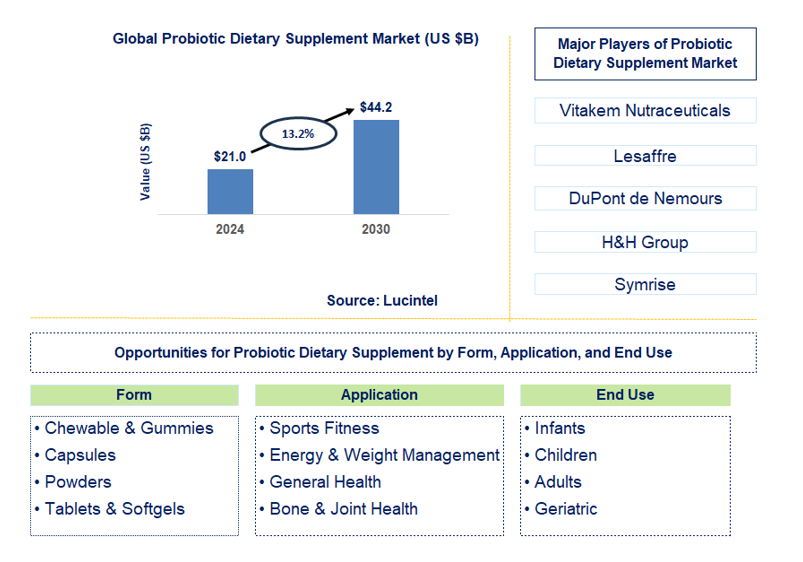
Key data points: The market size in 2030 = $44.2 billion, growth forecast = 13.2% annually for the next 6 years. Scroll below to get more insights. This market report covers trends, opportunities, and forecasts in the global probiotic dietary supplement market to 2030 by form (chewable & gummies, capsules, powders, tablets & softgels, and others), application (sports fitness, energy & weight management, general health, bone & joint health, gastrointestinal health, immunity, cardiac health, diabetes, and others), end use (infants, children, adults, and geriatric), and region (North America, Europe, Asia Pacific, and the Rest of the World)
We'll send your sample report shortly.
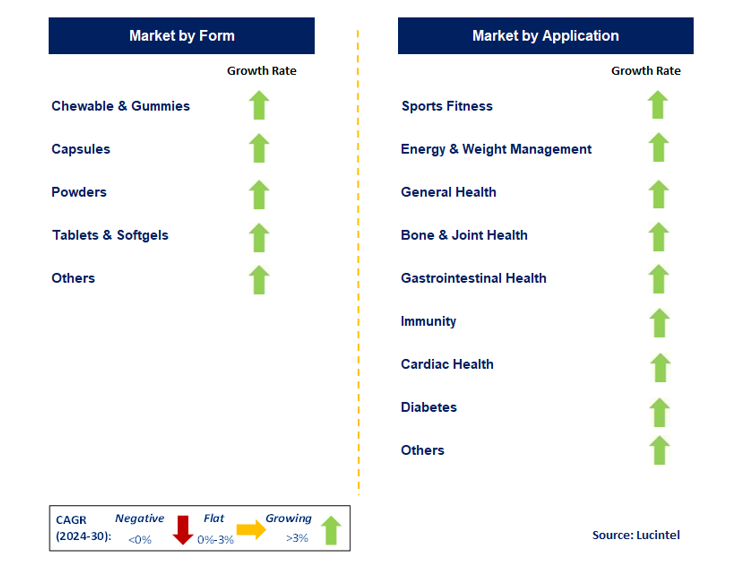
• Lucintel forecasts that, within the form category, tablet & softgel will remain the largest segment over the forecast period due to its rising preference among consumers given to its high-quality excipients, convenience, and provide an accurate dosage.
• North America will remain the largest region over the forecast period due to rising number of health-conscious consumers and presence of major manufacturers in the region. Gain valuable insights for your business decisions with our comprehensive 150+ page report.
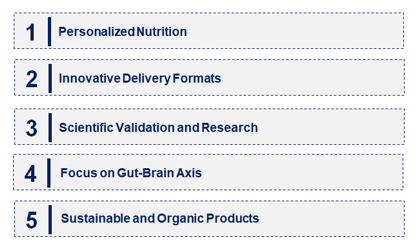
• Personalized Nutrition: In line with this trend, personalized nutrition is on the rise, where probiotic supplements are increasingly made specifically for individual health situations based on genetics, microbiomes, or lifestyle factors. Companies have developed custom-made formulas consisting of different strains of bacteria to address various conditions, thereby enhancing the consumer experience through higher satisfaction levels.
• Innovative Delivery Formats: Innovative delivery formats, such as jelly sweets, powders, and drinks, are becoming increasingly popular. These formats offer convenience and appeal to a much wider audience, including those who don’t prefer traditional capsule forms. The trend is expanding the market while accommodating diverse consumer tastes and increasing product reach.
• Scientific Validation and Research: There is a growing focus on scientific validation and clinical investigation to substantiate health claims for probiotic supplements. Brands invest in research to provide evidence-based benefits and improve credibility. This move is vital to building trust among consumers and ensuring adherence to regulatory requirements.
• Focus on Gut-Brain Axis: The emphasis on the gut-brain axis has emerged as a major trend, with probiotics being researched for their role in mental health, cognitive function, and other areas. This trend represents an increased desire to link gut health with general well-being, resulting in specialized products within the area of probiotics.
• Sustainable and Organic Products: There is increasing demand for sustainable, organic probiotic supplements from consumers. In response, brands have embraced environmentally friendly practices and used organic ingredients to guarantee transparent sourcing. This trend aligns well with the larger preferences of consumers who favor environmentally conscious products. These trends—personalized nutrition, innovative delivery formats, scientific validation, focus on the gut-brain axis, and sustainable products—are reshaping the probiotic dietary supplement market. They reflect changing consumer demands that drive industry innovation.
• Growth in Product Diversity: The market has seen significant growth in product diversity through the introduction of new strains of probiotics, different delivery systems, and new formulations. Companies are expanding their portfolios to address diverse health needs, thereby providing more choices for consumers and increasing the market's attractiveness.
• Increased Focus on Clinical Research: The focus of clinical research is increasingly on the validation of probiotics' health benefits. This development has led to more investment in research and development, providing scientifically backed information to buyers about probiotic products, which enhances their trust in these products.
• Rise of Personalized Probiotics: Personalized probiotics, based on each person's health profile, are becoming popular. With technological progress and increased knowledge about the human microbiome, tailored probiotics have been developed to meet the specific needs of patients, making them more effective.
• Expansion of E-Commerce Channels: E-commerce is taking over distribution channels for probiotic dietary supplements. Online platforms now serve as major sales outlets, offering convenience and reach to a wider audience, thus fueling growth in the market.
• Emphasis on Sustainability: The drive toward sustainability within the probiotic supplement sector is growing. Brands are adopting green packaging strategies and eco-friendly sourcing policies to attract eco-conscious consumers, which aligns with the growing trends in responsible consumption. These developments—product diversity, clinical research, personalization, e-commerce expansion, and sustainability—are shaping the probiotic dietary supplement market. They reflect industry trends and changing consumer preferences, leading to growth and innovation within this market segment.
• Personalized Probiotic Solutions: There is a major opportunity for growth in developing customized solutions that focus on an individual’s personal health. Customizing probiotics to fit specific health needs improves their efficiency and increases customer satisfaction, which in turn leads to the growing demand for product and service customization, as seen below.
• Expansion into Emerging Markets: Opening new markets is another opportunity for companies. For example, the rise of health-conscious populations and increases in disposable incomes in regions such as Asia and Latin America present a chance for probiotic brands to expand into new territories and capture emerging consumer segments.
• Innovations in Delivery Formats: Innovations in delivery formats, such as probiotic gummies or powders, provide opportunities for growth by catering to diverse consumer preferences. These formats have made it possible to reach more people by creating convenience through accessibility and ease, thereby enlarging the market and attracting new customers.
• Integration of Probiotics with Functional Foods: Probiotics can be combined with functional foods, such as drinks or snacks, offering new growth opportunities. This move combines other ingredients that promote good health with probiotics, making them more popular among consumers and opening up new areas for marketing.
• Focus on Sustainable and Organic Products: Sustainable and organic products are appealing due to increased concern about safe ecological alternatives among buyers. By adopting environmentally friendly approaches and using organic materials, companies can diversify their offerings while capturing consumers who prefer green options. These areas—personalized solutions, emerging markets, innovative formats, functional foods, and sustainability—represent opportunities for expansion or innovation within the probiotic dietary supplement industry. Addressing these opportunities enables brands to respond proactively to emerging trends, thus driving market development.
• Increasing Consumer Awareness of Gut Health: A major driver is the increased awareness among consumers about gut health and its impact on overall well-being. As more people recognize the benefits of taking probiotic supplements for digestion and immune system enhancement, demand continues to grow, which in turn supports market expansion.
• Advancements in Probiotic Research: Another significant driver boosting market growth is advancements in research on probiotics’ health benefits and their ability to make health claims. This makes it possible for countries to increase consumption by conducting scientific studies and clinical trials, thus building trust among customers.
• Growing Demand for Personalized Nutrition: Brands are now producing personalized probiotics to meet the increasing demand for individual nutrition needs. This customization makes products more effective while enhancing customer satisfaction, providing room for brands to develop targeted probiotic products.
• Expansion of Distribution Channels: Distribution channels, particularly through e-commerce, are expanding, making products more accessible and convenient for consumers. Online platforms are essential in reaching broader markets, allowing businesses to engage with larger audiences.
• Focus on Sustainable and Ethical Practices: Consumer preference for eco-friendly packaging and responsible sourcing is significantly contributing to sector growth. Brands that adopt sustainable practices can attract environmentally conscious consumers and differentiate themselves in the market. Challenges in the probiotic dietary supplement market include:
• Regulatory Compliance: Probiotic supplement manufacturers face the challenge of meeting regulatory requirements and standards. This necessitates investment in research, testing, and quality control to ensure compliance with health claims, labeling, and safety regulations, which can affect operational efficiency.
• High Production Costs: High production costs related to cutting-edge probiotic strains and quality management can affect company profitability. Sourcing high-quality ingredients and maintaining production standards is expensive, requiring careful management to balance costs and pricing effectively.
• Market Competition: The entry of numerous brands into the probiotic supplement field has intensified market competition. Aligning products, maintaining competitive price points while ensuring product quality and effectiveness requires innovative marketing strategies. Increasing consumer awareness, advancements in research, personalized nutrition demand, distribution channel expansion, and sustainability focus are some of the growth drivers within this industry. Regulatory compliance, high production costs, and market competition are challenges that affect industry dynamics. These factors must be addressed to navigate the market successfully and achieve success in the probiotic dietary supplement sector.
• Vitakem Nutraceuticals
• Lesaffre
• DuPont de Nemours
• H&H Group
• Symrise
• ProbioFerm
• Dietary Pros
• Chewable & Gummies
• Capsules
• Powders
• Tablets & Softgels
• Others
• Sports Fitness
• Energy & Weight Management
• General Health
• Bone & Joint Health
• Gastrointestinal Health
• Immunity
• Cardiac Health
• Diabetes
• Others
• Infants
• Children
• Adults
• Geriatric
• North America
• Europe
• Asia Pacific
• The Rest of the World
• The United States: The probiotic dietary supplement market in the United States has grown tremendously, with an increased variety of products and advanced probiotic strains. Companies focus on personalized nutrition while using new delivery formats, such as gummies and powders. There is also an emphasis on clinical trials to prove health claims, which helps boost consumer confidence. Additionally, partnerships between probiotic brands and healthcare practitioners have expanded.
• China: Rapidly growing disposable incomes, coupled with an increased focus on health and wellness, have boosted the market for probiotic dietary supplements in China. Developments have led to an upsurge in local probiotic brands as well as more international players entering the sector. The Chinese population is increasingly interested in products that support digestion or improve immune function by adding beneficial bacteria or yeasts, such as those found in yogurt, to their diet. E-commerce platforms play a key role in distribution, and accessibility to these supplements is spreading across the nation’s borders.
• Germany: Increasing consumer awareness about gut health is driving growth in Germany’s market for probiotic dietary supplements. Trends include focusing on scientifically validated probiotic strains and formulation innovations. German consumers demand products with proven health benefits, which has led to increased funding for research activities. Furthermore, organic and natural-based supplements are gaining popularity among Germans, reflecting the broad public interest in general wellbeing and ecological sustainability.
• India: The Indian dietary supplement industry has witnessed tremendous growth due to urbanization and rising health consciousness. Recent developments include the emergence of probiotic products targeted at local dietary habits and health concerns. There has been increasing interest among Indian consumers in probiotics for digestive health and immune support. Additionally, international brands are entering the market, and local manufacturing capacities for these products are also developing.
• Japan: The Japanese market for probiotic dietary supplements is characterized by a strong trend toward functional foods and advancements in research regarding probiotics. This includes incorporating probiotics into traditional Japanese diets and developing innovative product formats. Japanese consumers have high knowledge of probiotics and will only purchase products that offer specific benefits, such as improved digestion and increased immunity. Additionally, there is increased collaboration between probiotic brand manufacturers and healthcare professionals.


• Vitakem Nutraceuticals
• Lesaffre
• DuPont de Nemours
• H&H Group
• Symrise
• ProbioFerm
• Dietary Pros Q6. Which probiotic dietary supplement market segment will be the largest in future? Answer: Lucintel forecasts that tablet & softgel will remain the largest segment over the forecast period due to its rising preference among consumers given to its high-quality excipients, convenience, and provide an accurate dosage. Q7. In probiotic dietary supplement market, which region is expected to be the largest in next 5 years? Answer: North America will remain the largest region over the forecast period due to rising number of health-conscious consumers and presence of major manufacturers in the region. Q.8 Do we receive customization in this report? Answer: Yes, Lucintel provides 10% customization without any additional cost.


Choose a license that fits your team. Instant PDF delivery.
Prices exclude taxes. Instant delivery. Custom licensing available on request.
Market Report · July 16, 2026
Market Report · July 15, 2026
Market Report · July 15, 2026
Trusted partner for strategic intelligence and business growth


Receive a complimentary market analysis tailored to your industry. Our analysts will identify key growth opportunities and competitive dynamics specific to your business.

Market size, growth rate, and key trend analysis for your specific sector.

Top competitor positioning and market share analysis.

Strategic recommendations backed by data-driven insights.
Get curated market intelligence and competitive moves straight to your inbox.
By subscribing, you agree to receive our monthly insights. Unsubscribe anytime.
Receive a complimentary market analysis tailored to your industry. Our analysts will identify key growth opportunities and competitive dynamics specific to your business.
Market size, growth rate, and key trend analysis for your specific sector.
Top competitor positioning and market share analysis.
Strategic recommendations backed by data-driven insights.
Get curated market intelligence, emerging trends, and competitive moves straight to your inbox each month.
By subscribing, you agree to receive our monthly insights. Unsubscribe anytime.
We'll send your sample report shortly.