
Market Report · July 31, 2026

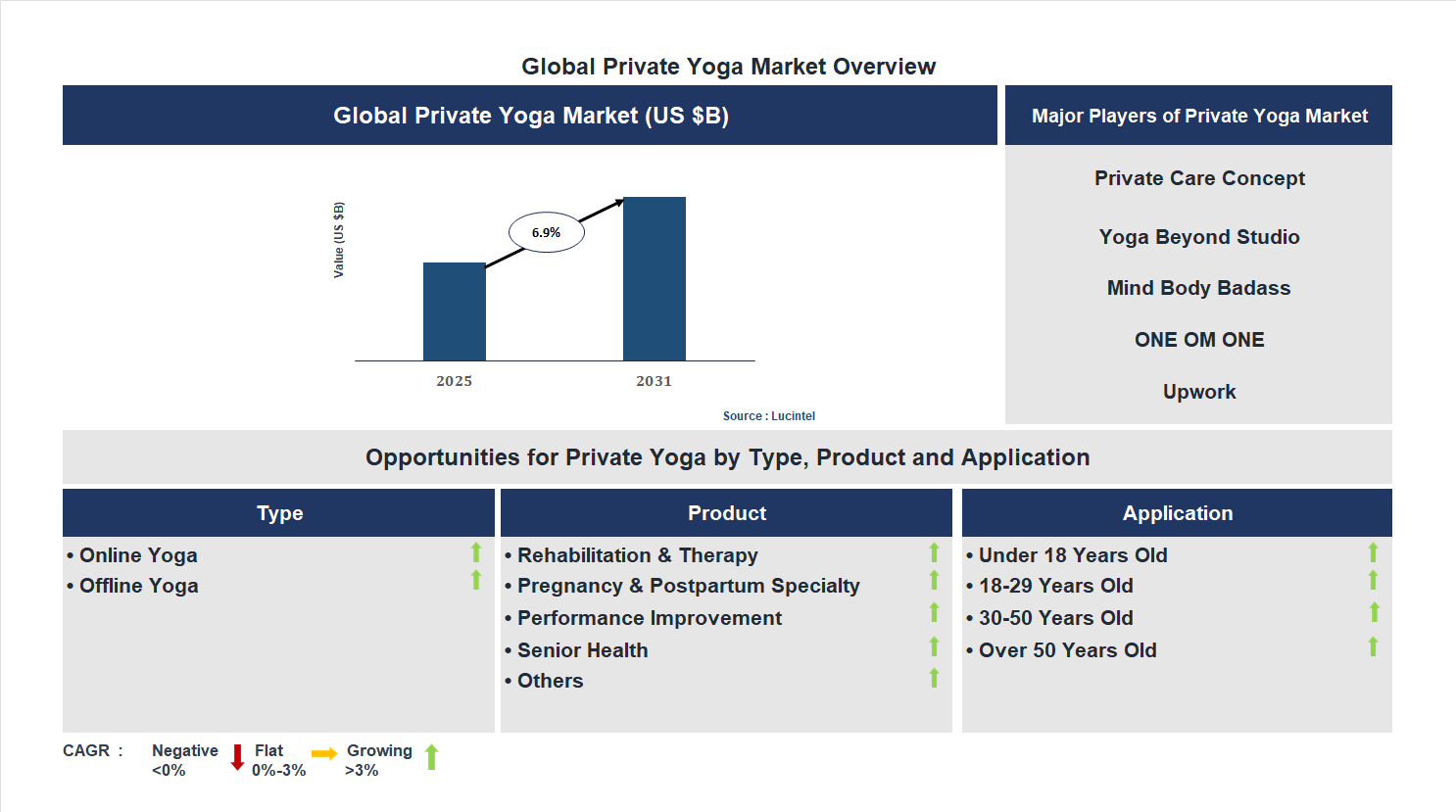
Key data points: The growth forecast = 6.9% annually for the next 6 years. Scroll below to get more insights. This market report covers trends, opportunities and forecasts in private yoga market to 2031 by type (online yoga and offline yoga), product (rehabilitation & therapy, pregnancy & postpartum specialty, performance improvement, senior health, and others), application (under 18 years old, 18-29 years old, 30-50 years old, and over 50 years old), and region (North America, Europe, Asia Pacific, and the Rest of the World)
We'll send your sample report shortly.
• Lucintel forecasts that, within the type category, online yoga is expected to witness higher growth over the forecast period.
• Within the product category, rehabilitation & therapy is expected to witness the highest growth.
• In terms of region, APAC is expected to witness the highest growth over the forecast period. Gain valuable insights for your business decisions with our comprehensive 150+ page report. Sample figures with some insights are shown below.
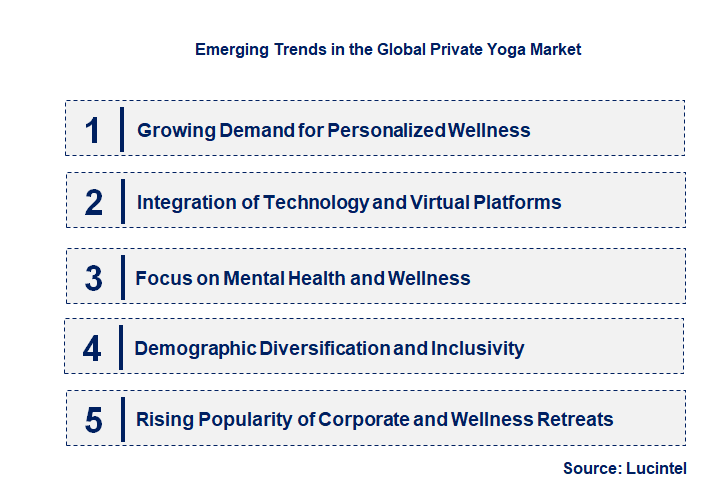
• Growing Demand for Personalized Wellness: The private yoga market is increasingly driven by consumers seeking customized fitness solutions. Clients prefer one-on-one sessions tailored to their specific health goals, physical limitations, and lifestyle preferences. This trend enhances client engagement and satisfaction, leading to higher retention rates. Practitioners are now offering specialized programs, including injury recovery, prenatal yoga, and mental health-focused sessions. The personalized approach also allows for flexible scheduling and location preferences, making yoga more accessible. As awareness of individual health needs grows, the demand for private, tailored yoga experiences is expected to continue rising, fueling market expansion.
• Integration of Technology and Virtual Platforms: Digital transformation is revolutionizing the private yoga market by enabling remote sessions through apps, video calls, and online classes. This trend broadens access to yoga, especially for those in remote or underserved areas. Virtual platforms offer convenience, flexibility, and a wider range of instructors, allowing clients to choose based on expertise and style. Additionally, wearable devices and apps provide real-time feedback on performance and progress, enhancing the personalized experience. The COVID-19 pandemic accelerated this shift, making virtual yoga a staple. As technology advances, the market will see more innovative tools, increasing engagement, and expanding reach.
• Focus on Mental Health and Wellness: Increasing awareness of mental health issues is shaping the private yoga market to emphasize mindfulness, stress reduction, and emotional well-being. Clients are seeking holistic approaches that combine physical postures with meditation and breathing techniques. Practitioners are incorporating mental health-focused practices into their offerings, addressing anxiety, depression, and burnout. This trend aligns with the broader wellness movement, positioning yoga as a mental health support tool. The integration of mental health into private yoga sessions is attracting a diverse clientele, including corporate wellness programs and individuals prioritizing mental resilience, thereby expanding market opportunities.
• Demographic Diversification and Inclusivity: The private yoga market is witnessing a shift towards inclusivity, catering to diverse age groups, genders, and physical abilities. There is a growing emphasis on making yoga accessible to seniors, people with disabilities, and marginalized communities. This trend promotes a more inclusive environment, broadening the market base. Practitioners are developing specialized programs and adaptive yoga techniques to meet varied needs. Increased awareness and social movements advocating inclusivity are also influencing marketing strategies. This diversification not only expands the customer base but also enriches the industry with varied perspectives and practices, fostering innovation and growth.
• Rising Popularity of Corporate and Wellness Retreats: Companies and organizations are increasingly incorporating private yoga into employee wellness programs to boost productivity, reduce stress, and improve overall health. This trend is leading to the development of corporate-specific yoga sessions and retreats. Wellness retreats combining yoga, meditation, and holistic therapies are gaining popularity among affluent clients seeking immersive experiences. These offerings provide a premium, personalized service that appeals to high-net-worth individuals and corporate clients. The growth of this segment is creating new revenue streams and elevating the profile of private yoga, positioning it as a vital component of comprehensive wellness strategies. In summary, these trends are transforming the private yoga market into a more personalized, accessible, and holistic industry. Technological integration, mental health focus, inclusivity, and corporate wellness initiatives are expanding the markets reach and diversity. As these developments continue, the private yoga sector is poised for sustained growth, innovation, and increased relevance in the broader wellness landscape.
• Growing Demand for Personalized Wellness: The increasing focus on individualized health and fitness solutions has boosted the private yoga market. Consumers prefer tailored sessions that address specific health concerns, injuries, or goals, leading to higher customer satisfaction and retention. This trend encourages yoga providers to customize programs, invest in specialized training, and develop niche offerings. As awareness of personalized wellness grows, the market is expected to expand further, attracting a broader demographic seeking bespoke fitness experiences.
• Digital Platforms and Virtual Classes: The adoption of online platforms has revolutionized access to private yoga sessions. Virtual classes offer convenience, affordability, and flexibility, enabling practitioners to connect with instructors worldwide. This shift has expanded market reach, especially during the pandemic, and continues to attract new clients who prefer remote options. Providers leveraging digital tools can offer personalized programs, track progress, and build community, thereby increasing engagement and revenue streams in a competitive landscape.
• Integration of Wellness Technologies: The incorporation of wearable devices, apps, and biofeedback tools enhances the private yoga experience. These technologies enable real-time monitoring of health metrics, personalized feedback, and progress tracking, making sessions more effective. This integration appeals to tech-savvy consumers seeking data-driven wellness solutions. It also allows instructors to tailor sessions precisely, improve outcomes, and differentiate their services, fostering loyalty and attracting a new segment of health-conscious clients.
• Rise of Corporate and Executive Wellness Programs: Companies increasingly recognize the benefits of private yoga for employee well-being, stress reduction, and productivity. This trend opens new B2B opportunities for yoga providers to partner with organizations, offering tailored corporate packages. Such programs enhance employee health, reduce healthcare costs, and improve workplace morale. As corporate wellness gains prominence, the private yoga market benefits from steady demand, expanding beyond individual consumers to institutional clients and creating scalable revenue streams.
• Focus on Niche and Specialized Offerings: The market is witnessing growth in niche yoga styles and specialized programs, such as prenatal, senior, or injury-recovery yoga. These targeted offerings meet specific needs, attracting diverse customer segments. Providers investing in certification and expertise in these areas can command premium prices and build loyal communities. The demand for specialized yoga reflects a broader trend toward holistic, inclusive wellness solutions, positioning providers to capitalize on underserved markets and diversify their portfolios. The overall impact of these developments is a dynamic, expanding private yoga market characterized by increased accessibility, personalization, and technological integration. Providers are better equipped to meet diverse consumer needs, fostering innovation and competition. This growth enhances market resilience, attracts new customer segments, and creates opportunities for sustainable revenue streams, ultimately driving the industry toward a more inclusive and technologically advanced future.
• Personalized Wellness Experiences Drive Market Expansion: The demand for customized yoga sessions tailored to individual health goals, physical conditions, and preferences is fueling market growth. Consumers increasingly prefer private classes for personalized attention, flexible scheduling, and targeted results. This trend encourages instructors and studios to develop bespoke programs, incorporate advanced health assessments, and offer specialized techniques, thereby attracting a broader client base seeking tailored wellness solutions and enhancing customer loyalty.
• Digital Platforms and Virtual Classes Expand Reach and Accessibility: The proliferation of online streaming, mobile apps, and virtual coaching has made private yoga accessible beyond geographical constraints. Consumers can now book personalized sessions from home, offering convenience and privacy. This digital shift enables instructors to reach a global audience, diversify revenue streams, and provide on-demand or live virtual classes. The integration of technology enhances user engagement, data-driven customization, and flexible scheduling, significantly broadening market scope and customer engagement.
• Corporate Wellness Programs Boost Private Yoga Adoption: Increasing awareness of employee health and productivity benefits is prompting organizations to incorporate private yoga sessions into corporate wellness initiatives. Tailored programs help reduce stress, improve flexibility, and enhance overall well-being among employees. This corporate focus creates a steady demand for private instructors to deliver customized sessions at workplaces or remotely, opening new revenue channels and fostering long-term client relationships within the expanding corporate wellness sector.
• Niche and Specialized Yoga Offerings Create New Market Segments: The rise of niche yoga styles such as prenatal, senior, therapeutic, and trauma-informed yoga caters to specific demographic needs. These specialized offerings attract clients seeking targeted benefits and personalized care. Developing expertise in these areas allows providers to differentiate themselves, command premium pricing, and tap into underserved markets. The focus on inclusivity and specialized health concerns further broadens the market, encouraging innovation and diversification within the private yoga industry.
• Wellness Tourism and Retreats Present Growth Opportunities: The integration of private yoga into wellness tourism and luxury retreats offers a unique growth avenue. Travelers seek exclusive, immersive experiences that combine relaxation, health, and personal growth. Offering private, customized yoga sessions in scenic or exotic locations enhances appeal and provides premium experiences. This trend attracts high-net-worth individuals and wellness tourists, fostering partnerships with resorts and travel agencies. It also encourages the development of branded retreats, expanding market reach, and elevating the overall industry profile. The overall impact of these opportunities is set to significantly accelerate market growth, diversify offerings, and enhance consumer engagement. By leveraging personalization, technology, niche specialization, corporate partnerships, and wellness tourism, the private yoga industry can achieve sustainable expansion, meet evolving consumer demands, and establish a competitive edge in the global wellness landscape.
• Increasing Awareness of Health and Wellness: The rising global focus on health, fitness, and mental well-being has significantly boosted demand for private yoga sessions. Consumers seek personalized, flexible, and effective wellness solutions, which private yoga offers. The proliferation of social media and wellness influencers has further amplified awareness, encouraging individuals to invest in tailored yoga experiences. This trend is especially prominent among urban populations and working professionals who prioritize mental health and physical fitness, thereby expanding the market’s customer base and encouraging service providers to innovate and diversify offerings.
• Technological Advancements and Digital Platforms: The integration of technology has revolutionized the private yoga market by enabling virtual classes, mobile apps, and online booking systems. These innovations facilitate remote access, allowing practitioners to participate from anywhere, thus broadening the market reach. AI-driven personalized programs and wearable devices also enhance user experience by providing real-time feedback and customized routines. The convenience and flexibility offered by digital platforms have increased consumer engagement, reduced operational costs for providers, and created new revenue streams, making technology a key driver of market growth.
• Growing Urbanization and Lifestyle Changes: Urbanization has led to busier lifestyles, increased stress levels, and limited time for traditional group classes. Private yoga offers a personalized, time-efficient, and flexible solution that fits into hectic schedules. The desire for privacy and tailored attention also appeals to high-net-worth individuals and professionals seeking discreet wellness options. As urban populations continue to grow, the demand for private yoga services is expected to rise, driven by lifestyle shifts that prioritize health and convenience, thereby fueling market expansion.
• Rising Disposable Income and Spending on Wellness: Economic growth in many regions has increased disposable incomes, enabling consumers to spend more on health and wellness services, including private yoga. This financial capability allows individuals to invest in personalized sessions with experienced instructors, premium equipment, and wellness retreats. The willingness to allocate funds toward mental and physical health has made private yoga a lucrative segment, attracting new entrants and encouraging existing providers to upscale their offerings, thus propelling market growth.
• Increasing Focus on Mental Health and Stress Management: The growing recognition of mental healths importance has made yoga a preferred method for stress relief and emotional well-being. Private yoga sessions offer customized practices targeting specific mental health issues, such as anxiety and depression. The increasing prevalence of stress-related disorders, especially in high-pressure environments, has driven demand for personalized, therapeutic yoga. This focus on mental health not only broadens the market but also encourages integration with other wellness services, fostering holistic approaches and expanding the scope of private yoga offerings. The challenges facing this private yoga market include:-
• Regulatory and Certification Standards: The private yoga market faces challenges related to inconsistent regulatory frameworks and certification standards across regions. Lack of standardized qualifications for instructors can impact consumer trust and safety. Regulatory changes may impose additional compliance costs and operational hurdles, especially for international providers. Ensuring quality assurance and maintaining credibility requires ongoing certification and adherence to health and safety standards, which can be resource-intensive and hinder rapid market expansion.
• Competition and Market Saturation: The increasing number of yoga instructors and wellness centers has led to intense competition and market saturation. Differentiating services and establishing a loyal customer base becomes challenging, especially with low entry barriers. Price wars and commoditization threaten profit margins, while new entrants struggle to gain visibility. Market saturation can also lead to reduced consumer spending per provider, necessitating innovative marketing strategies and service differentiation to sustain growth.
• Technological Dependence and Data Security Concerns: While technology drives growth, heavy reliance on digital platforms exposes providers and consumers to cybersecurity risks and data privacy issues. Breaches of personal health data can damage reputation and erode trust. Additionally, technological failures or glitches can disrupt service delivery, affecting customer satisfaction. As the market increasingly adopts online and app-based services, ensuring robust cybersecurity measures and compliance with data protection regulations becomes critical, posing ongoing challenges for market participants. In summary, the private yoga market is shaped by a combination of technological innovations, lifestyle shifts, and economic factors that promote growth. However, regulatory complexities, market competition, and data security concerns present significant hurdles. The interplay of these drivers and challenges will determine the market’s future trajectory, requiring stakeholders to innovate, adapt, and prioritize quality and safety to sustain long-term growth and meet evolving consumer demands.
• Private Care Concept
• Yoga Beyond Studio
• Mind Body Badass
• ONE OM ONE
• Upwork
• MyYogaTeacher
• Innergy Corporate Yoga
• Triyoga
• Charym
• Austin Private Yoga
• Online Yoga
• Offline Yoga
• Rehabilitation & Therapy
• Pregnancy & Postpartum Specialty
• Performance Improvement
• Senior Health
• Others
• Under 18 Years Old
• 18-29 Years Old
• 30-50 Years Old
• Over 50 Years Old
• North America
• Europe
• Asia Pacific
• The Rest of the World
• United States: The private yoga market in the United States has seen rapid expansion, with a focus on virtual classes and personalized coaching. Wellness apps and online platforms have gained popularity, allowing practitioners to access tailored sessions from home. High-profile wellness influencers and celebrity endorsements have further boosted market growth. Additionally, there is a rising demand for specialized yoga, such as prenatal, therapeutic, and corporate yoga, reflecting diverse consumer needs. The integration of wearable technology and data-driven approaches is enhancing personalized experiences, making private yoga more accessible and effective.
• China: In China, the private yoga market is experiencing a boom, driven by increasing health awareness and urbanization. More affluent consumers are seeking exclusive, personalized yoga experiences, often through luxury studios or private trainers. Digital platforms and live-streaming services are expanding their reach, especially among younger demographics. The government’s focus on wellness and traditional Chinese medicine integration has also contributed to market growth. Moreover, collaborations between local brands and international yoga providers are fostering innovation and expanding offerings, including hybrid models combining yoga with traditional Chinese practices.
• Germany: Germany’s private yoga market is characterized by a strong emphasis on holistic health and wellness. There is a growing trend toward personalized yoga sessions tailored to individual health conditions, such as stress management and rehabilitation. Many studios now offer private classes with certified instructors, often incorporating mindfulness and meditation techniques. The market benefits from a health-conscious population that values quality and expertise. Digitalization has facilitated remote coaching and online booking systems, making private yoga more convenient. Furthermore, corporate wellness programs incorporating private yoga are gaining popularity, reflecting a broader commitment to employee health.
• India: The private yoga market in India is witnessing a renaissance, blending traditional practices with modern wellness trends. High-net-worth individuals and urban professionals seek personalized yoga experiences, often through exclusive studios or private trainers. The rise of wellness tourism has also contributed to market growth, with luxury resorts offering bespoke yoga packages. Digital platforms are making private yoga accessible to a broader audience, especially during the pandemic. There is increased interest in specialized yoga forms, such as therapeutic and prenatal yoga. The integration of Ayurveda and yoga is further enriching the personalized wellness offerings in the country.
• Japan: Japan’s private yoga market is expanding steadily, driven by a focus on health, longevity, and stress reduction. Consumers prefer private sessions for personalized attention and tailored programs addressing specific health concerns. The market is characterized by a blend of traditional and modern approaches, with many studios offering customized plans incorporating mindfulness and relaxation techniques. Digital tools and online classes have become integral, especially among busy professionals. Corporate wellness initiatives incorporating private yoga are also on the rise. Overall, the Japanese market emphasizes quality, expertise, and holistic well-being, aligning with cultural values of health preservation and longevity.


• Private Care Concept
• Yoga Beyond Studio
• Mind Body Badass
• ONE OM ONE
• Upwork
• MyYogaTeacher
• Innergy Corporate Yoga
• Triyoga
• Charym
• Austin Private Yoga Q5. Which private yoga market segment will be the largest in future? Answer: Lucintel forecasts that, within the type category, online yoga is expected to witness higher growth over the forecast period. Q6. In private yoga market, which region is expected to be the largest in next 5 years? Answer: In terms of region, APAC is expected to witness the highest growth over the forecast period. Q7. Do we receive customization in this report? Answer: Yes, Lucintel provides 10% customization without any additional cost.


Choose a license that fits your team. Instant PDF delivery.
Prices exclude taxes. Instant delivery. Custom licensing available on request.
Market Report · July 31, 2026
Market Report · July 31, 2026
Market Report · July 31, 2026
Trusted partner for strategic intelligence and business growth


Receive a complimentary market analysis tailored to your industry. Our analysts will identify key growth opportunities and competitive dynamics specific to your business.

Market size, growth rate, and key trend analysis for your specific sector.

Top competitor positioning and market share analysis.

Strategic recommendations backed by data-driven insights.
Get curated market intelligence and competitive moves straight to your inbox.
By subscribing, you agree to receive our monthly insights. Unsubscribe anytime.
Receive a complimentary market analysis tailored to your industry. Our analysts will identify key growth opportunities and competitive dynamics specific to your business.
Market size, growth rate, and key trend analysis for your specific sector.
Top competitor positioning and market share analysis.
Strategic recommendations backed by data-driven insights.
Get curated market intelligence, emerging trends, and competitive moves straight to your inbox each month.
By subscribing, you agree to receive our monthly insights. Unsubscribe anytime.
We'll send your sample report shortly.