
Report Feature
Private Jet Charter Service Market Trends and Forecast
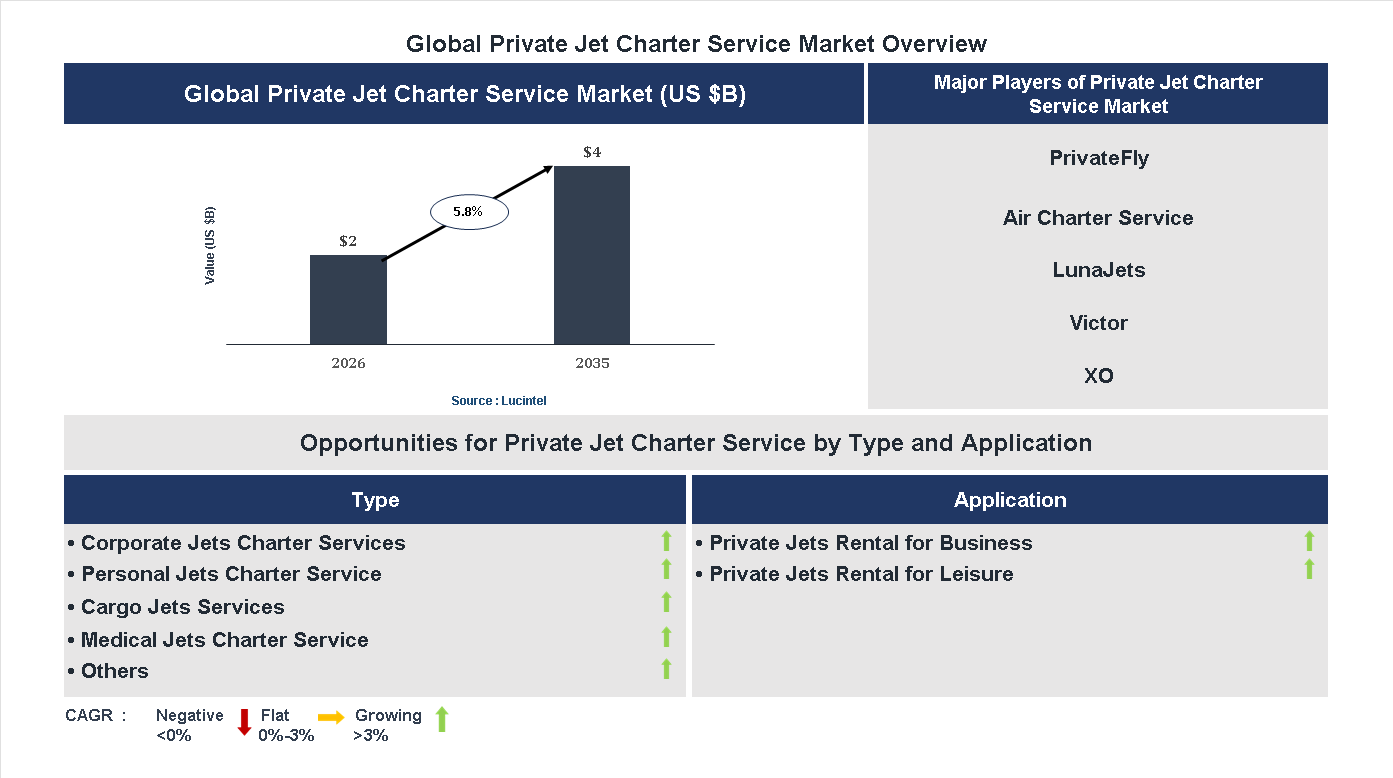
The future of the global private jet charter service market looks promising with opportunities in the private jets rental for business and private jets rental for leisure markets. The global private jet charter service market is expected to reach an estimated $4 billion by 2035 with a CAGR of 5.8% from 2026 to 2035. The major drivers for this market are the increasing demand for flexible luxury travel, the rising preference for time efficient aviation services, and the growing adoption of on demand private flights.• Lucintel forecasts that, within the type category, medical jet charter service is expected to witness the highest growth over the forecast period.
• Within the application category, private jets rental for leisure is expected to witness higher growth.
• In terms of region, APAC is expected to witness the highest growth over the forecast period. Gain valuable insights for your business decisions with our comprehensive 150+ page report. Sample figures with some insights are shown below.
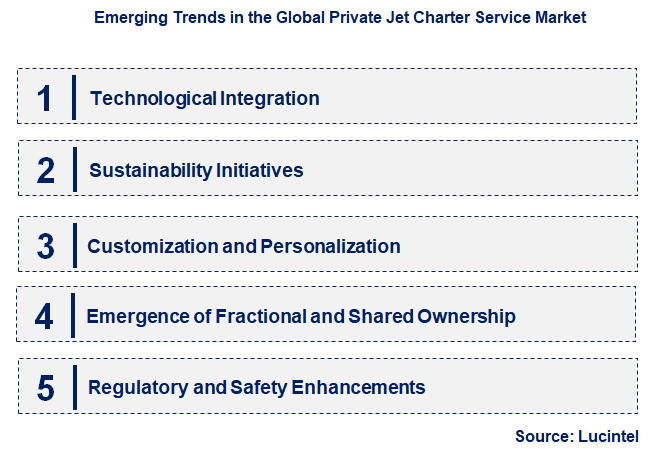
Emerging Trends in the Private Jet Charter Service Market
The private jet charter service market is experiencing rapid evolution driven by technological advancements, changing customer preferences, and global economic shifts. As luxury travel becomes more accessible and personalized, providers are innovating to meet increasing demand for convenience, safety, and exclusivity. The market is also influenced by environmental concerns and regulatory changes, prompting a shift toward sustainable practices. These developments are transforming how clients access and experience private jet services, making the industry more dynamic and competitive. Understanding these emerging trends is crucial for stakeholders aiming to capitalize on new opportunities and adapt to the evolving landscape.• Technological Integration: The adoption of advanced booking platforms, AI, and real-time tracking enhances customer experience by providing seamless, personalized, and efficient service. These innovations reduce booking time, improve safety protocols, and enable better fleet management, leading to increased customer satisfaction and operational efficiency.
• Sustainability Initiatives: Growing environmental awareness is pushing private jet operators to adopt greener practices, such as using sustainable aviation fuels, implementing carbon offset programs, and investing in more fuel-efficient aircraft. These efforts appeal to eco-conscious clients and help companies comply with stricter regulations, shaping a more sustainable industry future.
• Customization and Personalization: Clients now demand tailored travel experiences, prompting providers to offer bespoke services, including customized in-flight amenities, flexible scheduling, and exclusive access to destinations. This trend enhances customer loyalty and differentiates brands in a competitive market.
• Emergence of Fractional and Shared Ownership: The rise of fractional ownership and shared jet programs makes private jet travel more accessible and cost-effective for a broader customer base. These models reduce upfront costs and increase utilization rates, expanding market reach and offering flexible options for different customer segments.
• Regulatory and Safety Enhancements: Stricter safety standards, compliance requirements, and digital security measures are being implemented to ensure passenger safety and data protection. These developments build trust, mitigate risks, and align the industry with global safety protocols, fostering confidence among high-net-worth individuals. These trends are reshaping the private jet charter service market by making it more innovative, sustainable, personalized, accessible, and secure. They are driving growth, expanding customer bases, and setting new standards for luxury air travel, ensuring the industry remains competitive and responsive to evolving demands.
Recent Development in the Private Jet Charter Service Market
The private jet charter service market is experiencing rapid growth driven by increasing demand for luxury travel, technological advancements, and evolving customer preferences. As global mobility needs expand, providers are innovating to offer more personalized, efficient, and accessible services. This dynamic environment presents significant opportunities for market players to capitalize on emerging trends, enhance customer experiences, and expand their reach across different regions. The following developments highlight key areas shaping the future of this industry.• Streamlining Booking and Operations: The integration of advanced digital platforms has revolutionized booking processes, enabling real-time reservations, seamless payment options, and improved customer engagement. These innovations reduce operational costs, increase efficiency, and enhance user experience, making private jet services more accessible and convenient. As technology continues to evolve, companies that adopt digital solutions will gain competitive advantages, attract a broader customer base, and foster loyalty through personalized services.
• Embracing Eco-Friendly Practices: Increasing environmental awareness has prompted private jet operators to adopt sustainable practices, such as using alternative fuels, implementing carbon offset programs, and investing in more fuel-efficient aircraft. These initiatives appeal to eco-conscious clients and help companies meet regulatory requirements. The shift towards sustainability not only enhances corporate responsibility but also positions the industry as a forward-thinking sector committed to reducing its carbon footprint, thereby attracting new clientele and fostering long-term growth.
• Entering New Geographies and Segments: Companies are expanding their reach into emerging markets and underserved regions, driven by rising affluence and demand for luxury travel. Additionally, there is a growing focus on corporate and fractional ownership segments, diversifying revenue streams. This expansion allows providers to tap into new customer bases, increase market share, and mitigate risks associated with regional economic fluctuations. Strategic partnerships and localized services are key to successful market penetration in these areas.
• Enhancing Customer Experience: The industry is increasingly focusing on tailored services, from bespoke in-flight amenities to personalized travel itineraries. Advanced data analytics enable providers to anticipate client preferences, offering a more exclusive and comfortable experience. This emphasis on customization fosters customer loyalty, differentiates brands in a competitive market, and justifies premium pricing. As clients seek more unique travel solutions, personalization becomes a critical factor in market success.
• Strengthening Industry Standards: Enhanced safety protocols, stricter regulatory compliance, and technological innovations in aircraft maintenance are elevating industry standards. These improvements build customer trust, reduce operational risks, and ensure safer travel experiences. Governments and industry bodies are collaborating to establish uniform safety standards, which facilitate international operations and expand market confidence. Such developments are vital for sustainable growth and maintaining the industrys reputation for safety and reliability. The overall impact of these developments is a more dynamic, sustainable, and customer-centric private jet charter market. Increased technological integration, expanded geographic reach, and heightened safety standards are driving growth, attracting new clients, and fostering innovation. As the industry adapts to evolving demands and environmental considerations, it is poised for continued expansion and increased competitiveness in the global luxury travel sector.
Strategic Growth Opportunities in the Private Jet Charter Service Market
The private jet charter service market is experiencing rapid growth driven by increasing demand for luxury travel, business flexibility, and technological advancements. As high-net-worth individuals and corporations seek personalized, efficient, and exclusive travel options, the market is expanding across regions and applications. Strategic opportunities are emerging through innovation, partnerships, and expanding service offerings, enabling providers to capture new customer segments and enhance profitability. This dynamic landscape presents significant potential for market players to capitalize on evolving customer preferences and global travel trends.• Expanding Luxury Travel Demand Opens New Customer Segments: The rising affluence among high-net-worth individuals and increased preference for personalized travel experiences are fueling demand for private jet charters. This growth is driven by the desire for convenience, privacy, and exclusivity, especially in leisure travel. Market players can capitalize by offering tailored services, premium amenities, and flexible booking options, thereby attracting a broader customer base and increasing market share in luxury travel segments.
• Technological Innovations Enhance Booking and Operational Efficiency: The integration of advanced digital platforms, AI, and real-time tracking systems is transforming the booking process and operational management of private jet services. These innovations improve customer experience through seamless reservations, personalized interfaces, and enhanced safety protocols. Additionally, they optimize fleet management, reduce costs, and increase responsiveness, enabling providers to scale operations efficiently and meet the growing demand for instant, reliable service.
• Strategic Partnerships and Alliances Expand Service Reach: Collaborations between private jet operators, travel agencies, and technology providers are creating new opportunities for market expansion. These alliances facilitate access to broader customer networks, shared resources, and integrated service offerings. By leveraging partnerships, companies can enhance their geographic reach, diversify service portfolios, and improve customer engagement, ultimately strengthening their competitive position in a highly fragmented market.
• Growing Corporate Travel Drives Business Jet Demand: Increasing globalization and remote working trends are boosting corporate travel needs, prompting companies to invest in private jet charters for efficiency and confidentiality. Businesses seek flexible scheduling, on-demand services, and premium amenities to support executive travel. Providers can tap into this opportunity by customizing corporate packages, offering loyalty programs, and ensuring high safety standards, thereby capturing a significant share of the corporate travel market.
• Regional Market Expansion Presents New Growth Avenues: Emerging markets in Asia-Pacific, Middle East, and Latin America are witnessing rising demand for private jet services due to economic growth and increasing wealth. These regions offer untapped potential for market expansion through localized marketing, tailored service offerings, and strategic investments. Developing infrastructure and regulatory frameworks further support growth, enabling providers to establish a strong presence and capitalize on the expanding affluent population seeking luxury travel options. The overall impact of these opportunities is set to significantly accelerate market growth, diversify service offerings, and enhance competitiveness. By leveraging technological advancements, strategic collaborations, and regional expansion, private jet charter services can meet evolving customer demands and sustain long-term profitability in a competitive landscape.
Private Jet Charter Service Market Driver and Challenges
The private jet charter service market is influenced by a variety of technological, economic, and regulatory factors that shape its growth and development. Advances in aviation technology, digital platforms, and safety standards have expanded accessibility and efficiency. Economic conditions, such as rising disposable incomes and corporate travel budgets, drive demand for private jet services. Regulatory frameworks concerning safety, environmental impact, and international travel influence operational practices and market entry. Additionally, geopolitical stability and global travel trends impact customer preferences and market expansion. Understanding these drivers and challenges is essential for stakeholders aiming to capitalize on opportunities and navigate potential risks within this dynamic industry. The factors responsible for driving the private jet charter service market include:• Technological Innovation: The integration of advanced avionics, digital booking platforms, and real-time tracking systems enhances customer experience and operational efficiency. These innovations reduce costs, improve safety, and enable personalized services, making private jet charters more accessible and attractive to a broader clientele. The adoption of eco-friendly technologies also aligns with increasing environmental concerns, further boosting market growth.
• Rising Wealth and Disposable Income: Increasing global wealth, especially among high-net-worth individuals and corporate clients, has significantly expanded the customer base for private jet services. As disposable incomes rise, more individuals seek luxury and convenience, driving demand for private jet charters for both leisure and business purposes. This economic trend supports premium service providers and encourages market expansion into emerging regions.
• Business Travel and Corporate Demand: The need for efficient, flexible, and confidential travel options for executives and corporate teams sustains high demand. Companies prefer private jets to save time, ensure security, and maintain productivity during travel. The growth of global business hubs and international trade further amplifies this demand, making corporate clients a vital segment of the market.
• Regulatory and Safety Standards: Stringent safety regulations and international aviation standards ensure passenger security and operational reliability. Compliance with these regulations fosters trust and credibility among clients, encouraging market growth. Additionally, evolving policies related to environmental impact and noise pollution influence operational practices and fleet management.
• Digital and On-Demand Services: The rise of online booking platforms and on-demand charter services has democratized access to private jet travel. These digital solutions offer transparency, convenience, and cost-effective options, attracting a wider customer base. The proliferation of mobile apps and instant booking capabilities has transformed traditional business models, fueling market expansion. The challenges facing the private jet charter service market include:
• Regulatory Complexities: Navigating diverse international regulations, licensing requirements, and safety standards poses significant hurdles. These complexities can delay operations, increase compliance costs, and restrict market entry, especially in emerging regions with evolving legal frameworks. Ensuring adherence while maintaining operational efficiency remains a persistent challenge.
• Environmental Concerns and Sustainability: Growing awareness of aviations environmental impact pressures the industry to adopt greener technologies and sustainable practices. High costs associated with eco-friendly aircraft and regulatory restrictions on emissions can limit growth opportunities. Balancing luxury service with environmental responsibility is a critical challenge for market players.
• Economic Volatility: Fluctuations in global economic conditions, currency exchange rates, and geopolitical tensions can adversely affect discretionary spending on private jet services. During economic downturns, demand often declines sharply, impacting revenue and profitability. Market resilience depends on adapting to these unpredictable economic shifts. The private jet charter service market is driven by technological advancements, rising wealth, corporate demand, regulatory standards, and digital innovations. However, it faces challenges from regulatory complexities, environmental concerns, and economic volatility. These factors collectively influence market growth, shaping strategies for industry stakeholders. While opportunities for expansion are substantial, addressing regulatory and sustainability challenges is essential for sustainable development and long-term success in this competitive landscape.
List of Private Jet Charter Service Companies
Companies in the market compete on the basis of product quality offered. Major players in this market focus on expanding their manufacturing facilities, R&D investments, infrastructural development, and leverage integration opportunities across the value chain. With these strategies private jet charter service companies cater increasing demand, ensure competitive effectiveness, develop innovative products & technologies, reduce production costs, and expand their customer base. Some of the private jet charter service companies profiled in this report include-• PrivateFly
• Air Charter Service
• LunaJets
• Victor
• XO
• Charter Jet Airlines
• Paramount Business Jets
• EVOJETS
• Stratos Jets
• Flightpath
Private Jet Charter Service Market by Segment
The study includes a forecast for the global private jet charter service market by type, application, and region.Private Jet Charter Service Market by Type [Value from 2019 to 2035]:
• Corporate Jets Charter Services
• Personal Jets Charter Service
• Cargo Jets Services
• Medical Jets Charter Service
• Others
Private Jet Charter Service Market by Application [Value from 2019 to 2035]:
• Private Jets Rental for Business
• Private Jets Rental for Leisure
Private Jet Charter Service Market by Region [Value from 2019 to 2035]:
• North America
• Europe
• Asia Pacific
• The Rest of the World
Country Wise Outlook for the Private Jet Charter Service Market
The private jet charter service market has experienced significant growth and transformation driven by technological advancements, changing customer preferences, and global economic shifts. The demand for personalized, flexible, and luxury travel options has surged, prompting industry players to innovate and expand their offerings. Regulatory changes, environmental concerns, and the rise of digital platforms have also influenced market dynamics across key regions. As the market evolves, countries are adopting new strategies to enhance service quality, sustainability, and accessibility, shaping the future landscape of private jet charters worldwide.• United States: The US market has seen increased adoption of digital booking platforms and on-demand services, with major players expanding their fleets and routes. There is a growing emphasis on sustainability, with companies investing in greener aircraft and carbon offset programs. The demand from corporate clients remains strong, especially in business hubs like New York and Los Angeles. Regulatory frameworks are evolving to streamline operations, while luxury travel continues to drive high-end service innovations. Overall, the US market is characterized by technological integration and a focus on eco-friendly options.
• China: Chinas private jet market is rapidly expanding, fueled by rising wealth and a growing number of high-net-worth individuals. The government has eased regulations, facilitating easier access to private aviation services. Domestic routes are increasing, with new airports and hangar facilities being developed to support growth. Digital platforms and mobile apps are becoming popular for booking and managing flights. The market also sees a push towards luxury and bespoke services, catering to Chinas affluent consumers. Environmental concerns are prompting some companies to explore sustainable aircraft options.
• Germany: Germanys private jet market is marked by a focus on quality, safety, and environmental sustainability. The country has a well-established network of private airports and a strong regulatory framework ensuring high standards. There is a notable trend towards integrating sustainable aviation fuels and eco-friendly aircraft. Corporate clients dominate the market, especially in finance and manufacturing sectors. Technological innovations such as virtual concierge services and real-time flight tracking are enhancing customer experience. Germany continues to be a key hub for European private aviation, balancing luxury with sustainability.
• India: The Indian private jet market is experiencing rapid growth due to increasing wealth, business expansion, and improved infrastructure. The government has relaxed regulations, making private aviation more accessible. There is a rising demand for regional connectivity, with new airports and heliports being developed. Digital booking platforms are gaining popularity, offering convenience and transparency. The market is witnessing a shift towards luxury and personalized services, catering to India’s affluent classes. Environmental sustainability is gradually gaining attention, with some operators exploring greener aircraft options. Overall, India’s market is poised for substantial expansion.
• Japan: Japans private jet market is characterized by a cautious but steady growth trajectory, driven by corporate and high-net-worth individual demand. The country emphasizes safety, privacy, and comfort, with a focus on maintaining high standards. Technological integration, such as advanced booking systems and in-flight entertainment, enhances customer experience. Environmental concerns are influencing the adoption of more fuel-efficient aircraft and sustainable practices. The market is also influenced by regional travel needs within Asia, with Japan serving as a hub for luxury travel. Regulatory stability and a focus on quality make Japan a resilient player in the global private aviation industry.

Features of the Global Private Jet Charter Service Market
Market Size Estimates: Private jet charter service market size estimation in terms of value ($B). Trend and Forecast Analysis: Market trends (2019 to 2025) and forecast (2026 to 2035) by various segments and regions. Segmentation Analysis: Private jet charter service market size by type, application, and region in terms of value ($B). Regional Analysis: Private jet charter service market breakdown by North America, Europe, Asia Pacific, and Rest of the World. Growth Opportunities: Analysis of growth opportunities in different types, applications, and regions for the private jet charter service market. Strategic Analysis: This includes M&A, new product development, and competitive landscape of the private jet charter service market. Analysis of competitive intensity of the industry based on Porter’s Five Forces model.
FAQ
Q1. What is the private jet charter service market size? Answer: The global private jet charter service market is expected to reach an estimated $4 billion by 2035. Q2. What is the growth forecast for private jet charter service market? Answer: The global private jet charter service market is expected to grow with a CAGR of 5.8% from 2026 to 2035. Q3. What are the major drivers influencing the growth of the private jet charter service market? Answer: The major drivers for this market are the increasing demand for flexible luxury travel, the rising preference for time efficient aviation services, and the growing adoption of on demand private flights. Q4. What are the major segments for private jet charter service market? Answer: The future of the private jet charter service market looks promising with opportunities in the private jets rental for business and private jets rental for leisure markets. Q5. Who are the key private jet charter service market companies? Answer: Some of the key private jet charter service companies are as follows:• PrivateFly
• Air Charter Service
• LunaJets
• Victor
• XO
• Charter Jet Airlines
• Paramount Business Jets
• EVOJETS
• Stratos Jets
• Flightpath Q6. Which private jet charter service market segment will be the largest in future? Answer: Lucintel forecasts that, within the type category, medical jet charter service is expected to witness the highest growth over the forecast period. Q7. In private jet charter service market, which region is expected to be the largest in next 8 years? Answer: In terms of region, APAC is expected to witness the highest growth over the forecast period. Q8. Do we receive customization in this report? Answer: Yes, Lucintel provides 10% customization without any additional cost.
Table of Contents
List of Figures
List of Tables
Methodology
- In-depth interviews of the major players in this market
- Detailed secondary research from competitors’ financial statements and published data
- Extensive searches of published works, market, and database information pertaining to industry news, company press releases, and customer intentions
- A compilation of the experiences, judgments, and insights of Lucintel’s professionals, who have analyzed and tracked this market over the years.


Buy Now
Choose a license that fits your team. Instant PDF delivery.
Prices exclude taxes. Instant delivery. Custom licensing available on request.
Key Questions
- • What are some of the most promising, high-growth opportunities for the private jet charter service market by type (corporate jets charter services, personal jets charter service, cargo jets services, medical jets charter service, and others), application (private jets rental for business and private jets rental for leisure), and region (North America, Europe, Asia Pacific, and the Rest of the World)?
- • Which segments will grow at a faster pace and why?
- • Which region will grow at a faster pace and why?
- • What are the key factors affecting market dynamics? What are the key challenges and business risks in this market?
- • What are the business risks and competitive threats in this market?
- • What are the emerging trends in this market and the reasons behind them?
- • What are some of the changing demands of customers in the market?
- • What are the new developments in the market? Which companies are leading these developments?
- • Who are the major players in this market? What strategic initiatives are key players pursuing for business growth?
- • What are some of the competing products in this market and how big of a threat do they pose for loss of market share by material or product substitution?
- • What M&A activity has occurred in the last 5 years and what has its impact been on the industry? For any questions related to Private Jet Charter Service Market, Private Jet Charter Service Market Size, Private Jet Charter Service Market Growth, Private Jet Charter Service Market Analysis, Private Jet Charter Service Market Report, Private Jet Charter Service Market Share, Private Jet Charter Service Market Trends, Private Jet Charter Service Market Forecast, Private Jet Charter Service Companies, write Lucintel analyst at email: helpdesk@lucintel.com. We will be glad to get back to you soon.


