
Market Report · June 29, 2026

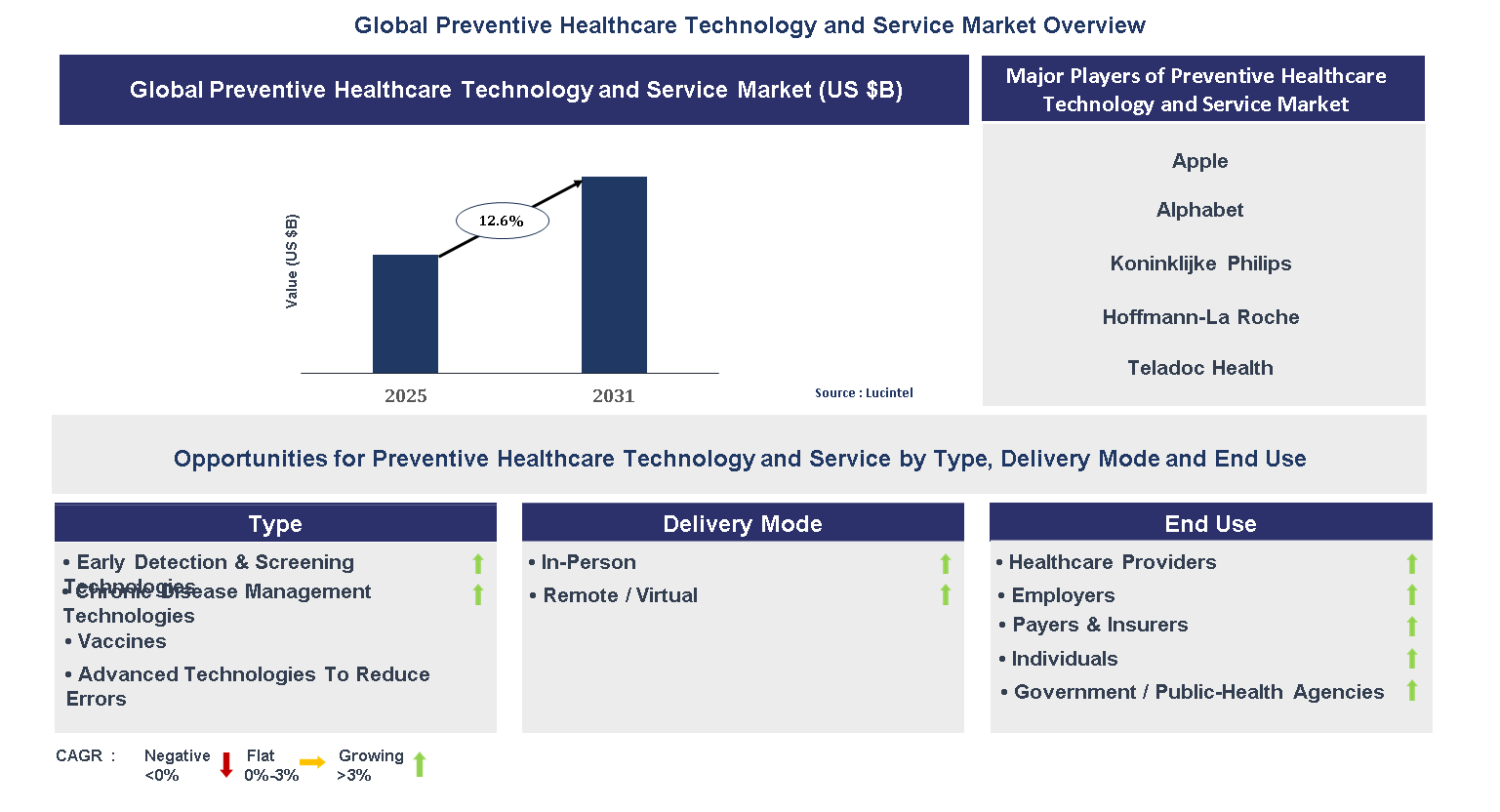
Key data points: The growth forecast = 12.6% annually for the next 7 years. Scroll below to get more insights. This market report covers trends, opportunities and forecasts in preventive healthcare technology and service market to 2031 by type (early detection & screening technologies, chronic disease management technologies, vaccines, and advanced technologies to reduce errors), delivery mode (in-person and remote / virtual), end use (healthcare providers, employers, payers & insurers, individuals, and government / public-health agencies), and region (North America, Europe, Asia Pacific, and the Rest of the World)
We'll send your sample report shortly.
• Lucintel forecasts that, within the type category, early detection & screening technology is expected to witness higher growth over the forecast period.
• Within the end use category, healthcare provider is expected to witness the highest growth.
• In terms of region, APAC is expected to witness the highest growth over the forecast period. Gain valuable insights for your business decisions with our comprehensive 150+ page report. Sample figures with some insights are shown below.
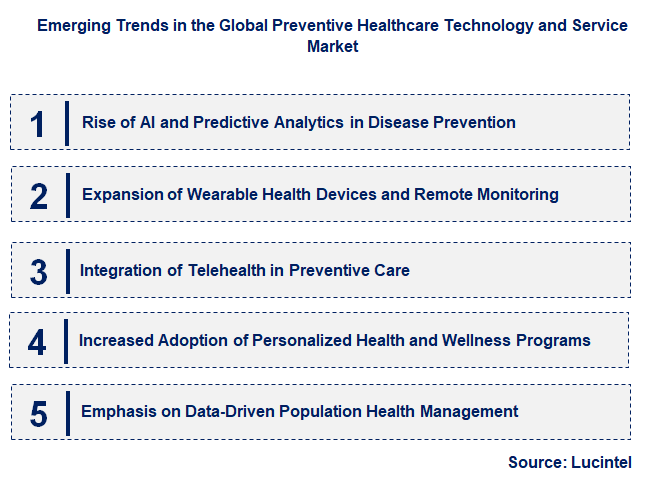
• Rise of AI and Predictive Analytics in Disease Prevention: AI-driven predictive models analyze health data to forecast disease risks and enable timely intervention. Hospitals use these systems to improve population health outcomes and reduce hospitalizations.
• Expansion of Wearable Health Devices and Remote Monitoring: Wearables and sensors are providing continuous health data, supporting early detection of irregularities, and promoting healthier lifestyles through data insights.
• Integration of Telehealth in Preventive Care: Teleconsultation platforms are making preventive services more accessible, particularly in remote regions, improving screening and follow-up compliance.
• Increased Adoption of Personalized Health and Wellness Programs: Data analytics and mobile platforms are enabling personalized wellness plans focused on nutrition, fitness, and mental health management.
• Emphasis on Data-Driven Population Health Management: Governments and providers are using data integration platforms to monitor health trends, predict outbreaks, and design preventive programs for large populations. Emerging trends in preventive healthcare technologies are revolutionizing how healthcare systems approach wellness and disease management. From predictive analytics to telemedicine and wearables, these innovations empower patients to take control of their health. The integration of personalized wellness programs and population health analytics enhances efficiency and prevention strategies. As data security and accessibility improve, preventive healthcare is becoming a cornerstone of sustainable and proactive healthcare delivery worldwide.
• Launch of AI-Powered Risk Assessment Tools: New AI platforms predict disease risks by analyzing patient lifestyle and medical history data, supporting proactive intervention.
• Expansion of Cloud-Based Preventive Health Platforms: Cloud systems are enabling centralized data access for real-time monitoring and health record integration.
• Growth in Wearable-Based Health Monitoring Solutions: Advanced wearable devices help track heart rate, glucose levels, and sleep patterns to identify potential health risks early.
• Integration of Preventive Services into Telemedicine Networks: Preventive screenings and consultations are increasingly available through telehealth platforms, expanding access to care.
• Government Support for Preventive Health Campaigns: Public health agencies are investing in technology-based awareness and vaccination programs to reduce disease burden. Recent developments demonstrate the growing importance of digital transformation in preventive healthcare. AI-driven diagnostics, telemedicine integration, and wearable technologies are improving disease prevention, early detection, and long-term wellness management. These advancements are fostering proactive healthcare ecosystems where technology and preventive strategies work together to improve population health outcomes.
• Digital Screening and Diagnostics: Expansion of AI-based diagnostic tools supports early disease detection and improves preventive care accessibility.
• Remote Health Monitoring Applications: Connected devices and sensors offer real-time health tracking, ensuring continuous patient engagement and intervention.
• Telemedicine-Based Preventive Services: Telehealth applications extend preventive consultations and screenings to underserved areas.
• Personalized Wellness and Fitness Platforms: Mobile-based applications focus on customized health management, fitness tracking, and lifestyle optimization.
• Population Health Data Analytics: Big data analytics platforms help identify health risks and design community-level preventive strategies. Strategic growth opportunities in preventive healthcare are reshaping global health management. The focus on predictive diagnostics, remote monitoring, and personalized wellness enables healthcare providers to improve outcomes while reducing costs. As digital solutions become integral to preventive care, these applications will drive the next phase of sustainable healthcare transformation.
• Apple
• Alphabet
• Koninklijke Philips
• Hoffmann-La Roche
• Teladoc Health
• Johnson & Johnson
• Abbott Laboratories
• Dexcom
• Garmin
• Omron Healthcare
• Early Detection & Screening Technologies
• Chronic Disease Management Technologies
• Vaccines
• Advanced Technologies To Reduce Errors
• In-Person
• Remote / Virtual
• Healthcare Providers
• Employers
• Payers & Insurers
• Individuals
• Government / Public-Health Agencies
• North America
• Europe
• Asia Pacific
• The Rest of the World
• United States: The United States is leading the adoption of preventive healthcare technologies through advanced digital infrastructure and strong regulatory support. The rise of wearable health devices, mobile health apps, and predictive analytics tools is enabling early detection of chronic diseases. Healthcare providers are implementing AI-driven population health platforms to identify at-risk groups and design personalized preventive care plans. Federal initiatives such as the CDC’s public health modernization programs are further boosting investments in data-driven health management.
• China: China’s preventive healthcare technology and service market is expanding rapidly due to government-led digital health initiatives and a growing focus on population wellness. The Healthy China 2030 strategy emphasizes disease prevention and health promotion through the use of big data, telemedicine, and smart wearable devices. Tech companies are partnering with hospitals to develop AI-based diagnostic and health monitoring solutions. The growing middle-class population and rising awareness of preventive health are driving demand for personalized wellness programs and health tracking applications. Integration of preventive technologies into public healthcare systems is strengthening early disease intervention nationwide.
• Germany: Germany’s preventive healthcare technology and service market is evolving with a strong focus on digital health innovation and public health awareness. The government’s Digital Healthcare Act has accelerated the integration of telemedicine, digital therapeutics, and wearable devices for preventive care. Insurance providers are encouraging preventive screening and lifestyle monitoring through technology-enabled programs. Hospitals and clinics are adopting predictive analytics tools to manage chronic disease risks more effectively.
• India: India is experiencing a surge in preventive healthcare adoption driven by digital health transformation and increased health awareness. Government initiatives such as Ayushman Bharat Digital Mission and Fit India Movement are promoting preventive health screening and wellness programs. The rapid growth of telehealth, wearable devices, and mobile diagnostic platforms is making preventive services more accessible across urban and rural areas. Startups are introducing AI-based wellness apps and early diagnosis tools.
• Japan: Japan’s preventive healthcare technology and service market is growing rapidly due to its aging population and strong focus on health longevity. The government promotes early detection and lifestyle management through advanced technologies such as health monitoring wearables, AI-based diagnostic tools, and digital health checkup systems. Healthcare providers are integrating real-time health tracking solutions to monitor chronic conditions. Collaboration between medical institutions and technology firms is leading to innovations in personalized preventive healthcare.


• Apple
• Alphabet
• Koninklijke Philips
• Hoffmann-La Roche
• Teladoc Health
• Johnson & Johnson
• Abbott Laboratories
• Dexcom
• Garmin
• Omron Healthcare Q5. Which preventive healthcare technology and service market segment will be the largest in future? Answer: Lucintel forecasts that, within the type category, early detection & screening technology is expected to witness higher growth over the forecast period. Q6. In preventive healthcare technology and service market, which region is expected to be the largest in next 5 years? Answer: In terms of region, APAC is expected to witness the highest growth over the forecast period. Q7. Do we receive customization in this report? Answer: Yes, Lucintel provides 10% customization without any additional cost.


Choose a license that fits your team. Instant PDF delivery.
Prices exclude taxes. Instant delivery. Custom licensing available on request.
Market Report · June 29, 2026
Market Report · May 18, 2026
Trusted partner for strategic intelligence and business growth


Receive a complimentary market analysis tailored to your industry. Our analysts will identify key growth opportunities and competitive dynamics specific to your business.

Market size, growth rate, and key trend analysis for your specific sector.

Top competitor positioning and market share analysis.

Strategic recommendations backed by data-driven insights.
Get curated market intelligence and competitive moves straight to your inbox.
By subscribing, you agree to receive our monthly insights. Unsubscribe anytime.
Receive a complimentary market analysis tailored to your industry. Our analysts will identify key growth opportunities and competitive dynamics specific to your business.
Market size, growth rate, and key trend analysis for your specific sector.
Top competitor positioning and market share analysis.
Strategic recommendations backed by data-driven insights.
Get curated market intelligence, emerging trends, and competitive moves straight to your inbox each month.
By subscribing, you agree to receive our monthly insights. Unsubscribe anytime.
We'll send your sample report shortly.