
Report Feature
Preclinical CRO Market Trends and Forecast
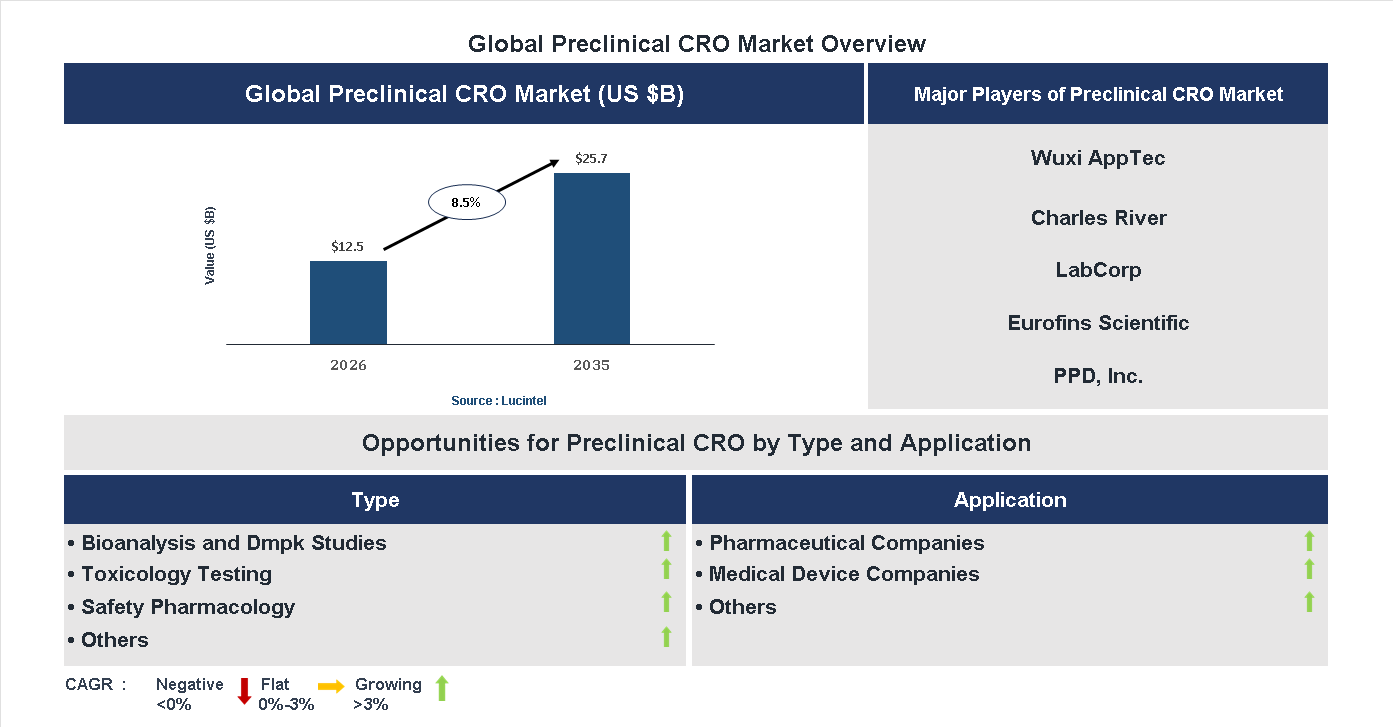
The future of the global preclinical CRO market looks promising with opportunities in the pharmaceutical company and medical device company markets. The global preclinical CRO market is expected to reach an estimated $25.7 billion by 2035 with a CAGR of 8.5% from 2026 to 2035. The major drivers for this market are the rising pharmaceutical r and d outsourcing to preclinical cros, the growing animal model usage for efficacy and toxicity testing, and the increasing biologics and cell gene therapy pipelines.• Lucintel forecasts that, within the type category, bioanalysis & dmpk study is expected to witness the highest growth over the forecast period.
• Within the application category, pharmaceutical is expected to witness higher growth.
• In terms of region, APAC is expected to witness the highest growth over the forecast period. Gain valuable insights for your business decisions with our comprehensive 150+ page report. Sample figures with some insights are shown below.
Emerging Trends in the Preclinical CRO Market
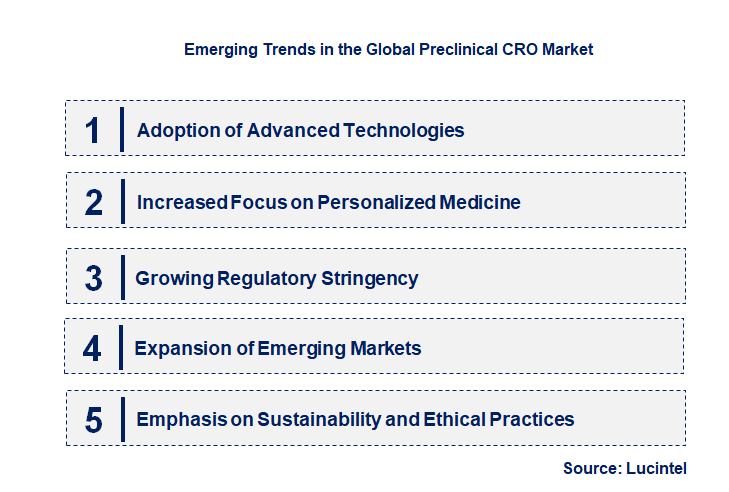
The preclinical CRO market is experiencing rapid evolution driven by technological advancements, increasing regulatory demands, and a growing emphasis on efficiency and innovation in drug development. As pharmaceutical and biotech companies seek to accelerate their pipelines while maintaining high standards of safety and efficacy, the market is adapting to new trends that enhance research capabilities and reduce time-to-market. These developments are reshaping how preclinical studies are conducted, funded, and integrated into the broader drug development process. Understanding these emerging trends is crucial for stakeholders aiming to stay competitive and leverage new opportunities in this dynamic landscape.• Adoption of Advanced Technologies: The integration of AI, machine learning, and automation is transforming preclinical research by enabling faster data analysis, predictive modeling, and high-throughput screening. These technologies improve accuracy, reduce human error, and accelerate decision-making processes, leading to more efficient study designs and resource allocation. As a result, CROs can deliver results more quickly, supporting faster progression of drug candidates through the pipeline.
• Increased Focus on Personalized Medicine: The shift toward personalized medicine is influencing preclinical research by emphasizing the development of targeted therapies. CROs are now investing in specialized models, such as patient-derived xenografts and genetic profiling, to better predict human responses. This trend enhances the relevance of preclinical data, reduces late-stage failures, and aligns research efforts with the growing demand for individualized treatments, ultimately improving success rates and market competitiveness.
• Growing Regulatory Stringency: Regulatory agencies are imposing stricter guidelines and standards for preclinical testing, demanding higher quality, reproducibility, and transparency. CROs are adapting by implementing rigorous quality control measures, comprehensive documentation, and compliance protocols. This trend increases the credibility of preclinical data, facilitates smoother regulatory approvals, and encourages innovation within a compliant framework, although it may also raise operational costs.
• Expansion of Emerging Markets: Developing regions such as Asia-Pacific are witnessing significant growth in preclinical CRO services due to lower costs, expanding pharmaceutical industries, and increasing investments in R&D. This expansion offers CROs access to new client bases and diverse research opportunities. It also fosters regional innovation hubs, enhances global collaboration, and diversifies the market landscape, making preclinical research more accessible and cost-effective worldwide.
• Emphasis on Sustainability and Ethical Practices: There is a rising focus on reducing animal testing through alternative methods like in vitro models, organ-on-a-chip, and computational simulations. CROs are adopting these innovative approaches to meet ethical standards and regulatory expectations while maintaining research quality. This trend promotes more humane, sustainable, and cost-effective research practices, aligning with global ethical considerations and improving public perception of the industry. These emerging trends are collectively reshaping the preclinical CRO market by fostering technological innovation, enhancing research relevance, ensuring regulatory compliance, expanding global reach, and promoting ethical practices. These developments are driving increased efficiency, reducing costs, and improving the overall quality and success rate of preclinical studies, ultimately accelerating the pathway from discovery to market.
Recent Development in the Preclinical CRO Market
The preclinical CRO market is experiencing rapid growth driven by technological advancements, increasing R&D investments, and a rising demand for efficient drug development processes. As pharmaceutical and biotech companies seek to reduce costs and accelerate timelines, the reliance on specialized contract research organizations has surged. This evolving landscape presents numerous opportunities for innovation and expansion, impacting global healthcare development. Stakeholders are focusing on strategic collaborations, regulatory compliance, and adopting new methodologies to stay competitive and meet the growing demand for preclinical testing services.• Growing Demand for Specialized Testing Services: The increasing complexity of drug candidates necessitates advanced preclinical testing, prompting CROs to expand their capabilities. This growth opportunity allows CROs to cater to diverse therapeutic areas, improve testing accuracy, and reduce time-to-market for new drugs. As pharmaceutical companies seek reliable partners, CROs investing in cutting-edge technologies can capture larger market shares, ultimately accelerating drug development pipelines and improving patient outcomes.
• Adoption of Innovative Technologies in Preclinical Testing: Integration of AI, machine learning, and automation in preclinical studies enhances data accuracy and reduces testing time. This technological shift offers CROs a competitive edge by enabling more predictive models and efficient workflows. The impact includes faster decision-making, cost savings, and improved reproducibility of results, which attract clients seeking high-quality, rapid testing services. Embracing these innovations positions CROs as leaders in the evolving preclinical landscape.
• Increasing Focus on Regulatory Compliance and Quality Standards: Stringent regulatory requirements worldwide compel CROs to adopt rigorous quality assurance protocols. This focus ensures the reliability and reproducibility of preclinical data, fostering trust among clients and regulators. Enhanced compliance reduces the risk of clinical trial delays and rejections, thereby safeguarding investments. CROs that prioritize quality standards can differentiate themselves, build long-term client relationships, and expand their market presence in a highly regulated environment.
• Expansion into Emerging Markets: Developing regions offer significant growth potential due to rising healthcare investments and increasing pharmaceutical R&D activities. CROs expanding into these markets can tap into a growing customer base, benefit from lower operational costs, and diversify their portfolios. This expansion supports local drug development initiatives, fosters regional collaborations, and accelerates access to innovative therapies, ultimately strengthening the global preclinical testing ecosystem and market competitiveness.
• Strategic Collaborations and Partnerships: Collaborations between CROs, pharmaceutical companies, and technology providers foster innovation and resource sharing. These alliances enable access to new methodologies, expand service offerings, and improve overall efficiency. The impact includes accelerated project timelines, enhanced expertise, and increased market reach. Such strategic partnerships are vital for staying ahead in a competitive environment, driving growth, and meeting the evolving needs of the pharmaceutical industry. The recent developments in the preclinical CRO market are significantly shaping its trajectory by fostering innovation, expanding geographic reach, and emphasizing quality. These opportunities are enabling CROs to deliver faster, more reliable, and cost-effective testing services, ultimately transforming drug development processes. As a result, the market is poised for sustained growth, attracting investments and fostering advancements that benefit the global healthcare landscape.
Strategic Growth Opportunities in the Preclinical CRO Market
The preclinical CRO market is experiencing rapid expansion driven by increasing R&D investments, technological advancements, and the growing need for efficient drug development processes. As pharmaceutical and biotech companies seek cost-effective and faster solutions, preclinical CROs are becoming essential partners. The markets growth is also fueled by regulatory pressures and the rising prevalence of chronic diseases, prompting a surge in demand for specialized testing services. This environment presents numerous strategic opportunities for market players to innovate and expand their service offerings.• Expansion into Emerging Markets: Preclinical CROs can capitalize on the growing pharmaceutical industries in regions like Asia-Pacific and Latin America by establishing local facilities and partnerships. This expansion reduces costs and improves access to regional clients, enabling faster project turnaround times. Additionally, emerging markets offer less saturated environments, allowing CROs to gain early-mover advantages and build brand recognition. Tailoring services to local regulatory requirements further enhances market penetration and long-term growth prospects.
• Adoption of Advanced Technologies for Better Data Accuracy: Integrating AI, machine learning, and high-throughput screening tools can significantly improve the precision and efficiency of preclinical testing. These technologies enable faster data analysis, reduce human error, and facilitate predictive modeling, leading to more reliable results. CROs adopting such innovations can differentiate themselves by offering superior service quality, shorter project timelines, and cost savings. This technological shift also supports personalized medicine development and complex biological studies.
• Diversification of Service Offerings to Include Specialized Testing: Expanding into niche areas such as toxicology, pharmacokinetics, and biomarker discovery allows CROs to meet diverse client needs. Offering integrated, end-to-end preclinical solutions enhances client retention and attracts new business. Specialization in emerging fields like regenerative medicine and gene therapy testing positions CROs at the forefront of innovative drug development. This diversification also mitigates risks associated with dependency on a limited set of services or therapeutic areas.
• Strategic Collaborations and Partnerships for Accelerated Growth: Forming alliances with biotech firms, academic institutions, and technology providers can foster innovation and expand service capabilities. Collaborations facilitate access to cutting-edge research, shared resources, and new client networks. Joint ventures can also streamline regulatory navigation and reduce time-to-market for new therapies. These strategic partnerships enable CROs to stay competitive, enhance their technological expertise, and accelerate the development pipeline, ultimately driving market growth.
• Focus on Sustainability and Ethical Practices to Attract Clients: Emphasizing environmentally friendly operations and ethical research practices can differentiate CROs in a competitive market. Implementing green laboratory techniques, waste reduction, and animal welfare standards appeals to socially responsible clients. Demonstrating commitment to sustainability enhances corporate reputation and compliance with evolving regulations. This focus can also open opportunities for government grants and funding, positioning CROs as leaders in responsible research and development, and fostering long-term client loyalty. The overall impact of these growth opportunities is a dynamic, innovative, and resilient preclinical CRO market. By leveraging technological advancements, expanding geographically, diversifying services, forming strategic alliances, and emphasizing sustainability, market players can capitalize on rising demand and accelerate drug development processes. These strategies will foster sustained growth, improve competitive positioning, and support the development of new therapies, ultimately benefiting the healthcare industry and patients worldwide.
Preclinical CRO Market Driver and Challenges
The preclinical CRO market is influenced by a variety of technological, economic, and regulatory factors that shape its growth trajectory. Advances in biotechnology and automation are driving innovation, while increasing R&D investments by pharmaceutical companies bolster demand for specialized preclinical services. Regulatory frameworks are becoming more stringent, necessitating high-quality testing and compliance. Economic factors such as rising healthcare expenditure and the need to reduce drug development costs further propel market expansion. However, the market also faces challenges, including technological complexities, regulatory hurdles, and high operational costs. These drivers and challenges collectively determine the pace and direction of growth within the preclinical CRO landscape. The factors responsible for driving the preclinical CRO market include:-• Technological Advancements: The integration of cutting-edge technologies like AI, automation, and high-throughput screening has revolutionized preclinical testing. These innovations enable faster, more accurate, and cost-effective research, attracting pharmaceutical companies to outsource their preclinical studies. As technology continues to evolve, CROs can offer more sophisticated services, reducing time-to-market for new drugs and increasing overall efficiency. This technological progress not only enhances data quality but also expands the scope of preclinical testing, making it a critical driver for market growth.
• Increasing R&D Investments: Pharmaceutical and biotech companies are significantly increasing their R&D budgets to develop new therapies, especially in areas like personalized medicine and biologics. This surge in investment directly correlates with higher demand for preclinical testing services to evaluate safety and efficacy before clinical trials. As companies seek to mitigate risks and accelerate drug development timelines, they increasingly rely on CROs for specialized preclinical services, fueling market expansion and fostering innovation within the sector.
• Regulatory Stringency: Governments and regulatory agencies worldwide are implementing stricter guidelines for drug safety and efficacy testing. Compliance with these regulations requires comprehensive preclinical studies, which in turn increases demand for specialized CRO services. The need for high-quality, validated data to meet regulatory approval processes encourages pharmaceutical companies to partner with experienced CROs. This regulatory environment acts as a catalyst for market growth, ensuring that preclinical testing standards are maintained and improved.
• Growing Focus on Personalized Medicine: The shift towards personalized medicine necessitates tailored preclinical studies to evaluate individual responses to therapies. This trend increases the complexity and specificity of preclinical testing, prompting CROs to develop specialized services and technologies. As personalized treatments become more prevalent, the demand for customized preclinical solutions rises, driving market growth and encouraging innovation in testing methodologies. The challenges facing this Market include:-
• Technological Complexities: The rapid evolution of technology in preclinical testing introduces complexities related to integration, validation, and standardization. CROs must continually update their infrastructure and train personnel, which involves significant investment. Additionally, ensuring data reproducibility and accuracy across different platforms remains a challenge. These technological hurdles can slow down adoption rates and increase operational costs, potentially limiting market growth and creating barriers for smaller players.
• Regulatory Challenges: Navigating the complex and evolving regulatory landscape poses significant hurdles for CROs and their clients. Variations in regulations across regions require extensive compliance efforts, which can delay project timelines and increase costs. Moreover, changes in regulatory policies may necessitate additional testing or data submission, complicating project management. These challenges can hinder market expansion, especially in emerging markets where regulatory frameworks are still developing.
• High Operational Costs: Running preclinical studies involves substantial expenses related to laboratory infrastructure, animal models, and skilled personnel. These costs can be prohibitive for smaller CROs or companies, limiting market accessibility. Additionally, maintaining compliance with stringent regulations and adopting new technologies further escalates operational expenses. High costs may restrict the entry of new players and slow down overall market growth, especially in regions with limited funding for research activities. The preclinical CRO market is driven by technological innovations, increased R&D investments, regulatory demands, and the rise of personalized medicine. However, technological complexities, regulatory challenges, and high operational costs pose significant hurdles. These factors collectively influence the market’s growth potential, requiring stakeholders to innovate and adapt to maintain competitiveness. Overall, the market’s future will depend on how effectively these drivers are leveraged and challenges managed to foster sustainable growth.
List of Preclinical CRO Companies
Companies in the market compete on the basis of product quality offered. Major players in this market focus on expanding their manufacturing facilities, R&D investments, infrastructural development, and leverage integration opportunities across the value chain. With these strategies preclinical CRO companies cater increasing demand, ensure competitive effectiveness, develop innovative products & technologies, reduce production costs, and expand their customer base. Some of the preclinical CRO companies profiled in this report include-• Wuxi AppTec
• Charles River
• LabCorp
• Eurofins Scientific
• PPD, Inc.
• ICON Plc.
• Pharmaron
• Inotiv
• ChemPartner
• JOINN Lab
Preclinical CRO Market by Segment
The study includes a forecast for the global preclinical CRO market by type, application, and region.Preclinical CRO Market by Type [Value from 2019 to 2035]:
• Bioanalysis and Dmpk Studies
• Toxicology Testing
• Safety Pharmacology
• Others
Preclinical CRO Market by Application [Value from 2019 to 2035]:
• Pharmaceutical Companies
• Medical Device Companies
• Others
Preclinical CRO Market by Region [Value from 2019 to 2035]:
• North America
• Europe
• Asia Pacific
• The Rest of the World
Country Wise Outlook for the Preclinical CRO Market
The preclinical CRO market is experiencing rapid growth driven by increasing demand for drug development, technological advancements, and expanding pharmaceutical and biotech sectors worldwide. As countries invest heavily in research and development, the landscape is evolving with new players, innovative services, and strategic collaborations. The United States remains a dominant force, while China, Germany, India, and Japan are rapidly advancing their capabilities to capture a larger share of this expanding market. These developments reflect broader trends in healthcare innovation, regulatory changes, and the global push for more efficient and cost-effective preclinical testing processes.• United States: The US preclinical CRO market continues to lead globally, driven by high R&D investments and a robust biotech industry. Recent advancements include increased adoption of AI and automation in preclinical testing, enhancing efficiency and accuracy. Major players are expanding their service portfolios to include specialized toxicology and pharmacology studies. Regulatory agencies like the FDA are also encouraging innovative approaches, fostering growth. Collaborations between CROs and pharmaceutical giants are becoming more strategic, emphasizing personalized medicine and biologics. The US market is also witnessing a rise in small and mid-sized CROs offering niche services.
• China: China is rapidly emerging as a key player in the preclinical CRO market, fueled by government initiatives supporting biotech innovation and increasing foreign investment. The country has seen significant infrastructure development, including state-of-the-art laboratories and research centers. Chinese CROs are expanding their service offerings to include advanced toxicology, pharmacokinetics, and safety pharmacology studies. The market benefits from a large pool of skilled scientists and competitive pricing, attracting international clients. Regulatory reforms are streamlining approval processes, further boosting growth. Strategic partnerships with Western firms are also on the rise, facilitating technology transfer and knowledge exchange.
• Germany: Germanys preclinical CRO market is characterized by high-quality standards, advanced scientific expertise, and a focus on innovative research. The country is investing in digital transformation, integrating AI and data analytics into preclinical studies. German CROs are strengthening their capabilities in areas like regenerative medicine, gene therapy, and personalized medicine. The country benefits from a strong regulatory framework aligned with European Union standards, ensuring compliance and safety. Collaborations with academic institutions and biotech startups are fostering innovation. Additionally, Germanys emphasis on sustainability and ethical research practices is shaping the development of new testing methodologies.
• India: India is witnessing rapid growth in its preclinical CRO sector, driven by increasing R&D expenditure and a large pool of scientific talent. The market is expanding its service offerings to include toxicology, pharmacology, and bioanalytical testing. Cost advantages and faster project turnaround times make Indian CROs attractive to global clients. The government’s initiatives to promote the biotech and pharmaceutical sectors are further fueling growth. Indian CROs are adopting advanced technologies such as automation and data management systems to improve service quality. Strategic alliances with international firms are helping Indian companies enhance their capabilities and expand their global footprint.
• Japan: Japans preclinical CRO market is characterized by a focus on innovation, quality, and regulatory compliance. The country is investing in cutting-edge research in areas like regenerative medicine, stem cell therapy, and precision medicine. Japanese CROs are integrating AI, machine learning, and big data analytics into their workflows to improve predictive accuracy and efficiency. The market benefits from strong government support and collaboration with leading academic institutions. Japan emphasizes ethical standards and safety in preclinical testing, aligning with global best practices. The country is also exploring sustainable and environmentally friendly testing methods to meet evolving regulatory and societal expectations.

Features of the Global Preclinical CRO Market
Market Size Estimates: Preclinical CRO market size estimation in terms of value ($B). Trend and Forecast Analysis: Market trends (2019 to 2025) and forecast (2026 to 2035) by various segments and regions. Segmentation Analysis: Preclinical CRO market size by type, application, and region in terms of value ($B). Regional Analysis: Preclinical CRO market breakdown by North America, Europe, Asia Pacific, and Rest of the World. Growth Opportunities: Analysis of growth opportunities in different types, applications, and regions for the preclinical CRO market. Strategic Analysis: This includes M&A, new product development, and competitive landscape of the preclinical CRO market. Analysis of competitive intensity of the industry based on Porter’s Five Forces model.
FAQ
Q1. What is the preclinical CRO market size? Answer: The global preclinical CRO market is expected to reach an estimated $25.7 billion by 2035. Q2. What is the growth forecast for preclinical CRO market? Answer: The global preclinical CRO market is expected to grow with a CAGR of 8.5% from 2026 to 2035. Q3. What are the major drivers influencing the growth of the preclinical CRO market? Answer: The major drivers for this market are the rising pharmaceutical r and d outsourcing to preclinical cros, the growing animal model usage for efficacy and toxicity testing, and the increasing biologics and cell gene therapy pipelines. Q4. What are the major segments for preclinical CRO market? Answer: The future of the preclinical CRO market looks promising with opportunities in the pharmaceutical company and medical device company markets. Q5. Who are the key preclinical CRO market companies? Answer: Some of the key preclinical CRO companies are as follows:• Wuxi AppTec
• Charles River
• LabCorp
• Eurofins Scientific
• PPD, Inc.
• ICON Plc.
• Pharmaron
• Inotiv
• ChemPartner
• JOINN Lab Q6. Which preclinical CRO market segment will be the largest in future? Answer: Lucintel forecasts that, within the type category, bioanalysis & dmpk study is expected to witness the highest growth over the forecast period. Q7. In preclinical CRO market, which region is expected to be the largest in next 5 years? Answer: In terms of region, APAC is expected to witness the highest growth over the forecast period. Q8. Do we receive customization in this report? Answer: Yes, Lucintel provides 10% customization without any additional cost.
Table of Contents
List of Figures
List of Tables
Methodology
- In-depth interviews of the major players in this market
- Detailed secondary research from competitors’ financial statements and published data
- Extensive searches of published works, market, and database information pertaining to industry news, company press releases, and customer intentions
- A compilation of the experiences, judgments, and insights of Lucintel’s professionals, who have analyzed and tracked this market over the years.


Buy Now
Choose a license that fits your team. Instant PDF delivery.
Prices exclude taxes. Instant delivery. Custom licensing available on request.
Key Questions
- • What are some of the most promising, high-growth opportunities for the preclinical CRO market by type (bioanalysis and DMPK studies, toxicology testing, safety pharmacology, and others), application (pharmaceutical companies, medical device companies, and others), and region (North America, Europe, Asia Pacific, and the Rest of the World)?
- • Which segments will grow at a faster pace and why?
- • Which region will grow at a faster pace and why?
- • What are the key factors affecting market dynamics? What are the key challenges and business risks in this market?
- • What are the business risks and competitive threats in this market?
- • What are the emerging trends in this market and the reasons behind them?
- • What are some of the changing demands of customers in the market?
- • What are the new developments in the market? Which companies are leading these developments?
- • Who are the major players in this market? What strategic initiatives are key players pursuing for business growth?
- • What are some of the competing products in this market and how big of a threat do they pose for loss of market share by material or product substitution?
- • What M&A activity has occurred in the last 7 years and what has its impact been on the industry? For any questions related to Preclinical CRO Market, Preclinical CRO Market Size, Preclinical CRO Market Growth, Preclinical CRO Market Analysis, Preclinical CRO Market Report, Preclinical CRO Market Share, Preclinical CRO Market Trends, Preclinical CRO Market Forecast, Preclinical CRO Companies, write Lucintel analyst at email: helpdesk@lucintel.com. We will be glad to get back to you soon.


