
Market Report · July 15, 2026

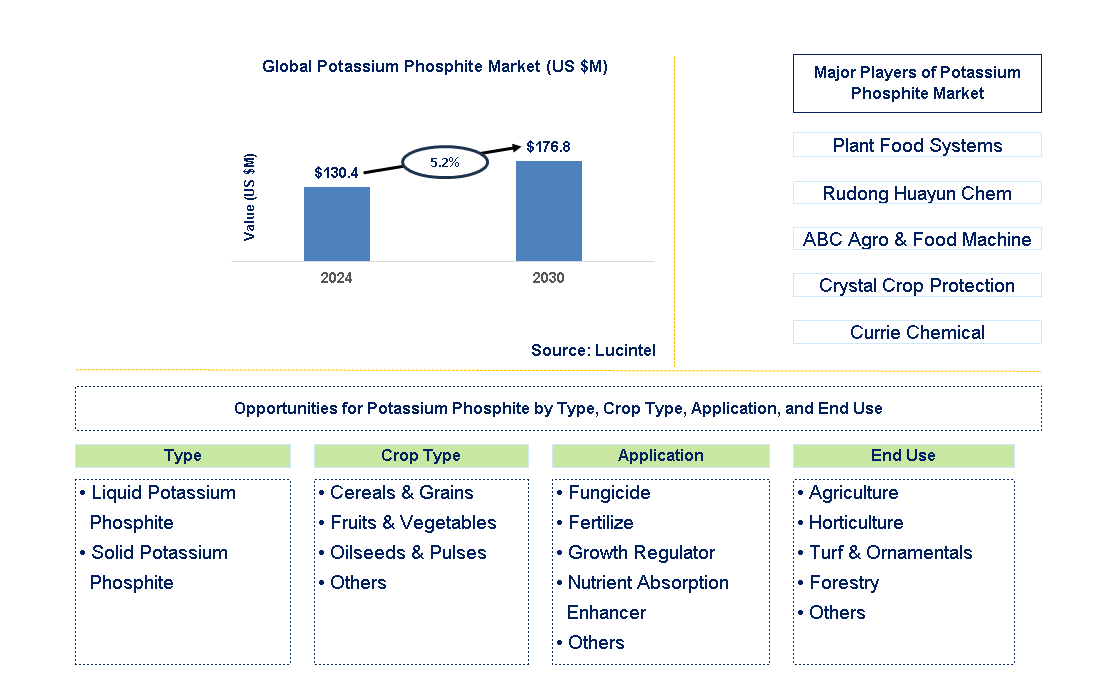
Key data points: The market size in 2030 = $176.8 million, growth forecast = 5.2% annually for the next 6 years. Scroll below to get more insights. This market report covers trends, opportunities, and forecastss in the global potassium phosphite market to 2030 by type (liquid potassium phosphite and solid potassium phosphite), crop type (cereals & grains, fruits & vegetables, oilseeds & pulses, and others), application (fungicide, fertilize, growth regulator, nutrient absorption enhancer, and others), end use (agriculture, horticulture, turf & ornamentals, forestry, and others), and region (North America, Europe, Asia Pacific, and the Rest of the World)
We'll send your sample report shortly.
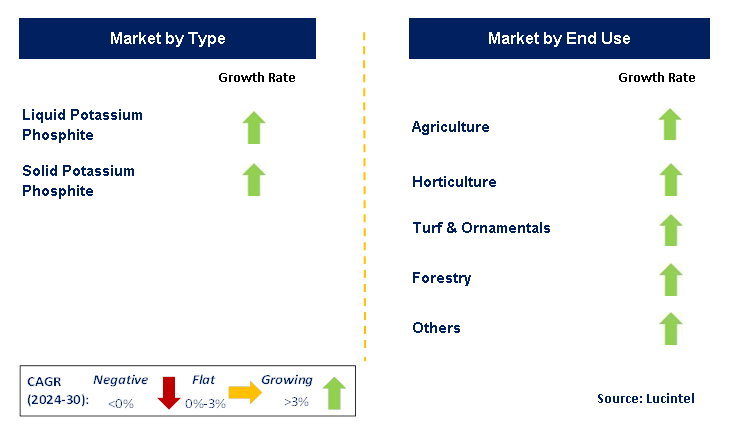
• Lucintel forecasts that, within the type category, liquid potassium phosphite will remain a larger segment over the forecast period due to its ease of usage and quick uptake by plants.
• Within the end use category, agriculture is expected to witness the highest growth due to the growing requirement for effective nutrient management.
• In terms of regions, North America will remain the largest region over the forecast period due to its thriving agriculture industry and environmental programs. Gain valuable insights for your business decisions with our comprehensive 150+ page report.
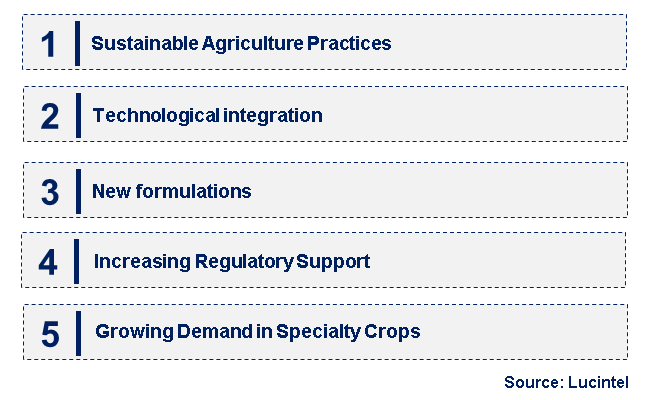
• Sustainable Agriculture Practices: This calls for a greater demand for Potassium Phosphite as an eco-friendly fertilizer source in agriculture. Rising farm adoption of these products leads to healthy soils and resilient crops without causing harm to the environment. This aligns with the global vision for sustainable food systems that significantly contribute to decreasing reliance on chemical fertilizers.
• Technological Integration: Potassium Phosphite is increasingly integrated into precision agriculture technologies. The application of Potassium Phosphite, using analytics and monitoring systems, makes the use more efficient and strategic for achieving maximum crop yield. This trend supports efficient resource utilization without waste and higher returns for farmers.
• New Formulations: Developments in advanced formulations of Potassium Phosphite enhance solubility and absorption rates. The efficiency of Potassium Phosphite in various crop species makes it more attractive to farmers. Better compatibility with other fertilizers leads to integrated nutrient management packages.
• Increasing Regulatory Support: Supportive regulatory actions for the use of environmentally friendly fertilizers such as Potassium Phosphite are increasing. Governments in certain countries have reduced regulatory barriers, thereby facilitating greater adaptation by farmers. Increased support also stimulates R&D on optimizing Potassium Phosphite applications.
• Growing Demand in Specialty Crops: The cultivation of specialty crops is emerging as one of the main drivers for increasing demand for Potassium Phosphite, particularly in fruits, vegetables, and ornamental plants. Quality and yield enhancement have become reasons to use Potassium Phosphite, creating a niche marketplace it can penetrate. This highlights the versatility of Potassium Phosphite in various agricultural applications. This shift toward sustainable practices, technological innovation, new formulations, regulatory support, and specialty crops is positioning Potassium Phosphite as a vital component of the future of agricultural productivity and sustainability.
• Advanced Production Technologies: Manufacturers are employing advanced production techniques to enhance the quality and efficiency of Potassium Phosphite products. This shift results in higher yields and fewer adverse effects on the environment. The industry is witnessing a move toward greener practices, and such technologies serve this purpose. Enhanced production methods lower the costs of producing Potassium Phosphite, making it more accessible to farmers.
• Formulation Innovations: Innovations include the formulation of advanced solutes that increase solubility and absorption by Potassium Phosphite in plants, providing better nutrition delivery and improved efficacy in disease prevention. This meets the market's growing demand for effective solutions for crop health.
• Government Initiatives: Different governments are initiating schemes to encourage the use of Potassium Phosphite as an integral part of sustainable agriculture. Supportive policies and subsidies help the agricultural sector shift to environmentally friendly fertilizers, promoting market growth. Governments are showing increasing commitment to sustainable food production.
• Research and Development Collaborations: Manufacturers are partnering with agricultural research institutions to advance R&D on Potassium Phosphite. Research has improved application methods and demonstrated the efficacy of Potassium Phosphite across a range of crops under varying conditions, making it more appealing to farmers and agronomists.
• Growth in Emerging Economies: The Potassium Phosphite market is expanding in emerging economies due to a surge in agricultural needs. Educational and awareness campaigns are helping farmers recognize the benefits of Potassium Phosphite, increasing its adoption and contributing to market growth in these regions. In conclusion, current trends in production technology, innovative formulations, increased government support, collaborative research, and the general expansion of market opportunities in developing nations are significantly enhancing the compound's efficacy and availability, positioning it as an essential tool in modern agriculture.
• Crop Protection Applications: Potassium Phosphite is increasingly used in crop protection as efficiency-seeking farmers aim to enhance plant resilience against diseases. It adds value to integrated pest management by strengthening plants' defense mechanisms, indicating potential growth in this application area.
• Fertility Management: Manufacturers are making strides in fertility management as Potassium Phosphite is becoming a major component of holistic nutrient management practices due to its ability to improve nutrient uptake and enhance soil health. This expands avenues for manufacturers to develop targeted products in the fertility enhancement area.
• Organic Farming: The growing popularity of organic farming is boosting the demand for organic fertilizers such as Potassium Phosphite. An increase in organic farming activities is expected to expand the market for environmentally friendly fertilizers, providing significant growth opportunities for Potassium Phosphite manufacturers.
• Specialty Crops Research and Development: There is substantial investment in the R&D of specialty crops. With farmers focusing on increasing yield and quality of high-value crops, opportunities exist to position Potassium Phosphite as a unique advantage by tailoring products to meet specific crop requirements.
• Expansion into Emerging Markets: Expanding into emerging markets presents opportunities for higher growth for Potassium Phosphite. Rising agricultural productivity needs in these regions can be supported through education and information campaigns highlighting the advantages of Potassium Phosphite. Initiatives aimed at educating local farmers can foster awareness and acceptance. The Potassium Phosphite market shows promising growth across crop protection applications, fertility management, organic farming, specialty crop R&D, and expansion into emerging markets. Stakeholders can leverage these opportunities to strengthen their market presence while supporting sustainable farming practices.
• Growing Demand for Sustainable Agriculture: The desire for sustainable agriculture—harvesting food in a healthy manner without harming the environment—is a hallmark of modern farming practices. Consequently, the demand for eco-friendly fertilizers like Potassium Phosphite continues to grow.
• Increased Farmer Perception of Balanced Plant Nutrition: A significant advantage of Potassium Phosphite is its ability to improve crop nutrient absorption and resistance. There is a growing recognition of the importance of plant nutrition among farmers.
• Supportive Government Policies for Eco-Friendly Fertilizers: Supportive regulations promoting the use of eco-friendly fertilizers are driving market growth. As policies evolve to encourage sustainable agricultural practices, demand for Potassium Phosphite is set to rise, benefiting both manufacturers and farmers.
• Technological Advancements in Agriculture: Precision agriculture technologies enhance the application of Potassium Phosphite. Innovative research focused on targeted application techniques helps farmers optimize the use of Potassium Phosphite for improved crop production with minimal waste.
• Increased Demand for Crops: The global population is growing, and the demand for food continues to rise, significantly influencing agricultural production systems. Potassium Phosphite, with its yield-enhancing and crop health benefits, serves as a valuable tool in addressing these challenges. Challenges in the Potassium Phosphite market include:
• Market Fragmentation: Market fragmentation, with multiple manufacturers producing various products, creates confusion among farmers and complicates purchasing decisions, hindering market growth.
• High Production Costs: The cost of producing high-grade Potassium Phosphite is relatively high, limiting adoption rates in price-sensitive markets. Manufacturers need to find ways to reduce production costs without compromising product quality.
• Low Awareness in Emerging Markets: While awareness of Potassium Phosphite is growing in developed regions, understanding in emerging markets remains limited. There is a significant need for educational efforts to inform the farming community about its benefits, which could lead to higher adoption rates. The Potassium Phosphite market is poised for sustainable growth due to increasing demand for sustainable agriculture, heightened awareness of plant nutrition, regulatory support, technological advancements, and rising crop demand. However, challenges such as market fragmentation, high production costs, and low awareness in emerging markets may impede potential growth. Addressing these challenges will be crucial for stakeholders to maintain a competitive edge in this dynamic marketplace; those who succeed may achieve significant market positions while contributing to sustainable agricultural practices.
• Plant Food Systems
• Rudong Huayun Chem
• ABC Agro & Food Machine
• Crystal Crop Protection
• Currie Chemical
• Fertiberia
• Growth Products
• Agriscience
• Agrowchem
• Biobest Group
• Liquid Potassium Phosphite
• Solid Potassium Phosphite
• Cereals & Grains
• Fruits & Vegetables
• Oilseeds & Pulses
• Others
• Fungicide
• Fertilize
• Growth Regulator
• Nutrient Absorption Enhancer
• Others
• Agriculture
• Horticulture
• Turf & Ornamentals
• Forestry
• Others
• North America
• Europe
• Asia Pacific
• The Rest of the World
• U.S.: The adoption of organic farming practices in the U.S. is driving demand for Potassium Phosphite. Innovations in new formulations that enhance nutrient uptake have increased acceptance among farmers. Additionally, a favorable regulatory environment is facilitating easier access to these products. There is a greater emphasis on integration with precision agriculture technology, promoting more targeted use and improving efficiency and effectiveness in crop production.
• China: The Potassium Phosphite market in China is experiencing significant growth, fueled by the demand for resource-friendly farming practices in response to rising food needs. Recent trends are supported by government encouragement for environmentally friendly fertilizers. Producers are improving production processes to enhance quality while reducing costs. Integrated pest management systems are also increasingly incorporating Potassium Phosphite, expanding market opportunities.
• Germany: Sustainable agricultural products are driving the Potassium Phosphite market in Germany. Government support for environmentally friendly products has significantly increased usage among organic farmers. New innovations in production processes are enhancing product quality and efficiency. Manufacturers are collaborating with various agricultural research institutions to enhance R&D, maximizing Potassium Phosphite’s applications, particularly with high-value crops, thereby improving yields and disease resistance.
• India: The application of Potassium Phosphite in India is growing as more farmers recognize its benefits for increasing crop productivity and resilience. Recent developments include formulating user-friendly products suitable for smallholders. Government initiatives promoting sustainable agriculture further boost demand for Potassium Phosphite as a key component of integrated nutrient management. Additionally, studies are underway to optimize application techniques for greater efficacy under diverse climatic conditions.
• Japan: The market for Potassium Phosphite in Japan is characterized by high-tech agricultural solutions. Recent innovations include developing formulations tailored to the specifics of the Japanese horticulture industry. Government support for sustainability is escalating the use of Potassium Phosphite in sustainable practices to enhance food security, while research collaborations continue to improve the understanding of Potassium Phosphite’s contributions to plant health, leading to more effective pest and disease management strategies.


• Plant Food Systems
• Rudong Huayun Chem
• ABC Agro & Food Machine
• Crystal Crop Protection
• Currie Chemical
• Fertiberia
• Growth Products
• Agriscience
• Agrowchem
• Biobest Group Q6. Which potassium phosphite market segment will be the largest in future? Answer: Lucintel forecasts that liquid potassium phosphite will remain the larger segment over the forecast period due to its ease of usage and quick uptake by plants. Q7. In potassium phosphite market, which region is expected to be the largest in next 5 years? Answer: North America will remain the largest region over the forecast period due to its thriving agriculture industry and environmental programs. Q.8 Do we receive customization in this report? Answer: Yes, Lucintel provides 10% customization without any additional cost.


Choose a license that fits your team. Instant PDF delivery.
Prices exclude taxes. Instant delivery. Custom licensing available on request.
Market Report · July 15, 2026
Market Report · June 24, 2026
Market Report · May 18, 2026
Trusted partner for strategic intelligence and business growth


Receive a complimentary market analysis tailored to your industry. Our analysts will identify key growth opportunities and competitive dynamics specific to your business.

Market size, growth rate, and key trend analysis for your specific sector.

Top competitor positioning and market share analysis.

Strategic recommendations backed by data-driven insights.
Get curated market intelligence and competitive moves straight to your inbox.
By subscribing, you agree to receive our monthly insights. Unsubscribe anytime.
Receive a complimentary market analysis tailored to your industry. Our analysts will identify key growth opportunities and competitive dynamics specific to your business.
Market size, growth rate, and key trend analysis for your specific sector.
Top competitor positioning and market share analysis.
Strategic recommendations backed by data-driven insights.
Get curated market intelligence, emerging trends, and competitive moves straight to your inbox each month.
By subscribing, you agree to receive our monthly insights. Unsubscribe anytime.
We'll send your sample report shortly.