
Market Report · July 22, 2026

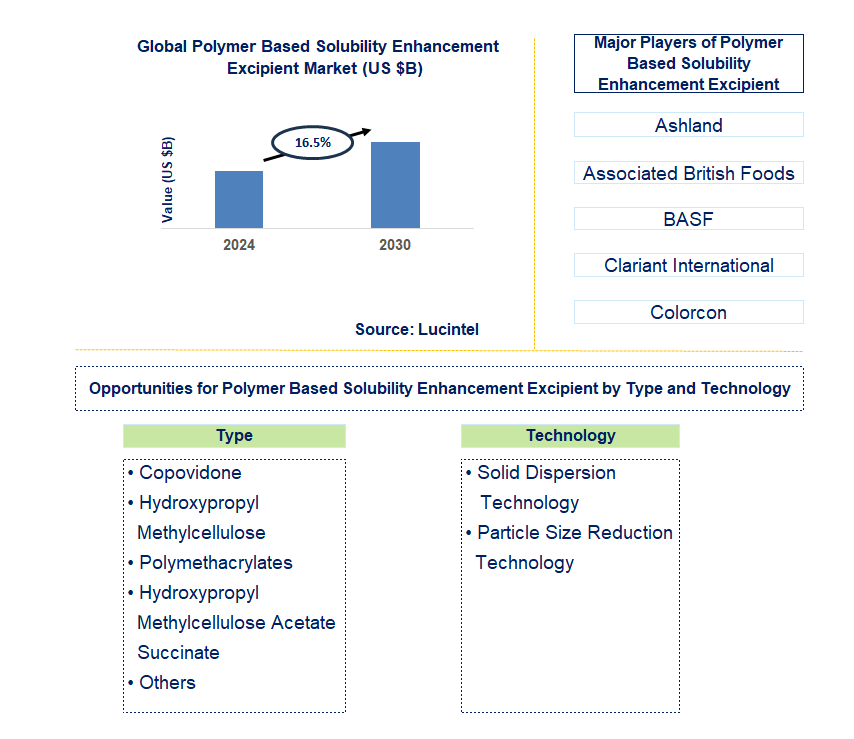
Key data points: The growth forecast = 16.5% annually for the next 6 years. Scroll below to get more insights. This market report covers trends, opportunities, and forecasts in the global polymer based solubility enhancement excipient market to 2030 by type (copovidone, hydroxypropyl methylcellulose, polymethacrylates, hydroxypropyl methylcellulose acetate succinate, and others), technology (solid dispersion technology and particle size reduction technology), and region (North America, Europe, Asia Pacific, and the Rest of the World)
We'll send your sample report shortly.
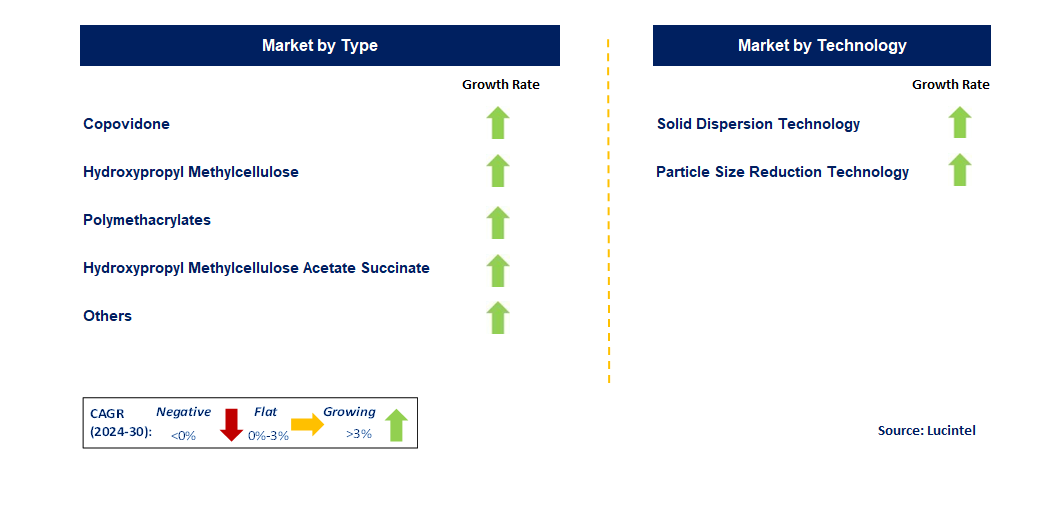
• Lucintel forecasts that, within the type category, copovidone will remain the largest segment over the forecast period due to its longer shelf life and incredibly high binding capacity.
• Within the technology category, solid dispersion technology is expected to witness a higher growth over the forecast period.
• In terms of regions, APAC is expected to witness the highest growth over the forecast period due to growing need for polymeric excipients among pharmaceutical products in the region. Gain valuable insights for your business decisions with our comprehensive 150+ page report.
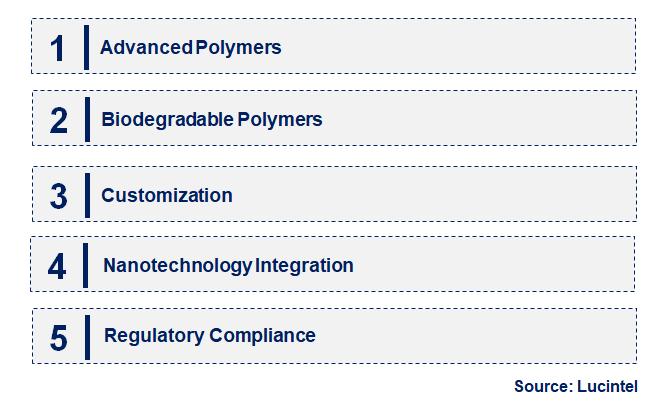
• Advanced Polymers: Introduction of novel polymers such as block copolymers and dendritic polymers that offer enhanced solubility and stability.
• Biodegradable Polymers: Growing use of biodegradable and biocompatible polymers in response to environmental and regulatory pressures.
• Customization: Increasing demand for tailored excipients designed for specific drug delivery systems and therapeutic applications.
• Nanotechnology Integration: Utilization of nanotechnology to enhance the solubility and bioavailability of poorly soluble drugs.
• Regulatory Compliance: Emphasis on excipients that meet stringent regulatory standards and international pharmacopoeia requirements.
• Collaboration and Innovation: Rising collaboration between pharmaceutical companies and excipient manufacturers to drive innovation and improve formulation strategies. Emerging trends in the polymer-based solubility enhancement excipient market include the development of advanced and biodegradable polymers, customization, nanotechnology integration, regulatory compliance, and increased collaboration, reflecting a shift towards more innovative and efficient drug formulation solutions.
• Novel Polymers: Introduction of new excipients such as polyvinyl alcohol (PVA) and polyvinylpyrrolidone (PVP) that enhance drug solubility and stability.
• Biodegradable Solutions: Development of biodegradable polymers that address environmental concerns and align with regulatory requirements.
• High-Performance Excipient Technologies: Adoption of advanced excipient technologies like cyclodextrins and hyperbranched polymers for improved drug formulation.
• Advanced Manufacturing Techniques: Implementation of state-of-the-art manufacturing technologies to enhance the quality and consistency of excipients.
• Customization for Drug Delivery: Growth in the development of customized excipients tailored for specific drug delivery systems, including oral and injectable formulations.
• Regulatory Alignment: Increased focus on ensuring excipients meet international quality standards and regulatory requirements. Recent developments in the polymer-based solubility enhancement excipient market include the introduction of novel polymers, biodegradable solutions, high-performance technologies, advanced manufacturing techniques, customization for drug delivery, and regulatory alignment, reflecting ongoing advancements in the industry.
• Pharmaceutical Formulations: Expansion opportunities in developing excipients that enhance the solubility and bioavailability of new and existing drugs.
• Targeted Drug Delivery: Growth potential in creating excipients for targeted and controlled-release drug delivery systems.
• Biologics and Specialty Drugs: Increasing demand for specialized excipients to improve the solubility and stability of biologics and specialty medications.
• Generics Market: Opportunities in the generics sector for enhancing the solubility of generic drugs to improve their efficacy and market competitiveness.
• Personalized Medicine: Potential for growth in developing excipients tailored to the needs of personalized medicine and individualized therapies.
• Emerging Therapies: Innovation opportunities in creating excipients for emerging therapies, including gene and cell therapies. Strategic growth opportunities for the polymer-based solubility enhancement excipient market include pharmaceutical formulations, targeted drug delivery, biologics, generics, personalized medicine, and emerging therapies, highlighting diverse application areas with significant potential.
• Pharmaceutical Innovation: Increased demand for advanced excipients driven by innovation in drug formulation and delivery technologies.
• Regulatory Requirements: Growing emphasis on excipients that meet stringent regulatory standards and quality requirements.
• Biodegradable and Eco-Friendly Trends: Rising preference for biodegradable and environmentally friendly excipients in response to sustainability concerns.
• Personalized Medicine Growth: Expansion of personalized medicine and tailored therapies driving demand for customized excipients.
• Technological Advancements: Innovations in polymer chemistry and manufacturing technologies enhancing excipient performance and functionality. Challenges in the polymer-based solubility enhancement excipient market include:
• Cost Constraints: High production costs and pricing pressures impacting the affordability and market adoption of advanced excipients.
• Regulatory Hurdles: Complex regulatory requirements and approval processes posing challenges for new excipient formulations.
• Market Competition: Intense competition among excipient manufacturers affecting market share and profitability.
• Technological Complexity: Challenges in keeping up with rapid technological advancements and integrating new technologies into production processes.
• Supply Chain Issues: Disruptions in the supply chain and raw material availability impacting production and delivery. The polymer-based solubility enhancement excipient market is driven by pharmaceutical innovation, regulatory requirements, sustainability trends, personalized medicine, and technological advancements, but faces challenges related to cost constraints, regulatory hurdles, market competition, technological complexity, and supply chain issues. Addressing these challenges is crucial for sustained growth and development in the market.
• Ashland
• Associated British Foods
• BASF
• Clariant International
• Colorcon
• Croda International
• Dow Chemical
• DuPont de Nemours
• Evonik Industries
• GATTEFOSSE
• Copovidone
• Hydroxypropyl Methylcellulose
• Polymethacrylates
• Hydroxypropyl Methylcellulose Acetate Succinate
• Others
• Solid Dispersion Technology
• Particle Size Reduction Technology
• North America
• Europe
• Asia Pacific
• The Rest of the World
• USA: In the USA, the polymer-based solubility enhancement excipient market is experiencing robust growth driven by advancements in pharmaceutical formulation technologies. Recent developments include the introduction of novel polymers such as polyvinyl alcohol (PVA) and polyvinylpyrrolidone (PVP) that enhance the solubility and bioavailability of poorly water-soluble drugs. There has been a significant push towards using biodegradable and biocompatible polymers to meet regulatory standards and environmental concerns. Additionally, pharmaceutical companies are investing in research and development to create customized excipients tailored for specific drug delivery systems, including oral and injectable formulations.
• China: In China, the polymer-based solubility enhancement excipient market is expanding rapidly as the country becomes a major player in global pharmaceutical manufacturing. Recent advancements include the development of new polymer excipients, such as graft copolymers and block copolymers, that offer enhanced solubility and stability for a wide range of drugs. Chinese companies are investing heavily in modernizing their production facilities and incorporating advanced technologies to improve the quality and functionality of excipients. There is also a growing focus on aligning with international standards to enhance the competitiveness of Chinese excipients in the global market.
• India: The Indian polymer-based solubility enhancement excipient market is growing due to the increasing demand for pharmaceutical innovations and cost-effective solutions. Recent developments include the use of novel excipients such as polyethylene glycol (PEG) and cellulose derivatives to enhance the solubility of generic drugs and improve their marketability. Indian manufacturers are also focusing on scaling up production capabilities and ensuring compliance with international quality standards. There is a notable trend towards the development of excipients that cater to the specific needs of oral and topical drug formulations, reflecting the diverse requirements of the Indian pharmaceutical industry.
• Japan: In Japan, the polymer-based solubility enhancement excipient market is characterized by high technological sophistication and a focus on precision. Recent advancements include the development of advanced polymer excipients like polyacrylic acids and polysaccharides that enhance drug solubility and release profiles. Japanese companies are investing in cutting-edge research to develop polymers with tailored properties for specific therapeutic applications. Additionally, there is a strong emphasis on the integration of excipients with innovative drug delivery systems, including controlled-release and targeted delivery formulations, to address complex pharmaceutical needs.


• Ashland
• Associated British Foods
• BASF
• Clariant International
• Colorcon
• Croda International
• Dow Chemical
• DuPont de Nemours
• Evonik Industries
• GATTEFOSSE Q5. Which polymer based solubility enhancement excipient market segment will be the largest in future? Answer: Lucintel forecasts that copovidone will remain the largest segment over the forecast period due to its longer shelf life and incredibly high binding capacity. Q6. In polymer based solubility enhancement excipient market, which region is expected to be the largest in next 5 years? Answer: APAC is expected to witness the highest growth over the forecast period due to growing need for polymeric excipients among pharmaceutical products in the region. Q.7 Do we receive customization in this report? Answer: Yes, Lucintel provides 10% customization without any additional cost.


Choose a license that fits your team. Instant PDF delivery.
Prices exclude taxes. Instant delivery. Custom licensing available on request.
Market Report · July 22, 2026
Market Report · July 22, 2026
Market Report · July 22, 2026
Trusted partner for strategic intelligence and business growth


Receive a complimentary market analysis tailored to your industry. Our analysts will identify key growth opportunities and competitive dynamics specific to your business.

Market size, growth rate, and key trend analysis for your specific sector.

Top competitor positioning and market share analysis.

Strategic recommendations backed by data-driven insights.
Get curated market intelligence and competitive moves straight to your inbox.
By subscribing, you agree to receive our monthly insights. Unsubscribe anytime.
Receive a complimentary market analysis tailored to your industry. Our analysts will identify key growth opportunities and competitive dynamics specific to your business.
Market size, growth rate, and key trend analysis for your specific sector.
Top competitor positioning and market share analysis.
Strategic recommendations backed by data-driven insights.
Get curated market intelligence, emerging trends, and competitive moves straight to your inbox each month.
By subscribing, you agree to receive our monthly insights. Unsubscribe anytime.
We'll send your sample report shortly.