
Market Report · July 22, 2026

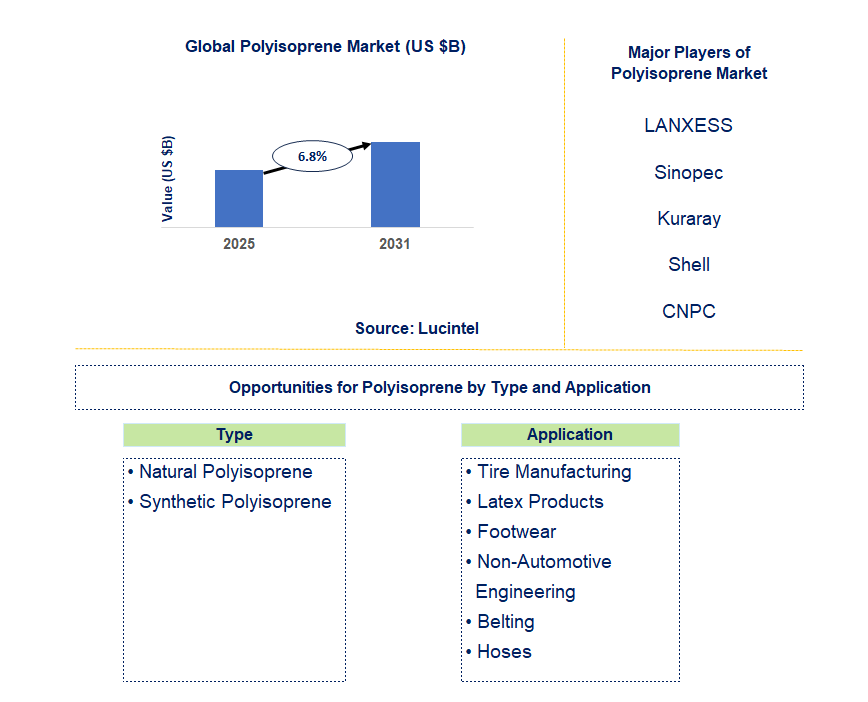
Key data points: The growth forecast = 6.8% annually for the next 7 years. Scroll below to get more insights. This market report covers Trends, opportunities and forecasts in polyisoprene market to 2031 by type (natural polyisoprene and synthetic polyisoprene), application (tire manufacturing, latex products, footwear, non-automotive engineering, belting, and hoses), and region (North America, Europe, Asia Pacific, and the Rest of the World)
We'll send your sample report shortly.
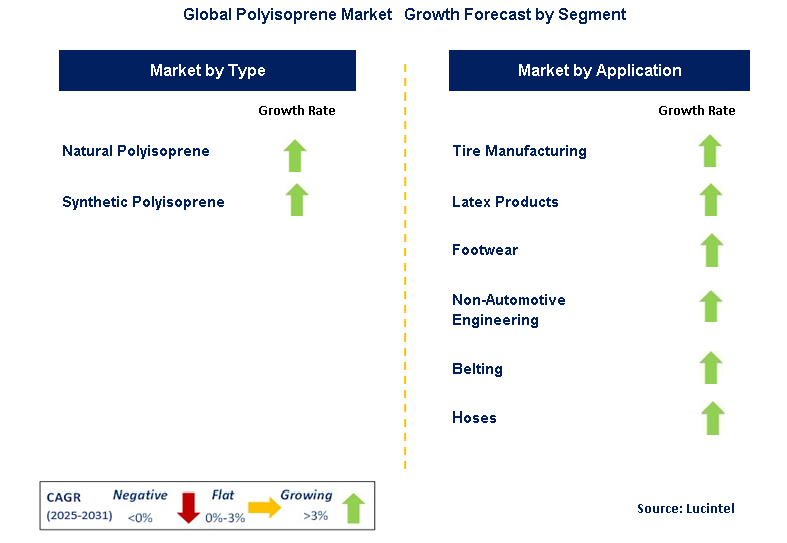
• Lucintel forecasts that, within the type category, synthetic polyisoprene is expected to witness higher growth over the forecast period.
• Within the application category, tire manufacturing is expected to witness the highest growth.
• In terms of region, APAC is expected to witness the highest growth over the forecast period.
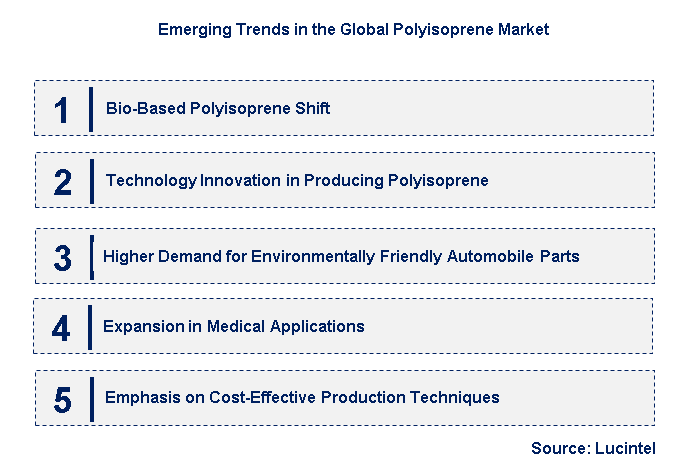
• Bio-Based Polyisoprene Shift: As manufacturers prioritize sustainability more and more, bio-based Polyisoprene is emerging as a preference. In contrast to traditional petrochemical-based Polyisoprene, bio-based alternatives come from renewable resources, minimizing the environmental impact of manufacturing. This is based on tightening environmental legislation and increasing customer pressure to source more sustainable products. Bio-based Polyisoprene is gaining usage across the automobile and pharmaceutical industries for manufacturing tires, medical devices, and other rubber components. Due to the support being extended by governments worldwide towards the implementation of eco-friendly production, this trend in using bio-based Polyisoprene will gain more traction in the years ahead.
• Technology Innovation in Producing Polyisoprene: Technological advancements in polymerization are making the production of Polyisoprene more efficient, with lower costs and better-quality products. New manufacturing processes allow for better control of the molecular structure of the polymer, improving its performance attributes like elasticity, strength, and heat stability. These gains are especially useful in applications like the automotive industry, where Polyisoprene is implemented in high-performance tires. As technology continues to advance, these developments will lower the costs of production and make Polyisoprene a more affordable and accessible material to a broader industrial base, adding further impetus to market expansion.
• Higher Demand for Environmentally Friendly Automobile Parts: The automobile industry is increasingly adopting environment-friendly materials, and Polyisoprene is at the center of this drive. The increasing requirement for electric vehicles (EVs) and the call for more fuel-efficient vehicles are necessitating the demand for light, strong materials with less environmental footprint. Polyisoprene's excellent durability and resistance to heat and wear make it a good candidate for tire manufacturing and automotive seal applications. As the automotive sector moves towards sustainability, Polyisoprene's contribution to the production of sustainable components will increase, especially in tire production and rubber components.
• Expansion in Medical Applications: Polyisoprene is being used more and more in medical devices because it is biocompatible and elastic. The material is applied in products like medical gloves, tubing, and seals. As demand for healthcare increases, especially in the developing world, Polyisoprene is becoming increasingly crucial in the manufacturing of disposable healthcare products. An increase in the prevalence of conditions that necessitate the frequent usage of healthcare products is also pushing demand. Increasing the trend toward personalized healthcare and increased emphasis on hygiene and patient safety are projected to fuel greater use of Polyisoprene in medical uses in the years to come.
• Emphasis on Cost-Effective Production Techniques: With rising demand for Polyisoprene, producers are emphasizing cost-effective production techniques to stay competitive. Increased efficiency in production, along with improved raw material procurement and recycling, is contributing to lowering the cost of Polyisoprene overall. Reduced production costs make Polyisoprene more appealing to a range of industries, particularly in emerging economies where cost-conscious applications like tire production are common. As new production methods become available, the Polyisoprene market will be able to take advantage of cheaper, better-quality products that are able to provide for a broad array of industries. The upcoming trends in the polyisoprene market are redesigning its future by propelling growth in sustainable, high-performing applications in industries like automotive, medical, and manufacturing. The move towards bio-based Polyisoprene, evolving production technologies, and growing emphasis on sustainability are revolutionizing the market scenario. These trends not only support environmental objectives but also open up new business prospects for producers. As these trends keep evolving, Polyisoprene is poised to contribute even more towards the manufacturing of environmentally friendly and high-performance products.
• Bio-Based Polyisoprene Development: The most important advancement in the Polyisoprene market is the advancement in the production of bio-based Polyisoprene. Bio-based Polyisoprene is produced from renewable sources like plant-based sugars, providing a greener alternative to traditional petrochemical-based Polyisoprene. This advancement comes in line with increasing demand for environmentally friendly materials in automotive and medical device manufacturing industries. With technological advancements in biotechnology and the sourcing of renewable resources, bio-based Polyisoprene is likely to be more cost-competitive, hence further increasing its uptake in target markets.
• Technological Developments in Synthetic Polyisoprene Manufacturing: Advances in the technology of synthesizing Polyisoprene have focused on more cost-effective and efficient ways of manufacturing. Improved polymerization methods have enhanced the molecular structure of Polyisoprene, yielding better material properties like higher elasticity and heat resistance. These developments have broadened the use of the material in high-performance applications, especially in the automotive and tire industries. With further development of these production technologies, the demand for Polyisoprene will grow, offering cost savings while not sacrificing performance.
• Growing Applications in Medical Devices: Polyisoprene is seeing growing applications in medical devices because of its biocompatibility, flexibility, and strength. The demand for high-quality Polyisoprene in medical applications like gloves, tubing, and seals comes from the need for improved and safer healthcare products. Improved disposable medical products demand, especially in developing markets, has spurred higher production of Polyisoprene for medical devices. These trends are likely to continue as the healthcare industry expands and requires better materials for patient safety and comfort.
• Use of Polyisoprene in Automotive Parts: The automotive sector has increasingly used Polyisoprene for tire, seal, and rubber part production because of its strength and high-performance nature. Advances in tire technology in recent times have created greater applications for Polyisoprene in high-performance tires with enhanced wear resistance and improved safety. With rising demand for fuel-efficient and electric vehicles, Polyisoprene applications in the automotive sector are also likely to expand, allowing manufacturers to produce materials that keep up with changing industry needs.
• Sustainability and Environmental Initiatives: With increasing global efforts towards sustainability, Polyisoprene producers are turning to sustainable production practices. Firms are investing in green technology to minimize the environmental footprint of production, including lowering carbon emissions and using renewable materials for production. Sustainability efforts also involve creating recyclable Polyisoprene and closed-loop systems to minimize waste. These practices are fueling market growth by meeting regulatory standards and consumer pressure for sustainable products. The latest trends in the polyisoprene industry are creating a greener, more efficient, and innovative future. Bio-based production, technological progress in manufacturing processes, and expanding use in the automotive and healthcare industries are driving growth. These trends are making Polyisoprene a major material in the industry, as well as meeting worldwide sustainability needs and market expectations.
• Automotive Industry – Application in Tires and Seals: The automotive industry is still one of the biggest users of Polyisoprene, especially in tire production. Polyisoprene is highly valued for its toughness, flexibility, and resistance to heat and wear, making it perfect for high-performance tires. Polyisoprene is also utilized in automobile seals and gaskets because of its high sealing capabilities. With the demand for fuel-efficient and electric vehicles on the rise, there is a greater need for lightweight yet tough materials such as Polyisoprene. This is a huge growth prospect in the automotive industry, with manufacturers looking for more sustainable and high-performance materials for their products.
• Healthcare Applications – Medical Devices and Gloves: Polyisoprene finds extensive application in the healthcare industry, especially in the production of medical gloves, seals, and tubing. Its biocompatibility, flexibility, and durability make it a perfect fit for disposable and reusable medical products. The healthcare industry worldwide is growing, particularly in emerging economies, fueling demand for medical supplies. As the standards of hygiene tighten, Polyisoprene's position in medical applications will grow. With continuous innovations in the manufacturing of Polyisoprene, producers are refining its application in a wider scope of medical devices, providing both growth prospects and improved functionality in healthcare products.
• Consumer Goods – Adhesives and Rubber Components: Polyisoprene's versatility reaches into the consumer goods market, where it finds application in making adhesives, footwear, and rubber parts for household appliances. Its potential to create a strong bond, flexibility, and wear resistance makes it perfect for application in products used daily. With the increase in demand for high-quality and long-lasting consumer goods, the potential for Polyisoprene increases. Manufacturers are increasingly relying on Polyisoprene due to its better properties, and it presents a lucrative growth opportunity in the consumer goods industry.
• Tires and Rubber Goods – Eco-Friendly Production Processes: Sustainability is one of the main areas of concern in the Polyisoprene market, especially in the tire and rubber goods sector. Companies are embracing bio-based Polyisoprene to minimize the use of petrochemical-based products. It is one aspect of a wider drive toward green and sustainable manufacturing processes. Through a change to renewable sources, Polyisoprene presents a greener option for synthetic rubbers compared to the traditional ones. Increased demand for environmentally friendly material use in tires and rubber products opens up the avenue for companies to innovate, lessen their impact on the environment, and comply with sustainability-related regulation.
• Renewable and Bio-Based Polyisoprene: The market for bio-based Polyisoprene, produced from renewable feedstocks like plant sugars, is increasing as consumers and industries move towards greener materials. Bio-based Polyisoprene is less carbon-intensive than its petrochemical equivalent, which makes it a good choice for industries looking to lower their carbon footprint. This transition is particularly pertinent to automotive, medical, and consumer goods markets, where sustainability increasingly drives purchasing decisions. The increasing availability and decreasing cost of bio-based Polyisoprene presents a significant opportunity for growth in this segment of the market. Opportunities for strategic growth in the polyisoprene market are vast across many industries, with innovation in sustainability, biocompatibility, and performance increasing the demand for this material. The healthcare, automotive, consumer goods, and renewable energy industries all have tremendous growth opportunities. With more companies innovating and moving toward more sustainable and bio-based solutions, the Polyisoprene market is likely to continue to grow. The companies that will be able to adjust to these new trends will be in an excellent position to take advantage of the changing market dynamics.
• LANXESS
• Sinopec
• Kuraray
• Shell
• CNPC
• Preferred Compounding
• Kent Elastomer Products
• Vanderbilt Chemical
• KUMHO PETROCHEMICAL
• TSRC
• Natural Polyisoprene
• Synthetic Polyisoprene
• Tire Manufacturing
• Latex Products
• Footwear
• Non-Automotive Engineering
• Belting
• Hoses
• North America
• Europe
• Asia Pacific
• The Rest of the World
• United States: The United States continues to be among the biggest markets for Polyisoprene, with major innovations in the synthesis of rubbers for a variety of industries. The automobile industry, specifically, is a key user of Polyisoprene, with tire production being the most prominent application of Polyisoprene due to its high performance and durability. Moreover, medical device companies are also becoming more inclined to use Polyisoprene in devices like seals, gaskets, and catheters because of its biocompatibility and flexibility. The sustainability drive has also fueled innovation in bio-based Polyisoprene, with producers emphasizing less environmental footprint while keeping product quality intact.
• China: China is among the most rapidly expanding markets for Polyisoprene, fueled by industrialization and increasing demand from the automotive, electronics, and healthcare sectors. The nation's automotive industry is largely dependent on Polyisoprene for tire manufacturing, with prominent tire producers utilizing the material to improve performance, durability, and safety. China is also targeting the production of bio-based Polyisoprene as part of the initiative towards de-patronization of products and making the environment more sustainable. Research and development investments are enhancing the cost-effectiveness and performance of the material, making China a prominent player in the industry.
• Germany: Germany dominates the Polyisoprene market in Europe with the establishment of strong roots of technological advancement and sustainability. The automotive and healthcare industries in the country are the biggest consumers of Polyisoprene, especially for seals, tires, and medical devices. German businesses are increasingly turning to bio-based Polyisoprene to fulfill regulatory requirements for greener products. Germany's emphasis on sustainability is propelling the innovation of alternative manufacturing processes which rely on renewable resources, thereby enabling Germany to stay ahead in eco-friendly production and minimizing carbon traces in the Polyisoprene manufacturing process.
• India: India's Polyisoprene industry has been growing at a steady pace with the support of a growing automotive industry and rising demand for healthcare products. The Polyisoprene manufacturing industry is amongst the main consumers of Polyisoprene since it is used extensively in tires due to its resilience and high-performance quality. Further, India is experiencing growing demand for medical devices such as tubing and gloves based on Polyisoprene, especially in the healthcare industry. The nation is also working to more sustainable production methods, with efforts directed at employing bio-based Polyisoprene and enhancing local manufacturing abilities for greater efficiency in support of home and export markets.
• Japan: Japan's Polyisoprene industry is fueled by its highly developed technological infrastructure and emphasis on high-performing applications, especially within the automotive and healthcare sectors. Polyisoprene finds widespread application in tire production as well as medical devices like rubber parts for medical devices and diagnostic equipment. Japan is also the forerunner in creating green production technologies such as bio-based Polyisoprene. The nation's high focus on innovation and efficiency has seen it become a major contributor in the international Polyisoprene market, with firms constantly endeavoring to improve the properties of the material in order to respond to the increasing demand for performance and sustainability.


• LANXESS
• Sinopec
• Kuraray
• Shell
• CNPC
• Preferred Compounding
• Kent Elastomer Products
• Vanderbilt Chemical
• KUMHO PETROCHEMICAL
• TSRC Q5. Which polyisoprene market segment will be the largest in future? Answer: Lucintel forecasts that, within the type category, synthetic polyisoprene is expected to witness higher growth over the forecast period. Q6. In polyisoprene market, which region is expected to be the largest in next 5 years? Answer: In terms of region, APAC is expected to witness the highest growth over the forecast period. Q7. Do we receive customization in this report? Answer: Yes, Lucintel provides 10% customization without any additional cost.


Choose a license that fits your team. Instant PDF delivery.
Prices exclude taxes. Instant delivery. Custom licensing available on request.
Market Report · July 22, 2026
Market Report · July 22, 2026
Market Report · July 22, 2026
Trusted partner for strategic intelligence and business growth


Receive a complimentary market analysis tailored to your industry. Our analysts will identify key growth opportunities and competitive dynamics specific to your business.

Market size, growth rate, and key trend analysis for your specific sector.

Top competitor positioning and market share analysis.

Strategic recommendations backed by data-driven insights.
Get curated market intelligence and competitive moves straight to your inbox.
By subscribing, you agree to receive our monthly insights. Unsubscribe anytime.
Receive a complimentary market analysis tailored to your industry. Our analysts will identify key growth opportunities and competitive dynamics specific to your business.
Market size, growth rate, and key trend analysis for your specific sector.
Top competitor positioning and market share analysis.
Strategic recommendations backed by data-driven insights.
Get curated market intelligence, emerging trends, and competitive moves straight to your inbox each month.
By subscribing, you agree to receive our monthly insights. Unsubscribe anytime.
We'll send your sample report shortly.