
Market Report · July 22, 2026

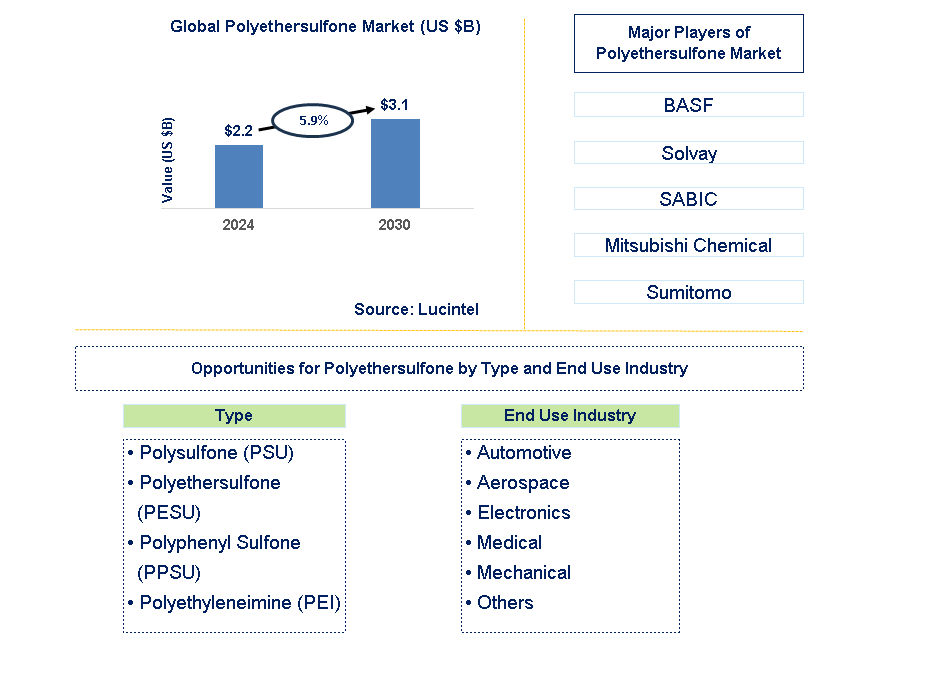
Key data points: The market size in 2030 = $3.1 billion, growth forecast = 5.9% annually next 6 years. Scroll below to get more insights. This market report covers trends, opportunities, and forecast in the global polyethersulfone market to 2030 by type (polysulfone (PSU), polyethersulfone (PESU), polyphenyl sulfone (PPSU), and polyethyleneimine (PEI)), end use industry (automotive, aerospace, electronics, medical, mechanical, and others), and region (North America, Europe, Asia Pacific, and the Rest of the World)
We'll send your sample report shortly.
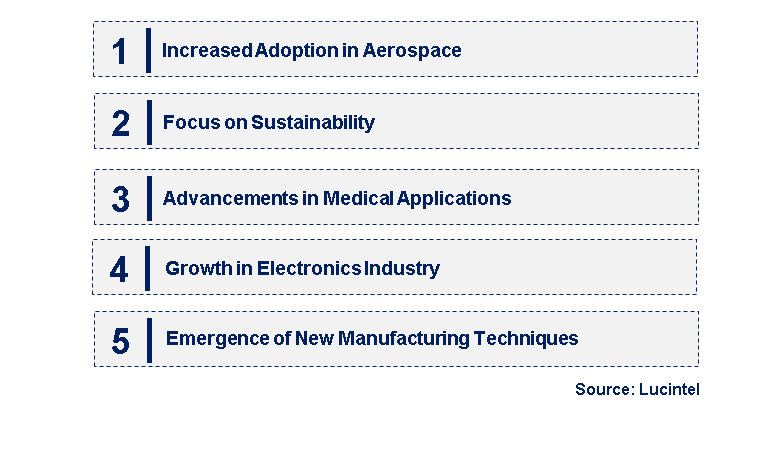
• Increased Adoption in Aerospace: In the field of aeroplane design, aerofoil heatsinks have made a significant impact due to the high thermal stability and strength of the materials, which place additional components under PKW PES. Forward-looking trends in such PES composites will contribute to the design, manufacture, and supply of lighter and stronger components for demanding aerospace applications.
• Focus on Sustainability: There is increased attention on creating recyclable and biodegradable PES materials, along with the recycling of existing technologies. Efforts are being made to mitigate the harmful effects of plastic types synthesized from PES and to enhance the recyclability of PES materials for non-structural polymer cut-offs.
• Advancements in Medical Applications: With high biocompatibility and long wear resistance, PES is suitable for use in medical equipment. Recently, emerging trends in the design and development of advanced medical implants and diagnostic equipment derived from PES materials have been supported by new developments in healthcare technology.
• Growth in the Electronics Industry: The growing need for high-performance materials in electronics encourages innovative ideas in PES. The growth of PES resins leads to better electrical insulation and reliability of electronic components, creating a conducive environment for the electronics industry.
• Emergence of New Manufacturing Techniques: Market growth stems from externally induced changes in PES production methods, such as enhanced polymerization techniques and various cost-effective approaches to making PES. These developments improve material performance and lower manufacturing costs. These trends are reshaping the PES market by driving innovations, improving material performance, and meeting sustainability needs. The changing environment resonates with improved demand in different sectors and increasing pressure for greener and more effective means of production.
• New Production Technologies: Recent advancements in PES production technologies include improvements in material properties at lower costs. Other innovations involve better polymerization techniques and new PES composites that result in more efficient performance across many sectors.
• Expansion of Manufacturing Capacities: The geographical spread of PES production facilities has been a notable development, especially in countries such as China and India. New facilities and elevated levels of production target anticipated future demand and facilitate market expansion.
• Enhanced Material Properties: Efforts in R&D have led to the production of improved PES materials with higher thermal stability, strength, and chemical resistance. These enhancements cater to advanced applications in aerospace, automotive, and medical sectors.
• Sustainability Initiatives: There is a growing database on PES, showing steps taken to make the industry more responsible. This includes technological pursuits for PES types that can be recycled and those that do not pollute the air during production processes.
• Collaborations and Partnerships: The adoption of strategic collaborations between PES manufacturers and end users has fueled innovation and growth in the market. Companies seek partnerships to create new markets and improve the performance of existing materials by leveraging their expertise and resources. These developments reflect the evolution of the PES market, stimulated by new technologies, expanded production facilities, and sustainability goals. The market appears poised for further growth due to these advancements and partnerships.
• Aerospace Sector: Due to PES's high thermal stability and tensile strength, it is widely used in aerospace components. Lightweight, strong, and advanced bismaleimide-based PES composites are available for applications in the aerospace market.
• Medical Devices: The biocompatibility and durability of PES open new possibilities in the medical field. Potential growth includes the development of advanced PES solutions for the medical market, such as implants and diagnostic equipment.
• Electronics Industry: The low viscosity and high thermal tolerance of PES provide growth opportunities in the electrical sector. Advances in the formulation of PES resins will improve the effectiveness and reliability of electronic components, thereby broadening the scope of the market.
• Automotive Applications: The demand for lightweight and high-performing materials in automotive applications supports positive revenue growth for the PES market. New grades of PES polymers for automotive parts could enhance vehicle weight and durability, further promoting market growth.
• Sustainable Solutions: There is an increasing interest in materials and practices that are environmentally friendly. This includes the production of recyclable PES materials and enhancements in manufacturing processes to minimize pollution, aligning with global sustainability efforts. These growth opportunities signify the market potential of PES across various end-use industries. By utilizing such technologies and meeting shifting expectations within the industry, PES can expand its range of applications and facilitate market growth.
• Technological Advancements: New strategies for producing PES and materials derived from PES are expected to fuel market growth. Improved performance attributes and advanced synthesis methods enhance PES applications in different areas.
• Rising Demand from Aerospace: The need for lightweight and high-strength materials in the aerospace industry contributes to the growth of the PES market. The high thermal stability and good chemical resistance properties of PES make it suitable for various aerospace components.
• Growth in the Medical Sector: The biocompatibility and durability of PES increase its applications in medical devices, driving demand. Continued development of innovative materials based on PES for medical purposes will further enhance this demand.
• Demand in the Automotive Industry: The adoption of PES is driven by the automotive sector’s need for high-performance materials. Advances in PES materials designed for different automotive parts help enhance vehicle efficiency and durability, fostering market growth.
• Focus on Sustainability: The demand for safety measures and environmental approaches increases the production of high-quality recyclable PES and sustainable manufacturing methods. This trend supports international environmental objectives and benefits market expansion. Challenges in the Polyethersulfone market include:
• High Production Costs: Persistently high production costs for PES compared to other materials pose a challenge. These costs can hinder market penetration and growth.
• Regulatory Constraints: Regulatory issues affecting the polymers market impose several restrictions. Compliance with regulations requires significant investment and adjustments by manufacturers.
• Limited Recycling Infrastructure: The growth of the PES market can be constrained by inadequate recycling capabilities. The development of practical recycling methods and the establishment of corresponding facilities can help address sustainability concerns. These drivers and challenges illustrate the evolving landscape of the PES market. While advancements in technology and increased production may boost growth, challenges like production costs, regulatory restrictions, and recycling limitations still exist. Addressing these concerns is vital for the continued growth and enhancement of the market.
• BASF
• Solvay
• SABIC
• Mitsubishi Chemical
• Sumitomo
• Ensinger
• DSM
• Celanese
• Sumitomo
• Kolon
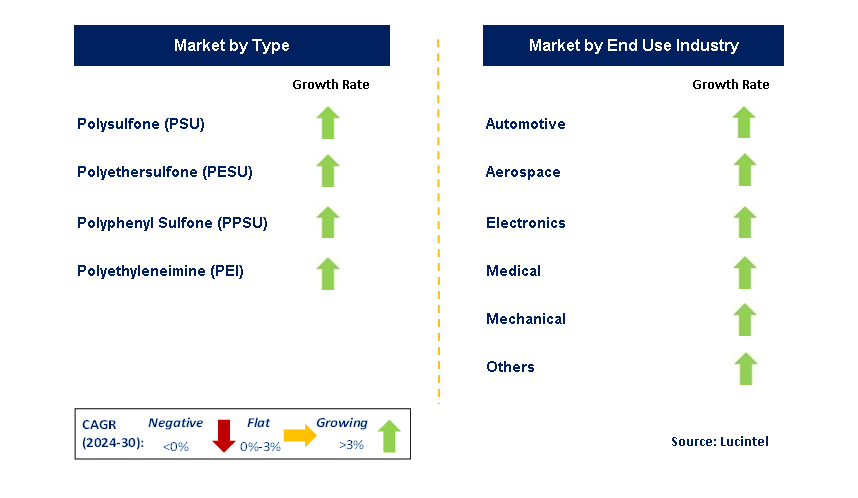
• Polysulfone (PSU)
• Polyethersulfone (PESU)
• Polyphenyl Sulfone (PPSU)
• Polyethyleneimine (PEI)
• Automotive
• Aerospace
• Electronics
• Medical
• Mechanical
• Others
• North America
• Europe
• Asia Pacific
• The Rest of the World
• United States: The US PES market is on a growth trajectory, driven by increasing applications of PES in sectors like aerospace and automotive. Companies are seeking new production technologies to enhance material properties while improving cost-effectiveness. Reports indicate new PES composites that are lightweight yet very strong.
• China: China is rapidly adopting and becoming a major consumer of the PES market, driven by growth in various sectors, particularly manufacturing and automotive. New facilities have been established, and collaborations with foreign firms have been initiated to localize PES production in alignment with market strategies.
• Germany: The innovation race in the PES market is ongoing in Germany, focusing on the technical development of new high-performance PES materials for automotive and industrial applications. Increasing environmental awareness has spurred more research on recycling polyethersulfone and developing sustainable practices in various industries.
• India: India's PES market is growing due to increasing industrialization and heightened use of PES in medical and electronics sectors. Recent developments include establishing new manufacturing facilities and engaging international companies to boost production capacity and meet demand.
• Japan: Japanese clients remain active in the PES market, particularly in analytical moldings, with many innovations targeting electronic appliances and automobiles. Developments include innovative PES resins, increased investment in research and development, and improvements in overall material properties and applications.


• BASF
• Solvay
• SABIC
• Mitsubishi Chemical
• Sumitomo
• Ensinger
• DSM
• Celanese
• Sumitomo
• Kolon Q6. Which polyethersulfone market segment will be the largest in future? Answer: Lucintel forecasts that polyethersulfone (PESU) will remain the largest segment due to its widespread use in printed circuits, machine guards, connectors, safety face shields, and high-intensity light bases because to its exceptional qualities, such as transparency, outstanding electrical property at extreme temperatures, low smoke generation, and superior chemical resistance. Q7. In polyethersulfone market, which region is expected to be the largest in next 5 years? Answer: APAC will remain the largest region due to increasing consumption of polyethersulfone from the automotive and aviation sector of the region. Q.8 Do we receive customization in this report? Answer: Yes, Lucintel provides 10% customization without any additional cost.


Choose a license that fits your team. Instant PDF delivery.
Prices exclude taxes. Instant delivery. Custom licensing available on request.
Market Report · July 22, 2026
Market Report · July 22, 2026
Market Report · July 22, 2026
Trusted partner for strategic intelligence and business growth


Receive a complimentary market analysis tailored to your industry. Our analysts will identify key growth opportunities and competitive dynamics specific to your business.

Market size, growth rate, and key trend analysis for your specific sector.

Top competitor positioning and market share analysis.

Strategic recommendations backed by data-driven insights.
Get curated market intelligence and competitive moves straight to your inbox.
By subscribing, you agree to receive our monthly insights. Unsubscribe anytime.
Receive a complimentary market analysis tailored to your industry. Our analysts will identify key growth opportunities and competitive dynamics specific to your business.
Market size, growth rate, and key trend analysis for your specific sector.
Top competitor positioning and market share analysis.
Strategic recommendations backed by data-driven insights.
Get curated market intelligence, emerging trends, and competitive moves straight to your inbox each month.
By subscribing, you agree to receive our monthly insights. Unsubscribe anytime.
We'll send your sample report shortly.