
Report Feature
Pocket Phone Market Trends and Forecast
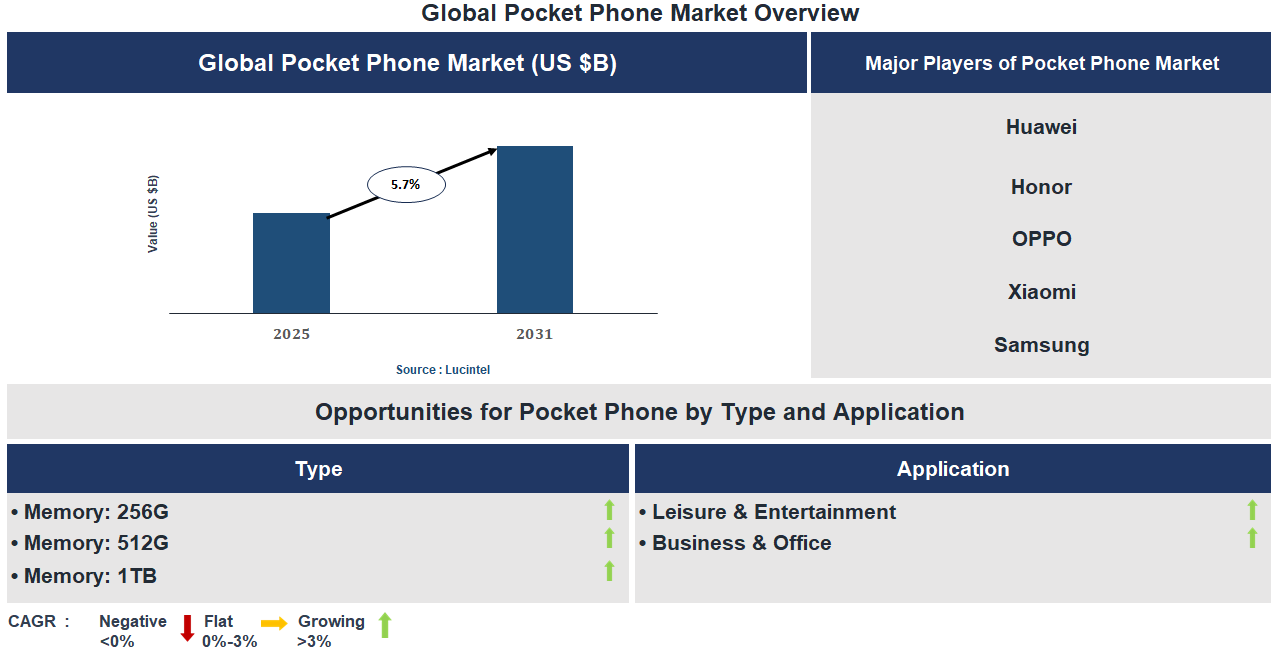
The future of the global pocket phone market looks promising with opportunities in the leisure & entertainment and business & office markets. The global pocket phone market is expected to grow with a CAGR of 5.7% from 2025 to 2031. The major drivers for this market are the increasing demand for ultra-portable smartphones, the rising popularity of compact mobile devices, and the growing need for space-efficient technology.• Lucintel forecasts that, within the type category, memory: 512G is expected to witness the highest growth over the forecast period.
• Within the application category, leisure & entertainment is expected to witness higher growth.
• In terms of region, APAC is expected to witness the highest growth over the forecast period. Gain valuable insights for your business decisions with our comprehensive 150+ page report. Sample figures with some insights are shown below.
Emerging Trends in the Pocket Phone Market
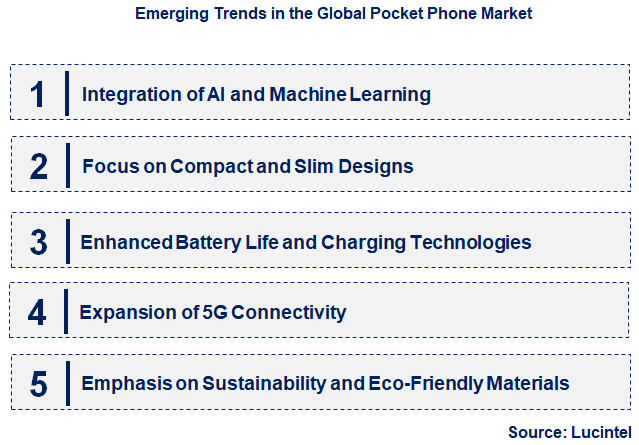
The pocket phone market is experiencing rapid evolution driven by technological advancements, changing consumer preferences, and increasing demand for portability and connectivity. As smartphones become more integrated into daily life, manufacturers are innovating to meet the needs of a diverse and expanding user base. Emerging trends are shaping the future of this market, influencing product design, features, and user experience. These developments are not only enhancing functionality but also redefining how consumers interact with their devices, creating new opportunities and challenges for industry players. Understanding these trends is essential for stakeholders aiming to stay competitive and capitalize on market growth.• Integration of AI and Machine Learning: Enhanced user experience through personalized features, smarter virtual assistants, and improved device performance. AI-driven functionalities enable better voice recognition, predictive text, and tailored content, making devices more intuitive and efficient. This trend is transforming user interaction, increasing convenience, and fostering greater user engagement, which ultimately boosts sales and customer loyalty.
• Focus on Compact and Slim Designs: Increasing demand for lightweight, portable devices that fit comfortably in pockets. Manufacturers are adopting innovative materials and engineering techniques to reduce size without compromising performance. This trend caters to consumers seeking convenience and style, influencing product aesthetics and portability, and driving competition in design innovation within the market.
• Enhanced Battery Life and Charging Technologies: Development of longer-lasting batteries and faster charging solutions to meet user expectations for all-day usage. Advances include new battery chemistries and wireless charging options, reducing downtime and improving user satisfaction. This trend addresses one of the primary pain points for users, making pocket phones more reliable and appealing for everyday use.
• Expansion of 5G Connectivity: Widespread adoption of 5G technology, enabling faster data speeds and lower latency. This trend supports high-quality streaming, gaming, and real-time communication, transforming the user experience. It also opens opportunities for new applications and services, encouraging manufacturers to integrate 5G capabilities into compact devices, thus future-proofing their products.
• Emphasis on Sustainability and Eco-Friendly Materials: Growing consumer awareness and regulatory pressures drive the adoption of recyclable materials and energy-efficient manufacturing processes. Companies are exploring biodegradable components and reducing electronic waste. This trend aligns with global sustainability goals, appealing to environmentally conscious consumers and shaping the market towards greener, more responsible products. In summary, these emerging trends are fundamentally reshaping the pocket phone market by enhancing device capabilities, improving user convenience, and aligning with sustainability goals. They foster innovation, influence consumer preferences, and create new competitive dynamics, ensuring the market remains dynamic and forward-looking.
Recent Development in the Pocket Phone Market
The pocket phone market has experienced rapid growth driven by technological advancements, increasing consumer demand for portable communication devices, and the integration of smart features. As smartphones become more affordable and versatile, the market landscape is shifting, with new players entering and existing brands innovating to maintain competitiveness. Recent developments reflect a focus on enhanced connectivity, improved user experience, and sustainability. These changes are shaping consumer preferences and influencing market dynamics, leading to increased adoption and diversification of product offerings. Understanding these key developments is essential for stakeholders aiming to capitalize on emerging opportunities and navigate the evolving market landscape effectively.• Technological Innovation: The integration of 5G technology has revolutionized the pocket phone market by enabling faster data speeds and more reliable connectivity. This advancement enhances user experience through seamless streaming, gaming, and communication, driving higher adoption rates. Manufacturers are now prioritizing 5G-enabled devices, which has led to a surge in new product launches. The impact is significant, as it pushes the market toward more advanced, future-proof devices, fostering competition and encouraging innovation across the industry.
• Sustainability Initiatives: Companies are increasingly adopting eco-friendly practices, such as using recycled materials and reducing carbon footprints in manufacturing processes. This shift responds to growing consumer demand for sustainable products and regulatory pressures. Sustainable design not only appeals to environmentally conscious consumers but also reduces costs in the long term. The market is witnessing a rise in eco-friendly pocket phones, which enhances brand reputation and aligns with global sustainability goals, ultimately influencing purchasing decisions and market growth.
• Enhanced User Experience: Manufacturers are focusing on improving user interfaces, battery life, and camera capabilities to differentiate their products. Innovations like foldable screens and AI-powered features are becoming standard, offering consumers more versatile and personalized devices. These enhancements increase customer satisfaction and loyalty, leading to higher sales volumes. The market benefits from a broader range of high-performance pocket phones, attracting diverse consumer segments and fostering competitive differentiation.
• Market Consolidation: Larger corporations are acquiring smaller startups to expand their product portfolios and technological capabilities. This consolidation results in increased market stability and resource sharing, enabling rapid innovation and better customer service. It also reduces fragmentation, allowing for more standardized offerings. The impact is a more competitive landscape with stronger brands, which can better meet consumer demands and accelerate technological advancements, ultimately shaping a more mature and resilient market.
• Rising Demand for Budget Devices: The affordability of pocket phones remains a key driver, especially in emerging markets. Manufacturers are launching cost-effective models with essential features to capture price-sensitive consumers. This trend broadens market reach and increases overall sales volume. The focus on budget devices also stimulates competition among brands, leading to improved quality and features even in lower-priced segments. As a result, the market experiences sustained growth driven by increased accessibility and expanding consumer bases. In summary, recent developments in the pocket phone market—technological innovation, sustainability initiatives, enhanced user experience, market consolidation, and rising demand for budget devices—are collectively transforming the industry. These changes are fostering increased competition, expanding consumer choices, and promoting sustainable practices, which are driving overall market growth and shaping future trends.
Strategic Growth Opportunities in the Pocket Phone Market
The pocket phone market is experiencing rapid evolution driven by technological advancements, changing consumer preferences, and increasing demand for portable communication devices. As smartphones become more integrated into daily life, key applications are expanding, creating significant growth opportunities. These developments are shaping the future landscape of the market, offering innovative solutions and new revenue streams. Companies that capitalize on these opportunities can enhance their market share and meet evolving consumer needs effectively. The following are five key growth opportunities across different applications that are poised to influence the market's trajectory significantly.• Mobile Commerce: Expansion of mobile payment solutions and e-commerce apps is driving growth. Consumers increasingly prefer shopping and financial transactions via pocket phones, leading to higher adoption of secure, user-friendly payment platforms. This trend boosts revenue for app developers and financial institutions, while also encouraging retailers to optimize mobile shopping experiences. The convenience and speed of mobile commerce are transforming retail landscapes, making pocket phones essential tools for everyday transactions.
• Healthcare Monitoring: Integration of health tracking and telemedicine applications is creating new opportunities. Pocket phones equipped with advanced sensors and health apps enable remote monitoring of vital signs, chronic disease management, and virtual consultations. This reduces healthcare costs and improves patient outcomes by providing real-time data and easy access to medical advice. The growth in mobile health solutions is expanding the market for healthcare providers and app developers, making health management more accessible and personalized.
• Gaming and Entertainment: The proliferation of mobile gaming and streaming services is a major growth driver. Pocket phones offer high-quality graphics and processing power, supporting immersive gaming experiences and on-the-go entertainment. This sector attracts a broad demographic, increasing app downloads, in-app purchases, and subscription revenues. The rise of cloud gaming and AR/VR integration further enhances user engagement, positioning pocket phones as primary entertainment devices and fueling market expansion.
• Communication and Social Networking: Continuous innovation in messaging, video calls, and social media platforms sustains growth. Pocket phones serve as primary communication tools, with features like instant messaging, video conferencing, and social sharing becoming integral to daily life. Enhanced connectivity, 5G adoption, and new app functionalities improve user experience and engagement. This fosters increased app usage, advertising revenue, and platform development, reinforcing the market’s importance in personal and professional communication.
• Business and Productivity Tools: The adoption of mobile productivity applications is transforming workplace dynamics. Pocket phones enable remote work, collaboration, and real-time data access through cloud-based apps and enterprise solutions. This flexibility increases productivity and supports digital transformation initiatives across industries. As businesses prioritize mobility, the demand for secure, efficient, and integrated productivity tools continues to grow, expanding the market for enterprise app developers and service providers. In summary, these growth opportunities are significantly impacting the pocket phone market by driving innovation, expanding application areas, and increasing consumer engagement. They are fostering a more integrated, versatile, and essential device ecosystem, which is expected to sustain market growth and create new revenue streams for industry players.
Pocket Phone Market Driver and Challenges
The pocket phone market is influenced by a variety of technological, economic, and regulatory factors that shape its growth and development. Rapid advancements in mobile technology, increasing consumer demand for portable communication devices, and evolving regulatory standards are key drivers. Economic factors such as rising disposable incomes and decreasing smartphone prices also play a significant role. However, the market faces challenges including technological obsolescence, regulatory restrictions, and intense competition. These elements collectively impact market dynamics, influencing innovation, pricing strategies, and consumer preferences. Understanding these drivers and challenges is essential for stakeholders aiming to capitalize on opportunities and mitigate risks in the pocket phone market. The factors responsible for driving the pocket phone market include:• Technological Innovation: The continuous evolution of mobile technology, such as 5G connectivity, advanced processors, and improved battery life, drives market growth. Consumers seek faster, more efficient devices, prompting manufacturers to innovate. These advancements enable new functionalities, enhance user experience, and open avenues for new applications, thereby expanding market potential. Companies investing heavily in R&D are able to introduce cutting-edge features that attract tech-savvy consumers and increase market share.
• Increasing Consumer Demand for Portability: The growing preference for compact, portable communication devices fuels market expansion. Consumers value convenience, ease of use, and mobility, leading to higher adoption rates of pocket phones. The trend is particularly prominent among younger demographics and urban populations who prioritize connectivity on the go. This demand encourages manufacturers to develop smaller, lightweight devices with powerful features, further boosting sales and market penetration.
• Economic Growth and Rising Disposable Income: As economies grow and disposable incomes rise globally, consumers are more willing to invest in advanced mobile devices. This economic upliftment enables a broader demographic to afford pocket phones, expanding the customer base. Additionally, increased spending power supports premium device segments, encouraging manufacturers to offer high-end models with sophisticated features, thus stimulating market growth.
• Regulatory Environment and Standards: Evolving regulatory standards concerning safety, privacy, and wireless communication impact the market. Compliance with regulations such as spectrum allocation, data protection laws, and environmental standards influences product design and manufacturing processes. While regulations can pose barriers, they also promote innovation in secure and eco-friendly devices, shaping market strategies and fostering consumer trust. The challenges in the pocket phone market are:
• Rapid Technological Obsolescence: The fast pace of technological change leads to frequent product obsolescence, pressuring manufacturers to continuously innovate. Companies face the risk of their devices becoming outdated quickly, which can result in reduced sales and increased R&D costs. This constant race to stay ahead demands significant investment and can lead to market saturation, making it difficult for new entrants to establish a foothold.
• Regulatory Restrictions and Compliance Costs: Stringent regulations related to safety, privacy, and environmental impact increase compliance costs for manufacturers. Navigating diverse regulatory landscapes across regions can delay product launches and inflate expenses. Non-compliance risks include legal penalties and damage to brand reputation, which can hinder market growth and limit innovation.
• Intense Competition and Price Wars: The market is highly competitive, with numerous players vying for consumer attention. This leads to aggressive pricing strategies, reducing profit margins, and forcing companies to differentiate through features and branding. The competition also accelerates product cycles, demanding rapid innovation and marketing efforts, which can strain resources and impact overall profitability. In summary, the pocket phone market is shaped by significant technological advancements, rising consumer demand, economic growth, and regulatory developments. While these drivers foster innovation and expansion, challenges such as rapid obsolescence, regulatory hurdles, and fierce competition pose risks. The interplay of these factors influences market stability, profitability, and future growth prospects. Stakeholders must strategically navigate these dynamics to capitalize on opportunities and mitigate potential setbacks, ensuring sustainable development in this evolving industry.
List of Pocket Phone Companies
Companies in the market compete on the basis of product quality offered. Major players in this market focus on expanding their manufacturing facilities, R&D investments, infrastructural development, and leverage integration opportunities across the value chain. With these strategies pocket phone companies cater increasing demand, ensure competitive effectiveness, develop innovative products & technologies, reduce production costs, and expand their customer base. Some of the pocket phone companies profiled in this report include-• Huawei
• Honor
• OPPO
• Xiaomi
• Samsung
• ZTE
• Motorola
Pocket Phone Market by Segment
The study includes a forecast for the global pocket phone market by type, application, and region.Pocket Phone Market by Type [Value from 2019 to 2031]:
• Memory: 256G
• Memory: 512G
• Memory: 1TB
Pocket Phone Market by Application [Value from 2019 to 2031]:
• Leisure & Entertainment
• Business & Office
Pocket Phone Market by Region [Value from 2019 to 2031]:
• North America
• Europe
• Asia Pacific
• The Rest of the World
Country Wise Outlook for the Pocket Phone Market
The pocket phone market has experienced rapid growth and innovation driven by technological advancements, changing consumer preferences, and global economic shifts. As smartphones become more integrated into daily life, countries are competing to lead in features, affordability, and connectivity. Emerging markets are expanding their user base, while developed nations focus on high-end models and 5G integration. Regulatory policies, supply chain dynamics, and environmental considerations also influence market trends. Understanding regional developments provides insight into the global trajectory of pocket phone adoption and innovation, highlighting opportunities and challenges faced by key players in different markets.• United States: The US market has seen a surge in 5G-enabled pocket phones, with major brands like Apple and Samsung launching innovative models. Consumer demand for advanced camera features and longer battery life continues to grow. The adoption of foldable phones is increasing, and there is a rising focus on sustainability and eco-friendly materials. Additionally, the US market emphasizes privacy and security features, influencing device design and software updates.
• China: China remains a dominant player in the pocket phone market, with brands like Huawei, Xiaomi, and Oppo leading innovation. The focus is on affordable 5G devices, with rapid adoption across urban and rural areas. The market also sees significant advancements in camera technology and AI integration. Government policies support domestic manufacturers, fostering competitive pricing and rapid product cycles. There is also a growing trend toward foldable and dual-screen devices.
• Germany: The German market prioritizes high-quality, durable pocket phones with advanced security features. Consumers show a preference for premium brands like Apple and Samsung, emphasizing design and performance. The market is also witnessing increased adoption of 5G technology and eco-friendly manufacturing practices. Regulatory standards for data privacy and sustainability influence product offerings, with a focus on long-term device support and repairability.
• India: India’s pocket phone market is characterized by rapid growth driven by affordability and expanding internet access. Local brands like Reliance Jio and Xiaomi dominate, offering budget-friendly 4G and 5G devices. The market is witnessing a surge in features such as large screens, long battery life, and multi-camera setups. The adoption of affordable smartphones is fueling digital inclusion, with a focus on mass-market penetration and regional language support.
• Japan: Japan’s market emphasizes high-end, innovative pocket phones with cutting-edge technology. Consumers favor compact, lightweight devices with superior build quality and advanced features like waterproofing and enhanced security. The adoption of 5G is accelerating, and there is a strong interest in augmented reality (AR) and virtual reality (VR) integration. Sustainability and energy efficiency are also key considerations, influencing product development and consumer choices.

Features of the Global Pocket Phone Market
Market Size Estimates: Pocket phone market size estimation in terms of value ($B). Trend and Forecast Analysis: Market trends (2019 to 2024) and forecast (2025 to 2031) by various segments and regions. Segmentation Analysis: Pocket phone market size by type, application, and region in terms of value ($B). Regional Analysis: Pocket phone market breakdown by North America, Europe, Asia Pacific, and Rest of the World. Growth Opportunities: Analysis of growth opportunities in different types, applications, and regions for the pocket phone market. Strategic Analysis: This includes M&A, new product development, and competitive landscape of the pocket phone market. Analysis of competitive intensity of the industry based on Porter’s Five Forces model.
FAQ
Q1. What is the growth forecast for pocket phone market? Answer: The global pocket phone market is expected to grow with a CAGR of 5.7% from 2025 to 2031. Q2. What are the major drivers influencing the growth of the pocket phone market? Answer: The major drivers for this market are the increasing demand for ultra-portable smartphones, the rising popularity of compact mobile devices, and the growing need for space-efficient technology. Q3. What are the major segments for pocket phone market? Answer: The future of the pocket phone market looks promising with opportunities in the leisure & entertainment and business & office markets. Q4. Who are the key pocket phone market companies? Answer: Some of the key pocket phone companies are as follows:• Huawei
• Honor
• OPPO
• Xiaomi
• Samsung
• ZTE
• Motorola Q5. Which pocket phone market segment will be the largest in future? Answer: Lucintel forecasts that, within the type category, memory: 512G is expected to witness the highest growth over the forecast period. Q6. In pocket phone market, which region is expected to be the largest in next 5 years? Answer: In terms of region, APAC is expected to witness the highest growth over the forecast period. Q7. Do we receive customization in this report? Answer: Yes, Lucintel provides 10% customization without any additional cost.
Table of Contents
List of Figures
List of Tables
Methodology
- In-depth interviews of the major players in this market
- Detailed secondary research from competitors’ financial statements and published data
- Extensive searches of published works, market, and database information pertaining to industry news, company press releases, and customer intentions
- A compilation of the experiences, judgments, and insights of Lucintel’s professionals, who have analyzed and tracked this market over the years.


Buy Now
Choose a license that fits your team. Instant PDF delivery.
Prices exclude taxes. Instant delivery. Custom licensing available on request.
Key Questions
- • What are some of the most promising, high-growth opportunities for the pocket phone market by type (memory: 256G, memory: 512G, and memory: 1TB), application (leisure & entertainment and business & office), and region (North America, Europe, Asia Pacific, and the Rest of the World)?
- • Which segments will grow at a faster pace and why?
- • Which region will grow at a faster pace and why?
- • What are the key factors affecting market dynamics? What are the key challenges and business risks in this market?
- • What are the business risks and competitive threats in this market?
- • What are the emerging trends in this market and the reasons behind them?
- • What are some of the changing demands of customers in the market?
- • What are the new developments in the market? Which companies are leading these developments?
- • Who are the major players in this market? What strategic initiatives are key players pursuing for business growth?
- • What are some of the competing products in this market and how big of a threat do they pose for loss of market share by material or product substitution?
- • What M&A activity has occurred in the last 6 years and what has its impact been on the industry? For any questions related to Pocket Phone Market, Pocket Phone Market Size, Pocket Phone Market Growth, Pocket Phone Market Analysis, Pocket Phone Market Report, Pocket Phone Market Share, Pocket Phone Market Trends, Pocket Phone Market Forecast, Pocket Phone Companies, write Lucintel analyst at email: helpdesk@lucintel.com. We will be glad to get back to you soon.


