
Market Report · July 22, 2026

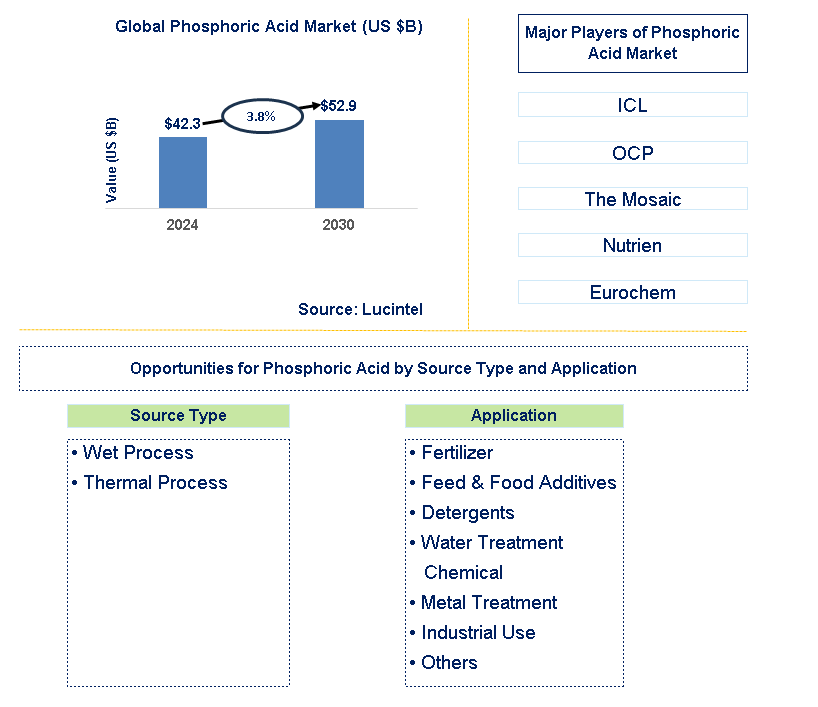
Key data points: The market size in 2030 = $52.9 billion, growth forecast = 3.8% annually next 6 years. Scroll below to get more insights. This market report covers trends, opportunities, and forecast in the global phosphoric acid market to 2030 by source type (wet process and thermal process), application (fertilizer, feed & food additives, detergents, water treatment chemical, metal treatment, industrial use, and others), and region (North America, Europe, Asia Pacific, and the Rest of the World)
We'll send your sample report shortly.
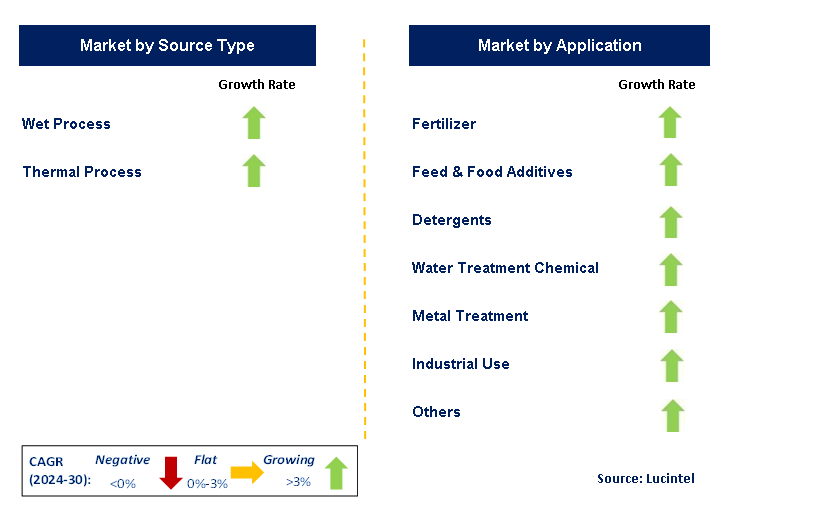
• Lucintel forecasts that wet process is expected to witness the higher growth over the forecast period.
• Within this market, fertilizer will remain the largest segment over the forecast period.
• APAC will remain the largest region over the forecast period. A more than 150-page report is developed to help in your business decisions.
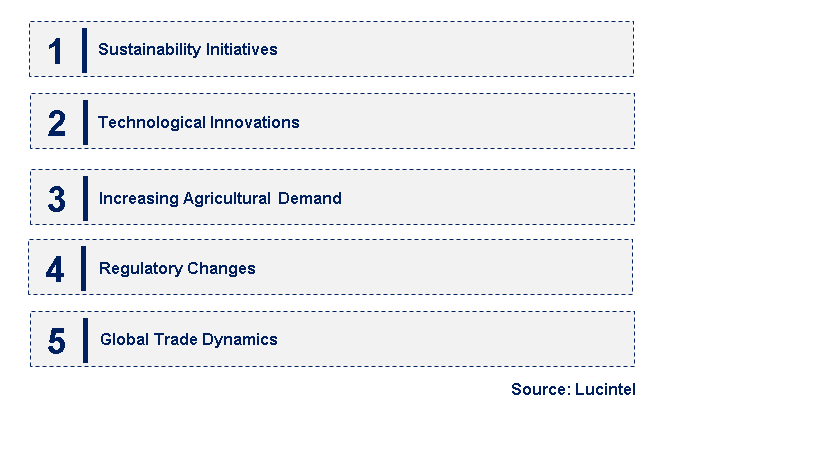
• Sustainability Initiatives: There is a growing emphasis on sustainable production practices, driven by consumer demand for environmentally friendly products. Manufacturers are investing in cleaner technologies and recycling processes, reducing the environmental impact of phosphoric acid production.
• Technological Innovations: Advances in production technologies are enhancing the efficiency and quality of phosphoric acid. New methods, such as low-energy processes and waste recovery systems, are being implemented, allowing companies to produce higher-quality products with reduced costs.
• Increasing Agricultural Demand: The rising global population and food demand are driving the need for phosphate fertilizers. This trend is leading to increased investments in phosphoric acid production to support agricultural initiatives aimed at improving crop yields and sustainability.
• Regulatory Changes: Stricter environmental regulations are influencing the phosphoric acid market. Governments are mandating cleaner production methods and waste management practices, prompting companies to adapt their operations to comply with new standards.
• Global Trade Dynamics: The global trade landscape for phosphoric acid is evolving, with countries seeking to strengthen their positions in the supply chain. Trade agreements and partnerships are forming, allowing for better access to raw materials and markets, thus enhancing competitiveness. These emerging trends are reshaping the phosphoric acid market by driving innovation, sustainability, and efficiency, positioning the industry for future growth and development.
• Investment in Production Facilities: Companies are upgrading their production facilities to improve efficiency and reduce emissions. These investments are essential for meeting growing demand while complying with environmental regulations, positioning firms for competitive advantage.
• Focus on Recycling Technologies: The introduction of technologies to recover phosphates from waste materials is gaining traction. This development not only enhances sustainability but also reduces dependency on raw materials, aligning with circular economy principles.
• Enhanced Fertilizer Formulations: Manufacturers are developing advanced fertilizer formulations that incorporate phosphoric acid for improved nutrient delivery. This trend addresses the need for more efficient fertilizers, enhancing agricultural productivity while minimizing environmental impact.
• Public-Private Collaborations: Increased collaboration between public entities and private companies is facilitating knowledge sharing and resource allocation. These partnerships are crucial for driving innovation in production methods and addressing common challenges in the phosphoric acid market.
• Emerging Market Demand: Developing countries are experiencing heightened demand for phosphoric acid due to agricultural growth. This trend is prompting investments in production capabilities to meet local needs and enhance food security, providing growth opportunities for manufacturers. These developments are significantly impacting the phosphoric acid market by fostering innovation, improving sustainability, and responding to evolving agricultural demands.
• Agricultural Fertilizers: The growing demand for phosphate-based fertilizers represents a major opportunity. Companies can focus on developing high-quality phosphoric acid products tailored for various crops, enhancing agricultural productivity and food security.
• Food Processing: The food industry’s reliance on phosphoric acid for flavor enhancement and preservation offers growth potential. Manufacturers can develop specialized formulations for different food applications, catering to the increasing demand for processed foods.
• Pharmaceuticals: The use of phosphoric acid in pharmaceutical applications is expanding. Companies can explore opportunities in producing high-purity phosphoric acid for drug formulations, tapping into the growing healthcare market.
• Industrial Applications: Phosphoric acid is used in various industrial processes, including metal treatment and electronics. Manufacturers can target this segment by developing customized solutions that meet specific industrial needs, driving market growth.
• Water Treatment: The demand for effective water treatment solutions is rising, creating opportunities for phosphoric acid applications in this sector. Companies can innovate in developing environmentally friendly water treatment processes, aligning with sustainability goals. These strategic growth opportunities are reshaping the phosphoric acid market, enabling companies to diversify their offerings and enhance their competitive positioning across multiple applications.
• ICL
• OCP
• The Mosaic
• Nutrien
• Eurochem
• Phosagro
• IFFCO
• Wet Process
• Thermal Process
• Fertilizer
• Feed & Food Additives
• Detergents
• Water Treatment Chemical
• Metal Treatment
• Industrial Use
• Others
• North America
• Europe
• Asia Pacific
• The Rest of the World
• United States: In the U.S., recent developments in the phosphoric acid market are largely influenced by the agricultural sector's demand for fertilizers. Companies are investing in modernizing production facilities to enhance efficiency and reduce environmental impact. The government is supporting sustainable agricultural practices, encouraging the use of phosphate-based fertilizers. Furthermore, collaborations between manufacturers and agricultural stakeholders are on the rise, focusing on optimizing fertilizer formulations. This approach aims to improve crop yields while minimizing nutrient runoff, thus addressing environmental concerns and boosting the market's growth.
• China: China continues to dominate the global phosphoric acid market, driven by its expansive agricultural sector and increasing fertilizer production. Recent developments include technological upgrades in production processes, aimed at reducing emissions and improving efficiency. The government is implementing stricter environmental regulations, pushing companies to adopt cleaner technologies. Additionally, China is exploring international partnerships to secure raw materials and enhance its export capabilities. This strategic focus not only addresses domestic needs but also positions China as a key player in the global phosphoric acid supply chain.
• Germany: Germany is enhancing its phosphoric acid market through a strong emphasis on sustainability and innovation. Recent developments include investments in eco-friendly production methods and recycling initiatives to recover phosphates from waste materials. The government’s support for organic farming is also boosting demand for phosphoric acid in natural fertilizers. German companies are collaborating with research institutions to develop advanced technologies that improve efficiency and reduce environmental footprints. This trend is setting a benchmark for sustainable practices in the European phosphoric acid market, aligning with the EU’s green initiatives.
• India: India’s phosphoric acid market is evolving rapidly, primarily driven by the need for enhanced agricultural productivity. Recent developments include government initiatives to promote the use of phosphate fertilizers to boost crop yields. Companies are investing in domestic production capabilities to reduce reliance on imports, enhancing self-sufficiency. The introduction of new fertilizer policies is also encouraging innovation in phosphoric acid applications. Furthermore, collaborations between manufacturers and agricultural experts are focusing on developing customized fertilizers that meet local soil and crop requirements, driving market growth.
• Japan: In Japan, the phosphoric acid market is witnessing shifts towards sustainability and efficiency. Recent developments include advancements in production technologies that minimize waste and emissions. The Japanese government is encouraging the use of phosphate fertilizers in sustainable agriculture practices, aligning with global sustainability goals. Companies are also focusing on developing high-quality phosphoric acid products for specific applications, such as food processing and pharmaceuticals. Additionally, collaborations with international partners are aimed at enhancing research and development efforts, fostering innovation in the sector.


• ICL
• OCP
• The Mosaic
• Nutrien
• Eurochem
• Phosagro
• IFFCO Q6. Which phosphoric acid market segment will be the largest in future? Answer: Lucintel forecasts that wet process is expected to witness the higher growth over the forecast period. Q7. In phosphoric acid market, which region is expected to be the largest in next 5 years? Answer: APAC will remain the largest region over the forecast period. Q.8 Do we receive customization in this report? Answer: Yes, Lucintel provides 10% customization without any additional cost.


Choose a license that fits your team. Instant PDF delivery.
Prices exclude taxes. Instant delivery. Custom licensing available on request.
Market Report · July 22, 2026
Market Report · July 22, 2026
Market Report · July 22, 2026
Trusted partner for strategic intelligence and business growth


Receive a complimentary market analysis tailored to your industry. Our analysts will identify key growth opportunities and competitive dynamics specific to your business.

Market size, growth rate, and key trend analysis for your specific sector.

Top competitor positioning and market share analysis.

Strategic recommendations backed by data-driven insights.
Get curated market intelligence and competitive moves straight to your inbox.
By subscribing, you agree to receive our monthly insights. Unsubscribe anytime.
Receive a complimentary market analysis tailored to your industry. Our analysts will identify key growth opportunities and competitive dynamics specific to your business.
Market size, growth rate, and key trend analysis for your specific sector.
Top competitor positioning and market share analysis.
Strategic recommendations backed by data-driven insights.
Get curated market intelligence, emerging trends, and competitive moves straight to your inbox each month.
By subscribing, you agree to receive our monthly insights. Unsubscribe anytime.
We'll send your sample report shortly.