
Market Report · July 22, 2026

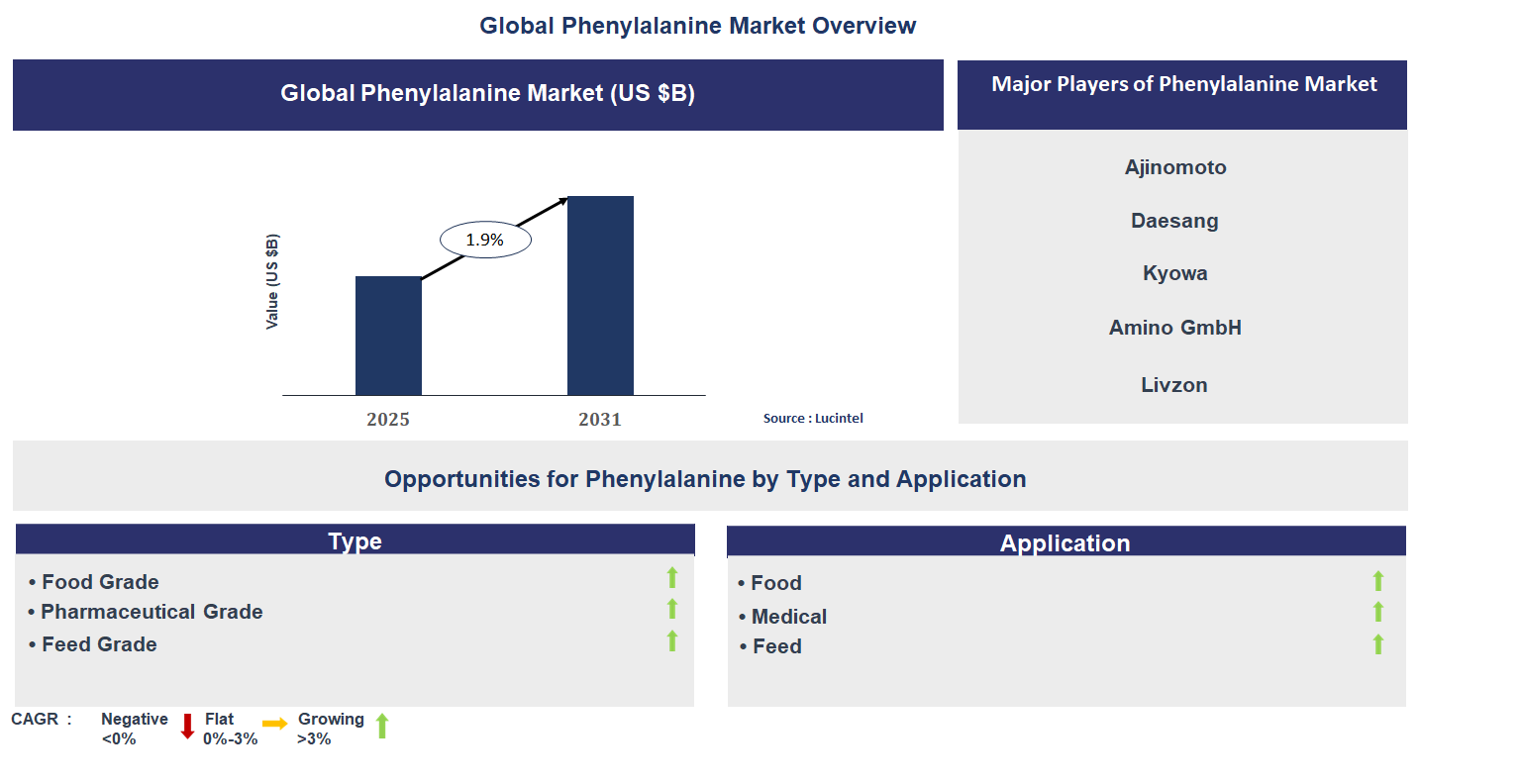
Key data points: The growth forecast = 1.9% annually for the next 7 years. Scroll below to get more insights. This market report covers trends, opportunities and forecasts in phenylalanine market to 2031 by type (food grade, pharmaceutical grade, and feed grade), application (food, medical, and feed), and region (North America, Europe, Asia Pacific, and the Rest of the World)
We'll send your sample report shortly.
• Lucintel forecasts that, within the type category, pharmaceutical grade is expected to witness the highest growth over the forecast period.
• Within the application category, food is expected to witness the highest growth.
• In terms of region, APAC is expected to witness the highest growth over the forecast period. Gain valuable insights for your business decisions with our comprehensive 150+ page report. Sample figures with some insights are shown below.
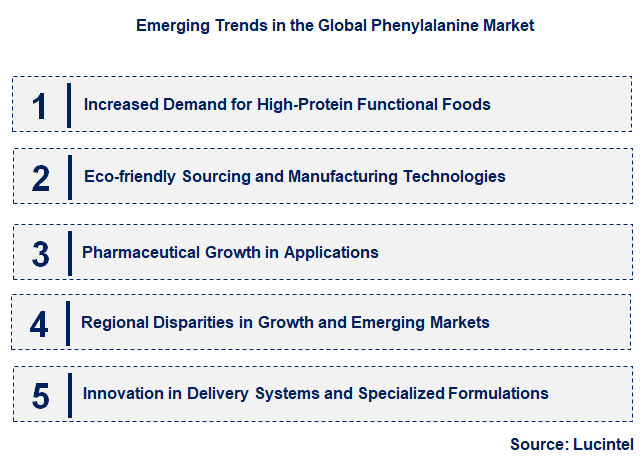
• Increased Demand for High-Protein Functional Foods: Phenylalanine application in aspartame and protein-fortified products addresses consumer need for more nutritious food choices, dramatically widening market potential.
• Eco-friendly Sourcing and Manufacturing Technologies: Emphasis on reducing environmental footprint compels companies to invest in more environmentally friendly fermentation processes and sustainable procurement of raw materials, enhancing brand value and regulatory acceptance.
• Pharmaceutical Growth in Applications: Growing application in therapeutic peptides and nutraceuticals propels growth in pharmaceutical-grade phenylalanine with enhanced purity and bioavailability, increasing market value.
• Regional Disparities in Growth and Emerging Markets: Rapid growth in Asia-Pacific markets is fueled by economic advancement and health consciousness, which offers huge-scale opportunities for manufacturers and suppliers.
• Innovation in Delivery Systems and Specialized Formulations: Innovation in new phenylalanine formulation optimized for absorption and crafted to each persons nutritional requirements evidences the market trend toward personalization. These trends together heighten global market competition and innovation, paving the way for sustainable expansion and diversification of applications around the world.
• Strategic Joint Ventures and Partnerships: The creation of joint ventures, like the one between BASF SE and Daesung Corporation in April 2024 to enhance production and distribution, reflects the trend toward market consolidation and supply chain optimization. The partnership seeks to maximize the strengths of the established players, providing a secure and increased supply of high-quality phenylalanine. The effect is a robust global supply chain, enhanced capacity for production, and improved competitive efficiency, ultimately contributing to fulfilling the rising demand of end-use industries such as food and pharmaceuticals.
• Introduction of Novel Enzyme-Based Production Technology: Evonik Industries AGs launch in March 2024 of a new enzyme-based technology for phenylalanine manufacturing represents a huge technology leap. The new technology is said to create a more sustainable, cost-efficient, and eco-friendly production process than conventional chemical synthesis or fermentation. The result is a possible cost reduction for manufacturing, a cleaner environmental profile, and the potential to manufacture high-purity phenylalanine on a cost-effective basis, which is important for the pharmaceutical and premium nutraceutical industries.
• Expansion in Dietary Supplements and Nutraceuticals: The market has experienced a significant growth of phenylalanine, especially L-phenylalanine, in dietary supplements for mental wellness, mood improvement, and brain function. This is precipitated by increasing world consciousness regarding mental health and the widespread nature of anxiety and depression. The effect is a huge diversification of the use base outside aspartame manufacturing, producing a high-value, rapidly expanding segment.
• Increasing Dominance of High-Purity Grade Phenylalanine: The High Purity Phenylalanine (99%+) segment holds more than 53% of market share, reflecting robust demand shift towards pharmaceutical and specialized nutritional uses. This is a result of stricter regulatory standards and the necessity of accuracy in drug development and medical food specialization, like that for the control of Phenylketonuria (PKU). The result is emphasis on quality control and high-technology purification methods by manufacturers, leading to higher profitability in the high-end segment and requiring ongoing research and development investment in purity and uniformity.
• Integration into Animal Feed Formulations: The increased global demand for quality animal protein has hastened the application of phenylalanine in animal feed, especially for cattle, swine, and poultry, to maximize growth, muscle strength, and general livestock well-being. Phenylalanines status as an essential amino acid in animal nutrition is now better understood. The effect is a volume-driven and stable use in the agricultural business, providing resistance to the entire market. This tool is essential for producers with an emphasis on bulk-level, commodity-quality manufacturing. These advances are collectively reshaping the phenylalanine market from a predominantly aspartame-led commodity to a diversified, value-added ingredient market. The technological transition to enzymatic manufacturing and partnership strategies are boosting supply and cost-efficiency. At the same time, emphasis on high-purity grades and growth into high-growth applications such as mental health supplements and specialized animal nutrition are generating higher revenue, encouraging innovation, and promoting the markets strong sustainable growth across various end-use industries.
• Functional Foods and Beverages: The potential is in incorporating L-phenylalanine into functional foods and health-oriented beverages promoting mood-enhancing and cognitive function benefits. With more consumers looking for natural means of stress relief and focus improvement, phenylalanine-enhanced products such as energy drinks, protein bars, and smart snacks are coveted items. This capitalizes on the amino acids status as a precursor to neurotransmitters such as dopamine and norepinephrine, leading to the production of high-end, differentiated product lines with higher pricing points and a substantial increase in the markets revenue potential in the mainstream consumer segment.
• Specialty Medical Foods for Phenylketonuria: There is an urgent, albeit specialty, opportunity to develop and market low-phenylalanine medical foods and dietary supplements for the expanding patient population managing PKU. This inborn error of metabolism necessitates a lifelong diet of precisely controlled low-phenylalanine intake. Advances in formula formulation, taste appeal, and convenience (such as ready-to-drink formulations or low-phi protein substitutes) are crucial.
• Advanced Pharmaceutical Formulations: Strategic development is attainable through research and development of D-phenylalanine (DPA) and DL-phenylalanine (DLPA) for pharmaceutical use to counteract chronic pain and certain neurological disorders (such as ADHD or depression). DPA, for example, has shown promise in inhibiting the enzyme that degrades natural pain-suppressing substances (endorphins). This segment has potential for high margins and is powered by the increase in global incidence of chronic pain and mental disorders, requiring focused investment in clinical trials and regulatory approvals.
• Focused Sports and Muscle Recovery Nutrition: Riding the sports nutrition bubble entails formulating L-phenylalanine as a main ingredient in pre- and post-exercise nutritional supplements for muscle protein recovery and synthesis. Being a conditionally essential amino acid, it promotes direct support of muscle repair and growth, which is attracting a broadening demographic of fitness-seekers and professional athletes. The approach involves developing synergistic mixes of other amino acids (BCAAs) and proteins, boosting volume demand for food-grade L-phenylalanine and offering a stable market base, particularly in developed economies with high fitness participation.
• Sustainable, Clean-Label Food Sweeteners: Although aspartame is an established application, one opportunity is to meet the market need for clean-label and sustainable sweeteners by refining the production of aspartames precursor. Improving the fermentation of L-phenylalanine to be non-GMO, organic, or more environmentally friendly can distinguish the end sweetener product. This emphasis secures the long-term relevance and expansion of the largest current application sector by harmonizing with worldwide consumer demand for natural and sustainably produced food ingredients, preserving market share over rival sweeteners. These growth prospects will re-calibrate the value proposition of the phenylalanine market. By concentrating on specialist medical requirements (PKU), high-margin drugs, and high-end consumer markets (functional food, sports nutrition), the market departs from sole dependence on the commodity cost of aspartame. Through this focused strategy, growth will be accelerated in demand for high-purity L- and D-forms, drive innovation in manufacturing and formulation, and ultimately towards a more diversified, robust, and much larger market size with greater profitability.
• Ajinomoto
• Daesang
• Kyowa
• Amino GmbH
• Livzon
• Bafeng Pharmaceutical & Chemical Share
• Amino Acid
• Shijiazhuang Jirong Pharmaceutical
• Jiahe Biotech
• Changzhou Guanghui Food Ingredients
• Food Grade
• Pharmaceutical Grade
• Feed Grade
• Food
• Medical
• Feed
• North America
• Europe
• Asia Pacific
• The Rest of the World
• United States: The United States market is characterized by intense innovation of high-purity pharmaceutical-grade phenylalanine and functional food ingredients. The nation has well-established regulatory frameworks that ensure the application of phenylalanine in cognitive health supplements and low-calorie sweeteners. Manufacturing processes that are cost-effective and environmentally sustainable are the major emphases among producers. The market grows steadily with the rise in consumer awareness of health issues and enhanced demand in therapeutic peptides.
• China: China is a leading manufacturer of phenylalanine through the use of sophisticated fermentation technology and large volumes of manufacturing capacity. Spurred by fast industrialization and increasing middle-class consumption, domestic demand is fueled by dietary supplements and functional foods. More Chinese companies are investing in research for novel derivatives and diversified uses, further solidifying domestic and export markets.
• Germany: Germanys market development focuses heavily on pharmaceutical and nutraceutical uses, emphasizing high-quality and regulatory compliance. German companies prioritize sustainable production technologies and functional food innovations. The country benefits from strong European Union regulations, supporting steady industry growth and investment in biotechnological advancements.
• India: India is witnessing significant market growth because of increased health awareness and growth in the capacity for producing pharmaceuticals. Phenylalanine is being used more extensively in infant nutrition, dietary supplements, and therapeutic applications. Improvements in production efficiency and supply chain infrastructure, along with competitive pricing, make India a major emerging market.
• Japan: Japan is strategically positioned for the production of pharmaceutical-grade phenylalanine, fueled by regulatory standards and consumer demand for health supplements. Growth in the market is fueled by end-use applications in pet foods, antiperspirants, and nutritional supplements. There is a focus on research into bioavailability and targeted formulations by Japanese firms that suit changing trends in health.


• Ajinomoto
• Daesang
• Kyowa
• Amino GmbH
• Livzon
• Bafeng Pharmaceutical & Chemical Share
• Amino Acid
• Shijiazhuang Jirong Pharmaceutical
• Jiahe Biotech
• Changzhou Guanghui Food Ingredients Q5. Which phenylalanine market segment will be the largest in future? Answer: Lucintel forecasts that, within the type category, pharmaceutical grade is expected to witness the highest growth over the forecast period. Q6. In phenylalanine market, which region is expected to be the largest in next 5 years? Answer: In terms of region, APAC is expected to witness the highest growth over the forecast period. Q7. Do we receive customization in this report? Answer: Yes, Lucintel provides 10% customization without any additional cost.


Choose a license that fits your team. Instant PDF delivery.
Prices exclude taxes. Instant delivery. Custom licensing available on request.
Market Report · July 22, 2026
Market Report · July 22, 2026
Market Report · July 22, 2026
Trusted partner for strategic intelligence and business growth


Receive a complimentary market analysis tailored to your industry. Our analysts will identify key growth opportunities and competitive dynamics specific to your business.

Market size, growth rate, and key trend analysis for your specific sector.

Top competitor positioning and market share analysis.

Strategic recommendations backed by data-driven insights.
Get curated market intelligence and competitive moves straight to your inbox.
By subscribing, you agree to receive our monthly insights. Unsubscribe anytime.
Receive a complimentary market analysis tailored to your industry. Our analysts will identify key growth opportunities and competitive dynamics specific to your business.
Market size, growth rate, and key trend analysis for your specific sector.
Top competitor positioning and market share analysis.
Strategic recommendations backed by data-driven insights.
Get curated market intelligence, emerging trends, and competitive moves straight to your inbox each month.
By subscribing, you agree to receive our monthly insights. Unsubscribe anytime.
We'll send your sample report shortly.