
Report Feature
Phenazepam Market Trends and Forecast
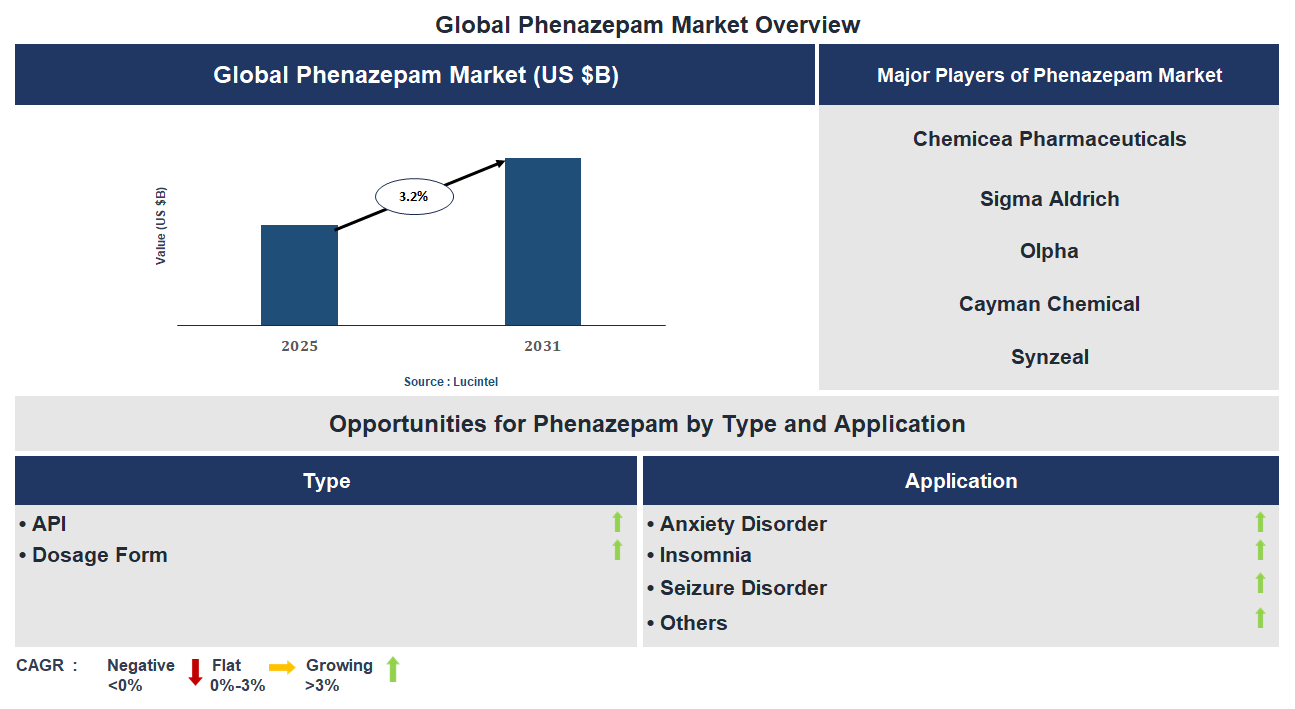
The future of the global phenazepam market looks promising with opportunities in the anxiety disorder, insomnia, and seizure disorder markets. The global phenazepam market is expected to grow with a CAGR of 3.2% from 2025 to 2031. The major drivers for this market are the increasing prevalence of anxiety disorders, the rising demand for anti-anxiety medications, and the growing awareness of mental health treatment.• Lucintel forecasts that, within the type category, dosage form is expected to witness higher growth over the forecast period.
• Within the application category, anxiety disorder is expected to witness the highest growth.
• In terms of region, APAC is expected to witness the highest growth over the forecast period. Gain valuable insights for your business decisions with our comprehensive 150+ page report. Sample figures with some insights are shown below.
Emerging Trends in the Phenazepam Market
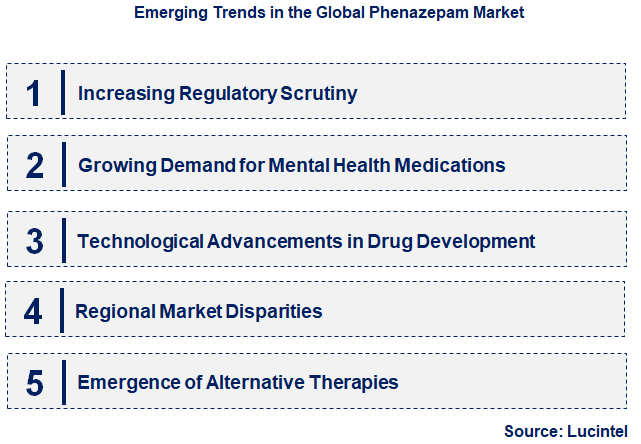
The phenazepam market is experiencing significant shifts driven by evolving regulatory landscapes, technological advancements, and changing consumer preferences. As awareness of mental health issues increases, demand for anxiolytics and sedatives like Phenazepam is rising. Additionally, the market is influenced by regional disparities, regulatory challenges, and the emergence of alternative therapies. These factors collectively shape the future trajectory of the phenazepam market, prompting manufacturers and stakeholders to adapt strategies accordingly. Understanding these emerging trends is crucial for navigating the complex landscape and capitalizing on growth opportunities while addressing safety and regulatory concerns.• Increasing Regulatory Scrutiny: Regulatory agencies worldwide are tightening controls on benzodiazepines, including Phenazepam, due to concerns over misuse and dependency. This trend results in stricter approval processes, limited availability in certain regions, and increased monitoring of distribution channels. Consequently, manufacturers face challenges in maintaining market access, and there is a push toward developing safer alternatives or formulations with reduced abuse potential. This trend emphasizes the importance of compliance and responsible marketing to sustain market presence amid evolving legal frameworks.
• Growing Demand for Mental Health Medications: Rising awareness of mental health issues and the stigma reduction surrounding psychiatric treatments are fueling demand for anxiolytics like Phenazepam. Patients seek effective medications for anxiety, insomnia, and related disorders, leading to increased prescriptions and over-the-counter availability in some regions. This trend boosts market growth but also raises concerns about potential misuse. The healthcare sector is increasingly focusing on balancing accessibility with safety, encouraging the development of targeted therapies and monitoring systems to prevent abuse while meeting patient needs.
• Technological Advancements in Drug Development: Innovations in pharmaceutical research, such as nanotechnology and personalized medicine, are transforming how Phenazepam and similar drugs are developed and delivered. These advancements enable more precise dosing, improved bioavailability, and reduced side effects, enhancing patient safety and treatment efficacy. Additionally, digital health tools facilitate better monitoring of drug use and adherence. This trend is likely to lead to more sophisticated formulations and delivery mechanisms, expanding the market scope and improving therapeutic outcomes.
• Regional Market Disparities: The phenazepam market exhibits significant regional differences driven by varying regulatory environments, healthcare infrastructure, and cultural attitudes toward sedatives. For instance, some Eastern European countries have higher usage rates due to historical prescribing patterns, while Western countries impose stricter controls. These disparities influence market growth, distribution channels, and pricing strategies. Companies must tailor their approaches to regional regulations and consumer preferences, which can either hinder or promote market expansion depending on local policies and societal attitudes.
• Emergence of Alternative Therapies: The increasing popularity of non-pharmacological treatments such as cognitive-behavioral therapy (CBT), mindfulness, and herbal remedies is impacting the phenazepam market. Patients and healthcare providers are exploring these options to reduce reliance on sedatives and minimize dependency risks. This trend encourages the development of integrated treatment approaches and may lead to a decline in traditional benzodiazepine prescriptions in some areas. However, it also opens opportunities for combining pharmacological and alternative therapies, fostering innovation and diversification within the market. In summary, these emerging trends are reshaping the phenazepam market by influencing regulatory policies, driving demand, fostering technological innovation, highlighting regional differences, and promoting alternative treatments. Together, they create a dynamic environment that requires stakeholders to adapt swiftly to ensure sustainable growth, safety, and efficacy in addressing mental health needs worldwide.
Recent Development in the Phenazepam Market
The phenazepam market is experiencing rapid growth driven by increasing demand for anxiolytics and sedatives across healthcare sectors. Advances in pharmaceutical research and the expanding applications of medical treatments are fueling market growth. Regulatory changes and rising awareness about mental health are also contributing to this trend. As the market evolves, key opportunities are emerging that could significantly influence future growth trajectories. Stakeholders are focusing on innovation, regulatory compliance, and expanding distribution channels to capitalize on these developments.• Growing Demand for Anxiolytics and Sedatives: The increasing prevalence of anxiety disorders and sleep disturbances is boosting demand for Phenazepam, a potent anxiolytic. Healthcare providers are increasingly prescribing it for short-term relief, leading to higher consumption rates. This trend is supported by rising mental health awareness and the need for effective medications. The market benefits from this surge, with pharmaceutical companies investing in production and distribution. However, concerns over dependency and regulation remain challenges to sustainable growth.
• Advances in Pharmaceutical Research and Development: Innovations in drug formulation and delivery methods are enhancing Phenazepams efficacy and safety profile. Researchers are exploring new formulations to reduce side effects and improve patient compliance. These developments open avenues for broader therapeutic applications, including in psychiatry and neurology. Pharmaceutical companies are collaborating with research institutions to develop novel derivatives, which could lead to new market segments. This ongoing R&D activity is expected to strengthen market competitiveness and expand product portfolios.
• Regulatory Changes and Legal Frameworks: Evolving regulations around benzodiazepines are impacting the phenazepam market significantly. Stricter controls on manufacturing, distribution, and prescription practices are being implemented in various regions to prevent misuse. While these regulations pose challenges, they also create opportunities for companies to ensure compliance and build trust. Clear legal frameworks can facilitate safer use and distribution, encouraging market growth. Companies investing in compliance and monitoring systems are better positioned to navigate regulatory landscapes.
• Expansion of Distribution Channels: The growth of online pharmacies and healthcare e-commerce platforms is transforming distribution strategies for Phenazepam. These channels provide a wider reach, especially in regions with limited healthcare infrastructure. Strategic partnerships with distributors and pharmacies are enhancing product availability and accessibility. This expansion is crucial for meeting rising demand and ensuring timely supply. However, it also necessitates stringent quality control and regulatory adherence to prevent illegal sales and misuse, which could impact market stability.
• Increasing Awareness and Acceptance of Mental Health Treatments: Societal shifts towards recognizing mental health issues are driving acceptance of pharmacological interventions like Phenazepam. Educational campaigns and destigmatization efforts are encouraging more patients to seek treatment. Healthcare providers are more willing to prescribe these medications, boosting market demand. This increased acceptance supports market growth, especially in developing regions. Nonetheless, balancing awareness with responsible use remains essential to prevent misuse and dependency, requiring ongoing public health initiatives. The recent developments in the phenazepam market, including rising demand, R&D innovations, regulatory adjustments, expanded distribution, and increased mental health awareness, are collectively propelling market growth. These factors are fostering a more dynamic, accessible, and regulated environment, which benefits manufacturers, healthcare providers, and patients. As these opportunities unfold, the market is poised for sustained expansion, though it must navigate regulatory challenges and safety concerns to ensure long-term stability and responsible growth.
Strategic Growth Opportunities in the Phenazepam Market
The phenazepam market is experiencing significant growth driven by increasing demand in medical, recreational, and research sectors. Advances in pharmaceutical research and expanding applications are creating new opportunities for manufacturers and distributors. Regulatory developments and rising awareness about mental health treatments further influence market dynamics. As the market evolves, stakeholders are exploring innovative formulations and delivery methods to meet diverse consumer needs. Strategic investments and collaborations are expected to accelerate growth, making Phenazepam a key focus in the pharmaceutical and research landscapes.• Expansion of Therapeutic Applications in Psychiatry and Neurology: Phenazepam is increasingly used for managing anxiety, insomnia, and seizures, prompting pharmaceutical companies to explore new formulations and dosages. Growing mental health awareness and the need for effective sedatives are driving demand. Regulatory approvals in various regions are facilitating wider clinical adoption. Additionally, research into its neuroprotective properties is opening avenues for novel therapeutic uses, further expanding its market scope and encouraging investment in R&D.
• Rising Demand for Research Chemicals in Neuroscience Studies: Phenazepam’s unique pharmacological profile makes it valuable for neuroscience research, especially in studying GABAergic systems. Academic institutions and biotech firms are investing in research to understand its mechanisms and potential benefits. The increasing prevalence of neurological disorders fuels demand for such research chemicals. Enhanced access to high-quality Phenazepam for laboratory use is expected to boost scientific discoveries and foster new drug development, thereby expanding the market’s research segment.
• Growing Use in Recreational and Illicit Markets: Despite regulatory restrictions, Phenazepam’s psychoactive effects have led to its popularity in recreational drug use. This trend raises concerns about safety and legal enforcement, but also influences market dynamics. Illicit trade and online availability contribute to its widespread use beyond medical settings. The demand in this segment impacts supply chains and regulatory policies, prompting authorities to tighten controls. Market players are closely monitoring this aspect to balance legal compliance with potential opportunities in controlled distribution.
• Development of Safer and More Effective Formulations: Innovation in drug delivery systems, such as transdermal patches or controlled-release tablets, aims to improve safety and efficacy. These advancements reduce side effects and overdose risks, making Phenazepam more suitable for long-term use. Pharmaceutical companies are investing in formulation research to meet regulatory standards and patient needs. Such developments could expand its therapeutic window and acceptance, ultimately broadening its market reach and ensuring safer consumption practices.
• Strategic Collaborations and Regulatory Approvals to Accelerate Market Penetration: Partnerships between pharmaceutical firms, research institutions, and regulatory bodies are crucial for market expansion. Obtaining approvals in new regions facilitates wider distribution and clinical use. Collaborations also enable shared R&D efforts, reducing development costs and time-to-market. As regulatory landscapes evolve, proactive engagement ensures compliance and market access. These strategies are vital for establishing Phenazepam’s presence globally, attracting investments, and fostering innovation, thereby significantly impacting overall market growth. In conclusion, these growth opportunities collectively position the phenazepam market for substantial expansion, driven by therapeutic, research, recreational, and formulation innovations. Strategic collaborations and regulatory progress will further enhance market penetration. As stakeholders capitalize on these opportunities, the market is poised for sustained growth, with potential benefits spanning healthcare, scientific research, and controlled recreational use, ultimately shaping its future trajectory.
Phenazepam Market Driver and Challenges
The phenazepam market is influenced by a variety of technological, economic, and regulatory factors that shape its growth and development. Advances in pharmaceutical research and manufacturing technologies have facilitated the production of phenazepam, while economic factors such as increasing healthcare expenditure and demand for anxiolytic medications drive market expansion. Regulatory policies, including approval processes and control measures, significantly impact market accessibility and distribution. Additionally, societal trends related to mental health awareness and substance use influence demand patterns. Navigating these complex drivers and challenges is essential for stakeholders aiming to capitalize on opportunities within this niche pharmaceutical segment. The factors responsible for driving the phenazepam market include:-• Technological Advancements: The development of sophisticated synthesis and formulation techniques has improved the quality, safety, and efficacy of phenazepam products. Innovations in drug delivery systems, such as controlled-release formulations, enhance patient compliance and therapeutic outcomes. These technological improvements reduce manufacturing costs and enable faster market entry, fostering growth. Moreover, ongoing research into new derivatives and analogs expands the therapeutic potential of phenazepam, attracting investment and interest from pharmaceutical companies. As technology continues to evolve, the market is poised for increased innovation, which will likely lead to broader applications and higher demand.
• Increasing Prevalence of Anxiety and Sleep Disorders: The rising incidence of mental health issues globally, including anxiety, insomnia, and related disorders, significantly propels the demand for anxiolytic and sedative medications like phenazepam. As awareness about mental health improves and stigma decreases, more individuals seek treatment, boosting market sales. Additionally, the aging population is more susceptible to sleep disturbances and anxiety, further expanding the customer base. The pharmaceutical industry responds by developing targeted therapies, with phenazepam positioned as an effective option. This growing prevalence directly correlates with increased market revenue and product development initiatives.
• Regulatory Approvals and Legal Frameworks: Stringent regulatory standards and approval processes influence the phenazepam market by determining product availability and market entry. Countries with well-established regulatory agencies, such as the FDA or EMA, impose strict controls on manufacturing, distribution, and prescription practices, which can both hinder and ensure product safety. Conversely, some regions with lax regulations may see unregulated sales, impacting market stability and safety concerns. Changes in legal frameworks, including scheduling and control measures, directly affect supply chains and market accessibility. Navigating these regulatory landscapes is crucial for companies aiming to expand their footprint globally.
• Growing Demand for Controlled Substances in Medical and Non-Medical Use: The increasing use of phenazepam as a controlled substance for medical purposes, such as anxiety relief and sleep aid, drives market growth. However, its potential for misuse and dependency has led to tighter regulations and control measures, impacting supply and distribution channels. The illicit use and recreational abuse of phenazepam pose significant challenges, prompting authorities to implement stricter controls. This dual demand—medical necessity versus abuse potential—creates a complex environment that influences market dynamics, requiring careful balancing of regulatory oversight and medical needs.
• Expansion of Online Pharmacies and Distribution Channels: The rise of digital platforms has transformed pharmaceutical distribution, making phenazepam more accessible through online pharmacies. This expansion facilitates easier access for patients, especially in regions with limited healthcare infrastructure. However, it also raises concerns about unregulated sales, counterfeit products, and misuse. Companies leveraging online channels can reach broader markets quickly, but must navigate legal and safety issues. The growth of e-commerce in pharmaceuticals is expected to continue, influencing market penetration, pricing strategies, and regulatory compliance. The challenges facing this phenazepam market include:-
• Regulatory and Legal Restrictions: Stringent regulations and legal restrictions on phenazepam, due to its potential for abuse and dependency, pose significant barriers. Many countries classify phenazepam as a controlled substance, limiting its availability and prescribing options. These restrictions complicate manufacturing, distribution, and sales, often leading to market fragmentation. Companies must invest heavily in compliance and legal navigation, which increases operational costs and delays product launches. Additionally, inconsistent regulations across regions create challenges for global expansion, requiring tailored strategies to meet diverse legal requirements.
• Risk of Abuse and Dependency: Phenazepam’s potent sedative and anxiolytic effects increase the risk of misuse, abuse, and dependency among users. This concern prompts regulatory agencies to impose strict controls, which can restrict legitimate medical use and limit market growth. The potential for adverse health effects and addiction also raises ethical and safety issues, leading to increased scrutiny and monitoring. Healthcare providers and patients may be hesitant to prescribe or use phenazepam, fearing legal repercussions or health risks. Managing these risks is critical for sustainable market development and requires ongoing education, regulation, and monitoring.
• Market Competition and Substitute Products: The phenazepam market faces intense competition from other anxiolytics, sedatives, and alternative therapies, including benzodiazepines and non-pharmacological treatments. The availability of substitutes with similar efficacy but fewer regulatory hurdles or lower abuse potential challenges phenazepam’s market share. Additionally, generic versions and new drug developments can erode profit margins and market dominance. Companies must innovate and differentiate their offerings while addressing safety concerns to maintain competitiveness. The evolving landscape of mental health treatments necessitates continuous adaptation to changing consumer preferences and regulatory environments. In summary, the phenazepam market is shaped by technological innovations, increasing mental health awareness, and regulatory frameworks that both enable and restrict growth. While rising demand driven by mental health issues offers significant opportunities, challenges such as strict regulations, abuse risks, and market competition pose hurdles. Navigating these factors requires strategic planning, compliance, and innovation. Overall, the market’s future depends on balancing medical needs with safety concerns, leveraging technological advances, and adapting to regulatory changes. Successful stakeholders will capitalize on emerging trends while mitigating risks associated with misuse and legal restrictions, ensuring sustainable growth in this complex landscape.
List of Phenazepam Companies
Companies in the market compete on the basis of product quality offered. Major players in this market focus on expanding their manufacturing facilities, R&D investments, infrastructural development, and leverage integration opportunities across the value chain. With these strategies phenazepam companies cater increasing demand, ensure competitive effectiveness, develop innovative products & technologies, reduce production costs, and expand their customer base. Some of the phenazepam companies profiled in this report include-• Chemicea Pharmaceuticals
• Sigma Aldrich
• Olpha
• Cayman Chemical
• Synzeal
• InterChem
• Arpimed Pharmaceutical
Phenazepam Market by Segment
The study includes a forecast for the global phenazepam market by type, application, and region.Phenazepam Market by Type [Value from 2019 to 2031]:
• API
• Dosage Form
Phenazepam Market by Application [Value from 2019 to 2031]:
• Anxiety Disorder
• Insomnia
• Seizure Disorder
• Others
Phenazepam Market by Region [Value from 2019 to 2031]:
• North America
• Europe
• Asia Pacific
• The Rest of the World
Country Wise Outlook for the Phenazepam Market
The phenazepam market has experienced notable shifts driven by regulatory changes, technological advancements, and evolving consumer demand across major economies. As awareness of mental health and pharmaceutical innovations grows, countries are adjusting their policies and market strategies to accommodate these trends. The United States, China, Germany, India, and Japan each exhibit unique developments influenced by their healthcare infrastructure, regulatory environment, and market dynamics. These changes reflect broader global trends toward safer, more effective treatments and increased research investments, shaping the future landscape of Phenazepam usage and distribution worldwide.• United States: The US market has seen increased regulatory scrutiny and research into Phenazepams safety profile, leading to tighter controls and a focus on clinical trials for potential therapeutic uses. Pharmaceutical companies are investing in new formulations to improve efficacy and reduce side effects, while law enforcement agencies continue monitoring illicit distribution channels. Public awareness campaigns about the risks associated with misuse are also gaining traction, influencing market dynamics.
• China: China has experienced rapid growth in Phenazepam production and consumption, driven by expanding pharmaceutical manufacturing capabilities and a great domestic demand for anxiolytics and sedatives. Regulatory authorities are working to standardize manufacturing practices and control illegal imports. The government is also investing in research to explore new medical applications, which could further boost market growth and innovation within the country.
• Germany: As a leading European market, Germany has focused on stringent regulatory standards and quality assurance for Phenazepam products. The country is at the forefront of research into its medical benefits, particularly in treating anxiety and sleep disorders. Market players are collaborating with healthcare providers to ensure safe prescribing practices, and there is an emphasis on developing safer formulations to minimize abuse potential.
• India: India’s phenazepam market is expanding due to increasing awareness of mental health issues and a growing pharmaceutical industry. Regulatory frameworks are evolving to better control manufacturing and distribution, with a focus on ensuring drug safety. Local companies are investing in research and development to create affordable, effective formulations, and the market is witnessing a rise in both domestic consumption and export opportunities.
• Japan: Japan has adopted a cautious approach toward Phenazepam, emphasizing strict regulation and monitoring to prevent misuse. The country is investing in research to understand its pharmacological effects better and explore potential therapeutic uses. Market growth is driven by a focus on high-quality manufacturing standards and collaborations with international pharmaceutical firms to develop innovative treatment options, while also addressing safety concerns.

Features of the Global Phenazepam Market
Market Size Estimates: Phenazepam market size estimation in terms of value ($B). Trend and Forecast Analysis: Market trends (2019 to 2024) and forecast (2025 to 2031) by various segments and regions. Segmentation Analysis: Phenazepam market size by type, application, and region in terms of value ($B). Regional Analysis: Phenazepam market breakdown by North America, Europe, Asia Pacific, and Rest of the World. Growth Opportunities: Analysis of growth opportunities in different types, applications, and regions for the phenazepam market. Strategic Analysis: This includes M&A, new product development, and competitive landscape of the phenazepam market. Analysis of competitive intensity of the industry based on Porter’s Five Forces model.
FAQ
Q1. What is the growth forecast for phenazepam market? Answer: The global phenazepam market is expected to grow with a CAGR of 3.2% from 2025 to 2031. Q2. What are the major drivers influencing the growth of the phenazepam market? Answer: The major drivers for this market are the increasing prevalence of anxiety disorders, the rising demand for anti-anxiety medications, and the growing awareness of mental health treatment. Q3. What are the major segments for phenazepam market? Answer: The future of the phenazepam market looks promising with opportunities in the anxiety disorder, insomnia, and seizure disorder markets. Q4. Who are the key phenazepam market companies? Answer: Some of the key phenazepam companies are as follows:• Chemicea Pharmaceuticals
• Sigma Aldrich
• Olpha
• Cayman Chemical
• Synzeal
• InterChem
• Arpimed Pharmaceutical Q5. Which phenazepam market segment will be the largest in future? Answer: Lucintel forecasts that, within the type category, dosage form is expected to witness higher growth over the forecast period. Q6. In phenazepam market, which region is expected to be the largest in next 5 years? Answer: In terms of region, APAC is expected to witness the highest growth over the forecast period. Q7. Do we receive customization in this report? Answer: Yes, Lucintel provides 10% customization without any additional cost.
Table of Contents
List of Figures
List of Tables
Methodology
- In-depth interviews of the major players in this market
- Detailed secondary research from competitors’ financial statements and published data
- Extensive searches of published works, market, and database information pertaining to industry news, company press releases, and customer intentions
- A compilation of the experiences, judgments, and insights of Lucintel’s professionals, who have analyzed and tracked this market over the years.


Buy Now
Choose a license that fits your team. Instant PDF delivery.
Prices exclude taxes. Instant delivery. Custom licensing available on request.
Key Questions
- • What are some of the most promising, high-growth opportunities for the phenazepam market by type (API and dosage form), application (anxiety disorder, insomnia, seizure disorder, and others), and region (North America, Europe, Asia Pacific, and the Rest of the World)?
- • Which segments will grow at a faster pace and why?
- • Which region will grow at a faster pace and why?
- • What are the key factors affecting market dynamics? What are the key challenges and business risks in this market?
- • What are the business risks and competitive threats in this market?
- • What are the emerging trends in this market and the reasons behind them?
- • What are some of the changing demands of customers in the market?
- • What are the new developments in the market? Which companies are leading these developments?
- • Who are the major players in this market? What strategic initiatives are key players pursuing for business growth?
- • What are some of the competing products in this market and how big of a threat do they pose for loss of market share by material or product substitution?
- • What M&A activity has occurred in the last 6 years and what has its impact been on the industry? For any questions related to Phenazepam Market, Phenazepam Market Size, Phenazepam Market Growth, Phenazepam Market Analysis, Phenazepam Market Report, Phenazepam Market Share, Phenazepam Market Trends, Phenazepam Market Forecast, Phenazepam Companies, write Lucintel analyst at email: helpdesk@lucintel.com. We will be glad to get back to you soon.


