
Report Feature
Pharmaceutical Primary Inner Packaging Market Trends and Forecast
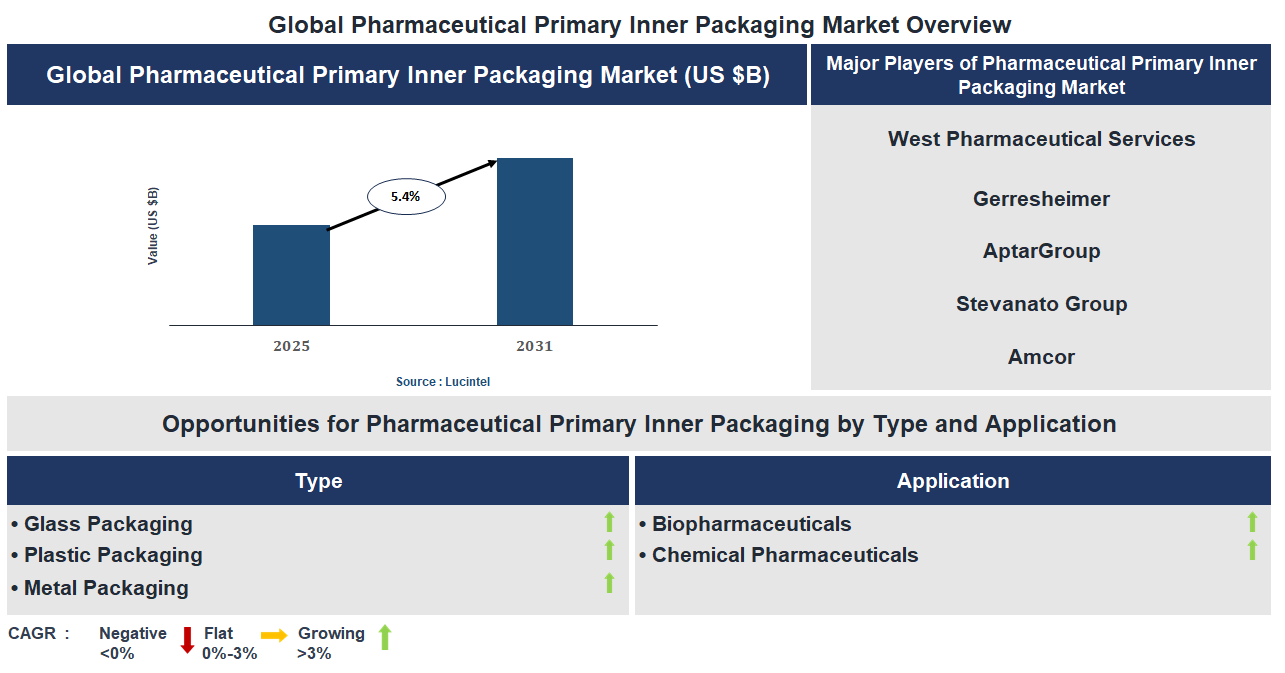
The future of the global pharmaceutical primary inner packaging market looks promising with opportunities in the biopharmaceutical and chemical pharmaceutical markets. The global pharmaceutical primary inner packaging market is expected to grow with a CAGR of 5.4% from 2025 to 2031. The major drivers for this market are the increasing demand for safe packaging, the rising need for drug protection, and the growing focus on regulatory compliance.• Lucintel forecasts that, within the type category, glass packaging is expected to witness the highest growth over the forecast period.
• Within the application category, biopharmaceutical is expected to witness higher growth.
• In terms of region, APAC is expected to witness the highest growth over the forecast period. Gain valuable insights for your business decisions with our comprehensive 150+ page report. Sample figures with some insights are shown below.
Emerging Trends in the Pharmaceutical Primary Inner Packaging Market
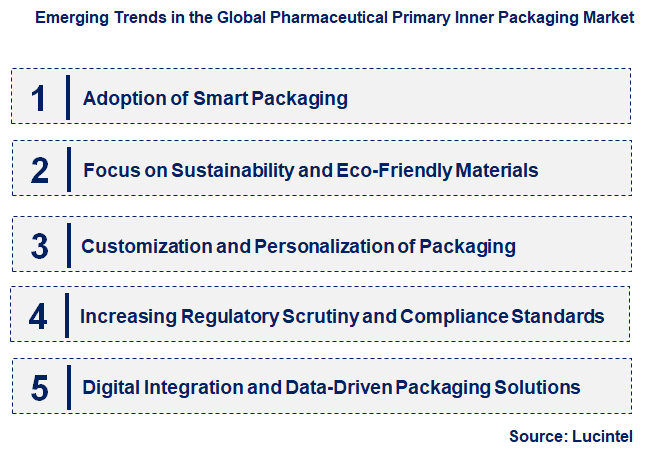
The pharmaceutical primary inner packaging market is experiencing rapid evolution driven by technological advancements, regulatory changes, and shifting consumer preferences. As the industry seeks to enhance product safety, extend shelf life, and improve patient compliance, innovative packaging solutions are emerging. These developments are also influenced by the increasing demand for personalized medicine, sustainability concerns, and digital integration. Companies are investing heavily in research and development to stay competitive and meet stringent regulatory standards. The following key trends highlight the transformative changes shaping this market, reflecting a move towards smarter, safer, and more sustainable packaging options that cater to the evolving needs of the pharmaceutical industry.• Adoption of Smart Packaging: The integration of IoT and RFID technology into primary inner packaging is revolutionizing the pharmaceutical industry. Smart packaging enables real-time tracking, temperature monitoring, and tamper evidence, ensuring product integrity and safety throughout the supply chain. This trend enhances traceability, reduces counterfeiting, and improves compliance with regulatory standards. It also provides valuable data for manufacturers and healthcare providers, facilitating better inventory management and patient safety. As technology becomes more affordable, smart packaging is expected to become a standard feature, significantly impacting how pharmaceuticals are stored, transported, and used.
• Focus on Sustainability and Eco-Friendly Materials: Increasing environmental concerns are prompting manufacturers to adopt sustainable packaging solutions. Biodegradable, recyclable, and eco-friendly materials are gaining popularity as alternatives to traditional plastics. This shift not only reduces the environmental footprint but also aligns with regulatory mandates and consumer preferences for greener products. Companies are investing in innovative materials that maintain product safety and efficacy while minimizing waste. The adoption of sustainable packaging is expected to drive market growth, influence supply chain practices, and enhance brand reputation, ultimately reshaping industry standards towards more environmentally responsible practices.
• Customization and Personalization of Packaging: The rise of personalized medicine is fueling demand for customized inner packaging solutions. Manufacturers are developing tailored packaging formats to accommodate specific drug formulations, dosages, and patient needs. This trend improves medication adherence, reduces errors, and enhances patient experience. Advanced manufacturing techniques like 3D printing enable rapid customization, allowing for more flexible and patient-centric packaging designs. As healthcare moves towards individualized treatment, the market for personalized inner packaging is poised for significant growth, influencing product development strategies and regulatory frameworks.
• Increasing Regulatory Scrutiny and Compliance Standards: Stringent regulations worldwide are shaping the development and adoption of inner packaging solutions. Authorities such as the FDA, EMA, and other regional agencies impose strict standards for safety, tamper evidence, and quality control. Manufacturers are investing in compliant packaging materials and technologies to meet these evolving standards. This trend drives innovation in tamper-proof seals, child-resistant features, and serialization techniques. Enhanced regulatory oversight ensures product safety but also increases operational costs and complexity. Companies that proactively adapt to these standards gain competitive advantages and build trust with consumers and regulators.
• Digital Integration and Data-Driven Packaging Solutions: The incorporation of digital technologies into inner packaging is transforming the pharmaceutical landscape. Digital labels, QR codes, and augmented reality features enable consumers and healthcare providers to access detailed product information instantly. Data-driven packaging solutions facilitate better inventory management, traceability, and recall processes. This trend supports transparency, enhances consumer engagement, and ensures compliance with regulatory documentation requirements. As digital integration becomes more sophisticated, it is expected to streamline supply chains, reduce errors, and improve overall efficiency, fundamentally changing how pharmaceutical products are packaged, tracked, and managed. In summary, these emerging trends are collectively reshaping the pharmaceutical primary inner packaging market by emphasizing safety, sustainability, customization, regulatory compliance, and technological innovation. They are driving the industry towards more intelligent, eco-friendly, and patient-centric solutions, ultimately enhancing product integrity and market competitiveness.
Recent Development in the Pharmaceutical Primary Inner Packaging Market
The pharmaceutical primary inner packaging market has experienced significant evolution driven by technological advancements, regulatory changes, and increasing demand for safety and convenience. As the pharmaceutical industry continues to innovate, the packaging sector plays a crucial role in ensuring drug integrity, patient safety, and compliance with stringent standards. Recent developments reflect a focus on sustainability, smart packaging, and personalized solutions, which are transforming how medicines are stored, transported, and administered. These trends are shaping the future landscape of pharmaceutical packaging, influencing manufacturers, healthcare providers, and consumers alike.• Adoption of Sustainable Materials: The market is shifting towards eco-friendly packaging options such as biodegradable plastics and recyclable materials, reducing environmental impact and aligning with global sustainability goals. This development enhances brand reputation and meets regulatory requirements, while also appealing to environmentally conscious consumers.
• Integration of Smart Packaging Technologies: Incorporating RFID tags, QR codes, and sensors into primary packaging allows real-time tracking, improved security, and enhanced patient compliance. These innovations help prevent counterfeiting, ensure proper dosage, and facilitate supply chain transparency, ultimately improving patient safety and operational efficiency.
• Regulatory Compliance and Standardization: Stricter regulations and quality standards are driving innovation in packaging designs to meet safety, tamper-evidence, and sterility requirements. This development ensures product integrity, reduces contamination risks, and facilitates global market access for pharmaceutical companies.
• Rise of Personalized Packaging Solutions: Customized packaging tailored to specific drug formulations and patient needs is gaining prominence. This approach improves medication adherence, reduces errors, and enhances user experience, especially in personalized medicine and specialty drugs.
• Advances in Material Science and Design: New materials with enhanced barrier properties, flexibility, and durability are being developed to better protect sensitive pharmaceuticals from moisture, light, and contamination. Innovative designs also improve ease of use and reduce waste, supporting sustainability and patient convenience. In summary, these recent developments are significantly impacting the pharmaceutical primary inner packaging market by promoting sustainability, enhancing security, ensuring compliance, and improving user experience. These trends are fostering innovation, increasing market competitiveness, and supporting the industrys shift towards safer, more efficient, and environmentally responsible packaging solutions.
Strategic Growth Opportunities in the Pharmaceutical Primary Inner Packaging Market
The pharmaceutical primary inner packaging market is experiencing rapid evolution driven by technological advancements, regulatory changes, and increasing demand for safety and convenience. As the pharmaceutical industry seeks to enhance product stability, patient compliance, and supply chain security, key growth opportunities are emerging across various applications. These developments are shaping the future landscape, offering innovative solutions that meet stringent standards while addressing market needs. Companies that capitalize on these opportunities can gain competitive advantages, expand their market share, and improve overall healthcare outcomes. The following are five key growth opportunities across different applications within this market.• Smart Packaging Technologies: Enhances safety and compliance by integrating sensors and IoT capabilities, allowing real-time monitoring of drug conditions, reducing contamination risks, and improving traceability. This innovation boosts consumer confidence and streamlines supply chain management, ultimately leading to reduced costs and enhanced product integrity.
• Tamper-Evident Packaging: Strengthens product security by providing visible evidence of tampering, which is crucial for patient safety and regulatory compliance. The adoption of advanced tamper-evident features increases consumer trust and reduces counterfeit risks, supporting brand integrity and market growth.
• Child-Resistant Packaging: Focuses on protecting vulnerable populations by designing packaging that is difficult for children to open but accessible to adults. This application not only complies with safety regulations but also enhances brand reputation and consumer confidence, especially in markets with strict safety standards.
• Eco-Friendly Packaging Solutions: Responds to increasing environmental concerns by developing biodegradable, recyclable, and sustainable packaging materials. This shift reduces environmental impact, appeals to eco-conscious consumers, and aligns with global sustainability initiatives, opening new market segments.
• Customized Packaging Solutions: Offers tailored packaging designs to meet specific product requirements, branding strategies, and regulatory standards. Customization improves product differentiation, enhances consumer engagement, and supports premium pricing strategies, thereby expanding market opportunities. In summary, these growth opportunities are significantly impacting the pharmaceutical primary inner packaging market by driving innovation, improving safety and compliance, and aligning with sustainability trends. They enable companies to meet evolving regulatory demands, enhance consumer trust, and differentiate their offerings, ultimately fostering market expansion and technological advancement.
Pharmaceutical Primary Inner Packaging Market Driver and Challenges
The pharmaceutical primary inner packaging market is influenced by a complex interplay of technological advancements, economic factors, and regulatory frameworks. Innovations in packaging materials and methods enhance product safety and compliance, while economic shifts impact production costs and demand. Regulatory standards ensure quality and safety but can also pose compliance challenges. These factors collectively shape market growth, competitiveness, and innovation, requiring stakeholders to adapt continuously to evolving technological, economic, and regulatory landscapes. The factors responsible for driving the pharmaceutical primary inner packaging market include:-• Technological Innovation: The development of advanced materials such as tamper-evident and child-resistant packaging enhances product safety and compliance, driving market growth. Innovations like smart packaging with tracking and monitoring capabilities improve supply chain transparency and patient safety. These technological advancements meet stringent regulatory standards and consumer expectations, fostering increased adoption across pharmaceutical companies. As R&D investments grow, the market benefits from new, more efficient, and sustainable packaging solutions, further fueling demand.
• Growing Pharmaceutical Industry: The expanding global pharmaceutical sector, driven by increasing healthcare needs, aging populations, and rising chronic diseases, significantly boosts demand for primary inner packaging. This growth necessitates reliable, compliant, and innovative packaging solutions to ensure drug integrity and patient safety. Emerging markets, especially in the Asia-Pacific, contribute substantially to this trend, offering new opportunities for manufacturers. The rising prevalence of personalized medicine also demands specialized packaging, further propelling market expansion.
• Regulatory Compliance and Standards: Stringent regulations from agencies like the FDA, EMA, and other global authorities mandate high safety, quality, and tamper-evidence standards for pharmaceutical packaging. Compliance ensures market access and consumer trust, prompting manufacturers to invest in compliant packaging solutions. Evolving regulations often drive innovation, pushing companies to develop new materials and designs that meet or exceed regulatory requirements, thus shaping the competitive landscape.
• Sustainability and Eco-friendly Packaging: Increasing environmental awareness and regulatory pressures are pushing the market toward sustainable packaging solutions. Use of biodegradable, recyclable, and eco-friendly materials reduces environmental impact and aligns with corporate social responsibility goals. This shift influences product design, material sourcing, and manufacturing processes, creating opportunities for innovative, sustainable packaging options that appeal to environmentally conscious consumers and regulators.
• Digitalization and Smart Packaging: The integration of digital technologies into primary inner packaging, such as QR codes, RFID tags, and IoT-enabled features, enhances traceability, authenticity verification, and supply chain management. Smart packaging improves patient safety, reduces counterfeiting, and streamlines inventory management. As digital transformation accelerates, pharmaceutical companies increasingly adopt these solutions to meet regulatory demands and improve operational efficiency. The challenges facing this pharmaceutical primary inner packaging market include:-
• Regulatory Complexity and Compliance Costs: Navigating diverse and evolving regulatory requirements across different regions poses significant challenges. Ensuring compliance with standards like the FDA, EMA, and other local regulations demands substantial investment in R&D, testing, and documentation. Non-compliance can lead to product recalls, legal penalties, and loss of market access, increasing operational costs and delaying product launches. Smaller players may find it particularly difficult to keep pace with regulatory changes, impacting market competitiveness.
• Material Supply Chain Disruptions: The market heavily relies on specific raw materials such as plastics, glass, and specialty polymers, which are susceptible to supply chain disruptions caused by geopolitical tensions, pandemics, or environmental factors. These disruptions can lead to delays in production, increased costs, and shortages, affecting the availability of packaging solutions. Ensuring a resilient supply chain is critical but challenging, especially amid global uncertainties.
• Environmental Regulations and Sustainability Challenges: While sustainability is a driver, it also presents challenges due to stringent environmental regulations and the need for eco-friendly materials that meet pharmaceutical safety standards. Developing biodegradable or recyclable materials that maintain drug integrity and comply with regulatory standards requires significant R&D investment. Balancing environmental goals with safety, efficacy, and cost considerations remains a complex challenge for manufacturers. In summary, the pharmaceutical primary inner packaging market is shaped by rapid technological innovations, expanding industry demand, and strict regulatory standards, which collectively foster growth and innovation. However, challenges such as regulatory complexities, supply chain disruptions, and sustainability pressures pose significant hurdles. Navigating these drivers and challenges requires strategic adaptation, technological investment, and regulatory compliance. Overall, the markets future hinges on balancing innovation with sustainability and resilience, ensuring safe, compliant, and environmentally responsible packaging solutions that meet evolving industry needs.
List of Pharmaceutical Primary Inner Packaging Companies
Companies in the market compete on the basis of product quality offered. Major players in this market focus on expanding their manufacturing facilities, R&D investments, infrastructural development, and leverage integration opportunities across the value chain. With these strategies pharmaceutical primary inner packaging companies cater increasing demand, ensure competitive effectiveness, develop innovative products & technologies, reduce production costs, and expand their customer base. Some of the pharmaceutical primary inner packaging companies profiled in this report include-• West Pharmaceutical Services
• Gerresheimer
• AptarGroup
• Stevanato Group
• Amcor
• Shandong Pharmaceutical
• Constantia Flexibles
• Schott Pharma
• Berry Global
• SGD Pharma
Pharmaceutical Primary Inner Packaging Market by Segment
The study includes a forecast for the global pharmaceutical primary inner packaging market by type, application, and region.Pharmaceutical Primary Inner Packaging Market by Type [Value from 2019 to 2031]:
• Glass Packaging
• Plastic Packaging
• Metal Packaging
Pharmaceutical Primary Inner Packaging Market by Application [Value from 2019 to 2031]:
• Biopharmaceuticals
• Chemical Pharmaceuticals
Pharmaceutical Primary Inner Packaging Market by Region [Value from 2019 to 2031]:
• North America
• Europe
• Asia Pacific
• The Rest of the World
Country Wise Outlook for the Pharmaceutical Primary Inner Packaging Market
The pharmaceutical primary inner packaging market has experienced significant growth and innovation driven by technological advancements, regulatory changes, and increasing global demand for safe and effective medication delivery. As countries adapt to evolving healthcare needs, key players are investing in sustainable materials, smart packaging solutions, and enhanced safety features. These developments aim to improve patient compliance, reduce contamination risks, and meet stringent regulatory standards. The markets trajectory is shaped by regional policies, technological breakthroughs, and the rising importance of personalized medicine, making it a dynamic and competitive landscape across major economies.• United States: The US market has seen rapid adoption of smart packaging technologies, including RFID and IoT-enabled solutions, to enhance medication tracking and safety. Regulatory agencies like the FDA are promoting innovations that improve drug stability and tamper evidence. Additionally, there is a growing focus on sustainable packaging materials to reduce environmental impact, driven by consumer demand and legislative initiatives. The market is also witnessing increased investments in biopharmaceutical packaging, reflecting the rise of biologics and personalized therapies.
• China: China’s pharmaceutical inner packaging market is expanding swiftly due to government initiatives supporting healthcare infrastructure and domestic pharmaceutical manufacturing. Innovations include the adoption of eco-friendly materials and tamper-evident packaging to meet international standards. The country is also investing in automation and smart packaging solutions to improve efficiency and traceability. Rising healthcare awareness and increasing pharmaceutical exports are further fueling market growth, with local companies increasingly adopting advanced packaging technologies to compete globally.
• Germany: Germany’s market emphasizes high-quality, sustainable packaging solutions aligned with strict EU regulations. There is a notable shift towards biodegradable and recyclable materials to meet environmental standards. Germany is also a leader in integrating digital technologies into packaging, such as serialization and track-and-trace systems, to combat counterfeiting. The focus on innovation is driven by the pharmaceutical industry’s demand for reliable, safe, and eco-friendly packaging options, supported by strong regulatory frameworks and technological expertise.
• India: The Indian pharmaceutical inner packaging market is experiencing rapid growth due to expanding domestic production and export activities. The focus is on cost-effective, durable, and tamper-proof packaging solutions to cater to a large population. There is increasing adoption of advanced materials and automation to improve efficiency and compliance with global standards. Government initiatives promoting pharmaceutical manufacturing under schemes like Make in India are also boosting innovation and investment in packaging technologies, making India a significant player in the global market.
• Japan: Japan’s market is characterized by a focus on high-quality, innovative packaging solutions that ensure drug stability and safety. The country is investing in smart packaging technologies, including sensors and digital tracking, to enhance medication management. Regulatory standards are stringent, emphasizing safety, environmental sustainability, and patient convenience. Japan’s aging population drives demand for user-friendly packaging, such as easy-open and child-resistant designs. The market also sees a trend toward eco-friendly materials and sustainable practices, aligning with Japan’s broader environmental commitments.

Features of the Global Pharmaceutical Primary Inner Packaging Market
Market Size Estimates: Pharmaceutical primary inner packaging market size estimation in terms of value ($B). Trend and Forecast Analysis: Market trends (2019 to 2024) and forecast (2025 to 2031) by various segments and regions. Segmentation Analysis: Pharmaceutical primary inner packaging market size by type, application, and region in terms of value ($B). Regional Analysis: Pharmaceutical primary inner packaging market breakdown by North America, Europe, Asia Pacific, and Rest of the World. Growth Opportunities: Analysis of growth opportunities in different types, applications, and regions for the pharmaceutical primary inner packaging market. Strategic Analysis: This includes M&A, new product development, and competitive landscape of the pharmaceutical primary inner packaging market. Analysis of competitive intensity of the industry based on Porter’s Five Forces model.
FAQ
Q1. What is the growth forecast for pharmaceutical primary inner packaging market? Answer: The global pharmaceutical primary inner packaging market is expected to grow with a CAGR of 5.4% from 2025 to 2031. Q2. What are the major drivers influencing the growth of the pharmaceutical primary inner packaging market? Answer: The major drivers for this market are the increasing demand for safe packaging, the rising need for drug protection, and the growing focus on regulatory compliance. Q3. What are the major segments for pharmaceutical primary inner packaging market? Answer: The future of the pharmaceutical primary inner packaging market looks promising with opportunities in the biopharmaceutical and chemical pharmaceutical markets. Q4. Who are the key pharmaceutical primary inner packaging market companies? Answer: Some of the key pharmaceutical primary inner packaging companies are as follows:• West Pharmaceutical Services
• Gerresheimer
• AptarGroup
• Stevanato Group
• Amcor
• Shandong Pharmaceutical
• Constantia Flexibles
• Schott Pharma
• Berry Global
• SGD Pharma Q5. Which pharmaceutical primary inner packaging market segment will be the largest in future? Answer: Lucintel forecasts that, within the type category, glass packaging is expected to witness the highest growth over the forecast period. Q6. In pharmaceutical primary inner packaging market, which region is expected to be the largest in next 5 years? Answer: In terms of region, APAC is expected to witness the highest growth over the forecast period. Q7. Do we receive customization in this report? Answer: Yes, Lucintel provides 10% customization without any additional cost.
Table of Contents
List of Figures
List of Tables
Methodology
- In-depth interviews of the major players in this market
- Detailed secondary research from competitors’ financial statements and published data
- Extensive searches of published works, market, and database information pertaining to industry news, company press releases, and customer intentions
- A compilation of the experiences, judgments, and insights of Lucintel’s professionals, who have analyzed and tracked this market over the years.


Buy Now
Choose a license that fits your team. Instant PDF delivery.
Prices exclude taxes. Instant delivery. Custom licensing available on request.
Key Questions
- • What are some of the most promising, high-growth opportunities for the pharmaceutical primary inner packaging market by type (glass packaging, plastic packaging, and metal packaging), application (biopharmaceuticals and chemical pharmaceuticals), and region (North America, Europe, Asia Pacific, and the Rest of the World)?
- • Which segments will grow at a faster pace and why?
- • Which region will grow at a faster pace and why?
- • What are the key factors affecting market dynamics? What are the key challenges and business risks in this market?
- • What are the business risks and competitive threats in this market?
- • What are the emerging trends in this market and the reasons behind them?
- • What are some of the changing demands of customers in the market?
- • What are the new developments in the market? Which companies are leading these developments?
- • Who are the major players in this market? What strategic initiatives are key players pursuing for business growth?
- • What are some of the competing products in this market and how big of a threat do they pose for loss of market share by material or product substitution?
- • What M&A activity has occurred in the last 5 years and what has its impact been on the industry? For any questions related to Pharmaceutical Primary Inner Packaging Market, Pharmaceutical Primary Inner Packaging Market Size, Pharmaceutical Primary Inner Packaging Market Growth, Pharmaceutical Primary Inner Packaging Market Analysis, Pharmaceutical Primary Inner Packaging Market Report, Pharmaceutical Primary Inner Packaging Market Share, Pharmaceutical Primary Inner Packaging Market Trends, Pharmaceutical Primary Inner Packaging Market Forecast, Pharmaceutical Primary Inner Packaging Companies, write Lucintel analyst at email: helpdesk@lucintel.com. We will be glad to get back to you soon.


