
Market Report · July 29, 2026

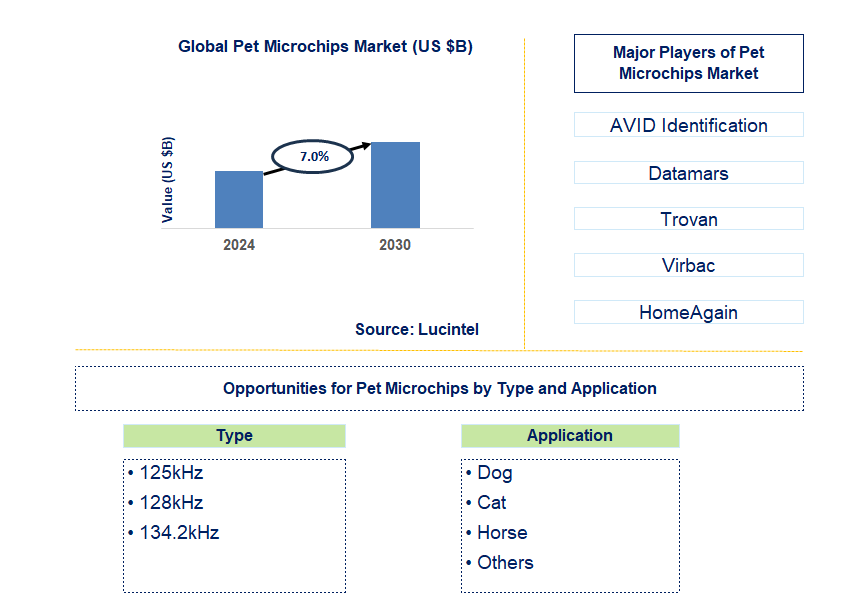
Key data points: The growth forecast = 7.0% annually next 6 years. Scroll below to get more insights. This market report covers trends, opportunities, and forecast in the global pet microchips market to 2030 by type (125khz, 128khz , and 134.2khz), application (dog, cat, horse, and others), and region (North America, Europe, Asia Pacific, and the Rest of the World)
We'll send your sample report shortly.
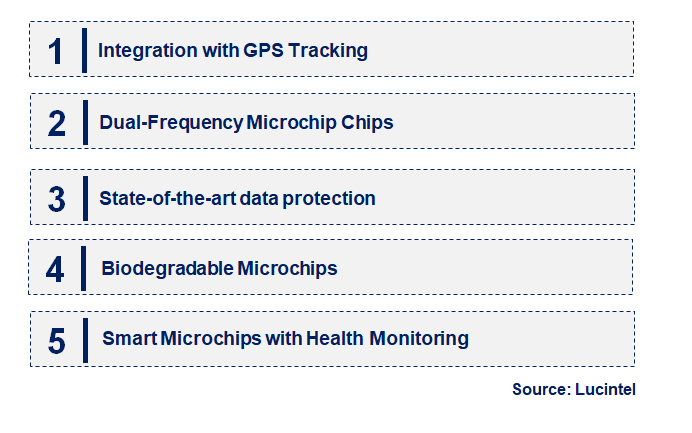
• Integration with GPS Tracking: The integration of GPS tracking technology into dog microchips is an emerging trend. It provides the pet owner with the real-time location of a lost pet, thus enhancing the possibility of recovery. It offers peace of mind and safety for pets, leading to higher adoption levels. From this perspective, GPS-enabled microchips offer more than mere basic identification; they add functional value to pet care and recovery processes.
• Dual-Frequency Microchips: There is a growing popularity of dual-frequency microchips. They operate at two frequencies, significantly increasing compatibility with scanning systems used worldwide. This eliminates the differences in standards and improves the efficiency of recovering pets by relying on those chips that can identify pets, irrespective of the type of scanner being used.
• State-of-the-Art Data Protection: Data security aspects have been enhanced with the use of modern microchip technology. While data may be encrypted for storage and safe communication protocols, pet information is protected from unauthorized access. This trend represents a paradigm shift in considering data privacy and what is needed to ensure proper systems for handling personally identifiable information as part of pet identification and recovery.
• Biodegradable Microchips: The development of biodegradable microchips represents one of the most exciting trends toward environmental sustainability. Biodegradable microchips are designed to degrade slowly, resulting in lower environmental impacts than traditional microchips. This aligns with both consumer demand and increasing regulatory pressure for more environmentally friendly products and practices in pet care.
• Smart Microchips with Health Monitoring: The latest microchips incorporate features that include health monitoring, enabling real-time tracking of pets. Such innovation keeps pet owners informed about their pet's temperature and activity levels, thereby providing early warning signs of health-related issues. There is a new trend toward all-inclusive pet care solutions through the integration of health monitoring features in microchips. Rising trends in advanced technologies and changing consumer needs reshape the dog microchip market. The integration of GPS, dual-frequency systems, health monitoring abilities, data security, and sustainability capabilities adds functionality to microchips. This will further lead to growth and development in the market.
• Advanced Microchip Technology: Developments have improved the performance and reliability of microchips. Modern microchips, compared to earlier versions, have better energy efficiency, longer-lasting batteries, and more powerful data storage. Such advancements enable more accurate and consistent identification of pets, thereby reducing errors and facilitating recovery.
• Mandatory Microchipping Laws: Laws have been enacted in various countries requiring pets to be microchipped. This provision simplifies the identification and recovery of pets. The implementation of mandatory microchipping is driving market growth, as pet owners and breeders must comply with these laws. Such provisions lead to high adoption rates and greater market penetration.
• Integration with Digital Platforms: Modern microchips are integrated with digital platforms to manage and access information conveniently. This integration allows pet owners to easily update and retrieve information about their pets from online databases. Strong integration into digital platforms simplifies information tracking and management regarding pets.
• Greater Collaboration with Veterinary Clinics: Collaborations between microchip manufacturers and veterinary clinics have increased, resulting in more pet owners adopting the microchipping process. Moreover, pets are getting microchipped every time they visit the veterinary clinic. As collaboration increases, the process becomes smoother, leading to higher adoption rates among pet owners.
• Advancement in Microchip Design: Advances in microchip design have led to the production of relatively smaller chips that cause minimal discomfort when inserted. Novel designs aim to reduce discomfort during insertion and ensure the long-term functionality of these microchips. Such advancements in design enhance the user experience and ensure higher satisfaction for pet owners and veterinarians. These developments will be key drivers of growth in the dog microchip market due to improvements in technology, rising compliance through regulations, and increasing integration into digital systems. Continuous advancements lead to better identification of pets, higher adoption rates, and greater market growth.
• Expansion into Emerging Markets: Newer markets, such as India and China, represent strong growth engines in pet ownership and awareness of pet welfare. Expansion in these markets will lead to higher adoption rates and increase overall market size. Local necessities and regulatory requirements may further strengthen growth potential.
• Development of Biodegradable Microchips: As more people become concerned about the environment, manufacturing biodegradable microchips will align with increased consumer demand for eco-friendly products. Biodegradable microchips serve as environmentally friendly substitutes for traditional ones and may attract environmentally conscious consumers. In a market striving for sustainability, this development can further differentiate products.
• Enhanced Data Integration and Management: Digital platforms advance data integration and management, a process likely to improve pet identification and recovery processes. Improved data management systems may provide real-time updates and easier access to pet information for owners, thereby making microchips more appealing and functional.
• Strategic Partnerships and Collaborations: Establishing strategic partnerships with veterinary clinics, pet care organizations, and technology companies may increase market reach and adoption. Partnerships can maximize the efficiency of microchip distribution and implementation, improve consumer education on microchip use, and enhance resource and expertise utilization, thereby accelerating market growth. Growth opportunities in the dog microchip market include driving innovations, expanding the market's scope, and fulfilling customer demands. Strategic health monitoring, sustainability, and digital integration, along with targeted expansion and partnerships, will be crucial factors propelling market growth transformation.
• Technological Development in the Field: The market is driven by advancements in microchip technology, such as GPS-enabled and dual-frequency microchips. Microchips that support GPS provide real-time tracking of pets, thereby increasing recovery rates and enhancing safety. The compatibility of dual-frequency microchips with various scanning systems worldwide overcomes issues of standard differences. These technological developments make microchips more effective and consumer-friendly, thus increasing adoption rates and market opportunities.
• Regulatory Support: Government legislation mandating the microchipping of pets is another growth factor for the market. In various markets, legislation has been enacted requiring all pets to be chipped for effective identification and improved recovery processes. Such regulations ensure constant demand for microchips, enhancing adoption and stability within the market. The enforcement of these regulations compels pet owners and breeders to comply, thereby promoting overall growth within the microchip market.
• High Number of Pet Owners: With the rise in the number of pet owners globally, the demand for dog microchips has increased. Greater awareness of identification and safety tends to grow alongside the number of people adopting pets. Individuals with more responsibility for their pets' welfare through microchipping are also more likely to facilitate recovery and safety. Such awareness and commitment fuel the market for these microchips and pressure manufacturers to expand their portfolios and innovate further.
• Consumer Awareness: Increased consumer awareness about the benefits of microchipping is advancing market growth. Animal welfare organizations and veterinary clinics have begun awareness campaigns highlighting the benefits of microchips for pet safety and recovery. When pet owners understand the advantages of microchipping, they are more inclined to invest in these technologies. A high adoption rate is ensured by increased awareness, which in turn drives market growth due to consumer choices.
• Advancements in Data Security: Improvements in the data security features of microchips are boosting the market by addressing privacy and data protection concerns. Modern microchips incorporate advanced data encryption and secure communication, safeguarding pet information from unauthorized access. These advancements enhance pet owners' perception of the safety of their pets' information, thereby inducing demand. Improved data security fosters confidence in microchip technology, catalyzing market growth. Challenges in the pet microchip market include:
• Cost: The primary barrier to the widespread adoption of microchipping is cost. In many countries, especially low-income areas or among budget-conscious pet owners, cost remains an issue, even though it has been decreasing. Many still find it out of reach due to high initial costs or additional expenses for registration and updates. Cost challenges must be addressed by providing cheaper options and financial assistance programs, among other initiatives.
• Regulatory Differences: Various regional governments have different rules regarding microchipping processes, creating challenges for market consistency. These differences pose difficulties for microchip manufacturers and distributors concerning production and distribution processes due to inconsistent requirements and standards. Additionally, such regulatory differences create confusion among pet owners and veterinary professionals. Harmonizing regional regulations and standard practices will help counteract these challenges and promote a more consistent market approach.
• Technological Constraints: Despite significant advancements in microchip technology, several constraints still limit market expansion. Some microchips may not be readable by certain scanning systems, and the potential for microchip failure exists, along with uncertainties about their lifespan. These technological constraints affect the reliability and efficiency of microchips, diminishing consumer confidence and acceptance rates. Continued efforts are necessary to innovate and upgrade the design and technology of microchips, which will help overcome these constraints and offer exponential growth opportunities in the market. The dog microchip market is influenced by several drivers and challenges that define its overall growth and development profile. Drivers include technological advancements, regulatory support, increased consumer pet ownership, consumer awareness, and improved data security. Challenges related to cost considerations, variability in regulatory support, and technological limitations must be addressed to broaden adoption and stabilize the market. The continued success and evolution of the dog microchip market will depend on balancing these drivers and overcoming challenges.
• AVID Identification Systems
• Datamars
• Trovan
• Virbac
• HomeAgain
• Jeffers Pet
• Bayer AG
• 125kHz
• 128kHz
• 134.2kHz
• Dog
• Cat
• Horse
• Others
• North America
• Europe
• Asia Pacific
• The Rest of the World
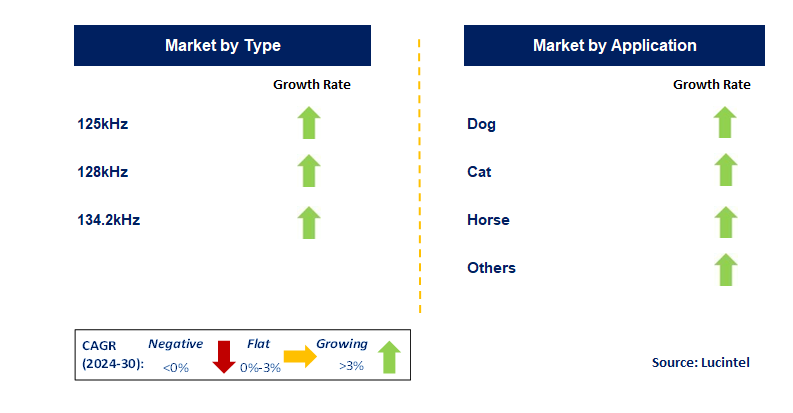
• Lucintel forecasts that 125khz is expected to witness the highest growth over the forecast period.
• Within this market, horses will remain the largest segment.
• North America will remain the largest region over the forecast period.


• AVID Identification Systems
• Datamars
• Trovan
• Virbac
• HomeAgain
• Jeffers Pet
• Bayer AG Q5. Which pet microchips market segment will be the largest in future? Answer: Lucintel forecasts that 125khz is expected to witness the highest growth over the forecast period. Q6. In pet microchips market, which region is expected to be the largest in next 5 years? Answer: North America will remain the largest region over the forecast period. Q.7 Do we receive customization in this report? Answer: Yes, Lucintel provides 10% customization without any additional cost.


Choose a license that fits your team. Instant PDF delivery.
Prices exclude taxes. Instant delivery. Custom licensing available on request.
Market Report · July 29, 2026
Market Report · July 15, 2026
Market Report · July 13, 2026
Trusted partner for strategic intelligence and business growth


Receive a complimentary market analysis tailored to your industry. Our analysts will identify key growth opportunities and competitive dynamics specific to your business.

Market size, growth rate, and key trend analysis for your specific sector.

Top competitor positioning and market share analysis.

Strategic recommendations backed by data-driven insights.
Get curated market intelligence and competitive moves straight to your inbox.
By subscribing, you agree to receive our monthly insights. Unsubscribe anytime.
Receive a complimentary market analysis tailored to your industry. Our analysts will identify key growth opportunities and competitive dynamics specific to your business.
Market size, growth rate, and key trend analysis for your specific sector.
Top competitor positioning and market share analysis.
Strategic recommendations backed by data-driven insights.
Get curated market intelligence, emerging trends, and competitive moves straight to your inbox each month.
By subscribing, you agree to receive our monthly insights. Unsubscribe anytime.
We'll send your sample report shortly.