
Report Feature
Pet Clothing Market Trends and Forecast
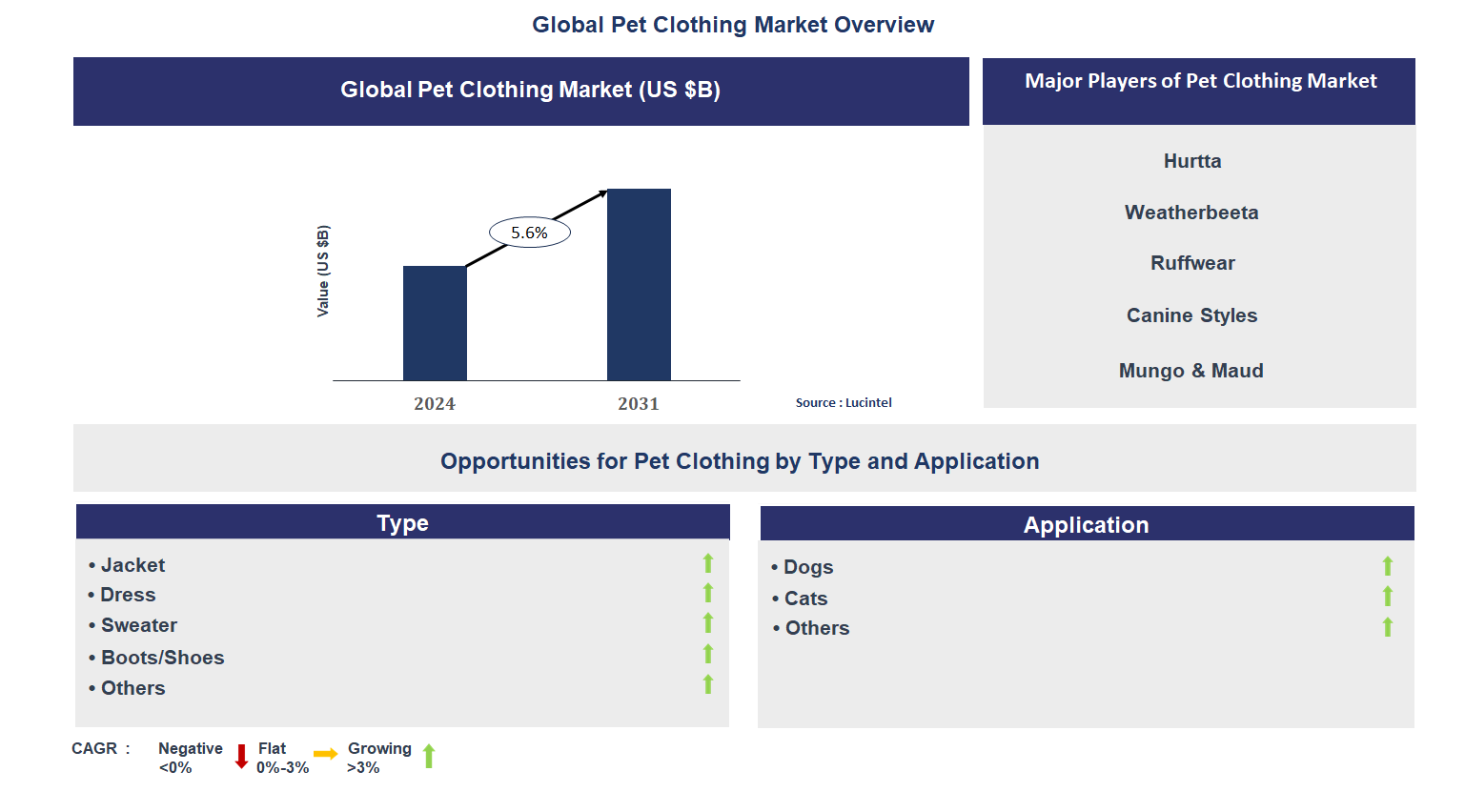
The future of the global pet clothing market looks promising with opportunities in the jacket, dress, sweater, and boot/shoe markets. The global pet clothing market is expected to grow with a CAGR of 5.6% from 2025 to 2031. The major drivers for this market are the increasing focus on pet fashion & style, the rising adoption of pets as family members, and the growing demand for functional pet clothing options.• Lucintel forecasts that, within the application category, dog is expected to witness higher growth over the forecast period.
• Within the type category, sweater is expected to witness the highest growth.
• In terms of region, APAC is expected to witness the highest growth over the forecast period. Gain valuable insights for your business decisions with our comprehensive 150+ page report. Sample figures with some insights are shown below.
Emerging Trends in the Pet Clothing Market
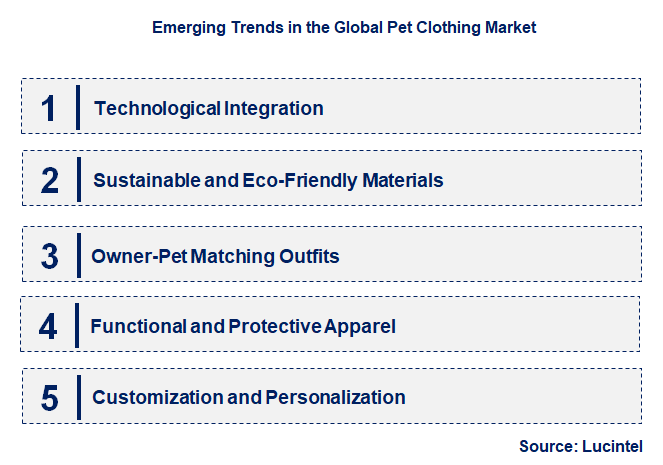
The pet clothing market is being reshaped by several key trends, which are pushing the industry toward greater innovation and specialization. These trends are driven by a convergence of technological advancements, a focus on health and safety, and a heightened emphasis on personal expression, all of which are influencing product offerings and consumer behavior.• Technological Integration: A key trend is the integration of technology into pet clothing. This includes smart apparel with embedded sensors for tracking a pet’s health metrics like temperature and heart rate, as well as GPS trackers. This trend is transforming clothing from a simple accessory into a multi-functional device, appealing to pet owners who want to monitor their pet’s well-being.
• Sustainable and Eco-Friendly Materials: There is a significant trend toward sustainable and eco-friendly pet clothing. Brands are now using materials like recycled plastic, organic cotton, and hemp to create their products. This trend is driven by growing environmental awareness among pet owners and is a key factor in their purchasing decisions, leading brands to highlight their commitment to sustainability.
• Owner-Pet Matching Outfits: A major trend is the popularity of matching outfits for pets and their owners, often called "twinning." This trend is driven by the humanization of pets and the desire for social media-friendly content. Brands are creating coordinated collections for various occasions, from casual wear to holiday themes, to capitalize on this emotional connection.
• Functional and Protective Apparel: The market is seeing a growing trend toward functional and protective apparel. This includes clothing designed to protect pets from extreme weather, such as cooling vests for summer and insulated jackets for winter. This trend is driven by a greater awareness of pet health and a desire to provide them with comfort and safety in all conditions.
• Customization and Personalization: The market is witnessing a strong trend toward customization and personalization. Pet owners are seeking unique clothing that can be personalized with their pet’s name, a custom design, or a specific color. This trend is a direct result of the humanization of pets and the desire for accessories that express their unique personality. These emerging trends are fundamentally reshaping the pet clothing market by prioritizing pet health, owner convenience, and environmental responsibility. The focus on smart technology and functional designs is enhancing product functionality and health benefits. Meanwhile, the shift toward sustainable and aesthetically pleasing products is transforming how brands engage with a new generation of pet owners who view their pets as family.
Recent Development in the Pet Clothing Market
The pet clothing market is experiencing a period of significant development, marked by a surge in innovation and a strategic focus on specific end-user needs. These changes are influencing product offerings, distribution channels, and market growth, with a clear emphasis on enhancing product performance and meeting the evolving demands of consumers.• Rise of Smart Pet Apparel: A key recent development is the rise of smart pet clothing with integrated technology. These products, such as jackets with built-in GPS and temperature sensors, are designed to monitor a pet’s health and location. This development is catering to a modern, tech-savvy consumer base and providing a new level of safety and peace of mind for pet owners.
• Introduction of Eco-Friendly Materials: A significant development is the widespread introduction of eco-friendly and sustainable materials. Brands are now using recycled plastic and natural fibers like organic cotton to create their products. This development is a direct response to a growing consumer demand for environmentally responsible products and is helping brands build a positive image.
• Launch of Twinning Collections: The market is witnessing a notable development in the launch of owner-pet matching collections. These collections, which allow owners to dress in coordinated outfits with their pets, are becoming increasingly popular, especially for social media sharing and special occasions. This development is a key driver of impulse purchases and brand loyalty.
• Growth of Direct-to-Consumer Channels: A recent development is the rapid growth of direct-to-consumer (DTC) sales and online retail for pet clothing. E-commerce platforms offer a wider variety of specialized apparel and provide a convenient shopping experience. This development is making innovative and niche products more accessible to a global audience.
• Focus on Post-Surgical and Medical Apparel: A recent development is the increased focus on post-surgical and medical-grade pet clothing. These products are designed to protect a pet’s wounds and prevent them from licking or biting affected areas. This development is a key innovation driven by a greater awareness of pet health and well-being. These recent developments are profoundly impacting the pet clothing market by elevating the standards of technology, health, and sustainability. The shift toward smart and functional apparel is enhancing product functionality, while the growth of online retail and the adoption of eco-friendly materials are transforming how brands are created and distributed to meet the modern pet owner’s needs.
Strategic Growth Opportunities in the Pet Clothing Market
The pet clothing market presents numerous strategic growth opportunities across various key applications. These opportunities are driven by the need for enhanced product quality, health, and efficacy in a wide range of products. Companies can leverage these trends to innovate and expand their market presence.• E-commerce and Direct-to-Consumer: The e-commerce and direct-to-consumer (DTC) channels present a prime growth opportunity. By bypassing traditional retail, brands can reduce operational costs, offer a wider product range, and build a more direct and personal relationship with their customers, while also collecting valuable consumer data.
• Functional and Protective Apparel: The functional apparel segment offers a significant growth opportunity. By designing clothing that protects pets from extreme weather, provides post-surgical comfort, or helps with anxiety, companies can address specific health and safety concerns. This market appeals to pet owners who are willing to invest in their pet’s long-term well-being.
• Customization and Personalization: The customization segment is a major growth area. There is a strong demand for pet clothing that can be personalized with a pet’s name, a custom design, or a specific color. This allows companies to create a unique value proposition, increase customer loyalty, and stand out in a competitive market.
• International Market Expansion: International markets, particularly in Asia, offer a lucrative opportunity. With rising disposable incomes and a growing interest in pet ownership, companies can expand their presence through strategic partnerships and localized marketing efforts. This strategy can significantly boost brand visibility and sales in untapped markets.
• Luxury and Designer Collaborations: The luxury and designer segment is a high-growth area. By collaborating with human fashion brands or creating high-end, limited-edition collections, pet clothing companies can appeal to affluent consumers. This strategy helps to elevate the brand’s image and commands premium pricing, creating a profitable niche. Strategic growth opportunities in the pet clothing market are concentrated in high-value, consumer-centric segments. By focusing on e-commerce, functional apparel, personalization, and international expansion, companies can align their strategies with the most dynamic parts of the market. This targeted approach will drive product innovation and market leadership, ensuring sustained growth and profitability.
Pet Clothing Market Driver and Challenges
The pet clothing market is influenced by a dynamic interplay of technological, economic, and regulatory factors. The major drivers are creating a strong demand for high-quality and functional solutions, pushing the industry forward. However, several challenges related to costs, regulations, and market competition must be addressed for sustained growth. The factors responsible for driving the pet clothing market include: 1. Increasing Pet Humanization: A major driver is the increasing humanization of pets, where pet owners view their animals as family members. This trend leads to a greater willingness to spend on high-quality, aesthetically pleasing, and specialized pet products, including premium and customized clothing that matches their own fashion choices. 2. Rising Disposable Income: A key driver is the increase in disposable income, particularly in emerging economies. As more people can afford discretionary purchases, the demand for non-essential pet products like clothing increases. This financial capacity is fueling market growth and enabling consumers to invest in a wider range of pet accessories. 3. Social Media and Influencer Culture: The influence of social media and pet influencers is a significant driver. Platforms like Instagram and TikTok showcase pets in stylish outfits, creating trends and driving aspirational purchases. This digital marketing has become a powerful tool for brands to directly engage with consumers and generate demand. 4. Growth of E-commerce Platforms: The proliferation of e-commerce platforms is a major driver. Online retail offers a wide variety of products, competitive pricing, and the convenience of shopping from home, making it easier for consumers to find niche and specialized pet clothing that may not be available in local stores. 5. Focus on Pet Health and Safety: The growing focus on pet health and safety is a key driver. Consumers are demanding clothing that serves a functional purpose, such as protecting pets from cold or heat, and providing a safe and comfortable solution for post-surgical recovery. This demand is leading to the development of innovative, purpose-driven products. Challenges in the pet clothing market are: 1. Low Product Differentiation: A significant challenge is the low product differentiation in the basic pet clothing segment. With numerous companies offering similar products, competition is intense, and price becomes the primary factor for consumers. This makes it difficult for new entrants and smaller brands to establish a strong market presence. 2. Sizing and Fit Issues: The pet clothing market faces a major challenge with sizing and fit issues. Pets come in a wide variety of shapes and sizes, and a "one-size-fits-all" approach often leads to poor fit and returns. This can be a major logistical and customer satisfaction challenge for brands, especially those selling online. 3. Consumer Perception: The market faces a challenge with consumer perception. While pet clothing is popular, many people still view it as a frivolous or unnecessary purchase. Overcoming this mindset is critical for market expansion and requires brands to educate consumers on the functional and health-related benefits of their products. The pet clothing market is experiencing robust growth driven by the powerful trends of pet humanization, rising disposable incomes, and technological innovation. However, this growth is tempered by significant challenges, including low product differentiation in the basic segment, sizing and fit issues, and the need to change consumer perceptions. The ability of companies to innovate and provide a unique value proposition while addressing these challenges will be crucial for sustained market growth.List of Pet Clothing Companies
Companies in the market compete on the basis of product quality offered. Major players in this market focus on expanding their manufacturing facilities, R&D investments, infrastructural development, and leverage integration opportunities across the value chain. With these strategies pet clothing companies cater increasing demand, ensure competitive effectiveness, develop innovative products & technologies, reduce production costs, and expand their customer base. Some of the pet clothing companies profiled in this report include-• Hurtta
• Weatherbeeta
• Ruffwear
• Canine Styles
• Mungo & Maud
• LAZYBONEZZ
• RC Pet Products
• Ultra Paws
• Muttluks
• Walkabout Harnesses
Pet Clothing Market by Segment
The study includes a forecast for the global pet clothing market by type, application, and region.Pet Clothing Market by Type [Value from 2019 to 2031]:
• Jacket
• Dress
• Sweater
• Boots/Shoes
• Others
Pet Clothing Market by Application [Value from 2019 to 2031]:
• Dogs
• Cats
• Others
Pet Clothing Market by Region [Value from 2019 to 2031]:
• North America
• Europe
• Asia Pacific
• The Rest of the World
Country Wise Outlook for the Pet Clothing Market
The global pet clothing market is experiencing a significant transformation, driven by the increasing humanization of pets and a growing focus on pet health, fashion, and technology. Recent developments across key countries are defined by a shift toward high-end, functional, and eco-friendly apparel, a proliferation of e-commerce, and a strong consumer demand for personalized and technologically advanced products that reflect their own lifestyles.• United States: The U.S. market is a leader in product innovation and premiumization. Recent developments include a strong demand for high-performance and functional apparel, such as waterproof jackets and cooling vests. The market is also seeing a surge in smart clothing with features like GPS tracking and temperature regulation. Brands are also focusing on sustainable materials.
• China: China’s pet clothing market is experiencing explosive growth, fueled by a burgeoning middle class and a rising number of pet owners. Recent developments are marked by a rapid expansion of local brands and a strong focus on e-commerce platforms. There is a high demand for stylish, often cartoon-themed, outfits and matching "twinning" apparel for pets and their owners.
• Germany: Germany’s market is characterized by a strong focus on quality, durability, and practicality. Recent developments are centered on the demand for high-quality, weather-protective clothing like raincoats and winter jackets. The market is also seeing a rise in specialized products that cater to specific breeds or health conditions, reflecting a consumer base that prioritizes functionality and pet well-being.
• India: India’s pet clothing market is in a rapid growth phase, fueled by its young, urban population and rising disposable incomes. Recent developments include the emergence of online-first brands that offer affordable yet stylish and functional clothing. There is a growing awareness of the need for protective gear for pets, especially during extreme weather conditions or for post-surgical recovery.
• Japan: Japan’s pet clothing market is highly sophisticated, focusing on precision, minimalist aesthetics, and functionality. Recent developments include a growing demand for high-quality, lightweight, and comfortable clothing. The market is also seeing a strategic shift toward specialized apparel for small breeds, with a strong emphasis on details and designs that are both functional and fashionable.

Features of the Global Pet Clothing Market
Market Size Estimates: Pet clothing market size estimation in terms of value ($B). Trend and Forecast Analysis: Market trends (2019 to 2024) and forecast (2025 to 2031) by various segments and regions. Segmentation Analysis: Pet clothing market size by type, application, and region in terms of value ($B). Regional Analysis: Pet clothing market breakdown by North America, Europe, Asia Pacific, and Rest of the World. Growth Opportunities: Analysis of growth opportunities in different types, applications, and regions for the pet clothing market. Strategic Analysis: This includes M&A, new product development, and competitive landscape of the pet clothing market. Analysis of competitive intensity of the industry based on Porter’s Five Forces model.
FAQ
Q1. What is the growth forecast for pet clothing market? Answer: The global pet clothing market is expected to grow with a CAGR of 5.6% from 2025 to 2031. Q2. What are the major drivers influencing the growth of the pet clothing market? Answer: The major drivers for this market are the increasing focus on pet fashion & style, the rising adoption of pets as family members, and the growing demand for functional pet clothing options. Q3. What are the major segments for pet clothing market? Answer: The future of the pet clothing market looks promising with opportunities in the jacket, dress, sweater, and boot/shoe markets. Q4. Who are the key pet clothing market companies? Answer: Some of the key pet clothing companies are as follows:• Hurtta
• Weatherbeeta
• Ruffwear
• Canine Styles
• Mungo & Maud
• LAZYBONEZZ
• RC Pet Products
• Ultra Paws
• Muttluks
• Walkabout Harnesses Q5. Which pet clothing market segment will be the largest in future? Answer: Lucintel forecasts that, within the application category, dog is expected to witness higher growth over the forecast period. Q6. In pet clothing market, which region is expected to be the largest in next 5 years? Answer: In terms of region, APAC is expected to witness the highest growth over the forecast period. Q7. Do we receive customization in this report? Answer: Yes, Lucintel provides 10% customization without any additional cost.
Table of Contents
List of Figures
List of Tables
Methodology
- In-depth interviews of the major players in this market
- Detailed secondary research from competitors’ financial statements and published data
- Extensive searches of published works, market, and database information pertaining to industry news, company press releases, and customer intentions
- A compilation of the experiences, judgments, and insights of Lucintel’s professionals, who have analyzed and tracked this market over the years.


Buy Now
Choose a license that fits your team. Instant PDF delivery.
Prices exclude taxes. Instant delivery. Custom licensing available on request.
Key Questions
- • What are some of the most promising, high-growth opportunities for the pet clothing market by type (jacket, dress, sweater, boots/shoes, and others), application (dogs, cats, and others), and region (North America, Europe, Asia Pacific, and the Rest of the World)?
- • Which segments will grow at a faster pace and why?
- • Which region will grow at a faster pace and why?
- • What are the key factors affecting market dynamics? What are the key challenges and business risks in this market?
- • What are the business risks and competitive threats in this market?
- • What are the emerging trends in this market and the reasons behind them?
- • What are some of the changing demands of customers in the market?
- • What are the new developments in the market? Which companies are leading these developments?
- • Who are the major players in this market? What strategic initiatives are key players pursuing for business growth?
- • What are some of the competing products in this market and how big of a threat do they pose for loss of market share by material or product substitution?
- • What M&A activity has occurred in the last 5 years and what has its impact been on the industry? For any questions related to Pet Clothing Market, Pet Clothing Market Size, Pet Clothing Market Growth, Pet Clothing Market Analysis, Pet Clothing Market Report, Pet Clothing Market Share, Pet Clothing Market Trends, Pet Clothing Market Forecast, Pet Clothing Companies, write Lucintel analyst at email: helpdesk@lucintel.com. We will be glad to get back to you soon.


