
Market Report · July 29, 2026

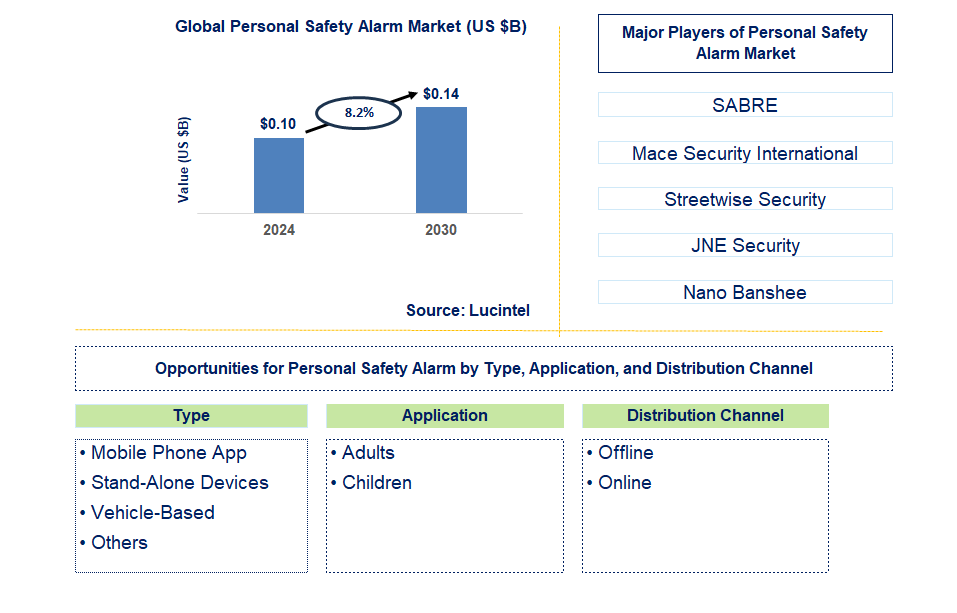
Key data points: The market size in 2030 = $0.14 billion, growth forecast = 8.2% annually for the next 6 years. Scroll below to get more insights. This market report covers trends, opportunities, and forecasts in the global personal safety alarm market to 2030 by type (mobile phone app, stand-alone devices, vehicle-based, and others), application (adults and children), distribution channel (offline and online), and region (North America, Europe, Asia Pacific, and the Rest of the World)
We'll send your sample report shortly.
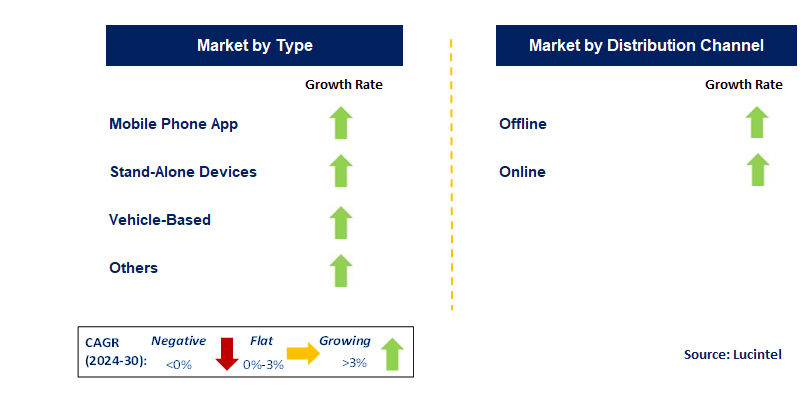
• Lucintel forecasts that, within the type category, mobile phone app will remain the largest segment over the forecast period because it has emergency panic buttons that assist the apps to offers safety to the users.
• Within the distribution channel, offline will remain the larger segment over the forecast period because physical retail remains the most potent distribution channel providing consumers with the tactile experience that profoundly influences their purchasing decisions, as well as enables customers to inspect products firsthand before making a purchase in brick-and-mortar stores.
• In terms of regions, North America will remain the largest region over the forecast period because the region is experiencing a substantial increase in product awareness, rising crime rate, and significant growth within the e-commerce industry. Gain valuable insights for your business decisions with our comprehensive 150+ page report.
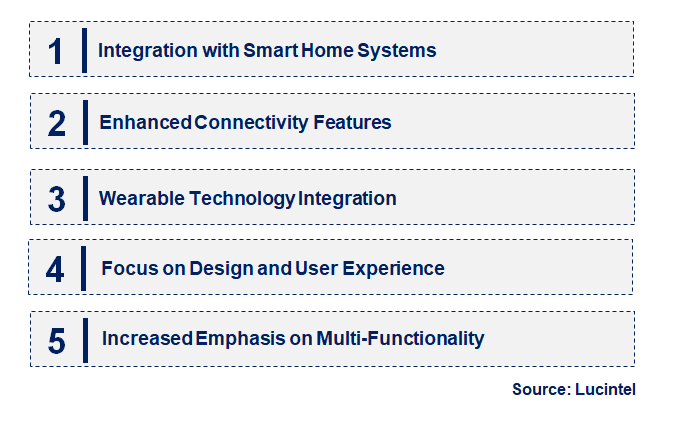
• Integration with Smart Home Systems: Personal safety alarms are increasingly being integrated with smart home systems. This trend allows for seamless communication with other smart devices, enhancing overall home security and enabling remote monitoring and control.
• Enhanced Connectivity Features: Modern personal safety alarms are incorporating enhanced connectivity features, such as GPS tracking and mobile app integration. These advancements provide real-time location updates and emergency alerts, improving the effectiveness of personal safety measures.
• Wearable Technology Integration: Wearable personal safety alarms, such as those embedded in smartwatches or fitness trackers, are gaining popularity. This integration provides users with discreet and accessible safety solutions that can be easily activated in emergencies.
• Focus on Design and User Experience: There is a growing emphasis on the design and user experience of personal safety alarms. Manufacturers are developing sleek, stylish, and easy-to-use devices that encourage regular use and integration into daily life.
• Increased Emphasis on Multi-Functionality: Personal safety alarms are evolving to offer multiple functionalities beyond basic alerts. Features such as fall detection, health monitoring, and environmental sensors are becoming common, providing users with comprehensive safety solutions. Emerging trends in personal safety alarms, including smart home integration, enhanced connectivity, wearable technology, improved design, and multi-functionality, are reshaping the market. These trends reflect a shift toward more advanced, user-friendly, and integrated safety solutions.
• Smartphone Integration: Personal safety alarms are increasingly incorporating smartphone integration, allowing users to receive alerts and share their location through mobile apps. This development enhances communication during emergencies and provides real-time updates.
• Advanced GPS Tracking: Enhanced GPS tracking features are being added to personal safety alarms, enabling precise location tracking. This development improves the effectiveness of emergency response and ensures timely assistance for users in distress.
• Wearable Safety Devices: The introduction of wearable personal safety alarms, such as those integrated into jewelry or clothing, offers discreet and convenient safety options. These devices are designed for easy access and activation in emergencies.
• IoT Connectivity: Personal safety alarms are adopting IoT connectivity to enable integration with other smart devices and systems. This development allows for more comprehensive safety solutions and streamlined communication with emergency services.
• Design Innovations: Recent design innovations focus on making personal safety alarms more aesthetically pleasing and user-friendly. These developments aim to encourage regular use and ensure that alarms are easily accessible when needed. Recent key developments in personal safety alarms, including smartphone integration, advanced GPS tracking, wearable devices, IoT connectivity, and design innovations, are enhancing the effectiveness and appeal of safety solutions while meeting evolving consumer needs.
• Expansion into Wearable Technology: The growth of wearable technology presents opportunities for personal safety alarms integrated into devices like smartwatches and fitness trackers. This expansion caters to consumers seeking discreet and accessible safety solutions.
• Integration with Smart Home Systems: Integrating personal safety alarms with smart home systems offers opportunities to enhance overall home security. This integration provides users with comprehensive safety solutions and seamless communication with other smart devices.
• Development of Multi-Functional Devices: There is a growing opportunity to develop personal safety alarms with multi-functional capabilities, such as health monitoring and environmental sensors. These advanced devices offer users a broader range of safety features and applications.
• Expansion in Emerging Markets: Emerging markets present growth opportunities for affordable and accessible personal safety alarms. Tailoring products to meet the specific needs of these markets can drive adoption and increase market share.
• Focus on Design and User Experience: Emphasizing design and user experience provides opportunities to attract consumers who value aesthetics and ease of use. Developing stylish and user-friendly alarms can enhance market appeal and encourage regular use. Strategic growth opportunities in the personal safety alarm market include expansion into wearable technology, smart home integration, multi-functional devices, emerging markets, and design improvements. These opportunities reflect a focus on enhancing safety features, accessibility, and user experience.
• Technological Advancements: Innovations in technology, such as GPS tracking and smartphone integration, are driving the growth of personal safety alarms. These advancements enhance the functionality and effectiveness of safety solutions, meeting evolving consumer needs.
• Increasing Consumer Awareness: Growing awareness of personal safety and security concerns is driving demand for safety alarms. Consumers are seeking advanced solutions to protect themselves and their families, fueling market growth.
• Integration with Smart Devices: The integration of personal safety alarms with smart home systems and wearable technology offers enhanced functionality and convenience. This trend drives adoption by providing comprehensive safety solutions.
• Focus on User Experience: Improvements in design and user experience are attracting consumers to personal safety alarms. Stylish and user-friendly devices encourage regular use and integration into daily life, boosting market demand.
• Growth in Emerging Markets: Expanding markets, particularly in developing regions, present opportunities for affordable and accessible personal safety alarms. Tailoring products to meet local needs can drive adoption and market growth. Challenges in the personal safety alarm market are:
• High Costs of Advanced Features: The cost of incorporating advanced features, such as GPS tracking and IoT connectivity, can be a barrier to widespread adoption. High prices may limit access for some consumers and affect market growth.
• Complexity of Integration: Integrating personal safety alarms with existing smart home systems and devices can be complex. Ensuring compatibility and seamless operation may pose challenges for manufacturers and users.
• Privacy and Security Concerns: Personal safety alarms that collect and transmit data may raise privacy and security concerns. Ensuring robust security measures and addressing consumer concerns are critical for maintaining trust. Major drivers and challenges in the personal safety alarm market include technological advancements, consumer awareness, smart device integration, design improvements, and growth in emerging markets. Challenges such as high costs, integration complexity, privacy concerns, regulatory compliance, and resistance to change must be addressed to ensure market success.
• SABRE
• Mace Security International
• Streetwise Security
• JNE Security
• Nano Banshee
• VitalCall
• Vigilant
• Doberman Security
• GE
• Mobile Phone App
• Stand-Alone Devices
• Vehicle-Based
• Others
• Adults
• Children
• Offline
• Online
• North America
• Europe
• Asia Pacific
• The Rest of the World
• United States: In the U.S., personal safety alarms are increasingly incorporating smart technology, such as GPS tracking and smartphone connectivity. Innovations include wearable alarms that sync with mobile apps, offering real-time location sharing and emergency alerts, improving response times and user convenience.
• China: China is seeing significant advancements in personal safety alarms, with a focus on affordability and mass accessibility. Recent developments include integration with local emergency services and the use of IoT technology to enhance alarm functionalities and connectivity, catering to a broad consumer base.
• Germany: Germany is advancing personal safety alarms with a strong emphasis on design and functionality. Key developments include high-tech features such as biometric sensors and advanced noise-detection capabilities, designed to provide more accurate emergency alerts and enhance user safety in various environments.
• India: In India, personal safety alarms are increasingly focusing on affordability and simplicity. Recent developments include basic yet effective alarm systems designed for widespread use in urban and rural areas. These alarms often feature loud sound alerts and basic emergency communication functions.
• Japan: Japan's personal safety alarms are integrating advanced technology and user convenience features. Recent innovations include compact, multi-functional alarms with features like earthquake detection and automatic emergency notifications, reflecting Japan's focus on disaster preparedness and technological integration.


• SABRE
• Mace Security International
• Streetwise Security
• JNE Security
• Nano Banshee
• VitalCall
• Vigilant
• Doberman Security
• GE Q6. Which personal safety alarm market segment will be the largest in future? Answer: Lucintel forecasts that mobile phone app will remain the largest segment over the forecast period because it has emergency panic buttons that assist the apps to offers safety to the users. Q7. In personal safety alarm market, which region is expected to be the largest in next 5 years? Answer: North America will remain the largest region over the forecast period due to region is experiencing a substantial increase in product awareness, rising crime rate, and significant growth within the e-commerce industry. Q.8 Do we receive customization in this report? Answer: Yes, Lucintel provides 10% customization without any additional cost.


Choose a license that fits your team. Instant PDF delivery.
Prices exclude taxes. Instant delivery. Custom licensing available on request.
Market Report · July 29, 2026
Market Report · July 15, 2026
Market Report · July 13, 2026
Trusted partner for strategic intelligence and business growth


Receive a complimentary market analysis tailored to your industry. Our analysts will identify key growth opportunities and competitive dynamics specific to your business.

Market size, growth rate, and key trend analysis for your specific sector.

Top competitor positioning and market share analysis.

Strategic recommendations backed by data-driven insights.
Get curated market intelligence and competitive moves straight to your inbox.
By subscribing, you agree to receive our monthly insights. Unsubscribe anytime.
Receive a complimentary market analysis tailored to your industry. Our analysts will identify key growth opportunities and competitive dynamics specific to your business.
Market size, growth rate, and key trend analysis for your specific sector.
Top competitor positioning and market share analysis.
Strategic recommendations backed by data-driven insights.
Get curated market intelligence, emerging trends, and competitive moves straight to your inbox each month.
By subscribing, you agree to receive our monthly insights. Unsubscribe anytime.
We'll send your sample report shortly.