
Market Report · July 31, 2026

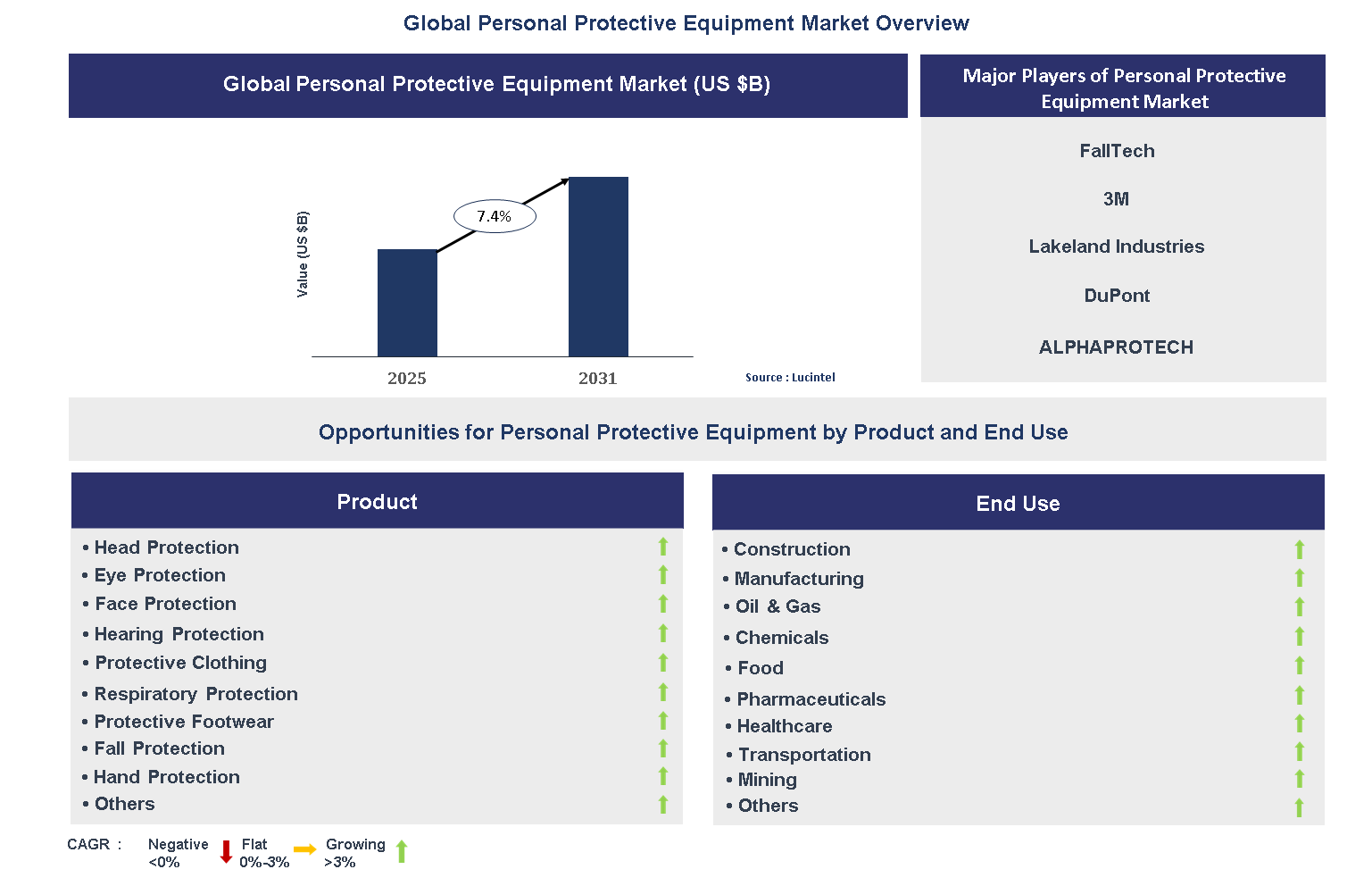
Key data points: The growth forecast = 7.4% annually for the next 7 years. Scroll below to get more insights. This market report covers trends, opportunities and forecasts in personal protective equipment market to 2031 by product (head protection, eye protection, face protection, hearing protection, protective clothing, respiratory protection, protective footwear, fall protection, hand protection, and others), end use (construction, manufacturing, oil & gas, chemicals, food, pharmaceuticals, healthcare, transportation, mining, and others), and region (North America, Europe, Asia Pacific, and the Rest of the World)
We'll send your sample report shortly.
• Lucintel forecasts that, within the product category, hand protection is expected to witness the highest growth over the forecast period.
• Within the end use category, manufacturing is expected to witness the highest growth.
• In terms of region, APAC is expected to witness the highest growth over the forecast period. Gain valuable insights for your business decisions with our comprehensive 150+ page report. Sample figures with some insights are shown below.
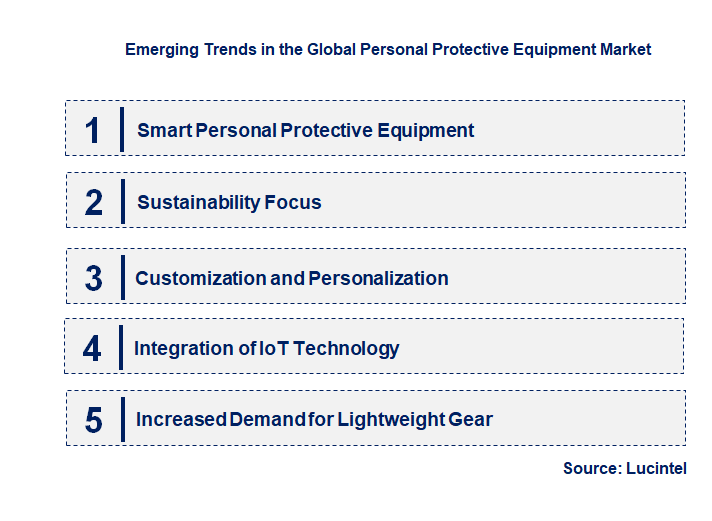
• Smart Personal Protective Equipment: Smart PPE, including helmets with sensors, wearable safety devices, and health-monitoring gloves, is revolutionizing worker safety. These devices provide real-time data on environmental hazards, worker fatigue, and health metrics, offering advanced protection and enhancing workplace safety monitoring.
• Sustainability Focus: Sustainability is becoming a core focus for PPE manufacturers, who are increasingly using eco-friendly materials like biodegradable plastics and recycled fabrics. This shift is driven by both consumer demand for greener products and regulatory pressure for more sustainable manufacturing processes in industries like construction and healthcare.
• Customization and Personalization: Personalized PPE is gaining traction, especially in industries where comfort and fit are paramount. Manufacturers are offering customization options such as adjustable straps, personalized designs, and bespoke sizing to improve comfort and ensure better protection for workers in a range of environments.
• Integration of IoT Technology: The integration of IoT (Internet of Things) technology into PPE is enhancing its functionality. IoT-enabled helmets, safety vests, and gloves now offer features like temperature regulation, real-time health tracking, and environmental hazard alerts. These innovations improve safety, efficiency, and productivity in high-risk work environments.
• Increased Demand for Lightweight Gear: Workers are increasingly demanding lightweight PPE that does not compromise on safety. The development of lighter materials like carbon fiber and advanced polymers is helping to create protective gear that is comfortable for long-term wear, reducing worker fatigue and improving overall performance. These emerging trends are reshaping the personal protective equipment market by enhancing product functionality, comfort, and sustainability. The integration of smart technologies, focus on eco-friendly materials, and demand for customization are not only improving worker safety but also driving innovation across industries. As these trends continue to evolve, the market is becoming more responsive to the needs of workers and employers alike.
• Adoption of Smart PPE: Smart PPE is becoming increasingly common in industries like construction, manufacturing, and healthcare. Wearables like smart helmets and gloves with built-in sensors are providing real-time data on worker health, environmental conditions, and fatigue, enhancing safety and productivity.
• Surge in Demand for Masks and Gloves: The COVID-19 pandemic caused a surge in demand for face masks, gloves, and other protective gear. While initially driven by healthcare needs, this demand has extended into industrial applications, where heightened hygiene and safety protocols remain in place.
• Focus on Eco-Friendly Materials: Manufacturers are shifting towards eco-friendly materials such as biodegradable plastics, recycled rubber, and organic cotton. This trend is particularly evident in protective clothing, gloves, and footwear. Companies are increasingly focusing on sustainable production processes to meet both consumer demand and regulatory requirements.
• Innovations in Foot Protection: The PPE market has seen advancements in footwear design, with lightweight, slip-resistant, and electrically insulated boots gaining popularity. These innovations are particularly important in sectors like construction and manufacturing, where workers face multiple safety risks that require specialized foot protection.
• Advancements in Protective Clothing: New technologies in protective clothing are allowing for better performance and comfort. Fabrics are being developed that are more resistant to heat, chemicals, and abrasion, while also being breathable and lightweight. These advancements ensure that workers are protected without sacrificing mobility or comfort. Recent developments in the personal protective equipment market highlight a growing emphasis on smart technology, sustainability, and performance. The demand for advanced protective gear is expanding beyond healthcare, and industries are adopting more innovative solutions to improve worker safety, comfort, and efficiency. As these developments continue, the PPE market is evolving to meet the changing needs of global industries.
• Expansion in Healthcare Sector: The healthcare sector continues to be a primary driver of PPE demand, especially for products like face shields, gloves, and gowns. With ongoing concerns about health safety, there is an opportunity for manufacturers to innovate in creating more comfortable, durable, and cost-effective protective gear for healthcare workers.
• Growth in Construction and Manufacturing: As construction and manufacturing industries expand, the demand for high-quality PPE such as helmets, gloves, and protective clothing rises. Companies in these sectors are increasingly looking for PPE that offers both protection and comfort, providing opportunities for manufacturers to cater to these specialized needs.
• Rise of E-commerce and Online Retail: The growth of e-commerce is creating new avenues for PPE manufacturers to reach a broader audience. Online platforms allow for customized products, offering a range of options for different industries. The convenience of e-commerce also allows businesses to purchase PPE in bulk, creating a large market segment.
• Increased Adoption of Smart PPE: The growing focus on worker health and safety is driving the adoption of smart PPE across industries like construction, mining, and oil and gas. Manufacturers have an opportunity to develop more advanced, data-driven protective gear that monitors worker health and safety, offering real-time feedback to prevent accidents.
• Focus on Sustainability and Eco-friendly Products: As businesses prioritize sustainability, there is a rising demand for eco-friendly PPE products. Manufacturers can capitalize on this trend by developing PPE made from recyclable, biodegradable, and sustainable materials. This is particularly attractive to environmentally conscious companies across sectors such as manufacturing, construction, and healthcare. Strategic growth opportunities in the personal protective equipment market are emerging in sectors such as healthcare, construction, and e-commerce, driven by technological advancements, sustainability initiatives, and a focus on worker safety. As industries continue to evolve, there will be significant demand for specialized, eco-friendly, and smart protective gear, providing manufacturers with ample opportunities for innovation and market expansion.
• FallTech
• 3M
• Lakeland Industries
• DuPont
• ALPHAPROTECH
• ANSELL
• Top Glove Corporation
• Mine Safety Appliances Company
• MALLCOM INDIA LIMITED
• Uvex Safety Group
• Head Protection
• Eye Protection
• Face Protection
• Hearing Protection
• Protective Clothing
• Respiratory Protection
• Protective Footwear
• Fall Protection
• Hand Protection
• Others
• Construction
• Manufacturing
• Oil & Gas
• Chemicals
• Food
• Pharmaceuticals
• Healthcare
• Transportation
• Mining
• Others
• North America
• Europe
• Asia Pacific
• The Rest of the World
• United States: In the U.S., the PPE market has seen substantial growth, spurred by COVID-19 and stricter workplace safety regulations. There is increasing demand for high-quality masks, gloves, and safety gear, especially in healthcare and manufacturing sectors. Innovations such as smart PPE with embedded sensors for real-time monitoring are gaining popularity, alongside a growing emphasis on sustainability.
• China: China’s PPE market has grown rapidly due to increased demand for protective gear during the pandemic and subsequent industrial expansions. The country has become a global hub for manufacturing PPE, with a focus on cost-efficient solutions. Key developments include advancements in the design of face masks, gloves, and protective suits, with a strong emphasis on domestic and international supply chains.
• Germany: Germany’s PPE market is heavily influenced by strict safety standards and regulations. The country is focusing on integrating advanced technologies like IoT and smart sensors into protective equipment to monitor worker health and safety in real time. Additionally, there is growing investment in sustainable PPE materials, aligning with Germanys commitment to environmental responsibility.
• India: In India, the PPE market has expanded due to increased awareness of workplace safety, especially in sectors like construction and manufacturing. The COVID-19 pandemic accelerated demand for face masks, gloves, and sanitizing products. However, affordability remains a concern, and manufacturers are focusing on providing cost-effective solutions without compromising on safety standards.
• Japan: Japans PPE market is driven by a focus on technological innovation and worker protection. The country is adopting cutting-edge technologies like wearable exoskeletons, which help in reducing worker fatigue in high-risk industries. Japan is also emphasizing lightweight, durable, and comfortable PPE, with strong growth in sectors like robotics, manufacturing, and healthcare.


• FallTech
• 3M
• Lakeland Industries
• DuPont
• ALPHAPROTECH
• ANSELL
• Top Glove Corporation
• Mine Safety Appliances Company
• MALLCOM INDIA LIMITED
• Uvex Safety Group Q5. Which personal protective equipment market segment will be the largest in future? Answer: Lucintel forecasts that, within the product category, hand protection is expected to witness the highest growth over the forecast period. Q6. In personal protective equipment market, which region is expected to be the largest in next 5 years? Answer: In terms of region, APAC is expected to witness the highest growth over the forecast period. Q7. Do we receive customization in this report? Answer: Yes, Lucintel provides 10% customization without any additional cost.


Choose a license that fits your team. Instant PDF delivery.
Prices exclude taxes. Instant delivery. Custom licensing available on request.
Market Report · July 31, 2026
Market Report · July 22, 2026
Market Report · July 20, 2026
Trusted partner for strategic intelligence and business growth


Receive a complimentary market analysis tailored to your industry. Our analysts will identify key growth opportunities and competitive dynamics specific to your business.

Market size, growth rate, and key trend analysis for your specific sector.

Top competitor positioning and market share analysis.

Strategic recommendations backed by data-driven insights.
Get curated market intelligence and competitive moves straight to your inbox.
By subscribing, you agree to receive our monthly insights. Unsubscribe anytime.
Receive a complimentary market analysis tailored to your industry. Our analysts will identify key growth opportunities and competitive dynamics specific to your business.
Market size, growth rate, and key trend analysis for your specific sector.
Top competitor positioning and market share analysis.
Strategic recommendations backed by data-driven insights.
Get curated market intelligence, emerging trends, and competitive moves straight to your inbox each month.
By subscribing, you agree to receive our monthly insights. Unsubscribe anytime.
We'll send your sample report shortly.