
Report Feature
Personal Flotation Device Market Trends and Forecast
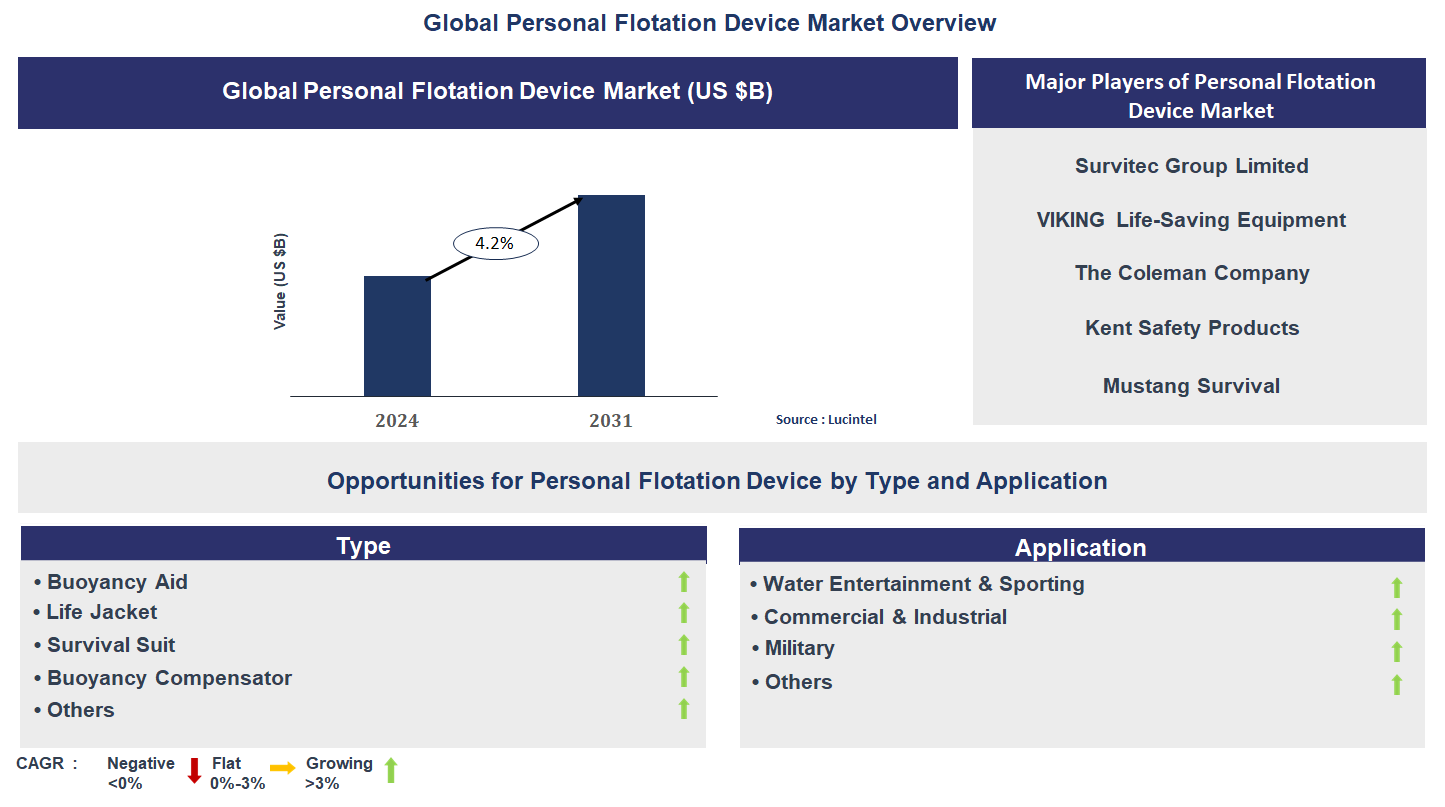
The future of the global personal flotation device market looks promising with opportunities in the water entertainment & sporting, commercial & industrial, and military markets. The global personal flotation device market is expected to grow with a CAGR of 4.2% from 2025 to 2031. The major drivers for this market are the increasing focus on water safety, the rising participation in water sports, and the growing awareness of drowning prevention.• Lucintel forecasts that, within the type category, life jacket is expected to witness the highest growth over the forecast period.
• Within the application category, water entertainment & sporting is expected to witness the highest growth.
• In terms of region, APAC is expected to witness the highest growth over the forecast period. Gain valuable insights for your business decisions with our comprehensive 150+ page report. Sample figures with some insights are shown below.
Emerging Trends in the Personal Flotation Device Market
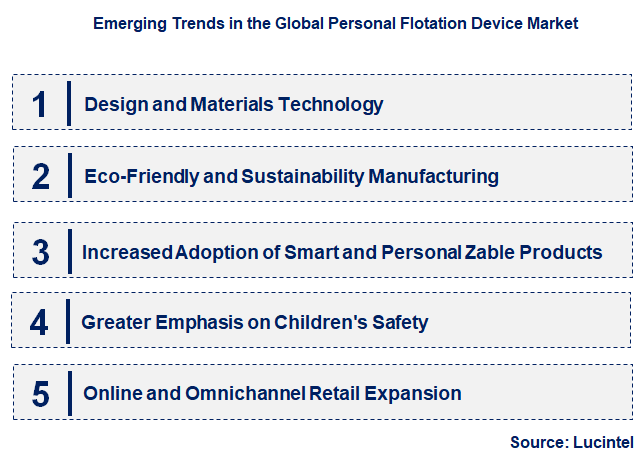
The market for personal flotation device is being transformed at its core, with various emerging trends defining its future. These new developments extend beyond elementary buoyancy, emphasizing increased user comfort, technological advancement, and sustainability. With a growth in popularity of water sports and awareness of safety, the market is compensating by developing sophisticated, user-friendly, and specialized products that are more innovative.• Design and Materials Technology: One of the dominant trends is the incorporation of high-tech technology and materials. Companies are incorporating lightweight, breathable materials and rapid drying materials to enhance wearer comfort. Examples of innovations include automatically deploying PFDs and intelligent devices with built-in sensors, GPS locators, and emergency lights. These technologies are enhancing the reliability and performance of PFDs as well as attracting a technically savvy buyer that is looking for integrated safety technology.
• Eco-Friendly and Sustainability Manufacturing: Sustainability is a major trend. More and more manufacturers are going green by using eco-friendly materials, like recycled materials and bio based foams, to minimize environmental impact. The trend is fueled by heightened consumer consciousness and a demand for eco-friendly products. Green manufacturing-focused companies are acquiring a competitive edge and helping make their industry more sustainable.
• Increased Adoption of Smart and Personal Zable Products: The market is changing with the use of smart and personalized PFDs. The products have built-in sensors, Bluetooth location tracking, and customizable fit adjustments. Consumers, especially in the recreational market, are looking for products that marry comfort, fashion, and advanced safety features. The trend is driving increased product innovation and enabling higher levels of personalization, which satisfies diverse segments of water sports enthusiasts.
• Greater Emphasis on Children’s Safety: One of the most significant trends is greater importance being placed on children’s water safety. As a result, PFDs for infants and children have been developed with special features offering improved buoyancy and comfort. Governments and agencies are also creating awareness on why and when PFDs should be used for children. This attention is building a solid and increasing market segment for children PFDs, with parental concern and regulatory requirements driving it.
• Online and Omnichannel Retail Expansion: Expansion of online and omnichannel retail is an essential trend. Consumers are more and more utilizing e-commerce websites as a platform to learn about and buy PFDs. This enables them to get access to a broader range of products and brands. Producers are adjusting by enhancing their platforms and logistics online. The development of digital channels is increasing the accessibility of PFDs and altering conventional forms of distribution, establishing a new opportunity for selling and market access. These tendencies are basically remapping the personal flotation device market. The shift towards technological integration and environmentally friendly materials is generating a new generation of high value, innovative products. The need for intelligent and flexible devices indicates a more sophisticated consumer. With the growth in online shopping, PFDs are increasingly within reach. The increased emphasis on safety, especially of children, is building a key and rapidly expanding market segment. All these trends are propelling the market to a more technologically advanced, consumer-oriented, and safer future.
Recent Development in the Personal Flotation Device Market
The personal flotation device industry has experienced numerous significant developments over the past few years, demonstrating an agile response to shifting consumer trends, technology, and legislation. These developments are taking the industry away from fundamental safety gear and towards a new generation of innovation and specialization. Today’s market is more concerned with producing products that are more comfortable, easy to use, and designed for particular activities and demographics. These advances are not only increasing security but also inducing a strong growth in many sectors.• Technological Innovation and Material Advancements: There have been noteworthy advancements in the application of new materials and technology. These involve the extensive use of lightweight and breathable materials, and also instant drying materials. Developers are also incorporating new technologies, including auto-inflation systems and intelligent safety markers, to enhance both safety and comfort. These innovations play a key role in gaining the attention of a new age of consumers who care about both functionality and aesthetics.
• Stringent Regulatory Standards and Enforcement: One significant advance is government agencies such as the US Coast Guard enforcing stricter safety standards and regulations. These enforce the use of PFDs across a range of water sports and activities, as well as a performance standard that manufacturers must meet. This has fostered a culture of responsible market and fueled demand for high quality, certified products, expanding the overall market for reliable and safe PFDs.
• Growing Adoption in Water Sports: The industry has witnessed a significant growth in the growing popularity of water sports like kayaking, paddle boarding, and fishing. This has resulted in enhanced demand for PFDs that provide improved mobility and comfort. This trend has broadened the market from mainstream boating and commercial uses to new opportunities for diversification and expansion.
• Direct-to-Consumer and E-commerce Growth: The emergence of strong e-commerce platforms has revolutionized the PFD industry. Brands are now selling directly to consumers online, with improved product offerings and convenience. This direct model is revolutionizing retail, putting PFDs in front of a broader global audience and allowing smaller brands to compete effectively with big players.
• Aesthetic and Ergonomic Design: There is also increased emphasis on the aesthetic and ergonomic design of PFDs. Manufacturers have shifted away from clunky, uncomfortable life jackets and are now producing more fashion-forward, sleeker, and comfortable ones. This design focus is instrumental in promoting consistent wear and is attractive to consumers who desire PFDs that not only are safe but also look good for recreational use. All these advances are collectively influencing the personal flotation device market by stimulating growth and widening its scope. The emphasis on technology, regulation, and aesthetics is making the industry more sophisticated and consumer-oriented. The rise of e-commerce is increasing accessibility, and the popularity of water sports is increasing the reach of the market. As a result, the market is evolving to be more dynamic, competitive, and adaptive to the varying needs of its end consumers.
Strategic Growth Opportunities in the Personal Flotation Device Market
The personal flotation device market provides a number of strategic growth opportunities in the major applications, spurred by a mix of changing consumer tastes, technological advancements, and widening end-use industries. Firms need to concentrate on the creation of specialized products catering to particular requirements and niches to benefit from these opportunities. Through strategic targeting of such areas, businesses are not only able to generate top-line growth, but a more solid market footing and improved water safety as well.• Kids and Youth Market Segment: One growth area exists in the youth and children’s market. As parents become more aware of water safety and family water sports gain popularity, there is a high market demand for safe, snug, and attractive PFDs for kids. Companies can create a special product line that incorporates child-oriented designs, colors, and adjustable sizes. This market is supported by recreational and institutional demand, like summer camps and swimming sport programs.
• Industrial and Commercial Uses: The market provides excellent opportunities in industrial and commercial applications like oil and gas, fishing, and naval industries. Strong safety standards and the necessity for durable equipment for professionals in hostile marine environments are fueling demand. Businesses can target creating heavy duty PFDs with improved durability, high visuality properties, and built-in tools for specialized tasks. This usage sector demands products that have strong performance and safety criteria.
• Intelligent PFDs with Integrated Technology: Creating intelligent PFDs is a prime growth area. They can be equipped with GPS, communication devices, and biometric sensors to track the health and location of the wearer. This technology is especially useful for rescue efforts as well as work in offshore or remote areas. Adding these features allows them to create a more valuable product and lead the safety technology category.
• Personalization and Custom Solutions: Another strategic option is to provide customization and personal solutions. Customers, particularly in the recreational market, are more and more interested in PFDs that match their own body shape and activity requirements. Businesses can offer custom sizing options, color, and features. This technique can result in increased customer satisfaction and brand loyalty, enabling premium pricing and a distinctive position in the market.
• Green and Sustainable Product Lines: With the worldwide emphasis on sustainability, there is enormous opportunity for growth in creating environmentally friendly PFDs. Companies can design products from recycled materials, bio-based foams, and other environmentally friendly fabrics. With proper marketing of these products, companies can reach green-conscious consumers and stand apart from others. Not only does this address an expanding market niche, but it also helps build a more sustainable business. These strategic expansion opportunities will have a major influence on the Personal Flotation Device market. The emphasis on child safety and business uses responds to varied and expanding demands. The creation of intelligent and programmable PFDs is pushing the boundaries of product innovation and buyer experience. By embracing sustainability, organizations can attract a new consumer generation. Cumulatively, these prospects are driving market growth, promoting specialization, and making activities related to water safer for all.
Personal Flotation Device Market Driver and Challenges
The personal flotation device industry is influenced by an intricate arrangement of drivers and challenges that determine its growth pattern. The key drivers are based on increased awareness of safety and an overall rise in water-based leisure activities globally. Conversely, the industry is faced with substantial challenges such as economic fluctuations and the availability of counterfeit products. To appreciate this dynamic, it is instrumental for companies in the industry. The factors responsible for driving the personal flotation device market include: 1. Increasing Water Safety Awareness: One of the major drivers is the growing worldwide awareness of water safety and prevention of drowning. Governments, non-profit entities, and media campaigns are raising public awareness of the need to wear PFDs. Increased consciousness is creating increased use of PFDs among recreational boaters, swimmers, and water sports enthusiasts, thus creating higher market demand. 2. Expansion in Water Activities and Leisure Activities: Increased popularity of water activities like kayak, paddle board, and fishing is a key market influencer. With increasing participation in such leisure activities, demand for safe and comfortable PFDs is rising. The trend is not limited to developed economies but is also gaining momentum in emerging economies with rising middle classes and disposable income. 3. Strict Government Policies: Strict policies and mandates by maritime authorities like the US Coast Guard are a dominant force. These regulations mandate the use of tested life vests on recreational and commercial boats, making the market mandatory. A consistent demand is generated by adhering to these rules for certified and high quality PFDs, forming a stable support base for market expansion. 4. Advances in PFD Design and Materials: Technological advances are the main impetus. The availability of lighter, more comfortable, yet less bulky PFDs is motivating individuals to wear them every day. Innovations such as automatically inflating systems and ergonomic design are enhancing the user experience and presenting PFDs as an attractive piece of gear. 5. Development of Water Tourism and Marine Industry: Its expansion is another major force behind the growth of water tourism and marine industries, such as commercial shipping and aquaculture. Both of these industries need a huge quantity of PFDs in order to protect their workers from accidents. With institutional demand for this product and expansion of new marine facilities, there is a strong and increasing market for PFDs. Challenges in the personal flotation device market are: 1. Excessive Price of High Performance PFDs: The excessive price tag associated with sophisticated, high performance PFDs is one major hindrance. While there is a willingness to spend money on safety among consumers, the cost value associated with technologically developed or tailor-made devices may prove to be an entry barrier for price sensitive buyers or in developing countries. This restricts market coverage and can result in the sale of lower priced, less effective substitutes. 2. Counterfeit Product Prevalence: The market is substantially hindered by low quality and counterfeit products. Such counterfeit PFDs may not conform to safety requirements and can be risky to use. The presence of such goods degrades the sales of genuine brands, damages consumer confidence, and can negatively impact the image of the industry in general. 3. Lack of Awareness and Appropriate Choice: Despite increasing awareness, an issue still exists in informing consumers about various forms of PFDs and how to choose the most appropriate one for a particular activity. The technicality of PFD categories and their direct functions can confuse beginners and lead to utilizing an unsuitable device with insufficient protection. The personal flotation device industry is in a state of flux, fueled by upbeat forces such as growing safety consciousness and water sports popularity. Such drivers are compelling the market towards innovation and niche products. That said, the industry also has to deal with major challenges in the form of the expensive nature of sophisticated products and the widespread phenomenon of counterfeits. Effectively overcoming these challenges and riding on the drivers of growth will be critical to the continued development of the market as well as to the safety of people engaged in water sports across the globe.List of Personal Flotation Device Companies
Companies in the market compete on the basis of product quality offered. Major players in this market focus on expanding their manufacturing facilities, R&D investments, infrastructural development, and leverage integration opportunities across the value chain. With these strategies personal flotation device companies cater increasing demand, ensure competitive effectiveness, develop innovative products & technologies, reduce production costs, and expand their customer base. Some of the personal flotation device companies profiled in this report include-• Survitec Group Limited
• VIKING Life-Saving Equipment
• The Coleman Company
• Kent Safety Products
• Mustang Survival
• Hansen Protection
• Drarger
• Johnson Outdoors
• LALIZAS
• Secumar
Personal Flotation Device Market by Segment
The study includes a forecast for the global personal flotation device market by type, application, and region.Personal Flotation Device Market by Type [Value from 2019 to 2031]:
• Buoyancy Aid
• Life Jacket
• Survival Suit
• Buoyancy Compensator
• Others
Personal Flotation Device Market by Application [Value from 2019 to 2031]:
• Water Entertainment & Sporting
• Commercial & Industrial
• Military
• Others
Personal Flotation Device Market by Region [Value from 2019 to 2031]:
• North America
• Europe
• Asia Pacific
• The Rest of the World
Country Wise Outlook for the Personal Flotation Device Market
The world market for personal flotation device is experiencing a phase of unprecedented growth and innovation, fueled by an intersection of forces such as increased awareness of safety, growing water-based recreational pursuits, and changing regulatory environments. Advances in recent years in materials, design, and technology are changing the industry, taking PFDs from basic safety gear to more functional, comfortable, and even technology-enhanced apparatus.• United States: The United States is still a key hub in the global PFD industry, as a result of a well-established regulatory system and strict safety standards imposed by the US Coast Guard. Recent news involves the acceptance of new life jacket standards with a greater emphasis placed on enhanced buoyancy and comfort for various user groups, such as children. Producers such as Mustang Survival are leaders in innovation, incorporating cutting-edge materials and technologies to develop better-performing products. The market also witnesses a move towards lightweight, ergonomic, and digitally connected flotation equipment, demonstrating a consumer market desiring both safety and user experience.
• China: China’s evolution in the PFD market is marked by both a robust export-driven manufacturing base and increasing national safety focus. Urban governments are increasingly equipping emergency infrastructure with life-saving equipment, especially for flood-vulnerable and coastal cities. The industry is diversifying its product lines with integrated safety features such as reflective panels and signal aids. The combination of domestic safety programs and competitive production is making China a global player with numerous companies producing PFDs to international standards for recreational and industrial applications.
• Germany: Although the search results did not yield concrete information on the PFD market in Germany, being a key European economy with a high value placed on outdoor sports and marine-based industries indicates the presence of a market focused on high standards of safety and quality. The German market is likely to follow wider European trends towards the use of technologically sophisticated and environmentally friendly PFDs. German consumers generally emphasize durability and dependability, and these would affect product development and sales in this market.
• India: The PFD market in India is seeing a strong growth boost on the back of the development of water sports and the tourism sector. The growing participation of the populace in leisure activities has contributed to a consistent increase in the usage of PFDs. The market is bolstered by small and medium enterprise growth in the industry. Also, firms are adopting competitive tactics such as strategic alliances and new product offerings to increase their market penetration. The demand for intrinsically buoyant PFDs is especially high because of their easy and dependable design.
• Japan: Japan’s market for PFDs is increasing steadily thanks to its peculiar geographic attribute as an island country and rising demand for water sports. The leisure segment enjoys a major share of the market owing to the growth in disposable incomes. The market is also affected by the choice for naturally buoyant equipment, which is much sought after for their trustworthiness and simplicity of use, especially among non-swimmers and children. Nevertheless, the market is confronted by low-quality and fake products, which hamper the integrity of established brands and pose a danger to consumers.

Features of the Global Personal Flotation Device Market
Market Size Estimates: Personal flotation device market size estimation in terms of value ($B). Trend and Forecast Analysis: Market trends (2019 to 2024) and forecast (2025 to 2031) by various segments and regions. Segmentation Analysis: Personal flotation device market size by type, application, and region in terms of value ($B). Regional Analysis: Personal flotation device market breakdown by North America, Europe, Asia Pacific, and Rest of the World. Growth Opportunities: Analysis of growth opportunities in different types, applications, and regions for the personal flotation device market. Strategic Analysis: This includes M&A, new product development, and competitive landscape of the personal flotation device market. Analysis of competitive intensity of the industry based on Porter’s Five Forces model.
FAQ
Q1. What is the growth forecast for personal flotation device market? Answer: The global personal flotation device market is expected to grow with a CAGR of 4.2% from 2025 to 2031. Q2. What are the major drivers influencing the growth of the personal flotation device market? Answer: The major drivers for this market are the increasing focus on water safety, the rising participation in water sports, and the growing awareness of drowning prevention. Q3. What are the major segments for personal flotation device market? Answer: The future of the personal flotation device market looks promising with opportunities in the water entertainment & sporting, commercial & industrial, and military markets. Q4. Who are the key personal flotation device market companies? Answer: Some of the key personal flotation device companies are as follows:• Survitec Group Limited
• VIKING Life-Saving Equipment
• The Coleman Company
• Kent Safety Products
• Mustang Survival
• Hansen Protection
• Drarger
• Johnson Outdoors
• LALIZAS
• Secumar Q5. Which personal flotation device market segment will be the largest in future? Answer: Lucintel forecasts that, within the type category, life jacket is expected to witness the highest growth over the forecast period. Q6. In personal flotation device market, which region is expected to be the largest in next 5 years? Answer: In terms of region, APAC is expected to witness the highest growth over the forecast period. Q7. Do we receive customization in this report? Answer: Yes, Lucintel provides 10% customization without any additional cost.
Table of Contents
List of Figures
List of Tables
Methodology
- In-depth interviews of the major players in this market
- Detailed secondary research from competitors’ financial statements and published data
- Extensive searches of published works, market, and database information pertaining to industry news, company press releases, and customer intentions
- A compilation of the experiences, judgments, and insights of Lucintel’s professionals, who have analyzed and tracked this market over the years.


Buy Now
Choose a license that fits your team. Instant PDF delivery.
Prices exclude taxes. Instant delivery. Custom licensing available on request.
Key Questions
- • What are some of the most promising, high-growth opportunities for the personal flotation device market by type (buoyancy aid, life jacket, survival suit, buoyancy compensator, and others), application (water entertainment & sporting, commercial & industrial, military, and others), and region (North America, Europe, Asia Pacific, and the Rest of the World)?
- • Which segments will grow at a faster pace and why?
- • Which region will grow at a faster pace and why?
- • What are the key factors affecting market dynamics? What are the key challenges and business risks in this market?
- • What are the business risks and competitive threats in this market?
- • What are the emerging trends in this market and the reasons behind them?
- • What are some of the changing demands of customers in the market?
- • What are the new developments in the market? Which companies are leading these developments?
- • Who are the major players in this market? What strategic initiatives are key players pursuing for business growth?
- • What are some of the competing products in this market and how big of a threat do they pose for loss of market share by material or product substitution?
- • What M&A activity has occurred in the last 5 years and what has its impact been on the industry? For any questions related to Personal Flotation Device Market, Personal Flotation Device Market Size, Personal Flotation Device Market Growth, Personal Flotation Device Market Analysis, Personal Flotation Device Market Report, Personal Flotation Device Market Share, Personal Flotation Device Market Trends, Personal Flotation Device Market Forecast, Personal Flotation Device Companies, write Lucintel analyst at email: helpdesk@lucintel.com. We will be glad to get back to you soon.


