
Report Feature
Peanut Allergy Therapeutic Market Trends and Forecast
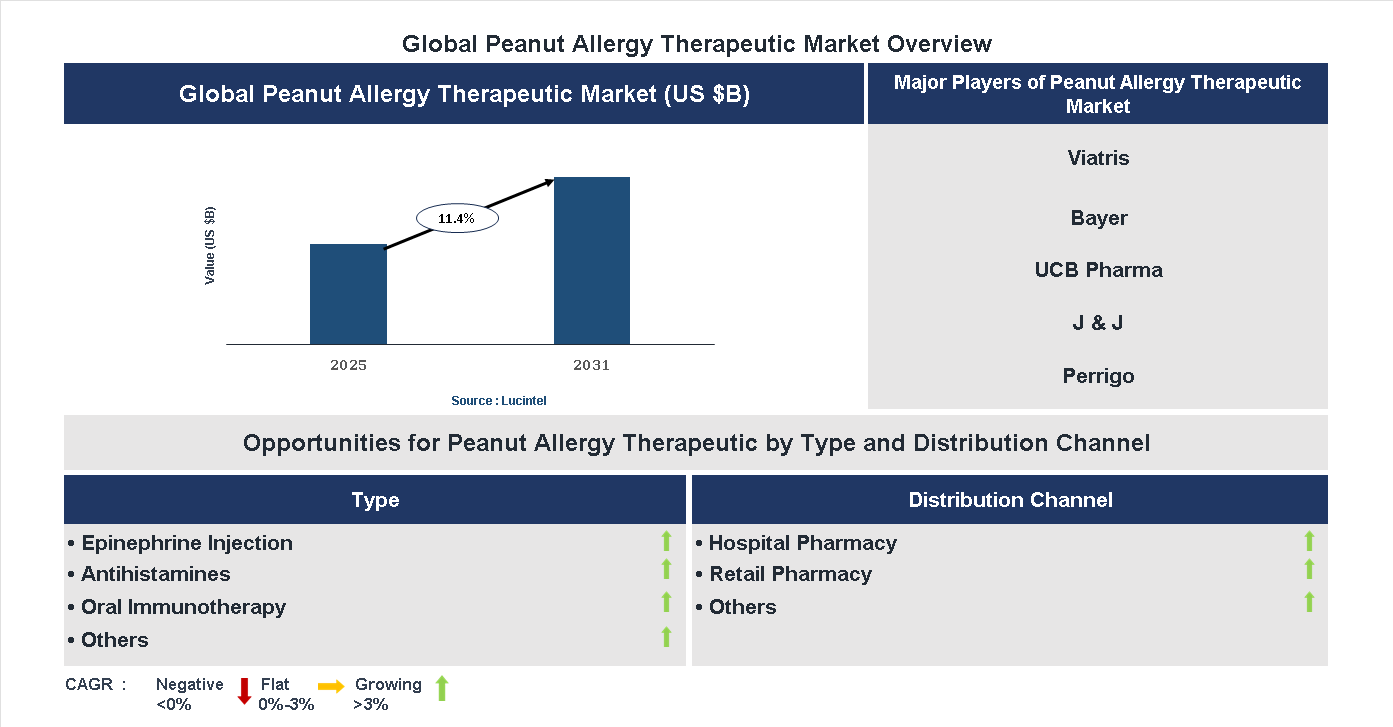
The future of the global peanut allergy therapeutic market looks promising with opportunities in the hospital pharmacy and retail pharmacy markets. The global peanut allergy therapeutic market is expected to grow with a CAGR of 11.4% from 2025 to 2031. The major drivers for this market are the increasing prevalence of peanut allergies, the rising demand for effective allergy treatments, and the growing awareness of peanut allergy risks.• Lucintel forecasts that, within the type category, oral immunotherapy is expected to witness the highest growth over the forecast period.
• Within the distribution channel category, hospital pharmacy is expected to witness higher growth.
• In terms of region, APAC is expected to witness the highest growth over the forecast period. Gain valuable insights for your business decisions with our comprehensive 150+ page report. Sample figures with some insights are shown below.
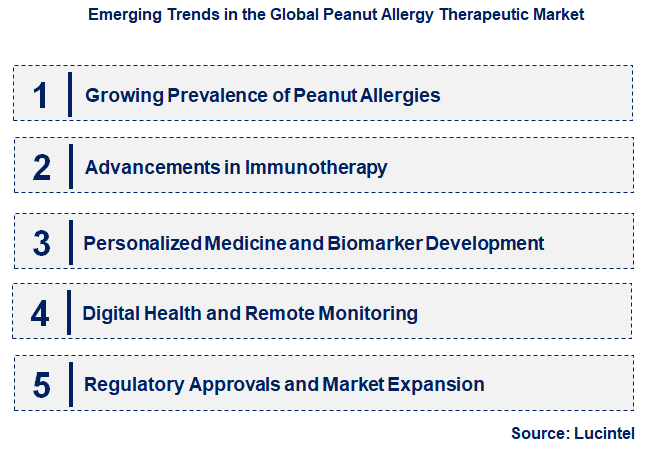
Emerging Trends in the Peanut Allergy Therapeutic Market
The peanut allergy therapeutic market is experiencing rapid growth driven by increasing awareness, advancements in medical research, and a rising prevalence of peanut allergies worldwide. As consumers and healthcare providers seek effective treatments, innovative therapies are emerging, transforming how peanut allergies are managed. These developments are not only expanding treatment options but also improving patients quality of life. The market is also witnessing a shift towards personalized medicine and digital health integration, which are shaping future strategies. This dynamic environment presents significant opportunities for pharmaceutical companies, biotech firms, and healthcare providers to collaborate and innovate, ultimately aiming to reduce allergy-related risks and enhance patient outcomes.• Growing Prevalence of Peanut Allergies: The increasing incidence of peanut allergies globally is a primary driver for market expansion. Factors such as urbanization, dietary changes, and environmental influences contribute to rising cases, creating a higher demand for effective therapies. This trend underscores the urgent need for innovative treatments that can offer long-term relief or potential cures, prompting significant investment in research and development. As awareness grows among consumers and healthcare providers, the market is poised for sustained growth, with a focus on early diagnosis and intervention strategies.
• Advancements in Immunotherapy: Immunotherapy remains at the forefront of therapeutic innovations in this market. New approaches, including oral, sublingual, and epicutaneous immunotherapies, are showing promising results in desensitizing patients to peanut allergens. These therapies aim to modify the immune response, reducing the severity of allergic reactions over time. The development of standardized protocols and improved safety profiles is enhancing their adoption. This trend is revolutionizing treatment paradigms, shifting from avoidance strategies to active immune modulation, thereby offering hope for long-term tolerance and improved quality of life for patients.
• Personalized Medicine and Biomarker Development: The shift towards personalized treatment plans is gaining momentum, driven by advances in genomics and biomarker research. Identifying specific genetic and immune response markers enables tailored therapies that are more effective and have fewer side effects. This approach allows clinicians to predict patient responses and customize treatment regimens accordingly. The integration of personalized medicine is expected to improve success rates, reduce adverse events, and optimize resource utilization, ultimately transforming the therapeutic landscape and making treatments more patient-centric.
• Digital Health and Remote Monitoring: The integration of digital health technologies is significantly impacting the peanut allergy market. Mobile apps, wearable devices, and telemedicine platforms facilitate remote monitoring of allergic reactions and adherence to treatment protocols. These tools enhance patient engagement, enable real-time data collection, and improve communication between patients and healthcare providers. Digital health solutions are also supporting clinical trials and research by providing valuable insights into patient responses. This trend is making allergy management more accessible, personalized, and efficient, thereby expanding market reach and improving overall patient outcomes.
• Regulatory Approvals and Market Expansion: Increasing regulatory approvals for novel peanut allergy therapies are accelerating market growth. Regulatory agencies are providing clearer pathways for innovative treatments, encouraging investment and development. Market expansion is also driven by the entry of new players and collaborations between biotech firms and pharmaceutical companies. Additionally, expanding insurance coverage and reimbursement policies are making therapies more accessible to a broader patient population. These regulatory and market dynamics are fostering a competitive environment that promotes innovation, ultimately leading to a wider array of effective treatment options and improved patient access. In summary, these emerging trends are collectively reshaping the peanut allergy therapeutic market by fostering innovation, improving treatment efficacy, and enhancing patient engagement. The focus on personalized medicine, digital integration, and regulatory support is driving growth and transforming allergy management from avoidance to active immune modulation. As these trends continue to evolve, they promise a future with more effective, accessible, and patient-centric therapies, significantly improving the quality of life for individuals with peanut allergies.
Recent Development in the Peanut Allergy Therapeutic Market
The peanut allergy therapeutic market has experienced significant growth driven by increasing prevalence of peanut allergies worldwide, advancements in biotechnology, and rising awareness about allergy management. Innovations in treatment options, including immunotherapies and biologics, are transforming patient care. Regulatory approvals and investments from pharmaceutical companies are further accelerating market expansion. Additionally, the focus on personalized medicine and improved diagnostic tools is shaping future strategies. These developments reflect a dynamic landscape aimed at providing safer, more effective solutions for individuals with peanut allergies, ultimately improving quality of life and reducing allergy-related risks.• Introduction of Oral Immunotherapy: OIT has gained prominence as a promising treatment, enabling patients to build tolerance to peanuts through controlled exposure. Its impact includes increased adoption among healthcare providers and patients, leading to a shift from avoidance strategies to active management. OIT has shown to reduce severe allergic reactions, improving patient confidence and safety. Ongoing clinical trials aim to optimize protocols, making OIT more accessible and effective. This development is pivotal in transforming peanut allergy management from reactive to proactive care.
• Approval of Biologic Therapies: Recently approved biologics, such as anti-IgE therapies, have marked a breakthrough in allergy treatment. These therapies target specific immune pathways, reducing allergic responses and severity. Their impact includes providing options for patients with severe allergies who do not respond well to traditional therapies. Biologics have demonstrated significant efficacy in clinical trials, leading to increased market interest and investment. This development enhances personalized treatment approaches and offers hope for long-term allergy control, reducing emergency incidents and improving patient quality of life.
• Advances in Diagnostic Technologies: Innovations in diagnostics, including component-resolved diagnostics and molecular testing, have improved allergy detection accuracy. These tools enable precise identification of allergen components, facilitating tailored treatment plans. The impact is a reduction in misdiagnosis and unnecessary dietary restrictions, leading to better patient outcomes. Enhanced diagnostics also support monitoring treatment efficacy and predicting allergy persistence. This development fosters a more targeted approach to allergy management, reducing healthcare costs and improving patient satisfaction.
• Rising Investment and Strategic Collaborations: Increased funding from pharmaceutical companies and strategic partnerships is fueling research and development in peanut allergy therapeutics. These collaborations accelerate innovation, clinical trials, and regulatory approvals. The impact includes a broader pipeline of potential therapies and faster market entry. Investment also supports manufacturing scale-up and distribution, making treatments more accessible. This trend signifies strong industry confidence in the market’s growth potential and is crucial for bringing novel, effective therapies to patients sooner.
• Regulatory Approvals and Policy Changes: Recent regulatory approvals have streamlined the pathway for new peanut allergy treatments, encouraging innovation. Policy changes promoting allergy awareness and management programs have increased market visibility. The impact involves faster access to therapies for patients and increased adoption by healthcare providers. Regulatory support also boosts investor confidence and stimulates further research. These developments are essential for establishing a robust framework that sustains market growth and ensures patient safety through rigorous standards. In summary, these key developments are collectively transforming the peanut allergy therapeutic market by enhancing treatment efficacy, safety, and accessibility. The integration of innovative therapies, advanced diagnostics, strategic investments, and supportive policies is driving market expansion. As a result, patients benefit from more personalized, effective management options, reducing the burden of peanut allergies and improving overall health outcomes.
Strategic Growth Opportunities in the Peanut Allergy Therapeutic Market
The peanut allergy therapeutic market is experiencing rapid growth driven by increasing prevalence of peanut allergies, advancements in treatment options, and heightened awareness among consumers and healthcare providers. As research progresses, new therapies are emerging, creating significant opportunities for market expansion across various applications. These developments are poised to improve patient outcomes, reduce healthcare costs, and expand access to effective treatments. The markets evolution is also influenced by regulatory support and technological innovations, which facilitate the development and adoption of novel therapies. Understanding these key growth opportunities across different applications is essential for stakeholders aiming to capitalize on this expanding market.• Immunotherapy Development: The rise of oral and epicutaneous immunotherapies is transforming treatment options by offering long-term allergy desensitization, reducing the risk of severe reactions, and improving patient quality of life. This approach is expected to dominate the market, attracting significant investment and research focus.
• Biologic and Monoclonal Antibodies: The development of biologics and monoclonal antibodies targeting specific immune pathways offers promising therapeutic options. These therapies can provide more precise and effective management of peanut allergies, especially for severe cases, thereby expanding treatment options.
• Diagnostic and Monitoring Tools: Advanced diagnostic tools, including component-resolved diagnostics and biomarkers, enable more accurate allergy identification and monitoring. These innovations improve personalized treatment plans and facilitate early intervention, impacting market growth positively.
• Preventive Vaccines: Research into preventive vaccines aims to reduce the incidence of peanut allergies, especially in high-risk populations. Successful development of such vaccines could shift the market from treatment to prevention, significantly altering the landscape.
• Digital Health and Patient Engagement: The integration of digital platforms, mobile apps, and telemedicine enhances patient engagement, adherence to therapies, and remote monitoring. These technologies improve treatment outcomes and expand access, especially in underserved regions. In summary, these key growth opportunities are significantly impacting the peanut allergy therapeutic market by driving innovation, improving patient outcomes, and expanding access to effective therapies. The market is poised for substantial growth as these developments continue to evolve, offering new hope for individuals affected by peanut allergies and creating lucrative opportunities for industry stakeholders.
Peanut Allergy Therapeutic Market Driver and Challenges
The peanut allergy therapeutic market is influenced by a variety of technological, economic, and regulatory factors that shape its growth trajectory. Advances in biotechnology and immunotherapy are driving innovation, while increasing awareness and prevalence of peanut allergies are expanding market demand. Regulatory approvals and safety standards also play a crucial role in shaping product development and commercialization. Economic factors such as healthcare spending and insurance coverage impact accessibility and affordability. However, the market faces challenges including stringent regulatory hurdles, high R&D costs, and safety concerns related to new therapies. Understanding these drivers and challenges is essential for stakeholders aiming to capitalize on emerging opportunities and navigate potential risks. The factors responsible for driving the peanut allergy therapeutic market include:• Technological Advancements: The development of novel immunotherapies, such as oral, sublingual, and epicutaneous treatments, has revolutionized peanut allergy management. These innovations offer potential for long-term desensitization, improving patients quality of life. Cutting-edge research into biologics and personalized medicine further enhances therapeutic options. As technology progresses, the efficacy and safety profiles of these treatments are expected to improve, encouraging adoption among healthcare providers and patients. This continuous innovation fuels market growth by expanding treatment options and increasing confidence in allergy management.
• Rising Prevalence of Peanut Allergies: The increasing incidence of peanut allergies worldwide, especially among children, is a significant driver. Factors such as urbanization, dietary changes, and environmental influences contribute to this rise. As awareness grows among parents, caregivers, and healthcare professionals, demand for effective therapies intensifies. This trend compels pharmaceutical companies to invest in research and develop targeted treatments, thereby expanding the market. The growing burden of peanut allergies underscores the urgent need for effective therapeutic solutions, propelling market expansion.
• Regulatory Approvals and Support: Regulatory agencies like the FDA and EMA are actively approving and supporting innovative peanut allergy therapies. These approvals validate the safety and efficacy of new treatments, encouraging market players to invest in product development. Regulatory frameworks also facilitate clinical trials and streamline approval processes, accelerating time-to-market. Government initiatives and funding for allergy research further bolster industry growth. Clear regulatory pathways reduce uncertainties, attract investments, and foster innovation, ultimately expanding the therapeutic options available to patients.
• Increasing Healthcare Expenditure: Rising healthcare spending globally enhances access to advanced peanut allergy treatments. Governments and private insurers are increasingly covering novel therapies, reducing out-of-pocket costs for patients. This financial support encourages more individuals to seek treatment, thereby expanding the market. Additionally, increased investment in healthcare infrastructure and specialist clinics improves diagnosis and management of peanut allergies. As healthcare expenditure continues to grow, so does the capacity to develop, approve, and distribute innovative therapies, fueling market growth.
• Growing Awareness and Education: Enhanced awareness campaigns and educational initiatives about peanut allergies and available treatments are driving market growth. Patients and caregivers are more informed about the risks and management options, leading to increased demand for effective therapies. Healthcare professionals are also better equipped to diagnose and recommend appropriate treatments. This heightened awareness reduces stigma and promotes early intervention, which is crucial for allergy management. As education efforts expand, market penetration improves, and demand for therapeutic solutions increases, supporting overall industry expansion. The challenges facing this peanut allergy therapeutic market include:
• Stringent Regulatory Hurdles: Navigating complex regulatory requirements for new peanut allergy therapies poses significant challenges. Approval processes involve extensive clinical trials to demonstrate safety and efficacy, which can be time-consuming and costly. Regulatory agencies may impose strict standards, delaying product launches and increasing R&D expenses. Variability in regulations across regions further complicates global market entry. These hurdles can hinder innovation, limit market access, and impact profitability, requiring companies to allocate substantial resources to compliance and regulatory strategy.
• High Research and Development Costs: Developing effective peanut allergy therapies involves substantial investment in research, clinical trials, and manufacturing. The high costs associated with R&D can be prohibitive, especially for smaller companies, limiting innovation. Additionally, the lengthy development timelines increase financial risks, with uncertain outcomes and potential failures. Securing funding and managing costs are ongoing challenges that can slow down the introduction of new therapies. These financial barriers restrict the pace of market growth and innovation within the industry.
• Safety and Efficacy Concerns: Ensuring the safety and long-term efficacy of peanut allergy treatments remains a critical challenge. Adverse reactions during clinical trials or post-market use can hinder approval and acceptance. Variability in patient responses complicates treatment standardization. Concerns about potential allergic reactions or side effects may lead to hesitancy among healthcare providers and patients. Addressing these safety issues requires rigorous testing and monitoring, which can extend development timelines and increase costs. Overcoming safety concerns is essential for widespread adoption and market confidence. In summary, the peanut allergy therapeutic market is driven by technological innovations, rising prevalence, regulatory support, increased healthcare spending, and heightened awareness. However, it faces challenges such as regulatory complexities, high R&D costs, and safety concerns. These factors collectively influence the pace of market growth, with opportunities for innovation and expansion tempered by regulatory and safety hurdles. Strategic navigation of these drivers and challenges will be crucial for stakeholders aiming to capitalize on the evolving landscape and improve patient outcomes in peanut allergy management.
List of Peanut Allergy Therapeutic Companies
Companies in the market compete on the basis of product quality offered. Major players in this market focus on expanding their manufacturing facilities, R&D investments, infrastructural development, and leverage integration opportunities across the value chain. With these strategies peanut allergy therapeutic companies cater increasing demand, ensure competitive effectiveness, develop innovative products & technologies, reduce production costs, and expand their customer base. Some of the peanut allergy therapeutic companies profiled in this report include-• Viatris
• Bayer
• UCB Pharma
• J & J
• Perrigo
• GSK
• Kaleo
• Amneal Pharma
• ALK Abello
• Aimmune Therapeutics
Peanut Allergy Therapeutic Market by Segment
The study includes a forecast for the global peanut allergy therapeutic market by type, distribution channel, and region.Peanut Allergy Therapeutic Market by Type [Value from 2019 to 2031]:
• Epinephrine Injection
• Antihistamines
• Oral Immunotherapy
• Others
Peanut Allergy Therapeutic Market by Distribution Channel [Value from 2019 to 2031]:
• Hospital Pharmacy
• Retail Pharmacy
• Others
Peanut Allergy Therapeutic Market by Region [Value from 2019 to 2031]:
• North America
• Europe
• Asia Pacific
• The Rest of the World
Country Wise Outlook for the Peanut Allergy Therapeutic Market
The peanut allergy therapeutic market has experienced significant growth driven by increasing awareness, advancements in treatment options, and rising prevalence of peanut allergies worldwide. As research progresses, new therapies and innovative approaches are emerging to improve patient outcomes. Regulatory approvals and investments in biotech are also shaping the landscape, making treatments more accessible and effective. Different countries are adopting varied strategies based on healthcare infrastructure, regulatory environment, and population needs. This dynamic environment reflects a global effort to address peanut allergies more effectively, with ongoing developments promising better management and potential cures in the near future.• United States: The US market has seen rapid advancements with the approval of several immunotherapy products, such as Palforzia, which is the first FDA-approved peanut allergy treatment. Increased awareness campaigns and research funding have boosted market growth. Innovative approaches like oral immunotherapy (OIT) and epicutaneous immunotherapy (EPIT) are gaining popularity. The healthcare infrastructure supports extensive clinical trials, and insurance coverage is expanding, making treatments more accessible. Additionally, startups and biotech firms are investing heavily in developing novel therapies, further accelerating market expansion.
• China: China’s peanut allergy therapeutic market is emerging, driven by rising allergy prevalence and increasing healthcare investments. Regulatory pathways are becoming more streamlined, encouraging local biotech companies to develop innovative treatments. Public awareness campaigns are improving diagnosis rates, and government initiatives are supporting allergy research. The market is characterized by a focus on traditional and novel immunotherapies, with collaborations between domestic and international firms. Although still in early stages compared to Western markets, China’s market is poised for rapid growth due to expanding healthcare infrastructure and increasing consumer demand for allergy management solutions.
• Germany: Germany’s market is mature, with a strong focus on clinical research and innovative therapies. The country benefits from a well-established healthcare system that supports advanced immunotherapy options. Recent developments include the approval of new biologics and personalized treatment approaches. Germany is also a hub for allergy research, hosting numerous clinical trials and collaborations with European institutions. The emphasis on patient safety and regulatory compliance ensures high-quality treatment options. Market growth is driven by increasing awareness, improved diagnostic techniques, and a rising number of allergy sufferers seeking effective therapies.
• India: India’s peanut allergy therapeutic market is in its nascent stages but growing rapidly due to increasing awareness and urbanization. The government’s focus on healthcare infrastructure development and allergy research is fostering market expansion. Local companies are exploring affordable immunotherapy options, and international firms are entering the market through partnerships. Rising prevalence of food allergies, coupled with improved diagnostic facilities, is fueling demand. The market is characterized by a focus on cost-effective solutions and innovative delivery methods, such as sublingual immunotherapy (SLIT). Overall, India presents significant growth opportunities for peanut allergy therapeutics.
• Japan: Japan’s market is characterized by high healthcare standards and advanced research capabilities. Recent developments include the approval of novel immunotherapy treatments and ongoing clinical trials for personalized allergy management. The country’s aging population and increasing allergy awareness are driving demand for effective therapies. Japan emphasizes safety and efficacy, with strict regulatory standards supporting high-quality products. The integration of digital health tools and patient-centric approaches is also notable. Market growth is supported by government initiatives promoting allergy research and the presence of leading biotech firms. Japan remains a key player in advancing peanut allergy treatment options globally.

Features of the Global Peanut Allergy Therapeutic Market
Market Size Estimates: Peanut allergy therapeutic market size estimation in terms of value ($B). Trend and Forecast Analysis: Market trends (2019 to 2024) and forecast (2025 to 2031) by various segments and regions. Segmentation Analysis: Peanut allergy therapeutic market size by type, distribution channel, and region in terms of value ($B). Regional Analysis: Peanut allergy therapeutic market breakdown by North America, Europe, Asia Pacific, and Rest of the World. Growth Opportunities: Analysis of growth opportunities in different types, distribution channels, and regions for the peanut allergy therapeutic market. Strategic Analysis: This includes M&A, new product development, and competitive landscape of the peanut allergy therapeutic market. Analysis of competitive intensity of the industry based on Porter’s Five Forces model.
FAQ
Q1. What is the growth forecast for peanut allergy therapeutic market? Answer: The global peanut allergy therapeutic market is expected to grow with a CAGR of 11.4% from 2025 to 2031. Q2. What are the major drivers influencing the growth of the peanut allergy therapeutic market? Answer: The major drivers for this market are the increasing prevalence of peanut allergies, the rising demand for effective allergy treatments, and the growing awareness of peanut allergy risks. Q3. What are the major segments for peanut allergy therapeutic market? Answer: The future of the peanut allergy therapeutic market looks promising with opportunities in the hospital pharmacy and retail pharmacy markets. Q4. Who are the key peanut allergy therapeutic market companies? Answer: Some of the key peanut allergy therapeutic companies are as follows:• Viatris
• Bayer
• UCB Pharma
• J & J
• Perrigo
• GSK
• Kaleo
• Amneal Pharma
• ALK Abello
• Aimmune Therapeutics Q5. Which peanut allergy therapeutic market segment will be the largest in future? Answer: Lucintel forecasts that, within the type category, oral immunotherapy is expected to witness the highest growth over the forecast period. Q6. In peanut allergy therapeutic market, which region is expected to be the largest in next 5 years? Answer: In terms of region, APAC is expected to witness the highest growth over the forecast period. Q7. Do we receive customization in this report? Answer: Yes, Lucintel provides 10% customization without any additional cost.
Table of Contents
List of Figures
List of Tables
Methodology
- In-depth interviews of the major players in this market
- Detailed secondary research from competitors’ financial statements and published data
- Extensive searches of published works, market, and database information pertaining to industry news, company press releases, and customer intentions
- A compilation of the experiences, judgments, and insights of Lucintel’s professionals, who have analyzed and tracked this market over the years.


Buy Now
Choose a license that fits your team. Instant PDF delivery.
Prices exclude taxes. Instant delivery. Custom licensing available on request.
Key Questions
- • What are some of the most promising, high-growth opportunities for the peanut allergy therapeutic market by type (epinephrine injection, antihistamines, oral immunotherapy, and others), distribution channel (hospital pharmacy, retail pharmacy, and others), and region (North America, Europe, Asia Pacific, and the Rest of the World)?
- • Which segments will grow at a faster pace and why?
- • Which region will grow at a faster pace and why?
- • What are the key factors affecting market dynamics? What are the key challenges and business risks in this market?
- • What are the business risks and competitive threats in this market?
- • What are the emerging trends in this market and the reasons behind them?
- • What are some of the changing demands of customers in the market?
- • What are the new developments in the market? Which companies are leading these developments?
- • Who are the major players in this market? What strategic initiatives are key players pursuing for business growth?
- • What are some of the competing products in this market and how big of a threat do they pose for loss of market share by material or product substitution?
- • What M&A activity has occurred in the last 5 years and what has its impact been on the industry? For any questions related to Peanut Allergy Therapeutic Market, Peanut Allergy Therapeutic Market Size, Peanut Allergy Therapeutic Market Growth, Peanut Allergy Therapeutic Market Analysis, Peanut Allergy Therapeutic Market Report, Peanut Allergy Therapeutic Market Share, Peanut Allergy Therapeutic Market Trends, Peanut Allergy Therapeutic Market Forecast, Peanut Allergy Therapeutic Companies, write Lucintel analyst at email: helpdesk@lucintel.com. We will be glad to get back to you soon.


