
Market Report · July 17, 2026

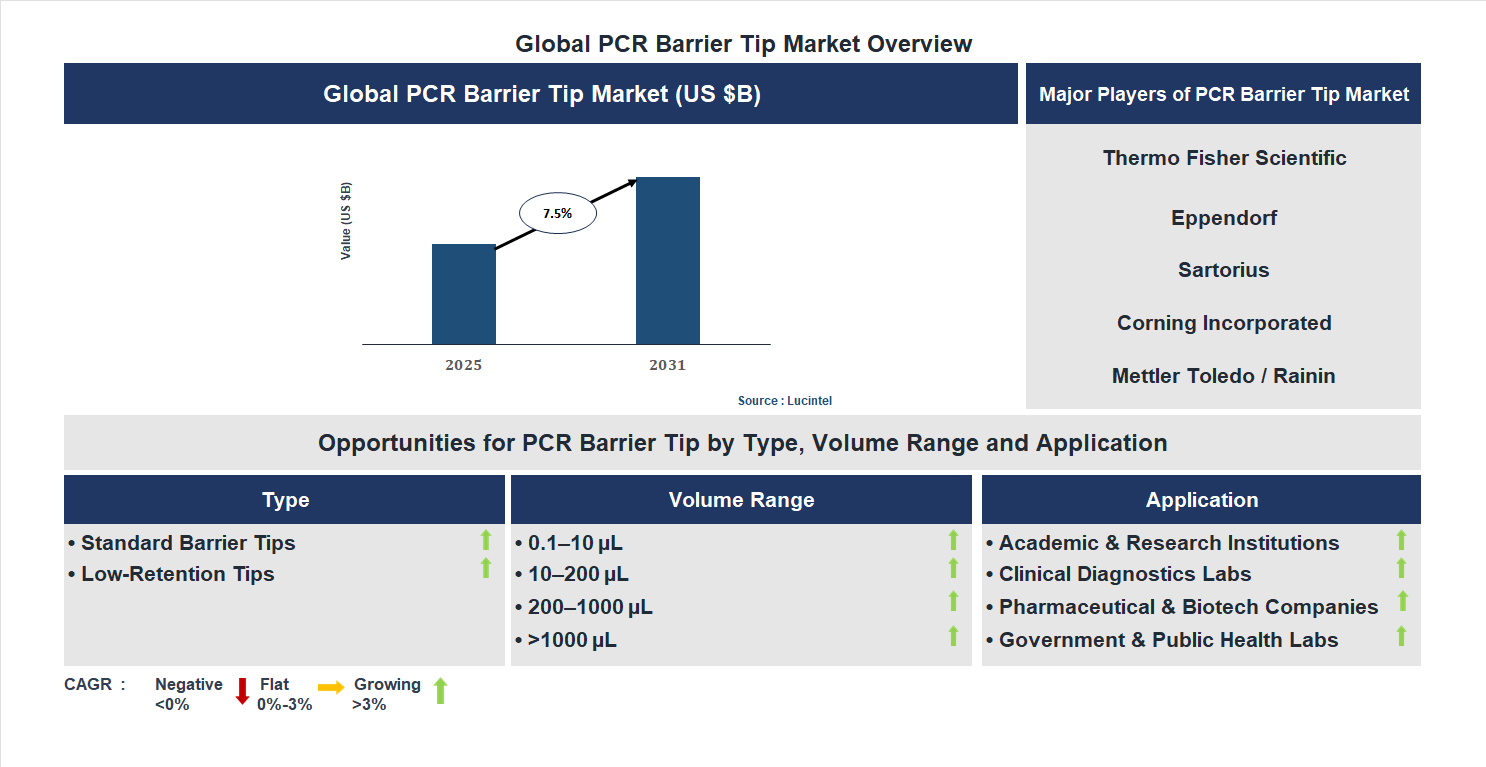
Key data points: The growth forecast = 7.5% annually for the next 6 years. Scroll below to get more insights. This market report covers trends, opportunities and forecasts in PCR barrier tip market to 2031 by type (standard barrier tips and low-retention tips), volume range (0.1–10 µl, 10–200 µl, 200–1000 µl, and >1000 µl), application (academic & research institutions, clinical diagnostics labs, pharmaceutical & biotech companies, and government & public health labs), and region (North America, Europe, Asia Pacific, and the Rest of the World)
We'll send your sample report shortly.
• Lucintel forecasts that, within the type category, standard barrier tip is expected to witness higher growth over the forecast period.
• Within the application category, pharmaceutical & biotech company is expected to witness the highest growth.
• In terms of region, APAC is expected to witness the highest growth over the forecast period. Gain valuable insights for your business decisions with our comprehensive 150+ page report. Sample figures with some insights are shown below.
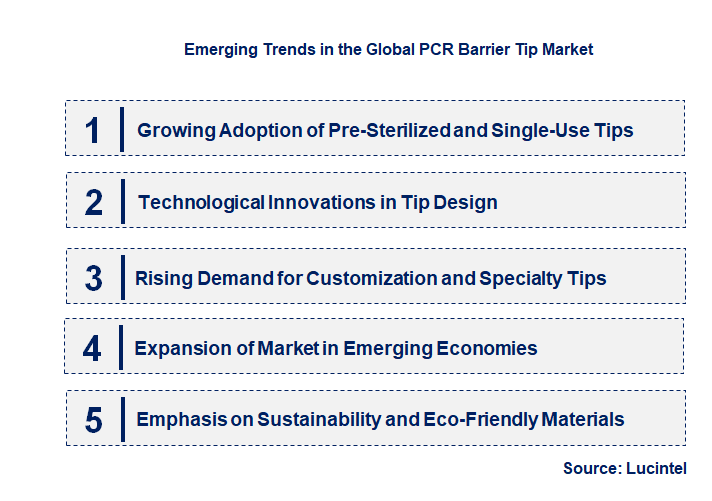
• Growing Adoption of Pre-Sterilized and Single-Use Tips: The demand for pre-sterilized, single-use PCR barrier tips is increasing due to their ability to prevent cross-contamination and ensure sample integrity. These tips eliminate the need for additional sterilization processes, saving time and reducing contamination risks. Their convenience and reliability are making them the preferred choice in high-throughput laboratories, thereby driving market growth. This trend underscores a shift towards more hygienic, efficient, and user-friendly laboratory consumables, ultimately improving the accuracy and reproducibility of PCR results.
• Technological Innovations in Tip Design: Advances in material science and manufacturing techniques are leading to the development of more precise, durable, and chemically resistant PCR barrier tips. Innovations such as low-retention tips and tips with enhanced fit are improving sample recovery and minimizing waste. These improvements contribute to higher accuracy and efficiency in PCR workflows. The integration of smart features, like color-coded tips for easy identification, is also gaining popularity. Such technological progress is expanding the capabilities of PCR testing, making it more reliable and adaptable to complex diagnostic and research needs.
• Rising Demand for Customization and Specialty Tips: The market is witnessing increased demand for customized PCR barrier tips tailored to specific applications, such as high-volume screening or sensitive genetic analysis. Specialty tips with features like anti-static coatings or enhanced chemical resistance are being developed to meet these needs. This trend allows laboratories to optimize their workflows and improve results for specialized tests. Customization enhances flexibility, reduces sample loss, and improves overall efficiency, thereby broadening the scope of PCR applications and attracting a wider customer base.
• Expansion of Market in Emerging Economies: Rapid industrialization, increasing healthcare infrastructure, and rising awareness about molecular diagnostics are fueling the growth of the PCR barrier tip market in emerging economies such as India, China, and Brazil. Local manufacturers are expanding their product portfolios to meet growing demand, often at competitive prices. This expansion is making PCR testing more accessible and affordable, thereby supporting early diagnosis and research initiatives. The market growth in these regions is expected to significantly contribute to the global market, fostering innovation and increasing competition.
• Emphasis on Sustainability and Eco-Friendly Materials: Environmental concerns are prompting manufacturers to develop biodegradable and recyclable PCR barrier tips. The shift towards sustainable laboratory practices is driven by regulatory pressures and increasing awareness among consumers. Eco-friendly tips reduce plastic waste and carbon footprint, aligning with global sustainability goals. This trend encourages innovation in material development and packaging, fostering a greener approach in laboratory consumables. As sustainability becomes a key consideration, it is likely to influence product design, procurement decisions, and market dynamics in the PCR barrier tip industry. In summary, these emerging trends are transforming the PCR barrier tip market by enhancing product performance, expanding application scope, and promoting sustainable practices. They are driving innovation, increasing accessibility, and ensuring higher standards of accuracy and safety, ultimately reshaping the landscape of molecular diagnostics and research.
• Innovation in Material Composition: The development of advanced, chemically inert plastics enhances sample protection and reduces contamination risks, leading to more reliable PCR results. These new materials improve tip durability and compatibility with various reagents, ensuring consistent performance. This innovation boosts confidence among users, minimizes sample loss, and supports high-throughput testing environments, ultimately expanding market adoption and driving growth.
• Enhanced Safety Features for Contamination Prevention: Incorporation of anti-microbial coatings and design modifications significantly reduces cross-contamination risks during sample handling. These safety features are crucial for maintaining sample integrity, especially in clinical diagnostics and research settings. The improved safety measures increase user confidence, comply with regulatory standards, and promote widespread adoption, thereby expanding the market and encouraging innovation in barrier tip design.
• Customization and Size Variability: Manufacturers now offer customizable barrier tips tailored to specific laboratory needs, including various sizes and configurations. This flexibility allows labs to optimize workflows and improve sample handling efficiency. Custom solutions cater to diverse testing protocols, increasing user satisfaction and expanding market reach. The ability to meet specific client requirements fosters stronger industry relationships and accelerates market growth.
• Integration of Automation Technologies: The adoption of automated liquid handling systems utilizing barrier tips enhances precision, reduces human error, and increases throughput. These integrations streamline laboratory workflows, especially in high-volume testing scenarios. Automation compatibility drives demand for specialized barrier tips, encouraging manufacturers to innovate and diversify product offerings. This trend significantly impacts the market by aligning with the broader shift toward laboratory automation and digitalization.
• Focus on Sustainability and Eco-Friendly Materials: The market is witnessing a shift toward biodegradable and recyclable barrier tips to address environmental concerns. Sustainable materials reduce plastic waste and align with global eco-friendly initiatives. This focus appeals to environmentally conscious consumers and institutions, fostering market differentiation. Adoption of eco-friendly products encourages industry-wide innovation, broadens customer base, and supports long-term market sustainability. The overall impact of these developments is a more reliable, safe, and efficient PCR barrier tip market. Innovations in materials, safety, customization, automation, and sustainability are driving growth, expanding applications, and improving user confidence. These advancements position the market for continued expansion, meeting evolving laboratory and healthcare demands while emphasizing quality and environmental responsibility.
• Increasing Adoption of Molecular Diagnostics: The rising prevalence of infectious diseases and genetic disorders is boosting demand for PCR testing. PCR barrier tips are essential for preventing cross-contamination and ensuring test accuracy. The growing adoption of molecular diagnostics in clinical and research settings creates a substantial market opportunity. Additionally, advancements in PCR technology and automation are encouraging laboratories to upgrade their equipment, further expanding the need for specialized barrier tips that enhance workflow efficiency and result reliability.
• Technological Innovations in Tip Design and Materials: Manufacturers are investing in developing advanced PCR barrier tips with improved features such as enhanced sealing, ergonomic design, and compatibility with automated systems. Innovations in materials, like anti-adhesive and chemical-resistant plastics, improve durability and performance. These technological improvements reduce contamination risks and increase user safety, making barrier tips more attractive to laboratories. Continuous R&D efforts are expected to lead to more sophisticated, cost-effective solutions, driving market growth and expanding application scope.
• Growing Use in Pharmaceutical and Biotech Research: The pharmaceutical and biotech industries rely heavily on PCR techniques for drug development, genetic research, and quality control. The need for contamination-free sample handling is critical, making barrier tips indispensable. As these sectors expand their R&D activities, the demand for high-quality PCR tips increases. The trend toward personalized medicine and precision therapies further amplifies the need for accurate, contamination-free testing, presenting lucrative opportunities for market players to innovate and diversify their product offerings.
• Expansion in Emerging Markets: Rapid economic growth and healthcare infrastructure development in emerging markets like Asia-Pacific, Latin America, and Africa are creating new opportunities. Increasing healthcare awareness, government initiatives, and rising investments in diagnostics are driving demand for PCR testing consumables, including barrier tips. Local manufacturers are entering the market, offering cost-effective solutions. Market expansion in these regions is expected to significantly contribute to global growth, with opportunities for strategic partnerships, distribution channels, and localized product development to meet regional needs.
• Rising Focus on Laboratory Safety and Contamination Prevention: Laboratory safety protocols emphasize contamination prevention to ensure accurate results and protect personnel. PCR barrier tips play a vital role in maintaining sample integrity and reducing biohazard risks. The increasing emphasis on safety standards and regulatory compliance encourages laboratories to adopt high-quality barrier tips. This focus is driving demand for tips with superior sealing, chemical resistance, and ergonomic features, fostering innovation and market growth. Enhanced safety measures are expected to sustain long-term demand across research, clinical, and industrial laboratories. The PCR barrier tip market is poised for substantial growth driven by technological advancements, expanding applications, and increasing safety standards. Opportunities in emerging markets and the biotech sector further bolster market potential. Continuous innovation and strategic investments will enable manufacturers to meet evolving customer needs, ensuring the markets robust expansion and contribution to improved diagnostic accuracy and laboratory safety worldwide.
• Technological Advancements: The continuous development of innovative PCR technologies and barrier tips enhances test accuracy and safety. These advancements reduce contamination risks, improve workflow efficiency, and meet the increasing demand for reliable diagnostic tools. As laboratories adopt more sophisticated methods, the market benefits from higher adoption rates and product innovation, fueling growth.
• Rising Healthcare Expenditure: Increasing investments in healthcare infrastructure and diagnostics, especially in emerging economies, drive demand for PCR barrier tips. Governments and the private sector are prioritizing molecular diagnostics for disease detection, which boosts market sales. The expanding biotech and pharmaceutical industries also contribute to higher consumption of these products.
• Growing Prevalence of Infectious Diseases: The global rise in infectious diseases such as COVID-19, influenza, and other viral infections has heightened the need for accurate diagnostic testing. PCR barrier tips are essential for preventing cross-contamination during sample processing, making them indispensable in laboratories, thus expanding market opportunities.
• Regulatory and Quality Standards: Stringent regulatory requirements for laboratory safety and product quality, such as ISO standards, compel manufacturers to innovate and improve product standards. Compliance ensures market credibility and opens doors to international markets, encouraging companies to invest in high-quality barrier tips. The challenges in the PCR barrier tip market are:
• High Manufacturing Costs: Producing high-quality PCR barrier tips involves advanced materials and precision manufacturing, leading to elevated costs. These expenses can limit profit margins and make it difficult for manufacturers to offer competitively priced products, especially in price-sensitive markets.
• Stringent Regulatory Compliance: Navigating complex regulatory landscapes across different regions requires significant investment in testing, documentation, and certification processes. This can delay product launches and increase operational costs, posing barriers for new entrants and existing players.
• Market Competition and Alternatives: The presence of alternative contamination prevention solutions and the availability of generic products intensify market competition. Companies must continuously innovate to maintain their market share, which can be resource-intensive and challenging in a highly competitive environment. In summary, the PCR barrier tip market is driven by technological innovations, increasing healthcare investments, and rising infectious disease prevalence, which collectively promote growth. However, high manufacturing costs, regulatory hurdles, and intense competition pose significant challenges. These factors collectively influence market dynamics, requiring stakeholders to adapt strategically. Overall, the markets future growth hinges on balancing innovation with regulatory compliance and cost management, ensuring the delivery of safe, reliable, and affordable diagnostic solutions.
• Thermo Fisher Scientific
• Eppendorf
• Sartorius
• Corning Incorporated
• Mettler Toledo / Rainin
• Labcon
• NEST Scientific
• Biotix
• Sorenson BioScience
• Greiner Bio‑One
• Standard Barrier Tips
• Low-Retention Tips
• 0.1–10 µL
• 10–200 µL
• 200–1000 µL
• >1000 µL
• Academic & Research Institutions
• Clinical Diagnostics Labs
• Pharmaceutical & Biotech Companies
• Government & Public Health Labs
• North America
• Europe
• Asia Pacific
• The Rest of the World
• United States: The U.S. market has seen rapid adoption of PCR barrier tips due to the surge in COVID-19 testing and ongoing research activities. Leading biotech firms are investing in R&D to develop more efficient, contamination-free tips. Regulatory agencies like the FDA have approved new products, boosting market confidence. The focus on personalized medicine and genomic research further drives demand for high-quality PCR consumables. Additionally, increased funding for healthcare infrastructure and diagnostic laboratories supports market expansion.
• China: China is experiencing rapid growth in the PCR barrier tip market, fueled by government initiatives to enhance diagnostic capabilities and pandemic preparedness. Domestic manufacturers are expanding production capacities to meet rising demand. The country’s focus on innovation and technology transfer has led to the development of cost-effective, high-performance tips. The expanding healthcare infrastructure and increased investments in biotech research are also contributing to market growth, making China a key player in the global PCR barrier tip industry.
• Germany: Germany’s market is characterized by high-quality standards and stringent regulatory requirements. The country emphasizes precision and contamination prevention in PCR testing, leading to a preference for advanced barrier tips. The presence of major biotech and pharmaceutical companies fosters innovation and product development. Germany’s focus on sustainable and eco-friendly laboratory supplies is influencing market trends. The integration of automation and digital solutions in laboratories further enhances the demand for specialized PCR barrier tips.
• India: India’s PCR barrier tip market is rapidly expanding due to increasing healthcare awareness and government initiatives to improve diagnostic infrastructure. The rising prevalence of infectious diseases and the COVID-19 pandemic have accelerated demand for reliable testing consumables. Local manufacturers are gaining prominence by offering affordable, quality products. The government’s push for self-reliance in medical supplies and the growing private healthcare sector are key factors driving market growth. Investments in biotech startups and research institutions also contribute to technological advancements in PCR consumables.
• Japan: Japan’s market is driven by technological innovation and a focus on high-precision diagnostics. The country’s aging population and rising chronic disease prevalence increase demand for advanced molecular testing. Japanese companies are investing in R&D to develop contamination-free, durable PCR barrier tips. Regulatory standards are strict, ensuring high product quality and safety. The integration of automation and robotics in laboratories is boosting demand for specialized tips. Japan’s emphasis on sustainable practices and eco-friendly materials is shaping future market trends, supporting the development of environmentally conscious PCR consumables.


• Thermo Fisher Scientific
• Eppendorf
• Sartorius
• Corning Incorporated
• Mettler Toledo / Rainin
• Labcon
• NEST Scientific
• Biotix
• Sorenson BioScience
• Greiner Bio‑One Q5. Which PCR barrier tip market segment will be the largest in future? Answer: Lucintel forecasts that, within the type category, standard barrier tip is expected to witness higher growth over the forecast period. Q6. In PCR barrier tip market, which region is expected to be the largest in next 5 years? Answer: In terms of region, APAC is expected to witness the highest growth over the forecast period. Q7. Do we receive customization in this report? Answer: Yes, Lucintel provides 10% customization without any additional cost.


Choose a license that fits your team. Instant PDF delivery.
Prices exclude taxes. Instant delivery. Custom licensing available on request.
Market Report · July 17, 2026
Market Report · July 16, 2026
Market Report · July 10, 2026
Trusted partner for strategic intelligence and business growth


Receive a complimentary market analysis tailored to your industry. Our analysts will identify key growth opportunities and competitive dynamics specific to your business.

Market size, growth rate, and key trend analysis for your specific sector.

Top competitor positioning and market share analysis.

Strategic recommendations backed by data-driven insights.
Get curated market intelligence and competitive moves straight to your inbox.
By subscribing, you agree to receive our monthly insights. Unsubscribe anytime.
Receive a complimentary market analysis tailored to your industry. Our analysts will identify key growth opportunities and competitive dynamics specific to your business.
Market size, growth rate, and key trend analysis for your specific sector.
Top competitor positioning and market share analysis.
Strategic recommendations backed by data-driven insights.
Get curated market intelligence, emerging trends, and competitive moves straight to your inbox each month.
By subscribing, you agree to receive our monthly insights. Unsubscribe anytime.
We'll send your sample report shortly.