
Report Feature
Passive Radiative Cooling Film Market Trends and Forecast
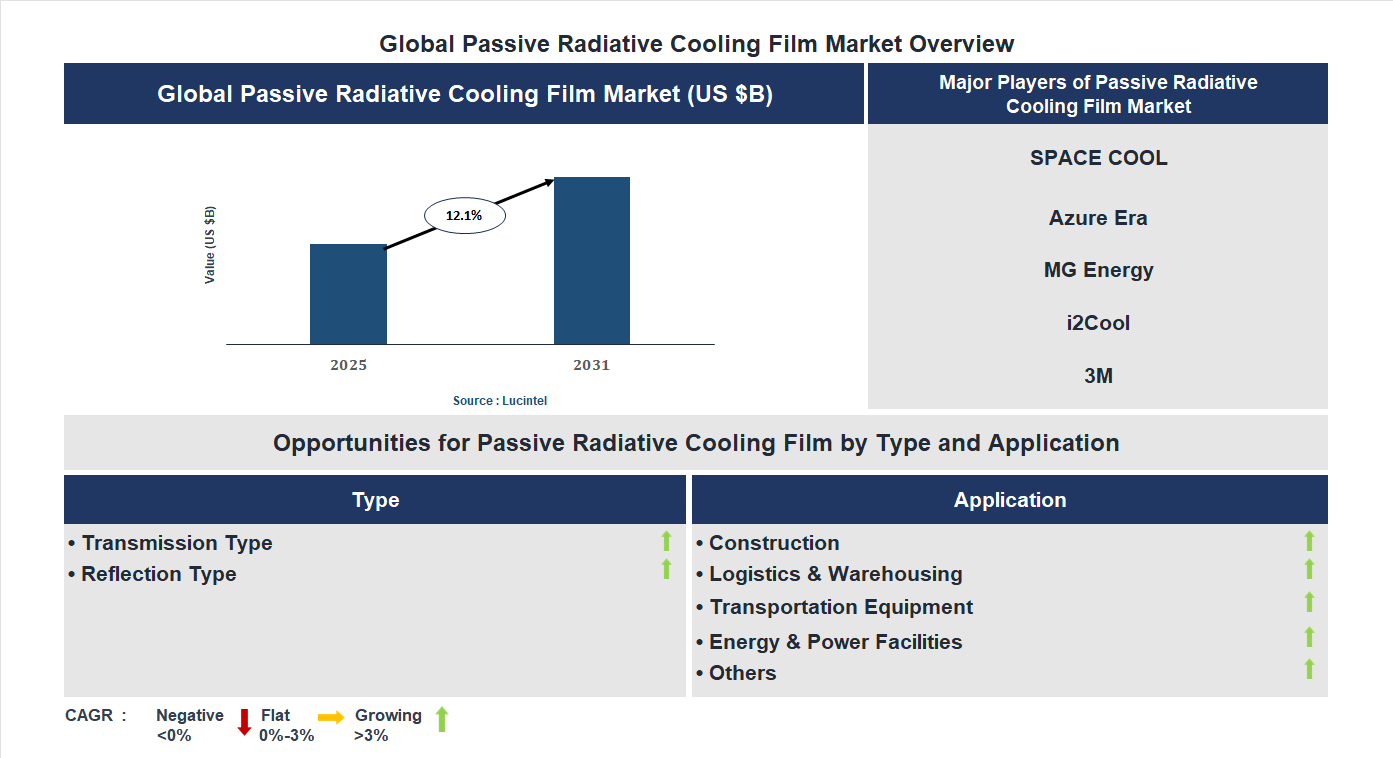
The future of the global passive radiative cooling film market looks promising with opportunities in the construction, logistics & warehousing, transportation equipment, and energy & power facility markets. The global passive radiative cooling film market is expected to grow with a CAGR of 12.1% from 2025 to 2031. The major drivers for this market are the increasing adoption in energy efficient buildings, the rising demand for automotive cooling solutions, and the growing use in sustainable construction materials.• Lucintel forecasts that, within the type category, transmission type is expected to witness higher growth over the forecast period.
• Within the application category, energy & power facility is expected to witness the highest growth.
• In terms of region, APAC is expected to witness the highest growth over the forecast period. Gain valuable insights for your business decisions with our comprehensive 150+ page report. Sample figures with some insights are shown below.
Emerging Trends in the Passive Radiative Cooling Film Market
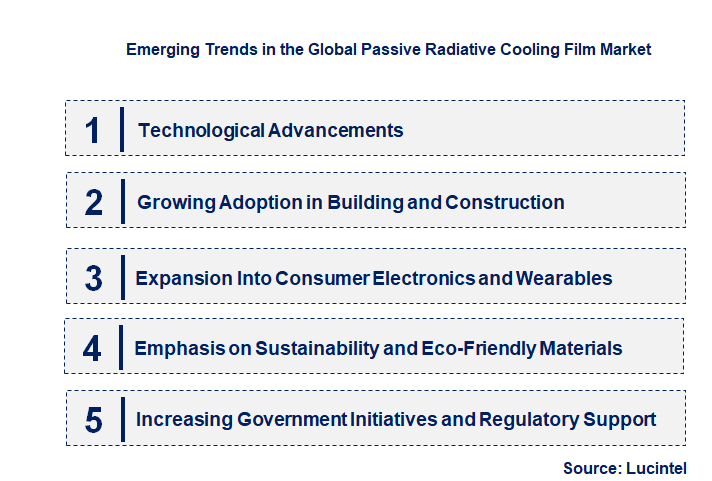
The passive radiative cooling film market is experiencing rapid growth driven by increasing demand for energy-efficient cooling solutions and sustainable technologies. As global temperatures rise and environmental concerns intensify, innovative materials that can passively reduce indoor temperatures without energy consumption are gaining prominence. This market is characterized by technological advancements, expanding applications across various sectors, and a shift towards eco-friendly products. The following key trends highlight the evolving landscape of this market, reflecting its potential to revolutionize cooling methods and contribute to sustainable development.• Technological Advancements: Innovations in nanomaterials and multilayer films have significantly improved the efficiency of passive radiative cooling films. These advancements enable films to reflect solar radiation while emitting thermal radiation effectively, leading to better cooling performance. Enhanced durability and flexibility of these materials also expand their application scope, making them suitable for diverse environments. As research progresses, the market is expected to see more sophisticated, cost-effective solutions that can be integrated into building designs and consumer products, thereby accelerating adoption.
• Growing Adoption in Building and Construction: The construction industry is increasingly adopting passive radiative cooling films to reduce reliance on conventional air conditioning systems. These films are applied to rooftops, windows, and exterior surfaces to reflect sunlight and emit heat, thereby lowering indoor temperatures naturally. This trend is driven by the need for energy-efficient, sustainable building solutions and government incentives for green construction. The integration of these films not only reduces energy costs but also helps buildings meet environmental standards, making them a vital component of modern, eco-friendly architecture.
• Expansion into Consumer Electronics and Wearables: The market is witnessing a surge in the application of passive radiative cooling films in consumer electronics, including smartphones, wearables, and portable cooling devices. These films help manage heat dissipation, enhancing device performance and longevity without increasing energy consumption. The lightweight and flexible nature of these materials makes them ideal for integration into compact devices. As consumers demand more energy-efficient and sustainable gadgets, manufacturers are increasingly incorporating cooling films to improve device reliability and meet eco-conscious market trends.
• Emphasis on Sustainability and Eco-Friendly Materials: Sustainability is a core driver in the market, prompting the development of eco-friendly radiative cooling films made from biodegradable or recyclable materials. These environmentally safe options aim to minimize ecological impact while maintaining high cooling efficiency. The focus on sustainability aligns with global efforts to reduce carbon footprints and promote green technologies. Manufacturers are investing in research to create materials that are not only effective but also safe for the environment, which enhances market acceptance and supports regulatory compliance.
• Increasing Government Initiatives and Regulatory Support: Governments worldwide are implementing policies and incentives to promote passive cooling technologies as part of broader energy conservation efforts. These include subsidies, tax benefits, and building codes that favor the use of radiative cooling films. Such regulatory support accelerates market growth by encouraging adoption across residential, commercial, and industrial sectors. Additionally, international climate commitments are fostering innovation and investment in sustainable cooling solutions, positioning passive radiative cooling films as a key component in achieving energy efficiency and climate goals. In summary, these emerging trends are transforming the passive radiative cooling film market by enhancing technological capabilities, expanding application areas, emphasizing sustainability, and benefiting from supportive policies. Collectively, they are driving the market toward more efficient, eco-friendly, and widespread adoption, ultimately reshaping how cooling needs are addressed in various sectors and contributing to global sustainability efforts.
Recent Development in the Passive Radiative Cooling Film Market
The passive radiative cooling film market has experienced significant growth driven by increasing demand for energy-efficient cooling solutions and sustainable building materials. As climate change concerns intensify, innovations in materials and applications are transforming this sector. Recent developments reflect advancements in film technology, improved performance, and broader adoption across industries. These changes are shaping the market landscape, making passive cooling more accessible and effective. Stakeholders are focusing on eco-friendly solutions that reduce energy consumption and carbon footprints. The following key developments highlight the current trajectory and future potential of this evolving market.• Technological Innovations: Development of high-performance radiative cooling films with enhanced reflectivity and emissivity, leading to better cooling efficiency and wider application scope. These innovations are enabling films to operate effectively in diverse climates, reducing reliance on traditional air conditioning systems and lowering energy costs.
• Material Advancements: Introduction of new polymer composites and nanomaterials that improve durability, flexibility, and environmental resistance of cooling films. These materials extend the lifespan of products and make them suitable for outdoor and harsh environments, expanding market applications.
• Regulatory Support and Sustainability Initiatives: Governments and organizations are implementing policies promoting energy-efficient building materials, including passive cooling films. These initiatives are incentivizing adoption, fostering market growth, and encouraging manufacturers to innovate sustainable solutions.
• Expansion into New Sectors: Increasing adoption of passive radiative cooling films in sectors such as automotive, electronics, and textiles. This diversification is broadening market reach, creating new revenue streams, and driving demand for customized solutions tailored to specific industry needs.
• Market Penetration and Cost Reduction: Efforts to scale production and optimize manufacturing processes are reducing costs, making passive radiative cooling films more affordable for end-users. This affordability is accelerating adoption across residential, commercial, and industrial sectors. In summary, these recent developments are significantly impacting the passive radiative cooling film market by enhancing product performance, expanding application areas, and promoting sustainable practices. The market is poised for continued growth as technological, regulatory, and economic factors align to support widespread adoption of energy-efficient cooling solutions.
Strategic Growth Opportunities in the Passive Radiative Cooling Film Market
The passive radiative cooling film market is experiencing rapid growth driven by increasing demand for energy-efficient cooling solutions and sustainable building practices. As global temperatures rise and environmental concerns intensify, innovative cooling technologies are gaining prominence across various sectors. This market offers significant opportunities for applications in architecture, electronics, transportation, agriculture, and consumer products. Companies are investing in advanced materials that enhance cooling efficiency while reducing energy consumption. These developments are shaping a competitive landscape focused on sustainability, cost-effectiveness, and technological innovation, ultimately transforming how cooling needs are addressed worldwide.• Building and Architectural Applications: Impactful energy savings and sustainability Passive radiative cooling films are increasingly integrated into building materials, such as roofs and facades, to reduce cooling loads. These films reflect sunlight and emit heat through the atmospheric window, lowering reliance on air conditioning. This application significantly reduces energy consumption in commercial and residential buildings, promoting eco-friendly construction practices. The adoption of these films enhances building sustainability credentials and helps meet regulatory standards for energy efficiency, making them a vital component of green building initiatives.
• Electronics and Device Cooling: Enhancing device performance and lifespan In electronics, passive radiative cooling films are used to dissipate heat from devices such as servers, data centers, and consumer electronics. By providing an efficient cooling mechanism without additional power, these films improve device performance and extend operational lifespan. This application is crucial as electronic devices become more compact and generate more heat. The technology offers a sustainable alternative to traditional cooling methods, reducing energy costs and environmental impact, and is expected to see widespread adoption in the electronics industry.
• Transportation Sector: Improving energy efficiency and comfort The transportation industry is exploring passive radiative cooling films for vehicle exteriors and interiors to enhance energy efficiency and passenger comfort. For example, applying these films to vehicle surfaces can reduce interior temperatures, decreasing the need for air conditioning. This results in lower fuel consumption and emissions. Additionally, the films can be used in electric vehicle batteries to manage heat, improving safety and performance. As the transportation sector shifts toward sustainability, these films offer a promising solution for reducing environmental impact and enhancing vehicle efficiency.
• Agricultural Applications: Supporting sustainable farming practices In agriculture, passive radiative cooling films are used to protect crops and livestock from excessive heat. Films can be applied to greenhouses or used as ground covers to reflect heat and maintain optimal temperatures. This technology helps improve crop yields and livestock health by reducing heat stress, especially in regions with high temperatures. It also minimizes the need for energy-intensive cooling systems, promoting sustainable farming practices. The adoption of these films supports climate resilience and resource conservation in agriculture.
• Consumer Products and Personal Use: Promoting energy-efficient cooling solutions The consumer market is witnessing the integration of passive radiative cooling films into personal cooling products, such as wearable devices and outdoor gear. These films provide passive cooling effects, enhancing comfort without electricity or batteries. This application appeals to environmentally conscious consumers seeking sustainable lifestyle solutions. The growth in this segment is driven by increasing awareness of energy conservation and the desire for portable, eco-friendly cooling options. It is expected to expand as product innovation continues, making passive radiative cooling accessible to a broader audience. In summary, these key growth opportunities are significantly impacting the passive radiative cooling film market by expanding its application scope, driving technological innovation, and promoting sustainability. As industries adopt these advanced materials, the market is poised for substantial growth, contributing to energy savings, environmental protection, and improved efficiency across multiple sectors.
Passive Radiative Cooling Film Market Driver and Challenges
The passive radiative cooling film market is influenced by a variety of technological, economic, and regulatory factors. Advances in material science and nanotechnology are enabling the development of more efficient cooling films, reducing energy consumption and environmental impact. Economic factors such as rising energy costs and increasing demand for sustainable solutions are driving market growth. Regulatory policies promoting energy efficiency and environmental conservation further support market expansion. However, challenges such as high production costs, limited durability of materials, and regulatory hurdles can impede growth. Understanding these drivers and challenges is essential for stakeholders to navigate the evolving landscape and capitalize on emerging opportunities. The factors responsible for driving the passive radiative cooling film market include:• Technological Innovation: The development of advanced materials like photonic and nanostructured films enhances cooling efficiency by reflecting solar radiation and emitting infrared heat. These innovations enable films to operate effectively across diverse climates, reducing reliance on traditional air conditioning systems. As research progresses, the cost of production decreases, making these films more accessible for commercial and residential applications. The integration of smart technologies further optimizes performance, fostering widespread adoption. This continuous technological evolution is pivotal in expanding market reach and improving sustainability metrics.
• Growing Demand for Energy Efficiency: Rising global energy consumption, especially in cooling applications, has heightened the need for energy-efficient solutions. Passive radiative cooling films offer a sustainable alternative to conventional air conditioning, significantly reducing electricity bills and carbon emissions. Governments and organizations are increasingly promoting energy conservation through incentives and regulations, encouraging adoption across sectors. The increasing awareness of climate change impacts and the push for green building standards further accelerate demand. As a result, the market benefits from a surge in applications across residential, commercial, and industrial sectors, supporting sustainable development goals.
• Environmental Regulations and Policies: Stringent environmental regulations aimed at reducing greenhouse gas emissions and promoting renewable energy sources are fueling the market. Policies encouraging the adoption of passive cooling technologies in building codes and urban planning initiatives create a favorable environment for market growth. Governments worldwide are providing subsidies and incentives for sustainable building materials, including radiative cooling films. These regulatory frameworks not only drive adoption but also stimulate innovation in material development. Compliance with such policies ensures market players remain competitive and aligned with global sustainability targets, fostering long-term growth.
• Increasing Urbanization and Construction Activities: Rapid urbanization and the expansion of infrastructure necessitate innovative cooling solutions to combat the urban heat island effect. Passive radiative cooling films are increasingly integrated into building facades, rooftops, and windows to enhance energy efficiency and indoor comfort. The construction sectors shift towards sustainable and green buildings further propels demand. Additionally, the need for retrofitting existing structures with energy-saving materials presents significant market opportunities. As urban areas grow denser, the importance of passive cooling solutions becomes more pronounced, making this a key driver for market expansion.
• Rising Awareness and Adoption of Sustainable Technologies: Growing environmental consciousness among consumers and businesses is driving the adoption of eco-friendly cooling solutions. Passive radiative cooling films, being energy-efficient and environmentally benign, appeal to eco-conscious stakeholders. Educational campaigns and corporate sustainability initiatives promote awareness of the benefits of passive cooling technologies. This increased awareness leads to higher adoption rates in residential, commercial, and industrial sectors. The shift towards sustainable practices not only supports environmental goals but also offers economic benefits, such as reduced operational costs, thereby reinforcing market growth. The challenges facing this passive radiative cooling film market include:
• High Production Costs: The manufacturing of advanced radiative cooling films involves sophisticated nanomaterials and precise fabrication techniques, resulting in high costs. These expenses can hinder widespread adoption, especially in price-sensitive markets. Additionally, scaling production to meet increasing demand without compromising quality remains a challenge. Cost barriers may limit the penetration of these films in developing regions where affordability is crucial. Overcoming this challenge requires technological advancements to reduce production costs and economies of scale to make the products more accessible.
• Limited Durability and Longevity: Many passive radiative cooling films face issues related to durability, such as degradation under prolonged exposure to environmental elements like UV radiation, moisture, and pollution. This reduces their effectiveness over time and increases maintenance costs. The limited lifespan of some materials discourages long-term investments and adoption, particularly in harsh climates. Developing more resilient materials with enhanced weather resistance is essential to ensure sustained performance and market confidence. Addressing durability concerns is critical for widespread acceptance and integration into building systems.
• Regulatory and Standardization Challenges: The lack of comprehensive standards and regulatory frameworks for passive radiative cooling films creates uncertainty in the market. Variations in regulations across regions can complicate product development, certification, and compliance processes. This regulatory ambiguity may delay product launches and hinder international trade. Additionally, concerns regarding the environmental impact of certain nanomaterials used in production pose regulatory hurdles. Establishing clear standards and gaining regulatory approvals are vital for market growth, requiring collaboration among industry players, policymakers, and research institutions. In summary, the passive radiative cooling film market is driven by technological advancements, increasing demand for energy efficiency, supportive policies, urbanization, and sustainability awareness. However, high production costs, durability issues, and regulatory challenges pose significant hurdles. The interplay of these factors will shape the markets trajectory, with innovation and regulatory clarity being key to unlocking its full potential. As stakeholders address these challenges, the market is poised for sustainable growth, contributing to energy conservation and environmental protection worldwide.
List of Passive Radiative Cooling Film Companies
Companies in the market compete on the basis of product quality offered. Major players in this market focus on expanding their manufacturing facilities, R&D investments, infrastructural development, and leverage integration opportunities across the value chain. With these strategies passive radiative cooling film companies cater increasing demand, ensure competitive effectiveness, develop innovative products & technologies, reduce production costs, and expand their customer base. Some of the passive radiative cooling film companies profiled in this report include-• SPACE COOL
• Azure Era
• MG Energy
• i2Cool
• 3M
• Radi-Cool
• SVG Optoelectronics
Passive Radiative Cooling Film Market by Segment
The study includes a forecast for the global passive radiative cooling film market by type, application, and region.Passive Radiative Cooling Film Market by Type [Value from 2019 to 2031]:
• Transmission Type
• Reflection Type
Passive Radiative Cooling Film Market by Application [Value from 2019 to 2031]:
• Construction
• Logistics & Warehousing
• Transportation Equipment
• Energy & Power Facilities
• Others
Passive Radiative Cooling Film Market by Region [Value from 2019 to 2031]:
• North America
• Europe
• Asia Pacific
• The Rest of the World
Country Wise Outlook for the Passive Radiative Cooling Film Market
The passive radiative cooling film market has seen significant advancements driven by increasing demand for energy-efficient cooling solutions and sustainable technologies worldwide. As climate change concerns grow, countries are investing in innovative materials that reduce reliance on traditional air conditioning systems. This markets development varies across regions, influenced by technological innovation, government policies, and environmental priorities. The United States, China, Germany, India, and Japan are leading the way, each contributing unique advancements and strategic initiatives to expand the application and adoption of passive radiative cooling films.• United States: The U.S. market has experienced rapid growth due to strong government incentives and increased research funding. Leading universities and tech companies are developing advanced materials with enhanced reflectivity and emissivity properties. Several pilot projects in commercial and residential buildings demonstrate significant energy savings, encouraging wider adoption. Regulatory support and public awareness campaigns further boost market expansion.
• China: China has emerged as a major player, driven by government policies promoting sustainable development and energy conservation. Local manufacturers are investing heavily in R&D to produce cost-effective, high-performance cooling films. Large-scale manufacturing facilities are being established, and collaborations with international firms are fostering innovation. The focus is on integrating these films into urban infrastructure and new construction projects.
• Germany: Germanys market is characterized by a strong emphasis on eco-friendly and high-efficiency materials. Research institutions are pioneering nanomaterial-based radiative cooling films with superior durability and performance. The country’s strict environmental regulations and sustainability goals are encouraging industries to adopt passive cooling solutions, especially in commercial and industrial sectors. Funding from the European Union also supports innovation and deployment.
• India: India’s market is driven by rising temperatures, energy shortages, and the need for affordable cooling solutions. Local startups and manufacturers are developing low-cost, scalable passive radiative cooling films suitable for rural and urban areas. Government initiatives aimed at reducing energy consumption and promoting green technologies are facilitating market growth. Pilot projects in public buildings and infrastructure are demonstrating the technology’s potential.
• Japan: Japan’s market focuses on high-tech, durable, and aesthetically integrated cooling films. Advanced research in nanotechnology and material science is leading to highly efficient products suitable for various climates. The country’s aging infrastructure and energy conservation policies are accelerating adoption in residential and commercial sectors. Collaboration between industry and academia is fostering innovative solutions tailored to Japan’s specific environmental conditions.

Features of the Global Passive Radiative Cooling Film Market
Market Size Estimates: Passive radiative cooling film market size estimation in terms of value ($B). Trend and Forecast Analysis: Market trends (2019 to 2024) and forecast (2025 to 2031) by various segments and regions. Segmentation Analysis: Passive radiative cooling film market size by type, application, and region in terms of value ($B). Regional Analysis: Passive radiative cooling film market breakdown by North America, Europe, Asia Pacific, and Rest of the World. Growth Opportunities: Analysis of growth opportunities in different types, applications, and regions for the passive radiative cooling film market. Strategic Analysis: This includes M&A, new product development, and competitive landscape of the passive radiative cooling film market. Analysis of competitive intensity of the industry based on Porter’s Five Forces model.
FAQ
Q1. What is the growth forecast for passive radiative cooling film market? Answer: The global passive radiative cooling film market is expected to grow with a CAGR of 12.1% from 2025 to 2031. Q2. What are the major drivers influencing the growth of the passive radiative cooling film market? Answer: The major drivers for this market are the increasing adoption in energy efficient buildings, the rising demand for automotive cooling solutions, and the growing use in sustainable construction materials. Q3. What are the major segments for passive radiative cooling film market? Answer: The future of the passive radiative cooling film market looks promising with opportunities in the construction, logistics & warehousing, transportation equipment, and energy & power facility markets. Q4. Who are the key passive radiative cooling film market companies? Answer: Some of the key passive radiative cooling film companies are as follows:• SPACE COOL
• Azure Era
• MG Energy
• i2Cool
• 3M
• Radi-Cool
• SVG Optoelectronics Q5. Which passive radiative cooling film market segment will be the largest in future? Answer: Lucintel forecasts that, within the type category, transmission type is expected to witness higher growth over the forecast period. Q6. In passive radiative cooling film market, which region is expected to be the largest in next 5 years? Answer: In terms of region, APAC is expected to witness the highest growth over the forecast period. Q7. Do we receive customization in this report? Answer: Yes, Lucintel provides 10% customization without any additional cost.
Table of Contents
List of Figures
List of Tables
Methodology
- In-depth interviews of the major players in this market
- Detailed secondary research from competitors’ financial statements and published data
- Extensive searches of published works, market, and database information pertaining to industry news, company press releases, and customer intentions
- A compilation of the experiences, judgments, and insights of Lucintel’s professionals, who have analyzed and tracked this market over the years.


Buy Now
Choose a license that fits your team. Instant PDF delivery.
Prices exclude taxes. Instant delivery. Custom licensing available on request.
Key Questions
- • What are some of the most promising, high-growth opportunities for the passive radiative cooling film market by type (transmission type and reflection type), application (construction, logistics & warehousing, transportation equipment, energy & power facilities, and others), and region (North America, Europe, Asia Pacific, and the Rest of the World)?
- • Which segments will grow at a faster pace and why?
- • Which region will grow at a faster pace and why?
- • What are the key factors affecting market dynamics? What are the key challenges and business risks in this market?
- • What are the business risks and competitive threats in this market?
- • What are the emerging trends in this market and the reasons behind them?
- • What are some of the changing demands of customers in the market?
- • What are the new developments in the market? Which companies are leading these developments?
- • Who are the major players in this market? What strategic initiatives are key players pursuing for business growth?
- • What are some of the competing products in this market and how big of a threat do they pose for loss of market share by material or product substitution?
- • What M&A activity has occurred in the last 5 years and what has its impact been on the industry? For any questions related to Passive Radiative Cooling Film Market, Passive Radiative Cooling Film Market Size, Passive Radiative Cooling Film Market Growth, Passive Radiative Cooling Film Market Analysis, Passive Radiative Cooling Film Market Report, Passive Radiative Cooling Film Market Share, Passive Radiative Cooling Film Market Trends, Passive Radiative Cooling Film Market Forecast, Passive Radiative Cooling Film Companies, write Lucintel analyst at email: helpdesk@lucintel.com. We will be glad to get back to you soon.


