
Market Report · May 18, 2026

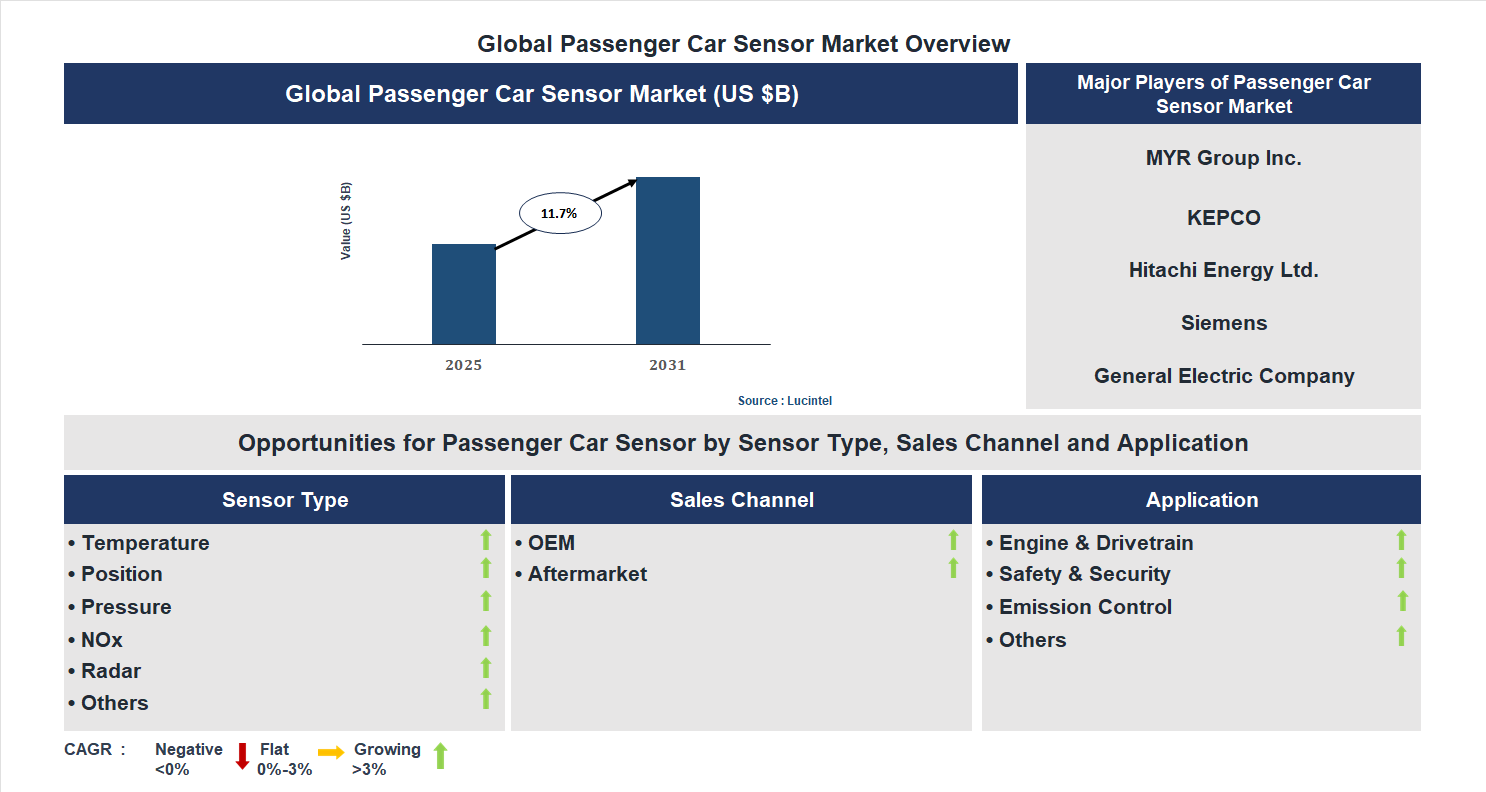
Key data points: The growth forecast = 11.7% annually for the next 7 years. Scroll below to get more insights. This market report covers trends, opportunities and forecasts in passenger car sensor market to 2031 by sensor type (temperature, position, pressure, NOx, radar, and others), sales channel (OEM and aftermarket), application (engine & drivetrain, safety & security, emission control, and others), and region (North America, Europe, Asia Pacific, and the Rest of the World)
We'll send your sample report shortly.
• Lucintel forecasts that, within the sensor type category, temperature is expected to witness the highest growth over the forecast period.
• Within the application category, engine & drivetrain is expected to witness the highest growth.
• In terms of region, APAC is expected to witness the highest growth over the forecast period. Gain valuable insights for your business decisions with our comprehensive 150+ page report. Sample figures with some insights are shown below.
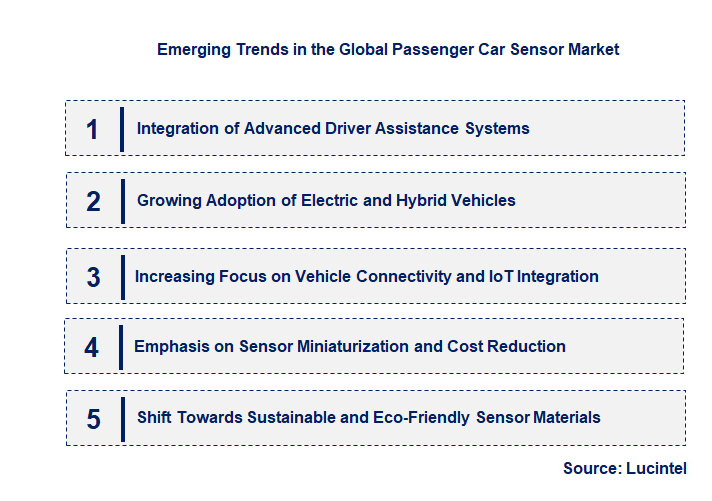
• Integration of Advanced Driver Assistance Systems: The adoption of ADAS sensors such as radar, lidar, and ultrasonic sensors is accelerating. These sensors enable features like adaptive cruise control, lane-keeping assist, and automatic emergency braking, significantly improving vehicle safety. The increasing regulatory focus on road safety standards and consumer demand for enhanced driving experiences are driving automakers to incorporate these sensors more extensively. This trend is fostering innovation in sensor technology and expanding market opportunities for suppliers.
• Growing Adoption of Electric and Hybrid Vehicles: As the shift towards electric and hybrid vehicles gains momentum, the demand for specialized sensors increases. These sensors monitor battery health, thermal management, and powertrain performance, ensuring optimal operation and safety. The integration of sensors in electric vehicles (EVs) is crucial for managing energy efficiency and extending vehicle range. This trend is expanding the market beyond traditional passenger cars, creating new avenues for sensor manufacturers and encouraging technological advancements tailored to EV requirements.
• Increasing Focus on Vehicle Connectivity and IoT Integration: The rise of connected vehicles relies heavily on sensors that facilitate data collection and communication. Sensors such as GPS, proximity, and environmental sensors enable real-time data exchange between vehicles and infrastructure, supporting features like traffic management and predictive maintenance. This connectivity enhances user experience and safety while opening new revenue streams for automakers and tech companies. The trend is fostering the development of more integrated sensor systems and promoting the convergence of automotive and digital technologies.
• Emphasis on Sensor Miniaturization and Cost Reduction: To meet the demands of compact vehicle designs and affordability, sensor manufacturers are focusing on miniaturization and cost-effective production methods. Smaller sensors enable more seamless integration into vehicle systems without compromising performance. Cost reduction strategies make advanced sensor technology accessible to a broader market segment, including economy vehicles. This trend is crucial for mass adoption of sensor-based safety and comfort features, ultimately making advanced automotive sensing technology more widespread and affordable.
• Shift Towards Sustainable and Eco-Friendly Sensor Materials: Environmental concerns are prompting the development of sensors using sustainable materials and energy-efficient designs. Manufacturers are exploring biodegradable components and low-power sensors to reduce the environmental footprint of vehicle production and operation. This trend aligns with the global push for greener transportation solutions and regulatory pressures to lower emissions. Sustainable sensor development not only enhances corporate responsibility but also appeals to eco-conscious consumers, influencing market growth and innovation in eco-friendly automotive technologies. In summary, these trends are collectively reshaping the passenger car sensor market by fostering innovation, enhancing vehicle safety and connectivity, and promoting sustainability. As these developments continue, the market is poised for significant growth, driven by technological integration, regulatory support, and evolving consumer preferences, ultimately leading to smarter, safer, and more environmentally friendly vehicles.
• Technological Advancements in Sensor Types: Development of multi-functional sensors such as LiDAR, radar, and ultrasonic sensors has improved vehicle perception capabilities, enabling better object detection and collision avoidance, thus enhancing safety and supporting autonomous driving features.
• Integration of AI and Machine Learning: Incorporation of AI algorithms with sensors has enabled real-time data processing and predictive analytics, leading to smarter vehicle systems that adapt to driving conditions, improve navigation, and reduce accidents.
• Growing Adoption of Electric and Hybrid Vehicles: The shift toward electric and hybrid vehicles has increased demand for sensors related to battery management, thermal management, and energy efficiency, impacting overall sensor market growth and diversification.
• Stringent Safety and Emission Regulations: Governments worldwide are implementing stricter safety standards, prompting automakers to incorporate advanced sensors for compliance, which accelerates market growth and innovation in sensor technology.
• Expansion of Autonomous Vehicle Development: The push toward fully autonomous vehicles has driven demand for high-precision sensors like LiDAR and radar, fostering innovation and collaboration among tech companies and automakers, and significantly shaping the market trajectory. These developments are collectively transforming the passenger car sensor market by enhancing vehicle safety, enabling autonomous driving, and supporting the shift toward electric mobility. They are fostering innovation, increasing market competitiveness, and aligning with regulatory requirements, ultimately leading to smarter, safer, and more efficient passenger vehicles.
• Advanced Driver Assistance Systems (ADAS): Integration of sensors such as radar, lidar, and ultrasonic sensors enhances vehicle safety and automation, reducing accidents and enabling features like adaptive cruise control and lane-keeping assist, thereby expanding market scope and driving demand.
• Electric and Hybrid Vehicles: The rise of electric and hybrid cars increases the need for specialized sensors like battery management sensors and temperature sensors, supporting efficient energy use and safety, which boosts sensor adoption in eco-friendly vehicles.
• Connectivity and IoT Integration: Sensors enabling vehicle-to-everything (V2X) communication facilitate real-time data exchange, improving navigation, safety, and traffic management, thus opening new revenue streams and market segments.
• Autonomous Vehicle Development: The push towards fully autonomous vehicles relies heavily on high-precision sensors such as cameras, lidar, and radar, which are critical for environment perception, significantly expanding sensor market opportunities.
• Interior and Comfort Sensors: Growing demand for enhanced passenger comfort and in-car infotainment systems drives the adoption of sensors for climate control, occupancy detection, and gesture recognition, enriching user experience and market growth. In summary, these growth opportunities are transforming the passenger car sensor market by fostering innovation, increasing safety, and supporting the shift towards autonomous and electric vehicles. They are enabling automakers to meet stringent safety standards, improve vehicle performance, and deliver smarter, more connected driving experiences. As a result, the market is poised for substantial expansion, driven by technological advancements and evolving consumer preferences.
• Technological Advancements: The rapid development of sensor technologies such as LiDAR, radar, and ultrasonic sensors has significantly enhanced vehicle safety and automation. These innovations enable features like adaptive cruise control, lane-keeping assist, and collision avoidance, which are increasingly demanded by consumers. Automakers are investing heavily in sensor R&D to improve accuracy, reliability, and integration with other vehicle systems. The integration of AI and machine learning further boosts sensor capabilities, making vehicles smarter and safer. As technology continues to evolve, the market is expected to expand rapidly, driven by the need for advanced driver-assistance systems (ADAS) and autonomous vehicles.
• Growing Safety Regulations: Governments worldwide are implementing stringent safety standards and regulations that mandate the inclusion of various sensors in passenger vehicles. For instance, regulations requiring automatic emergency braking, lane departure warnings, and blind-spot detection systems compel automakers to adopt advanced sensors. These regulations aim to reduce road accidents and fatalities, thereby increasing demand for sensor-based safety features. Compliance with such standards not only enhances vehicle safety but also provides automakers with a competitive edge. As safety regulations become more comprehensive and widespread, the demand for sophisticated sensors in passenger cars is expected to rise significantly.
• Increasing Adoption of Autonomous Vehicles: The push toward autonomous driving is a major driver for the passenger car sensor market. Autonomous vehicles rely heavily on a suite of sensors to perceive their environment accurately. The integration of sensors such as LiDAR, radar, and cameras is crucial for enabling self-driving capabilities. As automakers and technology companies accelerate their development of autonomous vehicles, the demand for high-performance sensors surges. This trend is supported by investments from major industry players and favorable regulatory environments. The growth of autonomous vehicles is expected to substantially boost sensor sales, transforming the passenger car market landscape.
• Rising Consumer Preference for Connected and Smart Vehicles: Consumers are increasingly seeking vehicles equipped with advanced connectivity features, which require sophisticated sensors for data collection and communication. Sensors enable features like real-time traffic updates, vehicle-to-everything (V2X) communication, and personalized driving experiences. The demand for smart vehicles that enhance safety, convenience, and entertainment is fueling sensor adoption. Automakers are integrating sensors to support IoT connectivity, leading to a more integrated and intelligent vehicle ecosystem. This consumer-driven trend is expected to continue, further propelling the growth of the passenger car sensor market.
• Economic Growth and Rising Disposable Income: Economic development in emerging markets has led to increased disposable incomes, enabling consumers to purchase higher-end vehicles equipped with advanced sensors. As vehicle prices rise with the inclusion of sophisticated safety and comfort features, automakers are motivated to incorporate more sensors to meet consumer expectations. Additionally, economic growth supports increased production and innovation in sensor technologies, making them more accessible and affordable. This economic trend broadens the market reach, encouraging automakers to target a larger customer base with feature-rich vehicles, thereby expanding the passenger car sensor market globally. The challenges facing this passenger car sensor market include:-
• High Sensor Costs: The advanced sensors required for modern passenger vehicles, such as LiDAR and high-resolution cameras, are expensive to manufacture and integrate. These costs can significantly increase the overall vehicle price, potentially deterring cost-sensitive consumers. Automakers face the challenge of balancing sensor performance with affordability to ensure market competitiveness. Additionally, the high costs impact the adoption rate of sensor-based safety and autonomous features, especially in entry-level vehicles. As technology advances, efforts are ongoing to reduce sensor costs through economies of scale and technological innovations, but cost remains a critical barrier to widespread adoption.
• Technological Complexity and Integration Issues: Integrating multiple sensors into a vehicles electronic architecture presents significant technical challenges. Ensuring seamless communication between sensors and other vehicle systems requires sophisticated software and hardware solutions. Compatibility issues, sensor calibration, and data processing complexities can lead to system failures or inaccuracies, affecting vehicle safety and performance. Moreover, rapid technological evolution necessitates continuous updates and integration efforts, which can be resource-intensive. Overcoming these complexities is essential for reliable sensor performance, but it remains a significant hurdle for manufacturers aiming for widespread deployment of advanced sensor systems.
• Stringent Regulatory Compliance and Standardization: The evolving regulatory landscape imposes strict standards for sensor performance, safety, and cybersecurity. Ensuring compliance across different regions with varying regulations can be complex and costly. Lack of standardized protocols for sensor interoperability and data security can hinder market growth and delay product launches. Automakers and sensor manufacturers must invest heavily in testing, certification, and compliance processes, which can slow down innovation and increase costs. Navigating these regulatory challenges is crucial for market players to expand globally and ensure the safe deployment of sensor technologies. In summary, the passenger car sensor market is driven by technological innovations, safety regulations, autonomous vehicle development, consumer preferences for connected vehicles, and economic growth. However, high costs, technological complexities, and regulatory hurdles pose significant challenges. These factors collectively influence the pace and direction of market growth. While opportunities for expansion are substantial, addressing these challenges is essential for sustainable development. The markets future will depend on technological advancements, cost reductions, and regulatory harmonization, shaping a more connected, safe, and intelligent automotive landscape.
• MYR Group Inc.
• KEPCO
• Hitachi Energy Ltd.
• Siemens
• General Electric Company
• Cisco Systems Inc.
• Schneider Electric SE
• Temperature
• Position
• Pressure
• NOx
• Radar
• Others
• OEM
• Aftermarket
• Engine & Drivetrain
• Safety & Security
• Emission Control
• Others
• North America
• Europe
• Asia Pacific
• The Rest of the World
• United States: The US market has seen rapid adoption of advanced sensors, driven by stringent safety regulations and the rise of autonomous vehicle testing. Major automakers and tech companies are investing in sensor technology to improve vehicle safety and automation features. The integration of lidar, radar, and ultrasonic sensors is expanding, with a focus on enhancing ADAS capabilities. The government’s initiatives for vehicle safety standards and funding for autonomous vehicle research are further propelling market growth. Additionally, the shift towards electric vehicles is increasing demand for sensors that support battery management and vehicle diagnostics.
• China: China remains the largest market for passenger car sensors, fueled by government policies promoting electric vehicles and smart car development. Domestic manufacturers are innovating rapidly, offering cost-effective sensor solutions for mass-market vehicles. The country’s focus on intelligent and connected vehicles has led to increased deployment of sensors for vehicle connectivity, navigation, and safety systems. Investments in 5G infrastructure and smart city projects are also boosting sensor integration in vehicles. Regulatory support and incentives for EV adoption are expected to sustain growth, with Chinese companies expanding their global footprint through strategic partnerships and exports.
• Germany: Germany’s automotive industry is emphasizing high-precision sensors for premium vehicles and autonomous driving systems. Leading automakers are integrating advanced sensor technologies to meet stringent safety and emission standards. The focus is on developing sensors with higher accuracy, durability, and integration capabilities for electric and hybrid vehicles. Germany’s strong R&D ecosystem and collaborations with technology firms are fostering innovation in sensor design. The country’s push towards Industry 4.0 and digitalization in manufacturing is also influencing sensor development, ensuring compatibility with smart production systems and future mobility solutions.
• India: The Indian passenger car sensor market is witnessing rapid growth due to increasing vehicle safety awareness and government initiatives promoting electric mobility. Local manufacturers are adopting cost-effective sensor solutions to cater to the expanding middle-class market. The government’s push for electric vehicles and stricter safety regulations are driving demand for sensors related to vehicle stability, collision avoidance, and battery management. Additionally, rising urbanization and infrastructure development are encouraging automakers to incorporate sensors for enhanced vehicle performance and safety features. The market is expected to grow further with increased investments in R&D and collaborations with global sensor technology providers.
• Japan: Japan’s market is characterized by a focus on high-quality, reliable sensors for advanced safety and autonomous driving systems. Leading automakers are investing in sensor innovations to meet strict safety standards and consumer expectations. The emphasis is on developing sensors with superior performance in harsh environmental conditions, such as extreme temperatures and humidity. Japan’s strong automotive R&D sector and collaborations with technology firms are fostering innovations in sensor miniaturization and integration. The country is also advancing in sensor applications for electric vehicles and hybrid models, aligning with its sustainability goals and technological leadership in the automotive industry.


• MYR Group Inc.
• KEPCO
• Hitachi Energy Ltd.
• Siemens
• General Electric Company
• Cisco Systems Inc.
• Schneider Electric SE Q5. Which passenger car sensor market segment will be the largest in future? Answer: Lucintel forecasts that, within the sensor type category, temperature is expected to witness the highest growth over the forecast period. Q6. In passenger car sensor market, which region is expected to be the largest in next 5 years? Answer: In terms of region, APAC is expected to witness the highest growth over the forecast period. Q7. Do we receive customization in this report? Answer: Yes, Lucintel provides 10% customization without any additional cost.


Choose a license that fits your team. Instant PDF delivery.
Prices exclude taxes. Instant delivery. Custom licensing available on request.
Market Report · May 18, 2026
Market Report · May 18, 2026
Market Report · May 18, 2026
Trusted partner for strategic intelligence and business growth


Receive a complimentary market analysis tailored to your industry. Our analysts will identify key growth opportunities and competitive dynamics specific to your business.

Market size, growth rate, and key trend analysis for your specific sector.

Top competitor positioning and market share analysis.

Strategic recommendations backed by data-driven insights.
Get curated market intelligence and competitive moves straight to your inbox.
By subscribing, you agree to receive our monthly insights. Unsubscribe anytime.
Receive a complimentary market analysis tailored to your industry. Our analysts will identify key growth opportunities and competitive dynamics specific to your business.
Market size, growth rate, and key trend analysis for your specific sector.
Top competitor positioning and market share analysis.
Strategic recommendations backed by data-driven insights.
Get curated market intelligence, emerging trends, and competitive moves straight to your inbox each month.
By subscribing, you agree to receive our monthly insights. Unsubscribe anytime.
We'll send your sample report shortly.