
Market Report · July 15, 2026

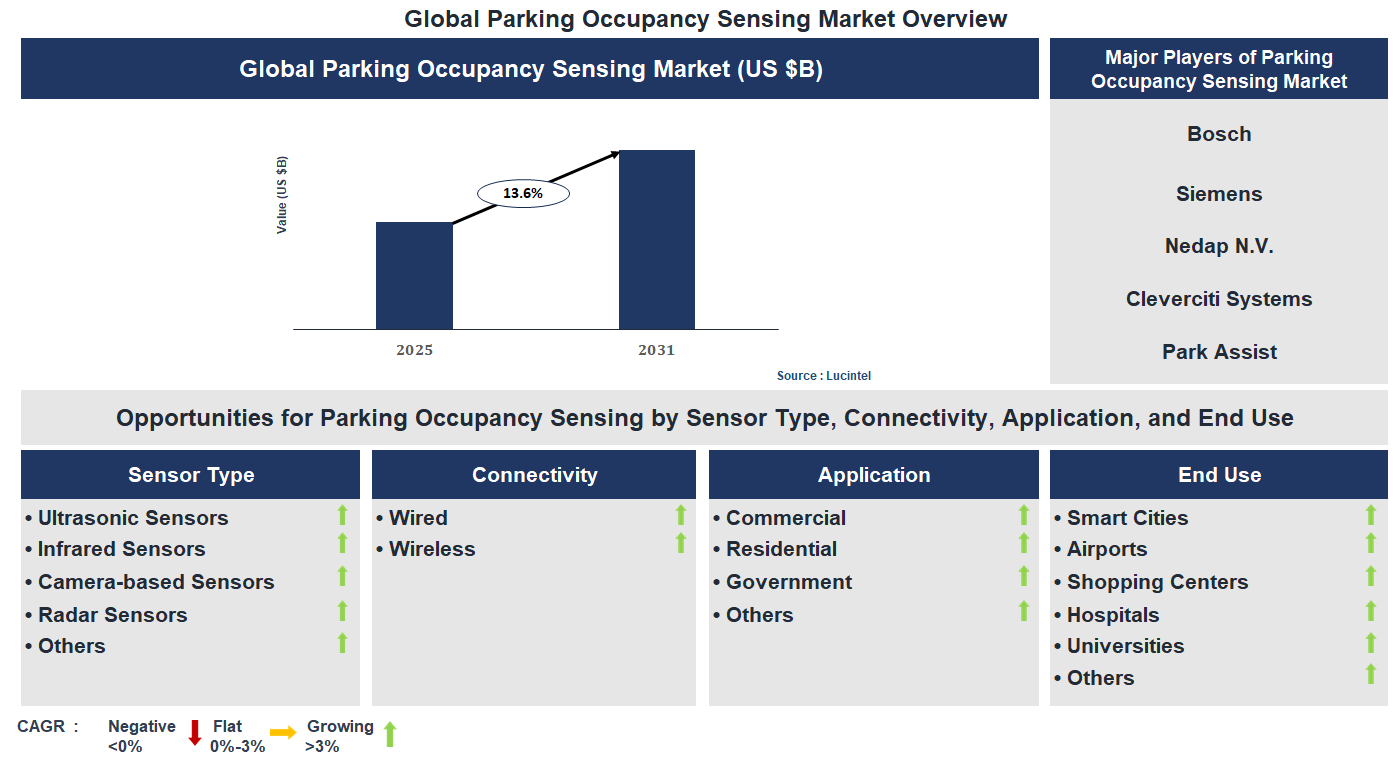
Key data points: The growth forecast = 13.6% annually for the next 7 years. Scroll below to get more insights. This market report covers trends, opportunities and forecasts in parking occupancy sensing market to 2031 by sensor type (ultrasonic sensors, infrared sensors, camera-based sensors, radar sensors, and others), connectivity (wired and wireless), application (commercial, residential, government, and others), end use (smart cities, airports, shopping centers, hospitals, universities, and others), and region (North America, Europe, Asia Pacific, and the Rest of the World)
We'll send your sample report shortly.
• Lucintel forecasts that, within the sensor type category, ultrasonic sensor is expected to witness the highest growth over the forecast period.
• Within the application category, commercial is expected to witness the highest growth.
• In terms of region, North America is expected to witness the highest growth over the forecast period. Gain valuable insights for your business decisions with our comprehensive 150+ page report. Sample figures with some insights are shown below.
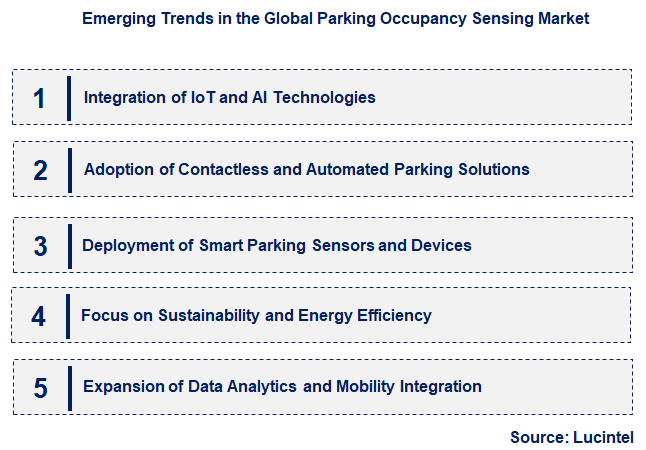
• Integration of IoT and AI Technologies: The market is witnessing a significant shift towards IoT-enabled sensors combined with AI algorithms. These systems provide real-time occupancy data, predictive analytics, and automated management, leading to enhanced accuracy and efficiency. IoT connectivity allows seamless data sharing across platforms, enabling smart city initiatives and improving user experience. AI-driven insights help parking operators optimize space allocation and reduce operational costs, making parking management more intelligent and responsive.
• Adoption of Contactless and Automated Parking Solutions: The COVID-19 pandemic accelerated the demand for contactless parking options to minimize physical contact. Automated parking systems, including robotic and sensor-based solutions, are gaining popularity for their convenience and safety. These systems enable users to reserve, access, and pay for parking without manual intervention, reducing wait times and congestion. The trend is also driven by the need for touchless experiences and the desire to modernize aging parking infrastructure.
• Deployment of Smart Parking Sensors and Devices: Advanced sensors such as ultrasonic, infrared, and magnetic sensors are increasingly deployed to detect vehicle presence accurately. These sensors are compact, energy-efficient, and capable of providing real-time occupancy data. Their deployment enhances parking lot management, reduces false readings, and improves overall system reliability. The proliferation of smart sensors is fundamental to creating integrated parking ecosystems that support dynamic pricing and space optimization.
• Focus on Sustainability and Energy Efficiency: Environmental concerns are prompting the adoption of energy-efficient sensing technologies and sustainable practices. Solar-powered sensors and low-energy communication modules are being integrated into parking systems to reduce carbon footprints. Additionally, smart parking solutions help decrease vehicle emissions by reducing cruising time and congestion. This trend aligns with broader urban sustainability goals and encourages the development of eco-friendly parking infrastructure.
• Expansion of Data Analytics and Mobility Integration: The market is moving towards comprehensive data analytics platforms that analyze occupancy patterns, user behavior, and revenue metrics. These insights enable better decision-making and strategic planning. Furthermore, integration with other mobility services such as public transit, ride-sharing, and electric vehicle charging stations creates a seamless urban mobility ecosystem. This interconnected approach enhances user convenience, optimizes resource allocation, and supports the development of smart city initiatives. In summary, these emerging trends are fundamentally reshaping the parking occupancy sensing market by making parking management more intelligent, efficient, and sustainable. The integration of advanced technologies, contactless solutions, and data-driven insights is driving innovation and improving urban mobility. As these trends continue to evolve, they will play a crucial role in addressing urban congestion, reducing environmental impact, and enhancing the overall parking experience for users worldwide.
• Integration of IoT Technology: The adoption of Internet of Things (IoT) sensors has enabled real-time data collection and transmission, improving parking occupancy accuracy and management efficiency. IoT integration allows for seamless communication between sensors and centralized systems, facilitating dynamic parking guidance and automated billing. This development enhances user convenience and operational control, leading to increased adoption among municipal authorities and private operators.
• Deployment of AI and Machine Learning: AI-powered algorithms are now being used to analyze occupancy data, predict parking trends, and optimize space utilization. Machine learning models improve sensor accuracy by reducing false readings and enabling proactive management. This technological advancement results in better resource allocation, reduced congestion, and enhanced customer experience, making parking management more intelligent and responsive.
• Development of Contactless and Automated Systems: The market has seen a rise in contactless parking solutions, including automated entry/exit and mobile payment options. These systems minimize physical contact, streamline parking processes, and reduce wait times. The impact is a safer, more efficient parking experience, especially relevant during health crises, and it encourages wider adoption of smart parking facilities.
• Use of Advanced Sensor Technologies: Innovations such as ultrasonic, infrared, and magnetic sensors have improved detection accuracy and reliability across diverse environmental conditions. These sensors are more durable and cost-effective, enabling deployment in various settings, from urban centers to remote areas. Enhanced sensor technology ensures consistent performance, reducing maintenance costs and increasing system lifespan.
• Integration with Smart City Infrastructure: Parking occupancy sensing systems are increasingly integrated with broader smart city platforms, including traffic management and public transportation systems. This connectivity facilitates holistic urban mobility solutions, reducing traffic congestion and pollution. The integration supports data-driven decision-making for city planners and improves overall urban living standards. In summary, these recent developments are significantly transforming the parking occupancy sensing market by enhancing system accuracy, efficiency, and integration. The adoption of IoT, AI, contactless solutions, advanced sensors, and smart city integration is driving market growth, improving user experiences, and supporting sustainable urban development. As these innovations continue, the market is poised for further expansion, contributing to smarter, more efficient urban environments.
• Enhanced Efficiency and Revenue Generation: Implementing advanced occupancy sensors in commercial parking lots enables real-time space monitoring, reducing search time for drivers and increasing turnover rates. This improves customer satisfaction and maximizes revenue for operators. Additionally, data analytics from sensors help optimize space allocation and maintenance schedules, leading to operational cost savings and better resource management.
• Smart Parking Management for Residents: Integration of occupancy sensing in residential complexes offers residents real-time parking availability updates via mobile apps. This reduces frustration and time spent searching for parking, improving overall resident satisfaction. It also allows property managers to monitor parking space usage, plan for future expansions, and enforce parking policies effectively.
• Streamlined Traffic Flow and Reduced Congestion: Deployment of occupancy sensors at airports, train stations, and bus terminals facilitates efficient vehicle flow management. Real-time data helps direct drivers to available parking, decreasing congestion and wait times. This enhances traveler experience, reduces emissions, and supports smoother transit operations, contributing to overall transportation system efficiency.
• Improved Customer Experience and Operational Insights: Retail centers utilize parking occupancy sensors to monitor parking lot utilization continuously. This data helps manage peak times, optimize staffing, and improve customer flow. Enhanced parking management attracts more visitors, boosts sales, and provides valuable insights for future infrastructure planning.
• Urban Planning and Smart City Initiatives: Governments leverage occupancy sensing data for urban planning, traffic management, and smart city development. Real-time parking data supports policy-making, reduces urban congestion, and promotes sustainable mobility solutions. These initiatives foster smarter, more livable cities with efficient parking infrastructure. In summary, these growth opportunities are significantly impacting the parking occupancy sensing market by driving technological adoption, improving operational efficiency, and enhancing user experiences across various sectors. As stakeholders continue to innovate, the market is poised for sustained expansion, contributing to smarter, more sustainable urban environments.
• Technological Innovation: The rapid development of sensor technologies, IoT connectivity, and data analytics has revolutionized parking management. These innovations enable real-time occupancy detection, improved accuracy, and seamless integration with smart city infrastructure. As cities aim to reduce congestion and improve urban mobility, the deployment of advanced sensors becomes crucial. The cost-effectiveness and scalability of these technologies further accelerate adoption, making parking occupancy sensing a vital component of smart city initiatives. This technological evolution not only enhances user experience but also provides valuable data for urban planning and traffic management, thereby fueling market growth.
• Urbanization and Population Growth: Increasing urbanization and population density in major cities worldwide are driving the demand for efficient parking solutions. Limited space and rising vehicle ownership create congestion issues, prompting cities to adopt occupancy sensing systems to optimize parking utilization. These systems help reduce time spent searching for parking, decrease emissions, and improve overall traffic flow. The economic benefits of better parking management attract municipal investments, while consumers benefit from reduced frustration and time savings. As urban populations continue to grow, the need for intelligent parking solutions becomes more critical, significantly expanding the market.
• Government Regulations and Policies: Governments worldwide are implementing policies aimed at reducing urban congestion, lowering emissions, and promoting sustainable transportation. Regulations encouraging the deployment of smart parking systems, along with incentives for adopting IoT-enabled infrastructure, are propelling market growth. Additionally, mandates for data transparency and smart city development initiatives support the adoption of occupancy sensing solutions. These policies create a favorable environment for market expansion by providing funding, standards, and frameworks that facilitate deployment. Regulatory support not only accelerates adoption but also ensures that parking management aligns with broader environmental and urban development goals.
• Cost Savings and Operational Efficiency: Parking occupancy sensing systems offer significant cost benefits for municipalities and private operators by reducing labor costs and optimizing space utilization. Automated detection reduces the need for manual monitoring, enabling real-time management and dynamic pricing strategies. Improved operational efficiency leads to better revenue collection and resource allocation. Additionally, data collected from these systems can be used for predictive maintenance and planning, further reducing costs. The economic advantages of enhanced efficiency and revenue generation make these systems attractive investments, encouraging widespread adoption across various sectors.
• Integration with Smart City Infrastructure: The integration of parking occupancy sensing with broader smart city frameworks enhances urban management capabilities. These systems connect with traffic management, public transportation, and environmental monitoring platforms, creating a cohesive urban ecosystem. Such integration facilitates real-time data sharing, improved traffic flow, and better resource allocation. It also supports the development of autonomous vehicles and mobility-as-a-service models. The synergy between parking sensors and other smart city components accelerates digital transformation, making urban environments more livable and sustainable. This interconnected approach is a key driver for market expansion and technological advancement. The challenges facing this parking occupancy sensing market include:-
• High Implementation Costs: Despite the benefits, the initial investment required for deploying parking occupancy sensing systems remains a significant barrier. Costs associated with sensor hardware, installation, infrastructure upgrades, and integration can be substantial, especially for large-scale deployments. Budget constraints faced by municipalities and private operators often limit adoption, particularly in developing regions. Additionally, ongoing maintenance and system upgrades add to the total cost of ownership. These financial hurdles slow down market growth and require innovative financing models or public-private partnerships to overcome.
• Data Privacy and Security Concerns: The deployment of IoT-enabled parking sensors involves the collection and transmission of large volumes of data, raising privacy and security issues. Stakeholders worry about potential data breaches, unauthorized access, and misuse of personal information. Regulatory frameworks around data protection vary across regions, complicating compliance efforts. Ensuring robust cybersecurity measures and transparent data policies is essential, but can be costly and technically challenging. These concerns may hinder consumer acceptance and limit the deployment scope, posing a significant challenge to market expansion.
• Technological Integration and Standardization: Integrating parking occupancy sensors with existing urban infrastructure and other smart city systems presents technical challenges. Lack of standardized protocols and interoperability issues can lead to system incompatibilities, increased complexity, and higher costs. Moreover, rapid technological advancements require continuous updates and upgrades, which can be resource-intensive. Ensuring seamless integration across diverse platforms and devices is critical for maximizing system efficiency and user experience. Overcoming these technical barriers is essential for widespread adoption and sustainable growth in the market. In summary, the parking occupancy sensing market is driven by technological advancements, urbanization, supportive policies, operational efficiencies, and smart city integration. However, high costs, data privacy issues, and integration challenges pose significant hurdles. These factors collectively influence the pace and scope of market development. While growth opportunities are substantial, addressing these challenges through innovation, regulation, and strategic planning is vital. The markets future will depend on balancing technological progress with effective management of costs and privacy concerns, ultimately shaping smarter, more efficient urban environments.
• Bosch
• Siemens
• Nedap N.V.
• Cleverciti Systems
• Park Assist
• SWARCO
• ParkMobile
• INDECT
• CivicSmart
• ParkPlus
• Ultrasonic Sensors
• Infrared Sensors
• Camera-based Sensors
• Radar Sensors
• Others
• Wired
• Wireless
• Commercial
• Residential
• Government
• Others
• Smart Cities
• Airports
• Shopping Centers
• Hospitals
• Universities
• Others
• North America
• Europe
• Asia Pacific
• The Rest of the World
• United States: The US market has seen rapid adoption of smart parking solutions, with major cities implementing IoT-enabled sensors and AI-based management systems. Innovations include contactless payment options and real-time occupancy data, improving user experience and reducing congestion. Public-private partnerships are fostering deployment, and government incentives are supporting technological upgrades. The focus is on integrating parking sensors with broader smart city infrastructure to enhance urban mobility and sustainability.
• China: China leads in deploying large-scale smart parking projects, driven by urbanization and government policies promoting smart city development. The country has introduced advanced sensor networks, AI-driven analytics, and mobile app integrations for seamless parking management. Major cities like Beijing and Shanghai are expanding their sensor networks to optimize parking space utilization and reduce traffic congestion. The government’s focus on environmental sustainability is encouraging the adoption of electric vehicle-compatible parking solutions.
• Germany: Germany emphasizes high-quality, reliable parking sensing systems with a focus on energy efficiency and integration with existing urban infrastructure. Recent developments include the deployment of sensor networks in historic city centers and commercial districts, supported by EU funding initiatives. The market is also witnessing increased adoption of automated parking systems and integration with vehicle-to-infrastructure (V2I) communication technologies, aligning with Germany’s automotive innovation leadership.
• India: The Indian market is witnessing rapid growth driven by urban congestion and government initiatives like the Smart Cities Mission. Recent developments include the deployment of sensor-based parking management systems in major metropolitan areas such as Delhi, Mumbai, and Bengaluru. These systems aim to reduce traffic congestion, improve parking efficiency, and support electric vehicle adoption. Public-private collaborations and affordable sensor solutions are key drivers of market expansion.
• Japan: Japan is focusing on integrating parking occupancy sensing with its advanced transportation infrastructure. Recent developments include deploying sensor networks in urban centers and integrating them with smart traffic management systems. The country is also exploring automated and robotic parking solutions to address space constraints in densely populated areas. Emphasis is placed on energy-efficient sensors and seamless integration with existing smart city frameworks to enhance urban mobility.


• Bosch
• Siemens
• Nedap N.V.
• Cleverciti Systems
• Park Assist
• SWARCO
• ParkMobile
• INDECT
• CivicSmart
• ParkPlus Q5. Which parking occupancy sensing market segment will be the largest in future? Answer: Lucintel forecasts that, within the sensor type category, ultrasonic sensor is expected to witness the highest growth over the forecast period. Q6. In parking occupancy sensing market, which region is expected to be the largest in next 5 years? Answer: In terms of region, North America is expected to witness the highest growth over the forecast period. Q7. Do we receive customization in this report? Answer: Yes, Lucintel provides 10% customization without any additional cost.


Choose a license that fits your team. Instant PDF delivery.
Prices exclude taxes. Instant delivery. Custom licensing available on request.
Market Report · July 15, 2026
Market Report · July 13, 2026
Market Report · July 13, 2026
Trusted partner for strategic intelligence and business growth


Receive a complimentary market analysis tailored to your industry. Our analysts will identify key growth opportunities and competitive dynamics specific to your business.

Market size, growth rate, and key trend analysis for your specific sector.

Top competitor positioning and market share analysis.

Strategic recommendations backed by data-driven insights.
Get curated market intelligence and competitive moves straight to your inbox.
By subscribing, you agree to receive our monthly insights. Unsubscribe anytime.
Receive a complimentary market analysis tailored to your industry. Our analysts will identify key growth opportunities and competitive dynamics specific to your business.
Market size, growth rate, and key trend analysis for your specific sector.
Top competitor positioning and market share analysis.
Strategic recommendations backed by data-driven insights.
Get curated market intelligence, emerging trends, and competitive moves straight to your inbox each month.
By subscribing, you agree to receive our monthly insights. Unsubscribe anytime.
We'll send your sample report shortly.