
Report Feature
Paraphenylenediamine Market Trends and Forecast
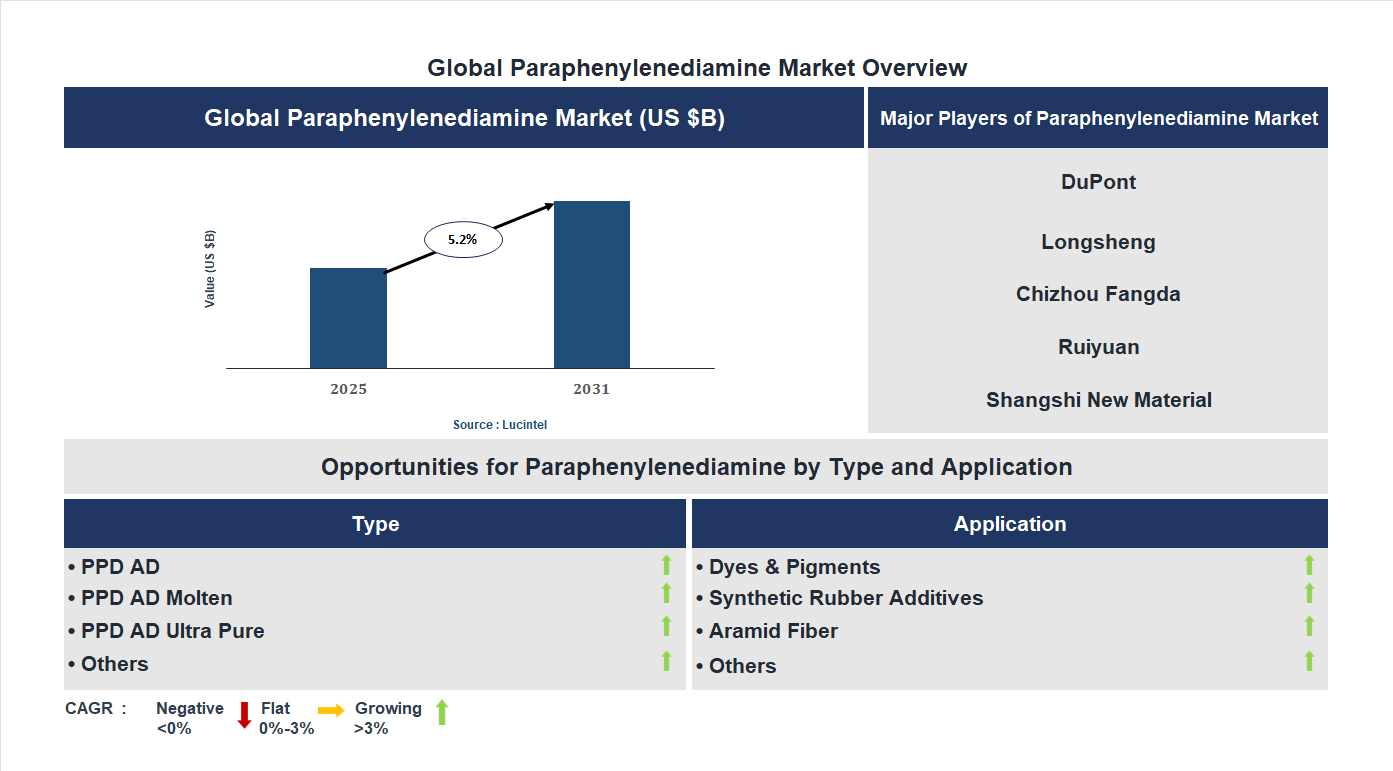
The future of the global paraphenylenediamine market looks promising with opportunities in the dye & pigment, synthetic rubber additive, and aramid fiber markets. The global paraphenylenediamine market is expected to grow with a CAGR of 5.2% from 2025 to 2031. The major drivers for this market are the increasing demand for high-performance textile fibers, the rising use in automotive & electronics coatings, and the growing adoption in industrial dyes & pigments.• Lucintel forecasts that, within the type category, PPD AD ultra pure is expected to witness the highest growth over the forecast period.
• Within the application category, aramid fiber is expected to witness the highest growth.
• In terms of region, APAC is expected to witness the highest growth over the forecast period. Gain valuable insights for your business decisions with our comprehensive 150+ page report. Sample figures with some insights are shown below.
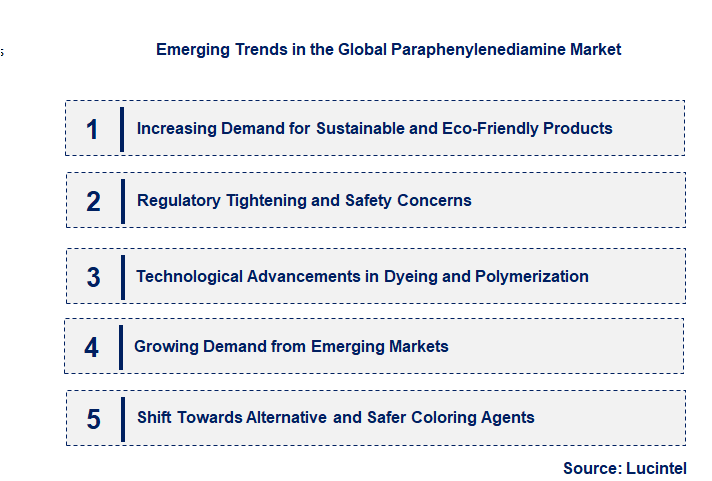
Emerging Trends in the Paraphenylenediamine Market
The paraphenylenediamine market is experiencing significant transformation driven by technological advancements, shifting consumer preferences, and regulatory changes. As industries such as cosmetics, dyes, and polymers evolve, the demand for PPD is influenced by sustainability concerns, innovation, and safety standards. These trends are shaping the market landscape, creating new opportunities and challenges for manufacturers and stakeholders. Understanding these emerging trends is crucial for strategic planning and competitive positioning in this dynamic environment. The following key trends highlight the major developments currently impacting the PPD market.• Increasing demand for sustainable and eco-friendly products: Consumers and regulators are prioritizing environmentally friendly options, prompting manufacturers to develop greener PPD alternatives. This trend encourages innovation in production processes to reduce hazardous waste and emissions, aligning with global sustainability goals. Companies investing in eco-friendly PPD formulations are gaining competitive advantage, especially in markets with strict environmental regulations. The shift towards sustainable products also influences R&D investments, fostering the development of safer, biodegradable, and less toxic PPD variants, which could redefine industry standards and expand market reach.
• Regulatory tightening and safety concerns: Governments and regulatory bodies are imposing stricter regulations on the use of PPD due to its potential health hazards, including allergies and carcinogenic risks. This trend compels manufacturers to enhance safety protocols, reformulate products, and improve labeling standards. Compliance costs may increase, but these regulations also drive innovation toward safer alternatives. Companies that proactively adapt to these regulations can mitigate legal risks and maintain consumer trust. The regulatory landscape is thus a critical factor influencing product development, market entry strategies, and overall industry growth.
• Technological advancements in dyeing and polymerization: Innovations in chemical processing and dyeing technologies are enabling more efficient, durable, and vibrant PPD-based products. These advancements improve colorfastness, reduce processing times, and lower production costs. Such technological progress enhances product performance, making PPD more attractive for various applications, including textiles, hair dyes, and plastics. As a result, manufacturers can offer higher-quality products, expand application scopes, and meet evolving customer demands. Continuous R&D in this area is expected to further optimize PPDs properties, fostering market expansion and diversification.
• Growing demand from emerging markets: Rapid industrialization and urbanization in regions like Asia-Pacific and Latin America are fueling demand for dyes, textiles, and cosmetic products containing PPD. These markets offer significant growth opportunities due to expanding consumer bases and increasing disposable incomes. Local manufacturers are investing in capacity expansion and technology upgrades to meet rising demand. Additionally, regional supply chains are becoming more integrated, reducing costs and lead times. This trend is expected to drive global market growth, with emerging markets playing a pivotal role in shaping future industry dynamics and innovation trajectories.
• Shift towards alternative and safer coloring agents: Due to health and environmental concerns, there is a rising interest in developing and adopting alternative dyes and coloring agents that pose fewer risks than traditional PPD. This trend is driven by consumer awareness, regulatory pressures, and the desire for safer cosmetic and industrial products. Companies investing in research are exploring bio-based and natural dyes, which could replace PPD in certain applications. While this may challenge traditional PPD markets, it also opens avenues for innovation and diversification. The shift encourages a balanced approach between safety, performance, and sustainability, influencing future product development strategies. In summary, these emerging trends are collectively reshaping the Paraphenylenediamine market by emphasizing sustainability, safety, technological innovation, and expanding global demand. They are prompting industry players to adapt swiftly, fostering a more responsible, innovative, and competitive landscape that aligns with evolving regulatory and consumer expectations.
Recent Development in the Paraphenylenediamine Market
The paraphenylenediamine market has experienced significant shifts driven by technological advancements, regulatory changes, and evolving consumer preferences. As a critical component in dyes, hair colorants, and rubber products, PPDs demand is closely linked to the cosmetics and textile industries. Recent developments reflect efforts to improve safety, sustainability, and product quality, which are shaping the market landscape. These changes are also influenced by stricter regulations and increasing consumer awareness about health and environmental impacts. Understanding these key developments is essential for stakeholders aiming to navigate the dynamic PPD market effectively.• Innovation in Safer Formulations: Companies are developing alternative PPD formulations with reduced allergenic potential, enhancing consumer safety and expanding market acceptance. This innovation helps meet regulatory standards and addresses health concerns, boosting demand for safer hair dyes and cosmetic products.
• Regulatory Stringency and Compliance: Governments worldwide are implementing stricter regulations on PPD usage, including limits on concentration levels and mandatory safety testing. These measures compel manufacturers to reformulate products, impacting supply chains and encouraging investment in safer alternatives.
• Sustainability Initiatives: The market is witnessing a shift towards eco-friendly production processes, including the use of renewable raw materials and waste reduction techniques. These initiatives align with global sustainability goals, attracting environmentally conscious consumers and investors.
• Technological Advancements in Production: New manufacturing technologies, such as green synthesis methods, are reducing environmental footprints and improving product quality. These advancements lower production costs and enhance the markets sustainability profile, fostering industry growth.
• Rising Demand in Emerging Markets: Rapid urbanization and increasing disposable incomes in developing countries are driving demand for hair dyes and cosmetic products containing PPD. This trend presents significant growth opportunities for market players expanding their presence in these regions. In summary, recent developments in the PPD market—focused on safety, regulation, sustainability, technological innovation, and emerging market growth—are collectively transforming the industry landscape. These changes are leading to safer, more sustainable products, while also opening new avenues for growth and investment. The market is becoming more regulated, innovative, and aligned with global sustainability goals, ultimately shaping a more responsible and dynamic industry environment.
Strategic Growth Opportunities in the Paraphenylenediamine Market
The paraphenylenediamine market is experiencing significant growth driven by expanding applications across various industries such as dyes, hair colorants, rubber, and pharmaceuticals. As demand for vibrant dyes and hair coloring products increases globally, companies are exploring innovative ways to capitalize on these opportunities. Technological advancements and regulatory changes are also shaping the market landscape, creating new avenues for growth. Understanding key application-driven opportunities is essential for stakeholders aiming to enhance their market share and develop sustainable strategies. The following are five key growth opportunities across different applications that are poised to influence the future trajectory of the PPD market.• Dyes and Pigments: Expansion in textile and leather industries is fueling demand for PPD-based dyes, leading to increased market penetration and product innovation. This growth enhances color vibrancy and durability, attracting new customers and expanding market share.
• Hair Colorants: Rising consumer preference for hair coloring products, especially in emerging markets, is driving demand for PPD in permanent and semi-permanent hair dyes. This opportunity boosts sales volume and encourages product development tailored to safety and efficacy.
• Rubber Industry: PPD is used as an antioxidant and vulcanization accelerator in rubber manufacturing. Growing automotive and industrial sectors are increasing rubber demand, thereby expanding PPD applications and supporting market growth.
• Pharmaceuticals: PPDs role in synthesizing pharmaceuticals and intermediates presents opportunities for diversification. Increasing research activities and demand for specialty chemicals are expected to propel growth in this segment.
• Personal Care and Cosmetics: The rising trend of organic and chemical-free products is prompting innovation in PPD alternatives, but demand for traditional PPD-based products remains strong. This balance offers growth prospects through product differentiation and regulatory compliance. In summary, these growth opportunities across applications are significantly impacting the Paraphenylenediamine market by driving innovation, expanding customer bases, and fostering industry diversification. As industries evolve and consumer preferences shift, the market is poised for sustained growth, with strategic focus on these key areas shaping its future landscape.
Paraphenylenediamine Market Driver and Challenges
The paraphenylenediamine market is influenced by a variety of technological, economic, and regulatory factors that shape its growth trajectory. Advances in chemical manufacturing processes, increasing demand from the textile and dye industries, and evolving regulatory standards are key drivers. Additionally, economic conditions affecting consumer spending and industrial investments play a significant role. However, the market also faces challenges such as stringent environmental regulations, health and safety concerns, and fluctuating raw material prices. Understanding these drivers and challenges is essential for stakeholders to navigate the complex landscape and capitalize on emerging opportunities while mitigating risks. The factors responsible for driving the paraphenylenediamine market include:• Technological Innovations: The development of more efficient and environmentally friendly manufacturing processes has significantly boosted PPD production. Innovations such as green synthesis methods reduce hazardous waste and improve safety, making PPD more sustainable and appealing to manufacturers. These advancements enable higher yields, lower costs, and compliance with stricter environmental standards, thereby expanding market potential. As industries seek sustainable solutions, technological progress remains a critical driver for market growth.
• Growing Textile and Dye Industry Demand: The textile industry is a major consumer of PPD, especially in dyeing processes for wool, silk, and synthetic fibers. The increasing global demand for vibrant, long-lasting colors in textiles fuels the need for high-quality dyes containing PPD. Rapid urbanization and rising disposable incomes in emerging economies further boost apparel consumption, thereby driving demand for PPD-based dyes. This trend is expected to continue, supporting sustained growth in the market.
• Regulatory Environment and Environmental Concerns: Stricter regulations aimed at reducing the environmental impact of chemical manufacturing and usage are influencing the PPD market. Governments are imposing limits on emissions, waste disposal, and the use of hazardous substances, compelling manufacturers to adopt cleaner production techniques. While these regulations pose compliance challenges, they also encourage innovation in eco-friendly alternatives, shaping the markets evolution toward sustainability.
• Expansion in End-Use Industries: Beyond textiles, PPD finds applications in rubber, photography, and hair dyes, among others. The expanding automotive industry increases demand for rubber products, which utilize PPD in vulcanization. The cosmetics sectors growth, especially in hair dye products, also propels PPD consumption. These diverse applications diversify market opportunities and reduce dependency on a single industry, fostering resilience and growth potential.
• Global Market Penetration and Emerging Economies: Increasing industrialization and urbanization in emerging economies such as India, China, and Southeast Asian countries are expanding the PPD market. These regions are experiencing rising demand for textiles, dyes, and rubber products, creating new growth avenues. Market penetration strategies, local manufacturing, and supply chain development further facilitate growth, making emerging markets vital drivers for the overall expansion of the PPD industry. The challenges in the paraphenylenediamine market are:
• Stringent Environmental Regulations: Governments worldwide are imposing strict regulations to limit the environmental impact of chemical manufacturing. These include restrictions on emissions, waste disposal, and the use of hazardous substances like PPD. Compliance often requires significant investment in cleaner technologies and waste management systems, increasing operational costs. Non-compliance can lead to penalties, product bans, and reputational damage, posing a substantial challenge for manufacturers to balance regulatory adherence with profitability.
• Health and Safety Concerns: PPD is known for its allergenic and toxic properties, raising health concerns among workers and consumers. Exposure can cause skin allergies, respiratory issues, and other health problems, leading to regulatory scrutiny and demand for safer alternatives. Managing these risks involves implementing strict safety protocols, worker training, and product testing, which can increase costs and complicate manufacturing processes. The market must navigate these safety concerns while maintaining product efficacy.
• Raw Material Price Fluctuations: The cost of raw materials used in PPD production, such as aniline and benzene, is highly volatile due to geopolitical tensions, supply chain disruptions, and fluctuating oil prices. These fluctuations impact production costs and profit margins, making pricing strategies challenging. Manufacturers may face difficulties in maintaining competitive pricing and consistent supply, which can hinder market growth and profitability, especially for smaller players with limited financial resilience. In summary, the paraphenylenediamine market is shaped by technological advancements, expanding end-use industries, and regulatory pressures that drive growth and innovation. However, environmental and health concerns, along with raw material volatility, pose significant challenges. The markets future depends on how effectively stakeholders can leverage technological progress and adapt to regulatory landscapes while managing risks. Overall, these drivers and challenges will influence the markets evolution, requiring strategic agility and sustainable practices to ensure long-term success.
List of Paraphenylenediamine Companies
Companies in the market compete on the basis of product quality offered. Major players in this market focus on expanding their manufacturing facilities, R&D investments, infrastructural development, and leverage integration opportunities across the value chain. With these strategies paraphenylenediamine companies cater increasing demand, ensure competitive effectiveness, develop innovative products & technologies, reduce production costs, and expand their customer base. Some of the paraphenylenediamine companies profiled in this report include-• DuPont
• Longsheng
• Chizhou Fangda
• Ruiyuan
• Shangshi New Material
• Jayvir Dye Chem
• Jay Organics
Paraphenylenediamine Market by Segment
The study includes a forecast for the global paraphenylenediamine market by type, application, and region.Paraphenylenediamine Market by Type [Value from 2019 to 2031]:
• PPD AD
• PPD AD Molten
• PPD AD Ultra Pure
• Others
Paraphenylenediamine Market by Application [Value from 2019 to 2031]:
• Dyes & Pigments
• Synthetic Rubber Additives
• Aramid Fiber
• Others
Paraphenylenediamine Market by Region [Value from 2019 to 2031]:
• North America
• Europe
• Asia Pacific
• The Rest of the World
Country Wise Outlook for the Paraphenylenediamine Market
The paraphenylenediamine market has experienced significant shifts driven by technological innovations, regulatory changes, and evolving consumer preferences across the globe. Countries are focusing on sustainable production methods, expanding product applications, and tightening safety standards. These developments reflect the growing demand for PPD in industries such as cosmetics, dyes, and rubber, alongside increasing emphasis on environmental and health considerations. The following summaries highlight recent key advancements and market dynamics in the United States, China, Germany, India, and Japan, illustrating how each region is shaping the future of the PPD industry.• United States: The U.S. market has seen increased regulatory scrutiny on PPD safety, prompting companies to develop safer formulations and alternative dyes. Innovation in eco-friendly production processes is gaining momentum, driven by consumer demand for sustainable products. Major players are investing in R&D to improve product stability and reduce allergenic potential, while expanding applications in hair dyes and textile industries. The market is also witnessing growth through strategic partnerships and acquisitions aimed at enhancing product portfolios and compliance with stricter safety standards.
• China: China remains a leading producer and consumer of PPD, with rapid industrial growth fueling demand across textiles, automotive, and cosmetics sectors. Recent developments include the adoption of stricter environmental regulations, encouraging manufacturers to adopt cleaner production technologies. The country is also witnessing increased investment in research to develop high-performance, low-toxicity PPD variants. Export opportunities are expanding as Chinese companies focus on meeting international safety standards, while domestic demand continues to grow due to expanding cosmetic markets and industrial applications.
• Germany: Germanys PPD market is characterized by a focus on sustainability and innovation. Companies are investing in green chemistry to develop eco-friendly PPD alternatives that meet stringent European Union regulations. There is a notable emphasis on reducing environmental impact through cleaner manufacturing processes and waste management. The country is also a hub for research collaborations aimed at improving product safety and efficacy. Market growth is supported by the cosmetics industrys demand for high-quality, safe dyes and the increasing adoption of sustainable practices within the chemical sector.
• India: The Indian PPD market is experiencing rapid growth driven by expanding cosmetic and textile industries. Recent developments include the adoption of stricter safety standards and quality controls, which are encouraging manufacturers to innovate safer formulations. The government’s focus on promoting chemical manufacturing and exports is boosting industry growth. Additionally, local companies are investing in R&D to develop cost-effective, low-toxicity PPD products to cater to domestic and international markets. The increasing popularity of hair coloring products and industrial dyes further propels market expansion.
• Japan: Japans PPD market is characterized by technological advancements and a strong emphasis on safety and environmental sustainability. Companies are developing innovative, eco-friendly PPD formulations to comply with strict domestic and international regulations. There is a focus on reducing allergenic properties and improving product performance. Japan is also investing in research to explore alternative dyes and sustainable production methods. The market benefits from the countrys advanced chemical industry and high consumer awareness regarding product safety, leading to a steady demand for high-quality, safe PPD products in cosmetics and industrial applications.

Features of the Global Paraphenylenediamine Market
Market Size Estimates: Paraphenylenediamine market size estimation in terms of value ($B). Trend and Forecast Analysis: Market trends (2019 to 2024) and forecast (2025 to 2031) by various segments and regions. Segmentation Analysis: Paraphenylenediamine market size by type, application, and region in terms of value ($B). Regional Analysis: Paraphenylenediamine market breakdown by North America, Europe, Asia Pacific, and Rest of the World. Growth Opportunities: Analysis of growth opportunities in different types, applications, and regions for the paraphenylenediamine market. Strategic Analysis: This includes M&A, new product development, and competitive landscape of the paraphenylenediamine market. Analysis of competitive intensity of the industry based on Porter’s Five Forces model.
FAQ
Q1. What is the growth forecast for paraphenylenediamine market? Answer: The global paraphenylenediamine market is expected to grow with a CAGR of 5.2% from 2025 to 2031. Q2. What are the major drivers influencing the growth of the paraphenylenediamine market? Answer: The major drivers for this market are the increasing demand for high-performance textile fibers, the rising use in automotive & electronics coatings, and the growing adoption in industrial dyes & pigments. Q3. What are the major segments for paraphenylenediamine market? Answer: The future of the paraphenylenediamine market looks promising with opportunities in the dye & pigment, synthetic rubber additive, and aramid fiber markets. Q4. Who are the key paraphenylenediamine market companies? Answer: Some of the key paraphenylenediamine companies are as follows:• DuPont
• Longsheng
• Chizhou Fangda
• Ruiyuan
• Shangshi New Material
• Jayvir Dye Chem
• Jay Organics Q5. Which paraphenylenediamine market segment will be the largest in future? Answer: Lucintel forecasts that, within the type category, PPD AD ultra pure is expected to witness the highest growth over the forecast period. Q6. In paraphenylenediamine market, which region is expected to be the largest in next 5 years? Answer: In terms of region, APAC is expected to witness the highest growth over the forecast period. Q7. Do we receive customization in this report? Answer: Yes, Lucintel provides 10% customization without any additional cost.
Table of Contents
List of Figures
List of Tables
Methodology
- In-depth interviews of the major players in this market
- Detailed secondary research from competitors’ financial statements and published data
- Extensive searches of published works, market, and database information pertaining to industry news, company press releases, and customer intentions
- A compilation of the experiences, judgments, and insights of Lucintel’s professionals, who have analyzed and tracked this market over the years.


Buy Now
Choose a license that fits your team. Instant PDF delivery.
Prices exclude taxes. Instant delivery. Custom licensing available on request.
Key Questions
- • What are some of the most promising, high-growth opportunities for the paraphenylenediamine market by type (PPD AD, PPD AD molten, PPD AD ultra pure, and others), application (dyes & pigments, synthetic rubber additives, aramid fiber, and others), and region (North America, Europe, Asia Pacific, and the Rest of the World)?
- • Which segments will grow at a faster pace and why?
- • Which region will grow at a faster pace and why?
- • What are the key factors affecting market dynamics? What are the key challenges and business risks in this market?
- • What are the business risks and competitive threats in this market?
- • What are the emerging trends in this market and the reasons behind them?
- • What are some of the changing demands of customers in the market?
- • What are the new developments in the market? Which companies are leading these developments?
- • Who are the major players in this market? What strategic initiatives are key players pursuing for business growth?
- • What are some of the competing products in this market and how big of a threat do they pose for loss of market share by material or product substitution?
- • What M&A activity has occurred in the last 5 years and what has its impact been on the industry? For any questions related to Paraphenylenediamine Market, Paraphenylenediamine Market Size, Paraphenylenediamine Market Growth, Paraphenylenediamine Market Analysis, Paraphenylenediamine Market Report, Paraphenylenediamine Market Share, Paraphenylenediamine Market Trends, Paraphenylenediamine Market Forecast, Paraphenylenediamine Companies, write Lucintel analyst at email: helpdesk@lucintel.com. We will be glad to get back to you soon.


