
Report Feature
Panoramic Stitching Camera Market Trends and Forecast
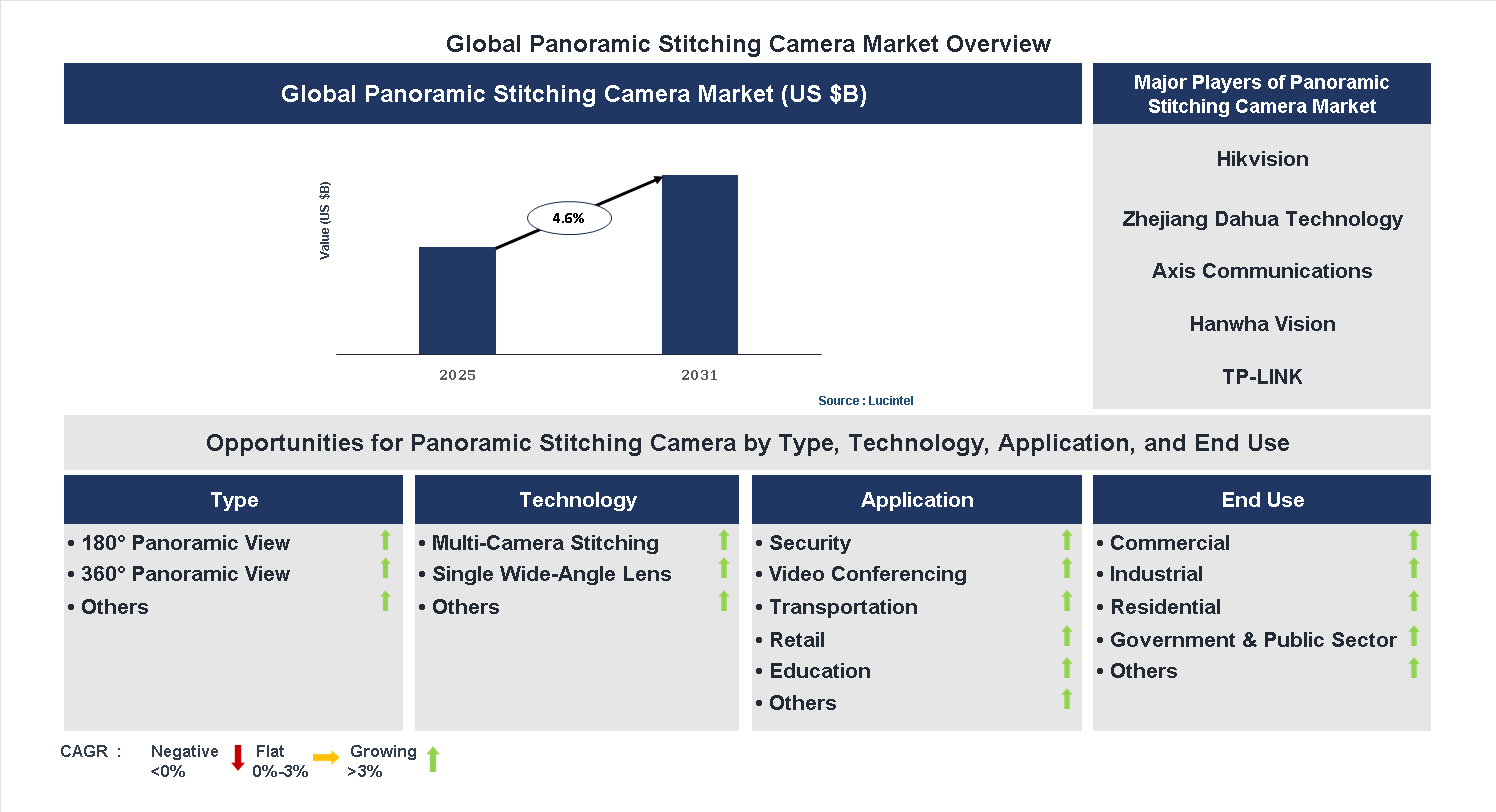
The future of the global panoramic stitching camera market looks promising with opportunities in the commercial, industrial, residential, and government & public sector markets. The global panoramic stitching camera market is expected to grow with a CAGR of 4.6% from 2025 to 2031. The major drivers for this market are the increasing demand for high-resolution imaging, the rising adoption of 360-degree photography, and the growing need for advanced surveillance systems.• Lucintel forecasts that, within the type category, 360° panoramic view is expected to witness higher growth over the forecast period.
• Within the end use category, commercial is expected to witness the highest growth.
• In terms of region, APAC is expected to witness the highest growth over the forecast period. Gain valuable insights for your business decisions with our comprehensive 150+ page report. Sample figures with some insights are shown below.
Emerging Trends in the Panoramic Stitching Camera Market
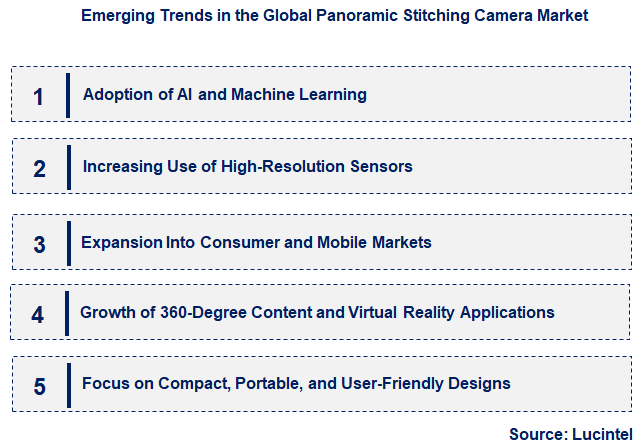
The panoramic stitching camera market is experiencing rapid growth driven by advancements in imaging technology, increasing demand for immersive visual experiences, and the expanding applications across various industries such as real estate, entertainment, and security. As consumers and businesses seek higher quality, more seamless panoramic images, manufacturers are innovating to meet these needs. The markets evolution is also influenced by the integration of AI and machine learning, which enhances image processing capabilities. These developments are not only improving product performance but also broadening the scope of applications, making panoramic stitching cameras more accessible and versatile. The following trends highlight the key shifts shaping this dynamic market.• Adoption of AI and Machine Learning: The integration of AI and machine learning algorithms is revolutionizing panoramic stitching by enabling automatic image alignment, real-time processing, and enhanced image quality. These technologies reduce manual intervention, increase efficiency, and improve accuracy, making panoramic cameras more user-friendly. AI-driven features such as scene recognition and adaptive stitching are enabling applications in security, virtual tours, and entertainment. As AI continues to evolve, we can expect even more sophisticated image processing capabilities, further expanding the market’s potential and enabling new use cases.
• Increasing Use of High-Resolution Sensors: The demand for higher resolution sensors in panoramic cameras is rising to meet consumer expectations for detailed, high-quality images. High-resolution sensors improve image clarity, color accuracy, and overall visual appeal, which is crucial for professional applications like real estate virtual tours and cinematic productions. This trend is driven by advancements in sensor technology and decreasing costs, making high-resolution panoramic cameras more accessible. As a result, the market is witnessing a shift towards devices capable of capturing ultra-high-definition images, thereby enhancing the immersive experience for end-users and opening new commercial opportunities.
• Expansion into Consumer and Mobile Markets: Traditionally used in professional settings, panoramic stitching cameras are now increasingly penetrating consumer and mobile markets. Smartphone manufacturers are integrating panoramic stitching features directly into devices, allowing users to capture wide-angle images effortlessly. This trend is driven by consumer demand for immersive content and social media sharing. The proliferation of mobile apps with built-in stitching capabilities is also democratizing access to panoramic photography. This expansion is broadening the market base, encouraging innovation in compact, portable camera designs, and fostering a new wave of user-generated content.
• Growth of 360-Degree Content and Virtual Reality Applications: The rise of virtual reality (VR), augmented reality (AR), and 360-degree content is significantly impacting the panoramic stitching camera market. These applications require seamless, high-quality panoramic images and videos to create immersive experiences. As VR adoption increases across gaming, training, real estate, and tourism, the demand for specialized panoramic cameras capable of capturing 360-degree content is surging. This trend is prompting manufacturers to develop cameras with advanced stitching capabilities, higher frame rates, and better stabilization, thereby expanding the market and enabling more engaging virtual experiences.
• Focus on Compact, Portable, and User-Friendly Designs: Market players are emphasizing the development of compact, lightweight, and easy-to-use panoramic cameras to appeal to a broader audience. Portability and simplicity are critical for outdoor, travel, and casual users who seek quick, high-quality panoramic shots without complex setups. Innovations include foldable designs, integrated stabilization, and intuitive interfaces. This trend is making panoramic photography more accessible, encouraging wider adoption among hobbyists and professionals alike. As a result, the market is shifting towards versatile, user-centric products that cater to both amateur and professional needs, fostering growth and diversification. In summary, these emerging trends are transforming the panoramic stitching camera market by enhancing technological capabilities, expanding application areas, and making panoramic photography more accessible and user-friendly. These developments are driving innovation, increasing market competition, and opening new opportunities across various industries, ultimately reshaping how panoramic images are captured, processed, and utilized worldwide.
Recent Development in the Panoramic Stitching Camera Market
The panoramic stitching camera market is experiencing rapid growth driven by advancements in imaging technology and increasing demand for immersive visual experiences. As industries such as real estate, entertainment, and security adopt panoramic imaging solutions, market players are innovating to meet diverse needs. These developments are shaping the future landscape, offering enhanced capabilities and expanding applications. The following key opportunities highlight the sectors dynamic evolution and potential for significant market expansion.• Enhanced Image Quality and Resolution: The development of high-resolution sensors and advanced stitching algorithms has significantly improved image clarity and detail. This allows for more accurate and seamless panoramic images, boosting user confidence and expanding applications in professional photography, surveillance, and virtual tours. As image quality improves, market adoption accelerates, fostering innovation and increasing revenue streams for manufacturers.
• Integration of AI and Machine Learning: Incorporating AI-driven stitching and image enhancement techniques has streamlined the creation of panoramic images. These technologies enable faster processing, automatic correction of distortions, and improved alignment, reducing manual effort. The integration of AI enhances user experience, broadens application scope, and opens new revenue opportunities in sectors like real estate, tourism, and security.
• Development of Compact and Portable Cameras: The trend toward smaller, lightweight panoramic cameras has made the technology more accessible and versatile. Portable devices facilitate on-the-go capturing for consumers and professionals alike, expanding market reach. This innovation supports applications in travel, event coverage, and fieldwork, driving sales and encouraging new business models centered around mobility and convenience.
• Expansion into Virtual Reality and Augmented Reality: Panoramic cameras are increasingly integrated with VR and AR platforms, providing immersive experiences for gaming, training, and remote collaboration. This synergy enhances user engagement and opens new revenue streams for content creators and hardware manufacturers. As VR/AR adoption grows, the demand for high-quality panoramic content surges, fueling market growth and technological advancements.
• Adoption of 360-Degree Live Streaming: The rise of live streaming platforms has spurred demand for real-time 360-degree video capture. Panoramic cameras capable of live streaming are transforming event coverage, sports broadcasting, and remote conferencing. This development offers new monetization avenues, enhances viewer engagement, and broadens market applications, positioning panoramic stitching cameras as essential tools in the evolving digital content landscape. The overall impact of these developments is a robust expansion of the panoramic stitching camera market, characterized by improved product capabilities, broader application areas, and increased consumer and enterprise adoption. These innovations are fostering competitive growth, driving technological progress, and creating new revenue opportunities across multiple industries. As a result, the market is poised for sustained growth and diversification in the coming years.
Strategic Growth Opportunities in the Panoramic Stitching Camera Market
The panoramic stitching camera market is experiencing rapid growth driven by advancements in imaging technology, increasing demand for immersive visual experiences, and expanding applications across industries such as real estate, entertainment, and security. Innovations in hardware and software are enabling higher resolution, faster processing, and more seamless stitching, opening new opportunities for manufacturers and service providers. As consumer and enterprise needs evolve, strategic investments in R&D and market expansion are critical to capitalize on this expanding landscape.• Expansion into the Real Estate and Architecture Sectors: Panoramic stitching cameras are increasingly used in real estate and architecture to create virtual tours and detailed property visualizations. This technology allows potential buyers to explore spaces remotely with high accuracy and an immersive experience, reducing the need for physical visits. As demand for virtual property viewing grows, manufacturers can develop specialized solutions tailored to these industries, boosting adoption and market share.
• Integration with Virtual and Augmented Reality Platforms: The rise of VR and AR applications presents significant growth opportunities for panoramic stitching cameras. These cameras enable the creation of realistic 360-degree environments essential for immersive experiences in gaming, training, and remote collaboration. Developing compatible hardware and software solutions that seamlessly integrate with VR/AR platforms can attract a broader user base and open new revenue streams.
• Advancements in Hardware for Higher Resolution and Faster Processing: Continuous improvements in sensor technology, image processing algorithms, and hardware design are driving the market forward. High-resolution panoramic cameras with faster stitching capabilities are meeting the needs of professional photographers, filmmakers, and surveillance agencies. Investing in R&D to enhance hardware performance will enable providers to deliver superior products, maintain competitive advantage, and meet increasing quality expectations.
• Growing Demand for Security and Surveillance Applications: Panoramic stitching cameras are increasingly deployed in security and surveillance to monitor large areas with fewer devices. Their ability to provide comprehensive 360-degree views enhances situational awareness and reduces blind spots. As security concerns escalate globally, manufacturers can focus on developing rugged, high-performance cameras with advanced analytics to capture market share in public safety, transportation, and critical infrastructure sectors.
• Development of AI-Driven Stitching Software for Enhanced Accuracy: Incorporating artificial intelligence into stitching software improves image alignment, reduces artifacts, and accelerates processing times. AI-driven solutions enable more accurate and seamless panoramic images, essential for professional applications and consumer use. Companies investing in AI technology can differentiate their offerings, improve user experience, and expand into new markets such as autonomous vehicles, drone imaging, and medical diagnostics. The overall market growth will be significantly influenced by these opportunities, fostering innovation, expanding application areas, and increasing adoption across diverse industries. Strategic focus on technological advancements and industry-specific solutions will be key to capturing the full potential of the panoramic stitching camera market.
Panoramic Stitching Camera Market Driver and Challenges
The panoramic stitching camera market is influenced by a variety of technological, economic, and regulatory factors that shape its growth trajectory. Advances in imaging technology and increasing demand for immersive visual experiences are primary drivers. Economic factors such as rising consumer spending on high-end photography equipment and the proliferation of digital content creation also play significant roles. Regulatory considerations, including data privacy laws and standards for image processing, impact market operations and innovation. Together, these drivers and challenges create a dynamic environment that influences market expansion, product development, and competitive strategies, ultimately determining the pace and direction of growth in the panoramic stitching camera industry. The factors responsible for driving the panoramic stitching camera market include:• Technological Advancements: The continuous evolution of camera sensors, image processing algorithms, and stitching software enhances image quality and ease of use. Innovations such as AI-powered stitching and real-time processing enable users to capture seamless panoramic images efficiently. These technological improvements attract both professional and amateur photographers, expanding market reach. As technology becomes more affordable and accessible, adoption rates increase, fueling market growth. Additionally, integration with smartphones and portable devices broadens the application scope, making panoramic cameras more versatile and appealing to a wider audience.
• Increasing Demand for Immersive Content: The rising popularity of virtual reality (VR), augmented reality (AR), and 360-degree videos drives demand for panoramic images. Content creators, tourism industries, and real estate sectors seek high-quality panoramic visuals to enhance user engagement and experience. This trend encourages manufacturers to develop advanced panoramic stitching cameras capable of capturing immersive environments. As consumers and businesses prioritize engaging visual content for marketing, entertainment, and training, the market experiences accelerated growth driven by this demand for immersive content.
• Growing Adoption in Professional Photography and Videography: Professional photographers and videographers increasingly utilize panoramic stitching cameras for landscape, architectural, and event photography. The ability to produce high-resolution, wide-angle images with minimal post-processing appeals to professionals seeking efficiency and quality. This adoption is supported by the development of specialized features such as high dynamic range (HDR) imaging and stabilization. As the professional sector expands, it stimulates innovation and investment in the market, further boosting the availability and sophistication of panoramic stitching cameras.
• Expansion of Consumer Electronics Market: The proliferation of smartphones, tablets, and portable devices with integrated high-quality cameras contributes to market growth. Consumers demand versatile devices capable of capturing panoramic images without additional equipment. Manufacturers incorporate panoramic stitching capabilities into their devices, making high-quality panoramic photography accessible to the mass market. This expansion increases overall demand, encourages competitive pricing, and fosters innovation in camera technology, thereby supporting the growth of dedicated panoramic stitching cameras as complementary or standalone products.
• Rising Investment in R&D and Strategic Collaborations: Companies are investing heavily in research and development to improve camera hardware, software algorithms, and user interfaces. Strategic collaborations between camera manufacturers, software developers, and content platforms facilitate the integration of advanced features and seamless workflows. These investments lead to innovative products that meet evolving consumer needs and regulatory standards. Enhanced R&D efforts also help in overcoming technical challenges, reducing costs, and accelerating time-to-market, which collectively drive market expansion and competitiveness. The challenges facing this panoramic stitching camera market include:
• High Cost of Advanced Equipment: Developing and manufacturing high-quality panoramic stitching cameras involves significant investment in sophisticated hardware and software. These costs translate into higher retail prices, limiting accessibility for budget-conscious consumers and small-scale professionals. The high price point can hinder widespread adoption, especially in emerging markets where consumers are more price-sensitive. Manufacturers must balance technological sophistication with affordability to sustain growth, but cost barriers remain a significant challenge in expanding market penetration.
• Technical Limitations and Image Artifacts: Despite technological advancements, stitching errors, ghosting, and misalignments can occur, especially in complex scenes with moving objects or varying lighting conditions. These technical limitations affect image quality and user satisfaction, posing a challenge for manufacturers to develop foolproof algorithms. Overcoming these issues requires ongoing R&D, which increases costs and development time. Persistent technical challenges can slow market growth and reduce consumer confidence in panoramic stitching cameras.
• Regulatory and Privacy Concerns: The collection and sharing of panoramic images, especially in public or sensitive areas, raise privacy and data security issues. Regulations governing image capture, storage, and distribution vary across regions and can impose restrictions on usage. Non-compliance risks legal penalties and reputational damage. Additionally, concerns over surveillance and data misuse may lead to stricter regulations, impacting product features and market expansion. Navigating these regulatory landscapes requires careful compliance strategies, which can complicate product development and deployment. In summary, the panoramic stitching camera market is driven by rapid technological innovations, increasing demand for immersive content, professional adoption, expanding consumer electronics, and strategic R&D investments. However, high equipment costs, technical limitations, and regulatory concerns pose significant challenges. These factors collectively influence market growth, requiring stakeholders to innovate continuously, address technical hurdles, and navigate regulatory environments carefully. Overall, the markets future depends on balancing technological progress with affordability and compliance, ensuring sustainable expansion and adoption across diverse user segments.
List of Panoramic Stitching Camera Companies
Companies in the market compete on the basis of product quality offered. Major players in this market focus on expanding their manufacturing facilities, R&D investments, infrastructural development, and leverage integration opportunities across the value chain. With these strategies panoramic stitching camera companies cater increasing demand, ensure competitive effectiveness, develop innovative products & technologies, reduce production costs, and expand their customer base. Some of the panoramic stitching camera companies profiled in this report include-• Hikvision
• Zhejiang Dahua Technology
• Axis Communications
• Hanwha Vision
• TP-LINK
• Milesight
• VIP Vision
Panoramic Stitching Camera Market by Segment
The study includes a forecast for the global panoramic stitching camera market by type, technology, application, end use, and region.Panoramic Stitching Camera Market by Type [Value from 2019 to 2031]:
• 180° Panoramic View
• 360° Panoramic View
• Others
Panoramic Stitching Camera Market by Technology [Value from 2019 to 2031]:
• Multi-Camera Stitching
• Single Wide-Angle Lens
• Others
Panoramic Stitching Camera Market by Application [Value from 2019 to 2031]:
• Security
• Video Conferencing
• Transportation
• Retail
• Education
• Others
Panoramic Stitching Camera Market by End Use [Value from 2019 to 2031]:
• Commercial
• Industrial
• Residential
• Government & Public Sector
• Others
Panoramic Stitching Camera Market by Region [Value from 2019 to 2031]:
• North America
• Europe
• Asia Pacific
• The Rest of the World
Country Wise Outlook for the Panoramic Stitching Camera Market
The panoramic stitching camera market has experienced significant growth driven by advancements in imaging technology, increasing demand for immersive visual experiences, and expanding applications in sectors such as automotive, security, and entertainment. As industries seek higher resolution, faster processing, and more versatile camera systems, key players are innovating to meet these needs. The market dynamics vary across regions, influenced by technological adoption, regulatory environments, and consumer preferences. Recent developments reflect a global push towards smarter, more integrated panoramic imaging solutions, shaping the future landscape of this industry.• United States: The US market has seen rapid adoption of panoramic stitching cameras in autonomous vehicles and security systems. Leading tech companies are investing heavily in AI-powered image processing to enhance real-time stitching accuracy. There is also a growing trend in integrating these cameras with virtual reality platforms for immersive experiences. Regulatory standards for data security and privacy are influencing product development, encouraging more secure and compliant solutions. Additionally, startups are innovating with lightweight, portable systems suitable for outdoor and industrial applications.
• China: China is experiencing robust growth in panoramic stitching camera technology, driven by advancements in consumer electronics and surveillance infrastructure. Major manufacturers are focusing on cost-effective, high-resolution cameras for smart city projects and retail environments. The government’s emphasis on smart city initiatives has accelerated adoption, with significant investments in AI-enabled stitching algorithms. Domestic companies are also expanding into international markets, offering competitive pricing and innovative features. R&D efforts are concentrated on improving low-light performance and reducing processing latency to meet diverse application needs.
• Germany: The German market emphasizes precision engineering and high-quality imaging solutions, particularly in automotive and industrial sectors. Companies are developing panoramic cameras with superior stitching accuracy for use in advanced driver-assistance systems (ADAS) and manufacturing inspections. There is a focus on integrating these cameras with IoT platforms for predictive maintenance and automation. Germany’s strong emphasis on sustainability is reflected in the development of energy-efficient systems. Collaborations between research institutions and industry players are fostering innovations in multi-sensor stitching and real-time processing capabilities.
• India: India’s panoramic stitching camera market is expanding rapidly, driven by the growth of smart city projects, security infrastructure, and the entertainment industry. Local manufacturers are offering affordable, feature-rich solutions tailored to regional needs. The government’s push for digital transformation and surveillance modernization has increased demand for high-resolution, easy-to-deploy cameras. Startups are exploring innovative applications such as drone-based panoramic imaging for agriculture and disaster management. Additionally, there is a rising interest in integrating AI and machine learning to enhance image stitching and analysis, making these systems more intelligent and versatile.
• Japan: Japan’s market is characterized by advanced technological integration and high standards of quality. Companies are focusing on developing panoramic cameras for robotics, industrial inspection, and entertainment applications. Innovations include multi-sensor stitching and enhanced image stabilization for cinematic and broadcast uses. The country’s emphasis on precision and reliability is driving R&D in low-latency processing and compact designs suitable for mobile and embedded systems. Collaborations with automotive and electronics giants are fostering the development of next-generation panoramic imaging solutions, with a strong focus on sustainability and energy efficiency.

Features of the Global Panoramic Stitching Camera Market
Market Size Estimates: Panoramic stitching camera market size estimation in terms of value ($B). Trend and Forecast Analysis: Market trends (2019 to 2024) and forecast (2025 to 2031) by various segments and regions. Segmentation Analysis: Panoramic stitching camera market size by various segments, such as by type, technology, application, end use, and region in terms of value ($B). Regional Analysis: Panoramic stitching camera market breakdown by North America, Europe, Asia Pacific, and Rest of the World. Growth Opportunities: Analysis of growth opportunities in different type, technology, application, end use, and regions for the panoramic stitching camera market. Strategic Analysis: This includes M&A, new product development, and competitive landscape of the panoramic stitching camera market. Analysis of competitive intensity of the industry based on Porter’s Five Forces model.
FAQ
Q1. What is the growth forecast for panoramic stitching camera market? Answer: The global panoramic stitching camera market is expected to grow with a CAGR of 4.6% from 2025 to 2031. Q2. What are the major drivers influencing the growth of the panoramic stitching camera market? Answer: The major drivers for this market are the increasing demand for high-resolution imaging, the rising adoption of 360-degree photography, and the growing need for advanced surveillance systems. Q3. What are the major segments for panoramic stitching camera market? Answer: The future of the panoramic stitching camera market looks promising with opportunities in the commercial, industrial, residential, and government & public sector markets. Q4. Who are the key panoramic stitching camera market companies? Answer: Some of the key panoramic stitching camera companies are as follows:• Hikvision
• Zhejiang Dahua Technology
• Axis Communications
• Hanwha Vision
• TP-LINK
• Milesight
• VIP Vision Q5. Which panoramic stitching camera market segment will be the largest in future? Answer: Lucintel forecasts that, within the type category, 360° panoramic view is expected to witness higher growth over the forecast period. Q6. In panoramic stitching camera market, which region is expected to be the largest in next 5 years? Answer: In terms of region, APAC is expected to witness the highest growth over the forecast period. Q7. Do we receive customization in this report? Answer: Yes, Lucintel provides 10% customization without any additional cost.
Table of Contents
List of Figures
List of Tables
Methodology
- In-depth interviews of the major players in this market
- Detailed secondary research from competitors’ financial statements and published data
- Extensive searches of published works, market, and database information pertaining to industry news, company press releases, and customer intentions
- A compilation of the experiences, judgments, and insights of Lucintel’s professionals, who have analyzed and tracked this market over the years.


Buy Now
Choose a license that fits your team. Instant PDF delivery.
Prices exclude taxes. Instant delivery. Custom licensing available on request.
Key Questions
- • What are some of the most promising, high-growth opportunities for the panoramic stitching camera market by type (180° panoramic view, 360° panoramic view, and others), technology (multi-camera stitching, single wide-angle lens, and others), application (security, video conferencing, transportation, retail, education, and others), end use (commercial, industrial, residential, government & public sector, and others), and region (North America, Europe, Asia Pacific, and the Rest of the World)?
- • Which segments will grow at a faster pace and why?
- • Which region will grow at a faster pace and why?
- • What are the key factors affecting market dynamics? What are the key challenges and business risks in this market?
- • What are the business risks and competitive threats in this market?
- • What are the emerging trends in this market and the reasons behind them?
- • What are some of the changing demands of customers in the market?
- • What are the new developments in the market? Which companies are leading these developments?
- • Who are the major players in this market? What strategic initiatives are key players pursuing for business growth?
- • What are some of the competing products in this market and how big of a threat do they pose for loss of market share by material or product substitution?
- • What M&A activity has occurred in the last 6 years and what has its impact been on the industry? For any questions related to Panoramic Stitching Camera Market, Panoramic Stitching Camera Market Size, Panoramic Stitching Camera Market Growth, Panoramic Stitching Camera Market Analysis, Panoramic Stitching Camera Market Report, Panoramic Stitching Camera Market Share, Panoramic Stitching Camera Market Trends, Panoramic Stitching Camera Market Forecast, Panoramic Stitching Camera Companies, write Lucintel analyst at email: helpdesk@lucintel.com. We will be glad to get back to you soon.


