
Packaging Coating Market Trends and Forecast
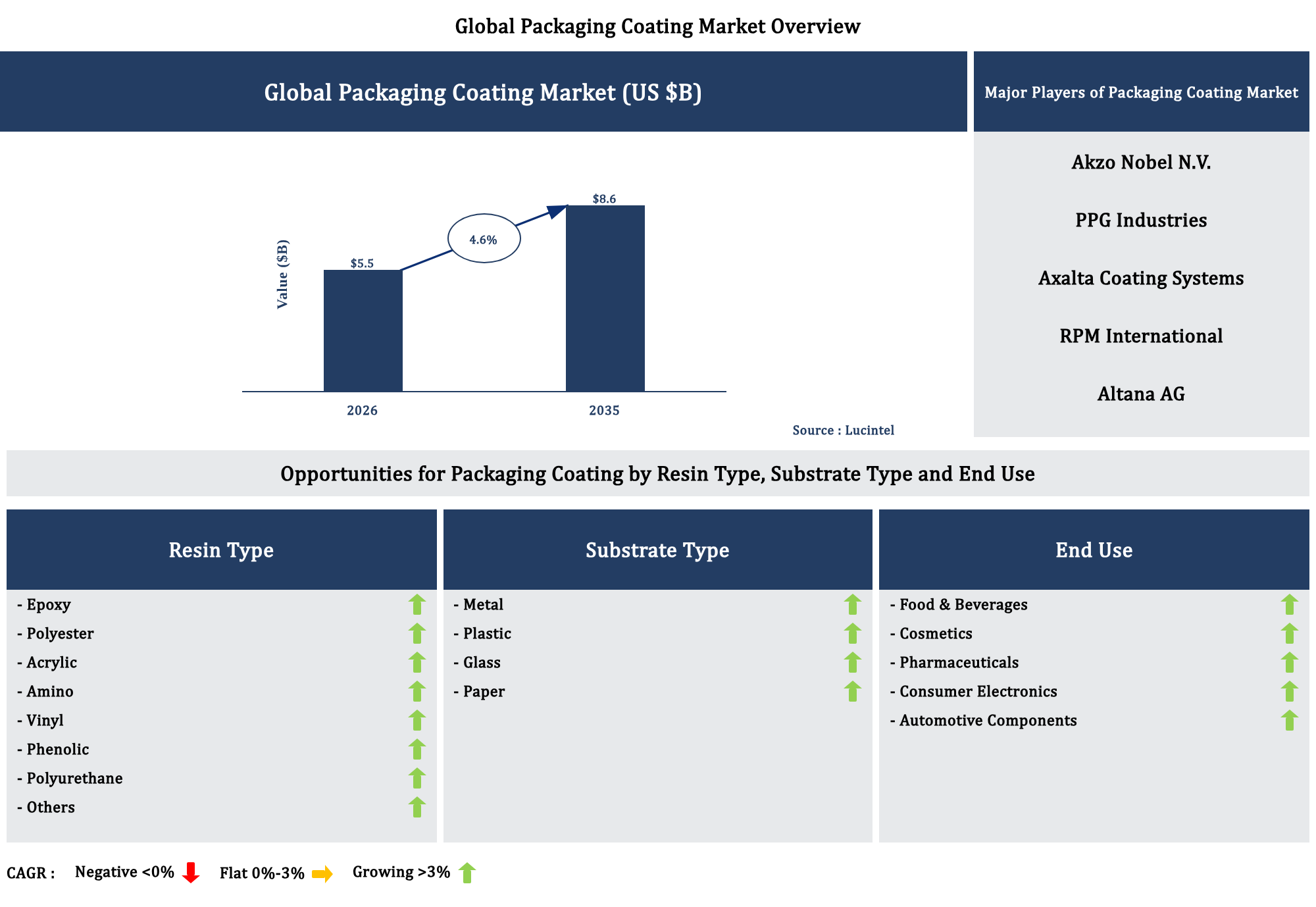
The future of the global packaging coating market looks promising with opportunities in the food & beverage, cosmetic, pharmaceutical, consumer electronic, and automotive component markets. The global packaging coating market is expected to reach an estimated $8,682 million by 2035 with a CAGR of 4.6% from 2026 to 2035. The major drivers for this market are the rising use of flexible packaging formats, the increasing demand for eco friendly packaging solutions, and the growing innovations in water based & uv coatings.
• Lucintel forecasts that, within the resin type category, acrylic is expected to witness higher growth over the forecast period.
• Within the end use category, food & beverage is expected to witness the highest growth.
• In terms of region, APAC is expected to witness the highest growth over the forecast period.
Gain valuable insights for your business decisions with our comprehensive 150+ page report. Sample figures with some insights are shown below.
Emerging Trends in the Packaging Coating Market
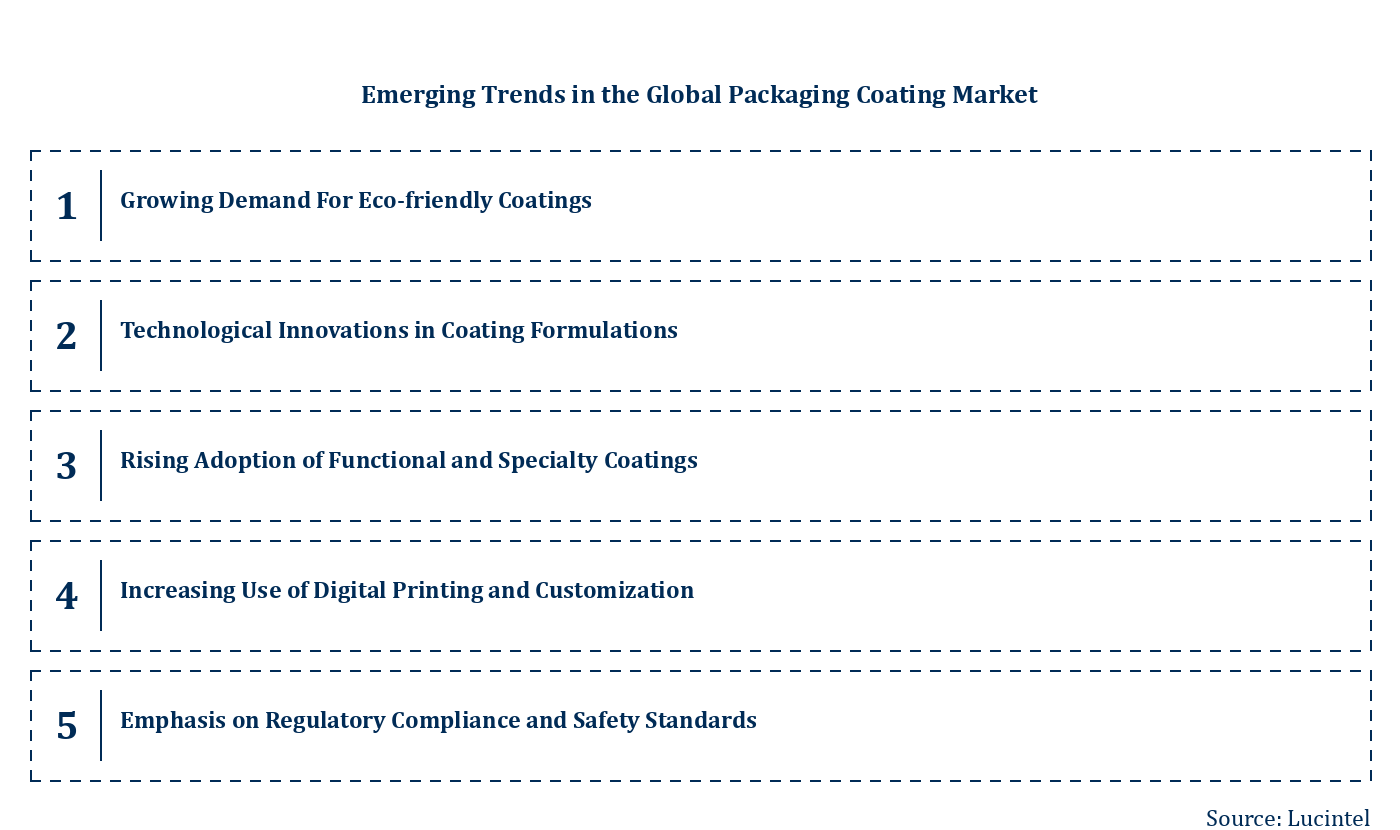
The packaging coating market is experiencing rapid evolution driven by technological advancements, sustainability demands, and changing consumer preferences. As industries seek innovative solutions to enhance product protection, aesthetics, and environmental responsibility, several emerging trends are shaping the future landscape of packaging coatings. These developments are not only improving product performance but also aligning with global sustainability goals, thereby transforming how companies approach packaging design and material selection. Understanding these key trends is essential for stakeholders aiming to stay competitive and meet evolving market demands effectively.
• Growing Demand for Eco-Friendly Coatings: Increasing environmental awareness and stricter regulations are driving the adoption of biodegradable, water-based, and low-VOC coatings. These eco-friendly options reduce harmful emissions and waste, appealing to environmentally conscious consumers. Companies are investing in sustainable formulations that maintain coating performance while minimizing ecological impact, thus aligning with global sustainability initiatives and enhancing brand reputation.
• Technological Innovations in Coating Formulations: Advances in nanotechnology, polymer chemistry, and surface modification are leading to smarter, more durable coatings. These innovations improve resistance to scratches, chemicals, and UV radiation, extending the lifespan of packaged products. Enhanced coating properties also enable functionalities like antimicrobial activity and easy-release surfaces, which are increasingly in demand across various sectors, including food, pharmaceuticals, and consumer goods.
• Rising Adoption of Functional and Specialty Coatings: The market is witnessing a shift towards coatings that offer additional functionalities such as barrier properties, anti-fog, and heat resistance. These specialty coatings improve product shelf life, safety, and consumer appeal. Their application is expanding into flexible packaging, labels, and containers, providing brands with opportunities to differentiate their products through enhanced performance and aesthetic appeal.
• Increasing Use of Digital Printing and Customization: Digital printing technologies are enabling high-quality, customizable coatings that cater to personalized packaging needs. This trend allows brands to quickly adapt designs, reduce waste, and enhance consumer engagement through unique visuals and branding. The integration of digital printing with coating processes is streamlining production and offering greater flexibility in packaging design.
• Emphasis on Regulatory Compliance and Safety Standards: Stringent regulations regarding food contact, chemical safety, and environmental impact are influencing coating formulations and application processes. Manufacturers are focusing on developing compliant coatings that meet international standards, ensuring safety and reducing liability. This trend encourages innovation in non-toxic, food-safe coatings and promotes transparency in ingredient disclosures, fostering consumer trust.
These emerging trends are collectively reshaping the packaging coating market by emphasizing sustainability, technological advancement, functional performance, customization, and regulatory compliance. They are driving innovation, improving product quality, and aligning the industry with global environmental and safety standards, ultimately leading to more sustainable and competitive packaging solutions.
Recent Developments in the Packaging Coating Market
The packaging coating market is experiencing rapid innovation driven by technological advancements, sustainability demands, and evolving consumer preferences. Companies are investing in eco-friendly solutions, enhancing coating durability, and expanding product applications across various sectors. These developments are shaping a competitive landscape, creating new growth opportunities, and influencing market dynamics. Stakeholders must adapt to these changes to capitalize on emerging trends and meet increasing regulatory and environmental standards.
• Growth in Eco-Friendly Coatings: The shift towards sustainable packaging solutions is accelerating, with biodegradable and water-based coatings gaining popularity. This trend reduces environmental impact and aligns with regulatory requirements, opening new market segments. Companies investing in green technologies are gaining competitive advantages, attracting eco-conscious clients, and complying with stricter environmental standards. The demand for eco-friendly coatings is expected to drive significant market growth, fostering innovation and expanding application scopes across industries.
• Advancements in Coating Durability: Innovations in coating formulations are enhancing resistance to moisture, chemicals, and physical wear. These improvements extend packaging lifespan, reduce damage during transit, and improve product shelf life. Enhanced durability is particularly vital for food, pharmaceuticals, and electronics sectors, where packaging integrity is critical. This development boosts customer satisfaction, reduces costs associated with product loss, and opens opportunities for high-performance coatings in demanding environments, thereby expanding market reach and application diversity.
• Growing Use of Nanotechnology: Incorporating nanomaterials into packaging coatings is revolutionizing the industry by providing superior barrier properties, UV resistance, and antimicrobial features. Nanotech-enabled coatings improve product protection and shelf life, especially for perishable goods. This technological leap offers competitive advantages, enabling manufacturers to meet stringent safety standards and consumer expectations. The adoption of nanotechnology is expected to significantly influence market growth, fostering innovation and enabling new, high-value applications in packaging.
• Expansion of Digital and Custom Coatings: Digital printing and customization technologies are enabling brands to create personalized packaging with unique coatings. This trend caters to consumer demand for individualized products and enhances brand visibility. Custom coatings also allow for functional enhancements like anti-fingerprint or gloss effects. The ability to produce small batches efficiently reduces costs and accelerates time-to-market. This development is transforming packaging aesthetics and functionality, opening new revenue streams and market segments for coating manufacturers.
• Increased Focus on Regulatory Compliance: Stringent regulations regarding food safety, environmental impact, and chemical usage are shaping the packaging coating industry. Companies are investing in compliant formulations that meet global standards, reducing legal risks and enhancing brand reputation. This focus drives innovation in non-toxic, low-VOC, and allergen-free coatings. Compliance requirements are prompting market players to adopt safer, more sustainable practices, which in turn stimulates industry growth and encourages the development of advanced, regulation-friendly coating solutions.
The overall impact of these developments is a dynamic, innovative market that is more sustainable, durable, and tailored to consumer needs. These opportunities are fostering growth, encouraging technological advancements, and enabling companies to meet evolving regulatory standards, ultimately shaping a competitive and resilient packaging coating market.
Strategic Growth Opportunities in the Packaging Coating Market
The packaging coating market is experiencing rapid expansion driven by increasing demand for durable, sustainable, and visually appealing packaging solutions across various industries. Innovations in coating materials, rising e-commerce activities, and stringent regulatory standards are shaping growth trajectories. Companies are investing in advanced technologies to enhance product performance, environmental compliance, and customer satisfaction. This dynamic landscape offers numerous opportunities for market players to capitalize on emerging trends and expand their market share through strategic initiatives and product development.
• Expansion into Sustainable and Eco-Friendly Coatings: Growing environmental concerns and regulations are prompting manufacturers to develop biodegradable, water-based, and low-VOC coatings. These eco-friendly options meet consumer demand for sustainable packaging and help brands achieve compliance with global standards. Investing in research and development to create high-performance, environmentally safe coatings can open new market segments and strengthen brand reputation.
• Adoption of Smart Packaging Coatings for Enhanced Functionality: The integration of smart coatings that offer features like temperature sensitivity, anti-counterfeiting, and moisture control is gaining traction. These advanced coatings improve product safety, shelf life, and consumer engagement. Companies focusing on innovative, functional coatings can differentiate their offerings, cater to evolving customer needs, and tap into premium markets with value-added solutions.
• Growth in E-commerce Driving Demand for Protective Coatings: The surge in online shopping necessitates packaging that withstands transportation stresses and preserves product integrity. Protective coatings with superior durability, scratch resistance, and moisture barriers are increasingly in demand. Developing specialized coatings tailored for e-commerce packaging can help manufacturers capture a larger share of this rapidly expanding segment.
• Technological Advancements in Coating Application Processes: Innovations such as spray, dip, and digital printing techniques are improving coating efficiency, quality, and cost-effectiveness. These advancements enable precise application on complex shapes and reduce waste. Embracing new application technologies can enhance production capabilities, reduce environmental impact, and meet the rising quality expectations of end-users.
• Rising Demand for Food and Beverage Packaging Coatings: Stringent safety standards and consumer preferences for attractive, long-lasting packaging are fueling growth in food-grade coatings. These coatings must be non-toxic, odorless, and resistant to moisture and chemicals. Developing compliant, high-performance coatings for food and beverage packaging can open lucrative opportunities, especially in emerging markets with increasing food safety regulations.
These growth opportunities are poised to significantly influence the packaging coating market by fostering innovation, sustainability, and technological progress. Companies that strategically invest in these areas can enhance their competitive edge, meet evolving customer demands, and capitalize on the expanding global packaging industry.
Packaging Coating Market Driver and Challenges
The packaging coating market is influenced by a variety of technological, economic, and regulatory factors that shape its growth and development. Advances in coating technologies, increasing demand for sustainable and eco-friendly solutions, and stringent regulations on environmental impact are key drivers. Economic factors such as rising packaging needs driven by e-commerce and consumer goods also play a significant role. However, the market faces challenges including fluctuating raw material prices, strict regulatory compliance, and environmental concerns related to coating chemicals. Understanding these drivers and challenges is essential for stakeholders to navigate the evolving landscape and capitalize on emerging opportunities.
The factors responsible for driving the packaging coating market include:
• Technological Innovation: The development of advanced coating formulations, such as UV-curable and water-based coatings, enhances durability, safety, and environmental compliance. These innovations enable manufacturers to meet diverse packaging requirements, improve efficiency, and reduce environmental impact. As technology continues to evolve, the market benefits from increased product performance and new application possibilities, fueling growth across various packaging sectors.
• Growing Demand for Sustainable Packaging: Increasing consumer awareness and regulatory pressure are pushing companies toward eco-friendly packaging solutions. Biodegradable, recyclable, and low-VOC coatings are gaining popularity, aligning with global sustainability goals. This shift not only reduces environmental footprint but also appeals to eco-conscious consumers, thereby expanding market opportunities for manufacturers offering sustainable coating options.
• Expansion of E-commerce and Food Packaging: The rapid growth of e-commerce and the food industry has significantly increased demand for protective, attractive, and durable packaging. Coatings that provide moisture resistance, printability, and aesthetic appeal are in high demand. This trend drives innovation and volume sales in the packaging coating market, supporting manufacturers in meeting the needs of these expanding sectors.
• Regulatory Environment and Standards: Stringent regulations regarding VOC emissions, chemical safety, and environmental impact influence market dynamics. Compliance with standards such as REACH and EPA regulations necessitates the development of safer, low-emission coatings. While this creates challenges for manufacturers, it also opens opportunities for innovation and differentiation in eco-friendly coating solutions.
The challenges in the packaging coating market are:
• Fluctuating Raw Material Prices: The market heavily depends on raw materials like resins, solvents, and pigments, which are subject to volatile prices due to geopolitical tensions, supply chain disruptions, and environmental policies. These fluctuations impact production costs and profit margins, forcing manufacturers to adapt pricing strategies and seek alternative materials, which can delay product development and affect market stability.
• Strict Regulatory Compliance: Increasing regulations related to VOC emissions, chemical safety, and environmental standards impose significant compliance costs. Manufacturers must invest in research, testing, and certification processes to meet these standards, which can be time-consuming and expensive. Non-compliance risks legal penalties and damage to brand reputation, making regulatory adherence a critical challenge.
• Environmental Concerns and Sustainability Pressures: The environmental impact of chemical coatings, including pollution and waste management issues, poses ongoing challenges. The industry faces pressure to develop greener formulations that are biodegradable and non-toxic. Balancing performance requirements with environmental sustainability demands substantial R&D investment and may limit the adoption of traditional coatings, impacting market growth.
The packaging coating market is driven by technological advancements, sustainability trends, and expanding packaging needs, while facing challenges from raw material volatility, regulatory demands, and environmental concerns. These factors collectively influence market dynamics, requiring stakeholders to innovate and adapt strategically. The interplay of drivers and challenges will determine the pace of growth and the evolution of sustainable, compliant packaging solutions in the future.
List of Packaging Coating Companies
Companies in the market compete on the basis of product quality offered. Major players in this market focus on expanding their manufacturing facilities, R&D investments, infrastructural development, and leverage integration opportunities across the value chain. With these strategies packaging coating companies cater increasing demand, ensure competitive effectiveness, develop innovative products & technologies, reduce production costs, and expand their customer base. Some of the packaging coating companies profiled in this report include-
• Akzo Nobel N.V.
• PPG Industries
• Axalta Coating Systems
• RPM International
• Altana AG
• Sherwin-Williams Company
• Kansai Paint
Packaging Coating Market by Segment
The study includes a forecast for the global packaging coating market by resin type, substrate type, end use, and region.
Packaging Coating Market by Resin Type [Value from 2019 to 2035]:
• Epoxy
• Polyester
• Acrylic
• Amino
• Vinyl
• Phenolic
• Polyurethane
• Others
Packaging Coating Market by Substrate Type [Value from 2019 to 2035]:
• Metal
• Plastic
• Glass
• Paper
Packaging Coating Market by End Use [Value from 2019 to 2035]:
• Food & Beverages
• Cosmetics
• Pharmaceuticals
• Consumer Electronics
• Automotive Components
Packaging Coating Market by Region [Value from 2019 to 2035]:
• North America
• Europe
• Asia Pacific
• The Rest of the World
Country Wise Outlook for the Packaging Coating Market
The packaging coating market has experienced significant shifts driven by technological innovations, sustainability initiatives, and evolving consumer preferences across the globe. Countries are investing in advanced coating technologies to enhance packaging durability, safety, and environmental compliance. The focus on eco-friendly materials and regulatory standards has prompted manufacturers to innovate and adapt quickly. Market dynamics are also influenced by the growth of e-commerce, food and beverage sectors, and pharmaceutical packaging needs. These developments reflect a broader trend towards sustainable, high-performance packaging solutions that meet stringent safety and environmental standards worldwide.
• United States: The US packaging coating market has seen increased adoption of water-based and UV-curable coatings, driven by stringent environmental regulations and consumer demand for eco-friendly products. Major players are investing in R&D to develop biodegradable and recyclable coatings, aligning with sustainability goals. The growth of e-commerce has also boosted demand for durable, high-quality coatings that protect products during transit. Additionally, innovations in antimicrobial coatings are gaining traction, especially in food and pharmaceutical packaging, to enhance safety and shelf life.
• China: China’s packaging coating market is rapidly expanding due to the booming e-commerce and food industries. The country is focusing on developing environmentally friendly coatings, with a significant shift towards water-based and low-VOC formulations to comply with stricter regulations. Local manufacturers are increasing investments in advanced coating technologies to improve product performance and sustainability. The government’s emphasis on green manufacturing and pollution control has further accelerated the adoption of eco-friendly coatings. Moreover, China is witnessing a rise in demand for specialized coatings for flexible packaging and food safety applications.
• Germany: Germany’s market is characterized by a strong emphasis on sustainability and innovation. The country is leading in the adoption of solvent-free and biodegradable coatings, driven by strict EU regulations and consumer awareness. German companies are investing heavily in research to develop high-performance, environmentally friendly coatings that meet safety standards. The demand for coatings with enhanced barrier properties for food and pharmaceutical packaging is also increasing. Additionally, digital printing and customization trends are influencing coating technologies, enabling more personalized and sustainable packaging solutions.
• India: The Indian packaging coating market is experiencing rapid growth fueled by expanding manufacturing, food, and pharmaceutical sectors. There is a notable shift towards water-based and eco-friendly coatings to meet environmental regulations and consumer preferences. Local companies are adopting advanced coating technologies to improve product durability and safety. The government’s focus on promoting sustainable packaging practices and reducing plastic waste is encouraging innovation in biodegradable and recyclable coatings. The rise of e-commerce and retail sectors is further boosting demand for high-quality, protective coatings suitable for diverse packaging needs.
• Japan: Japan’s market is characterized by technological innovation and a focus on sustainability. The country is investing in advanced coating solutions such as UV-curable and functional coatings that offer enhanced durability and safety. Regulatory standards for environmental impact are strict, prompting a shift towards eco-friendly formulations. Japan is also exploring nanotechnology-based coatings to improve barrier properties and functionality. The aging population and increasing health consciousness are driving demand for coatings that ensure food safety and extend product shelf life. Overall, Japan’s market is evolving with a focus on high-performance, sustainable packaging solutions.
Features of the Global Packaging Coating Market
Market Size Estimates: Packaging coating market size estimation in terms of value ($M).
Trend and Forecast Analysis: Market trends (2019 to 2025) and forecast (2026 to 2035) by various segments and regions.
Segmentation Analysis: Packaging coating market size by resin type, substrate type, end use, and region in terms of value ($M).
Regional Analysis: Packaging coating market breakdown by North America, Europe, Asia Pacific, and Rest of the World.
Growth Opportunities: Analysis of growth opportunities in different resin type, substrate type, end use, and regions for the packaging coating market.
Strategic Analysis: This includes M&A, new product development, and competitive landscape of the packaging coating market.
Analysis of competitive intensity of the industry based on Porter’s Five Forces model.
FAQ
Q1. What is the packaging coating market size?
Answer: The global packaging coating market is expected to reach an estimated $8,682 million by 2035.
Q2. What is the growth forecast for packaging coating market?
Answer: The global packaging coating market is expected to grow with a CAGR of 4.6% from 2026 to 2035.
Q3. What are the major drivers influencing the growth of the packaging coating market?
Answer: The major drivers for this market are the rising use of flexible packaging formats, the increasing demand for eco friendly packaging solutions, and the growing innovations in water based & uv coatings.
Q4. What are the major segments for packaging coating market?
Answer: The future of the packaging coating market looks promising with opportunities in the food & beverage, cosmetic, pharmaceutical, consumer electronic, and automotive component markets.
Q5. Who are the key packaging coating market companies?
Answer: Some of the key packaging coating companies are as follows:
• Akzo Nobel N.V.
• PPG Industries
• Axalta Coating Systems
• RPM International
• Altana AG
• Sherwin-Williams Company
• Kansai Paint
Q6. Which packaging coating market segment will be the largest in future?
Answer: Lucintel forecasts that, within the resin type category, acrylic is expected to witness higher growth over the forecast period.
Q7. In packaging coating market, which region is expected to be the largest in next 8 years?
Answer: In terms of region, APAC is expected to witness the highest growth over the forecast period.
Q8. Do we receive customization in this report?
Answer: Yes, Lucintel provides 10% customization without any additional cost.
This report answers following 11 key questions:
Q.1. What are some of the most promising, high-growth opportunities for the packaging coating market by resin type (epoxy , polyester, acrylic, amino, vinyl, phenolic, polyurethane, and others), substrate type (metal , plastic, glass, and paper), end use (food & beverages, cosmetics, pharmaceuticals, consumer electronics, and automotive components), and region (North America, Europe, Asia Pacific, and the Rest of the World)?
Q.2. Which segments will grow at a faster pace and why?
Q.3. Which region will grow at a faster pace and why?
Q.4. What are the key factors affecting market dynamics? What are the key challenges and business risks in this market?
Q.5. What are the business risks and competitive threats in this market?
Q.6. What are the emerging trends in this market and the reasons behind them?
Q.7. What are some of the changing demands of customers in the market?
Q.8. What are the new developments in the market? Which companies are leading these developments?
Q.9. Who are the major players in this market? What strategic initiatives are key players pursuing for business growth?
Q.10. What are some of the competing products in this market and how big of a threat do they pose for loss of market share by material or product substitution?
Q.11. What M&A activity has occurred in the last 5 years and what has its impact been on the industry?
For any questions related to Packaging Coating Market, Packaging Coating Market Size, Packaging Coating Market Growth, Packaging Coating Market Analysis, Packaging Coating Market Report, Packaging Coating Market Share, Packaging Coating Market Trends, Packaging Coating Market Forecast, Packaging Coating Companies, write Lucintel analyst at email: helpdesk@lucintel.com. We will be glad to get back to you soon.
