
Market Report · July 29, 2026

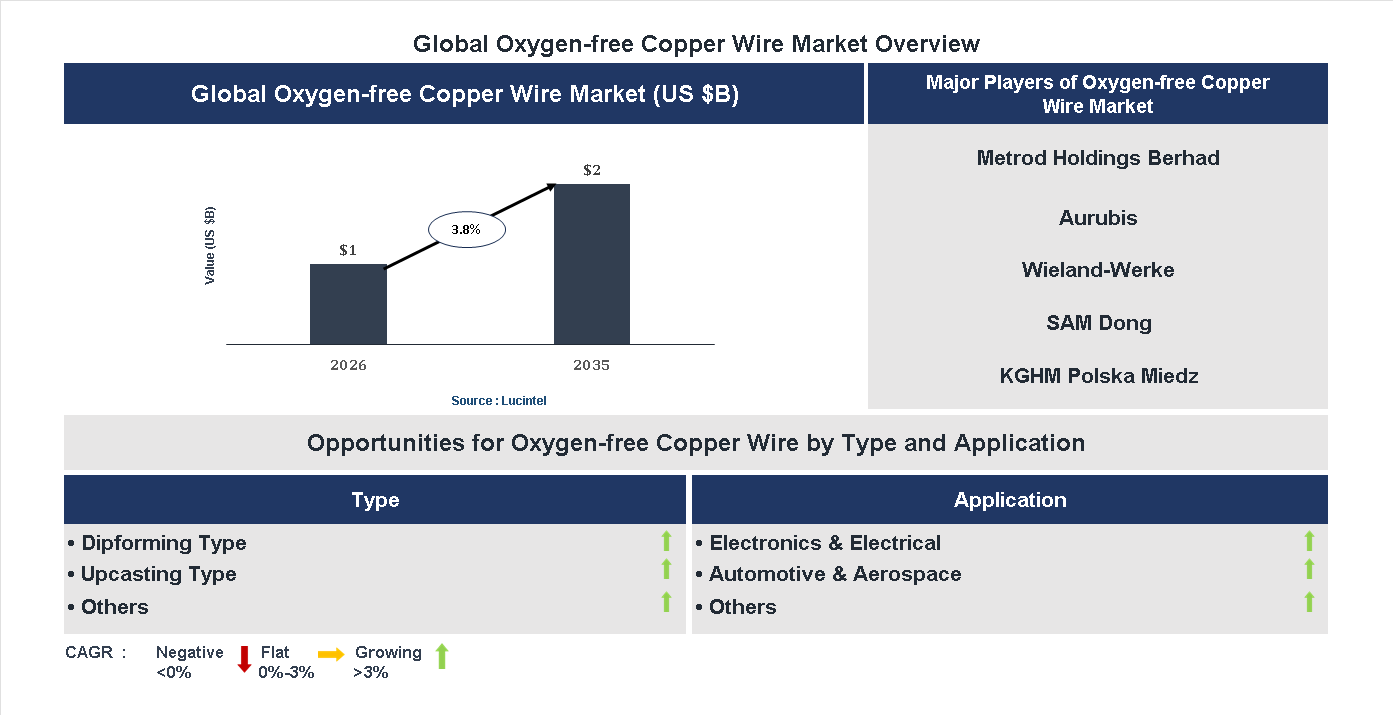
Key data points: The market size in 2035 = $2.4 billion, growth forecast = 3.8% annually for the next 8 years. Scroll below to get more insights. This market report covers trends, opportunities and forecasts in oxygen-free copper wire market to 2035 by type (dipforming type, upcasting type, and others), application (electronics & electrical, automotive & aerospace, and others), and region (North America, Europe, Asia Pacific, and the Rest of the World)
We'll send your sample report shortly.
• Lucintel forecasts that, within the type category, upcasting type is expected to witness higher growth over the forecast period.
• Within the application category, electronics & electrical is expected to witness higher growth.
• In terms of region, APAC is expected to witness the highest growth over the forecast period. Gain valuable insights for your business decisions with our comprehensive 150+ page report. Sample figures with some insights are shown below.
• Rising Demand for High-Purity Copper: The increasing need for high-purity oxygen-free copper wire is driven by its superior electrical conductivity and corrosion resistance. Industries such as electronics and power transmission prefer these wires for their reliability and performance. This trend is pushing manufacturers to enhance refining processes and expand production capacities, ultimately leading to higher quality standards and a broader application scope. The demand surge is also encouraging innovation in alloy compositions to meet specific industry needs, fostering a competitive environment focused on quality and performance.
• Technological Innovations in Manufacturing: Advances in manufacturing technologies, including improved refining techniques and automation, are enabling producers to create more consistent and higher-quality oxygen-free copper wires. These innovations reduce production costs, improve efficiency, and ensure tighter quality control. As a result, the market benefits from increased product reliability and reduced lead times. The adoption of new technologies also allows for customization and the development of specialized wire types, catering to niche applications and expanding market reach.
• Growing Adoption in Renewable Energy and Electric Vehicles: The shift towards renewable energy sources and electric vehicles (EVs) is significantly impacting the oxygen-free copper wire market. These sectors require high-performance wiring solutions for efficient energy transmission and vehicle components. The demand for lightweight, durable, and high-conductivity copper wires is rising, prompting manufacturers to innovate and adapt their product offerings. This trend not only boosts market growth but also encourages sustainable practices and eco-friendly manufacturing processes, aligning with global environmental goals.
• Emphasis on Sustainability and Eco-Friendly Practices: Environmental concerns are prompting market players to adopt sustainable manufacturing practices, such as recycling copper and reducing energy consumption during production. Certification standards related to environmental impact are becoming more stringent, influencing product development and supply chain management. This trend enhances the markets reputation and appeals to environmentally conscious consumers and industries. Sustainable practices also help reduce costs and ensure compliance with international regulations, fostering long-term growth and stability.
• Expansion into Emerging Markets: Emerging economies are witnessing rapid industrialization and infrastructure development, creating new opportunities for oxygen-free copper wire suppliers. Increased investments in power grids, telecommunications, and manufacturing sectors are driving demand. Companies are expanding their distribution networks and establishing local manufacturing facilities to capitalize on these opportunities. This geographic diversification helps mitigate risks associated with mature markets and positions companies for sustained growth, while also supporting regional economic development and technological advancement. These trends are collectively reshaping the oxygen-free copper wire market by enhancing product quality, driving technological progress, expanding application areas, emphasizing sustainability, and opening new geographic markets. These developments are fostering a more competitive, innovative, and environmentally conscious industry landscape, poised for continued growth and evolution.

• Growing Electronics Industry: Expanding consumer electronics, automotive electronics, and industrial machinery are fueling demand for high-purity copper wires. These wires offer superior conductivity, corrosion resistance, and reliability, essential for advanced electronic components. As technology advances, the need for high-quality wiring increases, boosting market growth. The rise in electric vehicles and smart devices further amplifies this trend, creating opportunities for manufacturers to innovate and capture new market segments.
• Advancements in Manufacturing Technologies: Innovations such as improved electrolysis and refining techniques are enhancing the purity levels of oxygen-free copper wires. These technological developments reduce production costs and improve wire quality, making them more attractive for high-end applications. Enhanced manufacturing processes also enable scalability and customization, meeting specific industry needs. As a result, companies can offer better products, expand their customer base, and strengthen their market position in a competitive landscape.
• Increasing Use in Renewable Energy Systems: The shift toward renewable energy sources like solar and wind power is driving demand for durable, high-conductivity wiring solutions. Oxygen-free copper wires are ideal for these applications due to their excellent electrical performance and corrosion resistance. This trend supports the growth of sustainable infrastructure projects and energy-efficient systems. The expanding renewable sector presents significant opportunities for market players to supply specialized wiring solutions, fostering long-term industry growth.
• Rising Demand in Automotive Sector: The automotive industry’s transition to electric vehicles (EVs) and advanced electronic systems is boosting the need for high-quality copper wiring. Oxygen-free copper wires provide the necessary conductivity and safety features required for EV batteries, charging stations, and electronic control units. This demand encourages innovation in wire design and material quality, opening new avenues for manufacturers. The automotive sector’s growth directly impacts market expansion, emphasizing the importance of high-purity copper in future vehicle technologies.
• Focus on Sustainable and Eco-Friendly Production: Increasing environmental regulations and consumer awareness are prompting manufacturers to adopt eco-friendly production practices. Recycling and sustainable sourcing of oxygen-free copper reduce environmental impact and improve brand reputation. These initiatives support the development of greener supply chains and products. As sustainability becomes a key market differentiator, companies investing in eco-friendly processes are likely to gain competitive advantages, influencing overall market dynamics and encouraging industry-wide adoption of sustainable practices. The overall impact of these developments is a robust, innovative market characterized by higher quality products, expanded applications, and sustainable practices. These factors collectively drive growth, enhance competitiveness, and open new opportunities across various sectors, shaping a promising future for the oxygen-free copper wire market.
• Advanced Manufacturing Technologies Enhance Copper Wire Quality: Implementing innovative manufacturing processes such as continuous casting and electrolysis improves the purity and conductivity of oxygen-free copper wires. These advancements enable producers to meet stringent industry standards, reduce impurities, and produce high-performance conductors suitable for sensitive electronic applications. The focus on quality control and process optimization also reduces waste and energy consumption, making production more sustainable and cost-effective, thereby expanding market opportunities in high-end electrical and electronic sectors.
• Growing Adoption in Renewable Energy Systems Drives Demand: The increasing deployment of solar panels, wind turbines, and energy storage systems requires high-quality wiring solutions to ensure efficiency and safety. Oxygen-free copper wires, with their superior conductivity and corrosion resistance, are ideal for these applications. As governments promote renewable energy adoption through policies and incentives, the demand for reliable, durable wiring solutions is expected to rise significantly, opening new avenues for market growth in sustainable energy infrastructure.
• Expansion in Automotive Electrification Boosts Market Opportunities: The shift toward electric vehicles (EVs) and hybrid systems necessitates high-performance wiring components capable of handling increased electrical loads. Oxygen-free copper wires are preferred for their excellent electrical conductivity and thermal stability, essential for EV batteries, charging stations, and onboard electronics. The automotive industrys transition to electrification presents substantial growth prospects, encouraging manufacturers to develop specialized wire segments tailored for automotive applications, including high-temperature and high-current variants.
• Increasing Use in Electronics and Consumer Devices Promotes Market Growth: The proliferation of smartphones, laptops, and wearable devices demands miniaturized, high-quality wiring solutions. Oxygen-free copper wires are favored for their high conductivity and flexibility, enabling compact and efficient electronic circuits. As consumer electronics become more sophisticated and integrated, the need for reliable wiring components grows, prompting manufacturers to innovate in product design and material performance, thereby expanding the market for oxygen-free copper wires in this segment.
• Strategic Collaborations and Market Penetration in Emerging Economies Accelerate Growth: Companies are forming alliances and joint ventures to expand their reach in rapidly developing regions such as Asia-Pacific and Latin America. These collaborations facilitate technology transfer, local manufacturing, and cost reduction, making high-quality oxygen-free copper wires more accessible. Increased infrastructure development, urbanization, and industrialization in these regions further drive demand, enabling market players to capitalize on emerging opportunities and strengthen their global presence. The overall market outlook is positively influenced by these growth opportunities, promising increased innovation, expanded applications, and competitive advantages for industry participants. As demand for high-quality, reliable wiring solutions continues to rise across sectors, strategic investments and technological advancements will be crucial in capturing market share and driving sustainable growth in the oxygen-free copper wire market.
• Technological Advancements: The continuous development of manufacturing technologies enhances the purity and quality of copper wires, making them suitable for high-performance applications. Innovations such as improved refining processes and coating techniques increase durability and conductivity, expanding their use in electronics, aerospace, and automotive industries. These advancements also enable cost-effective production, encouraging manufacturers to meet rising demand efficiently. As technology evolves, the market benefits from higher-quality products that meet stringent industry standards, fostering growth and innovation.
• Growing Electronics and Automotive Industries: The surge in demand for electronic devices, including smartphones, computers, and IoT gadgets, significantly boosts the need for high-quality copper wiring. Similarly, the automotive sectors shift toward electric vehicles (EVs) relies heavily on oxygen-free copper wires for efficient electrical systems. This increased consumption in these sectors drives market expansion, as manufacturers seek reliable, high-conductivity materials to meet performance and safety standards. The expanding infrastructure for EV charging stations further amplifies this demand, making the electronics and automotive industries key growth drivers.
• Infrastructure Development and Urbanization: Rapid urbanization and infrastructure projects worldwide necessitate extensive electrical wiring for power distribution, telecommunications, and construction. Governments and private sectors invest heavily in smart city initiatives and renewable energy projects, which require high-quality copper wiring solutions. The need for durable, corrosion-resistant, and high-conductivity wires in these projects propels market growth. As urban areas expand and modernize, the demand for oxygen-free copper wires increases, supporting reliable electrical infrastructure essential for sustainable development.
• Regulatory and Environmental Standards: Stringent regulations concerning environmental impact and safety standards influence the production and application of copper wires. Governments enforce regulations on emissions, waste management, and recycling practices, prompting manufacturers to adopt cleaner, more sustainable processes. These standards also encourage the use of recycled copper, which aligns with environmental goals and reduces costs. Compliance with such regulations ensures market players maintain quality and safety, fostering consumer trust and opening avenues for eco-friendly product development.
• Rising Investment in Renewable Energy: The global shift toward renewable energy sources, such as wind and solar power, necessitates extensive electrical infrastructure, including high-quality copper wiring. These wires are critical for transmitting electricity efficiently and reliably in renewable energy systems. Increased investments in renewable projects worldwide directly impact demand for oxygen-free copper wires, supporting market growth. As countries aim to meet climate goals, the expansion of renewable energy infrastructure will continue to be a significant driver, promoting innovation and sustainable practices within the market. The challenges facing the oxygen-free copper wire market include:-
• Fluctuating Raw Material Prices: The market heavily depends on copper prices, which are subject to volatility due to geopolitical tensions, mining disruptions, and global economic conditions. Price fluctuations can impact manufacturing costs and profit margins, making it difficult for companies to plan and invest confidently. Sudden increases in copper prices may lead to higher product costs, reducing competitiveness and potentially slowing market growth. Conversely, price drops can affect supplier revenues and supply stability, creating uncertainty that hampers long-term strategic planning.
• Environmental and Recycling Regulations: While regulations promote sustainability, they also pose challenges for market players. Stricter environmental standards require significant investments in cleaner production technologies and recycling facilities, increasing operational costs. Managing waste and ensuring compliance with evolving standards can be complex and resource-intensive. Additionally, the availability of recycled copper may be limited, affecting supply chains and leading to potential shortages or increased reliance on primary copper sources, which can be more environmentally taxing.
• Technological Disruption and Competition: Rapid technological changes and the emergence of alternative materials threaten the market’s stability. Innovations in composite materials or conductive polymers could replace traditional copper wires in certain applications, reducing demand. Moreover, competition from low-cost producers in emerging markets can pressure established players to lower prices, impacting profitability. Staying ahead of technological trends and maintaining competitive pricing require continuous R&D investments, which can strain resources and challenge market sustainability. The oxygen-free copper wire market is shaped by technological progress, expanding industrial sectors, infrastructure development, regulatory compliance, and renewable energy investments. However, it faces challenges such as raw material price volatility, stringent environmental regulations, and technological disruptions. These factors collectively influence market stability, growth potential, and strategic planning. While opportunities abound in high-growth sectors, stakeholders must navigate regulatory complexities and market fluctuations carefully. Overall, the market’s future hinges on innovation, sustainability efforts, and adaptive strategies to mitigate risks and capitalize on emerging trends.
• Metrod Holdings Berhad
• Aurubis
• Wieland-Werke
• SAM Dong
• KGHM Polska Miedz
• Mitsubishi Materials
• Hitachi Metals Neomaterial
• KME Germany
• Aviva Metals
• Citizen Metalloys
• Dipforming Type
• Upcasting Type
• Others
• Electronics & Electrical
• Automotive & Aerospace
• Others
• North America
• Europe
• Asia Pacific
• The Rest of the World
• United States: The U.S. market has seen increased adoption of oxygen-free copper wires in renewable energy projects, electric vehicles, and high-speed data centers. Innovations in manufacturing processes have improved wire purity and performance, while regulatory standards promote higher quality and safety. The country’s focus on sustainable infrastructure and green energy initiatives has further driven demand, with key players investing in R&D to develop advanced, eco-friendly copper wire solutions.
• China: China remains the largest consumer and producer of oxygen-free copper wire, driven by rapid industrialization and infrastructure development. The government’s policies favor high-tech manufacturing and green energy, boosting demand for high-purity copper wires in electric vehicles, smart grids, and electronics. Chinese companies are investing heavily in technological upgrades and expanding capacity to meet domestic and export needs, positioning China as a global leader in this market.
• Germany: Germany’s market is characterized by a focus on high-quality, precision-engineered oxygen-free copper wires used in automotive, aerospace, and industrial automation sectors. The country emphasizes sustainable manufacturing practices and stringent quality standards, leading to innovations in wire purity and performance. German firms are also investing in R&D to develop environmentally friendly production methods, aligning with the country’s commitment to sustainability and technological excellence.
• India: India’s oxygen-free copper wire market is expanding rapidly due to increasing infrastructure projects, urbanization, and the growth of the electrical and electronics sectors. The government’s initiatives to promote renewable energy and smart city projects are fueling demand. Local manufacturers are adopting advanced technologies to improve product quality and reduce costs, while foreign investments are helping to enhance production capacity and meet rising domestic and export demands.
• Japan: Japan’s market focuses on high-performance oxygen-free copper wires used in electronics, robotics, and transportation industries. The country’s emphasis on innovation and quality has led to the development of specialized, high-purity copper wires that meet strict safety and efficiency standards. Japanese companies are also exploring sustainable manufacturing practices and recycling technologies to reduce environmental impact, maintaining their position as leaders in high-tech applications within the global market.


• Metrod Holdings Berhad
• Aurubis
• Wieland-Werke
• SAM Dong
• KGHM Polska Miedz
• Mitsubishi Materials
• Hitachi Metals Neomaterial
• KME Germany
• Aviva Metals
• Citizen Metalloys Q6. Which oxygen-free copper wire market segment will be the largest in future? Answer: Lucintel forecasts that, within the type category, upcasting type is expected to witness higher growth over the forecast period. Q7. In oxygen-free copper wire market, which region is expected to be the largest in next 5 years? Answer: In terms of region, APAC is expected to witness the highest growth over the forecast period. Q8. Do we receive customization in this report? Answer: Yes, Lucintel provides 10% customization without any additional cost.


Choose a license that fits your team. Instant PDF delivery.
Prices exclude taxes. Instant delivery. Custom licensing available on request.
Market Report · July 29, 2026
Market Report · July 15, 2026
Market Report · July 13, 2026
Trusted partner for strategic intelligence and business growth


Receive a complimentary market analysis tailored to your industry. Our analysts will identify key growth opportunities and competitive dynamics specific to your business.

Market size, growth rate, and key trend analysis for your specific sector.

Top competitor positioning and market share analysis.

Strategic recommendations backed by data-driven insights.
Get curated market intelligence and competitive moves straight to your inbox.
By subscribing, you agree to receive our monthly insights. Unsubscribe anytime.
Receive a complimentary market analysis tailored to your industry. Our analysts will identify key growth opportunities and competitive dynamics specific to your business.
Market size, growth rate, and key trend analysis for your specific sector.
Top competitor positioning and market share analysis.
Strategic recommendations backed by data-driven insights.
Get curated market intelligence, emerging trends, and competitive moves straight to your inbox each month.
By subscribing, you agree to receive our monthly insights. Unsubscribe anytime.
We'll send your sample report shortly.