
Report Feature
OTC Analgesic Gel Drug Market Trends and Forecast
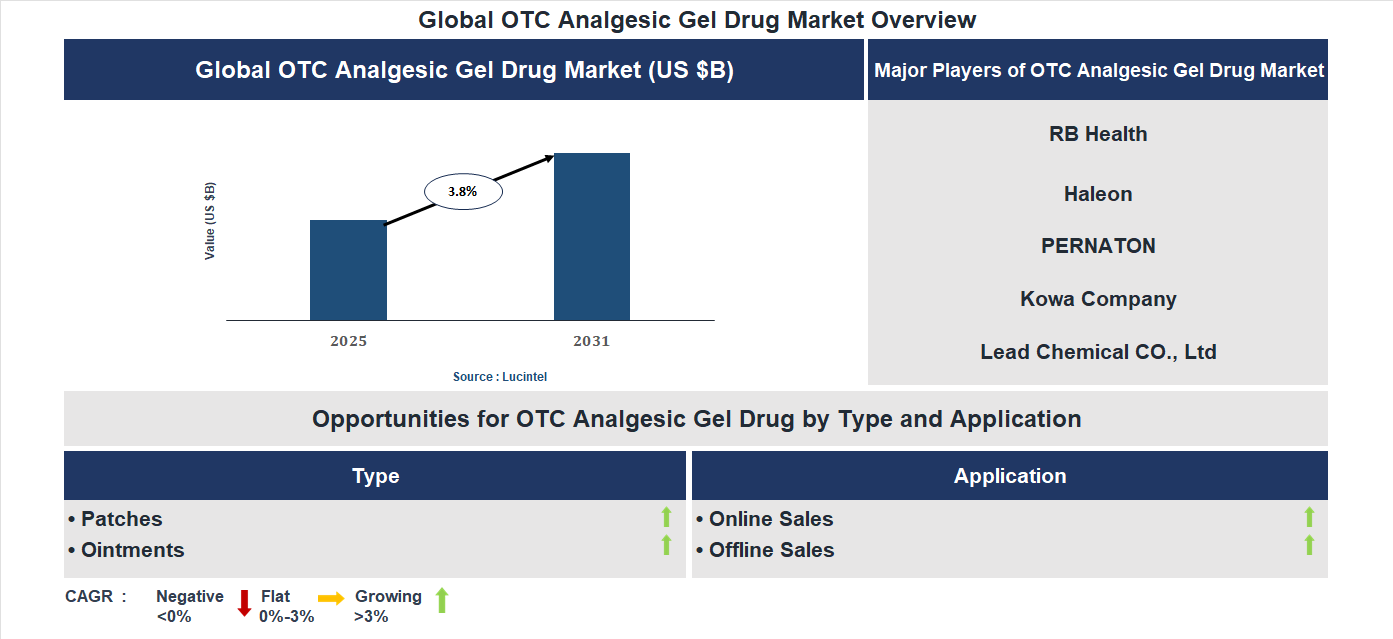
The future of the global OTC analgesic gel drug market looks promising with opportunities in the online sale and offline sale markets. The global OTC analgesic gel drug market is expected to grow with a CAGR of 3.8% from 2025 to 2031. The major drivers for this market are the rising prevalence of musculoskeletal pain & joint disorders, the increasing retail pharmacy & online availability of OTC analgesic gels, and the growing sports injury & fitness related muscle pain cases.• Lucintel forecasts that, within the type category, patch is expected to witness higher growth over the forecast period.
• Within the application category, offline sale is expected to witness higher growth.
• In terms of region, APAC is expected to witness the highest growth over the forecast period. Gain valuable insights for your business decisions with our comprehensive 150+ page report. Sample figures with some insights are shown below.
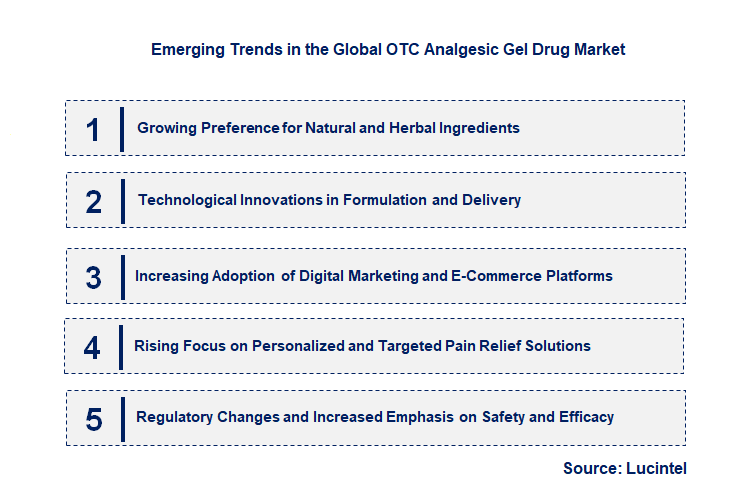
Emerging Trends in the OTC Analgesic Gel Drug Market
The OTC analgesic gel drug market is experiencing rapid evolution driven by technological advancements, changing consumer preferences, and regulatory shifts. As consumers seek faster, more effective pain relief options, companies are innovating to meet these demands. Additionally, the increasing focus on natural ingredients and personalized healthcare is shaping product development. The market is also witnessing a surge in digital marketing and e-commerce channels, expanding reach and accessibility. These developments are collectively transforming the landscape, making it more competitive, consumer-centric, and innovative. Understanding these trends is crucial for stakeholders aiming to capitalize on emerging opportunities and navigate potential challenges effectively.• Growing Preference for Natural and Herbal Ingredients: Consumers are increasingly seeking OTC analgesic gels with natural, herbal, and organic ingredients. This trend is driven by a rising awareness of side effects associated with synthetic drugs and a desire for holistic health solutions. Companies are reformulating products to include plant-based extracts like arnica, menthol, and capsaicin, which appeal to health-conscious consumers. This shift not only enhances product appeal but also aligns with regulatory trends favoring natural ingredients. The demand for natural analgesic gels is expected to continue rising, influencing product innovation and marketing strategies.
• Technological Innovations in Formulation and Delivery: Advances in formulation technology are enabling the development of more effective and faster-acting analgesic gels. Innovations such as nanotechnology and bioavailability enhancement improve drug absorption and efficacy. Additionally, new delivery systems like transdermal patches and microemulsions are being explored to optimize pain relief. These technological improvements enhance user experience by providing longer-lasting effects and reducing application frequency. As a result, companies are investing heavily in R&D to develop next-generation products that meet consumer expectations for quick, effective, and convenient pain relief solutions.
• Increasing Adoption of Digital Marketing and E-commerce Platforms: The rise of digital channels is significantly impacting the OTC analgesic gel market. Brands are leveraging social media, influencer marketing, and targeted online advertising to reach a broader audience. E-commerce platforms provide consumers with easy access to product information, reviews, and direct purchasing options, boosting sales and brand visibility. The COVID-19 pandemic accelerated this shift, making online shopping the preferred method for many consumers. This trend allows companies to gather valuable consumer data, personalize marketing efforts, and expand into new markets more efficiently, thereby driving market growth and competitiveness.
• Rising Focus on Personalized and Targeted Pain Relief Solutions: Consumers are increasingly seeking personalized healthcare options tailored to their specific pain conditions. This trend is prompting companies to develop customizable formulations and targeted delivery systems. Innovations such as combination gels addressing multiple pain types or formulations designed for specific demographics (e.g., elderly, athletes) are gaining popularity. Personalized analgesic gels improve efficacy and reduce side effects, enhancing consumer satisfaction. This shift towards tailored solutions is reshaping product development strategies and encouraging collaborations between healthcare providers and manufacturers to deliver more precise pain management options.
• Regulatory Changes and Increased Emphasis on Safety and Efficacy: Evolving regulatory frameworks are influencing product formulation, marketing, and approval processes. Authorities are imposing stricter safety and efficacy standards, prompting companies to conduct more rigorous clinical testing and quality assurance. This trend ensures consumer safety but also increases development costs and time-to-market. Additionally, transparent labeling and claims are becoming mandatory, fostering trust and credibility. Companies that adapt quickly to these regulatory changes can gain competitive advantages by demonstrating compliance and safety, ultimately shaping the market landscape towards higher standards and more reliable products. In summary, these emerging trends are collectively reshaping the OTC Analgesic Gel Drug Market by fostering innovation, enhancing consumer engagement, and emphasizing safety and personalization. As a result, the market is becoming more dynamic, competitive, and aligned with modern healthcare and consumer expectations, paving the way for sustained growth and development.
Recent Development in the OTC Analgesic Gel Drug Market
The OTC analgesic gel drug market has experienced significant growth driven by increasing consumer demand for effective pain relief solutions, advancements in formulation technologies, and a rising preference for non-prescription medications. The market is characterized by innovation, expanding product portfolios, and evolving regulatory landscapes. These developments are shaping the competitive environment and influencing consumer choices. As awareness of pain management options grows, companies are investing in research and development to meet diverse needs. The following key developments highlight the recent trends and shifts within this dynamic market, reflecting its ongoing evolution and future potential.• Introduction of Natural and Herbal Formulations: Companies are increasingly launching OTC analgesic gels with natural ingredients such as menthol, eucalyptus, and herbal extracts. This shift caters to consumers seeking organic and side-effect-free pain relief options, boosting market appeal and expanding customer base.
• Technological Advancements in Delivery Systems: Innovations like transdermal patches and enhanced gel formulations improve drug absorption and efficacy. These advancements increase consumer satisfaction, promote faster relief, and differentiate products in a competitive market.
• Regulatory Changes and Approvals: Governments and regulatory bodies are updating guidelines for OTC analgesic products, emphasizing safety and efficacy. These changes influence product formulations, marketing strategies, and market entry, ensuring higher standards and consumer trust.
• Growing Focus on Pain Management in Chronic Conditions: There is an increasing demand for OTC gels targeting chronic pain conditions such as arthritis and muscle strains. This trend expands market opportunities and encourages companies to develop specialized formulations.
• Expansion into Emerging Markets: Companies are focusing on expanding distribution channels and marketing efforts in emerging economies. This geographic diversification enhances market reach, drives sales growth, and taps into a large, underserved consumer base. The recent developments in the OTC analgesic gel drug market are fostering innovation, improving product efficacy, and expanding market access. These trends are collectively enhancing consumer options, increasing competition, and driving overall market growth, positioning the industry for sustained future expansion.
Strategic Growth Opportunities in the OTC Analgesic Gel Drug Market
The OTC analgesic gel drug market is experiencing rapid growth driven by increasing consumer demand for effective, fast-acting pain relief solutions. Advances in formulation technology, rising awareness of self-medication, and expanding healthcare access are fueling market expansion across various applications. Key growth opportunities are emerging in areas such as sports injuries, chronic pain management, arthritis relief, dental pain, and post-surgical care. These opportunities are transforming the landscape by offering targeted, convenient, and non-invasive options for pain relief, thereby broadening consumer choices and driving market competitiveness. Companies that capitalize on these trends can significantly enhance their market share and innovation capabilities.• Sports Injuries: Expanding use of OTC analgesic gels for sports-related injuries offers quick, localized pain relief, appealing to athletes and active individuals. This growth enhances market penetration in sports medicine, encouraging brand loyalty and frequent usage, ultimately boosting sales and product development tailored to active lifestyles.
• Chronic Pain Management: The rising prevalence of chronic pain conditions such as back pain and muscle strains creates demand for long-lasting, effective OTC gels. This opportunity allows companies to develop formulations with extended relief durations, improving patient compliance and expanding their customer base in the chronic pain segment.
• Arthritis Relief: Increasing cases of arthritis, especially among aging populations, drive demand for OTC gels that provide targeted relief with minimal side effects. This growth opportunity supports innovation in formulations that offer rapid, localized pain alleviation, strengthening market position in elderly care.
• Dental Pain: The need for immediate, non-invasive relief from dental discomfort presents a significant opportunity. OTC analgesic gels designed for oral use can address this demand, expanding product portfolios and capturing a broader consumer segment seeking quick dental pain solutions.
• Post-Surgical Care: The growing trend of self-managed post-surgical pain relief creates a niche for OTC gels that facilitate recovery at home. Developing specialized formulations for post-operative pain management can reduce reliance on prescription medications and foster market growth in surgical recovery products. In summary, these key growth opportunities are significantly impacting the OTC analgesic gel drug market by broadening application areas, enhancing product innovation, and meeting diverse consumer needs. This evolution is driving increased market size, competitive dynamics, and the development of tailored pain relief solutions, positioning the industry for sustained growth.
OTC Analgesic Gel Drug Market Driver and Challenges
The OTC analgesic gel drug market is influenced by a variety of technological, economic, and regulatory factors that shape its growth and development. Advances in formulation technology and delivery methods enhance product efficacy and patient compliance. Economic factors such as increasing healthcare costs and consumer spending patterns drive demand for over-the-counter solutions. Regulatory policies impact product approval, marketing, and safety standards, influencing market entry and competition. Additionally, consumer awareness and preferences for non-invasive, fast-acting pain relief options further propel market expansion. Navigating these diverse drivers and overcoming associated challenges is crucial for stakeholders aiming to capitalize on the markets potential. The factors responsible for driving the OTC analgesic gel drug market include:• Technological Innovation: The development of advanced gel formulations with improved absorption and faster relief capabilities has significantly boosted market growth. Innovations such as transdermal delivery systems and bioavailability enhancements make products more effective and appealing to consumers. These technological advancements also enable companies to differentiate their offerings, meet regulatory standards, and respond to consumer demands for safer, non-invasive pain relief options. As research continues, the market benefits from new, more effective formulations that cater to a broader demographic, including those with sensitive skin or specific health conditions.
• Rising Prevalence of Chronic Pain Conditions: The increasing incidence of chronic pain conditions such as arthritis, musculoskeletal disorders, and sports injuries has heightened demand for accessible, effective pain relief solutions. Consumers prefer OTC gels for their convenience, quick action, and targeted application, reducing reliance on oral medications that may have systemic side effects. This trend is supported by aging populations and lifestyle factors that contribute to pain-related ailments, thereby expanding the market as more individuals seek immediate, non-prescription relief options.
• Growing Consumer Awareness and Preference for Non-Invasive Treatments: Consumers are increasingly aware of the benefits of topical analgesics over oral medications, including fewer side effects and targeted relief. This awareness, coupled with a preference for non-invasive, easy-to-use products, drives demand for OTC analgesic gels. Marketing campaigns, educational initiatives, and digital platforms have further amplified consumer knowledge, encouraging trial and adoption. As a result, manufacturers focus on product innovation, branding, and accessibility to meet this growing preference, fueling market expansion.
• Impact of Regulatory Policies and Approvals: Stringent regulatory standards and approval processes influence the development, marketing, and distribution of OTC analgesic gels. Regulatory bodies such as the FDA impose safety, efficacy, and labeling requirements that companies must adhere to, which can both challenge and shape market dynamics. While compliance may increase costs and time-to-market, it also enhances product credibility and consumer trust. Evolving regulations around ingredients and claims further impact formulation strategies, requiring continuous adaptation by manufacturers to maintain market competitiveness.
• Expansion of Distribution Channels: The proliferation of online retail platforms, pharmacies, and healthcare outlets has broadened product accessibility. E-commerce channels enable companies to reach a wider consumer base, including remote and rural areas, facilitating rapid market penetration. Strategic partnerships with retail chains and healthcare providers also enhance visibility and availability. This expansion of distribution networks supports increased sales volume, brand recognition, and consumer convenience, thereby driving overall market growth. The challenges facing this Market include:
• Regulatory Hurdles and Compliance Costs: Navigating complex regulatory landscapes poses significant challenges for market players. Stringent safety and efficacy standards require extensive testing, documentation, and approval processes, which can delay product launches and increase costs. Variations across regions further complicate compliance, necessitating tailored formulations and marketing strategies. These hurdles can limit innovation, restrict market entry for smaller companies, and impact profitability, ultimately affecting the markets growth trajectory.
• Intense Competition and Market Saturation: The OTC Analgesic Gel Market is highly competitive, with numerous established and emerging brands vying for consumer attention. Market saturation leads to price wars, reduced profit margins, and increased marketing expenditures. Differentiating products becomes difficult, especially when many formulations offer similar benefits. This competitive pressure can hinder innovation and limit opportunities for new entrants, challenging overall market expansion and sustainability.
• Supply Chain Disruptions and Raw Material Availability: The markets reliance on specific raw materials, such as active pharmaceutical ingredients and gel bases, makes it vulnerable to supply chain disruptions. Factors like geopolitical tensions, pandemics, and logistical challenges can lead to shortages, delays, and increased costs. These disruptions impact production schedules, inventory management, and product availability, ultimately affecting sales and market stability. Ensuring a resilient supply chain is essential for sustained growth but remains a persistent challenge. In summary, the OTC analgesic gel drug market is driven by technological advancements, increasing chronic pain prevalence, consumer preferences for non-invasive treatments, regulatory influences, and expanding distribution channels. However, it faces challenges such as regulatory compliance costs, intense competition, and supply chain vulnerabilities. These factors collectively shape the markets evolution, requiring strategic adaptation by industry players. While growth prospects remain promising, addressing these challenges is crucial for long-term success and market stability.
List of OTC Analgesic Gel Drug Companies
Companies in the market compete on the basis of product quality offered. Major players in this market focus on expanding their manufacturing facilities, R&D investments, infrastructural development, and leverage integration opportunities across the value chain. With these strategies OTC analgesic gel drug companies cater increasing demand, ensure competitive effectiveness, develop innovative products & technologies, reduce production costs, and expand their customer base. Some of the OTC analgesic gel drug companies profiled in this report include-• RB Health
• Haleon
• PERNATON
• Kowa Company
• Lead Chemical CO., Ltd
• MIKASA SEIYAKU CO.,LTD
• Teikoku Pharma
• China Biopharmaceutical Co., Ltd.
• Jiangsu Innovent Biologics Co., Ltd.
• Job Care Pharmaceutical Group Co., Ltd.
OTC Analgesic Gel Drug Market by Segment
The study includes a forecast for the global OTC analgesic gel drug market by type, application, and region.OTC Analgesic Gel Drug Market by Type [Value from 2019 to 2031]:
• Patches
• Ointments
OTC Analgesic Gel Drug Market by Application [Value from 2019 to 2031]:
• Online Sales
• Offline Sales
OTC Analgesic Gel Drug Market by Region [Value from 2019 to 2031]:
• North America
• Europe
• Asia Pacific
• The Rest of the World
Country Wise Outlook for the OTC Analgesic Gel Drug Market
The OTC analgesic gel drug market has experienced significant shifts driven by technological innovations, regulatory changes, and evolving consumer preferences across major economies. As pain management becomes increasingly prioritized, countries are adopting new formulations, expanding distribution channels, and enhancing product efficacy. These developments reflect a global trend toward more effective, accessible, and safe analgesic options, with each country tailoring strategies to meet local healthcare needs and regulatory standards. The following summaries highlight recent key advancements and market dynamics in the United States, China, Germany, India, and Japan.• United States: The US market has seen a surge in demand for natural and organic OTC analgesic gels, driven by consumer preference for safer, plant-based ingredients. Regulatory agencies have approved new formulations with enhanced absorption properties, improving efficacy. E-commerce sales have grown substantially, and major pharmaceutical companies are investing in innovative delivery systems, such as transdermal patches combined with gels, to improve pain relief. Additionally, increased awareness of topical analgesics benefits over oral medications has expanded market penetration.
• China: Chinas OTC analgesic gel market is expanding rapidly due to rising urbanization and increasing healthcare awareness. Local manufacturers are innovating with herbal and traditional medicine-based gels, blending modern science with traditional remedies. Regulatory reforms have streamlined approval processes, encouraging new product launches. The government’s focus on improving pain management in rural areas has also boosted demand. E-commerce platforms are playing a crucial role in distribution, making these products more accessible to a broader population.
• Germany: In Germany, the market is characterized by a focus on high-quality, clinically tested products. There is a growing trend toward combining analgesic gels with other therapeutic agents for enhanced effectiveness. Stringent regulatory standards ensure product safety and efficacy, fostering consumer trust. The aging population has increased demand for long-lasting pain relief solutions, prompting companies to develop gels with extended-release formulations. Sustainability and eco-friendly packaging are also gaining importance among German consumers, influencing product development and marketing strategies.
• India: The Indian OTC analgesic gel market is witnessing rapid growth due to increasing awareness of pain management and a large, young population. Local companies are introducing affordable, herbal-based gels that cater to traditional preferences. The rise of online retail channels has expanded access, especially in rural areas. Regulatory authorities are working to improve product standards and safety, encouraging innovation. The market is also seeing a shift toward gels with faster absorption and longer-lasting effects, driven by consumer demand for quick relief solutions.
• Japan: Japans market is characterized by a focus on advanced formulations and high safety standards. There is a notable trend toward combining analgesic gels with other health supplements to promote overall wellness. Aging demographics have increased demand for effective, easy-to-use pain relief options, leading to innovations in gel delivery systems. Regulatory agencies emphasize rigorous testing and safety, which has fostered consumer confidence. Eco-conscious packaging and natural ingredients are increasingly prioritized, aligning with Japan’s environmental and health-conscious consumer base.

Features of the Global OTC Analgesic Gel Drug Market
Market Size Estimates: OTC analgesic gel drug market size estimation in terms of value ($B). Trend and Forecast Analysis: Market trends (2019 to 2024) and forecast (2025 to 2031) by various segments and regions. Segmentation Analysis: OTC analgesic gel drug market size by type, application, and region in terms of value ($B). Regional Analysis: OTC analgesic gel drug market breakdown by North America, Europe, Asia Pacific, and Rest of the World. Growth Opportunities: Analysis of growth opportunities in different types, applications, and regions for the OTC analgesic gel drug market. Strategic Analysis: This includes M&A, new product development, and competitive landscape of the OTC analgesic gel drug market. Analysis of competitive intensity of the industry based on Porter’s Five Forces model.
FAQ
Q1. What is the growth forecast for OTC analgesic gel drug market? Answer: The global OTC analgesic gel drug market is expected to grow with a CAGR of 3.8% from 2025 to 2031. Q2. What are the major drivers influencing the growth of the OTC analgesic gel drug market? Answer: The major drivers for this market are the rising prevalence of musculoskeletal pain & joint disorders, the increasing retail pharmacy & online availability of OTC analgesic gels, and the growing sports injury & fitness related muscle pain cases. Q3. What are the major segments for OTC analgesic gel drug market? Answer: The future of the OTC analgesic gel drug market looks promising with opportunities in the online sale and offline sale markets. Q4. Who are the key OTC analgesic gel drug market companies? Answer: Some of the key OTC analgesic gel drug companies are as follows:• RB Health
• Haleon
• PERNATON
• Kowa Company
• Lead Chemical CO., Ltd
• MIKASA SEIYAKU CO.,LTD
• Teikoku Pharma
• China Biopharmaceutical Co., Ltd.
• Jiangsu Innovent Biologics Co., Ltd.
• Job Care Pharmaceutical Group Co., Ltd. Q5. Which OTC analgesic gel drug market segment will be the largest in future? Answer: Lucintel forecasts that, within the type category, patch is expected to witness higher growth over the forecast period. Q6. In OTC analgesic gel drug market, which region is expected to be the largest in next 5 years? Answer: In terms of region, APAC is expected to witness the highest growth over the forecast period. Q7. Do we receive customization in this report? Answer: Yes, Lucintel provides 10% customization without any additional cost.
Table of Contents
List of Figures
List of Tables
Methodology
- In-depth interviews of the major players in this market
- Detailed secondary research from competitors’ financial statements and published data
- Extensive searches of published works, market, and database information pertaining to industry news, company press releases, and customer intentions
- A compilation of the experiences, judgments, and insights of Lucintel’s professionals, who have analyzed and tracked this market over the years.


Buy Now
Choose a license that fits your team. Instant PDF delivery.
Prices exclude taxes. Instant delivery. Custom licensing available on request.
Key Questions
- • What are some of the most promising, high-growth opportunities for the OTC analgesic gel drug market by type (patches and ointments), application (online sales and offline sales), and region (North America, Europe, Asia Pacific, and the Rest of the World)?
- • Which segments will grow at a faster pace and why?
- • Which region will grow at a faster pace and why?
- • What are the key factors affecting market dynamics? What are the key challenges and business risks in this market?
- • What are the business risks and competitive threats in this market?
- • What are the emerging trends in this market and the reasons behind them?
- • What are some of the changing demands of customers in the market?
- • What are the new developments in the market? Which companies are leading these developments?
- • Who are the major players in this market? What strategic initiatives are key players pursuing for business growth?
- • What are some of the competing products in this market and how big of a threat do they pose for loss of market share by material or product substitution?
- • What M&A activity has occurred in the last 5 years and what has its impact been on the industry? For any questions related to OTC Analgesic Gel Drug Market, OTC Analgesic Gel Drug Market Size, OTC Analgesic Gel Drug Market Growth, OTC Analgesic Gel Drug Market Analysis, OTC Analgesic Gel Drug Market Report, OTC Analgesic Gel Drug Market Share, OTC Analgesic Gel Drug Market Trends, OTC Analgesic Gel Drug Market Forecast, OTC Analgesic Gel Drug Companies, write Lucintel analyst at email: helpdesk@lucintel.com. We will be glad to get back to you soon.


