
Report Feature
Organic Soap Market Trends and Forecast
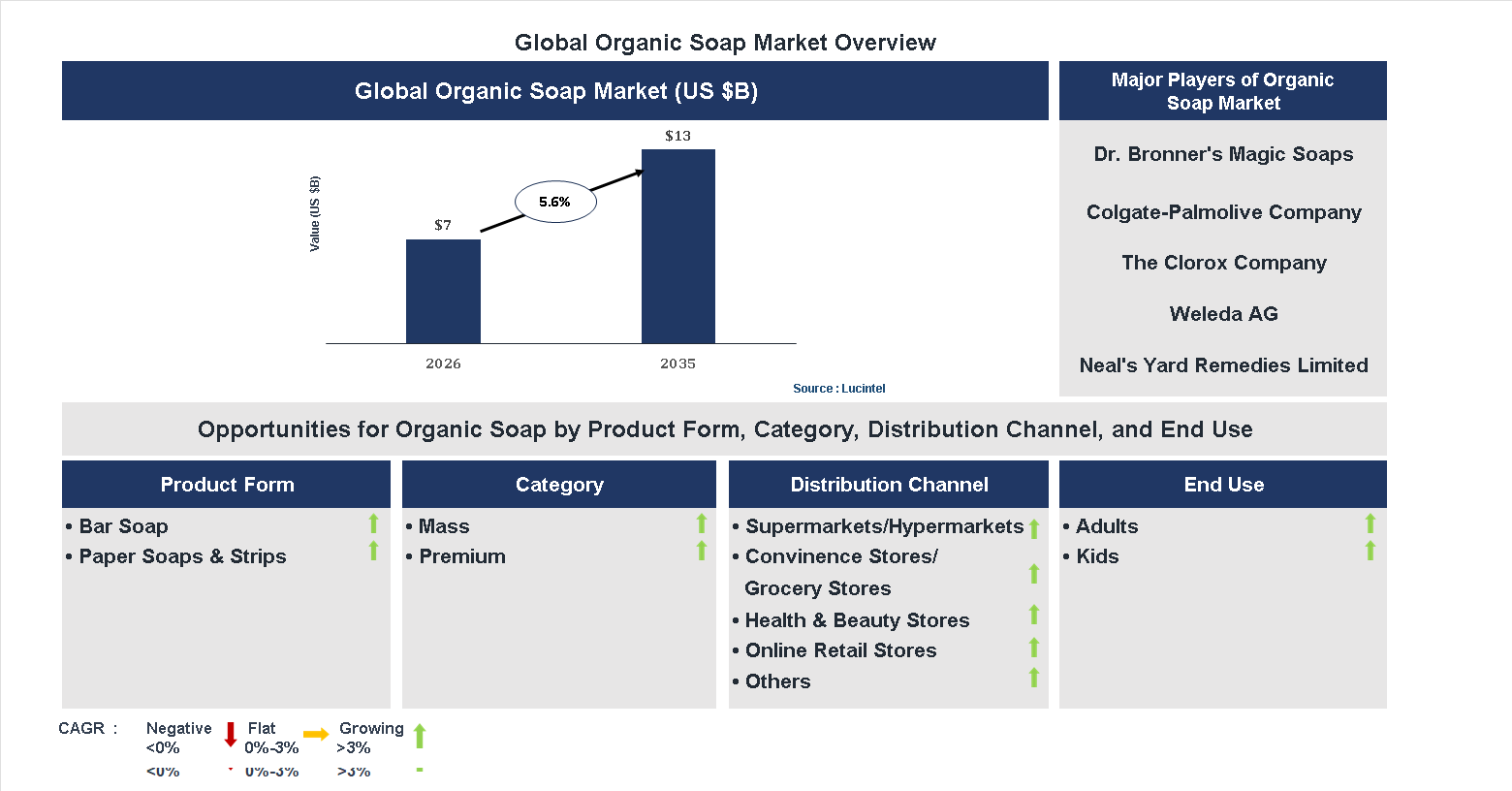
The future of the global organic soap market looks promising with opportunities in the bar soap and paper soap & strip markets. The global organic soap market is expected to reach an estimated $13 billion by 2035 with a CAGR of 5.6% from 2026 to 2035. The major drivers for this market are the increasing consumer preference for chemical free skincare, the rising awareness about benefits of natural ingredients, and the growing demand for eco friendly personal care products.• Lucintel forecasts that, within the distribution channel category, online retail store is expected to witness the highest growth over the forecast period.
• Within the product form category, bar soap is expected to witness higher growth.
• In terms of region, APAC is expected to witness the highest growth over the forecast period. Gain valuable insights for your business decisions with our comprehensive 150+ page report. Sample figures with some insights are shown below.
Emerging Trends in the Organic Soap Market
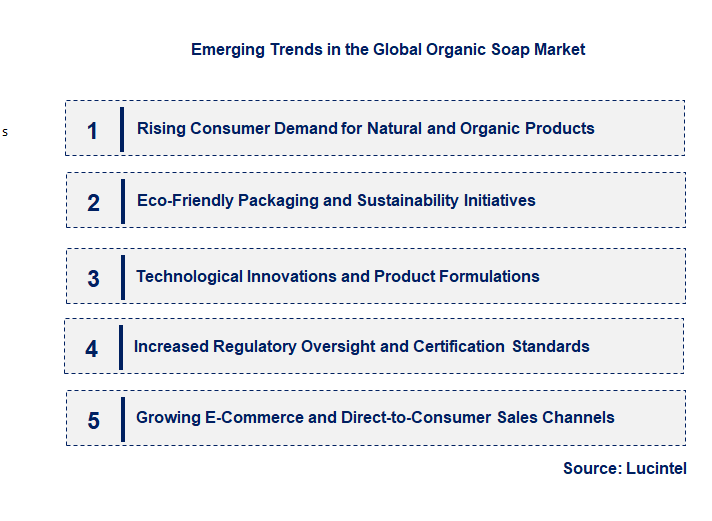
The organic soap market is experiencing rapid growth driven by increasing consumer awareness of health, environmental sustainability, and natural ingredients. As consumers seek cleaner, chemical-free products, brands are innovating to meet these demands with eco-friendly packaging, transparency, and unique formulations. Technological advancements and shifting regulations are also influencing product development and marketing strategies. These developments are not only expanding market size but also redefining industry standards and consumer expectations. The following key trends highlight the major shifts shaping the future of the organic soap market and how they are influencing industry dynamics.• Rising Consumer Demand for Natural and Organic Products : Consumers are increasingly prioritizing health and wellness, leading to a surge in demand for natural, chemical-free soaps. This trend is driven by concerns over synthetic ingredients and their potential health impacts. As a result, brands are focusing on sourcing organic ingredients, ensuring product transparency, and marketing the health benefits of their products. This shift is expanding market reach and encouraging new product innovations tailored to health-conscious consumers.
• Eco-Friendly Packaging and Sustainability Initiatives : Environmental concerns are prompting brands to adopt sustainable packaging solutions such as biodegradable, recyclable, or refillable containers. Companies are also emphasizing eco-friendly sourcing and production practices to reduce carbon footprints. These initiatives appeal to environmentally conscious consumers and enhance brand loyalty. The focus on sustainability is reshaping packaging standards and encouraging industry-wide adoption of greener practices, ultimately influencing consumer purchasing decisions.
• Technological Innovations and Product Formulations : Advances in formulation technology are enabling the development of more effective, longer-lasting, and aesthetically appealing organic soaps. Innovations include the use of plant-based extracts, essential oils, and natural preservatives that extend shelf life without synthetic chemicals. Additionally, digital tools are aiding in product customization and targeted marketing. These technological developments are elevating product quality, differentiating brands, and expanding options for consumers seeking personalized and effective organic skincare solutions.
• Increased Regulatory Oversight and Certification Standards : Governments and industry bodies are implementing stricter regulations and certification standards for organic products. Certifications such as USDA Organic or EcoCert are becoming essential for market credibility. This regulatory environment ensures product authenticity, builds consumer trust, and prevents false claims. Companies are investing in compliance and certification processes, which may increase costs but ultimately promote transparency and integrity within the market.
• Growing E-Commerce and Direct-to-Consumer Sales Channels : The rise of online shopping platforms is significantly impacting the organic soap market. Brands are leveraging e-commerce to reach wider audiences, offer personalized experiences, and provide detailed product information. Direct-to-consumer models facilitate better customer engagement and loyalty. This trend is reducing reliance on traditional retail channels, enabling smaller brands to compete effectively, and fostering innovation in marketing and distribution strategies, thus accelerating market growth. These trends are collectively transforming the organic soap market by emphasizing health, sustainability, innovation, regulation, and digital engagement. They are driving industry evolution towards more transparent, eco-friendly, and consumer-centric practices, ultimately reshaping how products are developed, marketed, and purchased.
Recent Development in the Organic Soap Market
The organic soap market is experiencing rapid growth driven by increasing consumer awareness of natural ingredients and health benefits. As consumers seek eco-friendly and chemical-free products, brands are innovating to meet this demand. Technological advancements and sustainable practices are shaping the industry landscape. Market players are expanding their product lines and distribution channels to capture new customer segments. This evolving environment presents significant opportunities for growth, innovation, and market expansion, influencing global trends toward healthier and environmentally conscious lifestyles.• Rising Consumer Demand For Natural Products: The increasing preference for organic and chemical-free products is fueling market growth. Consumers are more aware of the health risks associated with synthetic ingredients, leading to higher demand for natural soaps. This shift is encouraging brands to develop innovative formulations that meet consumer expectations for purity and sustainability. As awareness spreads, the market is expected to see sustained growth, with more companies entering the space to capitalize on this trend.
• Innovation In Formulations And Ingredients: Companies are investing in research to develop unique, effective, and eco-friendly ingredients for organic soaps. Natural oils, herbs, and botanicals are being used to enhance product efficacy and appeal. This innovation is driving differentiation in a competitive market, attracting health-conscious consumers. The focus on sustainable sourcing and biodegradable packaging further boosts brand reputation. As formulations improve, consumer trust and loyalty increase, supporting long-term market expansion.
• Expansion Of Distribution Channels: The growth of online retail platforms and specialty stores is broadening access to organic soaps. E-commerce provides convenience and wider reach, especially in emerging markets. Retail partnerships with health stores and supermarkets are also increasing product visibility. This expansion enhances consumer accessibility and drives sales volume. As distribution channels diversify, market penetration deepens, enabling brands to reach a broader demographic and accelerate growth.
• Increasing Focus On Sustainability And Eco-Friendly Practices: Brands are adopting sustainable sourcing, biodegradable packaging, and eco-conscious manufacturing processes. This focus aligns with consumer values and regulatory standards, strengthening brand loyalty. Sustainability initiatives also reduce environmental impact, appealing to eco-aware buyers. As the industry emphasizes green practices, it fosters innovation and competitive advantage, encouraging more companies to adopt eco-friendly strategies, which collectively boost market credibility and growth.
• Growing Awareness Of Health Benefits And Personal Care Trends: Consumers are increasingly aware of the health benefits associated with organic soaps, such as skin nourishment and allergy reduction. The rise of personal care routines emphasizing wellness and natural ingredients is boosting demand. Marketing campaigns highlighting health benefits are attracting new customer segments. This trend supports premium pricing and brand differentiation. As health consciousness grows, the market is poised for sustained expansion driven by consumer education and lifestyle shifts. These developments are significantly transforming the organic soap market by fostering innovation, expanding distribution, and aligning with sustainability and health trends. The increasing consumer preference for natural, eco-friendly products is driving market growth and encouraging brands to adopt sustainable practices. As a result, the industry is poised for continued expansion, with new opportunities emerging across product development, marketing, and distribution channels, shaping a more conscious and health-oriented marketplace.
Strategic Growth Opportunities in the Organic Soap Market
The organic soap market is experiencing rapid growth driven by increasing consumer awareness of natural ingredients, health benefits, and environmental sustainability. As consumers seek chemical-free and eco-friendly products, brands are innovating to meet these demands. The expanding distribution channels and rising disposable incomes further fuel market expansion. This presents significant opportunities for manufacturers to diversify product offerings, enhance branding, and tap into emerging markets. Strategic investments and product innovation are essential to capitalize on this evolving landscape and meet the growing demand for organic personal care products.• Expanding Consumer Preference for Natural and Organic Products: Growing awareness of health and environmental issues is driving consumers toward organic soaps. They prefer products free from synthetic chemicals, parabens, and artificial fragrances, seeking safer, eco-friendly options. This shift is supported by increased access to information and social media influence. Brands that emphasize transparency, ingredient sourcing, and sustainability are gaining market share. The demand for organic soap is also driven by a desire for cruelty-free and vegan products, creating opportunities for differentiation and premium pricing.
• Innovation in Formulations and Packaging: Continuous innovation in formulations, such as incorporating unique botanical extracts and essential oils, enhances product appeal. Eco-friendly, biodegradable, and minimalistic packaging aligns with consumer values and reduces environmental impact. Companies investing in sustainable packaging solutions, like refillable or compostable containers, can attract environmentally conscious buyers. Additionally, functional benefits such as moisturizing, anti-aging, or detoxifying properties are being integrated into formulations, broadening product appeal and encouraging repeat purchases.
• Growth of E-commerce and Direct-to-Consumer Sales Channels: The rise of online shopping platforms has expanded market reach beyond traditional retail outlets. E-commerce enables brands to target niche segments, offer personalized products, and build direct relationships with consumers. Digital marketing strategies, including social media and influencer collaborations, boost brand visibility. Subscription models and online-exclusive products foster customer loyalty. The convenience and accessibility of online channels are particularly appealing to younger demographics, accelerating sales growth and market penetration.
• Increasing Focus on Sustainability and Ethical Sourcing: Consumers are prioritizing brands committed to sustainability, fair trade, and ethical sourcing of ingredients. Transparency about supply chains and eco-friendly manufacturing practices enhances brand trust. Companies adopting sustainable sourcing, biodegradable packaging, and carbon-neutral operations can differentiate themselves. Certifications such as USDA Organic or Fair Trade further validate claims. This focus aligns with consumer values, encouraging brand loyalty and allowing premium pricing, while also supporting environmental conservation efforts.
• Rising Demand in Emerging Markets: Developing regions exhibit increasing disposable incomes and shifting consumer preferences toward organic products. Urbanization and rising awareness about health benefits are fueling demand for organic soaps. Local brands and international companies are expanding distribution networks to tap into these markets. Tailoring products to regional preferences, offering affordable pricing, and leveraging local marketing strategies are crucial. The growth in emerging markets presents substantial opportunities for market expansion and diversification, contributing significantly to overall industry growth. The overall impact of these opportunities is a dynamic and expanding organic soap market, driven by consumer preferences for health, sustainability, and innovation. Companies that strategically leverage these growth avenues can strengthen their market position, increase revenue, and contribute to a more sustainable personal care industry. This evolution promises sustained growth and diversification across global markets.
Organic Soap Market Driver and Challenges
The organic soap market is influenced by a variety of technological, economic, and regulatory factors that shape its growth trajectory. Increasing consumer awareness about health and environmental sustainability has driven demand for natural and organic products. Technological advancements in formulation and manufacturing processes have improved product quality and accessibility. Economic factors such as rising disposable incomes and the growing middle class support market expansion. Regulatory frameworks promoting organic standards and safety certifications further bolster consumer confidence. However, challenges like high production costs, stringent regulations, and market competition pose hurdles. Understanding these drivers and challenges is essential for stakeholders to navigate the evolving landscape effectively. The factors responsible for driving the organic soap market include:-• Growing Consumer Preference for Natural Products: Increasing awareness about the harmful effects of synthetic chemicals has led consumers to prefer organic soaps. This shift is driven by health consciousness, environmental concerns, and a desire for chemical-free skincare. As consumers seek safer, eco-friendly options, demand for organic soaps continues to rise, encouraging manufacturers to innovate and expand their product lines. The trend is particularly prominent among millennials and health-conscious demographics, fueling market growth globally.
• Technological Advancements in Formulation and Manufacturing: Innovations in natural ingredient extraction, preservation, and formulation techniques have enhanced the quality and shelf life of organic soaps. Automation and improved production processes reduce costs and increase scalability, enabling brands to offer affordable products. Additionally, advancements in packaging technology improve product appeal and sustainability. These technological improvements facilitate the development of diverse formulations catering to various skin types, thereby expanding market reach and consumer acceptance.
• Increasing Awareness and Adoption of Eco-Friendly Lifestyle: Consumers are increasingly adopting sustainable lifestyles, emphasizing eco-friendly and cruelty-free products. This trend boosts demand for organic soaps made from biodegradable ingredients and sustainable packaging. Educational campaigns and social media influence have amplified awareness about environmental impacts, prompting consumers to choose products aligned with their values. As eco-consciousness grows, brands that emphasize sustainability are gaining competitive advantage, further propelling market expansion.
• Expansion of E-commerce and Retail Channels: The proliferation of online retail platforms has made organic soaps more accessible to a broader audience. E-commerce offers convenience, detailed product information, and competitive pricing, attracting consumers who prefer online shopping. Additionally, retail stores and specialty outlets dedicated to organic and natural products are increasing their shelf space for organic soaps. This omnichannel presence enhances brand visibility and consumer engagement, accelerating market penetration across different regions.
• Rising Disposable Income and Middle-Class Population: Economic growth in emerging markets has increased disposable incomes, enabling consumers to spend more on premium and organic personal care products. The expanding middle class seeks high-quality, safe, and environmentally friendly products, driving demand for organic soaps. This economic upliftment supports market growth, especially in developing countries, where consumers are shifting from conventional to organic options, creating new opportunities for manufacturers. The challenges facing the organic soap market include:-
• High Production Costs and Price Sensitivity: Organic soap production involves sourcing high-quality natural ingredients, which are often more expensive than synthetic alternatives. Additionally, certifications and quality assurance processes add to manufacturing costs. These expenses translate into higher retail prices, making organic soaps less accessible to price-sensitive consumers. Balancing quality with affordability remains a key challenge for manufacturers aiming to expand their customer base without compromising product standards.
• Stringent Regulatory Frameworks and Certification Processes: The organic soap industry faces complex regulations and certification requirements that vary across regions. Compliance involves rigorous testing, documentation, and adherence to organic standards, which can be time-consuming and costly. Navigating these regulatory landscapes poses challenges for new entrants and small manufacturers, potentially limiting market entry and innovation. Non-compliance risks legal penalties and damage to brand reputation, emphasizing the need for robust regulatory strategies.
• Market Competition and Brand Differentiation: The increasing popularity of organic soaps has led to a crowded marketplace with numerous local and international brands. Differentiating products based on ingredients, sustainability, and branding becomes essential but challenging. Intense competition pressures profit margins and necessitates continuous innovation and marketing efforts. Smaller players may struggle to establish a foothold against well-established brands with extensive distribution networks, impacting overall market dynamics. The organic soap market is driven by rising consumer demand for natural, eco-friendly products, technological innovations, and economic growth in emerging markets. However, high production costs, regulatory complexities, and intense competition pose significant challenges. These factors collectively influence market growth, requiring stakeholders to adopt strategic approaches that leverage opportunities while mitigating risks. Overall, the markets future depends on balancing innovation, affordability, and compliance to meet evolving consumer preferences and regulatory standards.
List of Organic Soap Companies
Companies in the market compete on the basis of product quality offered. Major players in this market focus on expanding their manufacturing facilities, R&D investments, infrastructural development, and leverage integration opportunities across the value chain. With these strategies organic soap companies cater increasing demand, ensure competitive effectiveness, develop innovative products & technologies, reduce production costs, and expand their customer base. Some of the organic soap companies profiled in this report include-• Dr. Bronners Magic Soaps
• Colgate-Palmolive Company
• The Clorox Company
• Weleda AG
• Neals Yard Remedies Limited
• Unilever PLC
• LOccitane International SA
• Pre de Provence SAS
• Faith In Nature Limited
• Laverana GmbH & Co. KG
Organic Soap Market by Segment
The study includes a forecast for the global organic soap market by product form, category, distribution channel, end use, and region.Organic Soap Market by Product Form [Value from 2019 to 2035]:
• Bar Soap
• Paper Soaps & Strips
Organic Soap Market by Category [Value from 2019 to 2035]:
• Mass
• Premium
Organic Soap Market by Distribution Channel [Value from 2019 to 2035]:
• Supermarkets/Hypermarkets
• Convinence Stores/ Grocery Stores
• Health & Beauty Stores
• Online Retail Stores
• Others
Organic Soap Market by End Use [Value from 2019 to 2035]:
• Adults
• Kids
Organic Soap Market by Region [Value from 2019 to 2035]:
• North America
• Europe
• Asia Pacific
• The Rest of the World
Country Wise Outlook for the Organic Soap Market
The organic soap market has experienced significant growth globally, driven by increasing consumer awareness of health, environmental sustainability, and natural ingredients. As consumers seek cleaner, chemical-free products, countries are innovating and expanding their offerings to meet rising demand. Regulatory standards, technological advancements, and shifting preferences are shaping the landscape, with key markets adopting new strategies to capture market share. This dynamic environment reflects a broader trend toward eco-friendly personal care products, influencing production, marketing, and distribution channels worldwide.• United States: The US organic soap market has seen rapid expansion, fueled by rising consumer interest in natural and sustainable products. Major brands are investing in eco-friendly packaging and transparent ingredient lists. Innovative formulations with added benefits like moisturizing and anti-aging properties are gaining popularity. E-commerce sales are booming, and new startups are entering the market with niche offerings. Regulatory bodies are tightening standards to ensure product safety and authenticity, boosting consumer confidence. The market is also witnessing increased collaborations between brands and environmental organizations to promote sustainability.
• China: Chinas organic soap market is experiencing robust growth, driven by a growing middle class and increasing health consciousness. Domestic brands are expanding their product lines with innovative, herbal, and traditional Chinese medicine-based formulations. E-commerce platforms like Tmall and JD.com are key distribution channels, facilitating rapid market penetration. Government policies supporting green products and organic certification are encouraging local manufacturers to upgrade quality standards. International brands are also entering the market, leveraging Chinas large consumer base. Consumer awareness about the benefits of organic ingredients is rising, leading to higher demand for chemical-free personal care products.
• Germany: Germany remains a leading European market for organic soaps, with consumers prioritizing sustainability and eco-friendly practices. Certification labels such as NATRUE and BDIH are highly valued, ensuring product authenticity. Companies are focusing on biodegradable packaging and cruelty-free testing. Innovations include the integration of organic essential oils and plant-based extracts for added therapeutic benefits. The market benefits from strong regulatory frameworks that promote transparency and safety. Retailers are increasingly stocking organic soaps in mainstream outlets, and there is a rising trend of DIY and artisanal products appealing to niche consumers seeking unique, handcrafted options.
• India: The Indian organic soap market is witnessing rapid growth, driven by increasing awareness of natural skincare and rising disposable incomes. Local brands are emphasizing herbal and Ayurvedic ingredients, appealing to traditional preferences. The penetration of online retail channels is expanding access to a broader consumer base. Government initiatives promoting organic farming and products are supporting industry growth. Small-scale manufacturers are adopting sustainable practices, and there is a surge in organic certifications to build consumer trust. The market is also seeing a rise in premium, luxury organic soap brands targeting urban, health-conscious consumers seeking quality and authenticity.
• Japan: Japans organic soap market is characterized by a focus on purity, safety, and innovative formulations. Consumers prefer products with minimal synthetic ingredients and high-quality natural extracts. The market is driven by aging populations seeking gentle, skin-friendly options and environmentally conscious youth. Brands are incorporating traditional Japanese botanicals like green tea and rice bran for added appeal. Certification standards such as JAS (Japanese Agricultural Standards) are important for consumer trust. The market is also influenced by trends in minimalist packaging and multifunctional products. Retail channels include specialty stores, drugstores, and online platforms, with a growing emphasis on eco-friendly practices.

Features of the Global Organic Soap Market
Market Size Estimates: Organic soap market size estimation in terms of value ($B). Trend and Forecast Analysis: Market trends (2019 to 2025) and forecast (2026 to 2035) by various segments and regions. Segmentation Analysis: Organic soap market size by various segments, such as by product form, category, distribution channel, end use, and region in terms of value ($B). Regional Analysis: Organic soap market breakdown by North America, Europe, Asia Pacific, and Rest of the World. Growth Opportunities: Analysis of growth opportunities in different product forms, category, distribution channels, end uses, and regions for the organic soap market. Strategic Analysis: This includes M&A, new product development, and competitive landscape of the organic soap market. Analysis of competitive intensity of the industry based on Porter’s Five Forces model.
FAQ
Q1. What is the organic soap market size? Answer: The global organic soap market is expected to reach an estimated $13 billion by 2035. Q2. What is the growth forecast for organic soap market? Answer: The global organic soap market is expected to grow with a CAGR of 5.6% from 2026 to 2035. Q3. What are the major drivers influencing the growth of the organic soap market? Answer: The major drivers for this market are the increasing consumer preference for chemical free skincare, the rising awareness about benefits of natural ingredients, and the growing demand for eco friendly personal care products. Q4. What are the major segments for organic soap market? Answer: The future of the organic soap market looks promising with opportunities in the bar soap and paper soap & strip markets. Q5. Who are the key organic soap market companies? Answer: Some of the key organic soap companies are as follows:• Dr. Bronners Magic Soaps
• Colgate-Palmolive Company
• The Clorox Company
• Weleda AG
• Neals Yard Remedies Limited
• Unilever PLC
• LOccitane International SA
• Pre de Provence SAS
• Faith In Nature Limited
• Laverana GmbH & Co. KG Q6. Which organic soap market segment will be the largest in future? Answer: Lucintel forecasts that, within the distribution channel category, online retail store is expected to witness the highest growth over the forecast period. Q7. In organic soap market, which region is expected to be the largest in next 5 years? Answer: In terms of region, APAC is expected to witness the highest growth over the forecast period. Q8. Do we receive customization in this report? Answer: Yes, Lucintel provides 10% customization without any additional cost.
Table of Contents
List of Figures
List of Tables
Methodology
- In-depth interviews of the major players in this market
- Detailed secondary research from competitors’ financial statements and published data
- Extensive searches of published works, market, and database information pertaining to industry news, company press releases, and customer intentions
- A compilation of the experiences, judgments, and insights of Lucintel’s professionals, who have analyzed and tracked this market over the years.


Buy Now
Choose a license that fits your team. Instant PDF delivery.
Prices exclude taxes. Instant delivery. Custom licensing available on request.
Key Questions
- • What are some of the most promising, high-growth opportunities for the organic soap market by product form (bar soap and paper soaps & strips), category (mass and premium), distribution channel (supermarkets/hypermarkets, convinence stores/ grocery stores, health & beauty stores, online retail stores, and others), end use (adults and kids), and region (North America, Europe, Asia Pacific, and the Rest of the World)?
- • Which segments will grow at a faster pace and why?
- • Which region will grow at a faster pace and why?
- • What are the key factors affecting market dynamics? What are the key challenges and business risks in this market?
- • What are the business risks and competitive threats in this market?
- • What are the emerging trends in this market and the reasons behind them?
- • What are some of the changing demands of customers in the market?
- • What are the new developments in the market? Which companies are leading these developments?
- • Who are the major players in this market? What strategic initiatives are key players pursuing for business growth?
- • What are some of the competing products in this market and how big of a threat do they pose for loss of market share by material or product substitution?
- • What M&A activity has occurred in the last 7 years and what has its impact been on the industry? For any questions related to Organic Soap Market, Organic Soap Market Size, Organic Soap Market Growth, Organic Soap Market Analysis, Organic Soap Market Report, Organic Soap Market Share, Organic Soap Market Trends, Organic Soap Market Forecast, Organic Soap Companies, write Lucintel analyst at email: helpdesk@lucintel.com. We will be glad to get back to you soon.


