
Market Report · July 22, 2026

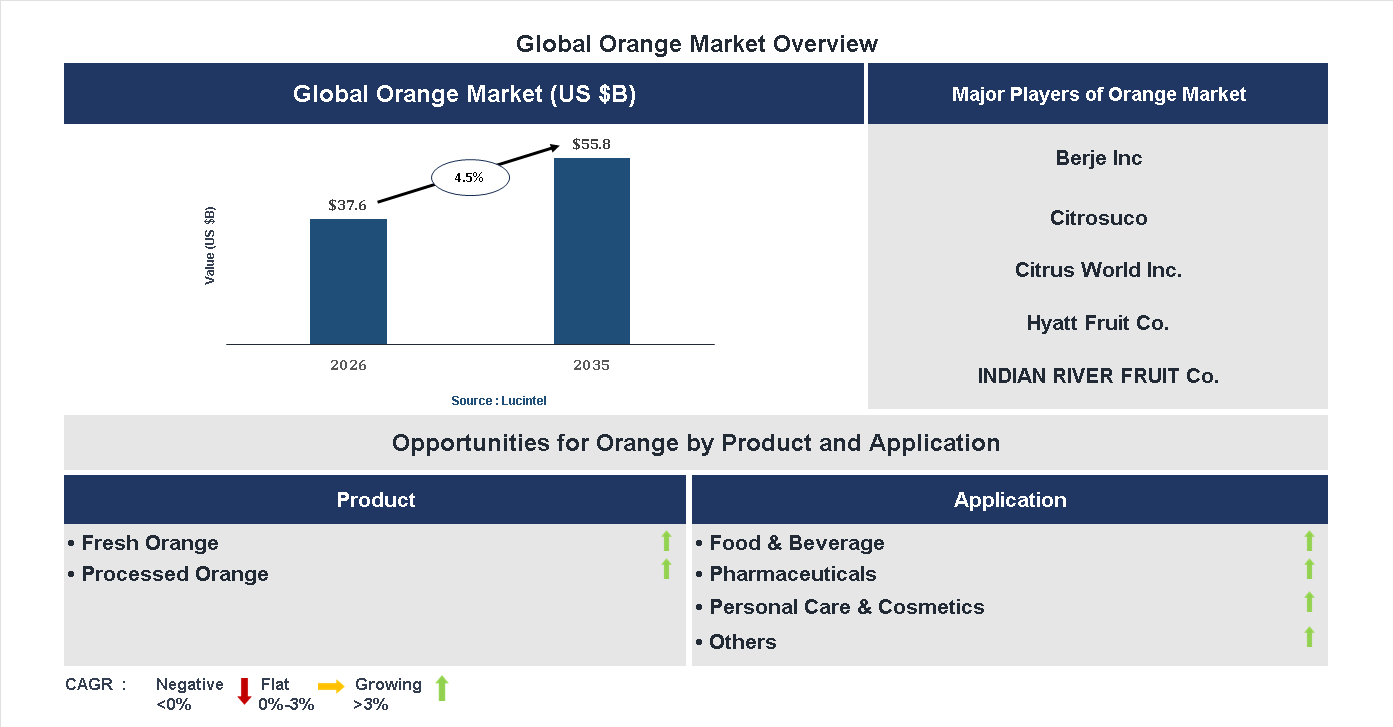
Key data points: The market size in 2035 = $55.8 billion, growth forecast = 4.5% annually for the next 8 years. Scroll below to get more insights. This market report covers trends, opportunities and forecasts in orange market to 2035 by product (fresh orange and processed orange ), application (food & beverage, pharmaceuticals, personal care & cosmetics, and others ), and region (North America, Europe, Asia Pacific, and the Rest of the World)
We'll send your sample report shortly.
• Lucintel forecasts that, within the product category, fresh orange is expected to witness higher growth over the forecast period.
• Within the application category, food & beverage is expected to witness the highest growth.
• In terms of region, APAC is expected to witness the highest growth over the forecast period. Gain valuable insights for your business decisions with our comprehensive 150+ page report. Sample figures with some insights are shown below.
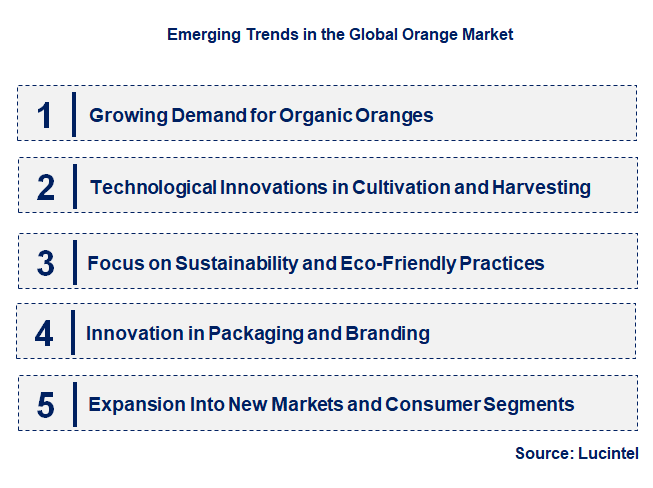
• Growing Demand for Organic Oranges: Increasing consumer awareness about health and environmental issues is driving demand for organic oranges. Consumers prefer products free from synthetic pesticides and fertilizers, prompting farmers to adopt organic farming practices. This trend boosts premium pricing and encourages sustainable agriculture. It also influences supply chains to prioritize organic certification, ensuring product authenticity. As organic options become more accessible, market share for conventional oranges may decline, but overall market growth is expected due to rising health consciousness. This shift supports a more sustainable and health-focused industry landscape.
• Technological Innovations in Cultivation and Harvesting: Advances in agricultural technology are transforming orange cultivation. Precision farming, drone monitoring, and automated harvesting are improving yield efficiency and fruit quality. These innovations reduce labor costs and minimize resource wastage, making production more sustainable. They also enable better pest and disease management, leading to healthier crops. The integration of data analytics helps optimize irrigation and fertilization schedules, enhancing overall productivity. As technology becomes more accessible, smaller farms can compete effectively, leading to increased market competitiveness and consistent supply.
• Focus on Sustainability and Eco-Friendly Practices: Sustainability is becoming a core aspect of orange production. Farmers and companies are adopting eco-friendly practices such as water conservation, integrated pest management, and biodegradable packaging. These efforts reduce environmental impact and appeal to eco-conscious consumers. Certification programs like Fair Trade and Rainforest Alliance are gaining importance, adding credibility to sustainable claims. Companies investing in sustainability can differentiate their products and build brand loyalty. This trend encourages a shift towards more responsible farming practices, fostering long-term industry resilience and environmental health.
• Innovation in Packaging and Branding: Packaging innovations are enhancing product appeal and shelf life. Eco-friendly, biodegradable, and resealable packaging options are gaining popularity, aligning with consumer preferences for sustainability. Branding strategies now emphasize health benefits, origin stories, and sustainability credentials to attract consumers. Digital branding and social media campaigns are also increasing engagement and transparency. These innovations help companies stand out in a competitive market, influence purchasing decisions, and foster brand loyalty. Effective packaging and branding are crucial for market differentiation and consumer trust in a crowded marketplace.
• Expansion into New Markets and Consumer Segments: Market expansion efforts are targeting emerging economies and niche consumer segments. Growing middle-class populations in developing countries are increasing the demand for oranges and related products. Additionally, health-conscious and premium segments are seeking organic and specialty varieties. Companies are exploring new distribution channels, including online platforms and direct-to-consumer models, to reach these markets. This expansion diversifies revenue streams and reduces dependence on traditional markets. It also encourages product innovation tailored to specific consumer preferences, fostering global growth and market resilience. These trends are collectively reshaping the orange market by promoting sustainability, technological advancement, and market diversification. They are fostering a more health-conscious, environmentally responsible, and innovative industry landscape, positioning stakeholders to capitalize on new opportunities and navigate emerging challenges effectively.
• Growing Demand for Organic Oranges: Increasing consumer awareness about health and wellness is driving demand for organic oranges. This shift encourages farmers to adopt sustainable practices, leading to higher-quality produce and premium pricing. The trend also promotes environmentally friendly farming methods, reducing chemical use and supporting biodiversity. As organic orange sales rise globally, market players are investing in organic certification and expanding organic orchards, which enhances market competitiveness and meets consumer expectations for healthier options.
• Technological Innovations in Cultivation: Advances in agricultural technology, such as precision farming, drone monitoring, and improved irrigation systems, are transforming orange cultivation. These innovations increase yield, reduce resource consumption, and improve fruit quality. Enhanced pest management and disease detection through technology minimizes crop losses, ensuring a stable supply. The adoption of these innovations boosts efficiency, reduces costs, and supports sustainable farming practices, ultimately strengthening the market’s resilience and capacity to meet growing global demand.
• Expansion of Export Markets: Emerging economies and trade agreements are opening new export opportunities for orange producers. Countries are leveraging free trade zones and reducing tariffs to access international markets. This expansion increases revenue streams for producers and diversifies market risks. Enhanced logistics and cold chain infrastructure facilitate fresh orange exports, maintaining quality during transit. As export markets grow, producers benefit from increased sales volumes and market diversification, fostering industry growth and global competitiveness.
• Impact of Climate Change on Production: Climate variability affects orange cultivation through unpredictable weather patterns, droughts, and temperature fluctuations. These changes threaten crop yields and quality, prompting farmers to adopt adaptive strategies such as drought-resistant varieties and improved water management. Climate impacts also increase production costs and risk of crop failure, influencing market stability. Addressing climate challenges is crucial for sustainable growth, requiring investments in resilient farming practices and climate-smart technologies to safeguard future orange supplies.
• Consumer Preference for Value-Added Products: There is a rising trend toward value-added orange products like juices, extracts, and snacks. This diversification caters to health-conscious consumers seeking convenient, nutritious options. The development of innovative packaging and flavor profiles enhances product appeal and market reach. Value addition increases profit margins and extends shelf life, reducing waste. As consumer preferences shift, producers are investing in processing facilities and branding strategies, which stimulate market growth and create new revenue streams within the orange industry. The overall impact of these developments is a more dynamic, resilient, and competitive orange market. Innovations and market expansion create new opportunities for stakeholders, while addressing challenges like climate change and changing consumer preferences. These trends are fostering sustainable growth, improving product quality, and expanding global reach, ultimately strengthening the industry’s prospects.
• Expanding Use of Oranges in Functional Foods and Nutraceuticals: The rising consumer focus on health and wellness is boosting demand for oranges in functional foods and nutraceuticals. Orange extracts, juices, and powders are increasingly incorporated into dietary supplements, energy bars, and health drinks due to their rich vitamin C content and antioxidant properties. This trend encourages product innovation and diversification, opening new revenue streams for producers. The growing awareness of health benefits supports sustained market growth and encourages R&D investments to develop specialized orange-based health products.
• Growing Demand for Organic and Sustainable Orange Products: Consumers are increasingly seeking organic and sustainably farmed oranges, driven by environmental concerns and health consciousness. This demand encourages farmers and producers to adopt eco-friendly cultivation practices, reduce chemical usage, and obtain organic certifications. The shift towards sustainable sourcing enhances brand reputation and appeals to premium market segments. Additionally, sustainable practices help in resource conservation and reduce environmental impact, aligning with global sustainability goals. This opportunity fosters market differentiation and long-term growth through eco-conscious consumer preferences.
• Innovation in Orange Processing and Value-Added Products: Advances in processing technologies are enabling the development of a wide range of value-added orange products, including flavored spreads, dried slices, and concentrated juices. These innovations extend shelf life, improve convenience, and meet diverse consumer tastes. The creation of novel orange-based products enhances market penetration and caters to evolving consumer preferences for convenience foods. Investment in processing infrastructure and R&D is crucial to capitalize on this opportunity, driving revenue growth and expanding product portfolios across various retail channels.
• Increasing Adoption of Oranges in Emerging Markets: Rapid urbanization and rising disposable incomes in emerging markets are fueling demand for oranges and orange-based products. These regions present untapped opportunities for market expansion, especially in Asia, Africa, and Latin America. Local production is often supplemented by imports, creating opportunities for international trade and partnerships. Tailoring products to regional tastes and preferences can boost acceptance and sales. Market players are focusing on distribution network expansion and localized marketing strategies to capture growth potential in these high-growth regions.
• Strategic Collaborations and Investments to Boost Market Growth: Partnerships between growers, processors, and distributors are vital for scaling operations and ensuring quality standards. Investments in modern cultivation, processing facilities, and supply chain infrastructure improve efficiency and product consistency. Collaborations with research institutions foster innovation in orange varieties and processing techniques. These strategic alliances help mitigate risks, expand market reach, and accelerate product development. Overall, such collaborations are essential for sustaining competitive advantage and fostering long-term growth in the orange market. The overall impact of these opportunities is a robust, diversified market poised for sustained expansion. By leveraging innovation, sustainability, and strategic partnerships, the orange market can meet evolving consumer demands and explore new geographic and product segments. This dynamic landscape offers significant potential for growth, profitability, and market leadership, ensuring a resilient and competitive industry in the coming years.
• Technological Innovation: The adoption of advanced agricultural techniques, including precision farming, drip irrigation, and disease-resistant varieties, enhances yield and fruit quality. These innovations reduce resource consumption and increase efficiency, making orange cultivation more sustainable and profitable. Processing technologies also improve juice extraction and packaging, expanding market reach. As technology continues to evolve, producers can meet rising consumer expectations for quality and safety, fueling market growth.
• Growing Consumer Demand for Healthy Products: Increasing awareness of health benefits associated with oranges, such as high vitamin C content and antioxidants, drives consumer preference. This demand encourages farmers to expand cultivation and encourages manufacturers to develop innovative orange-based products. The trend towards organic and natural foods further boosts the market, as consumers seek chemical-free and sustainably grown oranges, creating new opportunities for premium and niche segments.
• Export Opportunities and Global Trade Dynamics: The expansion of international trade agreements and reduced tariffs facilitates access to new markets. Countries with favorable climatic conditions can export oranges to regions with high demand, such as North America and Europe. This global trade expansion increases revenue streams for producers and encourages investment in infrastructure and quality standards to meet international requirements, thereby stimulating market growth.
• Economic Growth and Urbanization: Rising disposable incomes and urbanization lead to increased consumption of fresh fruits, including oranges. Urban consumers prefer convenient, ready-to-eat orange products, prompting manufacturers to innovate packaging and product formats. Economic development also attracts investments in agriculture and processing facilities, further boosting production capacity and market size.
• Sustainability and Environmental Concerns: Growing emphasis on sustainable farming practices and environmental conservation influences market dynamics. Adoption of eco-friendly cultivation methods, water conservation, and waste management reduces environmental impact. Certification standards related to sustainability attract environmentally conscious consumers and open access to premium markets, encouraging producers to align with eco-friendly practices. The challenges in the orange market are:
• Climate Change and Water Scarcity: Variability in weather patterns, rising temperatures, and irregular rainfall adversely affect orange cultivation. Droughts and water shortages limit irrigation options, reducing yields and increasing production costs. Climate change also increases the risk of pests and diseases, threatening crop health. These factors create uncertainty for growers and can lead to supply shortages, impacting market stability and pricing.
• Stringent Regulatory Standards: Increasing regulations related to food safety, pesticide use, and export standards impose compliance costs on producers. Meeting these standards requires investment in quality control, certification, and infrastructure, which can be burdensome for small-scale farmers. Non-compliance risks product rejection, market bans, and reputational damage, posing significant challenges to market expansion.
• Market Volatility and Price Fluctuations: Fluctuations in global demand, supply chain disruptions, and seasonal variations lead to unpredictable orange prices. Price volatility affects farmers income stability and investment planning. Overproduction can lead to glut situations, while shortages may cause price spikes, both of which destabilize the market and complicate strategic decision-making for stakeholders. The orange market is shaped by technological advancements, consumer health trends, trade opportunities, economic growth, and sustainability initiatives. However, it faces significant challenges from climate change, regulatory pressures, and market volatility. These drivers and challenges collectively influence market dynamics, requiring stakeholders to adapt strategically. Embracing innovation, sustainable practices, and regulatory compliance will be crucial for sustained growth, while managing risks associated with climate and market fluctuations remains essential for long-term stability.
• Berje Inc
• Citrosuco
• Citrus World Inc.
• Hyatt Fruit Co.
• INDIAN RIVER FRUIT Co.
• LEMONCONCENTRATE SLU
• Nielsen Citrus Products Co. Inc.
• Paradise Juice Pvt. Ltd
• Perricone Farms
• Schacht Groves
• Fresh Orange
• Processed Orange
• Food & Beverage
• Pharmaceuticals
• Personal Care & Cosmetics
• Others
• North America
• Europe
• Asia Pacific
• The Rest of the World
• United States: The U.S. orange market has seen a rise in organic orange cultivation, driven by consumer demand for healthier options. Innovations in pest management and sustainable farming practices have improved yield quality. The industry is also expanding into value-added products like orange juices with reduced sugar content. Trade policies and tariffs have influenced import-export dynamics, while technological advancements in harvesting and packaging have increased efficiency and shelf life. Consumer preferences for convenience have boosted the popularity of pre-packaged orange segments and smoothies.
• China: China’s orange market is rapidly growing, with increased domestic production and consumption. The government promotes orange cultivation through subsidies and improved farming techniques. There is a rising demand for premium and organic oranges, leading to diversification in varieties such as navel and blood oranges. E-commerce platforms have facilitated direct-to-consumer sales, expanding market reach. Additionally, technological adoption in irrigation and pest control has enhanced productivity. Urbanization and health awareness are driving consumption, with oranges becoming a staple in daily diets and health products.
• Germany: The German orange market is characterized by a strong preference for organic and sustainably sourced oranges. Import reliance remains high, primarily from Spain and Italy, but local organic cultivation is expanding. Consumer awareness about health benefits has increased demand for fresh and minimally processed oranges. Retailers are focusing on transparency and quality assurance, with certifications playing a crucial role. Innovations in cold chain logistics have improved freshness and reduced waste. The market also sees growth in orange-based products like juices, smoothies, and health supplements, aligning with the trend toward wellness.
• India: India’s orange market is witnessing rapid growth due to increased domestic consumption and export opportunities. States like Nagpur and Assam are major producers, adopting modern farming techniques to boost yield and quality. There is a rising demand for organic and seedless varieties, driven by health-conscious consumers. Government initiatives support orange cultivation through subsidies and research. The market is also expanding into processed products such as juices and dried oranges. Urban markets and supermarkets are increasing access to fresh oranges, while export markets are growing, especially to the Middle East and Southeast Asia.
• Japan: The Japanese orange market emphasizes high-quality, premium oranges, with a focus on unique varieties like mikan. Consumer preferences favor organic and locally grown options, with strict quality standards. Technological innovations in cultivation, such as controlled environment agriculture, have improved fruit quality and yield. The market is also seeing increased demand for health-oriented products, including orange-based supplements and functional foods. Retailers emphasize sustainability and traceability, appealing to environmentally conscious consumers. Import reliance remains significant, but domestic production continues to meet a substantial portion of demand, especially for specialty and seasonal oranges.


• Berje Inc
• Citrosuco
• Citrus World Inc.
• Hyatt Fruit Co.
• INDIAN RIVER FRUIT Co.
• LEMONCONCENTRATE SLU
• Nielsen Citrus Products Co. Inc.
• Paradise Juice Pvt. Ltd
• Perricone Farms
• Schacht Groves Q6. Which orange market segment will be the largest in future? Answer: Lucintel forecasts that, within the product category, fresh orange is expected to witness higher growth over the forecast period. Q7. In orange market, which region is expected to be the largest in next 5 years? Answer: In terms of region, APAC is expected to witness the highest growth over the forecast period. Q8. Do we receive customization in this report? Answer: Yes, Lucintel provides 10% customization without any additional cost.


Choose a license that fits your team. Instant PDF delivery.
Prices exclude taxes. Instant delivery. Custom licensing available on request.
Market Report · July 22, 2026
Market Report · July 22, 2026
Market Report · July 22, 2026
Trusted partner for strategic intelligence and business growth


Receive a complimentary market analysis tailored to your industry. Our analysts will identify key growth opportunities and competitive dynamics specific to your business.

Market size, growth rate, and key trend analysis for your specific sector.

Top competitor positioning and market share analysis.

Strategic recommendations backed by data-driven insights.
Get curated market intelligence and competitive moves straight to your inbox.
By subscribing, you agree to receive our monthly insights. Unsubscribe anytime.
Receive a complimentary market analysis tailored to your industry. Our analysts will identify key growth opportunities and competitive dynamics specific to your business.
Market size, growth rate, and key trend analysis for your specific sector.
Top competitor positioning and market share analysis.
Strategic recommendations backed by data-driven insights.
Get curated market intelligence, emerging trends, and competitive moves straight to your inbox each month.
By subscribing, you agree to receive our monthly insights. Unsubscribe anytime.
We'll send your sample report shortly.