
Market Report · July 22, 2026

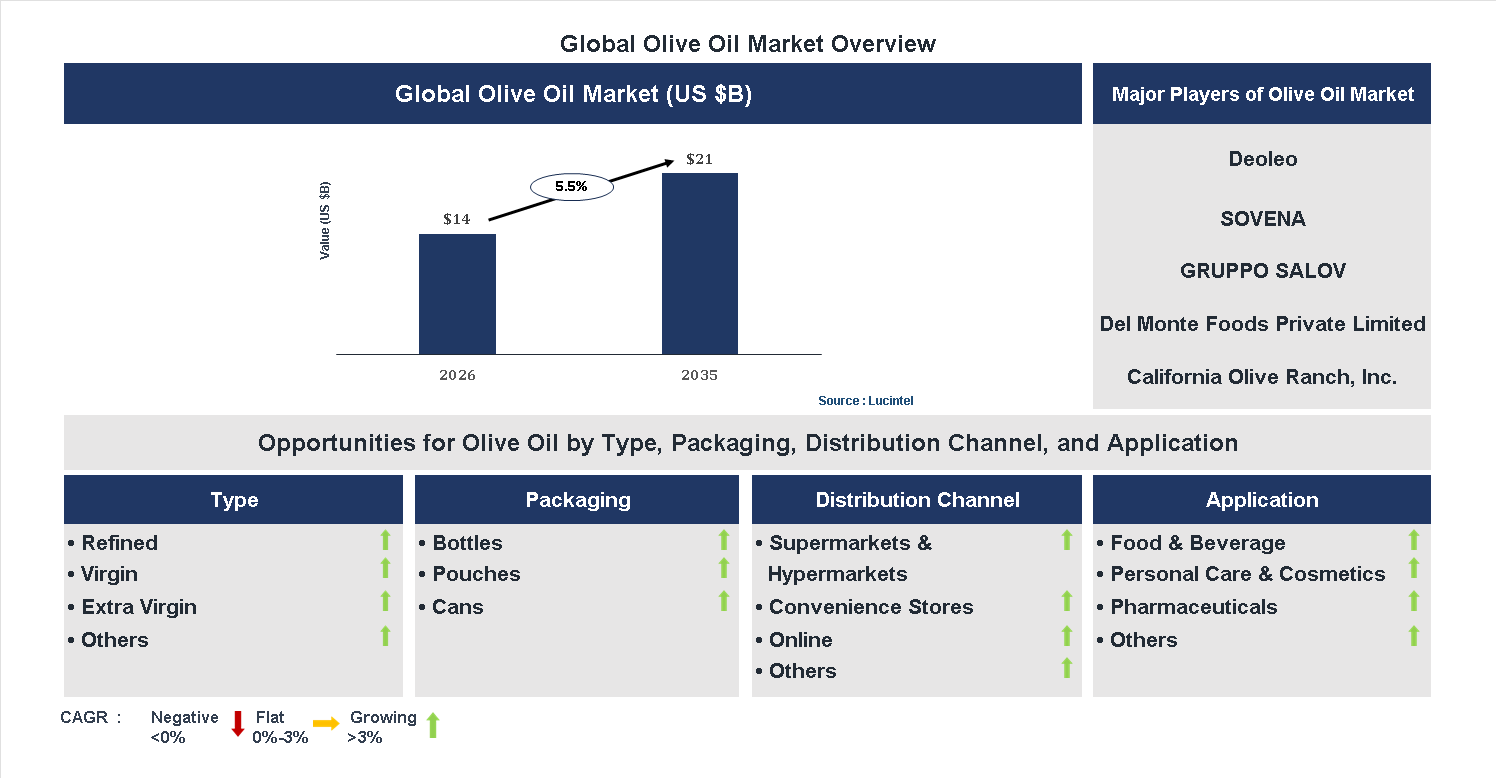
Key data points: The market size in 2035 = $21 billion, growth forecast = 5.5% annually for the next 8 years. Scroll below to get more insights. This market report covers trends, opportunities and forecasts in olive oil market to 2035 by type (refined, virgin, extra virgin, and others), packaging (bottles, pouches, and cans), distribution channel (supermarkets & hypermarkets, convenience stores, online, and others), application (food & beverage, personal care & cosmetics, pharmaceuticals, and others), and region (North America, Europe, Asia Pacific, and the Rest of the World)
We'll send your sample report shortly.
• Lucintel forecasts that, within the type category, extra virgin is expected to witness the highest growth over the forecast period.
• Within the application category, food & beverage is expected to witness the highest growth.
• In terms of region, Europe is expected to witness the highest growth over the forecast period. Gain valuable insights for your business decisions with our comprehensive 150+ page report. Sample figures with some insights are shown below.
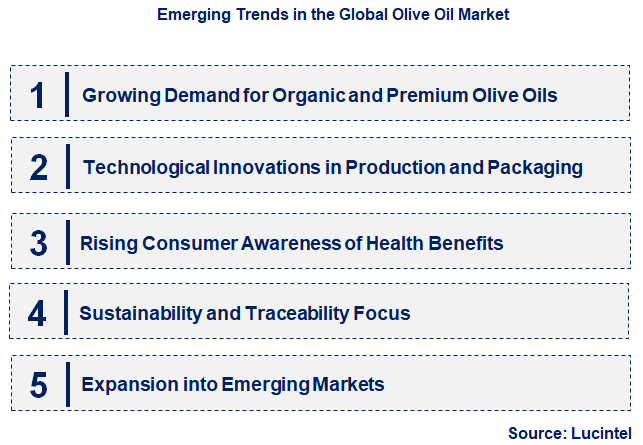
• Growing Demand for Organic and Premium Olive Oils: Consumers are increasingly prioritizing health and wellness, leading to a surge in demand for organic, extra virgin, and specialty olive oils. This trend emphasizes purity, quality, and unique flavor profiles, encouraging producers to adopt organic farming practices and premium branding strategies. The market is shifting towards higher-value products, which command better margins and cater to discerning customers seeking authentic and healthful options.
• Technological Innovations in Production and Packaging: Advances such as cold extraction, automated bottling, and smart packaging are improving product quality and shelf life. These innovations help preserve the olive oil’s flavor, aroma, and nutritional content while reducing waste. Smart packaging with QR codes enhances traceability, allowing consumers to verify authenticity and origin. Such technological progress boosts consumer confidence and differentiates brands in a competitive market, fostering loyalty and expanding market reach.
• Rising Consumer Awareness of Health Benefits: Increased awareness of olive oil’s health advantages, including its antioxidant properties and heart health benefits, is driving consumption. Educational campaigns and influencer marketing are amplifying this message, encouraging healthier lifestyles. This trend supports the growth of olive oil as a staple in daily diets, prompting retailers to expand their product ranges and educate consumers about proper usage, thereby increasing overall market size.
• Sustainability and Traceability Focus: Consumers are demanding transparency regarding sourcing, production practices, and environmental impact. Producers adopting sustainable farming, eco-friendly packaging, and traceability systems are gaining a competitive edge. Certifications such as organic, fair trade, and sustainability labels influence purchasing decisions. This trend aligns with global environmental concerns and enhances brand reputation, encouraging industry-wide shifts towards more responsible and transparent practices.
• Expansion into Emerging Markets: As disposable incomes rise and awareness spreads, emerging markets in Asia, Africa, and Latin America are becoming key growth areas. Local production, tailored marketing strategies, and affordable pricing are facilitating market entry. This expansion diversifies the customer base and stimulates competition, encouraging innovation and investment. The growth in these regions is expected to significantly contribute to the overall market expansion, making olive oil more accessible worldwide. In summary, these trends are collectively reshaping the olive oil market by emphasizing quality, transparency, health benefits, sustainability, and global expansion. They are fostering innovation, elevating consumer expectations, and creating new opportunities for stakeholders across the supply chain. As these developments continue, the market is poised for sustained growth and increased sophistication.
• Growing Demand for Organic and Premium Olive Oil: The increasing consumer focus on health and wellness has driven demand for organic and premium olive oils. This trend encourages producers to adopt sustainable farming practices and high-quality standards, leading to higher product prices and market differentiation. The shift towards organic options is also supported by regulatory changes and consumer awareness campaigns. As a result, the market is witnessing a surge in premium product launches, expanding consumer choice, and boosting overall industry revenue.
• Expansion into Emerging Markets: Emerging economies in Asia, Africa, and Latin America present significant growth opportunities for olive oil producers. Rising disposable incomes, urbanization, and changing dietary habits are fueling demand in these regions. Companies are investing in local production facilities and marketing strategies tailored to regional preferences. This expansion not only increases market size but also diversifies supply chains, reduces dependency on traditional markets, and fosters global industry growth.
• Innovation in Packaging and Product Offerings: Advances in packaging technology and product innovation are enhancing consumer convenience and product appeal. Single-serve bottles, eco-friendly packaging, and flavored olive oils are gaining popularity. These innovations improve shelf life, ease of use, and brand differentiation. Companies are also exploring functional olive oils with added health benefits. Such developments attract a broader consumer base, increase sales channels, and support premium pricing strategies, thereby strengthening market competitiveness.
• Adoption of Sustainable and Eco-Friendly Practices: Sustainability initiatives are becoming central to industry operations, driven by consumer demand and environmental concerns. Producers are adopting organic farming, water conservation, and waste reduction techniques. Certification programs and eco-labels are gaining importance, influencing purchasing decisions. These practices enhance brand reputation, ensure compliance with regulations, and open access to environmentally conscious markets. Overall, sustainability efforts are fostering industry resilience and aligning growth with global environmental goals.
• Digital Transformation and E-Commerce Growth: The integration of digital technologies and e-commerce platforms is revolutionizing distribution channels. Online sales enable brands to reach wider audiences, offer personalized experiences, and gather consumer data for targeted marketing. Digital marketing campaigns and social media engagement boost brand visibility. Additionally, blockchain and traceability solutions enhance transparency and trust. This digital shift accelerates market penetration, reduces distribution costs, and supports innovation, making the industry more agile and responsive to consumer trends. These developments collectively are transforming the olive oil market into a more competitive, innovative, and sustainable industry. Growing demand for premium and organic products, expansion into emerging markets, technological innovations, sustainability practices, and digital transformation are driving growth and diversification. As a result, the market is becoming more dynamic, with increased opportunities for producers and retailers to meet evolving consumer preferences and expand globally, ensuring long-term industry resilience and profitability.
• Growing Demand for Organic and Premium Olive Oils: The rising consumer preference for organic, extra virgin, and premium olive oils is creating opportunities for producers to develop high-quality, differentiated products. This trend is driven by health consciousness, environmental concerns, and a desire for authentic flavors. Companies investing in organic certification, sustainable farming practices, and premium packaging can attract health-conscious and affluent consumers, boosting sales and market share.
• Expansion into Emerging Markets with Increasing Disposable Incomes: Developing regions such as Asia-Pacific, Latin America, and Africa are witnessing rising disposable incomes and changing dietary habits, leading to increased olive oil consumption. Market players can capitalize on this by establishing local supply chains, educating consumers about health benefits, and offering affordable, quality products. This expansion can significantly boost global market size and diversify revenue streams.
• Innovation in Product Offerings and Packaging: Innovation in packaging, such as eco-friendly bottles, convenient single-serve packs, and attractive branding, enhances consumer appeal and convenience. Additionally, product innovations like flavored, infused, or fortified olive oils cater to diverse culinary preferences. These developments can differentiate brands, increase shelf life, and attract new customer segments, thereby driving sales and market penetration.
• Strategic Partnerships and Vertical Integration: Collaborations with farmers, cooperatives, and distributors can ensure quality control, supply stability, and cost efficiencies. Vertical integration allows companies to manage the entire supply chain, from cultivation to retail, reducing dependency on third parties. Such strategies can improve product consistency, reduce costs, and strengthen market positioning, enabling companies to respond swiftly to market demands and enhance profitability.
• Adoption of Digital Marketing and E-commerce Platforms: Leveraging digital channels enables brands to reach a broader audience, educate consumers, and build brand loyalty. E-commerce platforms facilitate direct sales, offer personalized experiences, and expand geographic reach beyond traditional retail outlets. Investing in digital marketing strategies, including social media, influencer collaborations, and online promotions, can accelerate market growth and capture emerging consumer segments. The overall impact of these opportunities is poised to significantly enhance market growth, diversify product offerings, and strengthen competitive positioning. Companies that strategically leverage these avenues can capitalize on evolving consumer preferences, expand into new regions, and innovate effectively. This will foster a more dynamic, resilient, and expansive olive oil market landscape, benefiting stakeholders across the supply chain.
• Increasing Health Awareness and Consumer Preference for Natural Products: Consumers are increasingly seeking healthy, natural, and organic food options. Olive oil, known for its health benefits such as heart health and antioxidant properties, has gained popularity globally. This shift in consumer preference drives demand, especially in health-conscious markets like North America and Europe. The growing awareness about the benefits of monounsaturated fats and the role of olive oil in Mediterranean diets further fuels consumption. Manufacturers are also innovating with organic and extra-virgin varieties to meet this demand, expanding market reach and product offerings.
• Technological Advancements in Extraction and Packaging: Innovations in extraction techniques, such as cold pressing and centrifugation, have improved the quality and yield of olive oil. Advanced packaging solutions, including dark glass bottles and vacuum-sealed containers, help preserve freshness and prevent oxidation. These technological improvements enhance product shelf life and consumer appeal, encouraging higher consumption. Additionally, automation and quality control systems ensure consistency and safety, boosting consumer confidence. As technology continues to evolve, producers can optimize production processes, reduce costs, and introduce new product formats, further expanding market opportunities.
• Growing Demand in Emerging Markets: Rapid urbanization, rising disposable incomes, and increasing health awareness in emerging economies like India, China, and Brazil are driving olive oil consumption. These markets are witnessing a shift from traditional cooking oils to healthier alternatives, creating significant growth potential. Import tariffs and trade agreements facilitate market entry, while local marketing efforts educate consumers about the health benefits of olive oil. The expansion of retail infrastructure and e-commerce platforms also makes olive oil more accessible. As awareness and affordability improve, these markets are expected to become key growth drivers for the global olive oil industry.
• Expansion of Organic and Premium Product Segments: The demand for organic, extra-virgin, and premium olive oils is rising due to consumer preferences for high-quality and authentic products. Organic certification assures consumers of chemical-free production, aligning with health and environmental concerns. Premium segments often feature unique varieties, regional specialties, and artisanal production methods, appealing to niche markets and gourmet consumers. This trend encourages producers to invest in quality assurance, branding, and sustainable practices. The growth of organic and premium segments not only boosts profit margins but also enhances market differentiation, attracting a broader consumer base seeking authentic and healthful products. The challenges facing the olive oil market include:
• Fluctuations in Raw Material Supply and Prices: Olive oil production is highly dependent on climatic conditions, pest control, and agricultural practices. Unfavorable weather events, such as droughts and frosts, can significantly reduce olive harvests, leading to supply shortages. Additionally, fluctuations in olive prices due to seasonal variations and geopolitical factors impact production costs. These uncertainties create volatility in the market, affecting pricing strategies and profit margins. Producers often face challenges in maintaining consistent supply levels, which can hinder market growth and lead to price instability for consumers.
• Stringent Regulatory Standards and Certification Processes: The olive oil industry faces complex regulations related to quality standards, labeling, and organic certification. Compliance with these standards requires significant investment in testing, certification, and quality assurance processes. Variations across regions can create barriers to international trade and market entry. Non-compliance or mislabeling can lead to legal penalties and damage to brand reputation. Navigating these regulatory landscapes demands continuous monitoring and adaptation, which can be resource-intensive, especially for small and medium-sized producers, potentially limiting market expansion.
• Competition from Alternative Oils and Synthetic Substitutes: The market faces stiff competition from other edible oils such as sunflower, soybean, and palm oil, which are often cheaper and more widely available. Additionally, synthetic or imitation olive oils pose a threat to authentic products, undermining consumer trust and market value. Price wars and aggressive marketing by competitors can erode market share for genuine olive oil brands. Consumers may also opt for less expensive options, especially in price-sensitive markets. This competitive pressure necessitates continuous innovation, branding, and quality assurance to maintain consumer loyalty and market position. In summary, the olive oil market is shaped by a combination of rising health consciousness, technological progress, and expanding markets, which present significant growth opportunities. However, supply fluctuations, regulatory complexities, and intense competition pose substantial challenges. Navigating these drivers and challenges requires strategic agility and innovation from industry stakeholders. Overall, the markets future growth hinges on balancing quality, sustainability, and consumer trust while managing operational risks effectively.
• Deoleo
• SOVENA
• GRUPPO SALOV
• Del Monte Foods Private Limited
• California Olive Ranch, Inc.
• Borges INTERNATIONAL GROUP, S.L.U.
• POMPEIAN
• Cargill
• Conagra Brands
• Modi Naturals Ltd.
• Refined
• Virgin
• Extra Virgin
• Others
• Bottles
• Pouches
• Cans
• Supermarkets & Hypermarkets
• Convenience Stores
• Online
• Others
• Food & Beverage
• Personal Care & Cosmetics
• Pharmaceuticals
• Others
• North America
• Europe
• Asia Pacific
• The Rest of the World
• United States: The U.S. olive oil market has seen a surge in demand for premium and organic products, driven by health-conscious consumers. Retailers are expanding their offerings, and there is increased interest in artisanal and cold-pressed varieties. Import reliance remains high, especially from Mediterranean countries, but domestic production is gradually increasing through new plantations. E-commerce sales have grown significantly, facilitating access to diverse brands. Regulatory standards are tightening to ensure quality, and marketing efforts emphasize health benefits. Overall, the U.S. market is becoming more sophisticated, with a focus on sustainability and authenticity.
• China: China’s olive oil market is rapidly expanding, fueled by rising disposable incomes and a growing middle class seeking healthier food options. Domestic production is limited but increasing, with imports constituting the majority of supply, mainly from Spain, Italy, and Greece. Consumer awareness about olive oil quality and origin is improving, leading to a preference for branded and certified products. Retail chains and e-commerce platforms are playing a crucial role in market penetration. The government is promoting olive cultivation in certain regions to reduce import dependency. Overall, China presents a significant growth opportunity for premium olive oils, with increasing consumer education and demand.
• Germany: Germany remains one of Europe’s key markets for olive oil, characterized by high consumer awareness and preference for organic and high-quality products. The market has seen a shift towards sustainable and ethically sourced oils, with certifications gaining importance. Retailers are expanding their organic sections, and specialty stores are offering a wider range of Mediterranean products. Import volumes are stable, with Spain, Italy, and Greece as primary suppliers. Innovations in packaging, such as eco-friendly bottles, are gaining popularity. The German market continues to emphasize health benefits, and consumers are willing to pay a premium for authentic, high-quality olive oils.
• India: The olive oil market in India is experiencing rapid growth, driven by increasing health consciousness and the westernization of diets. Domestic production is minimal, so the market relies heavily on imports from Spain, Italy, and Tunisia. Urban consumers, especially in metropolitan areas, are adopting olive oil for cooking and health benefits. The retail sector is expanding, with supermarkets and online platforms making olive oil more accessible. Marketing campaigns focus on health benefits and versatility. Despite price sensitivity, the premium and organic segments are growing steadily. The market is expected to continue its upward trajectory as awareness and disposable incomes increase.
• Japan: Japan’s olive oil market is characterized by a niche but growing consumer base interested in health and wellness. The country imports most of its olive oil, primarily from Mediterranean countries, with a focus on high-quality and organic products. Japanese consumers value purity, safety, and authenticity, influencing purchasing decisions. The market is expanding through specialty stores, supermarkets, and online channels. Innovative packaging and branding emphasizing health benefits are common. The trend towards plant-based diets and healthy cooking is boosting demand. Overall, Japan’s olive oil market is poised for steady growth, with a focus on premium and organic segments.


• Deoleo
• SOVENA
• GRUPPO SALOV
• Del Monte Foods Private Limited
• California Olive Ranch, Inc.
• Borges INTERNATIONAL GROUP, S.L.U.
• POMPEIAN
• Cargill
• Conagra Brands
• Modi Naturals Ltd. Q6. Which olive oil market segment will be the largest in future? Answer: Lucintel forecasts that, within the type category, extra virgin is expected to witness the highest growth over the forecast period. Q7. In olive oil market, which region is expected to be the largest in next 5 years? Answer: In terms of region, Europe is expected to witness the highest growth over the forecast period. Q8. Do we receive customization in this report? Answer: Yes, Lucintel provides 10% customization without any additional cost.


Choose a license that fits your team. Instant PDF delivery.
Prices exclude taxes. Instant delivery. Custom licensing available on request.
Market Report · July 22, 2026
Market Report · July 22, 2026
Market Report · July 22, 2026
Trusted partner for strategic intelligence and business growth


Receive a complimentary market analysis tailored to your industry. Our analysts will identify key growth opportunities and competitive dynamics specific to your business.

Market size, growth rate, and key trend analysis for your specific sector.

Top competitor positioning and market share analysis.

Strategic recommendations backed by data-driven insights.
Get curated market intelligence and competitive moves straight to your inbox.
By subscribing, you agree to receive our monthly insights. Unsubscribe anytime.
Receive a complimentary market analysis tailored to your industry. Our analysts will identify key growth opportunities and competitive dynamics specific to your business.
Market size, growth rate, and key trend analysis for your specific sector.
Top competitor positioning and market share analysis.
Strategic recommendations backed by data-driven insights.
Get curated market intelligence, emerging trends, and competitive moves straight to your inbox each month.
By subscribing, you agree to receive our monthly insights. Unsubscribe anytime.
We'll send your sample report shortly.