
Market Report · July 22, 2026

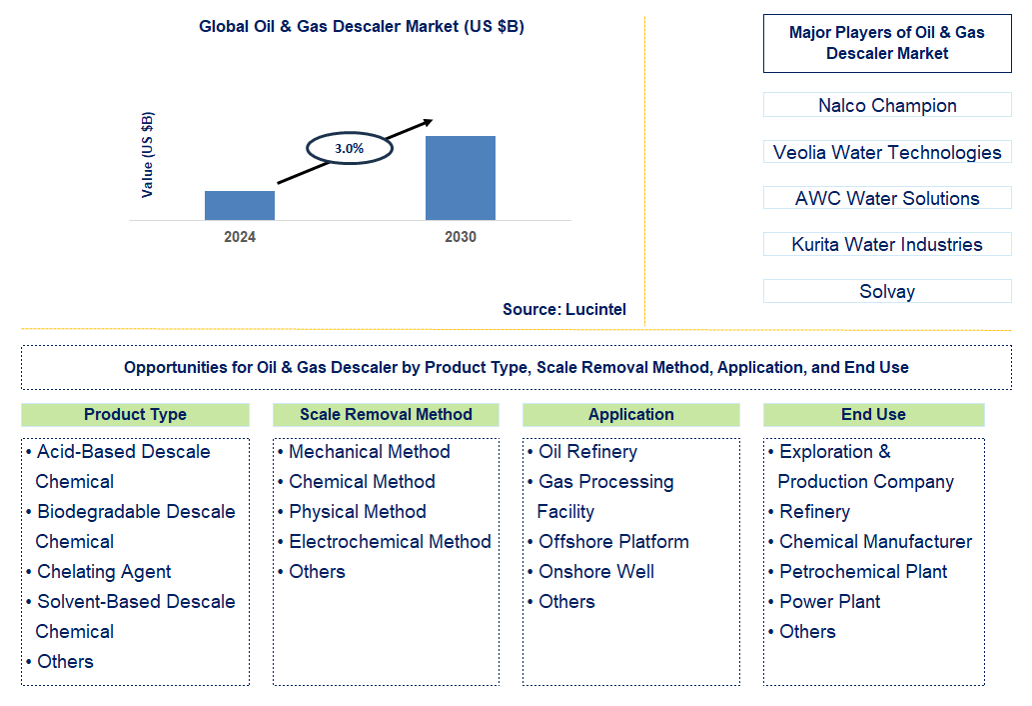
Key data points: The growth forecast = 3.0% annually for the next 6 years. Scroll below to get more insights. This market report covers trends, opportunities, and forecast in the global oil & gas descaler market to 2030 by product type (acid-based descale chemical, biodegradable descale chemical, chelating agent, solvent-based descale chemical, and others), scale removal method (mechanical method, chemical method, physical method, electrochemical method, and others), application (oil refinery, gas processing facility, offshore platform, onshore well, and others), end use (exploration & production company, refinery, chemical manufacturer, petrochemical plant, power plant, and others), and region (North America, Europe, Asia Pacific, and the Rest of the World)
We'll send your sample report shortly.
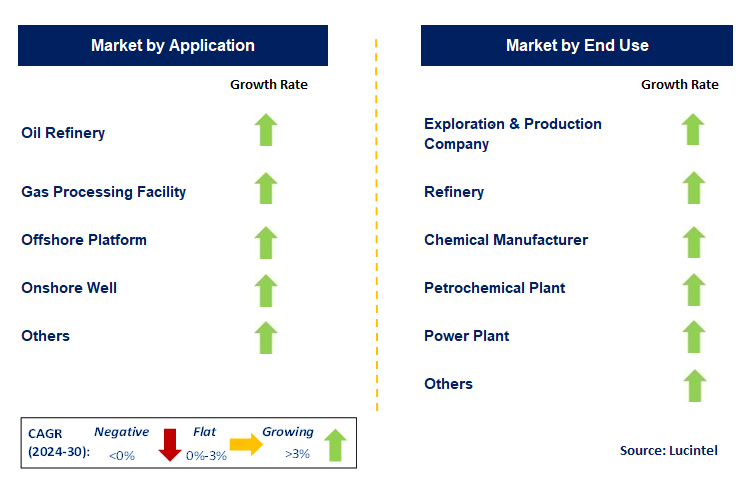
• Lucintel forecasts, within the application category, that oil refinery is expected to witness the highest growth over the forecast period due to increasing demand for descaler to maintain efficiency and prevent costly downtime.
• In terms of regions, North America is expected to witness highest growth over the forecast period due to high demand for oil and gas in the region, as well as the presence of a large number of oil and gas companies. Gain valuable insight for your business decisions with our comprehensive 150+ page report
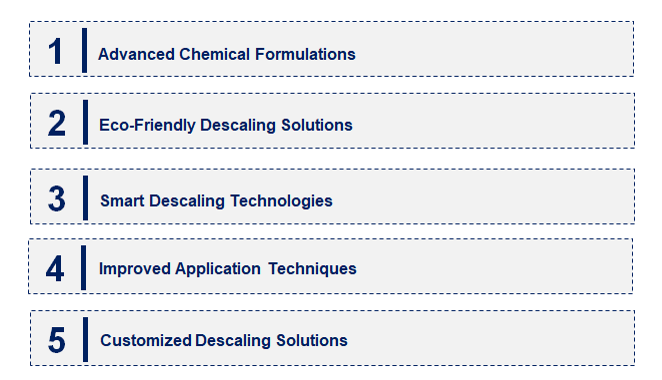
• Advanced Chemical Formulations: New chemical formulations are being developed to enhance descaling efficiency and reduce environmental impact. These advanced blends improve scale removal and minimize damage to equipment. The focus is on creating products that are less corrosive and more effective in a wider range of operating conditions, which helps reduce maintenance costs and extend the lifespan of machinery.
• Eco-Friendly Descaling Solutions: There is a growing emphasis on environmentally friendly descaling solutions. Manufacturers are developing biodegradable and non-toxic chemicals to meet stricter environmental regulations and reduce ecological footprints. These eco-friendly options are increasingly preferred due to their reduced environmental impact and compliance with global sustainability standards, aligning with the broader industry shift towards greener practices.
• Smart Descaling Technologies: The incorporation of Internet of Things (IoT) technology into descaling systems allows for real-time monitoring and automated adjustments. Smart descaling technologies provide precise control over the descaling process, leading to improved efficiency and reduced operational downtime. This trend enhances operational efficiency by offering more accurate and data-driven maintenance practices.
• Improved Application Techniques: New application techniques, such as ultrasonic and electromagnetic methods, are being utilized to improve the efficiency of descaling operations. These methods offer more effective removal of scale deposits and reduce the need for manual intervention. Improved application techniques lead to better performance and lower overall maintenance costs by addressing scale more effectively.
• Customized Descaling Solutions: Companies are increasingly offering customized descaling solutions designed to meet specific operational needs. This trend reflects the demand for more targeted and effective treatments tailored to different types of scaling and operating conditions. Customized solutions improve performance and efficiency by addressing the unique challenges faced by various facilities and operational environments. These trends are reshaping the oil and gas descaler market by driving innovation towards more effective, sustainable, and technologically advanced solutions. The emphasis on advanced chemical formulations, eco-friendly options, smart technologies, improved application methods, and customization reflects the industry's broader push for efficiency and environmental stewardship. These developments are enhancing operational performance while aligning with global sustainability goals.
• Introduction of Biodegradable Descalers: The development of biodegradable descalers is a major advancement in the oil and gas industry, offering an eco-friendly alternative to traditional chemical-based solutions. These descalers effectively remove scale while minimizing environmental impact, reducing the risk of hazardous waste disposal. This innovation aligns with increasing regulatory pressures and industry commitments to sustainability, making operations more environmentally compliant and socially responsible.
• Advancements in Smart Descaling Technologies: Smart descaling technologies that integrate IoT and AI are transforming the oil and gas sector by enabling real-time monitoring and predictive maintenance. These systems can detect scale formation early, allowing for targeted descaling that reduces downtime and extends equipment life. The impact of this development is significant, as it enhances operational efficiency, lowers maintenance costs, and reduces the likelihood of unplanned shutdowns.
• Adoption of High-Efficiency Chemical Formulations: New high-efficiency chemical formulations are being adopted that target specific types of scale, such as calcium carbonate and barium sulfate, with greater precision. These advanced formulations require lower concentrations to achieve effective descaling, which reduces chemical usage and operational costs. This development is particularly impactful in extending the lifespan of equipment and pipelines, ensuring smoother operations with less frequent interventions.
• Deployment of Portable Descaling Units: The deployment of portable descaling units has revolutionized field operations in remote oil and gas sites. These compact, mobile units provide flexibility and ease of use, enabling on-the-spot descaling without the need for large-scale equipment. This innovation significantly reduces the logistical challenges and costs associated with transporting heavy machinery, making it easier to maintain continuous operations in challenging environments.
• Increased Focus on Safety and Compliance: There is a growing emphasis on safety and regulatory compliance in descaling operations. New regulations require more rigorous safety protocols, leading to the development of safer descaling chemicals and procedures. This focus on safety not only protects workers and the environment but also minimizes the risk of regulatory penalties, ensuring smoother and uninterrupted operations that adhere to industry standards. These developments in the oil and gas descaler market are collectively driving the industry towards more efficient, sustainable, and safe operations. The introduction of biodegradable solutions, smart technologies, advanced chemical formulations, portable units, and a heightened focus on safety are reshaping how descaling is approached. These innovations not only enhance operational efficiency and reduce costs but also align the industry with evolving environmental and regulatory standards, ensuring long-term sustainability.
• Enhanced Downhole Descaling Solutions: Downhole scaling poses a significant challenge, leading to reduced production efficiency and equipment failures. Growth opportunities lie in developing advanced chemical descalers specifically formulated for downhole applications that can address diverse scaling types. These solutions can enhance well productivity, extend the life of downhole equipment, and reduce the need for costly mechanical interventions, ultimately leading to more sustainable and cost-effective operations in the oil and gas industry.
• Pipeline Integrity and Flow Assurance: Pipeline scaling can severely impact flow rates and overall system integrity. The demand for descalers that ensure consistent pipeline flow and protect against corrosion is rising. Innovative descaling technologies that can be applied without disrupting operations offer significant growth potential. These solutions can help maintain pipeline integrity, reduce maintenance costs, and ensure the safe transport of oil and gas, thereby enhancing operational reliability and efficiency.
• Refinery Equipment Maintenance: Scaling in refinery equipment, such as heat exchangers and boilers, can lead to energy inefficiencies and unplanned shutdowns. There is a growing opportunity for descalers that are specifically designed for refinery applications, offering non-corrosive, high-performance solutions. By improving the efficiency of heat transfer and preventing unplanned downtime, these descalers can contribute to substantial cost savings and more reliable refinery operations, driving market growth.
• Environmental Compliance and Sustainability: Environmental regulations are becoming increasingly stringent, pushing the industry towards greener alternatives. The development of biodegradable and environmentally friendly descalers presents a major growth opportunity. These solutions can help oil and gas companies meet regulatory requirements while maintaining effective scaling control. By reducing the environmental impact of descaling processes, companies can enhance their sustainability profiles, mitigate regulatory risks, and appeal to a more eco-conscious market.
• Offshore Platform Maintenance: Offshore platforms face unique challenges with scaling due to the harsh marine environment. Growth opportunities exist in the creation of robust descaling solutions tailored for offshore conditions, including those that can be applied remotely or through automated systems. These solutions can minimize the risk of equipment failure, reduce the need for costly offshore interventions, and ensure continuous production, thereby enhancing the operational efficiency and safety of offshore oil and gas operations. The strategic growth opportunities in the oil and gas descaler market are poised to significantly impact the industry by enhancing operational efficiency, reducing costs, and promoting environmental sustainability. As the demand for more specialized, high-performance, and eco-friendly descaling solutions grows, companies that can innovate in these key areas will be well-positioned to capitalize on the expanding market and drive the future of oil and gas operations.
• Advancements in Descaling Technology: Innovations in descaling technology, such as the development of environmentally friendly and highly efficient chemical formulations, are driving market growth. These advancements enable more effective removal of scale deposits, enhancing the operational efficiency of oil and gas equipment. As companies seek to optimize their production processes, the demand for advanced descalers is expected to rise, contributing to market expansion.
• Rising Global Energy Demand: The increasing global energy demand, particularly in emerging economies, is a significant driver for the oil and gas descaler market. As oil and gas production scales up to meet energy needs, the maintenance of infrastructure becomes critical. Descalers play a vital role in ensuring the smooth operation of pipelines, refineries, and other equipment, thereby supporting the continuous supply of energy.
• Stringent Environmental Regulations: Governments worldwide are imposing stricter environmental regulations on the oil and gas industry, particularly concerning emissions and wastewater management. This regulatory pressure is pushing companies to adopt more effective descaling solutions that minimize environmental impact. The need to comply with these regulations is driving the demand for advanced descalers that are both efficient and environmentally friendly.
• Increased Focus on Cost-Effective Maintenance Solutions: Oil and gas companies are increasingly focused on reducing operational costs while maintaining high efficiency. Descaling is a critical maintenance activity that, if neglected, can lead to costly equipment failures and downtime. The growing emphasis on cost-effective maintenance solutions is boosting the demand for efficient descalers that can extend equipment life and reduce overall maintenance expenses.
• Expansion of Offshore Oil and Gas Exploration: The expansion of offshore oil and gas exploration activities is another driver for the descaler market. Offshore environments are particularly prone to scale formation due to high salinity and pressure conditions. The increasing number of offshore projects is leading to a higher demand for specialized descalers that can effectively manage scale in these challenging environments. Challenges in the oil and gas descaler market are:
• Fluctuating Oil Prices: The volatility of oil prices poses a significant challenge to the oil and gas descaler market. When prices are low, companies often cut back on maintenance and exploration activities to save costs, leading to reduced demand for descalers. This fluctuation makes it difficult for descaler manufacturers to predict market trends and plan their production and sales strategies effectively.
• Environmental Concerns and Sustainability Issues: While descalers are essential for maintaining equipment, some chemical formulations used in descaling processes can be harmful to the environment. Growing awareness and concerns about sustainability are pressuring companies to develop and adopt eco-friendly descalers. This shift, while necessary, presents challenges in terms of research and development investment and market adoption of new products.
• Regulatory Compliance and Costs: Compliance with environmental and safety regulations is becoming increasingly complex and costly for oil and gas companies. The stringent requirements for chemical use and disposal in descaling processes can lead to higher operational costs. Companies may face challenges in balancing compliance with profitability, particularly when regulatory changes occur, necessitating rapid adaptation. The oil and gas descaler market is shaped by a combination of driving forces and challenges that reflect broader trends in the energy industry. Technological advancements, rising energy demand, and regulatory pressures are propelling market growth, while fluctuating oil prices, environmental concerns, and regulatory compliance pose significant hurdles. Companies operating in this market must navigate these factors carefully to ensure sustainable growth and remain competitive in a dynamic and evolving industry landscape.
• 4a technology
• AB Dynamics
• Airtificial Intelligence Structures
• Applied Measurement Australia
• Hexagon
• HI TEC
• Humanetics Innovative Solutions
• Oxford Technical Solutions
• Racelogic
• Renishaw
• Acid-Based Descale Chemical
• Biodegradable Descale Chemical
• Chelating Agent
• Solvent-Based Descale Chemical
• Others
• Mechanical Method
• Chemical Method
• Physical Method
• Electrochemical Method
• Others
• Oil Refinery
• Gas Processing Facility
• Offshore Platform
• Onshore Well
• Others
• Exploration & Production Company
• Refinery
• Chemical Manufacturer
• Petrochemical Plant
• Power Plant
• Others
• North America
• Europe
• Asia Pacific
• The Rest of the World
• United States: In the United States, advancements focus on environmentally friendly descaling solutions and automation. New formulations reduce harmful chemicals, aligning with stricter environmental regulations. Additionally, there is a growing adoption of automated descaling systems that improve operational efficiency and reduce downtime in high-demand sectors like oil refining and natural gas production.
• Chinese: The Chinese descaler market is seeing significant growth driven by the rapid expansion of its oil and gas industry. Recent developments include the introduction of high-efficiency descaling agents that can handle extreme operating conditions. Moreover, there is a push towards local manufacturing of descalers to reduce dependency on imports and lower costs, supporting the country's large-scale industrial activities.
• Germany: In Germany, the emphasis is on advanced descaling technologies that integrate with Industry 4.0 standards. The market is experiencing innovations such as real-time monitoring and smart descaling systems that utilize data analytics to optimize performance. These developments align with Germany’s focus on precision engineering and sustainability in its oil and gas sectors.
• Indian: The Indian oil and gas descaler market is growing due to increased industrial activities and infrastructure development. Recent trends include the adoption of cost-effective descaling solutions and the rise of local suppliers offering tailored products. There is also a focus on improving descaling efficiency to handle the challenges posed by the country's diverse and expanding oil and gas infrastructure.
• Japan: In Japan, the market is driven by advancements in high-performance descalers designed for extreme conditions. Recent innovations include the development of eco-friendly and biodegradable descaling agents that align with Japan's environmental standards. Additionally, Japan is investing in automated descaling systems to enhance operational reliability and minimize maintenance efforts in its sophisticated oil and gas industry.


• What is the growth forecast for oil & gas descaler market? Answer: The global oil & gas descaler market is expected to grow with a CAGR of 3.0% from 2024 to 2030. Q2. What are the major drivers influencing the growth of the oil & gas descaler market? Answer: The major drivers for this market are rising demand for oil and gas production, environmental rules and regulations, and rising adoption of environmentally friendly solutions for descalers. Q3. What are the major segments for oil & gas descaler market? Answer: The future of the global oil & gas descaler market looks promising with opportunities in the exploration and production company, refinery, chemical manufacturer, petrochemical plant, and power plant markets. Q4. Who are the key oil & gas descaler market companies? Answer: Some of the key oil & gas descaler companies are as follows:
• Nalco Champion
• Veolia Water Technologies
• AWC Water Solutions
• Kurita Water Industries
• Solvay
• Baker Hughes
• SUEZ Water Technologies & Solutions
• Schlumberger
• Halliburton
• ChemTreat Q5. Which oil & gas descaler market segment will be the largest in future? Answer: Lucintel forecasts that oil refinery is expected to witness the highest growth over the forecast period due to increasing demand for descaler to maintain efficiency and prevent costly downtime. Q6. In oil & gas descaler market, which region is expected to be the largest in next 5 years? Answer:
• In terms of regions, North America is expected to witness highest growth over the forecast period due to high demand for oil and gas in the region, as well as the presence of a large number of oil and gas companies. Q7. Do we receive customization in this report? Answer: Yes, Lucintel provides 10% customization without any additional cost.


Choose a license that fits your team. Instant PDF delivery.
Prices exclude taxes. Instant delivery. Custom licensing available on request.
Market Report · July 22, 2026
Market Report · July 22, 2026
Market Report · July 22, 2026
Trusted partner for strategic intelligence and business growth


Receive a complimentary market analysis tailored to your industry. Our analysts will identify key growth opportunities and competitive dynamics specific to your business.

Market size, growth rate, and key trend analysis for your specific sector.

Top competitor positioning and market share analysis.

Strategic recommendations backed by data-driven insights.
Get curated market intelligence and competitive moves straight to your inbox.
By subscribing, you agree to receive our monthly insights. Unsubscribe anytime.
Receive a complimentary market analysis tailored to your industry. Our analysts will identify key growth opportunities and competitive dynamics specific to your business.
Market size, growth rate, and key trend analysis for your specific sector.
Top competitor positioning and market share analysis.
Strategic recommendations backed by data-driven insights.
Get curated market intelligence, emerging trends, and competitive moves straight to your inbox each month.
By subscribing, you agree to receive our monthly insights. Unsubscribe anytime.
We'll send your sample report shortly.