
Market Report · July 22, 2026

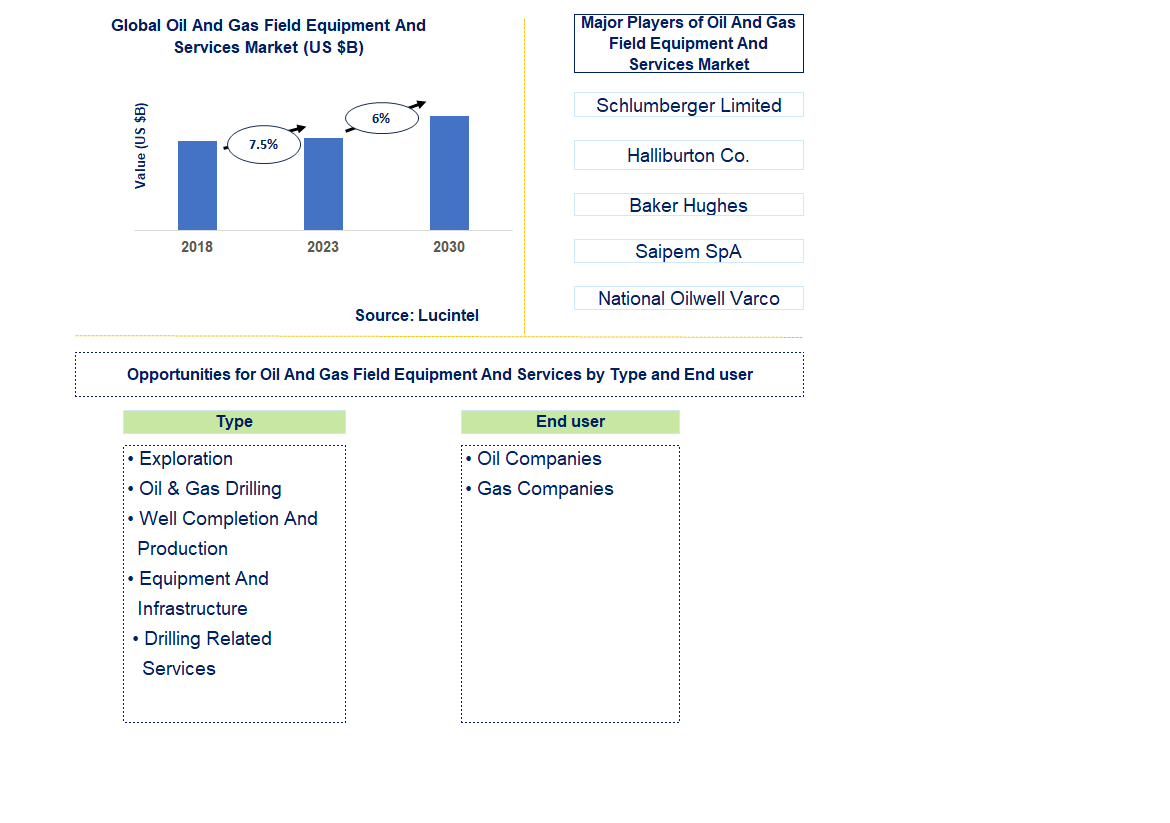
Key data points: The growth forecast = 6% annually next 7 years. Scroll below to get more insights. This market report covers trends, opportunities, and forecast in the global oil and gas field equipment and services market to 2030 by type (exploration , oil & gas drilling , well completion and production, equipment and infrastructure , and drilling related services), end user (oil companies and gas companies), and region (North America, Europe, Asia Pacific, and the Rest of the World)
We'll send your sample report shortly.
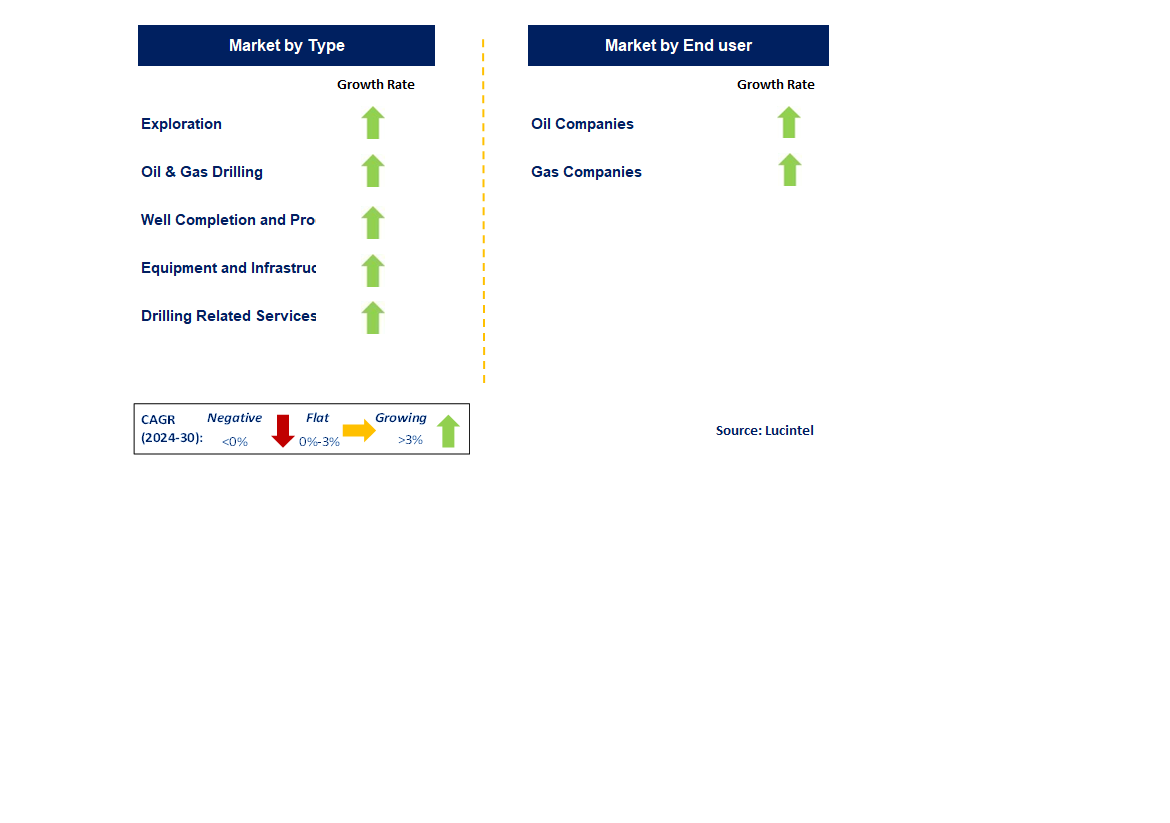
• Lucintel forecasts that oil companies will remain the largest segment over the forecast period due to demand for oil and gas field equipment and services.
• Within this market, equipment and infrastructure will remain the largest segment due to growing infrastructure. A more than 150-page report is developed to help in your business decisions.
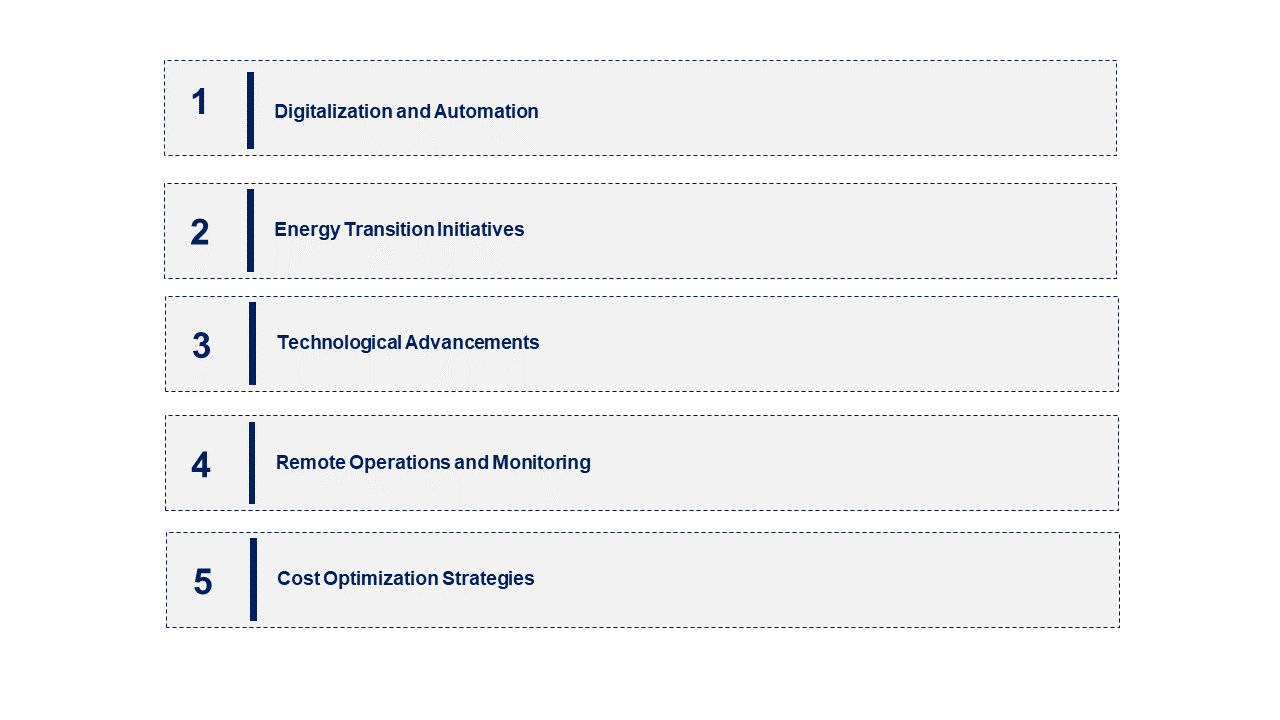
• Digitalization and Automation: There is a growing convergence of digital technologies like IoT, AI, and automation in the oil and gas sector. These technologies streamline operations, enhance predictive maintenance capabilities, and improve security measures while reducing expenses and increasing productivity.
• Energy Transition Initiatives: The oil and gas industry’s increasing focus on sustainability is driving investment in energy transition initiatives. This includes renewable energy projects, carbon capture and storage (CCS) technologies, and cleaner production methods aimed at reducing environmental impact.
• Technological Advancements: Improved extraction efficiencies from both conventional and unconventional reservoirs are being realized through advancements in drilling technology, such as horizontal drilling and hydraulic fracturing (fracking). Innovations in equipment design, coupled with new materials, have consequently improved safety during operations.
• Remote Operations and Monitoring: In the oil and gas sector, remote operations and monitoring solutions were accelerated by the COVID-19 pandemic. Remote-controlled drilling rigs, virtual inspections, and real-time data analytics platforms all contribute to flexibility in circumstances where operational resilience may be most needed.
• Cost Optimization Strategies: During periods of high market volatility, there is an increased focus on cost optimization strategies, including leaner supply chains for standardized equipment and outsourcing non-core activities to specialist service providers.
• Adoption of Advanced Data Analytics: There is an increasing emphasis on using big data and advanced analytics to improve operational efficiency and decision-making processes. Organizations are investing in predictive maintenance, monitoring equipment performance in real time, and enhancing asset reliability.
• Focus on ESG (Environmental, Social, and Governance) Factors: Within the oil and gas industry, there is a growing emphasis on ESG factors due to investor expectations and regulations. Sustainability initiatives undertaken by firms include emission reductions, community engagement improvements, and the adoption of responsible modes of production.
• Technological Innovations in Offshore Operations: The use of subsea technology advancements, remote operating vehicles (ROVs), and autonomous underwater vehicles (AUVs) has significantly improved operational safety while ensuring efficient management of challenging deep-water environments.
• Expansion of Digital Twin Technology: The uptake of digital twin technology is gaining traction within the oil and gas sector. Digital twins virtualize physical assets, facilitating simulation, monitoring, and optimization of asset performance throughout their life cycle. Such technology supports predictive maintenance, minimizes downtime, and enhances resilience during operations.
• Partnerships and Collaborations: Industry players are partnering with tech vendors and academia to seek innovative solutions to complex sectoral issues. These partnership arrangements are geared towards developing comprehensive solutions that leverage each company’s unique expertise while accelerating the introduction of innovative technologies for upstream, downstream, or midstream operations.
• Digitalization and Automation: There is a growing convergence of digital technologies like IoT, AI, and automation in the oil and gas sector. These technologies streamline operations, enhance predictive maintenance capabilities, and improve security measures while reducing expenses and increasing productivity.
• Energy Transition Initiatives: The oil and gas industry’s increasing focus on sustainability is driving investment in energy transition initiatives. This includes renewable energy projects, carbon capture and storage (CCS) technologies, and cleaner production methods aimed at reducing environmental impact.
• Technological Advancements: Improved extraction efficiencies from both conventional and unconventional reservoirs are being realized through advancements in drilling technology, such as horizontal drilling and hydraulic fracturing (fracking). Innovations in equipment design, coupled with new materials, have consequently improved safety during operations.
• Remote Operations and Monitoring: In the oil and gas sector, remote operations and monitoring solutions were accelerated by the COVID-19 pandemic. Remote-controlled drilling rigs, virtual inspections, and real-time data analytics platforms all contribute to flexibility in circumstances where operational resilience may be most needed.
• Cost Optimization Strategies: During periods of high market volatility, there is an increased focus on cost optimization strategies, including leaner supply chains for standardized equipment and outsourcing non-core activities to specialist service providers.
• Technological Advancements: Oil and gas operations benefit from continuous innovation in drilling technologies, automation, and digitalization that enhance operational efficiency while minimizing costs and improving safety.
• Global Energy Demand: Despite the global embrace of renewable energy sources, fossil fuels still remain the primary means of meeting global energy requirements, resulting in increased investment in exploration, production, and infrastructure.
• Offshore and Deepwater Exploration: This creates market demand for specialized products, necessitating specialized equipment that stimulates offshore exploration activities.
• Regulatory Compliance: Inadequate compliance with environmental laws necessitates better equipment and service provisions to reduce operational risks. Challenges facing the oil and gas field equipment and services market include:
• Market Volatility: Variability in demand for equipment occurs due to changes in capital expenditures and project investments caused by fluctuating oil prices and economic uncertainties.
• Cost Pressures: Profitability becomes critical, particularly when faced with price volatility tied to operational cost reductions during a downturn that restricts capital investment associated with new technologies or equipment.
• Environmental Concerns: Operating costs escalate as environmental issues gain importance, involving complexities related to sustainability practices, which increase expenses associated with operations.
• Geopolitical Risks: Political instability, trade wars, and regulatory changes in oil-producing countries can affect supply chains, jeopardizing project timelines and creating insecurity regarding market stability and profitability levels. In conclusion, technological advances, coupled with worldwide energy demands, drive the oil field service market; however, it also faces significant challenges, including industry volatility, cost pressures, environmental mandates, and geopolitical risks. To prosper in this fast-changing sector, key players must respond to these challenges by adopting innovative approaches, developing strategic plans, and complying with regulatory standards.
• Schlumberger Limited
• Halliburton Co.
• Baker Hughes
• Saipem SpA
• National Oilwell Varco These companies have established themselves as leaders in the oil and gas industry equipment and services market industry, with extensive product portfolios, global presence, and strong research and development capabilities. They continually strive to enhance their market positions through strategic partnerships, mergers and acquisitions, and product innovations. The market share dynamics within the oil and gas industry equipment and services market are evolving, with the entry of new players and the emergence of innovative oil and gas industry equipment and services market technologies. Additionally, collaborations between material suppliers, manufacturers, and end-users are fostering technological advancements and expanding market opportunities.
• Exploration
• Oil & Gas Drilling
• Well Completion and Production
• Equipment and Infrastructure
• Drilling Related Services
• Oil Companies
• Gas Companies
• North America
• Europe
• Asia Pacific
• The Rest of the World


• Schlumberger Limited
• Halliburton Co.
• Baker Hughes
• Saipem SpA
• National Oilwell Varco Q5. Which oil and gas field equipment and services market segment will be the largest in future? Answer: Lucintel forecasts that oil companies will remain the largest segment over the forecast period due to demand for oil and gas field equipment and services. Q6. In oil and gas field equipment and services market, which region is expected to be the largest in next 5 years? Answer: APAC will remain the largest region over the forecast period due to deepwater and exploration activities in east and west africa. Q7. Do we receive customization in this report? Answer: Yes, Lucintel provides 10% customization without any additional cost.


Choose a license that fits your team. Instant PDF delivery.
Prices exclude taxes. Instant delivery. Custom licensing available on request.
Market Report · July 22, 2026
Market Report · June 26, 2026
Market Report · May 18, 2026
Trusted partner for strategic intelligence and business growth


Receive a complimentary market analysis tailored to your industry. Our analysts will identify key growth opportunities and competitive dynamics specific to your business.

Market size, growth rate, and key trend analysis for your specific sector.

Top competitor positioning and market share analysis.

Strategic recommendations backed by data-driven insights.
Get curated market intelligence and competitive moves straight to your inbox.
By subscribing, you agree to receive our monthly insights. Unsubscribe anytime.
Receive a complimentary market analysis tailored to your industry. Our analysts will identify key growth opportunities and competitive dynamics specific to your business.
Market size, growth rate, and key trend analysis for your specific sector.
Top competitor positioning and market share analysis.
Strategic recommendations backed by data-driven insights.
Get curated market intelligence, emerging trends, and competitive moves straight to your inbox each month.
By subscribing, you agree to receive our monthly insights. Unsubscribe anytime.
We'll send your sample report shortly.