
Report Feature
Novel Sweetener Market Trends and Forecast
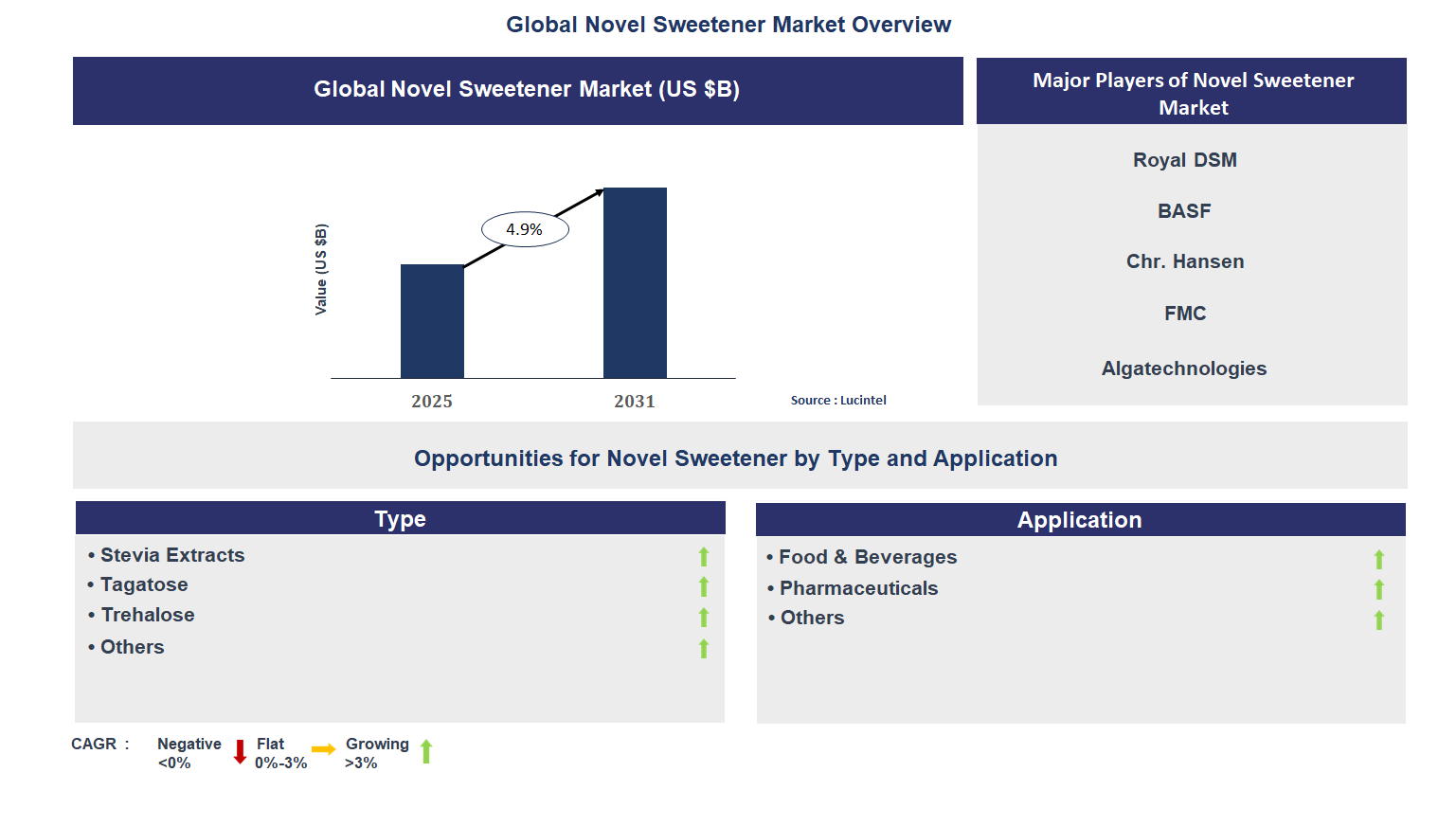
The future of the global novel sweetener market looks promising with opportunities in the food & beverage and pharmaceutical markets. The global novel sweetener market is expected to grow with a CAGR of 4.9% from 2025 to 2031. The major drivers for this market are the increasing consumer demand for low-calorie alternatives, the rising health consciousness about sugar consumption, and the growing adoption of sweeteners in food products.• Lucintel forecasts that, within the type category, stevia extract is expected to witness the highest growth over the forecast period.
• Within the application category, food & beverage is expected to witness higher growth.
• In terms of region, APAC is expected to witness the highest growth over the forecast period. Gain valuable insights for your business decisions with our comprehensive 150+ page report. Sample figures with some insights are shown below.
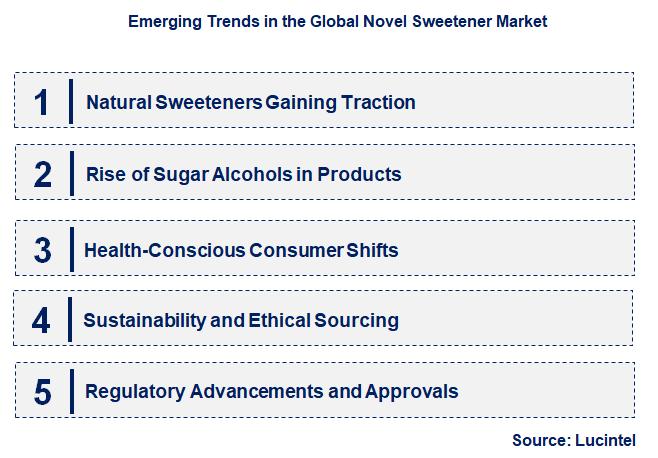
Emerging Trends in the Novel Sweetener Market
The novel sweetener market is shaped by evolving consumer preferences, technological advancements, and regulatory developments. Key trends include a growing shift towards natural alternatives, sustainability concerns, and innovations in product formulation. These trends are reshaping the sweetener landscape and providing new opportunities and challenges across global markets.• Natural Sweeteners Gaining Traction: Consumers are increasingly gravitating towards natural sweeteners like stevia, monk fruit, and coconut sugar due to their perception of being healthier and more sustainable. These alternatives offer low glycemic indexes and fewer calories, making them particularly appealing to those seeking to reduce sugar intake while maintaining sweetness in their diets. This trend is evident across food and beverage categories.
• Rise of Sugar Alcohols in Products: Sugar alcohols, such as erythritol and xylitol, are becoming popular in sugar-free and low-calorie products due to their minimal impact on blood sugar. These alcohols are being used in a variety of applications, from baked goods to candies. As the demand for low-carb diets increases, the role of sugar alcohols in reducing calorie content is growing in prominence.
• Health-Conscious Consumer Shifts: Health-conscious consumers are increasingly opting for sugar substitutes that are lower in calories and do not spike blood sugar levels. This has led to the rise of sweeteners with specific health benefits, like anti-inflammatory properties or improved gut health. The shift toward healthier eating habits is further pushing demand for innovative, functional sweeteners across multiple food categories.
• Sustainability and Ethical Sourcing: Sustainability is becoming a central theme in the novel sweetener market. Consumers and manufacturers alike are increasingly concerned about the environmental impact of raw material sourcing for sweeteners. As a result, there is growing demand for sweeteners derived from environmentally sustainable sources, such as plant-based and organic alternatives, encouraging suppliers to focus on eco-friendly production practices.
• Regulatory Advancements and Approvals: As novel sweeteners gain popularity, regulators in various countries are fast-tracking approvals for these alternatives, leading to quicker market access. The FDA in the U.S., EFSA in Europe, and other regulatory bodies have streamlined processes for evaluating sweeteners, making it easier for companies to launch new products. This regulatory support has been crucial for the widespread adoption of novel sweeteners. These emerging trends are reshaping the novel sweetener market, as demand for natural, health-conscious, and sustainable products grows. The market is becoming increasingly diverse, with innovations in product formulations and a shift towards healthier and more sustainable alternatives. Manufacturers that align with these trends are better positioned to capture the growing consumer base.
Recent Development in the Novel Sweetener Market
Recent developments in the novel sweetener market reflect the growing demand for healthier alternatives to sugar. Driven by consumer preferences and supported by regulatory changes, significant advancements have occurred in sweetener innovation, sustainability, and market access. Below are five key developments reshaping the market.• Increased Consumer Demand for Low-Calorie Sweeteners: Consumers are increasingly avoiding traditional sugars due to rising health concerns like obesity and diabetes. As a result, sweeteners like stevia, monk fruit, and allulose are gaining popularity, offering lower-calorie alternatives. The growing preference for these products has spurred innovation, leading to a greater variety of sweeteners available across various food categories.
• Advancements in Sweetener Blending: The use of blending techniques to create more balanced and palatable sweeteners is becoming widespread. By combining natural sweeteners like stevia with sugar alcohols or other alternatives, manufacturers can create a more sugar-like taste and improve mouthfeel. These advancements in sweetener blending are making novel sweeteners more appealing to mainstream consumers.
• Regulatory Support for Novel Sweeteners: Governments in key markets like the U.S., China, and Europe have been more supportive of novel sweeteners, introducing streamlined regulatory approval processes. This has accelerated the time it takes for new sweeteners to enter the market, ensuring quicker availability and broader access for manufacturers. Regulatory approvals also help boost consumer confidence in these products safety.
• Rise of Functional Sweeteners: Functional sweeteners that offer additional health benefits beyond calorie reduction are becoming more popular. Sweeteners with added benefits like digestive health properties, anti-inflammatory effects, or antioxidant content are seeing increased adoption. This is largely driven by consumer interest in wellness and the desire for sweeteners that offer more than just sweetness.
• Sustainability in Sweetener Production: As environmental concerns grow, manufacturers are focusing on the sustainability of their sweetener production processes. Sweeteners derived from sustainably grown crops or those produced through eco-friendly processes are increasingly in demand. This shift toward sustainable practices is influencing sourcing strategies, helping companies meet consumer expectations and adhere to environmental regulations. These developments in the novel sweetener market indicate a significant shift toward healthier, more sustainable, and innovative alternatives to sugar. With advancements in product formulations, regulatory support, and an increased focus on sustainability, the market is evolving rapidly, offering new opportunities for companies to cater to the growing consumer demand for healthier food and beverage options.
Strategic Growth Opportunities in the Novel Sweetener Market
The novel sweetener market is witnessing significant growth, driven by changing consumer preferences and the rising demand for healthier alternatives to sugar. This growth presents numerous opportunities across various applications, including food and beverages, pharmaceuticals, and personal care. Below are five key growth opportunities by application in the novel sweetener market.• Healthier Beverage Alternatives: The demand for low-calorie, sugar-free, and functional beverages is on the rise. Sweeteners like stevia, monk fruit, and erythritol are becoming key ingredients in soft drinks, energy drinks, and bottled teas. This trend is creating new opportunities for manufacturers to innovate and cater to the growing consumer base seeking healthier, guilt-free options.
• Sugar-Free Confectionery and Snacks: With the rise of health-conscious consumers, there is an increasing demand for sugar-free or low-sugar snacks and confectionery. Sweeteners like sucralose, xylitol, and stevia are being used to formulate sugar-free candies, gums, and chocolates. This shift toward healthier alternatives is expanding opportunities for novel sweeteners in the snacking industry.
• Diabetes-Friendly Food Products: The growing prevalence of diabetes is creating a demand for sugar substitutes that do not spike blood sugar levels. Sweeteners with a low glycemic index, like stevia and monk fruit, are being incorporated into diabetes-friendly products, from baked goods to cereals. This segment is expected to grow as awareness about diabetes management increases.
• Pharmaceutical Applications: The pharmaceutical industry offers significant growth potential for novel sweeteners, particularly in the formulation of sugar-free medications, lozenges, and syrups. Sweeteners like mannitol and sorbitol are commonly used in pharmaceutical products to improve taste and texture without increasing calories or affecting blood sugar. The demand for sugar-free medicines is expected to increase in the coming years.
• Personal Care and Cosmetics: The personal care industry is starting to explore the use of novel sweeteners in products such as toothpaste, mouthwash, and skin care. Sweeteners with antibacterial and moisturizing properties, such as xylitol, are being used for their functional benefits. As consumers seek more natural and gentle ingredients, sweeteners are becoming an integral part of personal care formulations. These growth opportunities highlight the expanding applications of novel sweeteners across various industries. As consumer preferences evolve and health concerns rise, manufacturers have significant potential to capitalize on these trends. By focusing on health-conscious, sustainable, and functional sweeteners, companies can strengthen their position in the rapidly growing market.
Novel Sweetener Market Driver and Challenges
The novel sweetener market is shaped by several drivers and challenges, including technological advancements, changing consumer preferences, and regulatory factors. While innovation is propelling the market forward, challenges such as regulatory complexity and cost pressures remain. Below, we explore the key drivers and challenges influencing the markets growth and development. The factors responsible for driving the novel sweetener market include: 1. Rising Health Concerns: Increasing awareness of the health risks associated with excessive sugar consumption, such as obesity, diabetes, and heart disease, is driving demand for healthier alternatives. Consumers are actively seeking low-calorie and sugar-free options, fueling the growth of novel sweeteners as a healthier alternative. 2. Technological Advancements in Sweetener Production: New technologies in the development and production of sweeteners have improved their efficiency and lowered costs. Advances in fermentation, enzyme modification, and blending techniques have enabled the creation of novel sweeteners that are both more cost-effective and closer to the taste of traditional sugar. 3. Regulatory Support for Healthier Alternatives: Governments worldwide are providing more regulatory clarity and support for novel sweeteners, helping to speed up approval processes. This regulatory environment is encouraging manufacturers to explore new sweetener solutions, providing quicker market access and improving consumer trust. 4. Consumer Demand for Natural Ingredients: There is growing consumer demand for natural, plant-based ingredients in food and beverages. Sweeteners like stevia and monk fruit, derived from natural sources, are increasingly popular. This shift toward clean-label products is driving the growth of novel sweeteners that align with consumer preferences for healthier, transparent ingredients. 5. Sustainability Focus in Production: As sustainability becomes a key concern, manufacturers are focusing on the environmental impact of sweetener production. The demand for sweeteners derived from renewable, environmentally friendly sources is increasing, prompting companies to innovate and develop more sustainable sweetener alternatives. Challenges in the novel sweetener market are: 1. High Production Costs: While novel sweeteners have grown in popularity, the cost of production can be high, particularly for plant-based sweeteners like stevia. This can make it difficult for manufacturers to keep prices competitive, particularly when compared to traditional sugars, which are often more cost-efficient to produce. 2. Regulatory Barriers: Despite regulatory advancements, some countries still have slow or complex approval processes for novel sweeteners. Inconsistent regulations across different regions can delay market access and create barriers for international expansion. Additionally, changing regulations can create uncertainty for manufacturers. 3. Consumer Acceptance and Taste Issues: While novel sweeteners have gained traction, some consumers remain hesitant due to taste differences or a lack of familiarity. Sweeteners like stevia and monk fruit can have an aftertaste that is not always well-received. Overcoming taste challenges and educating consumers about these products is crucial for market expansion. The novel sweetener market is shaped by a mix of positive drivers and challenges. While technological advancements, regulatory support, and health-conscious consumer trends are fueling growth, challenges such as high production costs, regulatory hurdles, and taste concerns remain. Manufacturers that can navigate these challenges while aligning with emerging trends are poised to thrive in this expanding market.List of Novel Sweetener Companies
Companies in the market compete on the basis of product quality offered. Major players in this market focus on expanding their manufacturing facilities, R&D investments, infrastructural development, and leverage integration opportunities across the value chain. With these strategies novel sweetener companies cater increasing demand, ensure competitive effectiveness, develop innovative products & technologies, reduce production costs, and expand their customer base. Some of the novel sweetener companies profiled in this report include-• Royal DSM
• BASF
• Chr. Hansen
• FMC
• Algatechnologies
• Allied Biotech
• AquaCarotene
• Kemin Industries
• Cyanotech
• DDW The Color House
Novel Sweetener Market by Segment
The study includes a forecast for the global novel sweetener market by type, application, and region.Novel Sweetener Market by Type [Value from 2019 to 2031]:
• Stevia Extracts
• Tagatose
• Trehalose
• Others
Novel Sweetener Market by Application [Value from 2019 to 2031]:
• Food & Beverages
• Pharmaceuticals
• Others
Novel Sweetener Market by Region [Value from 2019 to 2031]:
• North America
• Europe
• Asia Pacific
• The Rest of the World
Country Wise Outlook for the Novel Sweetener Market
The novel sweetener market has been experiencing significant advancements, driven by changing consumer preferences, health trends, and innovation in food technology. As global demand for sugar alternatives increases, countries like the United States, China, Germany, India, and Japan have been at the forefront of adopting and developing new sweeteners. This analysis explores the latest developments, emerging trends, and market dynamics in these regions.• United States: In the U.S., the demand for novel sweeteners is being driven by health-conscious consumers seeking alternatives to traditional sugar. New sweeteners like stevia, monk fruit, and allulose are gaining popularity due to their low-calorie, low-glycemic properties. The FDA has also been more proactive in evaluating and approving new sweeteners, paving the way for innovation in food and beverage applications.
• China: Chinas sweetener market has seen rapid growth, especially in response to increasing obesity rates and a rising middle class concerned with health. The market is shifting toward plant-based sweeteners like stevia and monk fruit. Additionally, Chinas regulatory landscape has become more favorable for novel sweeteners, with new approvals and policies encouraging the adoption of healthier alternatives in beverages, snacks, and processed foods.
• Germany: Germany has been a leader in the European market for novel sweeteners, driven by its strong health and wellness sector. The growing demand for sugar-free and low-calorie products has led to increased use of stevia, sucralose, and other artificial sweeteners. Germanys regulatory environment ensures that only safe and well-tested alternatives are allowed, fostering trust among consumers and manufacturers alike.
• India: In India, the shift toward novel sweeteners is gaining momentum due to increasing awareness of diabetes and obesity. Stevia, sucralose, and other plant-based alternatives are becoming more common in beverages and packaged foods. Additionally, India’s growing middle class and increasing disposable incomes are accelerating the demand for sugar alternatives. The regulatory framework is evolving to support the safe use of these sweeteners.
• Japan: Japans market for novel sweeteners is expanding, with the rising popularity of low-calorie and sugar-free products. Stevia and monk fruit are particularly sought after, and Japans strict food safety regulations ensure only the most rigorously tested sweeteners are used in food and beverages. Furthermore, Japanese consumers’ focus on health and wellness continues to fuel the market for natural, low-calorie alternatives.

Features of the Global Novel Sweetener Market
Market Size Estimates: Novel sweetener market size estimation in terms of value ($B). Trend and Forecast Analysis: Market trends (2019 to 2024) and forecast (2025 to 2031) by various segments and regions. Segmentation Analysis: Novel sweetener market size by type, application, and region in terms of value ($B). Regional Analysis: Novel sweetener market breakdown by North America, Europe, Asia Pacific, and Rest of the World. Growth Opportunities: Analysis of growth opportunities in different type, application, and regions for the novel sweetener market. Strategic Analysis: This includes M&A, new product development, and competitive landscape of the novel sweetener market. Analysis of competitive intensity of the industry based on Porter’s Five Forces model.
FAQ
Q1. What is the growth forecast for novel sweetener market? Answer: The global novel sweetener market is expected to grow with a CAGR of 4.9% from 2025 to 2031. Q2. What are the major drivers influencing the growth of the novel sweetener market? Answer: The major drivers for this market are the increasing consumer demand for low-calorie alternatives, the rising health consciousness about sugar consumption, and the growing adoption of sweeteners in food products. Q3. What are the major segments for novel sweetener market? Answer: The future of the novel sweetener market looks promising with opportunities in the food & beverage and pharmaceutical markets. Q4. Who are the key novel sweetener market companies? Answer: Some of the key novel sweetener companies are as follows:• Royal DSM
• BASF
• Chr. Hansen
• FMC
• Algatechnologies
• Allied Biotech
• AquaCarotene
• Kemin Industries
• Cyanotech
• DDW The Color House Q5. Which novel sweetener market segment will be the largest in future? Answer: Lucintel forecasts that, within the type category, stevia extract is expected to witness the highest growth over the forecast period. Q6. In novel sweetener market, which region is expected to be the largest in next 5 years? Answer: In terms of region, APAC is expected to witness the highest growth over the forecast period. Q7. Do we receive customization in this report? Answer: Yes, Lucintel provides 10% customization without any additional cost.
Table of Contents
List of Figures
List of Tables
Methodology
- In-depth interviews of the major players in this market
- Detailed secondary research from competitors’ financial statements and published data
- Extensive searches of published works, market, and database information pertaining to industry news, company press releases, and customer intentions
- A compilation of the experiences, judgments, and insights of Lucintel’s professionals, who have analyzed and tracked this market over the years.


Buy Now
Choose a license that fits your team. Instant PDF delivery.
Prices exclude taxes. Instant delivery. Custom licensing available on request.
Key Questions
- • What are some of the most promising, high-growth opportunities for the novel sweetener market by type (stevia extracts, tagatose, trehalose, and others), application (food & beverages, pharmaceuticals, and others), and region (North America, Europe, Asia Pacific, and the Rest of the World)?
- • Which segments will grow at a faster pace and why?
- • Which region will grow at a faster pace and why?
- • What are the key factors affecting market dynamics? What are the key challenges and business risks in this market?
- • What are the business risks and competitive threats in this market?
- • What are the emerging trends in this market and the reasons behind them?
- • What are some of the changing demands of customers in the market?
- • What are the new developments in the market? Which companies are leading these developments?
- • Who are the major players in this market? What strategic initiatives are key players pursuing for business growth?
- • What are some of the competing products in this market and how big of a threat do they pose for loss of market share by material or product substitution?
- • What M&A activity has occurred in the last 5 years and what has its impact been on the industry? For any questions related to Novel Sweetener Market, Novel Sweetener Market Size, Novel Sweetener Market Growth, Novel Sweetener Market Analysis, Novel Sweetener Market Report, Novel Sweetener Market Share, Novel Sweetener Market Trends, Novel Sweetener Market Forecast, Novel Sweetener Companies, write Lucintel analyst at email: helpdesk@lucintel.com. We will be glad to get back to you soon.


