
Market Report · July 22, 2026

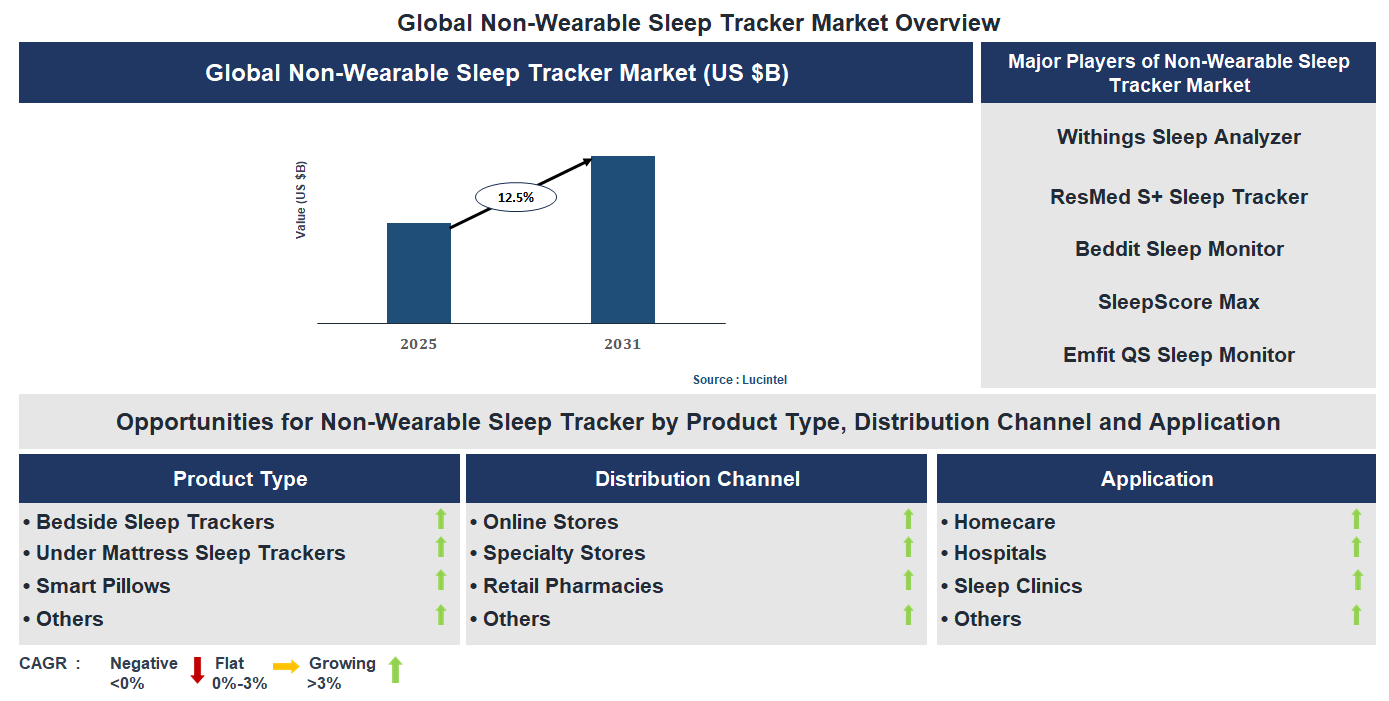
Key data points: The growth forecast = 12.5% annually for the next 7 years. Scroll below to get more insights. This market report covers trends, opportunities and forecasts in non-wearable sleep tracker market to 2031 by product type (bedside sleep trackers, under mattress sleep trackers, smart pillows, and others), distribution channel (online stores, specialty stores, retail pharmacies, and others), application (homecare, hospitals, sleep clinics, and others), and region (North America, Europe, Asia Pacific, and the Rest of the World)
We'll send your sample report shortly.
• Lucintel forecasts that, within the product type category, bedside sleep tracker is expected to witness the highest growth over the forecast period.
• Within the application category, homecare is expected to witness the highest growth.
• In terms of region, North America is expected to witness the highest growth over the forecast period. Gain valuable insights for your business decisions with our comprehensive 150+ page report. Sample figures with some insights are shown below.
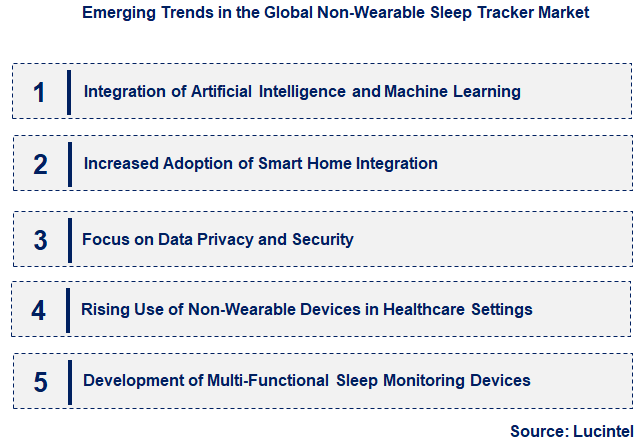
• Integration of Artificial Intelligence and Machine Learning: AI and machine learning algorithms are enhancing the accuracy and personalization of sleep data analysis. These technologies enable devices to identify sleep patterns, detect disturbances, and provide tailored recommendations for improving sleep quality. The integration of AI also facilitates real-time insights and predictive analytics, empowering users to make informed decisions about their sleep health. This trend is driving innovation in non-wearable sleep trackers, making them more intelligent and user-centric.
• Increased Adoption of Smart Home Integration: Non-wearable sleep trackers are increasingly being integrated with smart home ecosystems, allowing seamless communication with other devices such as smart lights, thermostats, and voice assistants. This integration enables automated adjustments to create optimal sleep environments, such as dimming lights or adjusting room temperature. It enhances user convenience and promotes better sleep hygiene. The trend is fostering a more holistic approach to sleep management, positioning sleep trackers as part of comprehensive smart home solutions.
• Focus on Data Privacy and Security: As sleep trackers collect sensitive health data, there is a growing emphasis on ensuring data privacy and security. Manufacturers are adopting advanced encryption methods and transparent data policies to build consumer trust. Regulatory compliance, such as GDPR, is becoming a critical aspect of product development. This trend reflects consumers increasing concern over personal data protection and is prompting companies to prioritize secure data handling practices, which could influence market growth and consumer confidence.
• Rising Use of Non-Wearable Devices in Healthcare Settings: Healthcare providers are increasingly adopting non-wearable sleep trackers for clinical assessments and remote patient monitoring. These devices offer a non-intrusive way to gather sleep data, facilitating early diagnosis of sleep disorders and personalized treatment plans. The trend is expanding the market beyond consumer use into professional healthcare, driving innovation and increasing demand for accurate, reliable, and easy-to-use sleep tracking solutions in medical environments.
• Development of Multi-Functional Sleep Monitoring Devices: The market is witnessing the emergence of multi-functional devices that combine sleep tracking with other health metrics such as heart rate, breathing, and environmental factors. These comprehensive solutions provide a holistic view of an individuals health and sleep quality. The integration of multiple functionalities enhances user engagement and offers more actionable insights. This trend is transforming sleep trackers from single-purpose devices into versatile health management tools, broadening their appeal and utility. In summary, these emerging trends are significantly reshaping the non-wearable sleep tracker market by making devices smarter, more integrated, secure, and versatile. They are expanding the markets scope from simple sleep monitoring to comprehensive health management solutions, ultimately improving user experience and health outcomes.
• Integration of Artificial Intelligence: AI-powered algorithms now enable more precise sleep stage detection and personalized insights, improving user experience and accuracy. This advancement allows for real-time analysis and tailored recommendations, increasing consumer trust and engagement. It also helps manufacturers differentiate their products in a competitive market, fostering innovation and higher adoption rates.
• Expansion of Bedside and Under-Mattress Devices: New non-wearable sensors placed under mattresses or on bedside tables offer seamless sleep tracking without user intervention. These devices provide continuous monitoring and are less intrusive, appealing to a broader demographic, including elderly users. Their ease of use and unobtrusive nature are driving market growth and expanding consumer base.
• Enhanced Data Integration and Connectivity: Sleep trackers now seamlessly connect with smartphones, smart home systems, and health apps, enabling comprehensive health management. This integration facilitates data sharing with healthcare providers and supports holistic wellness approaches. It enhances user engagement and encourages regular use, boosting market penetration.
• Focus on Sleep Environment Optimization: Recent developments include sensors that monitor environmental factors such as temperature, humidity, and noise levels. These devices help optimize sleep conditions, providing actionable insights to improve sleep quality. This holistic approach appeals to health-conscious consumers and adds value to sleep tracking solutions.
• Adoption of Advanced Sensor Technologies: Innovations in sensor technology, such as radar and infrared sensors, have improved accuracy and reliability of sleep detection. These sensors work without direct contact, ensuring comfort and continuous monitoring. Their increased precision and non-intrusiveness are key drivers of consumer confidence and market expansion. In summary, these recent developments are significantly impacting the non-wearable sleep tracker market by enhancing device accuracy, user convenience, and integration capabilities. They are broadening the consumer base, fostering innovation, and positioning the market for sustained growth. As technology continues to evolve, the market is expected to see further advancements that will redefine sleep health management.
• Improved diagnostics and patient monitoring : Non-wearable sleep trackers enable continuous, non-intrusive monitoring of sleep disorders, facilitating early diagnosis and personalized treatment plans, ultimately enhancing patient outcomes and reducing healthcare costs.
• Consumer Wellness: Enhanced sleep quality management : These devices empower consumers to track and analyze sleep patterns effortlessly, promoting healthier sleep habits, increasing user engagement, and driving market adoption among health-conscious individuals.
• Guest experience enhancement : Hotels and resorts utilize non-wearable sleep trackers to offer personalized sleep environment adjustments, improving guest satisfaction, loyalty, and differentiating their services in a competitive market.
• Data-driven sleep research : Researchers leverage these trackers for large-scale sleep studies, providing valuable data on sleep behaviors, aiding in the development of new therapies, and advancing scientific understanding of sleep health.
• Employee health monitoring : Organizations incorporate non-wearable sleep trackers into wellness initiatives to monitor employee sleep health, reduce fatigue-related productivity losses, and promote overall well-being, fostering a healthier workforce. In summary, these growth opportunities are significantly impacting the non-wearable sleep tracker market by expanding its applications across diverse sectors. They are driving innovation, increasing adoption, and fostering a more holistic approach to sleep health management. As these opportunities evolve, they are expected to further accelerate market growth, improve health outcomes, and create new revenue streams for industry stakeholders.
• Technological Advancements: The integration of sophisticated sensors, machine learning algorithms, and IoT connectivity has significantly improved the accuracy and usability of non-wearable sleep trackers. These innovations enable continuous, real-time sleep monitoring without discomfort, making them more appealing to consumers. As technology evolves, these devices can offer detailed insights into sleep patterns, environmental factors, and health correlations, fostering greater adoption among health-conscious users and medical professionals alike.
• Rising Prevalence of Sleep Disorders: Increasing awareness of sleep-related issues such as insomnia, sleep apnea, and restless leg syndrome has heightened demand for effective monitoring solutions. Non-wearable sleep trackers provide a non-intrusive way to diagnose and manage these conditions, encouraging both consumers and healthcare providers to adopt these devices for early detection and ongoing management, thereby expanding the market.
• Growing Focus on Preventive Healthcare: Consumers are increasingly prioritizing preventive health measures, including sleep health, to improve overall well-being. Non-wearable sleep trackers offer accessible, cost-effective tools for individuals to monitor and improve their sleep quality. This trend aligns with the broader shift towards proactive health management, fueling market growth as users seek to optimize sleep for better physical and mental health.
• Increasing Adoption of Smart Home Ecosystems: The integration of sleep tracking devices with smart home systems and IoT-enabled environments enhances user experience and data sharing capabilities. This interconnectedness allows for personalized sleep environment adjustments, such as lighting and temperature control, based on sleep patterns. The expansion of smart home ecosystems thus acts as a catalyst for the adoption of non-wearable sleep trackers, creating a seamless health monitoring experience. The challenges facing this non-wearable sleep tracker market include:
• Technological Limitations: Despite advancements, non-wearable sleep trackers face challenges related to accuracy and reliability. Factors such as environmental interference, device calibration, and limitations in sensor technology can affect data precision. These issues hinder clinical validation and consumer trust, restricting widespread adoption, especially in medical settings where precise diagnostics are critical.
• Data Privacy and Security Concerns: The collection and analysis of sensitive sleep data raise significant privacy issues. Consumers and regulatory bodies are increasingly concerned about data breaches, unauthorized access, and misuse of personal health information. Ensuring robust security measures and compliance with data protection laws is essential but challenging, potentially slowing market growth and adoption.
• Regulatory and Reimbursement Challenges: The lack of clear regulatory pathways and reimbursement policies for non-wearable sleep tracking devices complicates market expansion. Without standardized approval processes and insurance coverage, manufacturers face hurdles in product commercialization and acceptance within healthcare systems. This regulatory uncertainty can delay innovation and limit market penetration. In summary, the non-wearable sleep tracker market is driven by technological innovations, increasing health awareness, and integration with smart home systems. However, challenges such as technological limitations, privacy concerns, and regulatory hurdles pose significant barriers. Addressing these issues through technological improvements, robust data security, and clear regulatory frameworks will be crucial for sustainable growth. Overall, the market holds substantial potential, provided these drivers and challenges are effectively managed to meet consumer and healthcare needs.
• Withings Sleep Analyzer
• ResMed S+ Sleep Tracker
• Beddit Sleep Monitor
• SleepScore Max
• Emfit QS Sleep Monitor
• Nokia Sleep
• Eight Sleep Tracker
• Sleepace RestOn
• Beurer SE 80 SleepExpert
• EarlySense Live
• Bedside Sleep Trackers
• Under Mattress Sleep Trackers
• Smart Pillows
• Others
• Online Stores
• Specialty Stores
• Retail Pharmacies
• Others
• Homecare
• Hospitals
• Sleep Clinics
• Others
• North America
• Europe
• Asia Pacific
• The Rest of the World
• United States: The US market has seen rapid adoption of advanced sleep tracking technologies, with major companies launching AI-driven devices integrated into smart home ecosystems. There is a rising trend in clinical collaborations to validate non-wearable solutions for medical use. Startups are innovating with bed sensors and smart mattresses that provide detailed sleep analytics. Regulatory bodies are also exploring standards for sleep health devices, boosting consumer confidence. Additionally, partnerships between tech firms and healthcare providers are expanding access to sleep monitoring for broader populations, emphasizing personalized sleep health management.
• China: China’s non-wearable sleep tracker market is expanding swiftly, driven by a large, tech-savvy population and increasing health consciousness. Domestic companies are developing affordable, AI-powered sleep monitoring devices integrated into smart home systems. The government’s focus on digital health initiatives is supporting market growth, with investments in sleep health research and innovation. E-commerce platforms facilitate rapid distribution of new products, and collaborations with healthcare institutions are enhancing clinical validation. The market also benefits from rising awareness of sleep disorders, prompting consumers to seek non-intrusive monitoring solutions.
• Germany: Germany’s market emphasizes high-quality, reliable sleep tracking devices, with a focus on integrating sleep data into broader health management systems. Companies are innovating with bed sensors that seamlessly connect to health apps, ensuring data privacy and security. The market is influenced by strict regulatory standards and a strong emphasis on medical-grade accuracy. German consumers prefer discreet, user-friendly solutions, leading to the development of sleek, non-wearable devices. Partnerships between tech firms and healthcare providers are fostering clinical validation and adoption in medical settings. The market also benefits from a growing interest in holistic health and wellness approaches.
• India: The Indian non-wearable sleep tracker market is witnessing rapid growth due to increasing awareness of sleep health and rising disposable incomes. Local startups are offering affordable, AI-enabled sleep monitoring solutions tailored to diverse populations. The proliferation of smart home devices and IoT technology is facilitating market expansion. Government initiatives promoting digital health are encouraging innovation and adoption. Consumers are increasingly seeking non-intrusive, easy-to-use sleep solutions, especially in urban areas. The market is also seeing collaborations with healthcare providers to address sleep disorders, with a focus on affordability and accessibility.
• Japan: Japan’s market is characterized by a focus on precision and integration with existing health technologies. Companies are developing sophisticated bed sensors that provide detailed sleep analytics, compatible with health management platforms. The aging population drives demand for non-wearable sleep trackers to monitor sleep quality and assist in managing age-related sleep issues. Regulatory standards ensure high device accuracy and data security. Japanese consumers prefer discreet, high-tech solutions, leading to innovations in smart beds and integrated sleep systems. Collaborations with medical institutions are enhancing clinical validation, and the market continues to evolve with a focus on personalized sleep health management.


• Withings Sleep Analyzer
• ResMed S+ Sleep Tracker
• Beddit Sleep Monitor
• SleepScore Max
• Emfit QS Sleep Monitor
• Nokia Sleep
• Eight Sleep Tracker
• Sleepace RestOn
• Beurer SE 80 SleepExpert
• EarlySense Live Q5. Which non-wearable sleep tracker market segment will be the largest in future? Answer: Lucintel forecasts that, within the product type category, bedside sleep tracker is expected to witness the highest growth over the forecast period. Q6. In non-wearable sleep tracker market, which region is expected to be the largest in next 5 years? Answer: In terms of region, North America is expected to witness the highest growth over the forecast period. Q7. Do we receive customization in this report? Answer: Yes, Lucintel provides 10% customization without any additional cost.


Choose a license that fits your team. Instant PDF delivery.
Prices exclude taxes. Instant delivery. Custom licensing available on request.
Market Report · July 22, 2026
Market Report · July 22, 2026
Market Report · July 22, 2026
Trusted partner for strategic intelligence and business growth


Receive a complimentary market analysis tailored to your industry. Our analysts will identify key growth opportunities and competitive dynamics specific to your business.

Market size, growth rate, and key trend analysis for your specific sector.

Top competitor positioning and market share analysis.

Strategic recommendations backed by data-driven insights.
Get curated market intelligence and competitive moves straight to your inbox.
By subscribing, you agree to receive our monthly insights. Unsubscribe anytime.
Receive a complimentary market analysis tailored to your industry. Our analysts will identify key growth opportunities and competitive dynamics specific to your business.
Market size, growth rate, and key trend analysis for your specific sector.
Top competitor positioning and market share analysis.
Strategic recommendations backed by data-driven insights.
Get curated market intelligence, emerging trends, and competitive moves straight to your inbox each month.
By subscribing, you agree to receive our monthly insights. Unsubscribe anytime.
We'll send your sample report shortly.