
Report Feature
Non-surgical Rhinoplasty Market Trends and Forecast
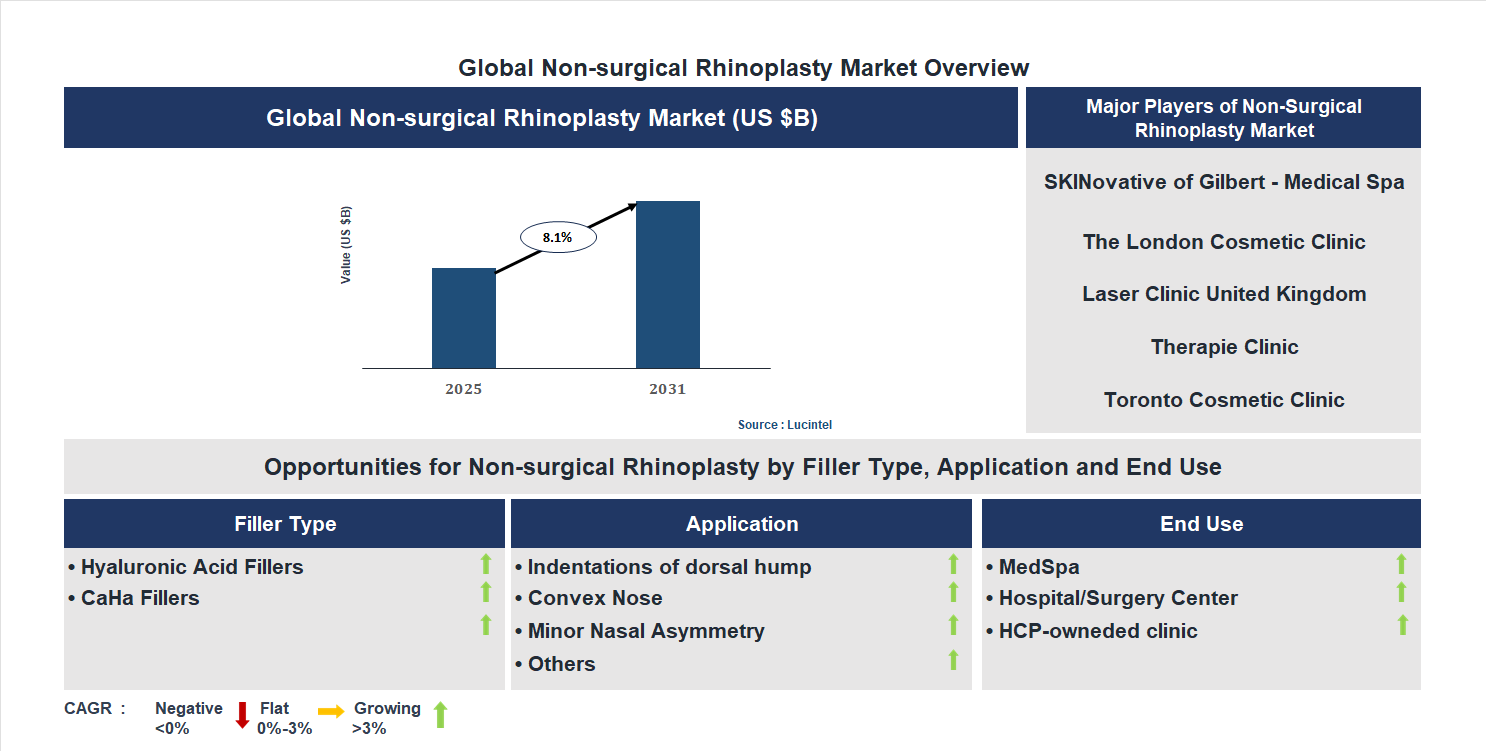
The future of the global non-surgical rhinoplasty market looks promising with opportunities in the MedSpa, hospital/surgery center, and HCP-owneded clinic markets. The global non-surgical rhinoplasty market is expected to grow with a CAGR of 8.1% from 2025 to 2031. The major drivers for this market are the increasing demand for minimally invasive procedures, the rising preference for aesthetic facial enhancements, and the growing awareness of non-surgical cosmetic options.• Lucintel forecasts that, within the filler type category, hyaluronic acid filler is expected to witness higher growth over the forecast period.
• Within the end use category, MedSpa is expected to witness the highest growth.
• In terms of region, APAC is expected to witness the highest growth over the forecast period. Gain valuable insights for your business decisions with our comprehensive 150+ page report. Sample figures with some insights are shown below.
Emerging Trends in the Non-surgical Rhinoplasty Market
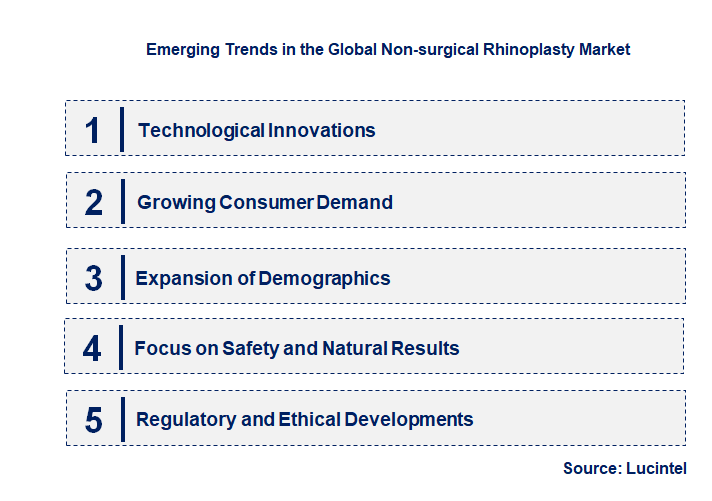
The non-surgical rhinoplasty market is experiencing rapid growth driven by technological advancements, changing consumer preferences, and increased demand for minimally invasive procedures. As patients seek quick, effective, and less risky alternatives to traditional surgery, industry players are innovating and expanding their offerings. This evolving landscape is characterized by new techniques, rising popularity among diverse demographics, and a focus on safety and natural results. These developments are transforming the market, making procedures more accessible and appealing. Understanding these key trends is essential for stakeholders aiming to capitalize on emerging opportunities and adapt to shifting consumer expectations in this dynamic sector.• Technological Innovations: Advancements in filler materials and injection techniques are enhancing safety, precision, and natural outcomes. New formulations offer longer-lasting results and reduced risk of complications, attracting more clients. Innovations such as 3D imaging and augmented reality enable practitioners to plan procedures more accurately and provide better patient consultations. These technological improvements are boosting confidence in non-surgical options, expanding their appeal across different age groups and aesthetic goals.
• Growing Consumer Demand: Increasing awareness and acceptance of non-invasive procedures are driving market growth. Consumers prefer non-surgical rhinoplasty due to its minimal downtime, lower cost, and reduced risk compared to traditional surgery. The rise of social media and influencer culture has amplified demand, with many seeking quick aesthetic enhancements without significant recovery periods. This trend is particularly prominent among younger demographics and busy professionals who prioritize convenience and immediate results.
• Expansion of Demographics: The market is witnessing a broader demographic reach, including men and older adults seeking subtle enhancements. Traditionally popular among women, non-surgical rhinoplasty is now gaining traction among men who desire refined features discreetly. Additionally, older patients are opting for minimally invasive procedures to address age-related changes without undergoing invasive surgery. This diversification is expanding the market’s customer base and encouraging providers to tailor services to varied aesthetic preferences.
• Focus on Safety and Natural Results: Emphasis on safety protocols and natural-looking outcomes is shaping industry standards. Practitioners are adopting rigorous training and certification processes to minimize risks. There is a growing preference for subtle, harmonious enhancements that preserve facial expressions and avoid an overdone appearance. This focus reassures clients and enhances market credibility, fostering trust and encouraging repeat business. As safety and natural results become priorities, the market is moving toward more responsible and patient-centric practices.
• Regulatory and Ethical Developments: Increasing regulation and ethical considerations are influencing market practices. Governments and professional bodies are establishing guidelines for practitioner qualifications, procedure standards, and product approvals. Transparency in marketing and informed consent are becoming mandatory, ensuring patient safety and ethical marketing. These regulatory frameworks aim to prevent malpractice and promote high-quality care, ultimately strengthening consumer confidence and stabilizing market growth amid evolving legal landscapes. In summary, these trends are collectively reshaping the non-surgical rhinoplasty market by making procedures safer, more accessible, and tailored to diverse consumer needs. Technological advancements, demographic expansion, and regulatory improvements are driving innovation and growth, positioning the market for sustained development in the coming years.
Recent Development in the Non-surgical Rhinoplasty Market
The non-surgical rhinoplasty market has experienced significant growth driven by increasing demand for minimally invasive cosmetic procedures. Advances in technology, changing consumer preferences, and the desire for quick, less painful alternatives to traditional surgery are fueling this expansion. Market players are innovating with new techniques and materials, while regulatory and safety considerations are evolving. The rise of social media and celebrity influence further boosts consumer interest. As a result, the market is becoming more competitive and diverse, offering a broader range of options for patients seeking aesthetic enhancements without surgery. These developments are shaping the future landscape of non-surgical rhinoplasty.• Technological Advancements: Introduction of new fillers and injection techniques has improved precision and safety, leading to higher patient satisfaction and increased adoption among practitioners.
• Growing Consumer Awareness: Increased marketing and social media influence have heightened awareness about non-surgical options, expanding the customer base and driving demand.
• Regulatory Developments: Governments and health authorities are implementing stricter guidelines and safety protocols, ensuring better standards and boosting consumer confidence.
• Rising Adoption in Emerging Markets: Economic growth and increasing aesthetic consciousness in developing countries are opening new opportunities for market expansion.
• Innovations in Materials: Development of longer-lasting, biocompatible fillers has enhanced procedure outcomes, reducing the need for repeat treatments and improving market stability. These developments are collectively transforming the Non-surgical Rhinoplasty Market by enhancing safety, efficacy, and accessibility. The market is becoming more competitive, with increased innovation and consumer trust, leading to sustained growth and broader acceptance worldwide.
Strategic Growth Opportunities in the Non-surgical Rhinoplasty Market
The non-surgical rhinoplasty market is experiencing rapid growth driven by increasing demand for minimally invasive cosmetic procedures. Advances in technology, rising aesthetic consciousness, and the desire for quick, cost-effective solutions are fueling this expansion across various applications. As consumers seek safer and less invasive options, key growth opportunities are emerging in different application segments. These developments are transforming the market landscape, offering new avenues for providers and expanding consumer access. Understanding these opportunities is essential for stakeholders aiming to capitalize on the evolving trends and meet the growing demand for non-surgical nasal enhancement solutions.• Cosmetic Enhancement: The rising preference for non-invasive procedures is boosting demand for non-surgical rhinoplasty as a quick, effective alternative to surgical options, attracting a broader demographic seeking aesthetic improvements without downtime.
• Reconstructive Applications: Increasing cases of nasal deformities and trauma are driving growth in reconstructive uses, with non-surgical methods offering less invasive options for correction, especially in patients hesitant about surgery.
• Medical Tourism: Growing global interest in affordable, minimally invasive procedures is expanding medical tourism, with patients traveling to regions offering advanced non-surgical rhinoplasty services, thus broadening market reach.
• Technological Innovations: Development of advanced fillers and injection techniques enhances procedure safety and results, encouraging more practitioners to adopt non-surgical rhinoplasty and expanding its application scope.
• Aging Population: As the global population ages, there is increased demand for non-surgical options to address age-related nasal changes, driving growth in anti-aging and rejuvenation applications. In summary, these growth opportunities are significantly impacting the Non-surgical Rhinoplasty Market by broadening its application base, increasing consumer accessibility, and fostering technological advancements. This evolution is leading to a more diverse, competitive, and dynamic market landscape, ultimately benefiting both providers and consumers through innovative, less invasive nasal enhancement solutions.
Non-surgical Rhinoplasty Market Driver and Challenges
The non-surgical rhinoplasty market is influenced by a variety of technological, economic, and regulatory factors that shape its growth trajectory. Advances in minimally invasive procedures, increasing consumer demand for aesthetic enhancements, and evolving regulatory standards are key drivers. Economic factors such as rising disposable incomes and the proliferation of medical tourism also contribute significantly. However, the market faces challenges including regulatory hurdles, safety concerns, and competition from surgical alternatives. Understanding these drivers and challenges is essential for stakeholders to navigate the dynamic landscape effectively and capitalize on emerging opportunities while addressing potential risks. The factors responsible for driving the non-surgical rhinoplasty market include:-• Technological Advancements: The development of innovative dermal fillers and injection techniques has revolutionized non-surgical rhinoplasty. These advancements enable practitioners to deliver more precise, safer, and longer-lasting results, increasing patient confidence and satisfaction. As technology continues to evolve, procedures become more accessible and less invasive, attracting a broader patient base. The integration of imaging and 3D modeling further enhances treatment planning, reducing risks and improving outcomes. This continuous innovation sustains market growth by meeting rising consumer expectations for quick, effective, and minimally invasive aesthetic solutions.
• Rising Aesthetic Consciousness: Increasing awareness about facial aesthetics and the desire for non-invasive procedures are major market drivers. Consumers, especially millennials and Gen Z, prefer non-surgical options due to shorter recovery times, lower costs, and minimal discomfort. Social media influence and celebrity endorsements amplify the demand for quick cosmetic enhancements, fueling market expansion. Additionally, the stigma associated with surgical procedures diminishes as non-surgical options become more popular. This heightened aesthetic consciousness drives clinics and practitioners to offer non-surgical rhinoplasty as a preferred choice, thereby expanding the market.
• Economic Growth and Disposable Income: Growing disposable incomes across emerging and developed economies enable more individuals to afford cosmetic procedures. As economic stability improves, consumers are more willing to invest in aesthetic treatments like non-surgical rhinoplasty. The affordability compared to surgical options makes it an attractive alternative, especially for first-time patients. The rise of medical tourism in regions offering cost-effective procedures further boosts market growth. Increased affordability and accessibility are expanding the customer base, encouraging clinics to adopt and promote non-surgical rhinoplasty services.
• Regulatory Support and Medical Practice Integration: Favorable regulatory frameworks and approval processes for dermal fillers and related products facilitate market growth. Clear guidelines ensure safety and efficacy, encouraging practitioners to adopt non-surgical rhinoplasty techniques confidently. Additionally, integration of these procedures into mainstream cosmetic practice and training programs enhances practitioner expertise. Regulatory support also fosters innovation by enabling the development of new products and techniques. As regulations become more streamlined and supportive, market players are motivated to expand their offerings, contributing to sustained growth.
• Growing Preference for Minimally Invasive Procedures: Patients increasingly prefer minimally invasive treatments due to their convenience, reduced downtime, and lower risk profiles. Non-surgical rhinoplasty fits this trend perfectly, offering quick results with minimal discomfort. The ability to customize procedures without the need for anesthesia or extensive recovery appeals to busy professionals and younger demographics. This preference is driving clinics to specialize in non-invasive options, expanding service portfolios. The trend toward minimally invasive procedures is expected to continue, further propelling market growth as consumers seek effective, low-risk aesthetic solutions. The challenges facing the non-surgical rhinoplasty market include:-
• Regulatory and Safety Concerns: Despite regulatory support, safety concerns remain a significant challenge. The risk of adverse reactions, improper injections, and complications can undermine consumer confidence. Variability in practitioner expertise and product quality further complicate safety standards. Regulatory agencies are continually updating guidelines, but inconsistent enforcement across regions hampers standardization. These concerns necessitate rigorous training and quality control measures, which can increase operational costs for providers. Addressing safety issues is crucial for maintaining market credibility and ensuring sustainable growth.
• Competition from Surgical Rhinoplasty: While non-surgical options are popular, surgical rhinoplasty remains a preferred choice for complex or permanent corrections. The availability of surgical procedures with long-lasting results and the perception of higher efficacy pose a challenge to non-surgical market growth. Patients often opt for surgery when seeking significant structural changes, limiting the scope of non-invasive treatments. Additionally, some practitioners may favor surgical options due to higher revenue potential. This competition necessitates continuous innovation and education to position non-surgical rhinoplasty as a viable alternative for suitable candidates.
• Limited Long-term Results and Reversibility: One of the key challenges is the temporary nature of non-surgical rhinoplasty results, which typically last from several months to a year. Patients seeking permanent solutions may be hesitant to opt for procedures that require repeat treatments. Reversibility, while an advantage, also means ongoing costs and maintenance, which can deter some consumers. The lack of long-term data and standardized protocols further complicates patient decision-making. Overcoming these limitations requires ongoing research, product development, and patient education to enhance confidence and satisfaction. In summary, the Non-surgical Rhinoplasty Market is driven by technological innovations, increasing aesthetic awareness, economic growth, regulatory support, and a preference for minimally invasive procedures. However, safety concerns, competition from surgical options, and the temporary nature of results pose significant challenges. These factors collectively influence market dynamics, requiring stakeholders to innovate, adhere to safety standards, and educate consumers. The overall impact is a rapidly evolving market with substantial growth potential, provided that challenges are effectively managed through strategic initiatives and continuous improvement.
List of Non-surgical Rhinoplasty Companies
Companies in the market compete on the basis of product quality offered. Major players in this market focus on expanding their manufacturing facilities, R&D investments, infrastructural development, and leverage integration opportunities across the value chain. With these strategies non-surgical rhinoplasty companies cater increasing demand, ensure competitive effectiveness, develop innovative products & technologies, reduce production costs, and expand their customer base. Some of the non-surgical rhinoplasty companies profiled in this report include-• SKINovative of Gilbert - Medical Spa
• The London Cosmetic Clinic
• Laser Clinic United Kingdom
• Therapie Clinic
• Toronto Cosmetic Clinic
• Canada MedLaser
• Skin Vitality Medical Clinic
• True MediSpa
• Nova Aesthetic Clinic
• VIVA Skin Clinic
Non-surgical Rhinoplasty Market by Segment
The study includes a forecast for the global non-surgical rhinoplasty market by filler type, application, end use, and region.Non-surgical Rhinoplasty Market by Filler Type [Value from 2019 to 2031]:
• Hyaluronic Acid Fillers
• CaHa Fillers
Non-surgical Rhinoplasty Market by Application [Value from 2019 to 2031]:
• Indentations of dorsal hump
• Convex Nose
• Minor Nasal Asymmetry
• Others
Non-surgical Rhinoplasty Market by End Use [Value from 2019 to 2031]:
• MedSpa
• Hospital/Surgery Center
• HCP-owneded clinic
Non-surgical Rhinoplasty Market by Region [Value from 2019 to 2031]:
• North America
• Europe
• Asia Pacific
• The Rest of the World
Country Wise Outlook for the Non-surgical Rhinoplasty Market
The non-surgical rhinoplasty market has experienced significant growth driven by technological advancements, increasing consumer demand for minimally invasive procedures, and expanding awareness of aesthetic options. As preferences shift towards less invasive treatments with quicker recovery times, countries are adopting innovative techniques and expanding their offerings. Regulatory changes and the rise of medical tourism also influence market dynamics. Each country’s unique healthcare infrastructure, regulatory environment, and cultural attitudes shape the development trajectory of this market, leading to diverse trends and opportunities across regions.• United States: The US market has seen rapid growth with the adoption of advanced fillers and innovative techniques. Key players are investing in research and development to improve safety and results. Increasing awareness and acceptance among younger demographics have driven demand, alongside a rise in medical tourism. Regulatory agencies are closely monitoring product safety, which influences market expansion. Telemedicine consultations and minimally invasive procedures are becoming more popular, contributing to overall market growth.
• China: China’s non-surgical rhinoplasty market is expanding due to rising disposable incomes and growing beauty consciousness. Local clinics are adopting new technologies, and international brands are entering the market. The government’s supportive policies for cosmetic procedures and increasing urbanization are fueling demand. Additionally, social media influence and celebrity endorsements are boosting popularity among younger consumers. The market is characterized by a mix of traditional and innovative techniques, with a focus on affordability and accessibility.
• Germany: Germany’s market is driven by high standards of safety and quality, with a focus on minimally invasive procedures. The country’s strict regulatory environment ensures product safety and efficacy, fostering consumer confidence. There is a growing trend towards natural-looking results, with practitioners emphasizing personalized treatments. The aging population also contributes to increased demand for aesthetic procedures. Technological advancements, such as improved filler formulations, are enhancing outcomes, and clinics are adopting digital marketing strategies to attract clients.
• India: The Indian non-surgical rhinoplasty market is witnessing rapid growth due to increasing awareness, affordability, and a rising middle class. Local clinics are adopting advanced techniques, and there is a surge in the number of trained practitioners. The influence of social media and celebrity culture is driving demand for aesthetic enhancements. The market is characterized by a focus on cost-effective solutions, with many clinics offering affordable packages. Government initiatives to promote medical tourism are also contributing to the expansion of the market.
• Japan: Japan’s market is characterized by a cautious approach emphasizing safety and natural results. The aging population and increasing beauty consciousness are key drivers. Technological innovations, such as improved filler materials and minimally invasive techniques, are gaining popularity. Japanese consumers prefer subtle enhancements, and practitioners focus on personalized, conservative treatments. The market is also influenced by cultural attitudes towards aging and beauty, with a growing trend towards holistic and wellness-oriented aesthetic procedures. Digital marketing and patient education are playing vital roles in market growth.

Features of the Global Non-surgical Rhinoplasty Market
Market Size Estimates: Non-surgical rhinoplasty market size estimation in terms of value ($B). Trend and Forecast Analysis: Market trends (2019 to 2024) and forecast (2025 to 2031) by various segments and regions. Segmentation Analysis: Non-surgical rhinoplasty market size by filler type, application, end use, and region in terms of value ($B). Regional Analysis: Non-surgical rhinoplasty market breakdown by North America, Europe, Asia Pacific, and Rest of the World. Growth Opportunities: Analysis of growth opportunities in different filler types, applications, end uses, and regions for the non-surgical rhinoplasty market. Strategic Analysis: This includes M&A, new product development, and competitive landscape of the non-surgical rhinoplasty market. Analysis of competitive intensity of the industry based on Porter’s Five Forces model.
FAQ
Q1. What is the growth forecast for non-surgical rhinoplasty market? Answer: The global non-surgical rhinoplasty market is expected to grow with a CAGR of 8.1% from 2025 to 2031. Q2. What are the major drivers influencing the growth of the non-surgical rhinoplasty market? Answer: The major drivers for this market are the increasing demand for minimally invasive procedures, the rising preference for aesthetic facial enhancements, and the growing awareness of non-surgical cosmetic options. Q3. What are the major segments for non-surgical rhinoplasty market? Answer: The future of the non-surgical rhinoplasty market looks promising with opportunities in the MedSpa, hospital/surgery center, and HCP-owneded clinic markets. Q4. Who are the key non-surgical rhinoplasty market companies? Answer: Some of the key non-surgical rhinoplasty companies are as follows:• SKINovative of Gilbert - Medical Spa
• The London Cosmetic Clinic
• Laser Clinic United Kingdom
• Therapie Clinic
• Toronto Cosmetic Clinic
• Canada MedLaser
• Skin Vitality Medical Clinic
• True MediSpa
• Nova Aesthetic Clinic
• VIVA Skin Clinic Q5. Which non-surgical rhinoplasty market segment will be the largest in future? Answer: Lucintel forecasts that, within the filler type category, hyaluronic acid filler is expected to witness higher growth over the forecast period. Q6. In non-surgical rhinoplasty market, which region is expected to be the largest in next 5 years? Answer: In terms of region, APAC is expected to witness the highest growth over the forecast period. Q7. Do we receive customization in this report? Answer: Yes, Lucintel provides 10% customization without any additional cost.
Table of Contents
List of Figures
List of Tables
Methodology
- In-depth interviews of the major players in this market
- Detailed secondary research from competitors’ financial statements and published data
- Extensive searches of published works, market, and database information pertaining to industry news, company press releases, and customer intentions
- A compilation of the experiences, judgments, and insights of Lucintel’s professionals, who have analyzed and tracked this market over the years.


Buy Now
Choose a license that fits your team. Instant PDF delivery.
Prices exclude taxes. Instant delivery. Custom licensing available on request.
Key Questions
- • What are some of the most promising, high-growth opportunities for the non-surgical rhinoplasty market by filler type (hyaluronic acid fillers and CaHa fillers), application (indentations of dorsal hump, convex nose, minor nasal asymmetry, and others), end use (MedSpa, hospital/surgery center, and HCP-owneded clinic), and region (North America, Europe, Asia Pacific, and the Rest of the World)?
- • Which segments will grow at a faster pace and why?
- • Which region will grow at a faster pace and why?
- • What are the key factors affecting market dynamics? What are the key challenges and business risks in this market?
- • What are the business risks and competitive threats in this market?
- • What are the emerging trends in this market and the reasons behind them?
- • What are some of the changing demands of customers in the market?
- • What are the new developments in the market? Which companies are leading these developments?
- • Who are the major players in this market? What strategic initiatives are key players pursuing for business growth?
- • What are some of the competing products in this market and how big of a threat do they pose for loss of market share by material or product substitution?
- • What M&A activity has occurred in the last 5 years and what has its impact been on the industry? For any questions related to Non-surgical Rhinoplasty Market, Non-surgical Rhinoplasty Market Size, Non-surgical Rhinoplasty Market Growth, Non-surgical Rhinoplasty Market Analysis, Non-surgical Rhinoplasty Market Report, Non-surgical Rhinoplasty Market Share, Non-surgical Rhinoplasty Market Trends, Non-surgical Rhinoplasty Market Forecast, Non-surgical Rhinoplasty Companies, write Lucintel analyst at email: helpdesk@lucintel.com. We will be glad to get back to you soon.


